
BuddhistCatholicContemplativeEvangelicalGeneral ChristianHinduJewishLatter-day SaintMuslimNew VisionsProgressive Christian
Beliefs
- Buddhist
- Catholic
- Contemplative
- Evangelical
- General Christian
- Hindu
- Jewish
- Latter-day Saint
- More Voices
- Muslim
- New Visions
- Pagan
- Progressive Christian
Topics
- Religion News
- Food and Religion
- Sports and Religion
- Religious Art
- Religious Music and Entertainment
- Religious Events
- History and Religion
- Style and Religion
- Politics and Religion
- Women in Religion
- Recreation Outdoors and Religion
- Business Finance and Religion
- Careers Workplace and Religion
- Education and Religion
- Family Parenting and Religion
- Health Fitness and Religion
- Home and Religion
- Relationships and Religion
- Technology and Religion
- Travel and Religion
Columnists
- Buddhist Columnists
- Business Finance and Religion Columnists
- Careers Workplace and Religion Columnists
- Catholic Columnists
- Contemplative Columnists
- Education and Religion Columnists
- Evangelists Columnists
- Family Parenting and Religion Columnists
- General Christian Columnists
- Health Fitness and Religion Columnists
- Hindu Columnists
- History and Religion Columnists
- Home and Religion Columnists
- Jewish Columnists
- More Voices Columnists
- Latter Day Columnists
- Muslim Columnists
- New Visions Columnists
- Nonreligious Columnists
- Pagan Columnists
- Politics and Religion Columnists
- Progressive Columnists
- Recreation Outdoors and Religion Columnists
- Relationships and Religion Columnists
- Religion News Columnists
- Religious Art Columnists
- Religious Events Columnists
- Religious Music and Entertainment Columnists
- Sports and Religion Columnists
- Style and Religion Columnists
- Technology and Religion Columnists
- Travel and Religion Columnists
- Women in Religion Columnists
Resource Library
- 2026 Calendar
- Library of World Religions
- The 100 Most Holy Places on Earth
- Patheos Answers
- Podcasts
- Videos
- Faith Leaders Database
- Anglican Episcopalian
- Bahai
- Baptist
- Buddhism
- Christianity
- Confucianism
- Eastern Orthodoxy
- Hinduism
- Holiness and Pentecostal
- ISKCON
- Islam
- Judaism
- Lutheran
- Methodist
- The Church of Jesus Christ of Latter-day Saints
- New Age
- Paganism
- Presbytarian and Reformed
- Protestantism
- Religion Behind the Scenes
- Roman Catholic
- Scientology
- Shia Islam
- Sikhism
- Sufism
- Sunni Islam
- Taoism
- Zen
- See all religions
Research Tools
 Ad-Free & Subscriber Log-In Subscription Support
Ad-Free & Subscriber Log-In Subscription Support
Follow Patheos 

- Trending:
- Forgiveness
- |
- Marriage
- |
- Consciousness
- |
- Death Penalty
- |
- Election
- |
- Halloween

-
About
-
Catholic Apologetics
-
Church History
-
Great Apologists
-
Christian Worldview
-
Protestantism & Misc.
- Home
- Catholic
- History and Religion
- Baptismal Regeneration and Justification (vs. Jason Engwer)
Baptismal Regeneration and Justification (vs. Jason Engwer)
Last updated on: June 4, 2020 at 2:27 pm by Dave Armstrong
Baptismal Regeneration and Justification (vs. Jason Engwer) 2020-06-04T14:27:55-04:00 Dave Armstrong
Patheos Explore the world's faith through different perspectives on religion and spirituality! Patheos has the views of the prevalent religions and spiritualities of the world.
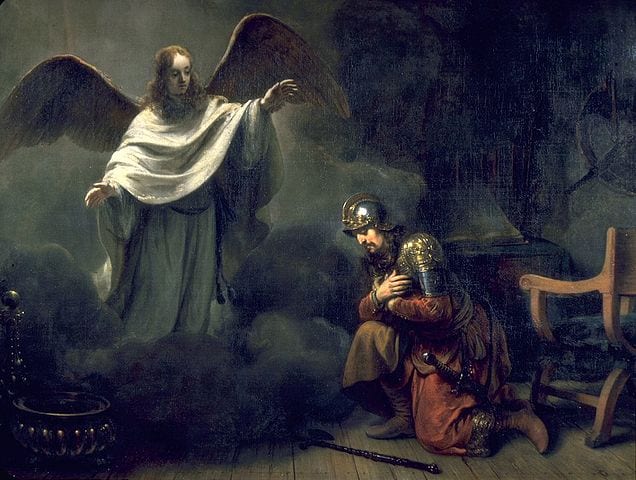
This is my reply to Jason Engwer’s article, “Baptismal Justification” (12-20-09), which was a portion of a larger discussion he was having with Catholic apologist Bryan Cross. His words will be in blue.
***
As an introductory statement, I would emphasize that the Bible and Catholicism teach both justification by grace through faith and baptismal regeneration (including normative infant baptism). The two notions and events are harmonious. But they can be discussed by themselves. Often (if not most times), the Bible will mention one without the other. But it doesn’t follow that every mention of one without the other implies some sort of contradiction. It does not, because both are asserted in inspired Scripture. I agree that many mentions of something constitute good biblical evidence for it (I presuppose this in many of my own articles, in citing a lot of Bible passages); however, there are things that are mentioned a lot less in the Bible that remain just as true as the frequently mentioned doctrines.
The examples of this that I usually point out are the virgin birth and original sin. Both are firmly believed by virtually all Christian believers: Catholic, Protestant, and Orthodox: yet they are mentioned (especially in the case of original sin) fairly few times. Moreover, there is an example of a firmly and universally held doctrine (apart from seven disputed books pout of 73) that is absolutely absent from Holy Scripture: the canon of the Bible: which was ultimately determined and decreed by Church authority and apostolic tradition.
Bottom line: assertion of either aspects of baptism or justification, without mentioning the other doctrine, does not imply a negation of the other. and if and when Jason argues in such a fashion, he will be engaging in logical fallacy and inadequate biblical exegesis and hermeneutics. The task of the fair and open biblical exegete is to incorporate all of the data regarding justification and baptism into a harmonious whole. As one would expect, I think the Catholic view does that. And there are two passages in Paul that explicitly link baptism and justification.
Below is a portion of my latest response, relevant to the subject of attaining justification through baptism. . . .
Paul, James, and other New Testament authors suggest continuity between justification through faith in the Old Testament era and justification through faith in the New Testament era.
Indeed they do. But baptism was prefigured by circumcision. I summarized the biblical data on that analogy in my paper, Infant Baptism: A Fictional Dialogue
Paul in Colossians 2:11-13 makes a connection between baptism and circumcision. Israel was the church before Christ (Acts 7:38; Romans 9:4). Circumcision, given to 8-day-old boys, was the seal of the covenant God made with Abraham, which applies to us also (Galatians 3:14, 29). It was a sign of repentance and future faith (Romans 4:11). Infants were just as much a part of the covenant as adults (Genesis 17:7; Deuteronomy 29:10-12, cf. Matthew 19:14). Likewise, baptism is the seal of the New Covenant in Christ. It signifies cleansing from sin, just as circumcision did (Deuteronomy 10:16; 30:6; Jeremiah 4:4; 9:25; Romans 2:28-29; Philippians 3:3).
I also have an article about John Calvin commenting at length about Paul’s circumcision-baptism analogy.
But works of faith come later than faith. Genesis 15:6 is about a faith that would result in works, but the works come after the faith.
We fully agree, which is why we speak of initial justification, by faith. I’ve even written a post entitled, Monergism in Initial Justification is Catholic Doctrine. So this notion doesn’t contradict Catholic soteriology or theology in general.
When somebody trusts God in response to a promise God makes, as in Genesis 15, that’s faith in the heart (as in Acts 15:7-11 and Romans 10:10), not faith accompanied by an outer manifestation like baptism.
Now here is where Jason attempts to illogically separate such justification from an equally necessary and regenerative baptism. Acts 15:7-11 is the account St. Peter at the Jerusalem Council talking about how he had observed Gentiles receive the Holy Spirit (15:8) and have their hearts “cleansed . . . by faith” (15:9). But there is no reason to believe that he would separate baptism from that, simply because he doesn’t mention it here. How do we know that? Well, we know from looking at actual instances of reception of the Holy Spirit in which Peter was present.
In Acts 2, it is the Day of Pentecost and the disciples receive the Holy Spirit and are indwelt by Him (2:1-4). As a result, St. Peter gives the first Christian sermon, explaining what had happened, and presents the gospel (2:14-36). When he is done, the Bible says that “they were cut to the heart, and said to Peter and the rest of the apostles, ‘Brethren, what shall we do?”‘ (2:37; RSV, as throughout). And here is how Peter responds:
Acts 2:38-41 . . . “Repent, and be baptized every one of you in the name of Jesus Christ for the forgiveness of your sins; and you shall receive the gift of the Holy Spirit. [39] For the promise is to you and to your children and to all that are far off, every one whom the Lord our God calls to him.” [40] And he testified with many other words and exhorted them, saying, “Save yourselves from this crooked generation.” [41] So those who received his word were baptized, and there were added that day about three thousand souls.
Thus, the very first act or “work” that those who have accepted the gospel by grace through faith is to get baptized. And this baptism is “for the forgiveness of your sins” and its result will be receiving “the gift of the Holy Spirit.” And it is intended for all believers, and for their “children” (infant baptism). Lastly, getting baptized is, according to Peter and inspired Scripture, “Sav[ing] yourselves from this crooked generation.” I don’t know how the Bible could be more explicit in describing baptismal regeneration and its actual necessity, either at the beginning of an adult convert’s Christian life or for an infant who is the child of Christians. Everything is here: repentance, forgiveness of sins, the indwelling Holy Spirit, salvation, and the idea that baptism formally adds one to the Church.
When Peter observes the Holy Spirit falling upon Gentiles, too, he acts in exactly the same fashion:
Acts 10:44-48 While Peter was still saying this, the Holy Spirit fell on all who heard the word. [45] And the believers from among the circumcised who came with Peter were amazed, because the gift of the Holy Spirit had been poured out even on the Gentiles. [46] For they heard them speaking in tongues and extolling God. Then Peter declared, [47] “Can any one forbid water for baptizing these people who have received the Holy Spirit just as we have?” [48] And he commanded them to be baptized in the name of Jesus Christ.
When St. Paul converted, it was precisely the same state of affairs again:
Acts 9:17-18 So Anani’as departed and entered the house. And laying his hands on him he said, “Brother Saul, the Lord Jesus who appeared to you on the road by which you came, has sent me that you may regain your sight and be filled with the Holy Spirit.” [18] And immediately something like scales fell from his eyes and he regained his sight. Then he rose and was baptized,
Acts 22:11-16 And when I could not see because of the brightness of that light, I was led by the hand by those who were with me, and came into Damascus. [12] “And one Anani’as, a devout man according to the law, well spoken of by all the Jews who lived there, [13] came to me, and standing by me said to me, `Brother Saul, receive your sight.’ And in that very hour I received my sight and saw him. [14] And he said, `The God of our fathers appointed you to know his will, to see the Just One and to hear a voice from his mouth; [15] for you will be a witness for him to all men of what you have seen and heard. [16] And now why do you wait? Rise and be baptized, and wash away your sins, calling on his name.’
Note that his sins were not yet “washed away” when he first converted and saw Jesus. That only came with baptism, just as was the case in Acts 2:38, 40.
Obviously, then, for Peter and Paul, baptism (i.e., for adult converts accepting Christianity for the first time) goes along with — at the same time — repentance, belief in the gospel and justification by faith. How is it, then, that Jason can claim the exact opposite: that it’s “not faith accompanied by an outer manifestation like baptism”? Well, he does so by highlighting certain passages while ignoring other relevant ones, and playing the usual Protestant unbiblical and illogical “either / or” game. The Bible teaches both things; he contends in futility that it teaches only one of them.
It isn’t the case that the chronological order is always the same (baptism —> reception of the Holy Spirit or reception of the Holy Spirit —> baptism), but rather, that they are, broadly speaking, together in time. That is the constant. The ancient Hebrews didn’t view chronology like we do. One being accompanied by the other (whether technically before or after) is the essence of the thing, rather than one being slightly before the other. That’s what Scripture teaches, whether Jason and other Protestants care for it or not.
There isn’t a single individual who’s described as coming to faith, but having to wait until baptism to be justified. Nor is there any individual who’s described as only having a lesser, unjustifying faith prior to baptism or not having faith at all until baptism. Rather, we repeatedly see people justified as soon as they believe, prior to or without baptism.
I just provided several counter-examples. In Acts 2, the sequence was repentance, then baptism, which brings forgiveness of sins, the Holy Spirit, salvation, and entrance into the kingdom (i.e., the Church). One can hardly be “justified” without all those things or have a greater faith before baptism (given this description). Therefore, baptism is what immediately caused it. When Paul was baptized, according to his own interpretation, his sins were washed away as a result.
So how could he be justified (before baptism), seeing that his sins weren’t even forgiven and washed away and he wasn’t “saved” yet? He could not, since forgiveness of sins and salvation / regeneration are essential to the notion of justification. And an infant can have no conscious, “personal” faith at all prior to baptism or even after. Yet the Bible teaches infant baptism. Other passages on baptismal regeneration reinforce this point:
Mark 16:16 He who believes and is baptized will be saved; but he who does not believe will be condemned.
John 3:5 Jesus answered, “I tell you the truth, unless a man is born of water and of the Spirit, he cannot enter the kingdom of God. (cf. 3:3: “unless a man is born again …”)
Romans 6:3-5 Do you not know that all of us who have been baptized into Christ Jesus were baptized into his death? [4] We were buried therefore with him by baptism into death, so that as Christ was raised from the dead by the glory of the Father, we too might walk in newness of life. [5] For if we have been united with him in a death like his, we shall certainly be united with him in a resurrection like his.
Titus 3:5 he saved us, not because of deeds done by us in righteousness, but in virtue of his own mercy, by the washing of regeneration and renewal in the Holy Spirit,
1 Peter 3:20-21 . . . during the building of the ark, in which a few, that is, eight persons, were saved through water. [21] Baptism, which corresponds to this, now saves you, . . .
We see from this additional relevant biblical data that a person is “saved” by baptism; it’s how he can “enter the kingdom of God” and be “born again”; it allows the baptized person to “walk in newness of life” and be united with Jesus in His Resurrection. It brings about “regeneration and renewal in the Holy Spirit.” I fail to see what else is required to prove the point! Is this not overwhelming evidence for the Catholic view (and Orthodox and Anglican and Lutheran and the view of other Protestant groups that believe in baptismal regeneration)? Yet Jason wants to argue that justification is before baptism. It makes no sense whatsoever. It’s exactly the opposite of the biblical presentation on these matters.
I just discovered some very exciting arguments for baptismal regeneration tonight (I don’t know how I’ve missed this, all this time, but I’m always learning), from my friend David Palm, who wrote on my Facebook page:
I remember when I was not-yet-converted and was scratching my head about this whole baptism and justification connection that the Council of Trent made. Trent references Romans 6:7, so I went and read it in the Greek and was absolutely gobsmacked. Romans 6:7 in English is often translated along the lines of, “For he who has died is freed from sin” (RSVCE). But in Greek it says, “ὁ γὰρ ἀποθανὼν δεδικαίωται ἀπὸ τῆς ἁμαρτίας.” That word “δεδικαίωται”, is a form of the verb “to justify”, the very same verb used in the more prominent passages in Rom 3 and 4. So more literally it would be (in the context), “For he who has died [in Christ, in baptism] has been justified from sin….”
I was curious to see if there were translations that reflected this. There aren’t many, but I found a few (including several quite old ones):
ASV for he that hath died is justified from sin.
Darby For he that has died is justified from sin.
Douay-Rheims For he that is dead is justified from sin.
Tyndale For he that is dead is justified from sin. [Old English spelling modified]
Wycliffe For he that is dead [to sin], is justified from sin.
Wuest for the one who died once for all stands in the position of a permanent relationship of freedom from the sinful nature.
ASV is the most surprising, since it was the American revision of the King James Version: produced in 1901. Strong’s Concordance lists the word here as dikaioo (#1344). Knowing that, we can trace its use in other passages, as David suggests above. It occurs 14 more times in Romans alone and 12 times in other Pauline epistles. Here are the most notable instances:
Romans 2:13 For it is not the hearers of the law who are righteous before God, but the doers of the law who will be justified.
Romans 3:23-25 since all have sinned and fall short of the glory of God, [24] they are justified by his grace as a gift, through the redemption which is in Christ Jesus, [25] whom God put forward as an expiation by his blood, to be received by faith. . . .
Romans 3:26 . . . he justifies him who has faith in Jesus.
Romans 3:28 For we hold that a man is justified by faith apart from works of law.
Romans 3:30 . . . he will justify the circumcised on the ground of their faith and the uncircumcised through their faith.
Romans 4:5 And to one who does not work but trusts him who justifies the ungodly, his faith is reckoned as righteousness.
Romans 5:1 Therefore, since we are justified by faith, we have peace with God through our Lord Jesus Christ.
Romans 5:9 Since, therefore, we are now justified by his blood, much more shall we be saved by him from the wrath of God.
Galatians 2:16 . . . in order to be justified by faith in Christ . . .
Galatians 3:24 So that the law was our custodian until Christ came, that we might be justified by faith.
Titus 3:7 so that we might be justified by his grace and become heirs in hope of eternal life.
Apologists, theologians, and avid Bible readers are well familiar with Paul’s theme of being justified by grace (Rom 3:24; Titus 3:7) and by faith (most of the other passages above). But in Romans 2:13, Paul applies the term not to either grace or faith, but to “doers of the law.” James uses the word (in a way that gave Luther fits) in relation to Abraham and Rahab being “justified by works” (Jas 2:21, 24-25).
But now we also see that St. Paul teaches that the baptized person is “justified from sin” (Rom 6:7). This pretty much dramatically shoots down Jason’s entire attempt to separate baptism from justification / regeneration. The entire chapter of Romans 6 is now seen in an exciting light in reference to baptism and its profound spiritual power. Paul creates an analogy between our baptism and Jesus’ death (6:3-6). Then we have the bombshell verse of 6:7, which directly applies justification to baptism.
The rest of the chapter, in light of the stage that Paul has set, is filled with proof texts for baptismal regeneration. Because of our baptism / “death” we are now “dead to sin and alive to God” (6:11). Thus, sanctification seems intimately tied in with the justification and regeneration that baptism has brought about (a very Catholic and unProtestant view indeed).
Perhaps this is some of what St. Paul means by saying, “For as many of you as were baptized into Christ have put on Christ” (Gal 3:27; cf. Rom 13:14), and also his terminology of “put on the new nature” (Eph 4:24; Col 3:10), and “if any one is in Christ, he is a new creation; the old has passed away, behold, the new has come” (2 Cor 5:17), and “the new life of the Spirit” (Rom 7:6): not to mention several other verses about the indwelling Holy Spirit.
As a result of this baptism, sin is no longer to “reign” over us or have “dominion” (Rom 6:12-15), leading to “righteousness for sanctification” (6:19). We’re no longer “slaves to sin” (6:16-18, 20). Now as a result of baptismal regeneration, we’ve been “set free from sin” with “the return” being “sanctification and its end, eternal life” (6:18, 22).
Wow! Hard to argue against all that! It’s baptismal regeneration, justification, sanctification, and salvation all in one fell swoop: in one chapter of Paul: supposedly the great “Protestant” apostle and alleged herald of justification by faith alone.
It’s not as though people like Cornelius and the Galatians didn’t have access to baptism,
In the passage about Cornelius, Peter preaches, and then Cornelius, along with other Gentiles who receive the Spirit are baptized (Acts 10:44-48). So this is more evidence of the Catholic position, not Jason’s. We know what Paul and Peter thought baptism did: not from this particular passage, but others, that have to be considered along with Acts 10.
It would make no sense to dismiss a passage like Luke 18:10-14, Acts 19:2, or Romans 10:10 as an exception to the rule. Justification upon believing response to the gospel, prior to baptism, is the rule, not the exception.
In Luke 18:10-14, we hear of the righteous man who was “justified”because he exhibited genuine repentance and humility. This doesn’t prove that he would not also have to be baptized (see my logical point in the introduction). The same Jesus Who taught this in a story, also said:
Matthew 28:19 Go therefore and make disciples of all nations, baptizing them in the name of the Father and of the Son and of the Holy Spirit,
After we preach and make disciples and bring about new converts and believers by the power of the Holy Spirit, we baptize them. The disciples were already baptizing others, early in Jesus’ ministry: thus we can assume that they must have themselves been baptized, in order to baptize others, but it wasn’t by Jesus (John 4:2).
Acts 19:1-6 While Apol’los was at Corinth, Paul passed through the upper country and came to Ephesus. There he found some disciples. [2] And he said to them, “Did you receive the Holy Spirit when you believed?” And they said, “No, we have never even heard that there is a Holy Spirit.” [3] And he said, “Into what then were you baptized?” They said, “Into John’s baptism.” [4] And Paul said, “John baptized with the baptism of repentance, telling the people to believe in the one who was to come after him, that is, Jesus.” [5] On hearing this, they were baptized in the name of the Lord Jesus. [6] And when Paul had laid his hands upon them, the Holy Spirit came on them; and they spoke with tongues and prophesied.
It’s the same again here: some disciples were found who had been baptized by John the Baptist. But then they were baptized in the name of Jesus and after that, they received the Holy Spirit. Apparently, then, Jason manages to believe (I know not how) in a justification without the Holy Spirit.
Romans 10:10 For man believes with his heart and so is justified, and he confesses with his lips and so is saved.
This refers to justification, but the same Paul makes it clear that baptism is also an essential part of the overall equation, in Romans 6:3-5 and Titus 3:5 (seen above). So it’s not “either/or” but “both/and.” I have repeatedly shown how the two can go hand-in-hand and be perfectly harmonious. This is what the Bible teaches. So why does Jason keep trying to separate them? Well, because he is engaged in systematic eisegesis: reading into the Bible and apostolic Christianity what isn’t there. And he is engaging in the typical and distressingly common Protestant false dichotomy.
*
Mark 16:16 is an extra-Biblical source. It has some significance as an early text, but the readers should keep in mind that it’s an extra-Biblical text. The authentic gospel of Mark says nothing of baptismal justification. (Similarly, the authentic letters of Ignatius of Antioch say nothing of it. The inauthentic longer versions of his letters, on the other hand, include reference to the concept.)
There are many excellent and compelling arguments for Mark 16:9-20 being part of Scripture. But even if it isn’t, there are plenty more passages teaching baptismal regeneration that Jason can’t dismiss.
You’ve made no attempt to explain the large number of Biblical examples of justification apart from baptism that I cited earlier. As I said, such passages have moved many advocates of baptismal justification to argue that baptism didn’t become a requirement (in normative cases) until after Jesus’ public ministry. . . . John refers to justification through faith many times (1:12, 3:15-16, 3:18, 3:36, 5:24, 6:35, 6:40, 6:47, 7:38-39, 11:25-26, etc.), and baptismal justification is alleged to be referred to only once, in 3:5.
As explained in the introduction, mentions of justification that do not also mention baptism, don’t wipe out all the passages that teach required baptism as an essential component of Christian discipleship and justification itself (which Paul literally asserts in Romans 6:7). It’s simply not a disproof. The Bible has to be interpreted as a harmonious whole, since it is inspired revelation, and Jason cannot ignore this massive biblical evidence regarding baptism. How very odd, if Jason is correct, that the very first thing Jesus did when He commenced His public ministry, was to be baptized as an example.
And the immediate precursor and proclaimer of the arrival of Jesus the Messiah: John the Baptist, was primarily one who baptized (as we see in his very title): which prophets had never done before. Then we see Jesus’ disciples baptizing (Jn 4:2), and His command. shortly before ascending, that mentioned baptism in conjunction with making disciples (Mt 28:19). After the Day of Pentecost and the first Christian sermon of the new covenant, Peter immediately calls for a mass baptism: precisely as Jesus said His disciples should do: preach and baptize. Jason’s inability to grasp the significance of all this is like a person looking all over the sky at high noon on a clear summer day and not being able to find the sun.
Most likely, Acts 2:38 has a meaning similar to Matthew 3:11. The people in Matthew 3 weren’t being baptized to attain repentance. Rather, they were repenting, then being baptized on the basis of that repentance. Not only would it be irrational to think that unrepentant people would be baptized in order to attain repentance, but Josephus specifically tells us that John’s baptism was for people who had already repented (Antiquities Of The Jews, 18:5:2).
Of course, this was the order (repentance, then baptism, which “seals” it), as indicated in Mark 1:5: “they were baptized by him in the river Jordan, confessing their sins” (cf. Mt 3:6). John’s words, “Repent, for the kingdom of heaven is at hand” (Mt 3:2), imply — it seems to me — a repentance, followed by baptism: rather like a Protestant altar call, where the person repents, then goes up to the altar in a ritual gesture of public proclamation of newfound faith. In Catholicism, the equivalent would be reception into the Church at Easter, followed by baptism, for those who had never been baptized. When I was received, I was conditionally baptized, just in case my previous one (as a Methodist infant in 1958) was invalid for some reason.
Acts 2:38 is the same order: “Repent, and be baptized.” And it was the same for St. Paul. He repented and stopped warring against Jesus Christ and His Body, and then he was baptized.
Given the availability of such a reasonable understanding of Acts 2:38 (one similar to how we all read Matthew 3:11), it wouldn’t make sense to adopt some other view of the passage that would be so inconsistent with what Luke says elsewhere and what other Biblical authors say (documented above).
Jason seems to think that repentance is the same thing as justification, but it’s not. It’s only the first step towards justification and regeneration. Hence we see a verse like this:
Mark 1:4 John the baptizer appeared in the wilderness, preaching a baptism of repentance for the forgiveness of sins. (cf. Lk 3:3)
The people in John’s baptisms would repent and confess, then get baptized, which would bring the forgiveness (which is the justification: at least by analogy to later Christian baptism). The Apostle Paul taught that the two are not identical:
2 Corinthians 7:10 For godly grief produces a repentance that leads to salvation . . .
1 Peter 3:21 is a passage addressed to Christians in the context of discussing sanctification. Baptism saves in that sense, not in the sense of justification. Like the baptism of John the Baptist, Christian baptism doesn’t remove the filth of sin (1 Peter 3:21). Instead, it’s a public pledge made to God that commits Christians, like those to whom Peter is writing, to faithfulness to God in their present experience of persecution.
The preceding context shows that Peter is talking about unbelievers being saved by baptism:
1 Peter 3:18 For Christ also died for sins once for all, the righteous for the unrighteous, that he might bring us to God, being put to death in the flesh but made alive in the spirit;
Peter goes on to make a parable-like comparison: during the Flood, “eight persons, were saved through water” (3:20). Then he says, “Baptism, which corresponds to this, now saves you” (3:21). “Salvation” in the Old Testament generally meant “saved from death” or from “enemies” (who often would bring death). In the New Testament it means being rescued from eternal death or spiritual death. So it’s a clear-cut analogy: eight people were saved from physical death “through water” on Noah’s ark. Now, by analogy, we are saved through the waters of baptism, which “correspond” to the waters of the Flood.
If baptism were intended as some sort of “pledge of faithfulness,” Scripture would say so. Instead, it is repeatedly referred to (including in key passages by Peter himself) as bringing salvation, regeneration, the Holy Spirit, and justification itself (Rom 6:7). Jason is simply doing more desperate eisegesis. It doesn’t fly. His view is neither biblically plausible nor self-consistent.
Acts 19:2 only mentions faith.
That’s right, but it’s just one verse. The original New Testament did not even have verses. When we consider context, the discussion immediately turns to baptism (19:3-4), then the people get baptized (19:5), which results in the reception of the Holy Spirit (19:6). Jason simply repeating that Acts 19:2 only mentions faith over and over proves or resolves absolutely nothing, as to the present dispute.
If you want us to believe that Galatians 3:2, Ephesians 1:13-14, and other passages are including baptism when they refer to faith, you need to argue for that position rather than just asserting it. . . . We don’t begin with a default assumption that references to belief include baptism. If you want baptism included, you carry the burden of proof.
As explained, they don’t have to mention baptism because it’s mentioned (and very prominently in the whole scheme of salvation) in many other places. Not everything has to be noted in any one particular passage. But St. Paul does put both things (and sanctification) in one verse:
1 Corinthians 6:11 And such were some of you. But you were washed, you were sanctified, you were justified in the name of the Lord Jesus Christ and in the Spirit of our God.
If Paul can put them together in that passage, then it follows that he could very well be presupposing this in other passages, and he also connects them in Romans 6:4-5, where he directly connects baptism with waling “in newness of life” and being “united” to Christ: both of which — I submit — are essentially synonyms of justification; and above all in Romans 6:7, where st. Paul leaves no room for doubt.
It’s not just a matter of faith coming before baptism. Rather, justification does as well. Cornelius’ example and Paul’s assumed soteriology in Acts 19:2 involve the reception of the Spirit, the seal of adoption and justification, at the time of faith and prior to baptism.
I don’t know why Jason can’t see the sequence of events around Acts 19:2. It’s not rocket science. These people did not have the Spirit prior to baptism. It says that they were “disciples” (19:1) and “believed (19:2). But so were the original twelve disciples, and they did not have the Holy Spirit till a post-Resurrection appearance of Jesus (John 20:22). The text says that they were baptized, Paul laid his hands on them, and then “the Holy Spirit came on them” (Acts 19:4-5). What is so hard to grasp about the chronology there? How is it that Jason gets it dead wrong? I find it perplexing, even given the usual, expected Protestant bias.
That’s why the Christians in Jerusalem, after hearing Peter mention Cornelius’ reception of the Spirit without any mention of his baptism, respond by saying that Cornelius had been given eternal life (Acts 11:18).
He doesn’t have to mention that they were baptized. In terms of Bible readers, that was already in the text at 10:47-48: just ten verses before. So Peter didn’t happen to mention Cornelius’ and the others’ baptism; so what? Paul certainly mentioned his own when he recounted his conversion story, and said that the effect of it was to “wash away [his] sins” (Acts 22:16). So one apostle (by far the favorite of Protestants) mentioned it and the other didn’t (but talks explicitly about it elsewhere). It’s a wash, and of no particular significance for determining the correct theology of baptism and justification.
Moreover, if we want to talk about what gives eternal life, Jesus explicitly said also that it was receiving His Body and Blood in Holy Communion:
John 6:48-51 I am the bread of life. Your fathers ate the manna in the wilderness, and they died. This is the bread which comes down from heaven, that a man may eat of it and not die. I am the living bread which came down from heaven; if any one eats of this bread, he will live for ever; and the bread which I shall give for the life of the world is my flesh.”
John 6:53-58 So Jesus said to them, “Truly, truly, I say to you, unless you eat the flesh of the Son of man and drink his blood, you have no life in you; he who eats my flesh and drinks my blood has eternal life, and I will raise him up at the last day. For my flesh is food indeed, and my blood is drink indeed. He who eats my flesh and drinks my blood abides in me, and I in him. As the living Father sent me, and I live because of the Father, so he who eats me will live because of me. This is the bread which came down from heaven, not such as the fathers ate and died; he who eats this bread will live for ever.”
This is extremely plain and clear, yet I don’t see Jason going around teaching that “the Bible says very plainly that the Eucharist gives eternal life.” He doesn’t even believe it. Nor does he believe the many passages clearly proclaiming that baptism regenerates and gives salvation. All he seems to care about are the ones that talk only about justification. He thinks — for some unknown reason — that he can avoid and ignore all of this additional relevant biblical revelation about salvation because it doesn’t harmonize with his man-made theology: devised in the 16th century after Jesus. But if he wants baptism and justification directly tied together, then we have Romans 6:7 and 1 Corinthians 6:11.
Peter goes on to use Cornelius as an example of a person whose heart had been cleansed through faith, demonstrated by his reception of the Spirit (Acts 15:7-11). Peter says nothing of baptism in that context, and the reception of the Spirit that confirmed Cornelius’ justification occurred prior to his baptism. Besides, reception of the Spirit is normally associated with the beginning of the Christian life, so the description of what happened in Acts 10:44-46 would be sufficient to support my conclusion even if we didn’t have the further confirmation in Acts 11 and Acts 15.
Sometimes this is the case, and it is an “anomaly” from the usual sequence: which we see in Acts 2 and Acts 19:1-6 and among the original twelve disciples, who were first baptized and later filled with the Spirit, and St. Paul, whose sins were forgiven by baptism. Yet, baptism was still associated with it in the same passage. It wasn’t absent, let alone irrelevant. Whatever spiritual benefit accrued from having the Holy Spirit still needed to be supplemented by baptism, which the same Peter said was instrumental for forgiveness, salvation, and inclusion in the Church, the Body of Christ.
But the Holy Spirit could not have been the end-all and be-all of justification and salvation, since the disciples were healing and raising the dead and casting out demons even before they received Him (Mt 10:8; Lk 10:17). Even in the Old Testament, the prophet Micah said that he was “filled with power, with the Spirit of the LORD” (Mic 3:8) and King David, the “man after” God’s “own heart” (1 Sam 13:14) cried out to God after he had sinned, “Cast me not away from thy presence, and take not thy holy Spirit from me” (Ps 51:11). God said about the prophet Jeremiah: “before you were born I consecrated you; I appointed you a prophet” (Jer 1:5).
Noah clearly had an extra measure of grace and “was a righteous man, blameless in his generation; Noah walked with God” (Gen 6:9). Enoch also “walked with God” (Gen 5:24) and the New Testament says that he “pleased God” (Heb 11:5), as one of the heroes of faith. Job was described as “blameless and upright, one who feared God, and turned away from evil” (Job 1:1). The extraordinary faith and obedience of Abraham and Joseph and the prophets is well known. God also expressed such an internal divine presence, I believe, in talking about transforming people’s hearts:
Deuteronomy 30:6 And the LORD your God will circumcise your heart and the heart of your offspring, so that you will love the LORD your God with all your heart and with all your soul, that you may live.
Jeremiah 24:7 I will give them a heart to know that I am the LORD; and they shall be my people and I will be their God, for they shall return to me with their whole heart.
Jeremiah 31:33 But this is the covenant which I will make with the house of Israel after those days, says the LORD: I will put my law within them, and I will write it upon their hearts; and I will be their God, and they shall be my people.
Jeremiah 32:40 I will make with them an everlasting covenant, that I will not turn away from doing good to them; and I will put the fear of me in their hearts, that they may not turn from me.
Ezekiel 11:19 And I will give them one heart, and put a new spirit within them; I will take the stony heart out of their flesh and give them a heart of flesh, (cf. 18:31: ” get yourselves a new heart and a new spirit!”)
In this sense, selective, anomalous instances of people receiving the Holy Spirit before baptism are not much greater than (perhaps even lesser than) these instances of old covenant “heart renewal” so to speak.
***
Related Reading
Born Again: Baptism in the Early Fathers (Evangelical Catholic Apologetics)
*
Church Fathers on Baptism (Armchair Theologian; Lutheran site)
*
The Church Fathers on Baptismal Regeneration (Bryan Cross, Called to Communion)
*
***
Photo credit: Vision of Cornelius the Centurion (1664), by Gerbrand van den Eeckhout (1621-1674) [public domain / Wikimedia Commons]

***
Previous Post

June 4, 2020
George Floyd: Atheist & Christian Agree; but What's the Solution?
Next Post
June 5, 2020 Papias (c. 60-c. 130) & the Rule of Faith (vs. Jason Engwer)
Browse Our Archives
Select a Category & Last Things About Me Anti-Catholicism Atheism & Agnosticism Baptism and Sacramentalism Bible and Tradition Blessed Virgin Mary Books by Dave Armstrong C. S. Lewis Calvinism & General Protestantism Catholic Apologetics Catholic Apologists Catholic conversion Catholic converts Christmas Church (Ecclesiology) Church History Conversion and Converts Development of Doctrine Eastern Orthodoxy Ecumenism & Christian Unity Eucharist & Liturgy Fathers of the Church French Translations G. K. Chesterton Hell Hell & Satan Hell & Satan & Last Things Heresies & Comparative Religion Holistic Health Inquisition & Crusades & Scandals James White Jews & Judaism & Old Testament John Calvin John Henry Newman Liberal / Modernist Theology Life Issues Literary Resume Lutheranism Mariology Martin Luther Music Orthodoxy Papacy & Infallibility Personal Page Philosophy & Science Political & Ethical & Moral Issues Protestant Persecution & Intolerance Protestantism Purgatory Purgatory & Penance Romantic & Imaginative Theology Saints & Purgatory & Penance Salvation Salvation & Justification Satan & Last Things Sexuality and Gender Issues Spanish Translations Traditionalism vs. Radical Catholic Reactionaries Traducciones al español / tradução para português Trinitarianism & Christology Uncategorized Videos
Select a Month October 2026 September 2026 August 2026 July 2026 June 2026 May 2026 April 2026 March 2026 February 2026 January 2026 December 2025 November 2025 October 2025 September 2025 August 2025 July 2025 June 2025 May 2025 April 2025 March 2025 February 2025 January 2025 December 2024 November 2024 October 2024 September 2024 August 2024 July 2024 June 2024 May 2024 April 2024 March 2024 February 2024 January 2024 December 2023 November 2023 October 2023 September 2023 August 2023 July 2023 June 2023 May 2023 April 2023 March 2023 February 2023 January 2023 December 2022 November 2022 October 2022 September 2022 August 2022 July 2022 June 2022 May 2022 April 2022 March 2022 February 2022 January 2022 December 2021 November 2021 October 2021 September 2021 August 2021 July 2021 June 2021 May 2021 April 2021 March 2021 February 2021 January 2021 December 2020 November 2020 October 2020 September 2020 August 2020 July 2020 June 2020 May 2020 April 2020 March 2020 February 2020 January 2020 December 2019 November 2019 October 2019 September 2019 August 2019 July 2019 June 2019 May 2019 April 2019 March 2019 February 2019 January 2019 December 2018 November 2018 October 2018 September 2018 August 2018 July 2018 June 2018 May 2018 April 2018 March 2018 February 2018 January 2018 December 2017 November 2017 October 2017 September 2017 August 2017 July 2017 June 2017 May 2017 April 2017 March 2017 February 2017 January 2017 December 2016 November 2016 October 2016 September 2016 August 2016 July 2016 June 2016 May 2016 April 2016 March 2016 February 2016 January 2016 December 2015 November 2015 October 2015 September 2015 August 2015 July 2015 June 2015 May 2015 April 2015 March 2015 February 2015 January 2015 December 2014 November 2014 October 2014 September 2014 August 2014 July 2014 June 2014 April 2014 March 2014 February 2014 January 2014 December 2013 November 2013 October 2013 September 2013 August 2013 July 2013 June 2013 April 2013 March 2013 February 2013 January 2013 December 2012 November 2012 October 2012 September 2012 August 2012 July 2012 June 2012 May 2012 April 2012 March 2012 February 2012 January 2012 December 2011 November 2011 October 2011 September 2011 August 2011 July 2011 June 2011 April 2011 March 2011 February 2011 October 2010 September 2010 August 2010 July 2010 April 2010 March 2010 December 2009 October 2009 August 2009 July 2009 June 2009 May 2009 March 2009 February 2009 October 2008 September 2008 April 2008 March 2008 February 2008 January 2008 December 2007 November 2007 October 2007 May 2007 March 2007 February 2007 January 2007 November 2006 October 2006 September 2006 August 2006 July 2006 June 2006 May 2006 April 2006 March 2006 February 2006 October 2005 June 2005 April 2005 February 2005 July 2004 May 2004 April 2004
Follow Us!
TAKE THE
Religious Wisdom Quiz
Which Old Testament book is entirely written as a dialogue between God and a prophet?
Select your answer to see how you score.
Zechariah Malachi Amos Habakkuk
Books by This Author Books by Dave Armstrong
Related posts from Biblical Evidence for Catholicism

Three More Anti-Catholic Lies About Catholicism (#6-4)
Biblical Evidence for Catholicism

Bible & Catholicism on Mortal Sin (vs. John...
Biblical Evidence for Catholicism

Top Ten Anti-Catholic Lies (#10-7)
Biblical Evidence for Catholicism

Dialogue on Eternal Security / Absolute Assurance
Biblical Evidence for Catholicism
TRENDING AT PATHEOS Catholic

In "Irreplaceable," our book on vocation and technology, Trevor Sutton and I...

I was strolling through the top floor of the brand new Parthenon...

What Does Gêvâh Mean For Kimberley Guifoyle &...
This week, a lot of the news is focused on Kimberly Guilfoyle....

INNER CIRCLE: Profound Mystery (Of Christ In All...
Ephesians 5:31-32 “For this reason, a man will leave his father and...

Do Not Rejoice When Your Enemy Falls: The...
Turning an execution into a public spectacle is a disturbing expression of...

'The Chosen' S6 Trailer: The Passion Gets Very...
Not many watching 'The Chosen' worry about spoilers, but just because they...
view all Catholic blogs
Ad-Free & Subscriber Log-In Subscription Support
- About Us
- 2026 Calendar
- Videos
- Podcasts
- Library of World Religions
- Faith In Media Tracker
- Advertise With Us
- Write for Us
- Privacy Policy
- Terms of Service
- Do Not Sell My Data
- Contact Us
- Radiant Digital
- Manage Newsletter Subscriptions
- Unsubscribe From Notifications
- Sitemap
Copyright 2008-2026, Patheos. All rights reserved.
Subscription Support Ad-Free & Subscriber Log-In
Follow Patheos