
BuddhistCatholicContemplativeEvangelicalGeneral ChristianHinduJewishLatter-day SaintMuslimNew VisionsProgressive Christian
Beliefs
- Buddhist
- Catholic
- Contemplative
- Evangelical
- General Christian
- Hindu
- Jewish
- Latter-day Saint
- More Voices
- Muslim
- New Visions
- Pagan
- Progressive Christian
Topics
- Religion News
- Food and Religion
- Sports and Religion
- Religious Art
- Religious Music and Entertainment
- Religious Events
- History and Religion
- Style and Religion
- Politics and Religion
- Women in Religion
- Recreation Outdoors and Religion
- Business Finance and Religion
- Careers Workplace and Religion
- Education and Religion
- Family Parenting and Religion
- Health Fitness and Religion
- Home and Religion
- Relationships and Religion
- Technology and Religion
- Travel and Religion
Columnists
- Buddhist Columnists
- Business Finance and Religion Columnists
- Careers Workplace and Religion Columnists
- Catholic Columnists
- Contemplative Columnists
- Education and Religion Columnists
- Evangelists Columnists
- Family Parenting and Religion Columnists
- General Christian Columnists
- Health Fitness and Religion Columnists
- Hindu Columnists
- History and Religion Columnists
- Home and Religion Columnists
- Jewish Columnists
- More Voices Columnists
- Latter Day Columnists
- Muslim Columnists
- New Visions Columnists
- Nonreligious Columnists
- Pagan Columnists
- Politics and Religion Columnists
- Progressive Columnists
- Recreation Outdoors and Religion Columnists
- Relationships and Religion Columnists
- Religion News Columnists
- Religious Art Columnists
- Religious Events Columnists
- Religious Music and Entertainment Columnists
- Sports and Religion Columnists
- Style and Religion Columnists
- Technology and Religion Columnists
- Travel and Religion Columnists
- Women in Religion Columnists
Resource Library
- 2026 Calendar
- Library of World Religions
- The 100 Most Holy Places on Earth
- Patheos Answers
- Podcasts
- Videos
- Faith Leaders Database
- Anglican Episcopalian
- Bahai
- Baptist
- Buddhism
- Christianity
- Confucianism
- Eastern Orthodoxy
- Hinduism
- Holiness and Pentecostal
- ISKCON
- Islam
- Judaism
- Lutheran
- Methodist
- The Church of Jesus Christ of Latter-day Saints
- New Age
- Paganism
- Presbytarian and Reformed
- Protestantism
- Religion Behind the Scenes
- Roman Catholic
- Scientology
- Shia Islam
- Sikhism
- Sufism
- Sunni Islam
- Taoism
- Zen
- See all religions
Research Tools
 Ad-Free & Subscriber Log-In Subscription Support
Ad-Free & Subscriber Log-In Subscription Support
Follow Patheos 

- Trending:
- Forgiveness
- |
- Marriage
- |
- Consciousness
- |
- Death Penalty
- |
- Election
- |
- Halloween

-
About
-
Catholic Apologetics
-
Church History
-
Great Apologists
-
Christian Worldview
-
Protestantism & Misc.
- Home
- Catholic
- History and Religion
- Papal Passages Lk 22:31-34 & Jn 21:15-17 (vs. Jason Engwer)
Papal Passages Lk 22:31-34 & Jn 21:15-17 (vs. Jason Engwer)
Last updated on: May 12, 2020 at 9:29 am by Dave Armstrong
Papal Passages Lk 22:31-34 & Jn 21:15-17 (vs. Jason Engwer) 2020-05-12T09:29:30-04:00 Dave Armstrong
Patheos Explore the world's faith through different perspectives on religion and spirituality! Patheos has the views of the prevalent religions and spiritualities of the world.
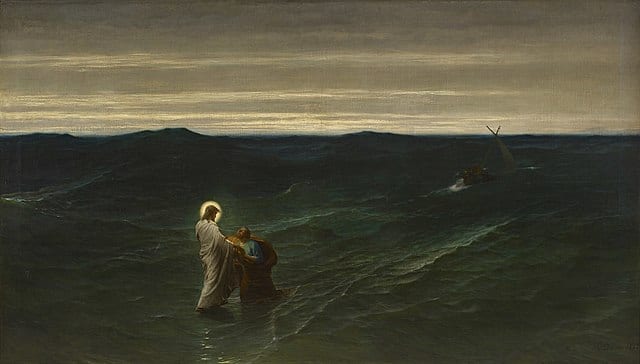
Jason Engwer is a Protestant apologist who does a lot of good work of general apologetics in defense of Christianity (I have linked, for example, to a lot of his material concerning Christmas), alongside not-so-great anti-Catholic polemics. I rejoice in the former, and refute the latter on occasion, as I will do now. I’ll be responding to Jason’s article, “Abusing Peter’s Weaknesses To Establish A Papacy” (1-23-20, Tribalblogue). His words will be in blue.
*****
Luke 22:31-34 (RSV) “Simon, Simon, behold, Satan demanded to have you, that he might sift you like wheat, [32] but I have prayed for you that your faith may not fail; and when you have turned again, strengthen your brethren.” [33] And he said to him, “Lord, I am ready to go with you to prison and to death.” [34] He said, “I tell you, Peter, the cock will not crow this day, until you three times deny that you know me.”
The passage is addressing Peter’s restoration after a fall, not some sort of strength he had as a Pope. The work Peter is described as doing, in strengthening his brethren, not only is common to all of the apostles (Acts 18:23), but is common to individuals of a lower rank in the church as well (Acts 15:32). It’s not something unique to Peter, much less is it papal.
Well, it is doing both things. Both/and (as so often in biblical and Catholic thought; and sadly, as so often not understood by Protestants, who often create false dichotomies and think in hyper-rationalistic either/or terms). He prays for Peter’s faith (knowing the brutal personal aftermath he would go through after denying the Lord three times). But He also prays for his function of strengthening the brethren, which is what leaders of apostles and popes (following them) habitually and characteristically do.
Of course all the apostles “strengthen”, as well as non-apostle Christian believers, as Jason points out. But what he doesn’t get: here and with regard to other Petrine / papal passages (I have debated him before several times about this topic) is the sense of St. Peter as preeminent. The apostles do certain things; Peter is their leader. Likewise, by analogy, the pope is the leader of the Christian Church, even though bishops do many things the pope does, on a lesser scale and with less than universal jurisdiction.
So Jason cites an example of St. Paul “strengthening all the disciples” (Acts 18:23; cf. 14:22; 15:41; 16:5; Rom 1:11) and the “prophets” Judas and Silas exhorting and strengthening the “brethren” (Acts 15:32). Of course they do. But it’s no proof that Peter does not do so in a universal sense; over against their local exercise of the spiritual gift of strengthening others. St. Paul also refers to God strengthening Christians (Rom 16:25; Eph 3:16; Phil 4:13; Col 1:11; 2 Thess 3:3), as does St. Peter (1 Pet 5:10).
The difference is that Jesus specifically commissions Peter (just as in the Matthew 16 passages) to play this role among believers in the new Church. Jason and others want to play this down as of no particular Petrine significance? I don’t think it’s no easy to do, if they are trying to faithfully abide by what Scripture teaches.
We can examine, for example, how very few times Jesus prayed for others by name in Holy Scripture. The phrase of Jesus, “I have prayed for you” occurs only here in the New Testament (in RSV). In fact “prayed for” applied to Jesus, meaning intercession for a human being, only appears here also. The word “prayed” referring to Jesus appears nine times in the New Testament. The passage above is one of them. Six other times it refers to Jesus praying in the Garden of Gethsemane about His Passion. The remaining two (Mk 1:35; Lk 5:16) refer to Jesus withdrawing alone and praying (no specific subject or object of prayer stated).
We can search “pray” in reference to Jesus and we find the same general thing: He is praying by Himself for we know not what (Mt 14:23; Mk 6:46; Lk 6:12; 9:18; 11:1), praying at His baptism (Lk 3:21), praying for many children (Mt 19:13), praying in Gethsemane (Mt 26:26; Mk 14:32; Lk 22:45), praying with (not for) Peter, John, and James right before the transfiguration (Lk 9:28-29), praying for the Holy Spirit to be given to believers (Jn 14:16), praying for the disciples as a group (Jn 17:9, 15), and for all Christians to come (Jn 17:20).
That’s the complete record, in terms of searching “pray” /”prayed” / “prayer” in the New Testament (in the RSV). I think it’s also clear that Jesus prayed for Lazarus (John 11:41: “”Father, I thank thee that thou hast heard me.”) before He raised him (which is, of course, prayer for the dead: something Protestants tell us is heresy and unacceptable practice).
Thus, the only other single person that Scripture records Jesus interceding for is Lazarus. The instance with Peter above is the only time we see Him praying for one of His disciples about what he will be tasked to do: to strengthen his brethren. Surely, this is highly significant, and it has to do with a central task of what popes do: they guide, exhort, and strengthen Christian believers.
John 21:15-17 When they had finished breakfast, Jesus said to Simon Peter, “Simon, son of John, do you love me more than these?” He said to him, “Yes, Lord; you know that I love you.” He said to him, “Feed my lambs.” [16] A second time he said to him, “Simon, son of John, do you love me?” He said to him, “Yes, Lord; you know that I love you.” He said to him, “Tend my sheep.” [17] He said to him the third time, “Simon, son of John, do you love me?” Peter was grieved because he said to him the third time, “Do you love me?” And he said to him, “Lord, you know everything; you know that I love you.” Jesus said to him, “Feed my sheep.”
Much the same can be said of John 21:15-17, another passage often abused to argue for a papacy. John 21, like Luke 22, is addressing Peter’s need for restoration, as reflected in the parallel between the three affirmations of love for Christ and Peter’s previous three denials of Christ. And, as with Luke 22, what Peter is called to do in John 21 is not only common to the other apostles, but also to individuals of a lesser rank (Acts 20:28, 1 Peter 5:2).
Yes, much the same can be said, but not what Jason is saying; rather, what I have been saying (above). Once again, Jesus singles Peter out by name. He rarely did that with any other disciple. And He is talking about how it is Peter’s role to guide the sheep and teach the Christian flock. It’s all perfectly consistent with Petrine primacy and the papacy. Jesus is the Good Shepherd; so is Peter, in the earthly sense. The shepherd tends to his flock. Jesus’ “sheep” are clearly Christian believers. This is who Peter feeds and tends in a universal sense. How anyone could fail to see the huge ecclesiological significance here is the mystery. It’s just Protestant blinders, I reckon.
Jason brings up Acts 20:28 as a supposed counter-evidence against Petrine primacy: “Take heed to yourselves and to all the flock, in which the Holy Spirit has made you overseers, to care for the church of God which he obtained with the blood of his own Son.” But it’s not at all. It’s talking about bishops, who do indeed oversee flocks, but only limited, localized ones. Hence, this passage was directed to the “elders” of Ephesus, which was only one local church (what we would call today a diocese).
So they are to care for that flock, whereas Peter (singularly addressed by Our Lord) is ultimately to tend and feed the entire Church: not just a local section. I Peter 5:2 teaches the same. He is addressing elders as a collective, but Jesus addresses him alone. Peter refers to “those in your charge” whereas Jesus refers to Peter’s overseeing of His “sheep.” And Peter is addressing only elders of a particular region in Asia Minor (Turkey): “To the exiles of the Dispersion in Pontus, Galatia, Cappado’cia, Asia, and Bithyn’ia,” (1 Peter 1:1).
Peter acts like a pope would act in his second epistle, because it is directed towards all Christians: “To those who have obtained a faith of equal standing with ours in the righteousness of our God and Savior Jesus Christ” (2 Pet 1:1).
Neither Luke 22 nor John 21 suggests that Peter had papal authority,
Well, they do in the sense that he is singled out, as opposed to others being addressed as a collective. It’s much like referring to the President of the United States, as compared to the collectives of Senators or Congressmen in the House or cabinet members.
much less that he would pass on such authority exclusively to a succession of bishops in Rome. It’s perverse to take these passages about Peter’s weakness and need for restoration and use them to claim that he was being given papal authority.
He wasn’t given the authority here, but rather in Matthew 16, when Jesus called him Rock and said He would build His Church upon him, and that he would be given the keys of the kingdom (also a thing said only to him). Papal succession is a logical argument, deduced from analogous Scriptures, but it makes perfect sense. If there was a leader of the Church at the beginning (i.e., what would later be called a pope), then it stands to reason that there would be in perpetuity, just as with other Church offices. The apostles would cease, but their successors: bishops and popes would not. And the New Testament is still talking about prophets as an ongoing office (Mt 11:9; Lk 2:36; Acts 15:32). I make the argument in several papers of mine:
Dialogue on Development of Doctrine (Esp. the Papacy) (vs. Jason Engwer) [2000]
*
Petrine & Roman Primacy & Papal Succession (vs. Calvin #14) [6-13-09]
*
Papal Succession & the Bible: An Exchange [1-27-12]
*
The Biblical Argument for Papal Succession [12-12-15]
*
Papal Succession: A Straightforward Biblical Argument [4-28-17]
*
The Catholic abuse of Isaiah 22 is of a somewhat similar nature. I won’t repeat everything I’ve said in past discussions about the passage. See the comments section of the thread here. As I explain there, if Catholics were consistent in their appeal to Isaiah 22, they would have to conclude that neither Peter nor his supposed successors have the attributes Catholics allege. So, whereas seeing a papacy in Luke 22 and John 21 involves unverifiable speculation, seeing a papacy in Matthew 16’s use of Isaiah 22 is even worse, since papal authority isn’t just absent from Isaiah 22, but is even contradicted.
The argument from Jesus giving Peter the “keys of the kingdom”: tying into the background of Isaiah 22 is more complex and involved. I have shown, from Protestant Bible commentators and other scholars, that a strong case for papal authority can be made from it. See: “Primacy of St. Peter Verified by Protestant Scholars.”
*
Related Reading
*
50 New Testament Proofs for Petrine Primacy & the Papacy [1994] [+ French version] [+ Portugese version]
*
Is St. Paul Superior to St. Peter? (Dialogue) [1998; expanded 5-13-02]
*
Reply to Critique of “50 NT Proofs for the Papacy” (vs. Jason Engwer) [3-14-02]
*
Refutation of a Satirical “Pauline Papacy” Argument (vs. Jason Engwer) [9-30-03]
*
Protestant Scholars on Matthew 16:16-19 (Nicholas Hardesty) [9-4-06]
*
Paul Rebuked Peter: Disproof of Papacy? [2007]
*
Bible on Papal & Church Infallibility [2007]
*
Biblical & Patristic Basis for the Papacy (vs. Calvin #13) [5-21-09]
*
Peter & the Papacy & the Early Church (vs. Calvin #15) [6-14-09]
*
Popes & Early Ecumenical Councils (vs. Calvin #16) [6-15-09]
*
Roman Primacy / Popes & Collegiality (vs. Calvin #18) [6-15-09]
*
Constantine / Universal Papal Jurisdiction (vs. Calvin #19) [6-25-09]
*
Peter the “Rock”: Protestant Contra-Catholic Exegetical Bias [7-7-09]
*
Infallible Individuals: Scriptural Examples & Analogies [2009]
*
Inspired & Infallible Prophets: Analogy to Infallible Popes [2-2-10]
*
*
Top 20 Biblical Proofs of the Papacy [12-12-15]
*
“No Pope in the New Testament” & Other Such Myths Debunked [1-21-16]
*
50 Biblical Indications of Petrine Primacy and the Papacy [National Catholic Register, 11-20-16]
*
Armstrong vs. Collins & Walls #10: St. Peter & the Papacy [10-21-17]
*
Salesian Apologetics #6: Papacy (St. Peter the Rock) [2-7-20]
*
Salesian Apologetics #7: Objections to St. Peter the Rock [2-11-20]
*
***
*
Photo credit: Jesus and Peter on the Water, 1863, by Gustave Brion (1824-1877) [public domain / Wikimedia Commons]

*
***
Previous Post

May 11, 2020
James White's "Doctorate": Dialogue w Seminary's Rick Walston
Next Post
May 12, 2020 2 Thessalonians 2:15 and Tradition (vs. Steve Hays)
Browse Our Archives
Select a Category & Last Things About Me Anti-Catholicism Atheism & Agnosticism Baptism and Sacramentalism Bible and Tradition Blessed Virgin Mary Books by Dave Armstrong C. S. Lewis Calvinism & General Protestantism Catholic Apologetics Catholic Apologists Catholic conversion Catholic converts Christmas Church (Ecclesiology) Church History Conversion and Converts Development of Doctrine Eastern Orthodoxy Ecumenism & Christian Unity Eucharist & Liturgy Fathers of the Church French Translations G. K. Chesterton Hell Hell & Satan Hell & Satan & Last Things Heresies & Comparative Religion Holistic Health Inquisition & Crusades & Scandals James White Jews & Judaism & Old Testament John Calvin John Henry Newman Liberal / Modernist Theology Life Issues Literary Resume Lutheranism Mariology Martin Luther Music Orthodoxy Papacy & Infallibility Personal Page Philosophy & Science Political & Ethical & Moral Issues Protestant Persecution & Intolerance Protestantism Purgatory Purgatory & Penance Romantic & Imaginative Theology Saints & Purgatory & Penance Salvation Salvation & Justification Satan & Last Things Sexuality and Gender Issues Spanish Translations Traditionalism vs. Radical Catholic Reactionaries Traducciones al español / tradução para português Trinitarianism & Christology Uncategorized Videos
Select a Month October 2026 September 2026 August 2026 July 2026 June 2026 May 2026 April 2026 March 2026 February 2026 January 2026 December 2025 November 2025 October 2025 September 2025 August 2025 July 2025 June 2025 May 2025 April 2025 March 2025 February 2025 January 2025 December 2024 November 2024 October 2024 September 2024 August 2024 July 2024 June 2024 May 2024 April 2024 March 2024 February 2024 January 2024 December 2023 November 2023 October 2023 September 2023 August 2023 July 2023 June 2023 May 2023 April 2023 March 2023 February 2023 January 2023 December 2022 November 2022 October 2022 September 2022 August 2022 July 2022 June 2022 May 2022 April 2022 March 2022 February 2022 January 2022 December 2021 November 2021 October 2021 September 2021 August 2021 July 2021 June 2021 May 2021 April 2021 March 2021 February 2021 January 2021 December 2020 November 2020 October 2020 September 2020 August 2020 July 2020 June 2020 May 2020 April 2020 March 2020 February 2020 January 2020 December 2019 November 2019 October 2019 September 2019 August 2019 July 2019 June 2019 May 2019 April 2019 March 2019 February 2019 January 2019 December 2018 November 2018 October 2018 September 2018 August 2018 July 2018 June 2018 May 2018 April 2018 March 2018 February 2018 January 2018 December 2017 November 2017 October 2017 September 2017 August 2017 July 2017 June 2017 May 2017 April 2017 March 2017 February 2017 January 2017 December 2016 November 2016 October 2016 September 2016 August 2016 July 2016 June 2016 May 2016 April 2016 March 2016 February 2016 January 2016 December 2015 November 2015 October 2015 September 2015 August 2015 July 2015 June 2015 May 2015 April 2015 March 2015 February 2015 January 2015 December 2014 November 2014 October 2014 September 2014 August 2014 July 2014 June 2014 April 2014 March 2014 February 2014 January 2014 December 2013 November 2013 October 2013 September 2013 August 2013 July 2013 June 2013 April 2013 March 2013 February 2013 January 2013 December 2012 November 2012 October 2012 September 2012 August 2012 July 2012 June 2012 May 2012 April 2012 March 2012 February 2012 January 2012 December 2011 November 2011 October 2011 September 2011 August 2011 July 2011 June 2011 April 2011 March 2011 February 2011 October 2010 September 2010 August 2010 July 2010 April 2010 March 2010 December 2009 October 2009 August 2009 July 2009 June 2009 May 2009 March 2009 February 2009 October 2008 September 2008 April 2008 March 2008 February 2008 January 2008 December 2007 November 2007 October 2007 May 2007 March 2007 February 2007 January 2007 November 2006 October 2006 September 2006 August 2006 July 2006 June 2006 May 2006 April 2006 March 2006 February 2006 October 2005 June 2005 April 2005 February 2005 July 2004 May 2004 April 2004
Follow Us!
TAKE THE
Religious Wisdom Quiz
Who asked Jesus, "What is truth?"
Select your answer to see how you score.
Caiaphas Pilate Nicodemus Herod
Books by This Author Books by Dave Armstrong
Related posts from Biblical Evidence for Catholicism

Three More Anti-Catholic Lies About Catholicism (#6-4)
Biblical Evidence for Catholicism

Top Ten Anti-Catholic Lies (#10-7)
Biblical Evidence for Catholicism

Was Peter "Any Old" Apostle? 10 Anti-Papal Arguments
Biblical Evidence for Catholicism

"Baptism" & Romans 10 (Engwer's Silly Word Games)
Biblical Evidence for Catholicism
TRENDING AT PATHEOS Catholic

I was strolling through the top floor of the brand new Parthenon...

What Does Gêvâh Mean For Kimberley Guifoyle &...
This week, a lot of the news is focused on Kimberly Guilfoyle....

INNER CIRCLE: Profound Mystery (Of Christ In All...
Ephesians 5:31-32 “For this reason, a man will leave his father and...

Do Not Rejoice When Your Enemy Falls: The...
Turning an execution into a public spectacle is a disturbing expression of...

'The Chosen' S6 Trailer: The Passion Gets Very...
Not many watching 'The Chosen' worry about spoilers, but just because they...

The purpose-driven labor priest
A labor activist reads Rick Warren and it gets me wondering about...
view all Catholic blogs
Ad-Free & Subscriber Log-In Subscription Support
- About Us
- 2026 Calendar
- Videos
- Podcasts
- Library of World Religions
- Faith In Media Tracker
- Advertise With Us
- Write for Us
- Privacy Policy
- Terms of Service
- Do Not Sell My Data
- Contact Us
- Radiant Digital
- Manage Newsletter Subscriptions
- Unsubscribe From Notifications
- Sitemap
Copyright 2008-2026, Patheos. All rights reserved.
Subscription Support Ad-Free & Subscriber Log-In
Follow Patheos