
BuddhistCatholicContemplativeEvangelicalGeneral ChristianHinduJewishLatter-day SaintMuslimNew VisionsProgressive Christian
Beliefs
- Buddhist
- Catholic
- Contemplative
- Evangelical
- General Christian
- Hindu
- Jewish
- Latter-day Saint
- More Voices
- Muslim
- New Visions
- Pagan
- Progressive Christian
Topics
- Religion News
- Food and Religion
- Sports and Religion
- Religious Art
- Religious Music and Entertainment
- Religious Events
- History and Religion
- Style and Religion
- Politics and Religion
- Women in Religion
- Recreation Outdoors and Religion
- Business Finance and Religion
- Careers Workplace and Religion
- Education and Religion
- Family Parenting and Religion
- Health Fitness and Religion
- Home and Religion
- Relationships and Religion
- Technology and Religion
- Travel and Religion
Columnists
- Buddhist Columnists
- Business Finance and Religion Columnists
- Careers Workplace and Religion Columnists
- Catholic Columnists
- Contemplative Columnists
- Education and Religion Columnists
- Evangelists Columnists
- Family Parenting and Religion Columnists
- General Christian Columnists
- Health Fitness and Religion Columnists
- Hindu Columnists
- History and Religion Columnists
- Home and Religion Columnists
- Jewish Columnists
- More Voices Columnists
- Latter Day Columnists
- Muslim Columnists
- New Visions Columnists
- Nonreligious Columnists
- Pagan Columnists
- Politics and Religion Columnists
- Progressive Columnists
- Recreation Outdoors and Religion Columnists
- Relationships and Religion Columnists
- Religion News Columnists
- Religious Art Columnists
- Religious Events Columnists
- Religious Music and Entertainment Columnists
- Sports and Religion Columnists
- Style and Religion Columnists
- Technology and Religion Columnists
- Travel and Religion Columnists
- Women in Religion Columnists
Resource Library
- 2026 Calendar
- Library of World Religions
- The 100 Most Holy Places on Earth
- Patheos Answers
- Podcasts
- Videos
- Faith Leaders Database
- Anglican Episcopalian
- Bahai
- Baptist
- Buddhism
- Christianity
- Confucianism
- Eastern Orthodoxy
- Hinduism
- Holiness and Pentecostal
- ISKCON
- Islam
- Judaism
- Lutheran
- Methodist
- The Church of Jesus Christ of Latter-day Saints
- New Age
- Paganism
- Presbytarian and Reformed
- Protestantism
- Religion Behind the Scenes
- Roman Catholic
- Scientology
- Shia Islam
- Sikhism
- Sufism
- Sunni Islam
- Taoism
- Zen
- See all religions
Research Tools
 Ad-Free & Subscriber Log-In Subscription Support
Ad-Free & Subscriber Log-In Subscription Support
Follow Patheos 

- Trending:
- Forgiveness
- |
- Marriage
- |
- Consciousness
- |
- Death Penalty
- |
- Election
- |
- Halloween

-
About
-
Catholic Apologetics
-
Church History
-
Great Apologists
-
Christian Worldview
-
Protestantism & Misc.
- Home
- Catholic
- History and Religion
- John 20:22-23 & Formal Absolution (vs. Steve Hays)
John 20:22-23 & Formal Absolution (vs. Steve Hays)
Last updated on: June 6, 2026 at 12:42 am by Dave Armstrong
John 20:22-23 & Formal Absolution (vs. Steve Hays) 2026-06-06T00:42:24-04:00 Dave Armstrong
Patheos Explore the world's faith through different perspectives on religion and spirituality! Patheos has the views of the prevalent religions and spiritualities of the world.
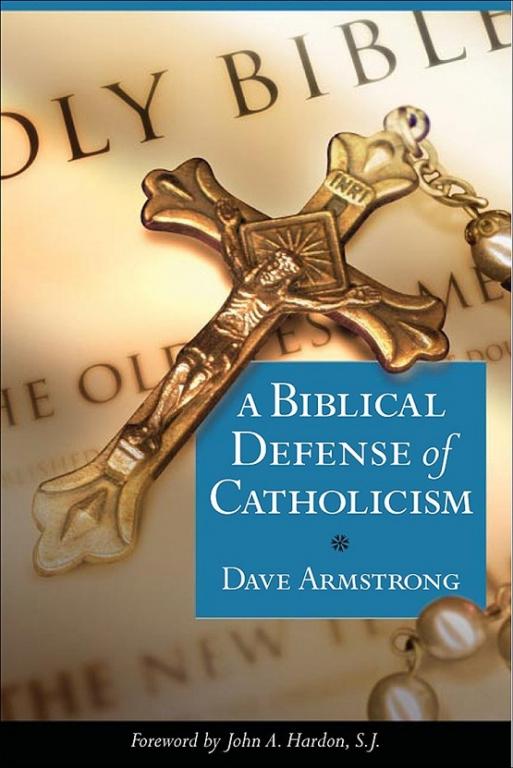
[book and purchase information]
***
Steve Hays of Tribalblogue is an anti-Catholic polemicist and sophist. I’ll be responding to one portion of Steve’s article, “Catholic prooftexts” (12-17-17, Tribalblogue). His words will be in blue.
*****
John 20:22-23 (RSV) And when he had said this, he breathed on them, and said to them, “Receive the Holy Spirit. [23] If you forgive the sins of any, they are forgiven; if you retain the sins of any, they are retained.”
i) How should we interpret this statement [John 20:22-23, which is his subtitle]? It’s in a Gospel, not a church history. So it doesn’t explicitly show us how that was understood and implemented in the church. For that our best source is the Book of Acts. It’s not that the disciples personally absolve sin. Indeed, you don’t find that in Acts. Rather, they provide the means for the remission of sin by evangelizing the lost.
That’s not what the text says. It’s more eisegesis (“reading into scriptural texts what isn’t there”) from Steve (sadly, a common occurrence). This text says nothing about evangelism. It’s very simple; the disciples are clearly acting as intermediaries between sinning human beings and God. If they forgive the penitent (by the power of the Holy Spirit), indeed, he or she is forgiven. It’s not just penitent —> God. Rather, it is penitent —> confessor who absolves or extends God’s forgiveness <— God.
Most Protestants simply can’t accept that paradigm, and so they have to find an alternative for these sorts of passage (and there are several, as we shall see). It is true, however, that Protestants retain a sort of remnant for this notion, insofar as they ask those whom they consider particularly holy (for example, the late great Billy Graham) to pray for them.
Steve mentions the book of Acts. Yet it teaches baptismal regeneration, which is quite similar to sacramental absolution. One repents, gets baptized by another human being (usually a clergyman), and forgiveness is extended. Thus, a human being through a rite, extends forgiveness (regeneration) to the recipient. And all of that is in Acts itself:
Acts 2:38-41 And Peter said to them, “Repent, and be baptized every one of you in the name of Jesus Christ for the forgiveness of your sins; and you shall receive the gift of the Holy Spirit. [39] For the promise is to you and to your children and to all that are far off, every one whom the Lord our God calls to him.” [40] And he testified with many other words and exhorted them, saying, “Save yourselves from this crooked generation.” [41] So those who received his word were baptized, and there were added that day about three thousand souls.
Acts 19:18 Many also of those who were now believers came, confessing and divulging their practices.
Acts 22:16 ‘And now why do you wait? Rise and be baptized, and wash away your sins, calling on his name.’ [referring to St.Paul, who had just undergone his conversion experience. He wasn’t truly a regenerate, forgiven Christian till he was baptized.]
John the Baptist was a precursor to this:
Mark 1:4-5 John the baptizer appeared in the wilderness, preaching a baptism of repentance for the forgiveness of sins. [5] And there went out to him all the country of Judea, and all the people of Jerusalem; and they were baptized by him in the river Jordan, confessing their sins. (cf. Mt 3:6)
Acts 19:4 And Paul said, “John baptized with the baptism of repentance, telling the people to believe in the one who was to come after him, that is, Jesus.”
ii) How were the Eleven in a position to be father confessors to thousands of converts? That’s quite unrealistic.
Obviously, by baptizing them. We learn from Acts 2:38-41 that this was how Peter “practically applied” his gospel preaching. They were to “repent” (just as in confession and absolution), be baptized, which was “for the forgiveness of your sins” and allowed them to “receive the gift of the Holy Spirit” and was the means by which they were “added” to the Church / kingdom of Jesus. That was the sacrament that bestowed grace and regeneration, just as the sacrament of absolution / reconciliation bestows both forgiveness of those particular sins and grace and power moving forward.
Steve asks how they did it? Well, Acts 2:41 says that “three thousand souls” were baptized and regenerated in one day. Divided by twelve, that is 250 persons per disciple. A baptism doesn’t take long. If it was five minutes per person that would add up to 20.8 hours of baptizing for each disciple. So it is possible to do all this in one day (provided they didn’t sleep all day). And one could argue that a baptism could be done in half that time, which would add up to 10.4 hours per disciple, for a total of 3000 baptisms in one day. It’s not “unrealistic” at all, anymore than it was “unrealistic” for a Billy Graham Crusade to process many hundreds (perhaps thousands) in the audience who “made a decision for Christ” and repented of their sins and wanted to become a serious disciple of Jesus Christ. You just set up the system and do it.
So it doesn’t envision auricular confession and absolution.
It certainly does. “If you forgive the sins of any, they are forgiven.” And the second part is “if you retain the sins of any, they are retained.” That’s even more “unProtestant.” It’s the notion of imposing penance which has to be met before absolution / forgiveness is extended. And of course there is the related binding and loosing passages:
Matthew 18:18 Truly, I say to you, whatever you bind on earth shall be bound in heaven, and whatever you loose on earth shall be loosed in heaven. (cf. 16:19)
God does the forgiving.
Yes; through the absolver / priest.
The Eleven are simply intermediaries of forgiveness by preaching the Gospel. Their role is indirect rather than direct.
Again, that is assumed by Steve, but not shown from Holy Scripture. As usual, I’m here as the Catholic apologist bringing up 15-20 other related passages before I’m done, and bringing all of that relevant data to bear. All Steve brought in was a mention of the entire book of Acts and John 3:16, and neither backs up his position when properly scrutinized.
That’s further reinforced by the fact that there’s no rite of confession to a priest and sacerdotal absolution in the NT epistles. Catholicism is a different religion.
Sheer nonsense. Catholicism is thoroughly biblical in a way that no form of Protestantism is or ever has been. We’ve only just scratched the surface of biblical passages that suggest some sort of human (or in some cases, angelic) transaction bearing upon repentance, forgiveness, and absolution (reconciliation ultimately with God). Here are many more:
Exodus 32:30-32 On the morrow Moses said to the people, “You have sinned a great sin. And now I will go up to the LORD; perhaps I can make atonement for your sin.” [31] So Moses returned to the LORD and said, “Alas, this people have sinned a great sin; they have made for themselves gods of gold. [32] But now, if thou wilt forgive their sin — and if not, blot me, I pray thee, out of thy book which thou hast written.”
Leviticus 4:35 . . . and the priest shall make atonement for him for the sin which he has committed, and he shall be forgiven. (cf. 4:20, 26, 31)
Leviticus 5:5-6 When a man is guilty in any of these, he shall confess the sin he has committed, [6] and he shall bring his guilt offering to the LORD for the sin which he has committed, a female from the flock, a lamb or a goat, for a sin offering; and the priest shall make atonement for him for his sin. (cf. 5:10, 13, 16, 18; 6:7)
Leviticus 19:22 And the priest shall make atonement for him with the ram of the guilt offering before the LORD for his sin which he has committed; and the sin which he has committed shall be forgiven him.
Numbers 5:7 he shall confess his sin which he has committed; and he shall make full restitution for his wrong, adding a fifth to it, and giving it to him to whom he did the wrong.
Numbers 14:19-20 [Moses] Pardon the iniquity of this people, I pray thee, according to the greatness of thy steadfast love, and according as thou hast forgiven this people, from Egypt even until now.” [20] Then the LORD said, “I have pardoned, according to your word; (cf. Num 15:25, 28)
Numbers 16:46-48 [Aaron] And Moses said to Aaron, “Take your censer, and put fire therein from off the altar, and lay incense on it, and carry it quickly to the congregation, and make atonement for them; for wrath has gone forth from the LORD, the plague has begun.” [47] So Aaron took it as Moses said, and ran into the midst of the assembly; and behold, the plague had already begun among the people; and he put on the incense, and made atonement for the people. [48] And he stood between the dead and the living; and the plague was stopped.
Numbers 25:11-13 “Phin’ehas the son of Elea’zar, son of Aaron the priest, has turned back my wrath from the people of Israel, in that he was jealous with my jealousy among them, so that I did not consume the people of Israel in my jealousy. [12] Therefore say, `Behold, I give to him my covenant of peace; [13] and it shall be to him, and to his descendants after him, the covenant of a perpetual priesthood, because he was jealous for his God, and made atonement for the people of Israel.'”
Deuteronomy 21:8 [Moses] Forgive, O LORD, thy people Israel, whom thou hast redeemed, and set not the guilt of innocent blood in the midst of thy people Israel; but let the guilt of blood be forgiven them.’
Isaiah 6:6-7 Then flew one of the seraphim to me, having in his hand a burning coal which he had taken with tongs from the altar. [7] And he touched my mouth, and said: “Behold, this has touched your lips; your guilt is taken away, and your sin forgiven.”
2 Corinthians 2:10 Any one whom you forgive, I also forgive. What I have forgiven, if I have forgiven anything, has been for your sake in the presence of Christ,
James 5:14-15 Is any among you sick? Let him call for the elders of the church, and let them pray over him, anointing him with oil in the name of the Lord; [15] and the prayer of faith will save the sick man, and the Lord will raise him up; and if he has committed sins, he will be forgiven.
iii) Finally, in the context of John’s Gospel, passages like Jn 3:16-18 offer a clue about how 20:22-23 was meant to be understood. The basis for forgiveness and damnation isn’t confession to a Roman Catholic priest and absolution from his lips but by having faith in Jesus or refusing to have faith in Jesus.
This is classic fallacious Protestant “either/or” unscriptural reasoning. Sure, sometimes a person can be forgiven without formal absolution or baptism. An example would be the thief on the cross. He did all that was possible to do in that situation. It doesn’t follow, however, that because that is possible, therefore normative baptism or absolution for regeneration or forgiveness of sins is ruled out. Both things are true. John 3:16-18 doesn’t rule out anything that I have brought to bear. It’s in harmony with them:
John 3:16-18 For God so loved the world that he gave his only Son, that whoever believes in him should not perish but have eternal life. [17] For God sent the Son into the world, not to condemn the world, but that the world might be saved through him. [18] He who believes in him is not condemned; he who does not believe is condemned already, because he has not believed in the name of the only Son of God.
Steve wants to play the game that this is faith alone, and that is all required not only for forgiveness in any given situation or time frame, but for eternal salvation itself. He also wants to bring in John’s Gospel as a whole. I’m all for that. I commented on John 3:36 and John 6:27-29 in this regard, with analogy to John 3:16, in my first book. A Biblical Defense of Catholicism:
John 3:36 He who believes in the Son has eternal life; he does not obey the Son shall not see life, but the wrath of God rests upon him.
The Greek word for “believes” is pistuo, and the Greek for “does not obey” is apitheo. There is a parallelism in this verse, whereby belief and obedience are essentially identical. When all is said and done, believing in Christ is obeying Him. This ought to be kept in mind by Protestant evangelists and pastors who urge penitents to “believe in Christ,” “accept Christ,” etc. To disobey Christ is to be subject to the wrath of God. Thus, again, we are faced with the inescapable necessity of good works — wrought by God’s grace, and done in the spirit of charity — for the purpose and end of ultimate salvation, holiness, and communion with God.
St. Peter, in 1 Peter 2:7, uses the same parallelism, with the same two identical Greek words (believe / disobedient in KJV). St. Paul uses apitheo with regard to disobedience to parents in Romans 1:30 and 2 Timothy 3:2, and in a more general sense (describing sinners) in Titus 1:16 and 3:3. Obviously, no one disbelieves in the existence of his parents. St. Paul is speaking of disobeying parents’ commands. In the same sense, such disobedience (not mere lack of faith) is said to be the basis of the loss of eternal life in John 3:36.
To speculate further, if it be granted that pistuo (“believe”) is roughly identical to “obeying,” as it indisputably is in John 3:36, by simple deduction, then its use elsewhere is also much more commensurate with the Catholic view of infused justification rather than the more abstract, extrinsic, and forensic Protestant view: for example, the “classic” Protestant evangelistic verse John 3:16, Jesus’ constant demand to believe in him in John 5 through 10, and St. Paul’s oft-cited salvific exhortations in Romans 1:16, 4:24, 9:33, and 10:9, generally thought to be irrefutable proofs of the Protestant viewpoint on saving faith.
John 6:27-29 Do not labour for the food which perishes, but for the food which endures to eternal life, which the Son of man will give to you; for on him has God the Father set his seal. Then said they to him, “What must we do, to be doing the works of God?” Jesus answered them, “This is the work of God, that you believe in him whom he has sent.”
In verses 28 and 29, working and belief in Christ are equated, much like obedience and belief in John 3:36. In the marvelous phrase “doing the works of God,” we see that our works and God’s are intertwined if indeed we are doing his will. This is the Catholic viewpoint: an organic connection of both faith with works, and God’s unmerited grace coupled with our cooperation and obedience. Our Lord constantly alludes to the related ideas of reward and merit, which are complementary: Matthew 5:11-12, 6:3, 18, 10:42, 12:36-37, 25:14-30, Luke 6:35, 38, 12:33. St. Paul, using the same word for “works” (ergon), speaks in Acts 26:20 of the process of repenting, turning to God, and doing deeds worthy of their repentance*.* In other words, they will thus prove their repentance by their deeds. (pp. 36-38)
***
Previous Post
May 12, 2020
2 Thessalonians 2:15 and Tradition (vs. Steve Hays)
Next Post
May 13, 2020 Does Pope Francis Have "Foot-in-the-Mouth" Disease?
Browse Our Archives
Select a Category & Last Things About Me Anti-Catholicism Atheism & Agnosticism Baptism and Sacramentalism Bible and Tradition Blessed Virgin Mary Books by Dave Armstrong C. S. Lewis Calvinism & General Protestantism Catholic Apologetics Catholic Apologists Catholic conversion Catholic converts Christmas Church (Ecclesiology) Church History Conversion and Converts Development of Doctrine Eastern Orthodoxy Ecumenism & Christian Unity Eucharist & Liturgy Fathers of the Church French Translations G. K. Chesterton Hell Hell & Satan Hell & Satan & Last Things Heresies & Comparative Religion Holistic Health Inquisition & Crusades & Scandals James White Jews & Judaism & Old Testament John Calvin John Henry Newman Liberal / Modernist Theology Life Issues Literary Resume Lutheranism Mariology Martin Luther Music Orthodoxy Papacy & Infallibility Personal Page Philosophy & Science Political & Ethical & Moral Issues Protestant Persecution & Intolerance Protestantism Purgatory Purgatory & Penance Romantic & Imaginative Theology Saints & Purgatory & Penance Salvation Salvation & Justification Satan & Last Things Sexuality and Gender Issues Spanish Translations Traditionalism vs. Radical Catholic Reactionaries Traducciones al español / tradução para português Trinitarianism & Christology Uncategorized Videos
Select a Month October 2026 September 2026 August 2026 July 2026 June 2026 May 2026 April 2026 March 2026 February 2026 January 2026 December 2025 November 2025 October 2025 September 2025 August 2025 July 2025 June 2025 May 2025 April 2025 March 2025 February 2025 January 2025 December 2024 November 2024 October 2024 September 2024 August 2024 July 2024 June 2024 May 2024 April 2024 March 2024 February 2024 January 2024 December 2023 November 2023 October 2023 September 2023 August 2023 July 2023 June 2023 May 2023 April 2023 March 2023 February 2023 January 2023 December 2022 November 2022 October 2022 September 2022 August 2022 July 2022 June 2022 May 2022 April 2022 March 2022 February 2022 January 2022 December 2021 November 2021 October 2021 September 2021 August 2021 July 2021 June 2021 May 2021 April 2021 March 2021 February 2021 January 2021 December 2020 November 2020 October 2020 September 2020 August 2020 July 2020 June 2020 May 2020 April 2020 March 2020 February 2020 January 2020 December 2019 November 2019 October 2019 September 2019 August 2019 July 2019 June 2019 May 2019 April 2019 March 2019 February 2019 January 2019 December 2018 November 2018 October 2018 September 2018 August 2018 July 2018 June 2018 May 2018 April 2018 March 2018 February 2018 January 2018 December 2017 November 2017 October 2017 September 2017 August 2017 July 2017 June 2017 May 2017 April 2017 March 2017 February 2017 January 2017 December 2016 November 2016 October 2016 September 2016 August 2016 July 2016 June 2016 May 2016 April 2016 March 2016 February 2016 January 2016 December 2015 November 2015 October 2015 September 2015 August 2015 July 2015 June 2015 May 2015 April 2015 March 2015 February 2015 January 2015 December 2014 November 2014 October 2014 September 2014 August 2014 July 2014 June 2014 April 2014 March 2014 February 2014 January 2014 December 2013 November 2013 October 2013 September 2013 August 2013 July 2013 June 2013 April 2013 March 2013 February 2013 January 2013 December 2012 November 2012 October 2012 September 2012 August 2012 July 2012 June 2012 May 2012 April 2012 March 2012 February 2012 January 2012 December 2011 November 2011 October 2011 September 2011 August 2011 July 2011 June 2011 April 2011 March 2011 February 2011 October 2010 September 2010 August 2010 July 2010 April 2010 March 2010 December 2009 October 2009 August 2009 July 2009 June 2009 May 2009 March 2009 February 2009 October 2008 September 2008 April 2008 March 2008 February 2008 January 2008 December 2007 November 2007 October 2007 May 2007 March 2007 February 2007 January 2007 November 2006 October 2006 September 2006 August 2006 July 2006 June 2006 May 2006 April 2006 March 2006 February 2006 October 2005 June 2005 April 2005 February 2005 July 2004 May 2004 April 2004
Follow Us!
TAKE THE
Religious Wisdom Quiz
Who prophesied destruction for Jerusalem but also promised a New Covenant?
Select your answer to see how you score.
Joel Isaiah Ezekiel Jeremiah
Books by This Author Books by Dave Armstrong
Related posts from Biblical Evidence for Catholicism

Top Three Anti-Catholic Lies About Catholicism
Biblical Evidence for Catholicism

Three More Anti-Catholic Lies About Catholicism (#6-4)
Biblical Evidence for Catholicism

Bible & Catholicism on Mortal Sin (vs. John...
Biblical Evidence for Catholicism

Top Ten Anti-Catholic Lies (#10-7)
Biblical Evidence for Catholicism
TRENDING AT PATHEOS Catholic

The Real AI Story Is Adoption Without Trust
Artificial intelligence has crossed a political threshold. It is no longer a...

A new article, written by Jeff Lindsay and Gale L. Pooley,...

Swimfan: Forgotten Aughts Pleasures
This is a recovery effort. In 2002, My Big Fat Greek Wedding...

Top Three Anti-Catholic Lies About Catholicism
This is my initial transcript for the video, "THE 3 WORST...

Pope Leo Celebrates Mass for Nurses & Docs...
I don't have any idea how he did it, but Pope Leo...

The Sermon on the Mount, Part I: Matthew...
The Sermon on the Mount, Part I (Matthew 4:12-5:12) St. Matthew moves...
view all Catholic blogs
Ad-Free & Subscriber Log-In Subscription Support
- About Us
- 2026 Calendar
- Videos
- Podcasts
- Library of World Religions
- Faith In Media Tracker
- Advertise With Us
- Write for Us
- Privacy Policy
- Terms of Service
- Do Not Sell My Data
- Contact Us
- Radiant Digital
- Manage Newsletter Subscriptions
- Unsubscribe From Notifications
- Sitemap
Copyright 2008-2026, Patheos. All rights reserved.
Subscription Support Ad-Free & Subscriber Log-In
Follow Patheos