
BuddhistCatholicContemplativeEvangelicalGeneral ChristianHinduJewishLatter-day SaintMuslimNew VisionsProgressive Christian
Beliefs
- Buddhist
- Catholic
- Contemplative
- Evangelical
- General Christian
- Hindu
- Jewish
- Latter-day Saint
- More Voices
- Muslim
- New Visions
- Pagan
- Progressive Christian
Topics
- Religion News
- Food and Religion
- Sports and Religion
- Religious Art
- Religious Music and Entertainment
- Religious Events
- History and Religion
- Style and Religion
- Politics and Religion
- Women in Religion
- Recreation Outdoors and Religion
- Business Finance and Religion
- Careers Workplace and Religion
- Education and Religion
- Family Parenting and Religion
- Health Fitness and Religion
- Home and Religion
- Relationships and Religion
- Technology and Religion
- Travel and Religion
Columnists
- Buddhist Columnists
- Business Finance and Religion Columnists
- Careers Workplace and Religion Columnists
- Catholic Columnists
- Contemplative Columnists
- Education and Religion Columnists
- Evangelists Columnists
- Family Parenting and Religion Columnists
- General Christian Columnists
- Health Fitness and Religion Columnists
- Hindu Columnists
- History and Religion Columnists
- Home and Religion Columnists
- Jewish Columnists
- More Voices Columnists
- Latter Day Columnists
- Muslim Columnists
- New Visions Columnists
- Nonreligious Columnists
- Pagan Columnists
- Politics and Religion Columnists
- Progressive Columnists
- Recreation Outdoors and Religion Columnists
- Relationships and Religion Columnists
- Religion News Columnists
- Religious Art Columnists
- Religious Events Columnists
- Religious Music and Entertainment Columnists
- Sports and Religion Columnists
- Style and Religion Columnists
- Technology and Religion Columnists
- Travel and Religion Columnists
- Women in Religion Columnists
Resource Library
- 2026 Calendar
- Library of World Religions
- The 100 Most Holy Places on Earth
- Patheos Answers
- Podcasts
- Videos
- Faith Leaders Database
- Anglican Episcopalian
- Bahai
- Baptist
- Buddhism
- Christianity
- Confucianism
- Eastern Orthodoxy
- Hinduism
- Holiness and Pentecostal
- ISKCON
- Islam
- Judaism
- Lutheran
- Methodist
- The Church of Jesus Christ of Latter-day Saints
- New Age
- Paganism
- Presbytarian and Reformed
- Protestantism
- Religion Behind the Scenes
- Roman Catholic
- Scientology
- Shia Islam
- Sikhism
- Sufism
- Sunni Islam
- Taoism
- Zen
- See all religions
Research Tools
 Ad-Free & Subscriber Log-In Subscription Support
Ad-Free & Subscriber Log-In Subscription Support
Follow Patheos 

- Trending:
- Forgiveness
- |
- Marriage
- |
- Consciousness
- |
- Death Penalty
- |
- Election
- |
- Halloween

-
About
-
Catholic Apologetics
-
Church History
-
Great Apologists
-
Christian Worldview
-
Protestantism & Misc.
- Home
- Catholic
- History and Religion
- James White Deacons-Elders-Bishops Controversy
James White Deacons-Elders-Bishops Controversy
Last updated on: June 6, 2026 at 12:42 am by Dave Armstrong
James White Deacons-Elders-Bishops Controversy 2026-06-06T00:42:44-04:00 Dave Armstrong
Patheos Explore the world's faith through different perspectives on religion and spirituality! Patheos has the views of the prevalent religions and spiritualities of the world.
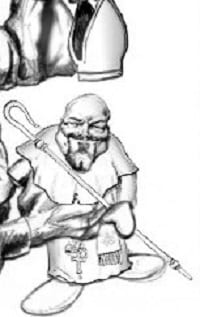
Original title: “Dumbbells and Deacons: Does No Protestant Denomination Whatsoever Regard Deacons as the Equivalent of Pastors and Elders — or Even Bishops?”
[originally posted on 6-16-07]
***
The anti-Catholic Reformed Baptist apologist luminary Bishop James White, issued a “review” of my book, The One-Minute Apologist (on 6-13-07). It consisted of perhaps 50-60% personal attack and aspersions upon my general knowledge of theology and Protestantism, and exactly two actual arguments against some aspect of the book itself: one concerning my use of the word “deacon” in my book, and the other (rather astonishingly and desperately) maintaining that the future tense of Jesus’ bestowing of the keys of the kingdom of heaven to St. Peter, somehow has some profound anti-papal significance.
I have already responded at length, defending my arguments and conceding one poor use of a word (“deacon”), while not the entire argument in which the word was used. I explained what I had in mind, and also that I was fully aware of the biblical distinctions of the office of deacon. All to no avail, of course (as always with the inimitable Mr. White).
Instead, rather than seeking to understand and truly interact with an opinion different from his own, White launched into a highly polemically charged, bombastic hit piece, clearly designed to destroy my credibility as a Catholic apologist — particularly my ability to accurately represent Protestant beliefs, in so doing. I’m in good company: the man attempts this with virtually every Catholic apologist. He has now announced that he will also trash Scott Hahn’s latest book, Reasons to Believe, in conjunction with his continuing “reviews” of mine. Thanks for the compliment, James! Here is White’s first salvo against one word in my book, from his first “review” (his words in blue):
Many of Armstrong’s suggested objections and answers are either aimed at the most dismally ignorant of those who oppose Rome’s claims (a common element of much of the literature produced by the wide spectrum of their apologists) or against people I honestly have never met or heard of. So a number of the sections really are not relevant to a serious non-Catholic reader. It is hard to decide which are which, because of some of the tremendously obvious errors Armstrong makes. For example, on page 17, Armstrong attempts to present a “Protestant” objection relating to the offices of the church:
The Bible teaches that bishops, elders, and deacons are all synonymous terms for the same office: roughly that of a pastor today. It doesn’t indicate that bishops are higher than these other offices.
Just who believes this, I wonder? I have never read any work by any Protestant theologian of any note who has ever made this argument. So, is Armstrong just ignorant of Protestant ecclesiology, or, has he run into some tiny sect someplace that has come up with some new wacky viewpoint? Given that he was once non-Catholic, it is hard to believe he could be so ignorant of the reality regarding the fact that bishop and elder refer to the same office and are used interchangeably in the New Testament, but that this office is clearly distinguished from that of the deacon. But, he does not show any knowledge of the biblical arguments in his presentation in this book . . .
I replied to this [in my paper, cited above], explaining what I had in mind, and how I could have phrased it better than I did, but White upped the ante considerably in his latest hit “review.” Sensing blood in the water and the right timing to make the “kill” he has longed and yearned for these past twelve years, as he has continually dodged my refutations and arguments, he gave it all he had, with his arsenal of sophistry and obfuscation and non sequitur. The only problem is that he has once again misrepresented my method and intent in the book (as he did to a notorious degree in his trashing of another book of mine: The Catholic Verses). And he has also exposed his own ignorance of his fellow Protestants. Here is what he wrote (with my interjections):
I recently pointed out a basic, simplistic error in Dave Armstrong’s new book: he claims Protestants (he makes no distinctions) think elders, bishops, and deacons are all one office.
This is sophistry and misrepresentation of opponents at their “finest.” First of all, I never claimed that all Protestants believed in such a thing in the first place, and it is ridiculous to contend that I did so in this book. The standard format in every two-page section has a second portion entitled “A Protestant Might Further Object”. Now, obviously, anyone who has even a fleeting acquaintance with comparative theology (and presupposing that they have an IQ higher than a box of nails) understands that this is either a generalization, or (as here) a presentation of one strain of Protestant belief, and how it would object to some Catholic view.
Moreover, it is difficult in particulars to speak of beliefs that all Protestants share. Only White, apparently, could be so dense as to not grasp this. This is especially the case in the area of ecclesiology, which is what this section was about, since it is well-known that Protestants have great and serious disagreements in that area. So how would it be possible in a three-sentence hypothetical objection, to somehow represent all Protestant thought? It’s not, and this is patently obvious. If it were not already plain, then it would be if White had troubled himself to read my Introduction, where I state:
It should be noted here that my use of the word “Protestant” is very broad. In most cases, I have in mind traditional, conservative, or evangelical Protestants, but in a few instances, the term applies (in context) to more “progressive” strains of the spectrum, encompassing an array of belief that includes theologically liberal denominations . . . (p. xiv)
All of this being the case, much of White’s derisive argumentation against me is entirely moot; irrelevant. I never claimed that Protestants en masse (with “no distinctions”) believed such a thing. They obviously do not, and I know this full well, as I proved in my first reply. Therefore, my present burden is rather simple: all I have to do is show that any strain of Protestantism believes something along these lines.
If I can do that, White’s objection utterly collapses, and he is shown to be ignorant of (at least some) fellow Protestants, which is far more scandalous than any shortcoming of knowledge he fancies that I suffer from, since he has made out that no Protestant sub-group believes this, or else that if anyone does, it must be a “tiny sect” with a “wacky viewpoint”.
In any case, Armstrong made a mistake on the level of my saying Catholics think Cardinals and acolytes are the same office. It’s just wrong. He can’t blame it on a typo.
I didn’t claim it was a typo, but rather (in retrospect), a poor choice of words.
He really believed that we make no distinction between the two offices despite the fact that there are two lists of qualifications for the two offices in Scripture! And this from a man who is a former Protestant. This speaks to how solid his “Protestant” credentials really were, and he knows it.
Nice try. Oh, he’s trying so hard to decimate my reputation! But bad things happen when one sets out to do such unsavory things. What goes around comes around. You reap what you sow . . . White is going to take a considerable fall on this one. Who is the “we” here? White is pretending that I am somehow referring to all Protestants. But I was not; it is simply one hypothetical objection that might come from any number of different sects of Protestantism, as explained in the Introduction. Then he foolishly tried to make out that I don’t have the slightest idea of what I am talking about, and was an imbecile when I was a Protestant too! How desperate and ridiculous can he get?!
Now, the proper way to respond to the error is to say, “I’m sorry, I should have been more careful. I confess I do not know nearly as much about what Protestants believe as I pretend to.” Of course, that won’t do, because Armstrong considers himself an expert in Protestant beliefs.
I explained myself quite adequately in my first reply, but because White wished to press the issue, I have done so in even greater detail now (thanks for the challenge, good bishop!), and it is only White’s reputation for supposed invincibility in argument that will suffer, not mine. Just keep reading folks; the “bomb” will be dropped soon and, believe me, it won’t be a pretty sight for fans and adorers of White.
You see, he may have made a “poor choice of one word” but you see, really, it’s my fault anyway. Poor choice of one word? Poor choice of wording has to do with adjectives, not with completely blowing the Protestant view of the diaconate!
What “Protestant” view? I wasn’t claiming to speak for all Protestant views; White is the only one doing that, and in so doing is merely setting himself up for a rather embarrassing fall and a serious case of log-in-the-eye deficiency.
When my point was that Armstrong’s book includes misrepresentations of Protestant belief, how can a plain example of this be a “minor” point? By saying this was an “unwise” use of “deacon,” would it follow that if I said “Catholics worship the Pope” I could excuse it later by saying “that was an unwise use of the word Pope”? It is this kind of refusal to simply admit, “OK, I was wrong,” that leaves Armstrong without a shred of credibility. But it gets worse.
I see. Well, with such compelling testimony against me, I hereby resign as an apologist, effective immediately after I finish this paper!
If Armstrong would take the time to actually study the writings of those he critiques (rather than just proof-texting sources, often from secondary writings), he would know that Reformed Baptists have confessed the elder/bishop interchangeability since their inception; likewise, that we have always distinguished deacons from elders.
Here is another non sequitur. What makes White think I necessarily had only Reformed Baptists in mind in this instance? He doesn’t know this; he simply assumes it. Now it is true that some of his own ludicrous statements in the past on ecclesiology probably influenced this entry of mine, but the hypothetical applies to any Protestant group who would believe something similar to what I wrote. I didn’t mention Reformed Baptist or any other kind of Baptist in this hypothetical objection. In fact, I don’t believe (I might be wrong) that I ever named a Protestant group in any of the objections.
And, he might actually have to deal with the reality that the Scriptures likewise use the terms interchangeably. This is not even a debatable topic, to be honest. It is a given, but, clearly, Armstrong is ignorant of the facts of the case. This is why he calls me “Bishop White,” though, of course, no one else does.
Since the man called himself a bishop (and indeed this follows from the equation in his mind of elder and bishop: he being an “elder” at his church), then why should I not call him the same? Makes perfect sense to me . . .
He thinks it is funny, when all he is proving by using the phrase is that he is the one ignorant of the subjects he chooses to pontificate upon in his voluminous writings.
What does that say about him, then, since he was silly enough to call himself a bishop?
White goes on to wrangle about bishops. Let us now examine the question of whether any Protestant group regards deacons as similar or identical in status to elders or pastors. Can it be done? I think so. White stated: “I have never read any work by any Protestant theologian of any note who has ever made this argument.” I don’t doubt his word, but only the scope of his knowledge of Protestant ecclesiology (and he wrote about how he contributed to a book of comparative ecclesiology, so he ought to know a wee little bit about that — one would hope, anyway).
For there is a little old “tiny sect” with a “wacky viewpoint” called Lutherans. Has White ever heard of those guys? You know: Martin Luther and Philip Melanchthon and Martin Chemnitz et al? “Here I stand”? Augsburg Confession, etc.? I’ll assume henceforth that White has heard of that group of Protestants, though judging by his above remarks and the smug dogmatism with which they were made, one might reasonably surmise that he hadn’t.
*
Has Bishop White perchance heard of a man named C. F. W. Walther (1811-1887)? He was only the first president of the Lutheran Church Missouri Synod: one of the most traditional Lutheran bodies today (with 2.6 million members: just a “tiny sect”). What did Walther believe about deacons? Let’s take a look-see (my asterisked emphases):
Comments on the Expulsion of a Lutheran “Deacon” [link]
by C. F. W. Walther
Translation and introduction by Mark Nispel
Translated from Der Lutheraner, Jan. 1, 1867, v. 23, n. 9, p. 65-68.
December 1993
[my bolded and italicized and green-colored emphases added]
[ . . . ]
It was an entirely different circumstance however when in a congregation more than one were installed who in every way (allerseits) had the office of the Word. In this instance they all had the same divine office established by Christ, the same spiritual and ecclesiastical authority. It was only a matter of human order (Ordnung), when they either divided certain functions of the office or the care for certain parts of the people among themselves. Likewise when they chose one from among themselves to whom the others submit themselves freely and according to human right or also when a whole group of ministers of the church (Kirchendiener) labor in the word in one congregation and continuously submit themselves one to another. The so-called system of bishops originally rested on this view of things in the times when the pure teaching still reined in the church. It was recognized that a Bishop set over the other ministers of the church was really nothing other than a presbyter (Elder), a pastor, who only for the sake of church order was set over the other ministers of the church and who had the additional authority given to him merely by human right.
. . . This also applies then to the distinction between a pastor and a Senior of Ministers (6), a president, a Superintendent, a Dean, a head pastor (Oberpfarrer), or whatever they may be called who are set over one or more preachers.
. . . But since there is no distinction between such offices according to divine right, so likewise between them and a Lutheran Deacon, to whom the office of the Word is commended. For the call to preach God’s Word publicly is truly the essence of the preaching office. To preach is the highest office (function) in the church, alone on account of which all other functions are necessary. It is also the judge of all other offices. Therefore the office of Lutheran Deacon is no helping office as is, for example, the office of caring for alms, the office of Church Father or Lay Elder. Rather it is the one true office which is specially instituted and established by Christ Himself. . . .
. . . A Deacon in the biblical sense is a man who only has a helping office to the ministry of the Word according to human arrangement. But a Deacon who is called to the preaching of the Word of God, as happens in the Lutheran Church, does not attend a helping office, but rather the highest office in Christendom. He is nothing else and nothing less than what the Scripture calls a pastor, Presbyter (elder), or Bishop. He has the same authority and rank of office and the same jurisdiction and the deacons in the biblical sense are also their servants.
. . . in the Lutheran Church the deacons who are called for the preaching of the Word of God and for the Administration of the Sacraments are seen as entirely equal to the pastors . . .
[he then cites four Lutheran theologians in his favor]
***
Well! What have we here? Martin Luther himself appears to teach something very similar if not identical (which is why Walther cited him in favor of his own view):
On this account I think it follows that we neither can nor ought to give the name priest to those who are in charge of Word and sacrament among the people. The reason they have been called priests is either because of the custom of heathen people or as a vestige of the Jewish nation. The result is greatly injurious to the church. According to the New Testament Scriptures better names would be ministers, deacons, bishops, stewards, presbyters (a name often used and indicating the older members). For thus Paul writes in I Cor. 4 [:1], “This is how one should regard us, as servants of Christ and stewards of the mysteries of God.” He does not say, “as priests of Christ,” because he knew that the name and office of priest belonged to all. Paul’s frequent use of the word “stewardship” or “household,” “ministry,” “minister,” “servant,” “one serving the gospel,” etc., emphasizes that it is not the estate, or order, or any authority or dignity that he wants to uphold, but only the office and the function. The authority and the dignity of the priesthood resided in the community of believers. (Luther’s Works, Vol. 40: Church and Ministry II, edited by Conrad Bergendoff, Philadephia: Muhlenberg Press, 1958, p. 35; primary work: Concerning the Ministry, 1523, translated by Conrad Bergendoff; my bolded and italicized and green-colored emphases added)
See related material:
“The ‘Early’ Luther on Priesthood of All Believers, Office of the Ministry” (Cameron A. Mackenzie)
“Luther’s Concept of the Ministry: The Creative Tension” (Mark Ellingsen, 1981)
St. Paul calls himself a “deacon” (i.e., Greek diakonos) in many places, as I noted in the book (RSV):
1 Corinthians 3:5: What then is Apol’los? What is Paul? Servants through whom you believed, as the Lord assigned to each.
2 Corinthians 3:5-6: Not that we are competent of ourselves to claim anything as coming from us; our competence is from God, who has made us competent to be ministers of a new covenant, not in a written code but in the Spirit; for the written code kills, but the Spirit gives life.
2 Corinthians 6:3-4: We put no obstacle in any one’s way, so that no fault may be found with our ministry [diakonia], but as servants of God we commend ourselves in every way: through great endurance, in afflictions, hardships, calamities,
2 Corinthians 11:22-23: Are they Hebrews? So am I. Are they Israelites? So am I. Are they descendants of Abraham? So am I. Are they servants of Christ? I am a better one . . .
Ephesians 3:7: Of this gospel I was made a minister according to the gift of God’s grace which was given me by the working of his power.
Colossians 1:23,25: . . . the hope of the gospel which you heard, which has been preached to every creature under heaven, and of which I, Paul, became a minister. . . . of which I became a minister according to the divine office which was given to me for you, to make the word of God fully known, . . .
Compare Paul’s similar use of diakonia as a description of what he does:
Acts 20:24: But I do not account my life of any value nor as precious to myself, if only I may accomplish my course and the ministry which I received from the Lord Jesus, to testify to the gospel of the grace of God.
Romans 11:13: Inasmuch then as I am an apostle to the Gentiles, I magnify my ministry
Romans 15:31: . . . that my service for Jerusalem may be acceptable to the saints,
2 Corinthians 4:1: Therefore, having this ministry by the mercy of God, we do not lose heart.
1 Timothy 1:12: I thank him who has given me strength for this, Christ Jesus our Lord, because he judged me faithful by appointing me to his service,
And also diakoneo:
2 Corinthians 8:19-20: and not only that, but he has been appointed by the churches to travel with us in this gracious work which we are carrying on, for the glory of the Lord and to show our good will. We intend that no one should blame us about this liberal gift which we are administering,
So that is at least fifteen times (I may have missed some) that the Apostle Paul uses the term deacon or related term for himself (diakonos: 7; diakonia: 6; diakoneo: 2). Remember what White claimed:
. . . people I honestly have never met or heard of.
. . . not relevant to a serious non-Catholic reader.
. . . tremendously obvious errors Armstrong makes. For example, on page 17, Armstrong attempts to present a “Protestant” objection relating to the offices of the church:
Just who believes this, I wonder? I have never read any work by any Protestant theologian of any note who has ever made this argument.
So, is Armstrong just ignorant of Protestant ecclesiology, or, has he run into some tiny sect someplace that has come up with some new wacky viewpoint?
Armstrong made a mistake on the level of my saying Catholics think Cardinals and acolytes are the same office.
. . . completely blowing the Protestant view of the deaconate!
. . . misrepresentations of Protestant belief . . . leaves Armstrong without a shred of credibility.
Right. I suppose, then, it follows (by White’s “reasoning”) that C. F. W. Walther, the first president of the Lutheran Church Missouri Synod, was either:
exceptionally ignorant, as White claims I am,
a wacko on the fringe of Protestantism, leading a tiny sect, or
not a Protestant.
In case White missed the direct comparison, let’s do a side-by-side:
Ignoramus & Imbecile & Unregenerate Apostate “Wolf” Dave Armstrong:
“A Protestant might further object: . . . bishops, elders, and deacons are all synonymous terms for the same office: roughly that of a pastor today.”
Lutheran (Protestant?) theologian C. F. W. Walther (undercover “Romanist” apologist):
“there is no distinction between such offices according to divine right, so likewise between them and a Lutheran Deacon”
“But a Deacon who is called to the preaching of the Word of God, as happens in the Lutheran Church, does not attend a helping office, but rather the highest office in Christendom. He is nothing else and nothing less than what the Scripture calls a pastor, Presbyter (elder), or Bishop. He has the same authority and rank of office and the same jurisdiction”
And old man Luther is right alongside Walther and yours truly, in the Hall of Shame and Ignorance of Protestant Ecclesiology:
Ignoramus & Imbecile & Unregenerate Apostate “Wolf” Dave Armstrong:
“A Protestant might further object: . . . bishops, elders, and deacons are all synonymous terms for the same office: roughly that of a pastor today.”
Protestant Founder Martin Luther “completely blowing the Protestant view of the diaconate” and engaging in “misrepresentations of Protestant belief” — thus leaving himself “without a shred of credibility”:
“According to the New Testament Scriptures better names [for priests] would be ministers, deacons, bishops, stewards, presbyters . . .”
It follows (by White’s peculiar “reasoning”) that Martin Luther was either:
exceptionally ignorant, as White claims I am,
a wacko on the fringe of Protestantism, leading a tiny sect, or
not a Protestant.
not a theologian (etc., etc.).
Take your pick (or throw out Mr. White’s ludicrous argument) . . .
***
Calvinism & General Protestantism
Previous Post
May 27, 2020
Jesus' "Brothers" Were "Unbelievers"? (vs. Jason Engwer)
Next Post
May 28, 2020 Dialogue on Whether Jesus' Kinfolk Were "Unbelievers"
Browse Our Archives
Select a Category & Last Things About Me Anti-Catholicism Atheism & Agnosticism Baptism and Sacramentalism Bible and Tradition Blessed Virgin Mary Books by Dave Armstrong C. S. Lewis Calvinism & General Protestantism Catholic Apologetics Catholic Apologists Catholic conversion Catholic converts Christmas Church (Ecclesiology) Church History Conversion and Converts Development of Doctrine Eastern Orthodoxy Ecumenism & Christian Unity Eucharist & Liturgy Fathers of the Church French Translations G. K. Chesterton Hell Hell & Satan Hell & Satan & Last Things Heresies & Comparative Religion Holistic Health Inquisition & Crusades & Scandals James White Jews & Judaism & Old Testament John Calvin John Henry Newman Liberal / Modernist Theology Life Issues Literary Resume Lutheranism Mariology Martin Luther Music Orthodoxy Papacy & Infallibility Personal Page Philosophy & Science Political & Ethical & Moral Issues Protestant Persecution & Intolerance Protestantism Purgatory Purgatory & Penance Romantic & Imaginative Theology Saints & Purgatory & Penance Salvation Salvation & Justification Satan & Last Things Sexuality and Gender Issues Spanish Translations Traditionalism vs. Radical Catholic Reactionaries Traducciones al español / tradução para português Trinitarianism & Christology Uncategorized Videos
Select a Month October 2026 September 2026 August 2026 July 2026 June 2026 May 2026 April 2026 March 2026 February 2026 January 2026 December 2025 November 2025 October 2025 September 2025 August 2025 July 2025 June 2025 May 2025 April 2025 March 2025 February 2025 January 2025 December 2024 November 2024 October 2024 September 2024 August 2024 July 2024 June 2024 May 2024 April 2024 March 2024 February 2024 January 2024 December 2023 November 2023 October 2023 September 2023 August 2023 July 2023 June 2023 May 2023 April 2023 March 2023 February 2023 January 2023 December 2022 November 2022 October 2022 September 2022 August 2022 July 2022 June 2022 May 2022 April 2022 March 2022 February 2022 January 2022 December 2021 November 2021 October 2021 September 2021 August 2021 July 2021 June 2021 May 2021 April 2021 March 2021 February 2021 January 2021 December 2020 November 2020 October 2020 September 2020 August 2020 July 2020 June 2020 May 2020 April 2020 March 2020 February 2020 January 2020 December 2019 November 2019 October 2019 September 2019 August 2019 July 2019 June 2019 May 2019 April 2019 March 2019 February 2019 January 2019 December 2018 November 2018 October 2018 September 2018 August 2018 July 2018 June 2018 May 2018 April 2018 March 2018 February 2018 January 2018 December 2017 November 2017 October 2017 September 2017 August 2017 July 2017 June 2017 May 2017 April 2017 March 2017 February 2017 January 2017 December 2016 November 2016 October 2016 September 2016 August 2016 July 2016 June 2016 May 2016 April 2016 March 2016 February 2016 January 2016 December 2015 November 2015 October 2015 September 2015 August 2015 July 2015 June 2015 May 2015 April 2015 March 2015 February 2015 January 2015 December 2014 November 2014 October 2014 September 2014 August 2014 July 2014 June 2014 April 2014 March 2014 February 2014 January 2014 December 2013 November 2013 October 2013 September 2013 August 2013 July 2013 June 2013 April 2013 March 2013 February 2013 January 2013 December 2012 November 2012 October 2012 September 2012 August 2012 July 2012 June 2012 May 2012 April 2012 March 2012 February 2012 January 2012 December 2011 November 2011 October 2011 September 2011 August 2011 July 2011 June 2011 April 2011 March 2011 February 2011 October 2010 September 2010 August 2010 July 2010 April 2010 March 2010 December 2009 October 2009 August 2009 July 2009 June 2009 May 2009 March 2009 February 2009 October 2008 September 2008 April 2008 March 2008 February 2008 January 2008 December 2007 November 2007 October 2007 May 2007 March 2007 February 2007 January 2007 November 2006 October 2006 September 2006 August 2006 July 2006 June 2006 May 2006 April 2006 March 2006 February 2006 October 2005 June 2005 April 2005 February 2005 July 2004 May 2004 April 2004
Follow Us!
TAKE THE
Religious Wisdom Quiz
What city did God command Jonah to preach to?
Select your answer to see how you score.
Babylon Jericho Nineveh Tyre
Books by This Author Books by Dave Armstrong
Related posts from Biblical Evidence for Catholicism

On Protestant Explanations of Catholic Conversion
Biblical Evidence for Catholicism

Three More Anti-Catholic Lies About Catholicism (#6-4)
Biblical Evidence for Catholicism

Top Ten Anti-Catholic Lies (#10-7)
Biblical Evidence for Catholicism

Does Catholic Intercession of Saints Require Omniscience?
Biblical Evidence for Catholicism
TRENDING AT PATHEOS Catholic

The Sermon on the Mount, Part I: Matthew...
The Sermon on the Mount, Part I (Matthew 4:12-5:12) St. Matthew moves...

What's up from Crossway: Reviewing some of their latest A few weeks...

Janie Learns the Way of the Cross: A...
Teaching children about Jesus' Passion can be challenging. Many parents and educators...

Looking For Good Catholic Writing - October 2026
He alone extends the heavens, and he walks upon the waves of...

In "Irreplaceable," our book on vocation and technology, Trevor Sutton and I...

I was strolling through the top floor of the brand new Parthenon...
view all Catholic blogs
Ad-Free & Subscriber Log-In Subscription Support
- About Us
- 2026 Calendar
- Videos
- Podcasts
- Library of World Religions
- Faith In Media Tracker
- Advertise With Us
- Write for Us
- Privacy Policy
- Terms of Service
- Do Not Sell My Data
- Contact Us
- Radiant Digital
- Manage Newsletter Subscriptions
- Unsubscribe From Notifications
- Sitemap
Copyright 2008-2026, Patheos. All rights reserved.
Subscription Support Ad-Free & Subscriber Log-In
Follow Patheos