
BuddhistCatholicContemplativeEvangelicalGeneral ChristianHinduJewishLatter-day SaintMuslimNew VisionsProgressive Christian
Beliefs
- Buddhist
- Catholic
- Contemplative
- Evangelical
- General Christian
- Hindu
- Jewish
- Latter-day Saint
- More Voices
- Muslim
- New Visions
- Pagan
- Progressive Christian
Topics
- Religion News
- Food and Religion
- Sports and Religion
- Religious Art
- Religious Music and Entertainment
- Religious Events
- History and Religion
- Style and Religion
- Politics and Religion
- Women in Religion
- Recreation Outdoors and Religion
- Business Finance and Religion
- Careers Workplace and Religion
- Education and Religion
- Family Parenting and Religion
- Health Fitness and Religion
- Home and Religion
- Relationships and Religion
- Technology and Religion
- Travel and Religion
Columnists
- Buddhist Columnists
- Business Finance and Religion Columnists
- Careers Workplace and Religion Columnists
- Catholic Columnists
- Contemplative Columnists
- Education and Religion Columnists
- Evangelists Columnists
- Family Parenting and Religion Columnists
- General Christian Columnists
- Health Fitness and Religion Columnists
- Hindu Columnists
- History and Religion Columnists
- Home and Religion Columnists
- Jewish Columnists
- More Voices Columnists
- Latter Day Columnists
- Muslim Columnists
- New Visions Columnists
- Nonreligious Columnists
- Pagan Columnists
- Politics and Religion Columnists
- Progressive Columnists
- Recreation Outdoors and Religion Columnists
- Relationships and Religion Columnists
- Religion News Columnists
- Religious Art Columnists
- Religious Events Columnists
- Religious Music and Entertainment Columnists
- Sports and Religion Columnists
- Style and Religion Columnists
- Technology and Religion Columnists
- Travel and Religion Columnists
- Women in Religion Columnists
Resource Library
- 2026 Calendar
- Library of World Religions
- The 100 Most Holy Places on Earth
- Patheos Answers
- Podcasts
- Videos
- Faith Leaders Database
- Anglican Episcopalian
- Bahai
- Baptist
- Buddhism
- Christianity
- Confucianism
- Eastern Orthodoxy
- Hinduism
- Holiness and Pentecostal
- ISKCON
- Islam
- Judaism
- Lutheran
- Methodist
- The Church of Jesus Christ of Latter-day Saints
- New Age
- Paganism
- Presbytarian and Reformed
- Protestantism
- Religion Behind the Scenes
- Roman Catholic
- Scientology
- Shia Islam
- Sikhism
- Sufism
- Sunni Islam
- Taoism
- Zen
- See all religions
Research Tools
 Ad-Free & Subscriber Log-In Subscription Support
Ad-Free & Subscriber Log-In Subscription Support
Follow Patheos 

- Trending:
- Forgiveness
- |
- Marriage
- |
- Consciousness
- |
- Death Penalty
- |
- Election
- |
- Halloween

-
About
-
Catholic Apologetics
-
Church History
-
Great Apologists
-
Christian Worldview
-
Protestantism & Misc.
- Home
- Catholic
- History and Religion
- James Swan Silliness, Melanchthon, Bishops, & Princes
James Swan Silliness, Melanchthon, Bishops, & Princes
Last updated on: May 5, 2020 at 2:16 pm by Dave Armstrong
James Swan Silliness, Melanchthon, Bishops, & Princes 2020-05-05T14:16:15-04:00 Dave Armstrong
Patheos Explore the world's faith through different perspectives on religion and spirituality! Patheos has the views of the prevalent religions and spiritualities of the world.
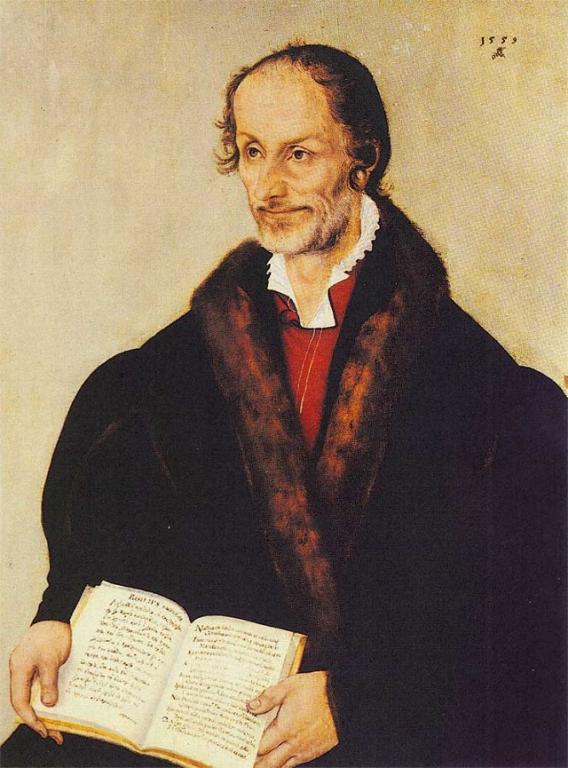
Because secularist historian Will Durant misattributed a quote to the Lutheran successor of Martin Luther, Philip Melanchthon (1497-1560) and I cited it in 1991 research, therefore, according to Calvinist anti-Catholic polemicist, James Swan, “Rome’s cyber-apologists” are guilty of “sloppy work” and this is an illustrative example of “Rome’s apologists at their best” and therefore, Catholics aren’t “deep into history.” Huh? This is really how this guy “argues,” believe it or not. It’s from a recent paper by Swan, posted on his Boors All website.
He’s been obsessed with trying to make Catholics look like witless dumbbells (and above all, to try to embarrass me: whom he has classified as a psychotic) for some dozen years now. He’s tried in vain to refute my work all these years. Give him an E for effort, if nothing else. For some time now, he has refused to even name my name (even posting several book reviews of my books without my name!), but rest assured, he has me in mind in all this, because he cites one of my 1991 papers on the “Reformation” as the source of what someone on the anti-Catholic CARM discussion board cited.
He goes into ridiculous, excruciating, “no one could care less” detail (even including long German and Latin quotations), establishing that Durant blew a quote. Great! And “duh!!!” Durant is a human being like all the rest of us, and quite capable of missing a detail. In fact (shhh! [whispering] don’t tell anyone!) I’ve documented Swan himself (back when I still bothered with him more than twice a year) doing this times without number. He is by no means perfect in his research and every jot and tittle of documentation in it. But he’s always lightning-quick to accuse anyone else of incompetence and idiocy if they happen to make the tiniest mistake of this sort. This is what intellectual midgets and wannabes do.
Never mind that the idea that Melanchthon was trying to get across is actually (without question) his own opinion, as can easily be shown. Catholic historian Johannes Janssen wrote in his History of the German People (Vol. VI, 534):
Melanchthon had been the first and the most vehement in complaining that the princes and municipal authorities who had taken the church management into their own hands had no real interest in religion or in the promotion of Christian discipline. ‘The imperial cities,’ he wrote, ‘do not trouble themselves about religion: all they care for is emancipation from the dominion of the bishops.’ ‘The princes do not concern themselves at all about these matters; one creed is as good in their eyes as another.’ Under cover of the Gospel the princes were only intent on the plunder of the churches, on gambling, drinking, and other degrading pursuits. ‘What state of things shall we bequeath to posterity if the authority of the bishops is abolished? Even were it allowable to overthrow the organization of the Church, it would be scarcely salutary. What will become of the parishes if the old customs and usages are done away with, and no more regular church overseers appointed?’
Note all the citations from Melanchthon (in green). But the italicized section [italics added currently] was not a Melanchthon quote. Durant mistakenly thought it was, and I passed on the mistake in my early research on the “Reformation”: right after I became a Catholic in 1991.
Swan couldn’t care less about what Melanchthon actually believed (which is what professional and amateur historians seek about historically important people). His only interest is in embarrassing Catholics and making them look like ignoramuses. But it was Will Durant who blew the quote, and he wasn’t even a Catholic.
So what is the point to be made? That I cited a quotation supposedly from Melanchthon that a professional historian botched; therefore, I can’t be trusted in my research? Anyone (well, anyone but the endlessly obtuse Swan) would immediately recognize that that is ludicrous. I dealt with the actual issue of what Melanchthon thought of bishops and princes who replaced them at great length over seven years ago.
But Swan wants nothing to do with that sort of serious discussion. He’d rather major on the minors and note that Will Durant blew a quote in the 1950s, and moan about my passing on the error in a 1991 overview paper. The point (whether “polemical” or not) is that Melanchthon didn’t think much of the rule of the princes, as a substitute for the rule of bishops (as under the Catholic Church). He made that quite clear.
Hence he wrote to perhaps his best friend, Joachim Camerarius, in a letter of August 31, 1530:
Oh, would that I could, not indeed fortify the domination, but restore the administration of the bishops. For I see what manner of church we shall have when the ecclesiastical body has been disorganized. I see that afterwards there will arise a much more intolerable tyranny [of the princes] than there ever was before. (C.R. 2, 334) (from: “Historical Introductions to the Symbolical books of the Evangelical Lutheran Church,” by F. Bente, section 70; published in: Triglot Concordia: The Symbolical Books of the Ev. Lutheran Church: St. Louis: Concordia Publishing House, 1921 / “C.R.” = Corpus Reformatorum, a collection of primary early Protestant sources in Latin, French, and German, edited by Karl Gottlieb Bretschneider in Halle starting in 1834)
Protestant Church historian Philip Schaff mentioned this belief of Melanchthon’s, on p. 33 of his History of the Christian Church, Vol. VII (Chapter One; § 10):
The transfer of the episcopal and papal power to the head of the state was not contemplated by the Reformers, but was the inevitable consequence of the determined opposition of the whole Roman hierarchy to the Reformation. The many and crying abuses which followed this change in the hands of selfish and rapacious princes, were deeply deplored by Melanchthon, who would have consented to the restoration of the episcopal hierarchy on condition of the freedom of gospel preaching and gospel teaching.
Also, in the same volume, Chapter Five, § 76:
The Protestant sovereigns became supreme bishops in their respective dominions. They did not preach, nor administer the sacraments, but assumed the episcopal jurisdiction in the government of the Church, and exercised also the right of reforming the Church (jus reformationis) in their dominions, whereby they established a particular confession as the state religion, and excluded others, or reduced them to the condition of mere toleration. This right they claimed by virtue of a resolution of the Diet of Speier, in 1526, which was confirmed by the Peace of Augsburg, 1555, and ultimately by the Peace of Westphalia, 1648. The Reformers regarded this secular summepiscopate as a temporary arrangement which was forced upon them by the hostility of the bishops who adhered to the Pope. They justified it by the example of Josiah and other pious kings of Israel, who destroyed idolatry and restored the pure worship of Jehovah. They accepted the protection and support of the princes at the sacrifice of the freedom and independence of the church, which became an humble servant of the state. Melanchthon regretted this condition; and in view of the rapacity of the princes, and the confusion of things, he wished the old bishops back again, and was willing even to submit to the authority of a pope if the pope would allow the freedom of the gospel. In Scandinavia and England the episcopal hierarchy was retained, or a new one substituted for the old, and gave the church more power and influence in the government. [my italicized and bolded emphases]
So let Swan play his games and spend his time on trifles and stupid stuff. I’m interested in actual history, in all its colors and complexities. That’s what readers get from me, and they also get fairness. I wrote a critical book about Martin Luther (as might be expected of a Catholic apologist), but I also recently compiled an entire book of his words that Catholics could agree with.
I’m an apologist, but I’m also an ecumenist, who rejoices in truth wherever it is found. Therefore I could edit a book like that, which can potentially create all kinds of Catholic good will towards Luther, the founder of Protestantism. But a raving anti-Catholic like Swan has no such interest in unity and finding common ground. He can”t even figure out that Catholics are fellow Christians.
And so he spends his time in ridiculous, worthless activities like this one. Note well, folks, the vast difference between his goals and mine. I simply seek historical truth. Swan seeks to belittle and deride fellow Christians, regarding whom he is so confused and bigoted that he thinks they are no Christians at all. The difference between seeking truth and seeking to lie about others is huge indeed.
Addendum: Typical Example of Swan’s Goofball Citations
One of the funniest Swan mishaps and mistakes, of the nature of which he is always excoriating others, occurred in a dispute about Luther’s sanction of the execution of Anabaptists. I documented this thoroughly in a paper of mine: Reply to Reformed Luther Apologist James Swan’s Request for Documentation of Executions of Anabaptists Sanctioned by Luther, in the 1530s [8-17-14].
After I wrote the paper, Swan made a very embarrassing mistake and cited sources he got from me, while pretending not to. Funniest of all, he thought that an Anabaptist martyr from the 16th century (Peter Pestel) was the editor of a recent Mennonite Encyclopedia. It’s absolutely classic Swan antics and foibles.
Now, this may seem like my nitpicking or piling on, in a case of a simple mistake or human error. Readers may wonder why I am making such a “big deal” about it. I do precisely because Swan is always pointing out human errors in Catholic works (he’s noted real or — usually — falsely alleged — ones in my writings for seventeen years). If a Catholic had made such an embarrassing error like this, we can be sure Swan would have trumpeted it from the rooftops as yet more evidence that we don’t know how to properly cite a source, and that we’re always trying to lie about and misrepresent Luther; that we’re, well, kind of dumb, and that we know nothing about context in reading and citing sources.
***
(originally 2-4-15 on Facebook)
Photo credit: Philip Melanchthon, 1559, by Lucas Cranach the Younger (1515-1586) [public domain / Wikimedia Commons]

***
Previous Post
May 5, 2020
Phil Lawler vs. Vatican II? ("Troublesome" / "Ambiguities")
Next Post
May 6, 2020 James Swan Attacks My 1991 Paper (Calvin & Bucer)
Browse Our Archives
Select a Category & Last Things About Me Anti-Catholicism Atheism & Agnosticism Baptism and Sacramentalism Bible and Tradition Blessed Virgin Mary Books by Dave Armstrong C. S. Lewis Calvinism & General Protestantism Catholic Apologetics Catholic Apologists Catholic conversion Catholic converts Christmas Church (Ecclesiology) Church History Conversion and Converts Development of Doctrine Eastern Orthodoxy Ecumenism & Christian Unity Eucharist & Liturgy Fathers of the Church French Translations G. K. Chesterton Hell Hell & Satan Hell & Satan & Last Things Heresies & Comparative Religion Holistic Health Inquisition & Crusades & Scandals James White Jews & Judaism & Old Testament John Calvin John Henry Newman Liberal / Modernist Theology Life Issues Literary Resume Lutheranism Mariology Martin Luther Music Orthodoxy Papacy & Infallibility Personal Page Philosophy & Science Political & Ethical & Moral Issues Protestant Persecution & Intolerance Protestantism Purgatory Purgatory & Penance Romantic & Imaginative Theology Saints & Purgatory & Penance Salvation Salvation & Justification Satan & Last Things Sexuality and Gender Issues Spanish Translations Traditionalism vs. Radical Catholic Reactionaries Traducciones al español / tradução para português Trinitarianism & Christology Uncategorized Videos
Select a Month October 2026 September 2026 August 2026 July 2026 June 2026 May 2026 April 2026 March 2026 February 2026 January 2026 December 2025 November 2025 October 2025 September 2025 August 2025 July 2025 June 2025 May 2025 April 2025 March 2025 February 2025 January 2025 December 2024 November 2024 October 2024 September 2024 August 2024 July 2024 June 2024 May 2024 April 2024 March 2024 February 2024 January 2024 December 2023 November 2023 October 2023 September 2023 August 2023 July 2023 June 2023 May 2023 April 2023 March 2023 February 2023 January 2023 December 2022 November 2022 October 2022 September 2022 August 2022 July 2022 June 2022 May 2022 April 2022 March 2022 February 2022 January 2022 December 2021 November 2021 October 2021 September 2021 August 2021 July 2021 June 2021 May 2021 April 2021 March 2021 February 2021 January 2021 December 2020 November 2020 October 2020 September 2020 August 2020 July 2020 June 2020 May 2020 April 2020 March 2020 February 2020 January 2020 December 2019 November 2019 October 2019 September 2019 August 2019 July 2019 June 2019 May 2019 April 2019 March 2019 February 2019 January 2019 December 2018 November 2018 October 2018 September 2018 August 2018 July 2018 June 2018 May 2018 April 2018 March 2018 February 2018 January 2018 December 2017 November 2017 October 2017 September 2017 August 2017 July 2017 June 2017 May 2017 April 2017 March 2017 February 2017 January 2017 December 2016 November 2016 October 2016 September 2016 August 2016 July 2016 June 2016 May 2016 April 2016 March 2016 February 2016 January 2016 December 2015 November 2015 October 2015 September 2015 August 2015 July 2015 June 2015 May 2015 April 2015 March 2015 February 2015 January 2015 December 2014 November 2014 October 2014 September 2014 August 2014 July 2014 June 2014 April 2014 March 2014 February 2014 January 2014 December 2013 November 2013 October 2013 September 2013 August 2013 July 2013 June 2013 April 2013 March 2013 February 2013 January 2013 December 2012 November 2012 October 2012 September 2012 August 2012 July 2012 June 2012 May 2012 April 2012 March 2012 February 2012 January 2012 December 2011 November 2011 October 2011 September 2011 August 2011 July 2011 June 2011 April 2011 March 2011 February 2011 October 2010 September 2010 August 2010 July 2010 April 2010 March 2010 December 2009 October 2009 August 2009 July 2009 June 2009 May 2009 March 2009 February 2009 October 2008 September 2008 April 2008 March 2008 February 2008 January 2008 December 2007 November 2007 October 2007 May 2007 March 2007 February 2007 January 2007 November 2006 October 2006 September 2006 August 2006 July 2006 June 2006 May 2006 April 2006 March 2006 February 2006 October 2005 June 2005 April 2005 February 2005 July 2004 May 2004 April 2004
Follow Us!
TAKE THE
Religious Wisdom Quiz
What does "Pentateuch" mean?
Select your answer to see how you score.
Five Scrolls God's Law Sacred Teachings Holy Writings
Books by This Author Books by Dave Armstrong
Related posts from Biblical Evidence for Catholicism

Three More Anti-Catholic Lies About Catholicism (#6-4)
Biblical Evidence for Catholicism

Top Ten Anti-Catholic Lies (#10-7)
Biblical Evidence for Catholicism

Does Catholic Intercession of Saints Require Omniscience?
Biblical Evidence for Catholicism

Protestant Confessions & "Ever-Virgin" Mary
Biblical Evidence for Catholicism
TRENDING AT PATHEOS Catholic

In "Irreplaceable," our book on vocation and technology, Trevor Sutton and I...

I was strolling through the top floor of the brand new Parthenon...

What Does Gêvâh Mean For Kimberley Guifoyle &...
This week, a lot of the news is focused on Kimberly Guilfoyle....

INNER CIRCLE: Profound Mystery (Of Christ In All...
Ephesians 5:31-32 “For this reason, a man will leave his father and...

Do Not Rejoice When Your Enemy Falls: The...
Turning an execution into a public spectacle is a disturbing expression of...

'The Chosen' S6 Trailer: The Passion Gets Very...
Not many watching 'The Chosen' worry about spoilers, but just because they...
view all Catholic blogs
Ad-Free & Subscriber Log-In Subscription Support
- About Us
- 2026 Calendar
- Videos
- Podcasts
- Library of World Religions
- Faith In Media Tracker
- Advertise With Us
- Write for Us
- Privacy Policy
- Terms of Service
- Do Not Sell My Data
- Contact Us
- Radiant Digital
- Manage Newsletter Subscriptions
- Unsubscribe From Notifications
- Sitemap
Copyright 2008-2026, Patheos. All rights reserved.
Subscription Support Ad-Free & Subscriber Log-In
Follow Patheos