
BuddhistCatholicContemplativeEvangelicalGeneral ChristianHinduJewishLatter-day SaintMuslimNew VisionsProgressive Christian
Beliefs
- Buddhist
- Catholic
- Contemplative
- Evangelical
- General Christian
- Hindu
- Jewish
- Latter-day Saint
- More Voices
- Muslim
- New Visions
- Pagan
- Progressive Christian
Topics
- Religion News
- Food and Religion
- Sports and Religion
- Religious Art
- Religious Music and Entertainment
- Religious Events
- History and Religion
- Style and Religion
- Politics and Religion
- Women in Religion
- Recreation Outdoors and Religion
- Business Finance and Religion
- Careers Workplace and Religion
- Education and Religion
- Family Parenting and Religion
- Health Fitness and Religion
- Home and Religion
- Relationships and Religion
- Technology and Religion
- Travel and Religion
Columnists
- Buddhist Columnists
- Business Finance and Religion Columnists
- Careers Workplace and Religion Columnists
- Catholic Columnists
- Contemplative Columnists
- Education and Religion Columnists
- Evangelists Columnists
- Family Parenting and Religion Columnists
- General Christian Columnists
- Health Fitness and Religion Columnists
- Hindu Columnists
- History and Religion Columnists
- Home and Religion Columnists
- Jewish Columnists
- More Voices Columnists
- Latter Day Columnists
- Muslim Columnists
- New Visions Columnists
- Nonreligious Columnists
- Pagan Columnists
- Politics and Religion Columnists
- Progressive Columnists
- Recreation Outdoors and Religion Columnists
- Relationships and Religion Columnists
- Religion News Columnists
- Religious Art Columnists
- Religious Events Columnists
- Religious Music and Entertainment Columnists
- Sports and Religion Columnists
- Style and Religion Columnists
- Technology and Religion Columnists
- Travel and Religion Columnists
- Women in Religion Columnists
Resource Library
- 2026 Calendar
- Library of World Religions
- The 100 Most Holy Places on Earth
- Patheos Answers
- Podcasts
- Videos
- Faith Leaders Database
- Anglican Episcopalian
- Bahai
- Baptist
- Buddhism
- Christianity
- Confucianism
- Eastern Orthodoxy
- Hinduism
- Holiness and Pentecostal
- ISKCON
- Islam
- Judaism
- Lutheran
- Methodist
- The Church of Jesus Christ of Latter-day Saints
- New Age
- Paganism
- Presbytarian and Reformed
- Protestantism
- Religion Behind the Scenes
- Roman Catholic
- Scientology
- Shia Islam
- Sikhism
- Sufism
- Sunni Islam
- Taoism
- Zen
- See all religions
Research Tools
 Ad-Free & Subscriber Log-In Subscription Support
Ad-Free & Subscriber Log-In Subscription Support
Follow Patheos 

- Trending:
- Forgiveness
- |
- Marriage
- |
- Consciousness
- |
- Death Penalty
- |
- Election
- |
- Halloween

-
About
-
Catholic Apologetics
-
Church History
-
Great Apologists
-
Christian Worldview
-
Protestantism & Misc.
- Home
- Catholic
- History and Religion
- Defending the “Bad Boy” Pistons and Isiah Thomas
Defending the “Bad Boy” Pistons and Isiah Thomas
Last updated on: May 9, 2020 at 2:41 am by Dave Armstrong
Defending the “Bad Boy” Pistons and Isiah Thomas 2020-05-09T02:41:09-04:00 Dave Armstrong
Patheos Explore the world's faith through different perspectives on religion and spirituality! Patheos has the views of the prevalent religions and spiritualities of the world.
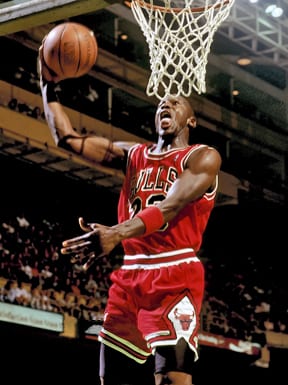
NBA basketball has been my favorite sport to watch for over 30 years now: ever since the Detroit Pistons, led by Isiah Thomas started becoming very good in the late 80s. I was born and raised in Detroit (till age 17) and have lived in metro Detroit my whole life. So I will obviously have that local bias. But I will make a “case” for the “bad boy” Pistons of that era, over against the bum rap that they seem to have gotten, which has been discussed a lot again recently, due in large part to an ESPN documentary about Michael Jordan, called The Last Dance.
It is a point of fact that the Pistons of 1987-1990 were among the greatest teams of all-time, and wound up winning back-to-back championships in 1989-1990 (against the Lakers and Trailblazers) and lost by three points in the 7th game in the 1988 Finals against the Lakers (we later suffered a heartbreaking loss in the last minute of a 7th game against the Spurs in 2005). Isiah Thomas sustained a severe sprained ankle in the 6th game in 1988 but even so, scored an NBA Finals record 25 third-quarter points after his injury, with the Pistons losing (maddeningly!) by one point. Clearly, we would have won the series, but for his injury. And if we had, we would have won three in a row: something even Magic Johnson’s Lakers and Larry Bird’s Celtics never did; only Jordan’s Bulls of 1991-1993 and 1996-1998.
It might be said that we beat the Lakers in the 1989 NBA Finals “only” because Magic Johnson pulled his hamstring muscle near the end of the third quarter in game two. It was certainly a big factor, and starting guard Byron Scott was also out for the series with an injury. But the Pistons had already outplayed the Lakers in the series with Magic Johnson. We had won game one 109-97, and the score in game two was 75-73, with the Lakers leading, when Magic went down. The Pistons wound up sweeping the series, making us the most recent Eastern Conference team to do so in the NBA finals. We also had beaten the Lakers in both games during the regular season: winning by three at home and by eight in their arena, and had the better record during the regular season (a league-best 63-19 to their 57-25).
The Pistons of that era were also notable and unique for having “taken out” Larry Bird’s three-time champion Celtics: beating them in 1988 for the eastern conference title. Their last championship was in 1986. We also took out Magic Johnson’s Lakers in the 1989 Finals. That team last won the league title in 1988 against us, and were to lose to Jordan’s Bulls in 1991. Thus, we eventually dominated the two best teams of the 1980s, and we also were dominant over Jordan’s Bulls in three straight eastern playoff series, from 1988-1990. We beat the Bulls by 4-1, 4-2, and 4-3 in those three series: the last two being the eastern finals. And Jordan was already the best player in the league at the time.
This is the background: the “bad boy” Pistons were as good as, and eventually better than the Celtics and Lakers, and better than the Bulls up until 1991 when they went on their run of six championships in eight years (i.e., the last team to “beat Jordan”).
Yet with this record of excellence, we wound up being widely despised (I think, most unfairly) as a supposedly uniquely “dirty” and “physical” team. I don’t know about “dirty”. The team was certainly physical in its defense, though: led by center Bill Laimbeer and forward Rick Mahorn; also future Hall-of-Famer Dennis Rodman. But we were not unique in that respect, and it’s unfair to single us out for being so. Reggie Miller on some TV sports show recently pointed out that this was generally the style of play in the eastern conference at that time, and teams like the Knicks, Bucks, Celtics, and Heat were also known for their bruising defensive styles. It was the era of “no easy layups”: especially in the playoffs.
But “physical play” was by no means confined to the eastern conference, Karl Malone had the most ever technical fouls with 332, and he played on all western conference teams. Charles Barkley is second with 329 and he played mostly in the west. Rasheed Wallace is third with 317. He wound up with the later Pistons (in the 2003 season), but played his first eight seasons with Portland. Gary Payton was 4th with 250. He played 14 of his 18 seasons in the western conference: mostly with Seattle. Dennis Rodman (more on him below) is 5th on the list with 212. He’s the player with the most technical fouls who played almost solely in the east. And he played with the Pistons and the Bulls.
Personally, I care very little for that style of play myself, with deliberate fouls and (I think, unnecessarily) rough play. Basketball is not football or rugby. I’ve always said that if Bill Laimbeer (“Mr. elbow to the head”) had been on another team, I would have intensely disliked him. I’m just making the point that the Pistons were not the only team that played like that. If other teams were doing it, then it became necessary to respond in kind, or be beaten.
In the 1984 NBA Finals between the Lakers and Celtics, the Celtics were down 2-1, having lost game three by 137-104 (the worst playoff loss in the team’s history). Larry Bird derided his team for playing like “sissies” and the Celtics decided to start playing with much more physical aggression: eventually winning the series 4-3. Wikipedia describes the physical nature of game four in particular: “The game was also marked by Celtic forward Kevin McHale’s clothesline take-down of Laker forward Kurt Rambis on a breakaway layup which triggered the physical aspect of the rivalry. Larry Bird would go after Kareem Abdul-Jabbar later on in the third quarter, . . .”
In describing game six, the article noted: “the Lakers answered the Celtics’ rough tactics when Laker forward James Worthy shoved Cedric Maxwell into a basket support.” This was, precisely, “bad boy”-style basketball: three years before the Pistons became famous (or notorious) for it. It wasn’t just us! In fact, we probably learned it mainly from the Celtics, because they were the team we had to beat in the east. Karl Malone, for example, elbowed Michael Jordan in the face in 1988 and gave Isiah Thomas a vicious sledgehammer elbow in 1991, causing 40 stitches near his eye. Many other such examples can easily be found in searches on You Tube.
This sort of rough, aggressive play caused the NBA to start enacting the “flagrant foul” and establishing “proper penalties for it in 1990-91, to deter contact which, in addition to being against the rules, puts an opponent’s safety or health at risk.” Between that and the increasing dominance of the three-point shot (Reggie Miller / Ray Allen / Steph Curry), the game has changed quite a bit in the last thirty years.
Much is currently being made of the fact that the Pistons walked off the court at the end of the eastern finals in 1991, without congratulating the winner, thus snubbing Jordan’s Bulls, who had finally beaten them, and displaying a lack of sportsmanship that has been widely and roundly criticized. The act was suggested by Bill Laimbeer, with the agreement of Isiah Thomas. Laimbeer in a recent interview, still stood by his decision; calling the Bulls a bunch of “whiners.”
Isiah Thomas, on the other hand, agrees that it was wrong (and did so even later that year) and says that he would have acted differently if he could go back. But he has also explained that it was an era of very intensive rivalries, where teams literally “hated” each other. The Bulls-Pistons rivalry was not the only one of that nature. The Lakers and Celtics displayed a much more intense mutual “hatred” that had a long history since the 1960s and the great Bill Russell Celtic teams, that won eleven championships.
Again, I greatly dislike the notion that athletic competitiveness has to descend to virtual hatred. I’m extremely competitive in all the many sports I have played (including minor “trash talk” in games like ping pong), but it never became personal. It was always in fun. But this is how the NBA was in those days. Again, it’s not fair to single out the Pistons for a now-admitted mistake. Larry Bird, for one, acted in much the same way. He was a sore loser (which many intensely competitive players are: including Magic Johnson and Michael Jordan). Bird didn’t run up to congratulate Magic Johnson when the latter’s team won the NCAA championship in 1979. He sat on the bench in despair: his face in a towel.
Likewise, when the Pistons finally beat the Celtics to win the eastern conference championship in 1988, Bird (with most of the Celtics team) glumly walked off the court with no congratulations. It was Kevin McHale (I distinctly remember) who was the good sport, wishing Isiah Thomas the best in the NBA Finals (which I thought was very classy at the time). Nor was Jordan much of a good sport when we kicked his butt for three straight years in the playoffs from 1988-1990 (see a good article about “The Jordan Rules” which the Pistons utilized to shut down Jordan). He was a ferocious pouter. Bill Laimbeer had a certain point. But it was primarily a Michael Jordan put-down of the Pistons during the same series that caused Laimbeer to suggest walking off the court as a defiant reaction. A Vintage Detroit article on the incident explains:
After doing his part to rid the league of “The Bad Boys” in a “clean” series sweep, Jordan commented, “The dirty play and the flagrant fouls and unsportsmanlike conduct, hopefully that will be eliminated from the game with them gone.”
He added, “I think people are happy the game will get back to a clean game.” . . .
Before the series was even over, Jordan spoke about how “The Bad Boys” were bad for the game.
As Thomas noted during a 2013 recording of NBA TV’s Open Court, “They (the Bulls) were up 3-0, and then, they had this press conference just totally disrespecting us as champions.”
A Chicago Tribune article from that time contained more Jordan disparaging comments:
”I think we play clean basketball,” added Jordan. ”We don’t go out and try to hurt people and dirty up the game.
”You never lose respect for the champions. But I haven’t agreed with the methods they used. . . .
”I don’t think people want that kind of basketball. I think they want to push that type of basketball out. . . .
”Detroit’s been very successful with their style and other teams tried to copy it because they were successful, and that’s not good for the game.
”We’ve taken the Good Boy image and walked away,” Jordan added. ”We may have complained about it and told the teacher, or whatever, but we never tried to lower ourselves to that level. We didn’t lose our cool or our heads. We maintained our poise.”
It’s said that this controversy caused Jordan to want to keep Isiah Thomas off of the Olympic Dream Team in 1992, but according to John Salley, who played for both teams, it was Magic Johnson who was the main reason this happened. Magic was resentful that the Lakers lost to the Pistons in 1989 and when he came down with the HIV virus, he somehow got the notion that Isiah Thomas was spreading rumors that he was a homosexual (a thing that Thomas vehemently denies). This led to a nearly 30-year freezing-up of their previous warm friendship. They recently reconciled: which I have noted in one of my articles, including a heartfelt apology from Magic.
Michael Jordan, in The Last Dance, expressly denied any effort to keep him off the Dream Team: “You want to attribute it to me, go ahead and be my guest, . . . but it wasn’t me.” And it’s a matter of record that Jordan has called Isiah Thomas the second-best point guard ever, after Magic Johnson.
Isiah recently observed that he was the president of the National Basketball Player Association for six years (1988-1994), and was voted as such unanimously. His point was that he couldn’t have been that unpopular as a player, to get so many votes to represent other players. NBA players have a lot to thank him for:
[H]e helped establish four historic Collective Bargaining Agreements and pushed to raise the average NBA player’s salary, which increased from $300,000 to $1.8 million. He also used his keen knowledge of marketing to help guide the expansion of the NBA into a multi-billion dollar industry.
This would have included people like Scottie Pippen, who certainly didn’t want him on the Dream Team. One theory has it that Pippen resented remarks made after his abysmal performances in the 1989 (deciding game six) and 1990 (game seven) eastern conference finals. In 1989, he received a Laimbeer elbow a minute into the game, stuck an ice-pack on his head (causing a regretful visual) and sat out the entire rest of the game. The next year he also had a migraine headache and played 42 minutes but managed to score only two points.
This is a strong contrast to Isiah Thomas scoring 25 in a quarter on a sprained ankle in the 1988 Finals and Jordan’s famous Finals game where he had a severe flu. So he developed a reputation as “soft” (some derisively calling him “Sitting Bull”) and no doubt some of the Pistons made statements that Pippen wouldn’t have thought much of. But we weren’t the only ones. A 1997 AP article observed:
[T]he lesson learned then should not be forgotten today: There is plenty of quit in Pippen. Always was. Always will be.
When Jordan took off one entire season and most of a second to play baseball, Pippen took over the lead and the Bulls produced respectable records in both before losing to New York and Orlando, respectively, in the playoffs. But the strain on Pippen was evident.
He whined incessantly about being underpaid. He got arrested with a loaded gun in his car. A few weeks later, he got booed during a bumpy stretch and blamed it on racism. Not long after that, with Chicago down two games to none against the Knicks at home in the playoffs and 1.8 seconds left, he staged a boycott because the last play was called for Toni Kukoc.
So it wasn’t just Isiah Thomas and/or the Pistons who thought this about Pippen. After the last outrageous incident, teammate Bill Cartwright tearfully rebuked Pippen in the locker room for letting down the team, and Pippen apologized. But it seems that such things have led Pippen to despise Isiah Thomas to this day, and caused him to not want him on the Dream Team in 1992. I respectfully suggest that he look at the beam in his own eye.
Charles Barkley, member of that fabled team, has said that Thomas should have been included, and member John Stockton chose Thomas as the one who installed him into the Hall of Fame. Likewise, Karl Malone stated in 2012:
First of all guys, you know, it wasn’t my job to pick the team. OK, . . . It didn’t matter who was out there, they are part of our team. I didn’t have that kind of [influence] and I would like to think that nobody else did. There were a lot of great athletes left off that team. . . . I never had any issue with Isiah. I think guys realized that it didn’t matter who was on the team. I know I could have cared less. It didn’t matter to me who was on that team. I was a part of something great.
Sports commentator Michael Wilbon apologized to Isiah Thomas for mischaracterizing (on 5-4-20) the extent of Dream Team opposition to him:
My apologies to Isiah Thomas… multiple sources reached out to tell me I’m dead wrong to say 9 members of the Dream Team objected to Isiah being on the ’92 Olympic team. Nowhere near that number objected. My apologies to Isiah for getting it wrong…
It’s also fascinating that, after criticizing the Pistons’ style of play, the Jordan-era Chicago Bulls acquired both John Salley (1995-1996) and Dennis Rodman (1995-1998): who were certainly key parts of the “bad boy” image and playing style (both rather physical power forwards). Backup center James “Buddha” Edwards was also hired to play for the Bulls in 1995-1996. Why would that be? Certainly, Jordan would have had input into those decisions. The star players of teams always do.
So the Bulls all of a sudden got three former Pistons in 1995: after Jordan had been on record excoriating the team for dirty play just four years earlier? Rodman certainly played a key role in the Jordan Bulls’ last three championships in 1996-1998, averaging a league-leading 14.9, 16.1, and 15.0 rebounds. Such excellent defense was central to the “bad boys” also (Rodman had led the league in rebounds twice with the Pistons, too: in 1991-1992 and 1992-1993). Something doesn’t add up there. It suggests that maybe Michael was spouting off in the heat of the moment, and perhaps thought better of it later.
There is nothing to suggest that Rodman played any differently for the Bulls than he did for the Pistons. In his first season with the Bulls (1995-1996, he had 23 technical fouls and was suspended for six games for head-butting a referee (!). But did the Bulls ultimately care about this behavior? No. And they didn’t because they were winning, as a 1996 article noted:
The Bulls had the NBA title in mind when they acquired Rodman from San Antonio before the season. The Spurs wanted to jettison the league’s top rebounder because they felt his selfish behavior undermined their playoff runs the previous two seasons.
Chicago was the only taker. . . .
The fact that the Bulls rarely lose — they are on pace to become the first NBA team to win 70 games — made Rodman’s antics and quirks easier for everyone to dismiss.
In other words, “whatever works” (including technical fouls and overtly physical play) to win a championship is fine: which is precisely what was Jordan’s and others’ rap against the “bad boy”-era Detroit Pistons. It’s the height of hypocrisy for Jordan and the Bulls to look down on the Pistons as “dirty” and too physical and then to acquire Dennis Rodman, who did exactly the same stuff with them, and wink at it simply because they were the best in the league. So were the Pistons in 1988-1989 and 1989-1990! So where is the beef? Rodman wound up with 212 technical fouls in his career: the fifth-highest total of anyone.
I think it all adds up to a bum rap against the Pistons. The one thing they did wrong (walk off the court without congratulating the winner), Isiah Thomas has freely acknowledged was wrong. Why, then, is it still held against him and the Pistons? No one is perfect. Larry Bird did the same, three years earlier in the same conference final, but no one holds it against him. And their style of play was widespread, at least in the eastern conference: including by the Celtics. Different styles become dominant at different times in sports. If certain things were allowed, they were. The league later changed its mind.
But we can’t blame teams for successfully taking advantage of a style, as long as the league was allowing it. And that remains true whatever one may think of the physical play. As I said, I don’t care for it myself. But the double standard employed in using this reasoning to single out the Pistons as a “dirty team” is unacceptable, and the so-called “bad boy” Pistons — led by the superb Hall-of-Famer Isiah Thomas and fellow guard and Hall-of-Famer Joe Dumars (whom I have had the pleasure to meet) deserve their due as one of the greatest NBA teams of all time.
***
Photo credit: Michael Jordan during the 1987-88 NBA season; by Steve Lipofsky www.Basketballphoto.com [Wikimedia Commons / Creative Commons Attribution-Share Alike 3.0 Unported license]

***
Previous Post

May 6, 2020
Phil Lawler's Mythical Private Letter (Unfruitful Discussion)
Next Post

May 7, 2020 Salvation is a Process & Not Instantaneously Assured
Browse Our Archives
Select a Category & Last Things About Me Anti-Catholicism Atheism & Agnosticism Baptism and Sacramentalism Bible and Tradition Blessed Virgin Mary Books by Dave Armstrong C. S. Lewis Calvinism & General Protestantism Catholic Apologetics Catholic Apologists Catholic conversion Catholic converts Christmas Church (Ecclesiology) Church History Conversion and Converts Development of Doctrine Eastern Orthodoxy Ecumenism & Christian Unity Eucharist & Liturgy Fathers of the Church French Translations G. K. Chesterton Hell Hell & Satan Hell & Satan & Last Things Heresies & Comparative Religion Holistic Health Inquisition & Crusades & Scandals James White Jews & Judaism & Old Testament John Calvin John Henry Newman Liberal / Modernist Theology Life Issues Literary Resume Lutheranism Mariology Martin Luther Music Orthodoxy Papacy & Infallibility Personal Page Philosophy & Science Political & Ethical & Moral Issues Protestant Persecution & Intolerance Protestantism Purgatory Purgatory & Penance Romantic & Imaginative Theology Saints & Purgatory & Penance Salvation Salvation & Justification Satan & Last Things Sexuality and Gender Issues Spanish Translations Traditionalism vs. Radical Catholic Reactionaries Traducciones al español / tradução para português Trinitarianism & Christology Uncategorized Videos
Select a Month October 2026 September 2026 August 2026 July 2026 June 2026 May 2026 April 2026 March 2026 February 2026 January 2026 December 2025 November 2025 October 2025 September 2025 August 2025 July 2025 June 2025 May 2025 April 2025 March 2025 February 2025 January 2025 December 2024 November 2024 October 2024 September 2024 August 2024 July 2024 June 2024 May 2024 April 2024 March 2024 February 2024 January 2024 December 2023 November 2023 October 2023 September 2023 August 2023 July 2023 June 2023 May 2023 April 2023 March 2023 February 2023 January 2023 December 2022 November 2022 October 2022 September 2022 August 2022 July 2022 June 2022 May 2022 April 2022 March 2022 February 2022 January 2022 December 2021 November 2021 October 2021 September 2021 August 2021 July 2021 June 2021 May 2021 April 2021 March 2021 February 2021 January 2021 December 2020 November 2020 October 2020 September 2020 August 2020 July 2020 June 2020 May 2020 April 2020 March 2020 February 2020 January 2020 December 2019 November 2019 October 2019 September 2019 August 2019 July 2019 June 2019 May 2019 April 2019 March 2019 February 2019 January 2019 December 2018 November 2018 October 2018 September 2018 August 2018 July 2018 June 2018 May 2018 April 2018 March 2018 February 2018 January 2018 December 2017 November 2017 October 2017 September 2017 August 2017 July 2017 June 2017 May 2017 April 2017 March 2017 February 2017 January 2017 December 2016 November 2016 October 2016 September 2016 August 2016 July 2016 June 2016 May 2016 April 2016 March 2016 February 2016 January 2016 December 2015 November 2015 October 2015 September 2015 August 2015 July 2015 June 2015 May 2015 April 2015 March 2015 February 2015 January 2015 December 2014 November 2014 October 2014 September 2014 August 2014 July 2014 June 2014 April 2014 March 2014 February 2014 January 2014 December 2013 November 2013 October 2013 September 2013 August 2013 July 2013 June 2013 April 2013 March 2013 February 2013 January 2013 December 2012 November 2012 October 2012 September 2012 August 2012 July 2012 June 2012 May 2012 April 2012 March 2012 February 2012 January 2012 December 2011 November 2011 October 2011 September 2011 August 2011 July 2011 June 2011 April 2011 March 2011 February 2011 October 2010 September 2010 August 2010 July 2010 April 2010 March 2010 December 2009 October 2009 August 2009 July 2009 June 2009 May 2009 March 2009 February 2009 October 2008 September 2008 April 2008 March 2008 February 2008 January 2008 December 2007 November 2007 October 2007 May 2007 March 2007 February 2007 January 2007 November 2006 October 2006 September 2006 August 2006 July 2006 June 2006 May 2006 April 2006 March 2006 February 2006 October 2005 June 2005 April 2005 February 2005 July 2004 May 2004 April 2004
Follow Us!
TAKE THE
Religious Wisdom Quiz
I wrote of a new covenant where God's law would be written not on stone but where?
Select your answer to see how you score.
On scrolls On their hearts In the temple In a book
Books by This Author Books by Dave Armstrong
Related posts from Biblical Evidence for Catholicism

100 Motown Stars: Info. & Links / My...
Biblical Evidence for Catholicism

My 19 Imprimaturs vs. James Swan's Slanders
Biblical Evidence for Catholicism

My “Number Articles”: Alphabetized by Topic
Biblical Evidence for Catholicism
Big Plans for Catholic Bible Highlights in 2026!
Biblical Evidence for Catholicism
TRENDING AT PATHEOS Catholic

Janie Learns the Way of the Cross: A...
Teaching children about Jesus' Passion can be challenging. Many parents and educators...

Looking For Good Catholic Writing - October 2026
He alone extends the heavens, and he walks upon the waves of...

In "Irreplaceable," our book on vocation and technology, Trevor Sutton and I...

I was strolling through the top floor of the brand new Parthenon...

What Does Gêvâh Mean For Kimberley Guifoyle &...
This week, a lot of the news is focused on Kimberly Guilfoyle....

INNER CIRCLE: Profound Mystery (Of Christ In All...
Ephesians 5:31-32 “For this reason, a man will leave his father and...
view all Catholic blogs
Ad-Free & Subscriber Log-In Subscription Support
- About Us
- 2026 Calendar
- Videos
- Podcasts
- Library of World Religions
- Faith In Media Tracker
- Advertise With Us
- Write for Us
- Privacy Policy
- Terms of Service
- Do Not Sell My Data
- Contact Us
- Radiant Digital
- Manage Newsletter Subscriptions
- Unsubscribe From Notifications
- Sitemap
Copyright 2008-2026, Patheos. All rights reserved.
Subscription Support Ad-Free & Subscriber Log-In
Follow Patheos