
BuddhistCatholicContemplativeEvangelicalGeneral ChristianHinduJewishLatter-day SaintMuslimNew VisionsProgressive Christian
Beliefs
- Buddhist
- Catholic
- Contemplative
- Evangelical
- General Christian
- Hindu
- Jewish
- Latter-day Saint
- More Voices
- Muslim
- New Visions
- Pagan
- Progressive Christian
Topics
- Religion News
- Food and Religion
- Sports and Religion
- Religious Art
- Religious Music and Entertainment
- Religious Events
- History and Religion
- Style and Religion
- Politics and Religion
- Women in Religion
- Recreation Outdoors and Religion
- Business Finance and Religion
- Careers Workplace and Religion
- Education and Religion
- Family Parenting and Religion
- Health Fitness and Religion
- Home and Religion
- Relationships and Religion
- Technology and Religion
- Travel and Religion
Columnists
- Buddhist Columnists
- Business Finance and Religion Columnists
- Careers Workplace and Religion Columnists
- Catholic Columnists
- Contemplative Columnists
- Education and Religion Columnists
- Evangelists Columnists
- Family Parenting and Religion Columnists
- General Christian Columnists
- Health Fitness and Religion Columnists
- Hindu Columnists
- History and Religion Columnists
- Home and Religion Columnists
- Jewish Columnists
- More Voices Columnists
- Latter Day Columnists
- Muslim Columnists
- New Visions Columnists
- Nonreligious Columnists
- Pagan Columnists
- Politics and Religion Columnists
- Progressive Columnists
- Recreation Outdoors and Religion Columnists
- Relationships and Religion Columnists
- Religion News Columnists
- Religious Art Columnists
- Religious Events Columnists
- Religious Music and Entertainment Columnists
- Sports and Religion Columnists
- Style and Religion Columnists
- Technology and Religion Columnists
- Travel and Religion Columnists
- Women in Religion Columnists
Resource Library
- 2026 Calendar
- Library of World Religions
- The 100 Most Holy Places on Earth
- Patheos Answers
- Podcasts
- Videos
- Faith Leaders Database
- Anglican Episcopalian
- Bahai
- Baptist
- Buddhism
- Christianity
- Confucianism
- Eastern Orthodoxy
- Hinduism
- Holiness and Pentecostal
- ISKCON
- Islam
- Judaism
- Lutheran
- Methodist
- The Church of Jesus Christ of Latter-day Saints
- New Age
- Paganism
- Presbytarian and Reformed
- Protestantism
- Religion Behind the Scenes
- Roman Catholic
- Scientology
- Shia Islam
- Sikhism
- Sufism
- Sunni Islam
- Taoism
- Zen
- See all religions
Research Tools
 Ad-Free & Subscriber Log-In Subscription Support
Ad-Free & Subscriber Log-In Subscription Support
Follow Patheos 

- Trending:
- Forgiveness
- |
- Marriage
- |
- Consciousness
- |
- Death Penalty
- |
- Election
- |
- Halloween

-
About
-
Catholic Apologetics
-
Church History
-
Great Apologists
-
Christian Worldview
-
Protestantism & Misc.
- Home
- Catholic
- History and Religion
- Catholic Development of Doctrine: A Defense: Part I
Catholic Development of Doctrine: A Defense: Part I
Last updated on: June 2, 2020 at 2:36 pm by Dave Armstrong
Catholic Development of Doctrine: A Defense: Part I 2020-06-02T14:36:28-04:00 Dave Armstrong
Patheos Explore the world's faith through different perspectives on religion and spirituality! Patheos has the views of the prevalent religions and spiritualities of the world.
vs. Jason Engwer (Emphasis on the Canon of the Bible & Church Infallibility)
[originally posted on my blog on 1-13-10]
***
I will be replying to anti-Catholic Protestant Jason Engwer’s article, “The Canon And Church Infallibility” (9-18-08). His words will be in blue.
***
I have considerable experience in debating Jason Engwer in the past, and even in the same general subject area: dialogues on development of doctrine with regard to the papacy and the canon of Scripture. We also engaged in an extremely in-depth discussion (one / two) concerning sola Scriptura and the views of the Church fathers in relation to that concept.
Jason, though a very able (and relatively amiable) disputant and quite clever and industrious and ambitious in argument, is prone, unfortunately, to warring against straw men. He tends to define opposing positions to his own liking and then shoot these new creations down. This is a famous logical fallacy. It runs as follows:
Position X (in this instance, a distinctively Catholic one).
Jason defines position X according to distinctively Protestant criteria (thus, in effect, making it now position X2).
Jason now subjects conveniently molded and transformed position X2 to all sorts of criticisms, showing how it is unworthy of belief.
But X2 is not the same as X.
Therefore, X2 is a straw man, as one of the most basic rules in constructive, legitimate debate is to properly understand and define that which one is disputing.
Thus, refutation of X2 accomplishes nothing whatsoever in the way of refuting X, and the counter-argument completely fails, as irrelevant and completely off-point.
In a nutshell, what he has done in his present argument that I shall critique, is define Catholic development according to hostile Protestant conceptions of it. He seems to expect papal infallibility and the nature of the papal office to appear almost whole and entire in the early centuries (which is the Protestant tendency in approaching Church history), whereas in fact, development of doctrine (and particularly St. Cardinal Newman’s formulation of it) is precisely an explanation of organic development over time, meaning (by its very definition) that in many ways doctrines and doctrinal beliefs of large masses of people will look quite different in the year 300 than they would in, say 1870.
The essence is what remains the same throughout. Therefore, the key consideration is not to find fully developed doctrines before (in our theory) there is any reasonable expectation of same, but to find the kernels or seeds of what later become the fully developed doctrines (just as an oak tree has little outward resemblance to an acorn, even though it is organically derived from it: to use the most frequent analogy of development). Thus, all of Jason’s searching for something that Newman would freely concede isn’t there in the first place, is a huge non sequitur. Obviously, if he sets out to refute Newman’s development, he has to first understand what it is that he is now “refuting.” He can’t redefine his opponent’s view going in.
The second thing he does is to make an analogical argument with the canon issue, with the canon being more closely allied, as he sees it, with Protestant sola Scriptura: its rule of faith, over against the Catholic Scripture + Tradition + Church, and apostolic succession. He argues that Catholic development regarding the papacy is less worthy of belief than “Protestant” development regarding the canon. But there are numerous problems with this approach as well, as I shall attempt to demonstrate.
Jason’s third methodology (often seen in his apologetics) is to make general statements of a sweeping negative nature and mount these up one after another in machine-gun fashion, thus presenting an illusion of great strength and invulnerability of his positions. In order to overcome this, it takes a huge amount of time and labor, in refuting each statement thrown out matter-of-factly. It’s the “death-by-a-thousand-qualifications” approach. Much as a thousand mini-criticisms may appear impressive, if all or most of the criticisms are based on false premises or muddleheaded thinking, then it is irrelevant how many are given, and to the extent that many or most or all are refuted, then the person looks rather foolish and quite prone to at least the suspicion of being a sophist or special pleader with no case, and only the appearance of one.
Jason’s anti-Catholic colleagues often commit the same fallacies in battling against Newmanian development. William Webster, supposedly some sort of pseudo-scholar on the fathers and development (despite having unknown or dubious credentials), demonstrated that he had little inkling of that which he was supposedly refuting, as I documented twice (one / two). He made the most elementary, rudimentary category mistakes. His co-author David T. King, was so ignorant of Newmanian development, that he claimed on a public discussion board that Cardinal Newman was an advocate of the theologically liberal notion of evolution of dogma: a thing roundly condemned by the Catholic Church as an aspect of modernism. Thus he asserted that the Church (particularly Pope St. Pius X) condemned Newman. I refuted that in no uncertain terms, too. Neither of those efforts of mine evoked any defense from these men.
This is the sort of thing that Catholics have to deal with: pretenders who lack even a rudimentary understanding of the nature of the thing they supposedly have “refuted”. Its extremely frustrating, especially when they refuse to defend their weak, incoherent arguments and lack of solid logic and factuality.
I don’t claim to be a scholar; never have. I’m not; I’m merely a lay apologist, who writes on a popular level. But I claim to know more than a little about both development and Cardinal Newman, and to know glaring logical fallacies and butchering of verifiable facts when I see them. And I claim to know how to argue positions properly, with real strength and force, not just the clever appearance of same by a bunch of questionable words and assertions strung together, so that readers are overwhelmed and made to feel that they are in the realm of truth, by the sheer force of multiple thousands of words. These words and arguments have to fit into a cohesive whole. And they do not, in this case, as I will be contending.
Steve Hays and I have been involved in an e-mail discussion with another person about some arguments against sola scriptura and for an infallible church. The discussion has primarily been about the claim that one of the arguments for the Protestant New Testament canon could also be used to support church infallibility. Supposedly, just as the patristic support for the canon suggests the apostolicity of that canon, so also the patristic support for church infallibility suggests the apostolicity of that concept.
What’s below is most of the text of two e-mails I wrote on these issues, . . .
Jason explains the basic analogical structure of his argument. He’ll argue, of course, that patristic support for infallibility is far less profound and far more troublesome than that for the canon of Scripture.
1. Though you asked about external evidence and referred to what the church fathers believed about the church, we also have internal evidence and other forms of external evidence for the canon. Even if the canon and church infallibility had comparable external evidence from the fathers, or church infallibility had better evidence in that category, we would have to take the other categories of evidence into account as well.
2. If some fathers refer to a form of church infallibility or contradict sola scriptura in some other way, it doesn’t follow that all such beliefs should be categorized together in the manner you’ve suggested. If church father A claims that church Y is infallible, whereas church father B claims that church Z is infallible, then there is no single church that those two fathers are pointing to as infallible. If five alternatives to sola scriptura are offered by the patristic Christians, but none of the five have support comparable to the support we see for the Protestant canon, then what does it prove to compare the support for five different alternatives combined to the support for our canon? As you said in your first letter, the testimony for an infallible church could be ambiguous, such as by not allowing us to discern which church is infallible.
Now we start to observe Jason’s methodology. He is the master of the general statement and the subtle anti-Catholic insinuation. But as I noted above, his assertions are often quite questionable, even from factual considerations of history: as “neutral” as any biased observer is able to present them. He starts right in by implying massive contradictory data in the fathers. But he is already confusing some things. The basic kernel of infallibility is the following:
There is such a thing as an authoritative Church, that has binding authority in matters of the faith.
That’s it, and the concept is already (I would contend) explicitly present in Scripture, in the Council of Jerusalem (Acts 15), which not only claimed profoundly binding authority, but even the express sanction of the Holy Spirit, making it close to the concept of biblical inspiration: a thing that goes beyond all Catholic claims for infallibility: an essentially lesser gift than inspiration. The authoritative Church also includes apostolic succession. The true apostolic tradition or deposit is authoritatively passed down.
All that really needs to be found, then, is a notion of an authoritative Church that can “bind and loose,” over against sola Scriptura, in which Scripture alone is the infallible authority. Aspects of particulars such as where this Church resides, exactly how it is governed, etc., are distinct from this basic kernel, and we would fully expect relatively more disagreement in the early centuries, just as we would expect the known fact of disagreement over the NT books (the canon): more so, the further we go back.
That should surprise no one or make no one think Catholic doctrine is brought into question on this ground by itself. Men could differ on the exact nature of the infallible Church, while agreeing that there is such a thing, just as men can differ on individual books, while agreeing that there is such a thing as a Bible, that is inspired.
3. My position is that we do see a variety of rules of faith among the patristic Christians. Sola scriptura is sometimes advocated, and it’s sometimes contradicted. However, the alternatives to sola scriptura that are offered are different from and contradictory to one another.
And here is the trademark Engwer ultra-simplification leaning (unsurprisingly) towards the Protestant position. There were differences, of course, but the fathers were far closer overall to the Catholic position than anything resembling a Protestant one. Jason’s method of simply noting these disagreements on secondary matters, does not overcome the overwhelming consensus in favor of an authoritative Church and against a Scripture Alone rule of faith. I demonstrated this again and again in my own debate with him about sola Scriptura and the fathers, linked above. He decided to split before it was anywhere near over with; I had analyzed the view of four fathers out of ten that I chose, when he left without further reply; and this was a planned, though relatively informal, debate at the anti-Catholic CARM discussion board.
The way Jason presents the situation, it sounds as if it is almost an even battle between the proto-Protestant fathers and the Catholic ones, with the latter hopelessly divided amongst themselves. This is simply not the case. And he can’t fine support for these assertions among reputable patristics scholars. Perhaps that is why he rarely troubles himself to cite any in the course of his revisionist history escapades, whereas I utilize the supporting opinions of Protestant scholars all over the place in my work.
4. Roman Catholicism and Eastern Orthodoxy aren’t the only candidates for church infallibility in this context. Why couldn’t the infallible church include some or all Catholic and Orthodox churches, but also include others, such as Protestant churches?
Well, obviously — if we are talking about the fathers –, because Protestantism didn’t exist. When it does come around over a thousand years later, it obviously has to be derived from Catholicism (being a western European phenomenon) in order to claim historical continuity, and then it has to provide a rationale for the “primacy” supposedly being switched over to them over against the existing Catholic Church. This it has never been able to do in any convincing way (to put it mildly).
Or, if it’s to be argued that each church must have a succession of bishops going back to the apostles (a conclusion that must be argued, not just assumed),
It is plainly asserted by many fathers. The existence of apostolic succession as a major part of the rule of faith in the fathers isn’t even arguable. It is simply a fact. It also has a directly biblical basis and a secondary, indirect (deductive) biblical basis, if the thing itself is to be disputed.
why not include Oriental Orthodox and Anglicans as well, for example, not just Catholicism and Orthodoxy? Why couldn’t the infallible church be something other than Catholicism or Orthodoxy or something that goes beyond those two groups?
They could conceivably be so, but the historical pedigree in those cases is far inferior to the pedigree of Rome: largely because of the historical function of the papacy.
5. If we were to conclude that there’s an infallible church, a third option (something other than Catholicism or Orthodoxy) would not only be possible, but would also be more likely. The earliest sources, like Irenaeus, don’t define the church as Roman Catholicism or Eastern Orthodoxy.
East and West were united at that time, not separated, so it is anachronistic to apply those categories of some 800 years later, after the schism, to him. St. Irenaeus refers to Rome, with the express implication that it was of primary importance in Church affairs:
Peter and Paul were preaching at Rome, and laying the foundations of the Church. (Against Heresies, III, 1, 1)
- Since, however, it would be very tedious, in such a volume as this, to reckon up the successions of all the Churches, we do put to confusion all those who, in whatever manner, whether by an evil self-pleasing, by vainglory, or by blindness and perverse opinion, assemble in unauthorized meetings; [we do this, I say,] by indicating that tradition derived from the apostles, of the very great, the very ancient, and universally known Church founded and organized at Rome by the two most glorious apostles, Peter and Paul; as also [by pointing out] the faith preached to men, which comes down to our time by means of the successions of the bishops. For it is a matter of necessity that every Church should agree with this Church, on account of its preeminent authority, that is, the faithful everywhere, inasmuch as the tradition has been preserved continuously by those [faithful men] who exist everywhere.
- The blessed apostles, then, having founded and built up the Church, committed into the hands of Linus the office of the episcopate. Of this Linus, Paul makes mention in the Epistles to Timothy. To him succeeded Anacletus; and after him, in the third place from the apostles, Clement was allotted the bishopric. This man, as he had seen the blessed apostles, and had been conversant with them, might be said to have the preaching of the apostles still echoing [in his ears], and their traditions before his eyes. Nor was he alone [in this], for there were many still remaining who had received instructions from the apostles. In the time of this Clement, no small dissension having occurred among the brethren at Corinth, the Church in Rome dispatched a most powerful letter to the Corinthians, exhorting them to peace, renewing their faith, and declaring the tradition which it had lately received from the apostles, proclaiming the one God, omnipotent, the Maker of heaven and earth, the Creator of man, who brought on the deluge, and called Abraham, who led the people from the land of Egypt, spoke with Moses, set forth the law, sent the prophets, and who has prepared fire for the devil and his angels. From this document, whosoever chooses to do so, may learn that He, the Father of our Lord Jesus Christ, was preached by the Churches, and may also understand the tradition of the Church, since this Epistle is of older date than these men who are now propagating falsehood, and who conjure into existence another god beyond the Creator and the Maker of all existing things. To this Clement there succeeded Evaristus. Alexander followed Evaristus; then, sixth from the apostles, Sixtus was appointed; after him, Telephorus, who was gloriously martyred; then Hyginus; after him, Pius; then after him, Anicetus. Soter having succeeded Anicetus, Eleutherius does now, in the twelfth place from the apostles, hold the inheritance of the episcopate. In this order, and by this succession, the ecclesiastical tradition from the apostles, and the preaching of the truth, have come down to us. And this is most abundant proof that there is one and the same vivifying faith, which has been preserved in the Church from the apostles until now, and handed down in truth. (Against Heresies, III, 3, 2-3; there is a textual dispute about the exact meaning, but in any event, the overall tenor and thrust of the passage can hardly be disputed. St. Irenaeus also mentions Ephesus, but in far more simplistic terms; thus showing a huge qualitative difference: “Then, again, the Church in Ephesus, founded by Paul, and having John remaining among them permanently until the times of Trajan, is a true witness of the tradition of the apostles.” — III, 3, 4). In III, 4, 1 he refers to “the most ancient Churches with which the apostles held constant intercourse” — but again this is a far cry from how he describes Rome)
The Catholic Encyclopedia (“The Pope”) observes about this passage:
He then proceeds to enumerate the Roman succession from Linus to Eleutherius, the twelfth after the Apostles, who then occupied the see. Non-Catholic writers have sought to rob the passage of its importance by translating the word convenire “to resort to”, and thus understanding it to mean no more than that the faithful from every side (undique) resorted to Rome, so that thus the stream of doctrine in that Church was kept immune from error. Such a rendering, however, is excluded by the construction of the argument, which is based entirely on the contention that the Roman doctrine is pure by reason of its derivation from the two great Apostolic founders of the Church, Sts. Peter and Paul. The frequent visits made to Rome by members of other Christian Churches could contribute nothing to this. On the other hand the traditional rendering is postulated by the context, and, though the object of innumerable attacks, none other possessing any real degree of probability has been suggested in its place . . .
Nor is there the slightest ground for the assertion that the language of Irenaeus, III:3:3, implies that Peter and Paul enjoyed a divided episcopate at Rome — an arrangement utterly unknown to the Church at any period. He does, it is true, speak of the two Apostles as together handing on the episcopate to Linus. But this expression is explained by the purpose of his argument, which is to vindicate against the Gnostics the validity of the doctrine taught in the Roman Church. Hence he is naturally led to lay stress on the fact that that Church inherited the teaching of both the great Apostles.
And again about other related utterances:
Irenaeus, however, supplies us with a cogent argument. In two passages (Against Heresies I.27.1 and III.4.3) he speaks of Hyginus as ninth Bishop of Rome [link], thus employing an enumeration which involves the inclusion of Peter as first bishop (Lightfoot was undoubtedly wrong in supposing that there was any doubt as to the correctness of the reading in the first of these passages. In III:4:3, the Latin version, it is true, gives “octavus”; but the Greek text as cited by Eusebius reads enatos.
The relative absence of earlier papal references is explained in the same article as follows:
In the second century we cannot look for much evidence. With the exception of Ignatius, Polycarp, and Clement of Alexandria, all the writers whose works we possess are apologists against either Jews or pagans. In works of such a character there was no reason to refer to such a matter as Peter’s Roman episcopate.
The doctrines the earliest sources describe as held by the apostolic churches are ones that are held by Protestants as well (monotheism, the virgin birth, the resurrection, etc.),
Yes, of course, but it is irrelevant to the present discussion.
and they argue for some doctrines that contradict what Catholicism and Orthodoxy believe. We know that the churches of Irenaeus’ day disagreed on some issues (eschatology, the celebration of Easter, etc.).
St. Irenaeus wrote to Pope Victor, suggesting leniency, but presupposed that he had the authority to make a sweeping decision one way or the other. Needless to add, the setting of the dates of feasts and eschatology are not issues that occupy the center of dogmatic concerns. So Jason is majoring in the minors, in an attempt to minimize the supreme Roman influence.
Irenaeus and other sources tell us so. Whatever rhetoric Irenaeus may use to the contrary at times, hyperbolically or carelessly or with a more limited context in mind perhaps, he didn’t believe that every church agreed on every issue.
Again, irrelevant to our present discussion . . .
If we were to look for an infallible church with the beliefs Irenaeus outlines when discussing the beliefs held in common by the churches (monotheism, the resurrection, etc.), we wouldn’t limit ourselves to Catholicism and Orthodoxy.
We can’t jump from the second century to the 16th and after. If one wants to discuss Irenaeus, then one must stay in his period. And in St. Irenaeus there is no semblance of a Protestant rule of faith (not even in a “proto” or primitive sense), no matter how hard Jason special pleads to try to manufacture such a reality. In our debate on the fathers and sola Scriptura, I went into St. Irenaeus; opposition to this notion in extreme detail, with copious documentation from the saint, and corroboration from Protestant historians Philip Schaff and J. N. D. Kelly. I need not delve into all that now. Jason is dead wrong. By that time in our debate he had long since departed, so there is no reply from him to all my patristic data. He prefers to dwell mostly in the region of vague summary statements of his own.
It’s commonly assumed that Catholicism and Orthodoxy would be our only options if we were to conclude that there’s an infallible church. Not only is that assumption not true, but it’s also not true that Catholicism or Orthodoxy would even be the best option among others. If we’re going to use people like Irenaeus as our standard, then we need to look for an infallible church that’s much broader than merely Catholicism or Orthodoxy or the two combined.
Sola Scriptura by definition excludes the option of an infallible church. By its very nature it holds that only the Bible is an infallible authority. Therefore all forms of Protestantism that hold to sola Scriptura (as Jason does) are necessarily excluded from consideration. This is rather elementary; I’m surprised Jason seems to have missed it altogether. And we Catholic apologists are so often accused of not understanding the nature of sola Scriptura. Here even a Protestant proponent of it and defender of the concept seems to not grasp it; else he wouldn’t frame the available choices of “repeatedly infallible churches” in these terms.
6. I’ve read everything Irenaeus wrote, and I’m not familiar with any affirmation of church infallibility in his writings.
We wouldn’t expect to find such a detailed understanding early on (which gets back to my basic point made at the top). What we would expect to find is a notion of profound, binding authority, apostolic succession, and related ideas. These are certainly present; therefore, exactly what Cardinal Newman would predict in a theologian of the second century, is present. Here are a few examples:
. . . carefully preserving the ancient tradition . . . by means of that ancient tradition of the apostles, they do not suffer their mind to conceive anything of the [doctrines suggested by the] portentous language of these teachers, among whom neither Church nor doctrine has ever been established. (Against Heresies, III, 4, 2)
Since, therefore, the tradition from the apostles does thus exist in the Church, and is permanent among us, let us revert to the Scriptural proof furnished by those apostles who did also write the Gospel, . . . (Against Heresies, III, 5, 1)
And then shall every word also seem consistent to him, if he for his part diligently read the Scriptures in company with those who are presbyters in the Church, among whom is the apostolic doctrine, as I have pointed out. (Against Heresies, IV, 32, 1)
Hence Philip Schaff describes St. Irenaeus’ view:
Irenaeus confronts the secret tradition of the Gnostics with the open and unadulterated tradition of the catholic church, and points to all churches, but particularly to Rome, as the visible centre of the unity of doctrine. All who would know the truth, says he, can see in the whole church the tradition of the apostles; and we can count the bishops ordained by the apostles, and their successors down to our time, who neither taught nor knew any such heresies. Then, by way of example, he cites the first twelve bishops of the Roman church from Linus to Eleutherus, as witnesses of the pure apostolic doctrine. He might conceive of a Christianity without scripture, but he could not imagine a Christianity without living tradition . . . (History of the Christian Church, Vol. II: Ante-Nicene Christianity: A.D. 100-325, Grand Rapids, Michigan: Eerdmans, 1970; reproduction of 5th revised edition of 1910, Chapter XII, section 139, “Catholic Tradition,” pp. 525-526)
Conceiving of a Christianity without Scripture is hardly any sort of Protestantism or anything remotely like it. Jason’s contention falls flat in a heap of ashes. Yet Jason is still playing the game. Protestant patristics scholar J. N. D. Kelly concurs:
But where in practice was this apostolic testimony or tradition to be found? . . . The most obvious answer was that the apostles had committed it orally to the Church, where it had been handed down from generation to generation. Irenaeus believed that this was the case, stating [Haer. 5, praef] that the Church preserved the tradition inherited from the Apostles and passed it on to her children. It was, he thought, a living tradition which was, in principle, independent of written documents; and he pointed [Ib. 3,4,1 f.] to barbarian tribes which ‘received this faith without letters’. Unlike the alleged secret tradition of the Gnostics, it was entirely public and open, having been entrusted by the apostles to their successors, and by these in turn to those who followed them, and was visible in the Church for all who cared to look for it [Ib. 3,2-5]. (Early Christian Doctrines, HarperSanFrancisco, revised 1978 edition, 37; cf. similar statements from Kelly on pages 38-39, 44, and 47)
Steve is correct in differentiating between infallibility and inerrancy,
*
And Cardinal Newman is correct in distinguishing between basic binding authority in the early Church and the later far more highly developed infallibility (just as Christology became far more complex as time went on: all the way to the seventh century or later).
*
and other distinctions could be made.
*
They certainly could, but Jason so often doesn’t make crucial ones, and so readers are ultimately led astray.
*
Irenaeus does refer to the current reliability of the apostolic churches. But he gives reasons for their reliability that could change with the passing of time.
*
Passing down an unbroken tradition or set of truths does not change over time. It either has happened and can be verified or it hasn’t.
*
The historical proximity of the bishops of his day to the time of the apostles isn’t applicable to the bishops of our day.
*
That’s right. But we can compare what we believe now with these early bishops and see if it agrees. In that way we have a “line” to the earliest Church teachings. Scripture is even earlier, so if we can line it up with that we’re on even better ground.
*
The fact that the churches of Rome and Ephesus had been faithful to apostolic teaching until the time of Irenaeus doesn’t prove that they would be faithful fifty, five hundred, or five thousand years later as well.
*
That’s correct, too. But again, the answer is the same: if we show that our beliefs today are consistent with the early ones, then time is irrelevant. Truth and consistency is the standard, backed up by the Bible: the source all Christian parties agree is infallible and inspired.
*
Since Irenaeus cites the Roman church as the primary example of a reliable apostolic church in his day, would Eastern Orthodox maintain that the church of Rome should be our primary standard today?
*
No, of course not. But simply saying this accomplishes nothing. One must look at the reasoning of both sides. The Orthodox decided to split off. That was simply yet another instance of the constant schismatic (as well as caesaropapist) tendency of the East. After all, they had done so at least five times before in the previous 700 years, and were on the wrong side of the debate in every case (231 out of 500 years, or 46% of the time!), according to their own judgment now (and our Catholic standard):
*
The Arian schisms (343-398)
-
- The controversy over St. John Chrysostom (404-415)
-
- The Acacian schism (484-519)
-
- Concerning Monothelitism (640-681)
-
*
- Concerning Iconoclasm (726-787 and 815-843)
These are historical facts, that can be easily verified. Anyone can go look it up if my report isn’t trusted. For much more along these lines, see my paper, Roman See as Historic Standard-Bearer of Orthodoxy (+ the Ecclesiological Absurdity of Anti-Catholic-Type Eastern Orthodox Arguments Against Roman Primacy & Apostolicity).
*
Secondly, if an Orthodox wishes to claim primacy, then he has to show that his doctrines are that of the early Church, over against Catholic doctrines. But they clearly are not, in several clear instances. The most clear ones are in the case of the papacy (we continue to have it like the early Church; they do not), ecumenical councils (we continue to have them like the early Church; they do not), divorce (we continue the overwhelming patristic consensus on no divorce and no remarriage; they do not, and this first changed in the sixth century in the East), and contraception (they now widely sanction it; we continue to regard it as grave sin, as all Christians did until 1930, including the fathers, as contraception was not unknown at all in ancient times).
*
Take your pick. If one desires apostolic Christianity: the Christianity of the apostles and Church fathers, there is no contest: Catholicism is for you. Orthodoxy caved to Byzantine cultural pressure in the sixth century, to change the apostolic and patristic teaching on divorce and indissoluble marriage, and it caved into the sexual revolution and modernity in the last fifty years, to change its views on contraception and allow what it once regarded as a grave sin, while Catholic teaching in both regards remains as it always has from the beginning.
*
How often do you see Roman Catholics appealing to the churches of Ephesus and Smyrna in the manner Irenaeus does?
*
We could and do refer to them exactly as he does: as apostolic churches. So what? That doesn’t make them the preeminent See of Christendom. How he treats them over against the Roman See, where Peter and Paul were martyred, makes this abundantly clear. But desperate folks utilize desperate arguments.
*
How many Catholic and Orthodox bishops have met the moral and doctrinal requirements that Irenaeus says bishops must meet?
*
I don’t know. A reference might be helpful, so I don’t have to find what he is talking about. But I suppose that would put Jason out. How many Christians, period (including Protestant pastors), abide by the scriptural admonitions of John?:
1 John 3:9 (RSV) No one born of God commits sin; for God’s nature abides in him, and he cannot sin because he is born of God.
1 John 5:18 We know that any one born of God does not sin, but He who was born of God keeps him, and the evil one does not touch him.
The Christian moral standard is extremely high. We would fully expect men to fall short of it, and they do. But in any event, St. Irenaeus alone does not decide the criteria of bishops: the Church ultimately does that.
*
When Irenaeus says that all apostolic teaching is known to every church and is available to the public, are we to conclude that concepts like praying to the deceased, the veneration of images, the perpetual virginity of Mary, and the papacy were accepted by all of the churches and known to the public?
*
Yes; in primitive form. The latter two doctrines have much explicit scriptural data in favor of them (that I have written about at length in several papers and more than one book). The former two, less so, but a fairly solid case can be made by speculating upon the doctrine of the communion of saints and the consciousness of our earthly activities of saints in heaven: seen particularly in Hebrews 12:1 and Revelation 6:10, and angels and dead saints having our “prayers” in heaven and presenting them to God: Revelation 5:8 and 8:3-4, thus implying that we can ask for their prayers; and the implications of the incarnation for the holiness of images representing holy persons, whom we are to imitate, as we do Paul (1 Cor 4:16; Phil 3:17; 4:9; 2 Thess 3:9), and honor (Rom 13:7; 1 Pet 2:17).
*
In other words, all of this was already in Scripture, so it is apostolic doctrine, and only remained to be developed. All of this appeared fairly quickly, in the practice and beliefs of early Christians, and developed rapidly in the patristic period.
*
Catholics and Orthodox can cite some agreements they have with Irenaeus’ view of the church, but they also disagree with him on some points and would add qualifications to Irenaeus’ comments that Irenaeus himself doesn’t include.
*
Great. None of this proves that Irenaeus is a witness for any tradition other than the Catholic one, and the primacy of the Roman See.
*
***
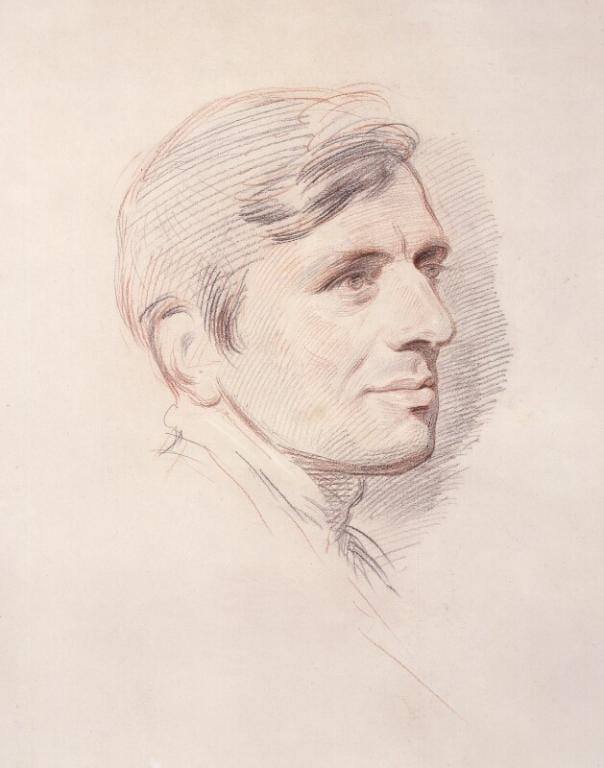
Photo credit: St. John Henry Cardinal Newman in 1844 [public domain]
***
Previous Post

May 29, 2020
Do Catholic Reactionary Sites Have Little Influence?
Next Post

May 31, 2020 Catholic Development of Doctrine: A Defense: Part II
Browse Our Archives
Select a Category & Last Things About Me Anti-Catholicism Atheism & Agnosticism Baptism and Sacramentalism Bible and Tradition Blessed Virgin Mary Books by Dave Armstrong C. S. Lewis Calvinism & General Protestantism Catholic Apologetics Catholic Apologists Catholic conversion Catholic converts Christmas Church (Ecclesiology) Church History Conversion and Converts Development of Doctrine Eastern Orthodoxy Ecumenism & Christian Unity Eucharist & Liturgy Fathers of the Church French Translations G. K. Chesterton Hell Hell & Satan Hell & Satan & Last Things Heresies & Comparative Religion Holistic Health Inquisition & Crusades & Scandals James White Jews & Judaism & Old Testament John Calvin John Henry Newman Liberal / Modernist Theology Life Issues Literary Resume Lutheranism Mariology Martin Luther Music Orthodoxy Papacy & Infallibility Personal Page Philosophy & Science Political & Ethical & Moral Issues Protestant Persecution & Intolerance Protestantism Purgatory Purgatory & Penance Romantic & Imaginative Theology Saints & Purgatory & Penance Salvation Salvation & Justification Satan & Last Things Sexuality and Gender Issues Spanish Translations Traditionalism vs. Radical Catholic Reactionaries Traducciones al español / tradução para português Trinitarianism & Christology Uncategorized Videos
Select a Month October 2026 September 2026 August 2026 July 2026 June 2026 May 2026 April 2026 March 2026 February 2026 January 2026 December 2025 November 2025 October 2025 September 2025 August 2025 July 2025 June 2025 May 2025 April 2025 March 2025 February 2025 January 2025 December 2024 November 2024 October 2024 September 2024 August 2024 July 2024 June 2024 May 2024 April 2024 March 2024 February 2024 January 2024 December 2023 November 2023 October 2023 September 2023 August 2023 July 2023 June 2023 May 2023 April 2023 March 2023 February 2023 January 2023 December 2022 November 2022 October 2022 September 2022 August 2022 July 2022 June 2022 May 2022 April 2022 March 2022 February 2022 January 2022 December 2021 November 2021 October 2021 September 2021 August 2021 July 2021 June 2021 May 2021 April 2021 March 2021 February 2021 January 2021 December 2020 November 2020 October 2020 September 2020 August 2020 July 2020 June 2020 May 2020 April 2020 March 2020 February 2020 January 2020 December 2019 November 2019 October 2019 September 2019 August 2019 July 2019 June 2019 May 2019 April 2019 March 2019 February 2019 January 2019 December 2018 November 2018 October 2018 September 2018 August 2018 July 2018 June 2018 May 2018 April 2018 March 2018 February 2018 January 2018 December 2017 November 2017 October 2017 September 2017 August 2017 July 2017 June 2017 May 2017 April 2017 March 2017 February 2017 January 2017 December 2016 November 2016 October 2016 September 2016 August 2016 July 2016 June 2016 May 2016 April 2016 March 2016 February 2016 January 2016 December 2015 November 2015 October 2015 September 2015 August 2015 July 2015 June 2015 May 2015 April 2015 March 2015 February 2015 January 2015 December 2014 November 2014 October 2014 September 2014 August 2014 July 2014 June 2014 April 2014 March 2014 February 2014 January 2014 December 2013 November 2013 October 2013 September 2013 August 2013 July 2013 June 2013 April 2013 March 2013 February 2013 January 2013 December 2012 November 2012 October 2012 September 2012 August 2012 July 2012 June 2012 May 2012 April 2012 March 2012 February 2012 January 2012 December 2011 November 2011 October 2011 September 2011 August 2011 July 2011 June 2011 April 2011 March 2011 February 2011 October 2010 September 2010 August 2010 July 2010 April 2010 March 2010 December 2009 October 2009 August 2009 July 2009 June 2009 May 2009 March 2009 February 2009 October 2008 September 2008 April 2008 March 2008 February 2008 January 2008 December 2007 November 2007 October 2007 May 2007 March 2007 February 2007 January 2007 November 2006 October 2006 September 2006 August 2006 July 2006 June 2006 May 2006 April 2006 March 2006 February 2006 October 2005 June 2005 April 2005 February 2005 July 2004 May 2004 April 2004
Follow Us!
TAKE THE
Religious Wisdom Quiz
What did John see coming down from heaven in Revelation 21?
Select your answer to see how you score.
The Ark of the Covenant The four horsemen The New Jerusalem A chariot of fire
Books by This Author Books by Dave Armstrong
Related posts from Biblical Evidence for Catholicism

Top Three Anti-Catholic Lies About Catholicism
Biblical Evidence for Catholicism

Three More Anti-Catholic Lies About Catholicism (#6-4)
Biblical Evidence for Catholicism

Top Ten Anti-Catholic Lies (#10-7)
Biblical Evidence for Catholicism

Jesus Founded the [Catholic] Church. If Not Him,...
Biblical Evidence for Catholicism
TRENDING AT PATHEOS Catholic

Swimfan: Forgotten Aughts Pleasures
This is a recovery effort. In 2002, My Big Fat Greek Wedding...

Top Three Anti-Catholic Lies About Catholicism
This is my initial transcript for the video, "THE 3 WORST...

Pope Leo Celebrates Mass for Nurses & Docs...
I don't have any idea how he did it, but Pope Leo...

The Sermon on the Mount, Part I: Matthew...
The Sermon on the Mount, Part I (Matthew 4:12-5:12) St. Matthew moves...

What's up from Crossway: Reviewing some of their latest A few weeks...

Janie Learns the Way of the Cross: A...
Teaching children about Jesus' Passion can be challenging. Many parents and educators...
view all Catholic blogs
Ad-Free & Subscriber Log-In Subscription Support
- About Us
- 2026 Calendar
- Videos
- Podcasts
- Library of World Religions
- Faith In Media Tracker
- Advertise With Us
- Write for Us
- Privacy Policy
- Terms of Service
- Do Not Sell My Data
- Contact Us
- Radiant Digital
- Manage Newsletter Subscriptions
- Unsubscribe From Notifications
- Sitemap
Copyright 2008-2026, Patheos. All rights reserved.
Subscription Support Ad-Free & Subscriber Log-In
Follow Patheos