
BuddhistCatholicContemplativeEvangelicalGeneral ChristianHinduJewishLatter-day SaintMuslimNew VisionsProgressive Christian
Beliefs
- Buddhist
- Catholic
- Contemplative
- Evangelical
- General Christian
- Hindu
- Jewish
- Latter-day Saint
- More Voices
- Muslim
- New Visions
- Pagan
- Progressive Christian
Topics
- Religion News
- Food and Religion
- Sports and Religion
- Religious Art
- Religious Music and Entertainment
- Religious Events
- History and Religion
- Style and Religion
- Politics and Religion
- Women in Religion
- Recreation Outdoors and Religion
- Business Finance and Religion
- Careers Workplace and Religion
- Education and Religion
- Family Parenting and Religion
- Health Fitness and Religion
- Home and Religion
- Relationships and Religion
- Technology and Religion
- Travel and Religion
Columnists
- Buddhist Columnists
- Business Finance and Religion Columnists
- Careers Workplace and Religion Columnists
- Catholic Columnists
- Contemplative Columnists
- Education and Religion Columnists
- Evangelists Columnists
- Family Parenting and Religion Columnists
- General Christian Columnists
- Health Fitness and Religion Columnists
- Hindu Columnists
- History and Religion Columnists
- Home and Religion Columnists
- Jewish Columnists
- More Voices Columnists
- Latter Day Columnists
- Muslim Columnists
- New Visions Columnists
- Nonreligious Columnists
- Pagan Columnists
- Politics and Religion Columnists
- Progressive Columnists
- Recreation Outdoors and Religion Columnists
- Relationships and Religion Columnists
- Religion News Columnists
- Religious Art Columnists
- Religious Events Columnists
- Religious Music and Entertainment Columnists
- Sports and Religion Columnists
- Style and Religion Columnists
- Technology and Religion Columnists
- Travel and Religion Columnists
- Women in Religion Columnists
Resource Library
- 2026 Calendar
- Library of World Religions
- The 100 Most Holy Places on Earth
- Patheos Answers
- Podcasts
- Videos
- Faith Leaders Database
- Anglican Episcopalian
- Bahai
- Baptist
- Buddhism
- Christianity
- Confucianism
- Eastern Orthodoxy
- Hinduism
- Holiness and Pentecostal
- ISKCON
- Islam
- Judaism
- Lutheran
- Methodist
- The Church of Jesus Christ of Latter-day Saints
- New Age
- Paganism
- Presbytarian and Reformed
- Protestantism
- Religion Behind the Scenes
- Roman Catholic
- Scientology
- Shia Islam
- Sikhism
- Sufism
- Sunni Islam
- Taoism
- Zen
- See all religions
Research Tools
 Ad-Free & Subscriber Log-In Subscription Support
Ad-Free & Subscriber Log-In Subscription Support
Follow Patheos 

- Trending:
- Forgiveness
- |
- Marriage
- |
- Consciousness
- |
- Death Penalty
- |
- Election
- |
- Halloween

-
About
-
Catholic Apologetics
-
Church History
-
Great Apologists
-
Christian Worldview
-
Protestantism & Misc.
- Home
- Catholic
- History and Religion
- Vatican II Upheld Biblical Inerrancy (vs. David Palm)
Vatican II Upheld Biblical Inerrancy (vs. David Palm)
Last updated on: June 5, 2026 at 11:56 pm by Dave Armstrong
Vatican II Upheld Biblical Inerrancy (vs. David Palm) 2026-06-05T23:56:11-04:00 Dave Armstrong
Patheos Explore the world's faith through different perspectives on religion and spirituality! Patheos has the views of the prevalent religions and spiritualities of the world.
David Palm’s words will be in blue. He is a traditionalist and friend of mine for some 25 years now. Words of James Scott will be in green. This discussion took place on my Facebook page.
*****
One thing I can’t get over is the blatant hypocrisy of the Radtrad crowd. They hate Vatican II because of its alleged “ambiguity” but their complaints about it are often ambiguous. Where in the text is the blatant doctrinal error? In thirty years I have never received a good answer.
Quiet James! You’ll expose the foolish game they have now been playing for 55 years . . .
I think this is a misrepresentation. If the claim was “blatant” doctrinal error then it couldn’t be at the same time “ambiguous”. We’ve already discussed the ambiguity in Dei Verbum 11 which even Cardinal Pell and Fr. Fessio take to mean there can be errors in Scripture. Likewise there are ambiguities with regard to ecumenism, religious liberty, the liturgy, etc. As mainstream a Catholic priest as Msgr. George Kelly wrote in Battle for the American Church that “The documents of the Council contain enough basic ambiguities to make the post-conciliar difficulties understandable.” What many of us have been asking for is simply an official interpretation of those conciliar texts in harmony with past magisterial teachings, along the lines of what was done by the CDF in the controversy over the phrase “substitit in”. It seems it shouldn’t be too much to ask that after all this time we have magisterial rulings rather than having to rely on theologians or even lay apologists to propose unofficial harmonizations.
I defended Vatican II in twelve lengthy papers (vs. reactionary Paolo Pasqualucci). You’re welcome to interact with any of those (maybe you could actually be persuaded of a thing or two), but you rarely want to do that with me. I’m with James. I have yet to find any insurmountable “problems” in the documents. I’m not claiming to be an expert; just sayin’ that I don’t see the problem.
Dave, we don’t need any more amateur attempts to explain the ambiguities. We need official, magisterial harmonizations with prior magisterial teaching. It’s about time.
I see. So you think these difficulties are so beyond any doubt that you refuse to even discuss them unless popes and high-ranking bishops give official interpretations . . .
Of course (almost needless to say), I cite important figures all through my twelve defenses. I never reply on my own reasoning alone in such weighty matters. Why should anyone care what I think? So I cite folks with much more credentials and authority.
I remember reading The Battle for the Bible (1977) by Harold Lindsell, back in the day when I was a fervent evangelical, and his making the point in the book that the Catholic Church had a doctrine of the inspiration and infallibility of Scripture that was as “high” as any Protestant view (it really struck me at the time, and I was delighted to learn of it). And that was well past Vatican II. So even Protestant scholars can see this, but not our beloved traditionalists and reactionaries.
The text in question is from Dei Verbum, III, Article 11:
Therefore, since everything asserted by the inspired authors or sacred writers must be held to be asserted by the Holy Spirit, it follows that the books of Scripture must be acknowledged as teaching solidly, faithfully and without error that truth which God wanted put into sacred writings (5) for the sake of salvation. Therefore “all Scripture is divinely inspired and has its use for teaching the truth and refuting error, for reformation of manners and discipline in right living, so that the man who belongs to God may be efficient and equipped for good work of every kind” (2 Tim. 3:16-17, Greek text).
[Footnotes: 5. cf. St. Augustine, “Gen. ad Litt.” 2, 9, 20:PL 34, 270-271; Epistle 82, 3: PL 33, 277: CSEL 34, 2, p. 354. St. Thomas, “On Truth,” Q. 12, A. 2, C.Council of Trent, session IV, Scriptural Canons: Denzinger 783 (1501). Leo XIII, encyclical “Providentissimus Deus:” EB 121, 124, 126-127. Pius XII, encyclical “Divino Afflante Spiritu:” EB 539.]
This conciliar passage contains a fundamental ambiguity which has misled even normally trustworthy churchmen such as Fr. Fessio and Card. Pell into limiting Scripture’s inerrancy to only those parts of Scripture which were written “for the sake of our salvation”. I submit that that sort of evidence indicates that the ambiguity is real and genuinely problematic. In light of that sort of confusion, am I wrong to state that an official, magisterial clarification is called for?
It tells us the Bible was written for salvation, not that only that which discusses salvation is true. There is no way to get from this to the error of limited inerrancy because all that is asserted to be true by sacred scripture is to be taken as true: regardless of whether it pertains to salvation. Of course that doesn’t eliminate the possibility of relative error in the text, but there is no true error.
Is Footnote 5 for this passage, which cites two works of St. Augustine, St. Thomas Aquinas, the council of Trent, Pope Leo XIII, and Ven. pope Pius XII, suspect, too, or did Vatican II distort their thoughts?
What am I missing here? The text says that “everything asserted” (i.e., all of Scripture) . . . [teaches] “truth which God wanted put into sacred writings for the sake of salvation.”
Then you say that Pell and Fessio are somehow talking about “only those parts of Scripture” that do this stuff. But Dei Verbum didn’t state that. So if this is the sort of the fabled “ambiguity” you are trying to establish, I must say it is a completely failed example, and rests on a total distortion of the interpreters, not the document.
I thoroughly demolished this false interpretation in one of the series of twelve articles I referred you to, in reply to Pasqualucci (that you won’t debate and maybe won’t even read [?], either): #6: Dei Verbum & the Bible [7-16-19]. In this article I relied on the argument from Fr. Brian W. Harrison (who is now a reactionary, too, I believe), in his article: “The Truth and Salvific Purpose of Sacred Scripture, According to Dei Verbum, Article 11″ (Roman Theological Forum, July 1995).
He demolishes interpretations of the sort you reference. But if you refuse to read what he says, then you will remain uninformed. In this case, ignorance is not bliss. You remain conflicted and troubled about Vatican II, by attempting to ignore orthodox defenses of it, by excellent scholars like Fr. Harrison: who clearly can’t be accused of liberal bias, whether at the time he wrote it (25 years ago), or now, with his current reactionary inclinations.
Fr. Harrison and the late Fr. Most ran point on this, but for some reason traditionalists today (I mean the sane loyal ones) want to pretend none of that has been written? Weird?
Jim Blackburn wrote an excellent article, “Is Scripture Inerrant?” (Catholic Answers, 1-1-14). He recounts the constant tradition of “unrestricted inerrancy”:
In 1893 Pope Leo XIII issued the most comprehensive treatment of Scripture interpretation the world had seen. Providentissimus Deus was a landmark encyclical that sought to correct the plethora of error about Scripture then circulating the world. In it, the pontiff traced the history of Scripture in the Catholic Church, addressed challenges, and defended the truth of Scripture. Pope Leo affirmed an unrestricted understanding of the inerrancy of Scripture:
For all the books which the Church receives as sacred and canonical are written wholly and entirely, with all their parts, at the dictation of the Holy Ghost; and so far is it from being possible that any error can co-exist with inspiration, that inspiration not only is essentially incompatible with error but excludes and rejects it as absolutely and necessarily, as it is impossible that God Himself, the supreme Truth, can utter that which is not true. . . . It follows that those who maintain that an error is possible in any genuine passage of the sacred writings either pervert the Catholic notion of inspiration or make God the author of such error (Providentissimus Deus, 20-21).
Pope St. Pius X in his 1907 Lamentabili Sane condemned the proposition “Divine inspiration does not extend to all of Sacred Scriptures so that it renders its parts, each and every one, free from every error” (LS 11).
Pope Benedict XV re-affirmed Pope Leo XIII’s teaching in his own encyclical Spiritus Paraclitus in 1920:
But although these words of our predecessor leave no room for doubt or dispute, it grieves us to find that not only men outside, but even children of the Catholic Church—nay, what is a peculiar sorrow to us, even clerics and professors of sacred learning—who in their own conceit either openly repudiate or at least attack in secret the Church’s teaching on this point (SP 18).
Benedict appealed to the life and teaching of St. Jerome as a model for timeless treatment of Scripture. Specifically, he noted, “Jerome further shows that the immunity of Scripture from error or deception is necessarily bound up with its divine inspiration and supreme authority” (SP 13). Also, “St. Jerome’s teaching on this point serves to confirm and illustrate what our predecessor of happy memory, Leo XIII, declared to be the ancient and traditional belief of the Church touching the absolute immunity of Scripture from error” (SP 16).
Pope Pius XII’s 1943 encyclical Divino Afflante Spiritu again affirmed the teaching of Leo XIII in light of biblical criticism and the difficulties of his own time. Of significant note, the pontiff used the incarnational analogy to compare the unrestricted inerrancy of sacred scripture with the absolute sinlessness of Jesus: “For as the substantial Word of God became like to men in all things, except sin, so the words of God, expressed in human language, are made like to human speech in every respect, except error” (DAS 37).
Thus, just as the Word took on human flesh in Jesus, the Word took on human language in Sacred Scripture. And just as Jesus is fully human yet fully divine, Scripture is authored by both human authors and the divine Author. And finally, just as Jesus is like men in all ways except he is without sin, Scripture is like human literature in all ways except it is without error.
In his 1950 encyclical Humani Generis, Pope Pius XII dealt with the issue yet again: “For some . . . put forward again the opinion, already often condemned, which asserts that immunity from error extends only to those parts of the Bible that treat of God or of moral and religious matters” (HG 22).
As we can see, popes taught the unrestricted inerrancy of Scripture over the decades leading up to Vatican II.
Then Blackburn cites Scott Hahn, who argues from the footnote of the disputed section (similarly to how I did above):
Hahn expands his view of the sentence in question in light of its footnote:
[T]he lengthy footnote attached to this sentence cites multiple sources from the tradition which speak of Scripture’s comprehensive conformity to the truth. Thus, in agreement with the document’s use of footnotes in general, the references in the present footnote underscore the continuity of the Council’s teaching with theological and magisterial positions of the past.
. . . Hahn also considers the sentence in light of its broader textual context:
[S]ince the preceding clause insists that everything (omne id) asserted by the human authors is likewise asserted by the Holy Spirit, a restricted inerrancy reading leaves no way to avoid imputing misstatements of fact to the divine author. Yet earlier papal statements declare such a proposition flatly “impossible.”
Finally, Hahn points out the absurdity of a supposed silent doctrinal shift:
[I]t borders on inconceivable that the Council fathers were introducing a development of doctrine with virtually no indication that they were doing so and no explanation as to why the time was ripe for taking such a momentous step. If this were the case, the Council could only be charged with dodging a grave responsibility to the people of God.
Hahn concludes that Dei Verbum did not change the Church’s teaching on inerrancy:
Taken together, the cumulative force of these observations supports the contention that Dei Verbum’s teaching on biblical truth stands in doctrinal continuity with previous ecclesiastical teaching on the inerrancy of Scripture. One can legitimately speak of a new emphasis on the Bible’s salvific purpose, but not of a fundamental departure from the Church’s historic position on its unlimited truthfulness.
See also: “Magisterial Teaching on the Inspiration and Truth of Scripture: Precedents and Prospects” (Pablo T. Gadenz, Letter & Spirit 6 [2010] ).
I found an article that deals with footnote 5: “For the Sake of Our Salvation”: Interpreting Dei Verbum, Art. 11, Fifty Years Later” (Robert P. Miller, Journal of Scriptural Reasoning, 11-16-16):
In order to clarify what the council’s intended meaning was in writing this paragraph, the fathers of the council placed a footnote in the hopes that any confusion would be avoided. The footnote contains citations from Augustine, Aquinas, the Council of Trent, Leo XIII, and Pius XII.
The first reference to St. Augustine is a lengthy comment from his work on the literal interpretation of Genesis. Given Augustine’s belief in the historical accuracy of Genesis, one would expect him to give a defense of this in his work, but instead of defending a scientific position, Augustine goes on to explain that the meaning of a text is more important than scientific questions. This quotation demonstrates that Augustine’s major concern was to distinguish what was important and what was not important. He is not interested in the shape of the earth even though he believes that the sacred writers knew the truth about such matters, for the Holy Spirit spoke to them only what was profitable for their salvation. Here, Augustine makes no distinction about what is or is not profitable for salvation. For him, all of scripture was profitable for salvation.
A second reference to St. Augustine is from Epistle 82.3. Here Augustine is replying to a letter from Jerome. After discussing how they might engage each other in a “friendlier” discussion, Augustine writes:
For I confess to your charity that I have learned to yield this respect and honor only to the canonical books of Scripture: of these alone do I most firmly believe that the authors were completely free from error. And if in these writings I am perplexed by anything which appears to me opposed to truth, I do not hesitate to suppose that either the manuscript is faulty, or the translator has not caught the meaning of what was said, or I myself have failed to understand it.
. . . in this text, Augustine indicates that the authors of scripture were “completely free from error.” Likewise, he indicates that difficult passages of scripture can only “appear” to be opposed to the truth, and this would be due either to errors in the transmission of the manuscript or mistranslation.
The council also quotes Thomas Aquinas’ work “Disputed Questions on Truth.” In this text, Aquinas draws directly on Augustine when addressing the question: “Does Prophecy Deal with Conclusions which Can Be Known Scientifically?”
In his answer, Aquinas says that “All those things the knowledge of which can be useful for salvation are the matter of prophecy, whether they are past, or future, or even eternal, or necessary, or contingent. But those things which cannot pertain to salvation are outside the matter of prophecy.” However, he immediately goes on to add that by “necessary for salvation,” he means “necessary for the instruction in the faith or the formation of morals.” Strikingly, he asserts that “many things which are proved in the sciences can be useful for this [that is, salvation].”…For this reason, Aquinas ultimately answers the question in the affirmative: “Conclusions which are demonstrated in the sciences can belong to prophecy.”
[ . . . ]
The next note is a reference to the Council of Trent, which wrote on the controversy surrounding the canonical scriptures:
This [Gospel], of old promised through the Prophets in the Holy Scriptures, our Lord Jesus Christ, the Son of God, promulgated first with His own mouth, and then commanded it to be preached by His Apostles to every creature as the source at once of all saving truth and rules of conduct; It also clearly perceives that these truths and rules are contained in the written books and in the unwritten traditions, which, received by the Apostles from the mouth of Christ Himself, or from the Apostles themselves, the Holy Ghost dictating, have come down to us, transmitted as it were from hand to hand.
Here, the “saving truth and rules of conduct” (or moral discipline) is not set in opposition with truths not pertaining to salvation. While those who subscribe to the limited inerrancy of scripture could admit that the passage does not address the subject of historical or scientific truth, neither can he cite this silent witness in his favor.
The note also refers to what Leo XIII wrote in Providentissimus Deus regarding the extent of inspiration and the incompatibility of inspiration with error. His emphatic insistence on the inerrancy of scripture is evident in several passages. He writes:
For all the books which the Church receives as sacred and canonical are written wholly and entirely, with all their parts, at the dictation of the Holy Spirit; and so far is it from being possible that any error can coexist with inspiration, that inspiration not only is essentially incompatible with error, but excludes it and rejects it as absolutely and necessarily as it is impossible that God Himself, the supreme Truth, can utter that which is not true. (emphasis added)
Leo continues speaking about the incompatibility of inspiration with error saying:
It follows that those who maintain that an error is possible in any genuine passage of the sacred writings either pervert the Catholic notion of inspiration or make God the author of such error. And so emphatically were all the Fathers and Doctors agreed that the divine writings…are free from all error…
[ . . . ]
The final citation in footnote five refers to Divino Afflante Spiritu (DAS) by Pius XII who comments on the work of Leo XIII. Pius begins by declaring that the purpose for which Leo wrote was to “set forth the teaching on the truth” of scripture and “to defend it from attack.” Pius then states:
Finally it is absolutely wrong and forbidden “either to narrow inspiration to certain passages of Holy Scripture, or to admit that the sacred writer has erred,” since divine inspiration “not only is essentially incompatible with error but excludes and rejects it as absolutely and necessarily as it is impossible that God Himself, the supreme Truth, can utter that which is not true. This is the ancient and constant faith of the Church.
In addition, Pius went further in DAS by making the connection between the inerrancy of scripture and the incarnation of Christ. He writes: “For as the substantial Word of God became like to men in all things ‘except sin’ (Heb 4:15), so the words of God, expressed in human language, are made like to human speech in every respect except error.”
In effect, we already have David Palm’s requested “official, magisterial clarification.” Past popes (Leo XIII, Ven. Pius XII) were cited in the relevant footnote, teaching unlimited inerrancy, and according to Catholic dogmatic theology and how these things routinely work (what footnotes mean in magisterial documents; the role they play), that is sufficient to interpret the text under question in an entirely traditional manner. In other words, it settles it, and it does so from the magisterium: right from popes. Thus, the request has already been granted.
This is perfectly legitimate, but it won’t be accepted, just as similar arguments regarding Amoris Laetitia were not. Vatican II Derangement Syndrome and Pope Francis Derangement Syndrome simply cannot be overcome, no matter how reasonable and in accord with Sacred Tradition any explanation we provide, is, because the hostility of the foundational premise is too profound.
As the saying goes, “a man convinced against his will retains his original beliefs still.”
***
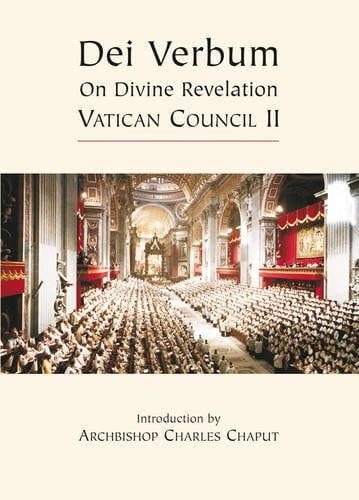
Photo credit: book cover from the bookseller Abe Books.com.
***
Traditionalism vs. Radical Catholic Reactionaries
Radical Catholic Reactionaries
Vatican II & biblical inerrancy
Previous Post
April 22, 2020
Luther & Mary's Virginity (James Swan's Silly Tactics)
Next Post

April 23, 2020 Buzzing, Mosquito-Like Trashers of Amoris Laetitia
Browse Our Archives
Select a Category & Last Things About Me Anti-Catholicism Atheism & Agnosticism Baptism and Sacramentalism Bible and Tradition Blessed Virgin Mary Books by Dave Armstrong C. S. Lewis Calvinism & General Protestantism Catholic Apologetics Catholic Apologists Catholic conversion Catholic converts Christmas Church (Ecclesiology) Church History Conversion and Converts Development of Doctrine Eastern Orthodoxy Ecumenism & Christian Unity Eucharist & Liturgy Fathers of the Church French Translations G. K. Chesterton Hell Hell & Satan Hell & Satan & Last Things Heresies & Comparative Religion Holistic Health Inquisition & Crusades & Scandals James White Jews & Judaism & Old Testament John Calvin John Henry Newman Liberal / Modernist Theology Life Issues Literary Resume Lutheranism Mariology Martin Luther Music Orthodoxy Papacy & Infallibility Personal Page Philosophy & Science Political & Ethical & Moral Issues Protestant Persecution & Intolerance Protestantism Purgatory Purgatory & Penance Romantic & Imaginative Theology Saints & Purgatory & Penance Salvation Salvation & Justification Satan & Last Things Sexuality and Gender Issues Spanish Translations Traditionalism vs. Radical Catholic Reactionaries Traducciones al español / tradução para português Trinitarianism & Christology Uncategorized Videos
Select a Month October 2026 September 2026 August 2026 July 2026 June 2026 May 2026 April 2026 March 2026 February 2026 January 2026 December 2025 November 2025 October 2025 September 2025 August 2025 July 2025 June 2025 May 2025 April 2025 March 2025 February 2025 January 2025 December 2024 November 2024 October 2024 September 2024 August 2024 July 2024 June 2024 May 2024 April 2024 March 2024 February 2024 January 2024 December 2023 November 2023 October 2023 September 2023 August 2023 July 2023 June 2023 May 2023 April 2023 March 2023 February 2023 January 2023 December 2022 November 2022 October 2022 September 2022 August 2022 July 2022 June 2022 May 2022 April 2022 March 2022 February 2022 January 2022 December 2021 November 2021 October 2021 September 2021 August 2021 July 2021 June 2021 May 2021 April 2021 March 2021 February 2021 January 2021 December 2020 November 2020 October 2020 September 2020 August 2020 July 2020 June 2020 May 2020 April 2020 March 2020 February 2020 January 2020 December 2019 November 2019 October 2019 September 2019 August 2019 July 2019 June 2019 May 2019 April 2019 March 2019 February 2019 January 2019 December 2018 November 2018 October 2018 September 2018 August 2018 July 2018 June 2018 May 2018 April 2018 March 2018 February 2018 January 2018 December 2017 November 2017 October 2017 September 2017 August 2017 July 2017 June 2017 May 2017 April 2017 March 2017 February 2017 January 2017 December 2016 November 2016 October 2016 September 2016 August 2016 July 2016 June 2016 May 2016 April 2016 March 2016 February 2016 January 2016 December 2015 November 2015 October 2015 September 2015 August 2015 July 2015 June 2015 May 2015 April 2015 March 2015 February 2015 January 2015 December 2014 November 2014 October 2014 September 2014 August 2014 July 2014 June 2014 April 2014 March 2014 February 2014 January 2014 December 2013 November 2013 October 2013 September 2013 August 2013 July 2013 June 2013 April 2013 March 2013 February 2013 January 2013 December 2012 November 2012 October 2012 September 2012 August 2012 July 2012 June 2012 May 2012 April 2012 March 2012 February 2012 January 2012 December 2011 November 2011 October 2011 September 2011 August 2011 July 2011 June 2011 April 2011 March 2011 February 2011 October 2010 September 2010 August 2010 July 2010 April 2010 March 2010 December 2009 October 2009 August 2009 July 2009 June 2009 May 2009 March 2009 February 2009 October 2008 September 2008 April 2008 March 2008 February 2008 January 2008 December 2007 November 2007 October 2007 May 2007 March 2007 February 2007 January 2007 November 2006 October 2006 September 2006 August 2006 July 2006 June 2006 May 2006 April 2006 March 2006 February 2006 October 2005 June 2005 April 2005 February 2005 July 2004 May 2004 April 2004
Follow Us!
TAKE THE
Religious Wisdom Quiz
Who prayed in a den of lions?
Select your answer to see how you score.
Elijah Noah Daniel David
Books by This Author Books by Dave Armstrong
Related posts from Biblical Evidence for Catholicism

Jesus Founded the [Catholic] Church. If Not Him,...
Biblical Evidence for Catholicism

A Few "Worst" & "Best" Arguments vs. Protestantism
Biblical Evidence for Catholicism

Jerusalem Council vs. James White & Sola Scriptura
Biblical Evidence for Catholicism

Biblical Perspicuity: Absurd Anti-Catholic "Defense"
Biblical Evidence for Catholicism
TRENDING AT PATHEOS Catholic

Swimfan: Forgotten Aughts Pleasures
This is a recovery effort. In 2002, My Big Fat Greek Wedding...

Top Three Anti-Catholic Lies About Catholicism
This is my initial transcript for the video, "THE 3 WORST...

Pope Leo Celebrates Mass for Nurses & Docs...
I don't have any idea how he did it, but Pope Leo...

The Sermon on the Mount, Part I: Matthew...
The Sermon on the Mount, Part I (Matthew 4:12-5:12) St. Matthew moves...

What's up from Crossway: Reviewing some of their latest A few weeks...

Janie Learns the Way of the Cross: A...
Teaching children about Jesus' Passion can be challenging. Many parents and educators...
view all Catholic blogs
Ad-Free & Subscriber Log-In Subscription Support
- About Us
- 2026 Calendar
- Videos
- Podcasts
- Library of World Religions
- Faith In Media Tracker
- Advertise With Us
- Write for Us
- Privacy Policy
- Terms of Service
- Do Not Sell My Data
- Contact Us
- Radiant Digital
- Manage Newsletter Subscriptions
- Unsubscribe From Notifications
- Sitemap
Copyright 2008-2026, Patheos. All rights reserved.
Subscription Support Ad-Free & Subscriber Log-In
Follow Patheos