
BuddhistCatholicContemplativeEvangelicalGeneral ChristianHinduJewishLatter-day SaintMuslimNew VisionsProgressive Christian
Beliefs
- Buddhist
- Catholic
- Contemplative
- Evangelical
- General Christian
- Hindu
- Jewish
- Latter-day Saint
- More Voices
- Muslim
- New Visions
- Pagan
- Progressive Christian
Topics
- Religion News
- Food and Religion
- Sports and Religion
- Religious Art
- Religious Music and Entertainment
- Religious Events
- History and Religion
- Style and Religion
- Politics and Religion
- Women in Religion
- Recreation Outdoors and Religion
- Business Finance and Religion
- Careers Workplace and Religion
- Education and Religion
- Family Parenting and Religion
- Health Fitness and Religion
- Home and Religion
- Relationships and Religion
- Technology and Religion
- Travel and Religion
Columnists
- Buddhist Columnists
- Business Finance and Religion Columnists
- Careers Workplace and Religion Columnists
- Catholic Columnists
- Contemplative Columnists
- Education and Religion Columnists
- Evangelists Columnists
- Family Parenting and Religion Columnists
- General Christian Columnists
- Health Fitness and Religion Columnists
- Hindu Columnists
- History and Religion Columnists
- Home and Religion Columnists
- Jewish Columnists
- More Voices Columnists
- Latter Day Columnists
- Muslim Columnists
- New Visions Columnists
- Nonreligious Columnists
- Pagan Columnists
- Politics and Religion Columnists
- Progressive Columnists
- Recreation Outdoors and Religion Columnists
- Relationships and Religion Columnists
- Religion News Columnists
- Religious Art Columnists
- Religious Events Columnists
- Religious Music and Entertainment Columnists
- Sports and Religion Columnists
- Style and Religion Columnists
- Technology and Religion Columnists
- Travel and Religion Columnists
- Women in Religion Columnists
Resource Library
- 2026 Calendar
- Library of World Religions
- The 100 Most Holy Places on Earth
- Patheos Answers
- Podcasts
- Videos
- Faith Leaders Database
- Anglican Episcopalian
- Bahai
- Baptist
- Buddhism
- Christianity
- Confucianism
- Eastern Orthodoxy
- Hinduism
- Holiness and Pentecostal
- ISKCON
- Islam
- Judaism
- Lutheran
- Methodist
- The Church of Jesus Christ of Latter-day Saints
- New Age
- Paganism
- Presbytarian and Reformed
- Protestantism
- Religion Behind the Scenes
- Roman Catholic
- Scientology
- Shia Islam
- Sikhism
- Sufism
- Sunni Islam
- Taoism
- Zen
- See all religions
Research Tools
 Ad-Free & Subscriber Log-In Subscription Support
Ad-Free & Subscriber Log-In Subscription Support
Follow Patheos 

- Trending:
- Forgiveness
- |
- Marriage
- |
- Consciousness
- |
- Death Penalty
- |
- Election
- |
- Halloween

-
About
-
Catholic Apologetics
-
Church History
-
Great Apologists
-
Christian Worldview
-
Protestantism & Misc.
- Home
- Catholic
- History and Religion
- Luther & Mary’s Virginity (James Swan’s Silly Tactics)
Luther & Mary’s Virginity (James Swan’s Silly Tactics)
Last updated on: June 6, 2026 at 12:42 am by Dave Armstrong
Luther & Mary’s Virginity (James Swan’s Silly Tactics) 2026-06-06T00:42:05-04:00 Dave Armstrong
Patheos Explore the world's faith through different perspectives on religion and spirituality! Patheos has the views of the prevalent religions and spiritualities of the world.
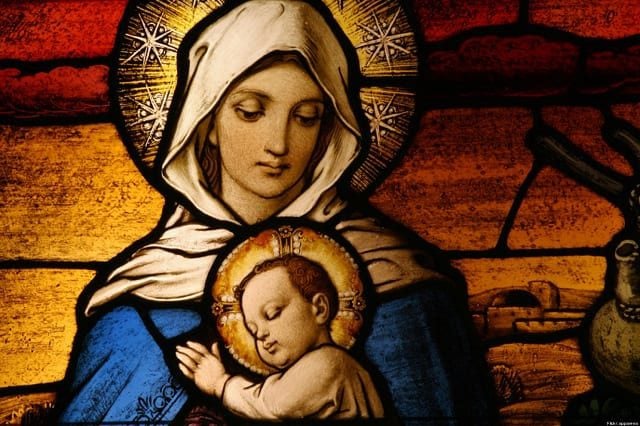
Reformed Protestant anti-Catholic polemicist James Swan specializes in belittling and mocking Catholics, as regards anything to do with Protestant Founder Martin Luther. He has developed a modus operandi that is remarkably uniform (and foolish). I thought I would take an example (a very typical one) of his posts to illustrate his methodology (endlessly repeated in hundreds of similar articles).
I’ve been interacting with Swan off and on for 17 years now. I’m very familiar with how he works, and distorts things for his own anti-Catholic purposes. Not to mention that I’ve often been the target myself of his systematic distortions (he has often been obsessed with my work in the past), and since I am the world’s biggest expert on my own writings, I have firsthand experience of his dubious tactics. I also happen to run the largest online Catholic web page devoted to a critique of Martin Luther, and have written two books about him as well (one / two).
The paper I’ll examine is called, “Luther Believed in Mary’s Perpetual Virginity?” (4-20-20). Swan’s words will be in blue; Martin Luther’s in green.
*****
A favorite tactic of Rome’s apologists is to find quotes from Martin Luther in which he says things sounding blatantly Roman Catholic and confusingly un-Protestant at the same time.
And what is wrong with that? I can think of at least two good reasons to do so:
it’s praiseworthy for Christians to find unity on whatever they can. That is a desire expressed by Jesus (His prayer of John 17) and often by St. Paul in the Bible (e.g., “maintain the unity of the Spirit”: Eph 4:3, RSV).
It’s also historically instructive to see how Protestants have developed or evolved through the years: often in ways that would be very foreign to their own founders, and almost always away from an initial strong similarity to Catholicism: so that Catholics are, surprisingly often, closer in belief to early Protestants than various of today’s Protestants are.
So: unity and history: both things are good to seek and better understand, respectively. Why, then, does Swan object to this? I can see objecting to citations that are outright false or taken out of context or misrepresented (which happens), but not to this overall practice of citing early Protestant views that are quite “Catholic.” Is it because it embarrasses Swan, that this is so often the case, and so he writes tedious articles like this one? That’s as good an explanation as any, I reckon.
Yes, it’s true Luther adhered to Mary’s perpetual virginity, . . .
And that’s precisely the point. So why engage in so much labor protesting when someone points out the obvious? It’s just odd . . .
but, it’s important to realize this convert has assumed the overarching context of a Roman Catholic historical interpretive paradigm.
Not necessarily. He may simply be pointing out common ground where it can be found: as I have done scores of times with Luther, Calvin, Zwingli, and other early Protestants.
Many of Rome’s defenders use a basic historical narrative: the early church testifies to to their beliefs only,
Yes, we Catholic apologists are weird that way: we produce much patristic material showing that the Church fathers were essentially Catholic in their beliefs, and far from the Protestantism that would arise some 1400 years later. I know it’s uncomfortable for a guy like Swan, but hey, historical facts is facts. We didn’t make them what they are.
those who don’t are exceptions or heretics,
Yep, there is a such a thing as a heretic, and heresy was determined by not adhering to what had always been believed, and passed down through apostolic succession. That was the bottom line. Everyone appealed to the Bible, so the Bible alone was not enough to settle the question of Christian orthodoxy.
if particulars of the early church don’t quite fit their narrative, “development of doctrine” is brought in to smooth the rough edges over.
It’s the usual asinine (and very ill-informed) denigration of development of doctrine by anti-Catholics, which I have criticized, sometimes in great depth, and against folks who never counter-respond for 18 and 20 years.
If Luther testifies to a distinctively Roman Catholic belief, his testimony is put forth to demonstrate modern Protestants have deviated from their founder and the universal testimony of the ancient church.
In cases where this is true (and there are many), again, what in the world is wrong with noting it? It’s simply historical examination. Luther (like fellow rebel Calvin) was scathingly critical of fellow Protestants who disagreed with him (favoring killing Anabaptists over the issue of adult baptism), so why is it that we can’t even point out when Protestants today do the same? Why is Swan so ultra-defensive about it?
Simply because Luther accepted perpetual virginity does not necessarily mean contemporary Protestants have to accept a distinctively Roman Catholic Marian dogma.
No one is saying that. We are simply noting interesting and “anomalous” facts of Protestant history.
Swan (rightly) goes after some Catholic citing Luther’s words on perpetual virginity, spread over 190 pages. He mentions my book on Mary (without naming me, as usual) as a possible source of the quotation. What he does not note is that I was very careful to separate the two citations, with full documentation from Luther’s Works (56 volumes of which I have in my own library, in hardcover). He points out the shoddy Catholic research, while ignoring and failing to credit the good research (my own) because that would be 1) contrary to his purpose, and 2) would constitute a compliment of my work, which he can never make, out of his extreme personal contempt towards my person and work alike.
Let’s go a bit deeper into Reformation history than many of Rome’s defenders do when they use these quotes. There’s are curious nuances typically left out of their cut-and-pasted versions sifted from That Jesus Christ Was Born a Jew. Previous to the words of Luther they cite, he makes some damning remarks of the “papist” understanding of Mary and perpetual virginity:
Then he goes on to cite Luther (Luther’s Works, vol. 45, p. 205), making one of his very characteristic contra-Catholic arguments:
Now just take a look at the perverse lauders of the mother of God. If you ask them why they hold so strongly to the virginity of Mary, they truly could not say.
Maybe some of them can say (I am one of those meself)! This is the standard Luther broad brush. Catholics are always clueless ignoramuses . . .
These stupid idolators do nothing more than to glorify only the mother of God; they extol her for her virginity and practically make a false deity of her.
Right. We don’t say a word about Jesus Christ . . . and Mary is almost in the Trinity (Quaternity?). I recently dealt with asinine, empty-headed claims like this from a contemporary Reformed polemicist (Douglas Wilson).
But Scripture does not praise this virginity at all for the sake of the mother; neither was she saved on account of her virginity.
Yep. I’ve never yet (in now 30 years) seen an educated Catholic claim otherwise. If Luther had, he could have produced him. But that’s not his style. It wrecks the straw men caricatures . . .
Indeed, cursed be this and every other virginity if it exists for its own sake, and accomplishes nothing better than its own profit and praise.
We agree! Mary is all about her Son. Our doctrine of Mariology is all about Christology, first and foremost. I have shown, for example, that even when Mary is honored in the most flowery language (e.g., by St. Alphonsus de Liguori), Jesus is always mentioned as God to be adored in the same context.
He held Mary retained her virginity during the birth of Christ (in partu) (LW 58:433-434). How was this possible? Luther held that Christ has a “spiritual mode” “to which he neither occupies nor yields space but passes through everything created as he wills,” including his mother (LW 37:222).
This is what is so extraordinary, because many (otherwise orthodox) Catholics do not hold this view today (that the birth itself was supernatural and not the usual physical process): even though it is a dogma of the church at the highest level. See:
Mary’s Perpetual Virginity “In Partu” (a Miraculous, Non-Natural Childbirth) is a Binding Catholic Dogma [9-24-08; expanded on 9-21-15]
Luther & Mary’s Virginity During Childbirth [10-12-11]
Mary Was a Virgin During Jesus’ Birth (In Partu) [9-19-14; slight modifications and additions on 4-18-18]
Mary’s Virginity During Childbirth: Ott’s Revision & Latin Analysis [9-29-15]
Biblical and Patristic Evidence for Mary’s “In Partu” Virginity [National Catholic Register, 11-14-19]
***
Three observations. First, Luther uses perpetual virginity to criticize his papal adversaries. He was keenly aware that when he spoke of Mary’s perpetual virginity, it had different emphasis than Rome’s version.
He assumes that; he doesn’t prove it. Luther too often thinks that just because he asserts some negative claim about the Catholic Church, that it must be true.
Don’t let Rome’s defenders respond by parsing out contemporary Mariology, as if everything has always been perfect.
Swan is as free as Luther was to actually (imagine this!) document and prove that we have ever regarded Mary as God. Good luck! Again, I’ve been studying historic Catholic theology for almost 30 years now as an apologist, and I’ve never seen anything remotely like Mary-worship and idolatry. It’s simply an anti-Catholic Protestant myth that it’s out there somewhere. Now, I’m not denying that no Catholic ever committed doctrinal or idolatrous excess as regards the Blessed Virgin Mary. They certainly have.
As always, I am talking about actual enshrined Catholic doctrines and dogmas; in the “books”: things we “officially” believe; just as Protestant beliefs are determined by consulting their own creeds and confessions like the Book of Concord or Westminster Confession; not by noting some half-drunk idiot antinomian “Protestant” in a bar in Leipzig or something . . . To his (partial) credit, Swan tries to produce such examples in a separate paper, but the closest he gets to official Catholic dogmas are Catholic prayer books, which carry no authority of the Catholic magisterium at all.
If Swan wants to determine historic Catholic Mariology (if he wants to attempt serious analysis, as opposed to playing silly polemical games), there are ways to do that. He can consult the latest version of Denzinger (Sources of Catholic Dogma, 43rd edition), or the summation of Catholic dogmatic theology by Ludwig Ott (2nd revised edition): both incidentally edited and translated by my good friend, Dr. Robert Fastiggi, who has attended by group theological discussions many times.
Luther points out that Mary fades from the biblical account after the birth, because the emphasis of the Scriptures are on her child.
Exactly! We fully agree. For this reason, we point out this very thing when we are taunted with the lack of material about Mary in the Bible. First things first. Mariology largely developed (not originated!) later, after the fine points of Christology had been developed and worked through by the early Church. Revelation 12, however, is not exactly a total fading-away of Mary.
Luther’s Mary, described in his exposition of the Magnificat, is that of a lowly and humble maiden that did housework her entire life. She has done nothing. There was no free-will choice to become the mother of Jesus or give her virginity to God.
Huh? Luther taught that Mary gave no free will consent to become the Mother of God? I highly doubt it. I can’t get to my Luther set right now because we are in the process of moving, but anyone who holds that Mary didn’t freely consent at the Annunciation has to explain her pretty clear words: “Behold, I am the handmaid of the Lord; let it be to me according to your word” (Lk 1:38, RSV). Was Mary some kind of programmed robot? She had a free will to say “yes” just as Eve did to say “no” to the serpent. This is why the Church fathers (at least as far back as Irenaeus: died c. 202) call Mary the New Eve or Second Eve: her “yes” reversed Eve’s “no.”
What other “virginity” was prevalent in the sixteenth century? The most popular was the virginity achieved by celibacy from monastic vows. To become a monk, one needed to take a vow of celibacy. Some of Rome’s defenders argue that Mary herself made a lifelong vow of virginity at the Annunciation: . . . In this view, Mary achieved the ascetic ideal.
It’s also the Jesus and St. Paul “ideal” (which is where Catholics got the idea):
Matthew 19:11-12 (RSV) But he said to them, “Not all men can receive this saying, but only those to whom it is given. [12] For there are eunuchs who have been so from birth, and there are eunuchs who have been made eunuchs by men, and there are eunuchs who have made themselves eunuchs for the sake of the kingdom of heaven. He who is able to receive this, let him receive it.”
1 Corinthians 7:7-8, 32-35, 38 I wish that all were as I myself am. But each has his own special gift from God, one of one kind and one of another. [8] To the unmarried and the widows I say that it is well for them to remain single as I do. . . . [32] I want you to be free from anxieties. The unmarried man is anxious about the affairs of the Lord, how to please the Lord; [33] but the married man is anxious about worldly affairs, how to please his wife, [34] and his interests are divided. And the unmarried woman or girl is anxious about the affairs of the Lord, how to be holy in body and spirit; but the married woman is anxious about worldly affairs, how to please her husband. [35] I say this for your own benefit, not to lay any restraint upon you, but to promote good order and to secure your undivided devotion to the Lord. . . . [38] So that he who marries his betrothed does well; and he who refrains from marriage will do better.
[C]ompare Luther’s Mary with the Catechism of the Catholic Church. Mary is celebrated as the “ever-virgin.”
Luther used the title “ever virgin” for Mary, according to The Annotated Luther: Volume 3: Church and Sacraments (edited by Paul W. Robinson, Minneapolis, Fortress Press, 2016. Contributor Erik H. Herrmann stated on page 35: “Luther would continue to use the title “the ever-Virgin Mary”.
Luther’s view of perpetual virginity is not exactly Rome’s view. When Luther speaks on the subject, it has some different underpinnings.
Swan simply has not shown that Luther’s view on perpetual virginity itself is essentially any different from our own.
It’s true that the early Reformers, particularly Luther, made comments about Mary that current Protestants would not make.
Yep. So why does Swan have a cow every time we simply point this out?
But similarly, there are comments made by Protestants today that would probably surprise Luther.
We know this to be a fact because some Protestants today say the same stupid things that some in Luther’s day said (e.g., about iconoclasm or a symbolic Eucharist or baptism or antinomianism), and he was incensed with them. Likewise, he would feel that way towards folks today who say and believe the same.
To steal a concept from Alister McGrath: the Reformers demonstrated both continuity and discontinuity with the period which immediately preceded it.
No kidding. Otherwise, they wouldn’t be called so-called “Reformers” would they?
It shouldn’t be at all surprising then to discover elements of Luther’s Mariology that echoed the medieval theological worldview.
This is usually how Protestants who disagree with such remnants of Catholic tradition rationalize it away: “Well, Luther was still immersed in the Catholic worldview, and so we expect to find some leftovers . . . ” Etc. They have to find some reason to reject these things as untrue, and so this is one of the most frequent tactics.
***
Related Reading
Martin Luther Was Extraordinarily Devoted to Mary [1994]
Perpetual Virginity of Mary: Held by All Protestant Reformers [1-27-02]
Martin Luther’s Mariology (Particularly the Immaculate Conception) [4-24-03; major revision: 4-7-08]
Counter-Reply: Martin Luther’s Mariology (Particularly the Immaculate Conception): Has Present-Day Protestantism Maintained the “Reformational” Heritage of Classical Protestant Mariology? (+ Part II | Part III) [4-26-03, at Internet Archive]
Second Reply Concerning Martin Luther’s Mariology [6-28-03; massive rebuttal!, at Internet Archive]
Mary’s Assumption & Historic Protestantism [6-30-08]
Mary Mother of God: Protestant Founders Agree (Luther, Calvin, Zwingli, and Bullinger) [10-10-08]
Luther & the “Immaculate Purification” of Mary [10-2-10]
My Luther Research Lied About Again (James Swan & CARM) [8-22-17]
Martin Luther vs. Nestorius Regarding “Mother of God” [3-28-18]
Martin Luther’s (“Catholic”) Mariology in a Nutshell [4-12-18; links added on 5-8-19]
***
Photo credit: Long Thiên (1-1-80) [Flickr / CC BY-SA 2.0 license]
***
anti-Catholics & perpetual virginity of Mary
Previous Post
April 22, 2020
Apocalypse! Steve Skojec's Pontifications vs. Vatican II
Next Post
April 23, 2020 Vatican II Upheld Biblical Inerrancy (vs. David Palm)
Browse Our Archives
Select a Category & Last Things About Me Anti-Catholicism Atheism & Agnosticism Baptism and Sacramentalism Bible and Tradition Blessed Virgin Mary Books by Dave Armstrong C. S. Lewis Calvinism & General Protestantism Catholic Apologetics Catholic Apologists Catholic conversion Catholic converts Christmas Church (Ecclesiology) Church History Conversion and Converts Development of Doctrine Eastern Orthodoxy Ecumenism & Christian Unity Eucharist & Liturgy Fathers of the Church French Translations G. K. Chesterton Hell Hell & Satan Hell & Satan & Last Things Heresies & Comparative Religion Holistic Health Inquisition & Crusades & Scandals James White Jews & Judaism & Old Testament John Calvin John Henry Newman Liberal / Modernist Theology Life Issues Literary Resume Lutheranism Mariology Martin Luther Music Orthodoxy Papacy & Infallibility Personal Page Philosophy & Science Political & Ethical & Moral Issues Protestant Persecution & Intolerance Protestantism Purgatory Purgatory & Penance Romantic & Imaginative Theology Saints & Purgatory & Penance Salvation Salvation & Justification Satan & Last Things Sexuality and Gender Issues Spanish Translations Traditionalism vs. Radical Catholic Reactionaries Traducciones al español / tradução para português Trinitarianism & Christology Uncategorized Videos
Select a Month October 2026 September 2026 August 2026 July 2026 June 2026 May 2026 April 2026 March 2026 February 2026 January 2026 December 2025 November 2025 October 2025 September 2025 August 2025 July 2025 June 2025 May 2025 April 2025 March 2025 February 2025 January 2025 December 2024 November 2024 October 2024 September 2024 August 2024 July 2024 June 2024 May 2024 April 2024 March 2024 February 2024 January 2024 December 2023 November 2023 October 2023 September 2023 August 2023 July 2023 June 2023 May 2023 April 2023 March 2023 February 2023 January 2023 December 2022 November 2022 October 2022 September 2022 August 2022 July 2022 June 2022 May 2022 April 2022 March 2022 February 2022 January 2022 December 2021 November 2021 October 2021 September 2021 August 2021 July 2021 June 2021 May 2021 April 2021 March 2021 February 2021 January 2021 December 2020 November 2020 October 2020 September 2020 August 2020 July 2020 June 2020 May 2020 April 2020 March 2020 February 2020 January 2020 December 2019 November 2019 October 2019 September 2019 August 2019 July 2019 June 2019 May 2019 April 2019 March 2019 February 2019 January 2019 December 2018 November 2018 October 2018 September 2018 August 2018 July 2018 June 2018 May 2018 April 2018 March 2018 February 2018 January 2018 December 2017 November 2017 October 2017 September 2017 August 2017 July 2017 June 2017 May 2017 April 2017 March 2017 February 2017 January 2017 December 2016 November 2016 October 2016 September 2016 August 2016 July 2016 June 2016 May 2016 April 2016 March 2016 February 2016 January 2016 December 2015 November 2015 October 2015 September 2015 August 2015 July 2015 June 2015 May 2015 April 2015 March 2015 February 2015 January 2015 December 2014 November 2014 October 2014 September 2014 August 2014 July 2014 June 2014 April 2014 March 2014 February 2014 January 2014 December 2013 November 2013 October 2013 September 2013 August 2013 July 2013 June 2013 April 2013 March 2013 February 2013 January 2013 December 2012 November 2012 October 2012 September 2012 August 2012 July 2012 June 2012 May 2012 April 2012 March 2012 February 2012 January 2012 December 2011 November 2011 October 2011 September 2011 August 2011 July 2011 June 2011 April 2011 March 2011 February 2011 October 2010 September 2010 August 2010 July 2010 April 2010 March 2010 December 2009 October 2009 August 2009 July 2009 June 2009 May 2009 March 2009 February 2009 October 2008 September 2008 April 2008 March 2008 February 2008 January 2008 December 2007 November 2007 October 2007 May 2007 March 2007 February 2007 January 2007 November 2006 October 2006 September 2006 August 2006 July 2006 June 2006 May 2006 April 2006 March 2006 February 2006 October 2005 June 2005 April 2005 February 2005 July 2004 May 2004 April 2004
Follow Us!
TAKE THE
Religious Wisdom Quiz
Which book of the Bible contains the most direct prophecies about the Messiah?
Select your answer to see how you score.
Micah Isaiah Zechariah Psalms
Books by This Author Books by Dave Armstrong
Related posts from Biblical Evidence for Catholicism

Three More Anti-Catholic Lies About Catholicism (#6-4)
Biblical Evidence for Catholicism

Top Ten Anti-Catholic Lies (#10-7)
Biblical Evidence for Catholicism

Holy Ground: Why Mary Had NO Other Children...
Biblical Evidence for Catholicism
Protestant Confessions & "Ever-Virgin" Mary
Biblical Evidence for Catholicism
TRENDING AT PATHEOS Catholic

The Sermon on the Mount, Part I: Matthew...
The Sermon on the Mount, Part I (Matthew 4:12-5:12) St. Matthew moves...

What's up from Crossway: Reviewing some of their latest A few weeks...

Janie Learns the Way of the Cross: A...
Teaching children about Jesus' Passion can be challenging. Many parents and educators...

Looking For Good Catholic Writing - October 2026
He alone extends the heavens, and he walks upon the waves of...

In "Irreplaceable," our book on vocation and technology, Trevor Sutton and I...

I was strolling through the top floor of the brand new Parthenon...
view all Catholic blogs
Ad-Free & Subscriber Log-In Subscription Support
- About Us
- 2026 Calendar
- Videos
- Podcasts
- Library of World Religions
- Faith In Media Tracker
- Advertise With Us
- Write for Us
- Privacy Policy
- Terms of Service
- Do Not Sell My Data
- Contact Us
- Radiant Digital
- Manage Newsletter Subscriptions
- Unsubscribe From Notifications
- Sitemap
Copyright 2008-2026, Patheos. All rights reserved.
Subscription Support Ad-Free & Subscriber Log-In
Follow Patheos