
BuddhistCatholicContemplativeEvangelicalGeneral ChristianHinduJewishLatter-day SaintMuslimNew VisionsProgressive Christian
Beliefs
- Buddhist
- Catholic
- Contemplative
- Evangelical
- General Christian
- Hindu
- Jewish
- Latter-day Saint
- More Voices
- Muslim
- New Visions
- Pagan
- Progressive Christian
Topics
- Religion News
- Food and Religion
- Sports and Religion
- Religious Art
- Religious Music and Entertainment
- Religious Events
- History and Religion
- Style and Religion
- Politics and Religion
- Women in Religion
- Recreation Outdoors and Religion
- Business Finance and Religion
- Careers Workplace and Religion
- Education and Religion
- Family Parenting and Religion
- Health Fitness and Religion
- Home and Religion
- Relationships and Religion
- Technology and Religion
- Travel and Religion
Columnists
- Buddhist Columnists
- Business Finance and Religion Columnists
- Careers Workplace and Religion Columnists
- Catholic Columnists
- Contemplative Columnists
- Education and Religion Columnists
- Evangelists Columnists
- Family Parenting and Religion Columnists
- General Christian Columnists
- Health Fitness and Religion Columnists
- Hindu Columnists
- History and Religion Columnists
- Home and Religion Columnists
- Jewish Columnists
- More Voices Columnists
- Latter Day Columnists
- Muslim Columnists
- New Visions Columnists
- Nonreligious Columnists
- Pagan Columnists
- Politics and Religion Columnists
- Progressive Columnists
- Recreation Outdoors and Religion Columnists
- Relationships and Religion Columnists
- Religion News Columnists
- Religious Art Columnists
- Religious Events Columnists
- Religious Music and Entertainment Columnists
- Sports and Religion Columnists
- Style and Religion Columnists
- Technology and Religion Columnists
- Travel and Religion Columnists
- Women in Religion Columnists
Resource Library
- 2026 Calendar
- Library of World Religions
- The 100 Most Holy Places on Earth
- Patheos Answers
- Podcasts
- Videos
- Faith Leaders Database
- Anglican Episcopalian
- Bahai
- Baptist
- Buddhism
- Christianity
- Confucianism
- Eastern Orthodoxy
- Hinduism
- Holiness and Pentecostal
- ISKCON
- Islam
- Judaism
- Lutheran
- Methodist
- The Church of Jesus Christ of Latter-day Saints
- New Age
- Paganism
- Presbytarian and Reformed
- Protestantism
- Religion Behind the Scenes
- Roman Catholic
- Scientology
- Shia Islam
- Sikhism
- Sufism
- Sunni Islam
- Taoism
- Zen
- See all religions
Research Tools
 Ad-Free & Subscriber Log-In Subscription Support
Follow Patheos 

- Trending:
- Advent
- |
- Forgiveness
- |
- Thanksgiving
- |
- Election
- |
- Seasonal Holidays
- |
- Marriage

-
About
-
Catholic Apologetics
-
Church History
-
Great Apologists
-
Christian Worldview
-
Protestantism & Misc.
- Home
- Catholic
- History and Religion
- Dietrich von Hildebrand & Legitimate Traditionalism
Dietrich von Hildebrand & Legitimate Traditionalism
Last updated on: April 18, 2020 at 11:00 am by Dave Armstrong
Dietrich von Hildebrand & Legitimate Traditionalism 2020-04-18T11:00:09-04:00 Dave Armstrong
Patheos Explore the world's faith through different perspectives on religion and spirituality! Patheos has the views of the prevalent religions and spiritualities of the world.
(originally uploaded on 27 February 2002; terminology and a few other minor things revised on 4-18-20)
[Dietrich von Hildebrand’s words will be in blue]
***
I immediately ask three primary questions of anyone who calls himself a Catholic “traditionalist”:
- What do you think of the Novus Ordo [ordinary form] Mass?
- What do you think of Vatican II?
- What do you think of Pope John Paul II?
Unfortunately I do think that self-described “traditionalists” — who are actually what I call radical Catholic reactionaries or reactionaries: over against legitimate “traditionalists” — often want to play a sort of sub-conscious “game” of (in effect, or logical reduction of their position) seeing how close they can get to the “edge” (schism) without going over it (like a wobbly tightrope walker).
What I call a “quasi-schismatic mentality” allows one to criticize pope, Mass, and Council alike all day long, with never-ending moaning and groaning and breast-beating, sometimes in conspiratorial, apocalyptic, Chicken Little proportions. I don’t think that is very helpful for the life of the Church, and in some respects, in my opinion, it is as bad or worse than being a schismatic, for it is still within the Church, adversely affecting the faith and outlook of others.
In other words, I think there is a strong attitudinal element or tendency, akin to that found in other points of view, such as anti-Catholic Protestantism or “Catholic” theological liberalism. One can see no good in the pope, or no bad, or one can take a middle position (which I would call orthodoxy and being a faithful, obedient Catholic), where the pope’s words and actions are accorded the immense respect and reverence appropriate to his exalted office, but where aspects of prudence or particular errors might be pointed out (as, e.g., in Luther’s very early rhetoric). It seems that the reactionaries want to make out like those of us who disagree with them are ultramontantanists: who think the choice of socks the pope wears every day is an ex cathedra doctrine.
This is silly and ludicrous. I have had on my site for several years a paper about “Laymen Rebuking the Pope.” This can occur and has occurred (most notably by saints like St. Francis, St. Dominic, or St. Catherine of Siena). My point is only that it would and should be a relatively rare thing. It is not normative or appropriate for a Catholic to go on and on about the pope. It’s usually bad form and highly presumptuous. There have been “bad popes,” of course, but John Paul II is not one of them.
So there is the “attitudinal problem” and the “factual problem” of determining whether Pope John Paul II is some raving heretic, or going senile, or lax on doctrine and discipline, etc. I believe he is one of the greatest popes ever, and on that basis in particular, I take a very dim view of all the hyper-criticism taking place about the ecumenical gathering at Assisi and what-not, not on the fatuous, wrongheaded basis that no pope can ever be criticized. But that is a convenient caricature for many reactionaries to construct, so they milk it for all it’s worth.
This goes beyond mere legal, canon law sorts of issues (I’m always one to get down to root causes and premises of viewpoints). I freely acknowledge that one can criticize a pope, if indeed sufficiently serious due cause exists. The problem here is to determine if that is presently the case. I see it as almost self-evident that it is not the case; many quasi-schismatic reactionaries take the opposite view. How Catholics seemingly so similar in outlook on many points of theology and morality can diverge so wildly as to the stature of this present pope is what is both interesting and distressing to ponder.
Reactionaryism often devolves into a “tightrope complex.” I think reactionaries want it both ways. They see the insuperable logical difficulties and the implications for indefectibility of denying the Novus Ordo Mass’s validity, yet they despise it (or what they think it is, in many cases) so much that they heap scorn upon it day and night, while always being able to retreat under the “safety cover” of acceptance of its validity, in the event of being called on their derision of it by someone like me.
But I find that, oftentimes, abuses contrary to the rubrics are what are called into question (i.e., almost throwing the baby out with the bath water). Reactionaries will often ask: “Is this Mass [the way it is often conducted today] the Mass of the ages?” Well, no, it isn’t, in many ways. When Masses are filled with abuses they aren’t (in a technical, non-canonical sense) even the Novus Ordo Mass — if nonsense is introduced into them which hasn’t been sanctioned by the Church. I feel very strongly about abuses, piety, and reverence, too, which is why I have attended Latin Mass (Novus Ordo) at an impeccably liturgically orthodox parish for more than eleven years now.
Or reactionaries will say the current Mass is a “serious break.” But why would that not imply (applying common sense) that it was invalid? Wouldn’t invalidity be an inherent part of a “serious” break? On the other hand, if it is a legitimate development, then it cannot be a serious break, it would seem to me. In other words, one might apply the Newmanian categories of development vs. corruption.
But, as always, it seems that the reactionaries want it both ways. They want to habitually treat it like a corruption, yet retreat behind validity when it suits their purpose, and speak of “technical validity.” This sort of “Catholic no-man’s land” or “neither fish nor fowl” is what drives critics like myself crazy in our dialogues on the general subject with reactionaries, who combine Protestant private judgment and the liberal pick-and-choose mentality in a Catholic guise, in the name of “tradition.”
If the Novus Ordo Mass is not a “serious deformation,” then it is valid, and in the most important sense, the same Mass. After all, our Lord Jesus is present body, blood, soul, and divinity. How, then, can a Mass where our Lord is substantially present be a “serious deformation” or “serious break” or fundamentally “impious” (another common charge)? Let’s get our priorities straight here. If someone simply says (as I do, to almost as great an extent) that they like the more traditional forms of worship, and the Latin Tridentine Mass, that would be fine with the Church. But so often reactionaries have to run down the Mass they don’t attend. Live and let live. If those at the Mass they detest receive Jesus, and the ineffable graces of the Holy Eucharist, I say, “more power to them.”
And of course most reactionaries acknowledge Pope John Paul II as a valid pope, if asked. Yet if he is not given the respect and reverence proper to the office, then that is scarcely different from saying that the Archbishop of Canterbury is who he is. It’s not saying much, when we look at what reactionaries do habitually say about the Holy Father.
Likewise with Vatican II. It’s the same old equivocation: wanting to have it both ways, with the constant charges that the Council’s documents are “ambiguous,” or shot-through with “novel” modernism or Protestant or secularist thought, or that it was merely a pastoral, therefore not binding on the faithful. I think there is an insuperable inner tension in this position, as in Protestantism or theological liberalism. I have found more than enough material in my discussions on the subject to show that the Council’s teachings are binding on the faithful, whether or not they are infallible.
I don’t claim to know all the ins and outs of that very complicated canon law discussion. The faithful are not expected to know all that stuff. They are expected to accept the teachings of the Church at the highest level and give assent to them: internally as well as externally. I am not just an apologist. I am also one of the faithful. It seems to me that acknowledging the binding character of the Council would end many of the severe criticisms of the decrees on Ecumenism and other religions, religious freedom, etc. “Authoritative” ought to be sufficient to shut the mouths of dissenting Catholics. But it is not. And that is another instance of the inherent equivocations of the reactionary position.
Who determines what is “novel” anyway? The pope and the bishops, or reactionaries? How is reactionary dissent and selectivity of what they will follow different from what Luther maintained in 1517 and (especially) 1521? He wanted to stand there and say he knew better than the Church, and it was “self-evident,” etc. that the Church was wrong in this and that teaching. Reactionaries vainly think that they can determine what is a legitimate development, apart from the mind of the Church and the official pronouncements of the Magisterium? Curious . . .
Likewise, Luther thought that merit and purgatory and the Sacrifice of the Mass were not legitimate developments of soteriology, prayers for the dead, and the Real Presence. The Church determines these things, not individuals. If the individual wants to dissent, then that is liberal cafeteria Catholicism and Protestant private judgment rearing their ugly heads again. I’m not saying (don’t get me wrong) that reactionaries are consciously taking this approach in those terms; what I am saying is that is what it boils down to, closely-scrutinized.
William Marshner of Christendom College, wrote:
At the same time, however, I join with all other theologians in saying that the new ground [on religious liberty] is non-infallible teaching. So when I say that the possibility exists that Vatican II is wrong on one or more crucial points of Dignitatis Humanae, I do not simply mean that the Council’s policy may prove unfruitful. I mean to signal a possibility that the Council’s teaching is false.
But may a Catholic theologian admit that such a possibility exists? Of course he may. The decree Dignitatis Humanae is a non-infallible document, and the teaching which it presents is admitted to be a ‘new development’, hence not something which is already acknowledged dogma ex magisterio ordinario. Therefore the kind of religious assent which Catholics owe to that teaching is the kind of assent which does not exclude the logical possibility that the teaching is wrong; rather our assent excludes any probability that the teaching is wrong” (Faith and Reason, Fall 1983)
What I get out of this is that we give our assent, whether the Church changes its opinion later or not. The “probability” is that the teaching is correct. But is that how reactionaries treat it? Of course not. We have fools like one person from The Remnant who went to the Ecumenical Gathering at Assisi as a reporter to heap scorn upon the proceedings and present it according to his warped, preconceived (false) notions of its intent and goal and underlying impulses. He is not giving an “assent” which “excludes any probability that the teaching is wrong.” He’s no different in this respect than any anti-Catholic Protestant polemicist who wouldn’t know true Catholic ecumenism from a hole in the ground.
I think there is a strong critique of reactionaryism which doesn’t rest on canon law intricacies. I believe I have been making it these past few years. Not every one (to greatly understate it) is a canonist or liturgist. Those things don’t particularly interest me. But I think a strong case can be made without relying on those areas and all that they entail. And that case is based on an examination of the underlying premises of the reactionary position and “mental predisposition” before one even gets to the technical minutiae of canon law and liturgical rubrics.
I question whether reactionaries even understand what legitimate Catholic ecumenism is. They must first understand that to even have an opposing position (which is itself highly imprudent, as a Catholic must give assent to the Church’s teaching). What I hear is the constant vapid equation of ecumenism with indifferentism. As the latter is clearly rejected by the Church, the criticism collapses as irrelevant; a non sequitur. Yet it is constantly made. To me that suggests that the real problem is in the prior attitude of the reactionary and his fallacies and Protestant-like false dichotomies, not in the teaching itself, since the very thing harped on is already dealt with in the documents themselves.
Reactionaries see in documents of Vatican II and papal and Church actions what they want to see. What they miss is the responsibility to give assent to what the pope (and the Council) is teaching. How is this approach a whit different from the dissent of the liberal theologians on Humanae Vitae (which they argued wasn’t infallible; therefore, not binding) or the Protestant protestations of Luther and his legatees for the last 500 years?
Why should I think any given reactionary’s opinion carries more weight than John Paul II’s in the first place? The very premise is ludicrous. I’m supposed to sit here and think, “hmmmm, lessee, on one hand I have reactionary person X’s and The Remnant’s and reactionary person Y’s and reactionary person Z’s opinions; on the other I have an Ecumenical Council, the Holy Father, and Cardinal Ratzinger, etc. Which shall I prefer??????” How can reactionaries explain to me how the very scenario which their opinions entail (in effect, offering such a “choice”) is not absolutely ridiculous and thoroughly un-Catholic from the get-go?
I think reactionaries have insuperable difficulties, and that they are thinking like Protestants in some key ways having to do with private judgment and authority, and like liberal theologians in some ways as well. Many may have converted from either Protestantism or liberal “cafeteria” Catholicism, and have brought certain ways of thought from those belief-systems with them into so-called Catholic reactionaryism. They can still attend the Tridentine Mass, as long as it is approved. That’s fine. No one has a problem with that. I consider myself a true Catholic traditionalist because I absolutely detest theological liberalism and liturgical and architectural compromise and mediocrity.
I was given the following citation from the great Catholic writer Dietrich von Hildebrand:
When the pope speaks ex cathedra on faith or morals, then unconditional acceptance and submission is required of every Catholic. But it is false to extend this loyalty to encyclicals in which new theses are proposed. (The Devastated Vineyard, Harrison, New York: Roman Catholic Books, rep. 1985 [orig. 1973], 246)
In context, however, von Hildebrand goes on to give an example of what might be dissented against: matters of a “corporate state,” e.g., where Pope Pius XI’s Quadragesimo Anno “differs on sociological questions with encyclicals of Paul VI” (p. 247). Hardly the usual reactionary concern . . . And then what does the great von Hildebrand (whose wife Alice I have had the pleasure to meet) say, immediately after those words?:
But when it is a question of . . . the introduction of a new missal, or the rearrangement of the Church calendar, or the new rubrics for the liturgy, then our obedience (as Vatican I declares [79]), but by no means our agreement is required. (Ibid., 247)
In footnote 79 (p. 254) he goes on:
The duty of this obedience is made clear by the dogmatic constitution Pastor Aeternus of Vatican I: ‘ . . . Regarding this jurisdiction the shepherds of whatever rite and dignity, and the faithful individually and collectively, are bound by the duty of hierarchical submission and sincere obedience. And this holds not only for matters relating to faith and morals, but also to matters pertaining to the discipline and government of the Church throughout the whole world.’ (Ch. 3; Denz. 1827).
In the same book (written at the very high-water mark of the Liberal Revolution: 1973), in a chapter entitled “Dawn,” von Hildebrand notes hopeful signs:
But the situation has also changed inasmuch as the opposition to this devastation has greatly increased, and many voices are being raised in defense of orthodoxy. Indeed, we see an unmistakeable wave of awakening, of protest against heresies. (Ibid., 102)
After listing many hopeful signs, he declares:
This is all a great consolation, and it is especially a hope for the future. This is real progress . . . (Ibid., 103)
Not only that, he also (in very un-reactionary fashion) praises actions of the Hierarchy of the Church: the Third Roman Synod of 1971, which he describes as a “successful opposition to the destructive tendencies of the modern ‘reformers'” in response to “the unambiguous position of the Holy Father.” (p. 103). Then he mentions approvingly two documents from the Sacred Congregation for the Doctrine of the Faith, in 1972 and 1973, the second of which condemned Hans Kung’s errors on infallibility (p. 105). Then he says, “I would like to conclude these signs of hope with the words of the Holy Father . . . “ [from an audience on 19 January 1972], and quotes Pope Paul VI at length on pages 105-106. Furthermore, even after severe criticisms of the Novus Ordo Mass, he states:
And it goes without saying that it would also be completely wrong to disobey any of the rulings of the Holy Father regarding the Novus Ordo and the Tridentine liturgy (cf. the passage from Vatican I I quoted in footnote 78-a, regarding the obedience which Catholics owe the Pope even in those practical matters where they are entitled to disagree with the judgment of the Pope). (Ibid., 73-74).
So much for the reactionaries’ claiming of Dietrich von Hildebrand. He doesn’t talk like reactionaries of today, who go directly after Blessed John Paul II and make no bones about it. If indeed Ven. Pope Paul VI was so incompetent and compromised, and presided over the virtual destruction of the Church (as many reactionaries would have it), why doesn’t von Hildebrand seem to notice that? Well, because his outlook is precisely like mine, and us so-called “Neo-Conservatives” or “Neo-Catholics” (i.e., the simply orthodox) and most unlike the current so-called reactionary zeitgeist.
Moreover, traditionalist Dietrich von Hildebrand doesn’t trash Vatican II, which is currently being touted as the very “source” of the problems (as opposed to the hijacking of it by the liberals, which is the compromised position, we are told, of the “Neo-Catholics”). In his earlier book, Trojan Horse in the City of God (Chicago: Franciscan Herald Press, 1967), von Hildebrand writes, at the beginning of Chapter One (p. 3):
When one reads the luminous encyclical Ecclesiam Suam of Pope Paul VI or the magnificent Dogmatic Constitution on the Church of the Fathers of the Council, one cannot but realize the greatness of the Second Vatican Council . . . Indeed, it would be difficult to conceive a greater contrast that that existing between the official documents of Vatican II and the superficial, insipid pronouncements of various theologian and laymen that have been breaking out everywhere like some infectious disease. On the one side, we find the true spirit of Christ, the authentic voice of the Church; we find texts that in both form and content breathe a glorious supernatural atmosphere [hmmmm: no hint of modernist co-opting of the Council and “ambiguity” in this description]. On the other side, we find a depressing secularization, a complete loss of the sensus supranaturalis, a morass of confusion.
He speaks of “The distortion of the authentic nature of the Council that this epidemic of theological dilettantism produces . . . ” (pp. 3-4). He goes on:
[T]here is a third choice, which welcomes the official decisions of the Vatican Council, but at the same time emphatically rejects the secularizing interpretations given them by many so-called progressive theologians and laymen. This third choice is based on unshakable faith in Christ and in the infallible magisterium of His Holy Church . . . This is simply the Catholic position . . . It should be clear that this third response to the contemporary crisis in the Church is not timidly compromising, but consistent and forthright . . . .
The response we have been describing involves grave concern and apprehension over the present invasion of the life of the Church by secularism. It considers the present crisis the most serious one in the entire history of the Church [as I often heard the late Fr. John A. Hardon say]. Yet it is full of hope that the Church will triumph, because our Lord Himself has said: ‘And the gates of Hell shall not prevail against it.’ (Ibid., 5-7)
Again, this is precisely my position. But things in the reactionary camp have moved radically to the right since 1967 (sort of a parallel to the most exclusivistic form of Protestant Fundamentalism). Now the Council is not dead-set against the liberals, nor does it represent “the true spirit of Christ, the authentic voice of the Church.” Rather, it is itself liberal, and the root of the problem (at least in large part)!!! It is “ambiguous” and shot-through with “modernist” theology. How different from the position of Catholic traditionalist von Hildebrand! Now his own thought on the matter has “evolved” into the following twisted, distorted caricature of orthodox Catholicism, under the pretense of Catholic reactionaryism:
There is the reactionary choice, which incessantly questions the official decisions of the Vatican Council, and at the same time emphatically rejects the alleged ‘orthodox’ interpretations given them by many so-called ‘conservative’ theologians and laymen. This reactionary choice is based on unshakable faith in Christ and in the infallible magisterium of His Holy Church, as interpreted by popes from Pius XII back and [in the final analysis] ourselves . . .
Now von Hildebrand, myself, and all doctrinally and morally orthodox Catholics (and/or traditionalists) who don’t follow the reactionary line are branded as compromising “Neo-Conservatives” or “Neo-Catholics”, in cahoots with the very folks we claim to decry. We are told that we distort the true meaning of the Council, which is liberal and modernist, and we put our heads in the sand with regard to the “self-evident” travesties of the Holy Father (whom they can no longer even respect, let alone trust), and all the myriad difficulties with the New Mass. As far as I can tell, von Hildebrand was a severe critic of the liturgical changes (without at all denying validity), and believed they could be rectified (as I do), but didn’t go after the Council or the pope at all.
Now, however, it is quite fashionable in reactionary circles to go after all three (while carefully avoiding stepping over the razor-thin line of invalidity). And that is how error (i.e., corruption) develops over time: a classic case. In my opinion, there is no clear logical or ecclesiological stopping-point or major difference in attitude, approach, and mentality, between these positions and those of schismatics or sedevacantism (it is a slippery slope). There is a significant difference of degree, but (arguably) not of bottom-line essence.
Now, perhaps reactionaries would argue, “well, if Dietrich von Hildebrand were alive today, he would be as vocal a critic of John Paul II as we are . . . ” Maybe, but we can judge his response by that of his widow, Alice von Hildebrand, a great thinker and faithful Catholic in her own right, who seems to have no problem with the Holy Father (nor with ecumenism):
Joanna Bratten’s article “Pluralism and Orthodoxy” calls for comments. I shall limit myself to her problem of balancing the acceptance of other religions while upholding her faith as being absolute Truth.
The first thing I would like to challenge is her claim that we should accept other religions. No one is required to do so. Ecumenism does not mean to “accept other religions” – far from it – but to have a loving and reverent attitude toward those who do not benefit from the fullness of revealed Truth. It challenges us to rejoice over every bit of truth we discover in them, but we should never accept what is false or partially false . . .
Alas, very few men can resist the Zeitgeist. Since Luther, the only concern of most people seems to be the question of salvation. All of us have heard the question “are you saved?”. If the answer is in the affirmative, people are satisfied that nothing more is needed.
What is sadly neglected is the question of truth. The primary end of man is not salvation but the glorification of God, and God can only be glorified “in the spirit and in Truth.” What is totally overlooked in our subjectivistic and relativistic society is that every untruth (particularly when it refers to matters of supreme importance, such as the nature of God) creates a metaphysical dissonance, and a discordance in the symphony of the universe. Plato has seen this; my late husband has underlined it repeatedly, and John Paul II has highlighted it magnificently in Veritatis Splendor. To deny that God is a Trinity, that Christ is God, that He alone is the Savior of the world must make the Angels weep, even though these terrible errors are held by people who are victims of invincible ignorance. Christ commanded us to spread His Truth (for He alone is the Truth) to the whole world. It is a duty of charity, and charity suffers no exception. (Article, “Charity requires us to proclaim the fullness of Truth,” in the University Concourse of the Franciscan University of Steubenville)
I would note that the so-called “traditionalists” of 1870, such as the excommunicate Old Catholic historian Dollinger, thought the definition of papal infallibility was a “novelty” contrary to past teaching. On the other end of the spectrum were the ultramontanists. But the Church, as always, guided by the Holy Spirit, came down with a reasonable middle position. Likewise, with Vatican II.
Vatican II stated that the Latin ought to be maintained. That it was not, was the fault of bishops, not the pope. As for the change in fasting and other penitential practices (another common complaint), in former times there were things like public whippings (even of kings in some instances), public confession of serious sins and so forth. In Ireland they climb up mountains on their knees. The people of that time (or the more devout Irish) could just as well argue that the entire 20th century (if not the whole period after Trent) was extremely lax in such matters. Obviously, these things can be changed and differ somewhat according to culture and time. The Church has every right and prerogative to modify them as She pleases.
The Church can modify the Church calendar. I don’t see that as a “biggie” at all. I largely agree with reactionary and also legitimate “traditionalist” concerns about communion in the hand. I think allowing it was imprudent, and played into the hand of the liberals (though I don’t deny that the Church has every right to allow it, and I don’t think it is necessarily harmful to piety. I think that in fact it often is, however, due to other factors). At my parish we have an altar rail and 95% of the communicants receive on the tongue. We never have altar girls, either.
As for the never-ending trashing of the critics of the Assisi I and II Ecumenical Gatherings, they need to show from actual proclamations by the pope and other Catholics, that the faith and Vatican II-type ecumenism was compromised. Instead I see a bunch of hysterical alarmism that presupposes certain fears and suspicions from the outset and then interprets the proceedings accordingly. This is singularly unimpressive and unpersuasive.
Then again, just because something is fairly new (say, altar girls) does not mean it is necessarily hostile to previous tradition or Tradition. Altar girls is the perfect example. I don’t like it much because it is a way that the liberals can further their nefarious ends by using it as a sort of “link” to female “priests.” As I thoroughly despise liberalism and all such schemes, I don’t want to be around this, and I am not. But in and of itself, I can’t see how it is intrinsically evil (and in fact, no doubt a pious practice for most of the girls involved).
I have heard that the pope allowed it, while at the same time making sure to reiterate, in the strongest terms, that there would not ever be such a thing as a female Catholic priest, as a matter of unchanging Catholic law. In that sense, I think it was strategically ingenious, given the situation that the pope finds himself in, with liberals in control of so many Catholic institutions and parishes.
We mustn’t condemn all “change” per se, without examining the merits and demerits of each change. It strikes me as simply a knee-jerk reactionary impulse: “change is bad.” Well, lots of folks thought that every “change” made at each and every Ecumenical Council was “bad.” The Nestorians didn’t like Ephesus; the Arians despised Nicaea; the Monophysites didn’t like Chalcedon. And now the reactionaries (like the Old Catholics at Vatican I) don’t like Vatican II and certain “changes” put into practice in accord with its general emphases.
As I said, I think some good critiques can be made, but the usual reactionaries case goes too far. But what about “changes” like the Catechism and the wave of converts and the flourishing of apologetics, or the significant rise in vocations in various quarters, or EWTN, or the strong trend of orthodoxy of young seminarians? Do reactionaries like those changes, or must they always just see all this negative stuff (much of which is arguably not negative)?
I think the reactionary approach becomes a lot like fundamentalist legalism: “you can’t dance, drink, or chew, or associate with those who do.” “You can’t show any appreciation for any aspect of truth present in other religions, lest you become an indifferentist” (or cause others to stumble and think you are, even if you are not). One doesn’t have to make such choices, because they are false dilemmas.
Reactionaries tell us that many of the faithful are confused by things like Assisi I and II and the Pope kissing the Koran, etc. But lots of things in Catholicism are confusing, as it is on a very high level, spiritually and intellectually. The Trinity is very confusing. The hearers of Jesus’ discourse from John 6 were very confused, too, including virtually all the disciples. So what? Luther was very confused about the biblical symbiotic relationship between faith and works. Ignorance is changed by education, not sugar-coating possibly difficult-to-understand teachings and actions. To me the complexity and depth of the Catholic Church is its unique glory, and a major reason I am here. The deepest spiritual and theological truths aren’t all that simple.
But Remnant-style lamentations about the state of the Church are scandalous and highly imprudent. Even if some of their analyses are correct, it is not right to air dirty laundry in public, just as it is highly inappropriate for a married couple to argue about their personal problems in a public restaurant.
Some presuppositions of reactionaries that I wonder a lot about are:
1. Whether they can differentiate Vatican II-type ecumenism from indifferentism. If they equate the two, what supporting documentation from official Church teaching can they produce?
2. What makes reactionaries think that they can ascertain that John Paul II is some sort of closet liberal (as often insinuated), on the basis of his actions which they consider imprudent to the point of laxity, compromise, and irresponsibility, or negligence with regard to the disciplining of liberal dissenters? If he is merely imprudent in some instances, then that alone is not a basis for saying he is no longer trustworthy.
On the other hand, if some reactionaries think he actually is a modernist (if that is their explanation of his actions), that needs to be established from documentation of his words (and — most importantly — his words in their proper context. Our reactionary friends have become quite adept at “proof-texting” out of context from the pope, to “prove” some negative, cynical point they wish to make; quite as “good” as fundamentalist Protestants are, with their anti-Catholic biblical “proof-texting”).
3. What makes reactionaries think that they know more about prudence itself, for that matter, and all the intricacies of the internal working of the Church and its problems, than does the pope, whose job it is to preside over the Church (so that they can sit and analyze why he does what he does, giving a negative slant to it, according to their own preferences)? This is a prime example of a certain outrageous presumption which lies behind all so-called reactionaryism, in my opinion. I freely grant that this is often not the conscious intent of such criticism, but it still stinks to high heaven when analyzed closely for the rank presumptuousness that it is, objectively speaking.
Of course, prudence itself (by its very nature) is the sort of thing where good men can differ in the first place, so it would be rather difficult to obtain agreement of all on any particular instance of it. Thus I don’t think it can be deemed determinative in an examination of someone’s Catholic orthodoxy or lack thereof. It could be introduced as an aspect of an overall picture, but not all by itself, or as the primary factor. I agree that any pope (or any saint) might be imprudent, rarely or often, just as a pope could conceivably be a heretic. That is not at issue (at least not in my case). But the stance that the average Catholic routinely takes towards the leader of their faith, and successor to Peter, is the highest level of respect and deference.
But faith and trust in the integrity and holiness of Pope John Paul II shouldn’t be confused with reasons given for his “misunderstood” actions, in particular instances. I admire John Paul II; he is my hero as well as my Pontiff. That doesn’t mean I can’t give reasons for why I defend him against whatever charges “traditionalists” wish to throw at him. The two things don’t exclude each other. The circularity is much more on the reactionary‘s side, as far as I am concerned.
They have assumed that the Holy Father is now untrustworthy and perpetually suspect, and that anything he does which hits the usual reactionary hot buttons” is proof positive that he is deficient. Most people simply fit new ideas into their existing framework or paradigm (things are “plausible” to them to the extent that they mesh with their current opinions). Reactionaries and their critics such as myself both do this. Everyone does.
We need not assert that any given reactionary is in bad faith. Rather, I would point out a certain inability of the reactionary to view things from another presuppositional framework. One can have an opinion that someone is behaviorally or theologically deficient in terms of the outlook of a faithful and obedient orthodox Catholic, yet still have the ability to view things from within their paradigm and critique it within its own logic. Both sides of this debate need to work on this ability. Generally I presume that error stems from deficient thinking, at least where the persons involved are otherwise very decent folk.
***
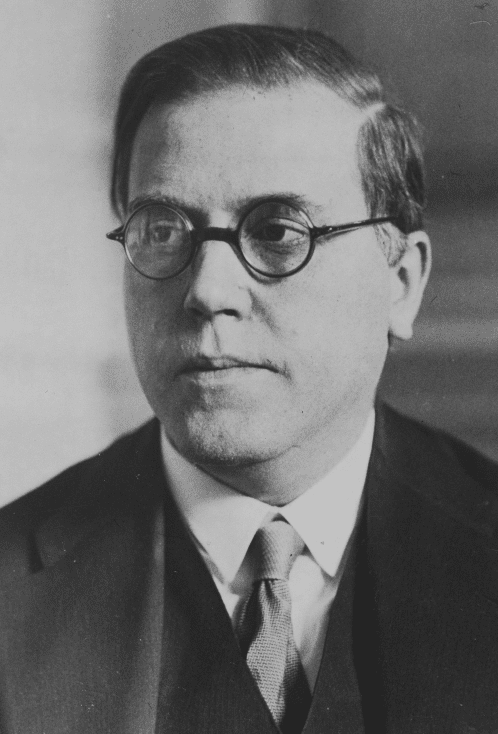
Photo credit: Dietrich von Hildebrand (1889–1977), German Roman Catholic philosopher and theologian [public domain / Wikipedia]

***
Traditionalism vs. Radical Catholic Reactionaries
Radical Catholic Reactionaries
Previous Post
April 17, 2020
Seidensticker Folly #40: Craig, Trinity Definition, & Analogies
Next Post
April 19, 2020 Eastern Orthodoxy, Councils, & Doctrinal Development
Browse Our Archives
Select a Category & Last Things About Me Anti-Catholicism Atheism & Agnosticism Baptism and Sacramentalism Bible and Tradition Blessed Virgin Mary Books by Dave Armstrong C. S. Lewis Calvinism & General Protestantism Catholic Apologetics Catholic Apologists Catholic conversion Catholic converts Christmas Church (Ecclesiology) Church History Conversion and Converts Development of Doctrine Eastern Orthodoxy Ecumenism & Christian Unity Eucharist & Liturgy Fathers of the Church French Translations G. K. Chesterton Hell Hell & Satan Hell & Satan & Last Things Heresies & Comparative Religion Holistic Health Inquisition & Crusades & Scandals James White Jews & Judaism & Old Testament John Calvin John Henry Newman Liberal / Modernist Theology Life Issues Literary Resume Lutheranism Mariology Martin Luther Music Orthodoxy Papacy & Infallibility Personal Page Philosophy & Science Political & Ethical & Moral Issues Protestant Persecution & Intolerance Protestantism Purgatory Purgatory & Penance Romantic & Imaginative Theology Saints & Purgatory & Penance Salvation Salvation & Justification Satan & Last Things Sexuality and Gender Issues Spanish Translations Traditionalism vs. Radical Catholic Reactionaries Traducciones al español / tradução para português Trinitarianism & Christology Uncategorized Videos
Select a Month November 2026 October 2026 September 2026 August 2026 July 2026 June 2026 May 2026 April 2026 March 2026 February 2026 January 2026 December 2025 November 2025 October 2025 September 2025 August 2025 July 2025 June 2025 May 2025 April 2025 March 2025 February 2025 January 2025 December 2024 November 2024 October 2024 September 2024 August 2024 July 2024 June 2024 May 2024 April 2024 March 2024 February 2024 January 2024 December 2023 November 2023 October 2023 September 2023 August 2023 July 2023 June 2023 May 2023 April 2023 March 2023 February 2023 January 2023 December 2022 November 2022 October 2022 September 2022 August 2022 July 2022 June 2022 May 2022 April 2022 March 2022 February 2022 January 2022 December 2021 November 2021 October 2021 September 2021 August 2021 July 2021 June 2021 May 2021 April 2021 March 2021 February 2021 January 2021 December 2020 November 2020 October 2020 September 2020 August 2020 July 2020 June 2020 May 2020 April 2020 March 2020 February 2020 January 2020 December 2019 November 2019 October 2019 September 2019 August 2019 July 2019 June 2019 May 2019 April 2019 March 2019 February 2019 January 2019 December 2018 November 2018 October 2018 September 2018 August 2018 July 2018 June 2018 May 2018 April 2018 March 2018 February 2018 January 2018 December 2017 November 2017 October 2017 September 2017 August 2017 July 2017 June 2017 May 2017 April 2017 March 2017 February 2017 January 2017 December 2016 November 2016 October 2016 September 2016 August 2016 July 2016 June 2016 May 2016 April 2016 March 2016 February 2016 January 2016 December 2015 November 2015 October 2015 September 2015 August 2015 July 2015 June 2015 May 2015 April 2015 March 2015 February 2015 January 2015 December 2014 November 2014 October 2014 September 2014 August 2014 July 2014 June 2014 April 2014 March 2014 February 2014 January 2014 December 2013 November 2013 October 2013 September 2013 August 2013 July 2013 June 2013 April 2013 March 2013 February 2013 January 2013 December 2012 November 2012 October 2012 September 2012 August 2012 July 2012 June 2012 May 2012 April 2012 March 2012 February 2012 January 2012 December 2011 November 2011 October 2011 September 2011 August 2011 July 2011 June 2011 April 2011 March 2011 February 2011 October 2010 September 2010 August 2010 July 2010 April 2010 March 2010 December 2009 October 2009 August 2009 July 2009 June 2009 May 2009 March 2009 February 2009 October 2008 September 2008 April 2008 March 2008 February 2008 January 2008 December 2007 November 2007 October 2007 May 2007 March 2007 February 2007 January 2007 November 2006 October 2006 September 2006 August 2006 July 2006 June 2006 May 2006 April 2006 March 2006 February 2006 October 2005 June 2005 April 2005 February 2005 July 2004 May 2004 April 2004
Follow Us!
TAKE THE
Religious Wisdom Quiz
Who played instruments in Temple?
Select your answer to see how you score.
Priests Levites Prophets Kings
Books by This Author Books by Dave Armstrong
Related posts from Biblical Evidence for Catholicism
Foreword: "Ignorance of Things Divine" (Andrew Mioni)
Biblical Evidence for Catholicism
Robert Fastiggi: Pope Francis "Often Misunderstood"
Biblical Evidence for Catholicism
Must the Gospel be Preached at Every Time...
Biblical Evidence for Catholicism
I Never Regarded Bp. Strickland or Cdl. Burke...
Biblical Evidence for Catholicism
TRENDING AT PATHEOS Catholic

Chapter 5, Sarah: The Quest for Safety in...
Open and Relational Theology & Social Psychology About this series: This series...

When Worry Gets You Nowhere, How Can Faith...
Sometimes, we think that by worrying, we can somehow predict the future....

The Wasp And I: Meditations on Repentance
How can we enter the power and joy of the repentant self...
Reflections on the Evangelical Theological Society
As I mentioned before, this year, for the first time since 2005,...

Demmed if it do and demmed if it...
"First Presidency Announces Salt Lake Temple Rededication Date" Apropos of that,...

Stop Making Thanksgiving Problematic And Just Give Thanks
“What if, today, we were grateful for everything?” –Charlie Brown I...
view all Catholic blogs
Ad-Free & Subscriber Log-In Subscription Support
- About Us
- 2026 Calendar
- Videos
- Podcasts
- Library of World Religions
- Faith In Media Tracker
- Advertise With Us
- Write for Us
- Privacy Policy
- Terms of Service
- Do Not Sell My Data
- Contact Us
- Radiant Digital
- Manage Newsletter Subscriptions
- Unsubscribe From Notifications
- Sitemap
Copyright 2008-2026, Patheos, part of the Radiant Digital network of media brands. All rights reserved.
Subscription Support Ad-Free & Subscriber Log-In
Follow Patheos