
BuddhistCatholicContemplativeEvangelicalGeneral ChristianHinduJewishLatter-day SaintMuslimNew VisionsProgressive Christian
Beliefs
- Buddhist
- Catholic
- Contemplative
- Evangelical
- General Christian
- Hindu
- Jewish
- Latter-day Saint
- More Voices
- Muslim
- New Visions
- Pagan
- Progressive Christian
Topics
- Religion News
- Food and Religion
- Sports and Religion
- Religious Art
- Religious Music and Entertainment
- Religious Events
- History and Religion
- Style and Religion
- Politics and Religion
- Women in Religion
- Recreation Outdoors and Religion
- Business Finance and Religion
- Careers Workplace and Religion
- Education and Religion
- Family Parenting and Religion
- Health Fitness and Religion
- Home and Religion
- Relationships and Religion
- Technology and Religion
- Travel and Religion
Columnists
- Buddhist Columnists
- Business Finance and Religion Columnists
- Careers Workplace and Religion Columnists
- Catholic Columnists
- Contemplative Columnists
- Education and Religion Columnists
- Evangelists Columnists
- Family Parenting and Religion Columnists
- General Christian Columnists
- Health Fitness and Religion Columnists
- Hindu Columnists
- History and Religion Columnists
- Home and Religion Columnists
- Jewish Columnists
- More Voices Columnists
- Latter Day Columnists
- Muslim Columnists
- New Visions Columnists
- Nonreligious Columnists
- Pagan Columnists
- Politics and Religion Columnists
- Progressive Columnists
- Recreation Outdoors and Religion Columnists
- Relationships and Religion Columnists
- Religion News Columnists
- Religious Art Columnists
- Religious Events Columnists
- Religious Music and Entertainment Columnists
- Sports and Religion Columnists
- Style and Religion Columnists
- Technology and Religion Columnists
- Travel and Religion Columnists
- Women in Religion Columnists
Resource Library
- 2026 Calendar
- Library of World Religions
- The 100 Most Holy Places on Earth
- Patheos Answers
- Podcasts
- Videos
- Faith Leaders Database
- Anglican Episcopalian
- Bahai
- Baptist
- Buddhism
- Christianity
- Confucianism
- Eastern Orthodoxy
- Hinduism
- Holiness and Pentecostal
- ISKCON
- Islam
- Judaism
- Lutheran
- Methodist
- The Church of Jesus Christ of Latter-day Saints
- New Age
- Paganism
- Presbytarian and Reformed
- Protestantism
- Religion Behind the Scenes
- Roman Catholic
- Scientology
- Shia Islam
- Sikhism
- Sufism
- Sunni Islam
- Taoism
- Zen
- See all religions
Research Tools
 Ad-Free & Subscriber Log-In Subscription Support
Ad-Free & Subscriber Log-In Subscription Support
Follow Patheos 

- Trending:
- Forgiveness
- |
- Marriage
- |
- Consciousness
- |
- Death Penalty
- |
- Election
- |
- Halloween

-
About
-
Catholic Apologetics
-
Church History
-
Great Apologists
-
Christian Worldview
-
Protestantism & Misc.
- Home
- Catholic
- History and Religion
- Dialogue on Method of Communion & Liturgical Development
Dialogue on Method of Communion & Liturgical Development
Last updated on: April 9, 2020 at 10:48 am by Dave Armstrong
Dialogue on Method of Communion & Liturgical Development 2020-04-09T10:48:21-04:00 Dave Armstrong
Patheos Explore the world's faith through different perspectives on religion and spirituality! Patheos has the views of the prevalent religions and spiritualities of the world.
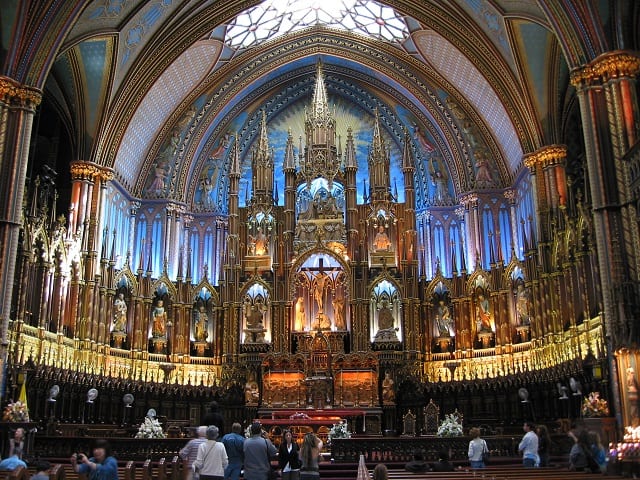
In the course of vigorous discussions over my defense of the Pauline Mass (aka Novus Ordo or “New Mass”), my traditionalist friend David Palm (blue font) made the following statements / arguments (each paragraph stands on its own) in my combox in June 2008 (all bolded emphases are my own):
* * * * *
The heart of the effective traditionalist argument isn’t that the various aspects reintroduced into the Pauline rite are intrinsically wrong–there is acknowledgement that they did at one time exist in the Church. Rather, the argument is that the innovations were neither required for the good of the Church, nor were they introduced in an organic way. Sacrosanctum Concilium insisted that, “care must be taken that any new forms adopted should in some way grow organically from forms already existing.” I would argue that in numerous instances among those examples you cited, that dictum was violated. . . . Your essay would be stronger if you could go down the list of innovations and show, not that they existed somewhere, sometime, in some unknown measure in Church history, but rather that they “in some way grow organically from forms already existing.”
I am interpreting “existing forms” to mean something that presently exists, not something that existed sometime in the past but fell out of use. To me that’s the only way that something can organically develop, from an existing (present tense) form. Any number of analogies (plant growth, etc.) would support this. It’s an area deserving of some discussion.
The “Tridentine Mass” (or Gregorian Rite as Cardinal Hoyos has recently insisted is its correct name) was not formulated by the Council of Trent. It had been celebrated for well over a thousand years prior to that council. Rather, the Council of Trent cracked down on the liturgical uncertainty/anarchy of that day by mandating that unless a liturgy could prove its pedigree to be more than two hundred years old it had to give way to the Gregorian Rite as codified by its celebration in Rome. . . . Vatican II mandated that the changes to the liturgy develop organically from existing forms. Upon some reflection, I think I want to camp on the position that “existing” means presently in existence, not just resurrected from the distant past after umpteen centuries of extinction (or, in the case of such things as female altar servers, female lectors, etc. introduced based on no historical precedent at all.)
[W]hat I see as the heart of the issue, namely, that the liturgical “reforms” were not organic developments but artificial constructs–sometimes more or less supported by historical precident, sometimes not at all, and sometimes outright condemned . . . mainstream critics of the NO does not hold that the myriad changes and innovations are intrinsically evil. Even Davies, an outspoken critic, wrote a book in defense of the validity of the NO. Rather, they contend that a) they were not introduced through organic development, b) that they frequently have no historical precident at all or were introduced from dissident influences, . . .
[S]ome of the changes have historical precedent and to cite this precedent against those who would argue that the NO is invalid or intrinsically evil is legitimate. However, this does not make their reintroduction an organic development, since an organic development can only come from “existing forms”. . . . I argue that the introduction/imposition of so much non-organic change has (gravely) harmed the Church.
[H]e [Msgr. Klaus Gamber] argued that the 1965 revision of the Roman missal was an organic development along the lines of what Vatican II actually called for, whereas the NO was uncalled for by Vatican II, contained numerous inorganic and highly imprudent innovations, represents a radical break with the Roman liturgical tradition, . . . if you believe that the entire approved liturgical reform has been represented by nothing but true, organic developments, then you will need to provide a different set of arguments than those contained in your essay.
. . . is the almost universal adoption of this orientation [priest facing the people, or versus populum] in the celebration of the NO a result of organic liturgical development and a legitimate application of Vatican II, or does it represent a liturgical novelty and an abuse of ecclesiastical authority?
For my part, I would submit that the questions on the table would be 1) was the introduction of the almost universal celebration of the NO Mass versus populum an organic development in the liturgy that was certainly required for the good of the Church . . .
Picture a liturgy celebrated in Latin, with . . . Holy Communion received by kneeling recipients on the tongue. . . . Now imagine another NO [Novus Ordo] . . . Holy Communion received in the hand by standing recipients. . . . The two liturgical expressions are night and day from one another. One is distinctively, unmistakably Roman Catholic. In the other, the actually distinctive Catholic content is approaching zero— . . . I personally would argue that the first is objectively superior [original emphasis here, not mine] to the second in terms of preserving the Roman Church’s venerable liturgical tradition, in expressing the fullness of the Catholic Faith in word and deed, and in instilling by example a holy reverence in the parishioners. Two abuse-free Novus Ordo Masses. Huge difference. One objectively superior to the other . . .
Let us summarize for brevity’s and argument’s sake. Our self-described “reluctant traditionalist” friend David Palm contends (and also contends that it is the Church’s proper and orthodox view) that:
A) Liturgical changes (so Holy Mother Church has decreed and established) must be organic developments from preceding liturgy.
B) This means, furthermore, that the development has to flow from what immediately preceded it (i.e., “organically”), not from earlier or primitive Christian precedents from many hundreds of years prior (but with a break of time in-between).
C) The Council of Trent (agreeably to David Palm) asserted that liturgical rites that lacked a pedigree of at least two hundred years, could be overthrown by the then-to-be-codified Gregorian (Tridentine rite).
D) Vatican II (400 years later) reiterated the requirement of development from “existing forms.”
E) Conversely, any liturgical changes that can be shown to have no historical precedent at all are no developments, but in fact a harmful corruptions, and therefore to be rejected as a violation of the above established principles, and deleterious to the Church and the piety of the Catholic faithful.
F) As particular examples, David Palm suggests that kneeling to receive communion, on the tongue, are practices “distinctively, unmistakably Roman Catholic” and “objectively superior . . . in terms of preserving the Roman Church’s venerable liturgical tradition” while contrary actions possess a “distinctive Catholic content” that “is approaching zero.”
G) Moreover, the actions described in F, according to David Palm, are characterized as “expressing the fullness of the Catholic Faith in word and deed, and in instilling by example a holy reverence in the parishioners.” And again, it logically follows that actions to the contrary (Holy Communion received standing, in the hand) signify a lack of same.
These are the principles and contentions that shall be presently scrutinized. I hope to prove that they are internally inconsistent and incoherent, through a rather simple exercise of logic (so apparent in the end, once the “spotlight” is shone upon them, that it is almost as easy to miss as the nose on one’s own face).
To do this, we shall examine (as a question of verifiable history) the examples of pious Catholic eucharistic practices suggested by Mr. Palm and see whether they themselves pass this crucial test of organic development from immediately existing forms. Obviously, if they do not, then they (assuming the desirability and helpfulness of logical consistency) would have to (logically speaking) be rejected on the selfsame basis as their contrary liturgical practices were rejected by Mr. Palm.
For development (as Cardinal Newman generally argued in his magnum opus on the topic) is not a “herky-jerky” process that follows one rule at one point of time, and another in a future era, but rather, consistent throughout, and true to itself. In much simpler terms, I’ll apply the old proverb: “what’s good for the goose is good for the gander.”
Let’s start with kneeling to receive communion? Was this always the practice of the Church or did it come in later on? Anglican historian of the liturgy, Dom Gregory Dix, in his classic volume on liturgical history and development, The Shape of the Liturgy (London: Dacre Press, second edition, 1945; reprinted 1970) gives us the historical background:
[T]he practice of kneeling by anybody for communion is confined to the Latin West, and began to come in there only in the early Middle Ages. The ancient church universally stood to receive communion, as in the East clergy and laity alike stand to this day; the apostolic church conceivably reclined in the oriental fashion, though this is uncertain.
It appears to have been the universal tradition in the pre-Nicene church that all should receive communion standing. (pp. 13, 81; my emphases)
Jovian P. Lang, OFM, in his Dictionary of the Liturgy (New York: Catholic Book Pub. Co., 1989, “Posture in Worship,” 512-513) concurs:
(1) Standing. Historically this was the normal attitude of prayer among pagans and Jews, adopted by the first Christians. It indicates a reverence for God. For Christians it took on an added implication, referring to the Resurrection of Christ, and frequently they faced the East toward the rising sun, regarded as the symbol of Christ Himself.
(2) Kneeling. This gesture indicates adoration, or the expression of humility before the greatness of God, fervent entreaty in prayer, a sign of penance or sorrow, even mourning. Historically the congregation knelt more and more instead of maintaining its standing position. Recent rules limit kneeling at Mass. [my emphasis]
Fr. Peter M. J. Stravinskas, S.T.L., in answering a question from a reader, stated:
While you surely have a right to receive kneeling if you so choose, I hope you do not think that kneeling is the only proper way to receive Holy Communion, since the Church of the East has had a tradition of standing for centuries. (The Catholic Answer Book 2, Huntington, Indiana: Our Sunday Visitor, 1994, 162)
The 1913 Catholic Encyclopedia (“Genuflexion”, written by Frederick Thomas Bergh) gives further corroboration:
The practice of kneeling during the Consecration was introduced during the Middle Ages, and is in relation with the Elevation which originated in the same period. . . .
Nor have we any grounds for believing, against the tradition of the Roman Church, that during the Canon of the Mass the faithful knelt on weekdays, and stood only on Sundays and in paschal time. It is far more likely that the kneeling was limited to Lent and other seasons of penance. . . . That, in the early Church, the faithful stood when receiving into their hands the consecrated particle can hardly be questioned. . . . St. Dionysius of Alexandria, writing to one of the popes of his time, speaks emphatically of “one who has stood by the table and has extended his hand to receive the Holy Food” (Eusebius, Hist. Eccl., VII, ix). [my emphases]
Seemingly unaware of these historical facts, the late, well-known “traditionalist” Michael Davies opined in 2004:
Standing has never been considered an act of reverence within the Roman Rite. . . . I repeat, standing is not an act of reverence, it has never been an act of reverence, and its imposition has nothing to do with the wisdom of the Church—it is antithetical to that wisdom.
Taking all this into account, we can arrive at the following conclusions:
1) Receiving communion standing was the “universal” tradition in the early Church.
2) In other words, it follows that in the early Church congregants did not kneel to receive Holy Communion.
3) Kneeling to receive Holy Communion was only introduced in the Middle Ages.
4) But David Palm has informed us that standing to receive communion possesses a “distinctive Catholic content” that “is approaching zero,” and that it is “objectively” inferior and deficient in terms of “expressing the fullness of the Catholic Faith in word and deed” and also in “holy reverence.”
5) Therefore, recipients of Holy Communion the early Church, according to David Palm, must have universally suffered from these lamentable and woeful deficiencies of piety, and (astonishingly enough) the very norm and universal practice of the Catholic Church (East and West alike) inculcated these interior attitudes that are antithetical to true, heartfelt worship and eucharistic devotion.
6) Moreover, when the (Palm-asserted) “correct” practice came in, during the Middle Ages, it must have been intrinsically corrupt, since it had no organic, immediate precedent, just as (so David Palm contends), standing at communion in our present era is a corrupt and (at least relatively) impious practice because it, too, had no immediate historical precedent.
7) If standing at communion cannot be considered an organic development of kneeling at communion (as David Palm has argued), then the opposite also logically holds (since they are not organically related): the earlier innovation of kneeling at communion over against the universal standing at communion of the early Church is likewise, a corruption and no true or genuine liturgical development. It’s like apples and oranges.
8) Since this leads to logical nonsense (either one or the other practice is inferior, yet by the same “logic” they cannot be, and one or the other is the genuine liturgical tradition and development, but by the same “logic” they cannot be), we must reject the entire argument as unworthy of allegiance. If standing at communion is a corruption and (at least relatively) impious and inferior now, as an “objective” matter, then it must have been in the early Church as well. And if standing at communion is a corruption because it is essentially distinct from kneeling at communion; thus the latter cannot be regarded as an organic precursor or “seed” of the former (and this is required), then likewise, kneeling when it was first introduced, must have likewise been a corruption, since it was not an organic development of the original standing posture at Holy Communion.
9) Ergo, David Palm must formulate a different argument, since this one utterly fails, logically speaking. It has collapsed as completely irrational; literally nonsensical.
Communion in the hand was, likewise, the widespread and predominant practice in the early days of the Catholic Church (the patristic period) [emphases mine throughout]:
That, in the early Church, the faithful stood when receiving into their hands the consecrated particle can hardly be questioned. . . . St. Dionysius of Alexandria, writing to one of the popes of his time, speaks emphatically of “one who has stood by the table and has extended his hand to receive the Holy Food” (Eusebius, Hist. Eccl., VII, ix). The custom of placing the Sacred Particle in the mouth, rather than in the hand of the communicant, dates in Rome from the sixth, and in Gaul from the ninth century (Van der Stappen, IV, 227; cf. St. Greg., Dial., I, III, c. iii). (Catholic Encyclopedia: “Genuflexion”)
In the early days of the Church the faithful frequently carried the Blessed Eucharist with them to their homes (cf. Tertullian, “Ad uxor.”, II, v; Cyprian, “De lapsis”, xxvi) or upon long journeys (Ambrose, De excessu fratris, I, 43, 46), . . . (Catholic Encyclopedia [Joseph Pohle], “The Real Presence of Christ in the Eucharist”)
The eucharistic vessel known as the paten is a small shallow plate or disc of precious metal upon which the element of bread is offered to God at the Offertory of the Mass, and upon which the consecrated Host is again placed after the Fraction. The word paten comes from a Latin form patina or patena, evidently imitated from the Greek patane. It seems from the beginning to have been used to denote a flat open vessel of the nature of a plate or dish. Such vessels in the first centuries were used in the service of the altar, and probably served to collect the offerings of bread made by the faithful and also to distribute the consecrated fragments which, after the loaf had been broken by the celebrant, were brought down to the communicants, who in their own hands received each a portion from the patina. . . .
When towards the ninth century the zeal of the faithful regarding the frequent reception of Holy Communion very much declined, the system of consecrating the bread offered by the faithful and of distributing Communion from the patinæseems gradually to have changed, and the use of the large and proportionately deep patinæ ministeriales grew up for the fell into abeyance. It was probably about the same time that the custom grew up for the priest himself to use a paten at the altar to contain the sacred Host, and obviate the danger of scattered particles after the Fraction. This paten, however, was of much smaller size and resembled those with which we are now familiar. (Catholic Encyclopedia, [Herbert Thurston], “Paten”)
All the solitaries in the desert, where there is no priest, take the communion themselves, keeping communion at home. And at Alexandria and in Egypt, each one of the laity, for the most part, keeps the communion, at his own house, and participates in it when he likes. For when once the priest has completed the offering, and given it, the recipient, participating in it each time as entire, is bound to believe that he properly takes and receives it from the giver.And even in the church, when the priest gives the portion, the recipient takes it with complete power over it, and so lifts it to his lips with his own hand. It has the same validity whether one portion or several portions are received from the priest at the same time. (St. Basil the Great, Letter 93: To the Patrician Cæsaria, concerning Communion)
When thou goest to receive communion go not with thy wrists extended, nor with thy fingers separated, but placing thy left hand as a throne for thy right, which is to receive so great a King, and in the hollow of the palm receive the body of Christ, saying, Amen. (St. Cyril of Jerusalem, Catechetical Lectures, 23:21)
Wherefore with all fear and a pure conscience and certain faith let us draw near and it will assuredly be to us as we believe, doubting nothing. Let us pay homage to it in all purity both of soul and body: for it is twofold. Let us draw near to it with an ardent desire, and with our hands held in the form of the cross let us receive the body of the Crucified One: and let us apply our eyes and lips and brows and partake of the divine coal, . . . (St. John Damascene, An Exposition of the Orthodox Faith, Book IV, Chapter 13)
Tell me, would you choose to come to the Sacrifice with unwashen hands? No, I suppose, not. But you would rather choose not to come at all, than come with soiled hands. And then, thus scrupulous as you are in this little matter, do you come with soiled soul, and thus dare to touch it? And yet the hands hold it but for a time, whereas into the soul it is dissolved entirely. (St. John Chrysostom, Homily 3 on Ephesians)
The present counter-argument, using the example of communion in the hand is not as strong as that concerning receiving communion standing, because unlike the latter, it was not the universal practice in the early Church. Yet there was significant usage, as at least eight eminent Church Fathers and three Catholic Encyclopedia articles attest. Thus, the counter-argument from development is not as airtight (though still strong), while the argument opposed to supposed “inferiority” remains compelling.
Even David Palm’s fellow “traditionalist” and comrade-in-arms lately on my blog, Ben Douglass, doesn’t buy this particular characteristic “traditionalist” argument:
I am in no way arguing that Communion in the hand has been good for the Church or that it was prudent to reintroduce it. On the contrary, I think the decision to permit Communion in the hand has been disastrous; I think that the practice, in the modern form, is less conducive to reverence and far less rich in symbolism as compared to Communion on the tongue; . . . All I desire to establish with this essay is that Communion in the hand in not a sacrilege and does not necessarily tend toward sacrilege, . . . I would like to point out that the laity received Communion in the hand quite frequently in the early Christian Church. [many of the same examples I have given are then cited] . . .
I would also like to comment that there is a strong point to the ancient form of Communion on the hand which even Communion on the tongue is lacking: it gives the communicant some time for private adoration of Jesus in the consecrated host. This could potentially be a very grace-filled moment and excite the communicant to greater reverence and devotion when he receives. Unfortunately, in the modern form of Communion in the hand (no altar rail and a line of people behind you waiting for you to get out of the way) this opportunity is gone. Thus with the modern form of Communion in the hand we have all the drawbacks of the ancient practice but we lose its central benefit. . . .
Taking Communion on the tongue is a venerable, lower-case t tradition of the Catholic Church. Yet while I am unequivocally opposed to the destruction of venerable lower-case t traditions, by the same token I am against conflating them with Sacred Tradition, the source of revelation. To receive Communion in the hand is absolutely not wrong in principle, as should be clear by now.
Not so, David Palm. He appears to oppose it in principle, irregardless of the logical problems inherent in such a position, given the way he has staked out his argument from development of liturgical practice. In an article on the topic of kneeling, from 27 May 2008, he wrote:
Several friends sent me notices about wonderful news concerning the recent Mass at which the Holy Father distributed Holy Communion exclusively to recipients who knelt and received on the tongue . . . They knew I would be interested in this development not just in a general way, as yet another move by the Holy Father to restore liturgical sanity to the Roman Rite, . . .
Recently a local priest expressed his concern in our diocesan paper that Catholics who regularly attend the TLM sometimes refrain from receiving Holy Communion when they attend the NOM. He surmised that it may be because they doubt the validity of the NOM and perhaps in a few cases that’s true, although I think that’s a rare position. I think it’s more likely that they just don’t care to be marginalized and possibly publicly ridiculed because their conscience tells them to follow the immemorial custom of the Church and receive kneeling. . . .
I will have more to say about kneeling before our Lord and the new movement against Communion in the hand in future postings. For now, let’s just say that this is the worst possible time to shy away from taking a stand (or, in this case, kneeling down) in support of Holy Tradition. The tide is turning.
Mr. Palm is, of course, free to believe and practice as he wishes (I always, by the way, receive Holy Communion kneeling at an altar rail, from the priest, in my parish, but I’ll receive on the hand on occasion in other parishes, because I recognize that that has a serious liturgical history and is a venerable, pious tradition as well). But Mr. Palm is not free to revise the laws of classical logic (they are what they are: a=a, etc.), and he is not immune from being illogical in his reasoning — as we all are at times –, as proven rather conclusively, I think, above.
***
Related Reading
How to Receive Communion: Tradition & Abuses [1-28-00]
*
Can Communion in the Hand be Equally Reverent? [7-13-11]
*
Further Thoughts on Communion in the Hand [6-20-13]
*
Clarification of My Nuanced Position on Hand-Communion [7-8-13]
*
Michael Voris & Historic Communion in the Hand (Standing) [8-8-13]
*
Catholic Worship & Beauty, Imagination [11-25-13]
*
St. Catherine of Siena Received Communion in the Hand [3-25-14]
*
Holy Communion in the Hand (Norm till 500-900 AD) (+ vigorous Facebook discussion) [9-3-15; some additions on 3-13-20]
*
Thoughts: Communion in the Hand & Reverence [9-4-15]
*
Communion in the Hand & Biblical Reverence & Piety [9-5-15]
*
St. Augustine’s Holy Communion (Standing, in the Hand) [10-4-15]
*
Taylor Marshall: Better No Jesus at All Than By Hand [+ vigorous Facebook discussion] [3-14-20]
*
Communion in the Hand: Reactionaries vs. St. Cyril [3-15-20]
***
(originally 6-25-08)
Photo credit: Notre Dame Cathedral, Montreal. Photo by Paul Mannix (8-31-06) [Flickr / CC BY 2.0 license]
***
Traditionalism vs. Radical Catholic Reactionaries
Previous Post
April 9, 2020
Bible on Reverent Posture for Worship & Communion
Next Post

April 9, 2020 Hydroxychloroquine: Logic, Evidence, & Irrational Opposition
Browse Our Archives
Select a Category & Last Things About Me Anti-Catholicism Atheism & Agnosticism Baptism and Sacramentalism Bible and Tradition Blessed Virgin Mary Books by Dave Armstrong C. S. Lewis Calvinism & General Protestantism Catholic Apologetics Catholic Apologists Catholic conversion Catholic converts Christmas Church (Ecclesiology) Church History Conversion and Converts Development of Doctrine Eastern Orthodoxy Ecumenism & Christian Unity Eucharist & Liturgy Fathers of the Church French Translations G. K. Chesterton Hell Hell & Satan Hell & Satan & Last Things Heresies & Comparative Religion Holistic Health Inquisition & Crusades & Scandals James White Jews & Judaism & Old Testament John Calvin John Henry Newman Liberal / Modernist Theology Life Issues Literary Resume Lutheranism Mariology Martin Luther Music Orthodoxy Papacy & Infallibility Personal Page Philosophy & Science Political & Ethical & Moral Issues Protestant Persecution & Intolerance Protestantism Purgatory Purgatory & Penance Romantic & Imaginative Theology Saints & Purgatory & Penance Salvation Salvation & Justification Satan & Last Things Sexuality and Gender Issues Spanish Translations Traditionalism vs. Radical Catholic Reactionaries Traducciones al español / tradução para português Trinitarianism & Christology Uncategorized Videos
Select a Month October 2026 September 2026 August 2026 July 2026 June 2026 May 2026 April 2026 March 2026 February 2026 January 2026 December 2025 November 2025 October 2025 September 2025 August 2025 July 2025 June 2025 May 2025 April 2025 March 2025 February 2025 January 2025 December 2024 November 2024 October 2024 September 2024 August 2024 July 2024 June 2024 May 2024 April 2024 March 2024 February 2024 January 2024 December 2023 November 2023 October 2023 September 2023 August 2023 July 2023 June 2023 May 2023 April 2023 March 2023 February 2023 January 2023 December 2022 November 2022 October 2022 September 2022 August 2022 July 2022 June 2022 May 2022 April 2022 March 2022 February 2022 January 2022 December 2021 November 2021 October 2021 September 2021 August 2021 July 2021 June 2021 May 2021 April 2021 March 2021 February 2021 January 2021 December 2020 November 2020 October 2020 September 2020 August 2020 July 2020 June 2020 May 2020 April 2020 March 2020 February 2020 January 2020 December 2019 November 2019 October 2019 September 2019 August 2019 July 2019 June 2019 May 2019 April 2019 March 2019 February 2019 January 2019 December 2018 November 2018 October 2018 September 2018 August 2018 July 2018 June 2018 May 2018 April 2018 March 2018 February 2018 January 2018 December 2017 November 2017 October 2017 September 2017 August 2017 July 2017 June 2017 May 2017 April 2017 March 2017 February 2017 January 2017 December 2016 November 2016 October 2016 September 2016 August 2016 July 2016 June 2016 May 2016 April 2016 March 2016 February 2016 January 2016 December 2015 November 2015 October 2015 September 2015 August 2015 July 2015 June 2015 May 2015 April 2015 March 2015 February 2015 January 2015 December 2014 November 2014 October 2014 September 2014 August 2014 July 2014 June 2014 April 2014 March 2014 February 2014 January 2014 December 2013 November 2013 October 2013 September 2013 August 2013 July 2013 June 2013 April 2013 March 2013 February 2013 January 2013 December 2012 November 2012 October 2012 September 2012 August 2012 July 2012 June 2012 May 2012 April 2012 March 2012 February 2012 January 2012 December 2011 November 2011 October 2011 September 2011 August 2011 July 2011 June 2011 April 2011 March 2011 February 2011 October 2010 September 2010 August 2010 July 2010 April 2010 March 2010 December 2009 October 2009 August 2009 July 2009 June 2009 May 2009 March 2009 February 2009 October 2008 September 2008 April 2008 March 2008 February 2008 January 2008 December 2007 November 2007 October 2007 May 2007 March 2007 February 2007 January 2007 November 2006 October 2006 September 2006 August 2006 July 2006 June 2006 May 2006 April 2006 March 2006 February 2006 October 2005 June 2005 April 2005 February 2005 July 2004 May 2004 April 2004
Follow Us!
TAKE THE
Religious Wisdom Quiz
Which Old Testament book is entirely written as a dialogue between God and a prophet?
Select your answer to see how you score.
Zechariah Malachi Amos Habakkuk
Books by This Author Books by Dave Armstrong
Related posts from Biblical Evidence for Catholicism

The Mass & Development of Doctrine (vs. Wes...
Biblical Evidence for Catholicism

Miraculous Eucharist (vs. Francois Turretin #4)
Biblical Evidence for Catholicism

God's Presence, the Ark, the Eucharist, & Death
Biblical Evidence for Catholicism
Protestant Eucharistic Objections Fail (Turretin)
Biblical Evidence for Catholicism
TRENDING AT PATHEOS Catholic

In "Irreplaceable," our book on vocation and technology, Trevor Sutton and I...

I was strolling through the top floor of the brand new Parthenon...

What Does Gêvâh Mean For Kimberley Guifoyle &...
This week, a lot of the news is focused on Kimberly Guilfoyle....

INNER CIRCLE: Profound Mystery (Of Christ In All...
Ephesians 5:31-32 “For this reason, a man will leave his father and...

Do Not Rejoice When Your Enemy Falls: The...
Turning an execution into a public spectacle is a disturbing expression of...

'The Chosen' S6 Trailer: The Passion Gets Very...
Not many watching 'The Chosen' worry about spoilers, but just because they...
view all Catholic blogs
Ad-Free & Subscriber Log-In Subscription Support
- About Us
- 2026 Calendar
- Videos
- Podcasts
- Library of World Religions
- Faith In Media Tracker
- Advertise With Us
- Write for Us
- Privacy Policy
- Terms of Service
- Do Not Sell My Data
- Contact Us
- Radiant Digital
- Manage Newsletter Subscriptions
- Unsubscribe From Notifications
- Sitemap
Copyright 2008-2026, Patheos. All rights reserved.
Subscription Support Ad-Free & Subscriber Log-In
Follow Patheos