
BuddhistCatholicContemplativeEvangelicalGeneral ChristianHinduJewishLatter-day SaintMuslimNew VisionsProgressive Christian
Beliefs
- Buddhist
- Catholic
- Contemplative
- Evangelical
- General Christian
- Hindu
- Jewish
- Latter-day Saint
- More Voices
- Muslim
- New Visions
- Pagan
- Progressive Christian
Topics
- Religion News
- Food and Religion
- Sports and Religion
- Religious Art
- Religious Music and Entertainment
- Religious Events
- History and Religion
- Style and Religion
- Politics and Religion
- Women in Religion
- Recreation Outdoors and Religion
- Business Finance and Religion
- Careers Workplace and Religion
- Education and Religion
- Family Parenting and Religion
- Health Fitness and Religion
- Home and Religion
- Relationships and Religion
- Technology and Religion
- Travel and Religion
Columnists
- Buddhist Columnists
- Business Finance and Religion Columnists
- Careers Workplace and Religion Columnists
- Catholic Columnists
- Contemplative Columnists
- Education and Religion Columnists
- Evangelists Columnists
- Family Parenting and Religion Columnists
- General Christian Columnists
- Health Fitness and Religion Columnists
- Hindu Columnists
- History and Religion Columnists
- Home and Religion Columnists
- Jewish Columnists
- More Voices Columnists
- Latter Day Columnists
- Muslim Columnists
- New Visions Columnists
- Nonreligious Columnists
- Pagan Columnists
- Politics and Religion Columnists
- Progressive Columnists
- Recreation Outdoors and Religion Columnists
- Relationships and Religion Columnists
- Religion News Columnists
- Religious Art Columnists
- Religious Events Columnists
- Religious Music and Entertainment Columnists
- Sports and Religion Columnists
- Style and Religion Columnists
- Technology and Religion Columnists
- Travel and Religion Columnists
- Women in Religion Columnists
Resource Library
- 2026 Calendar
- Library of World Religions
- The 100 Most Holy Places on Earth
- Patheos Answers
- Podcasts
- Videos
- Faith Leaders Database
- Anglican Episcopalian
- Bahai
- Baptist
- Buddhism
- Christianity
- Confucianism
- Eastern Orthodoxy
- Hinduism
- Holiness and Pentecostal
- ISKCON
- Islam
- Judaism
- Lutheran
- Methodist
- The Church of Jesus Christ of Latter-day Saints
- New Age
- Paganism
- Presbytarian and Reformed
- Protestantism
- Religion Behind the Scenes
- Roman Catholic
- Scientology
- Shia Islam
- Sikhism
- Sufism
- Sunni Islam
- Taoism
- Zen
- See all religions
Research Tools
 Ad-Free & Subscriber Log-In Subscription Support
Follow Patheos 

- Trending:
- Advent
- |
- Forgiveness
- |
- Thanksgiving
- |
- Election
- |
- Seasonal Holidays
- |
- Marriage

-
About
-
Catholic Apologetics
-
Church History
-
Great Apologists
-
Christian Worldview
-
Protestantism & Misc.
- Home
- Catholic
- History and Religion
- Dialogue: Orthodox Compromises on Contraception
Dialogue: Orthodox Compromises on Contraception
Last updated on: March 5, 2020 at 1:48 pm by Dave Armstrong
Dialogue: Orthodox Compromises on Contraception 2020-03-05T13:48:26-04:00 Dave Armstrong
Patheos Explore the world's faith through different perspectives on religion and spirituality! Patheos has the views of the prevalent religions and spiritualities of the world.
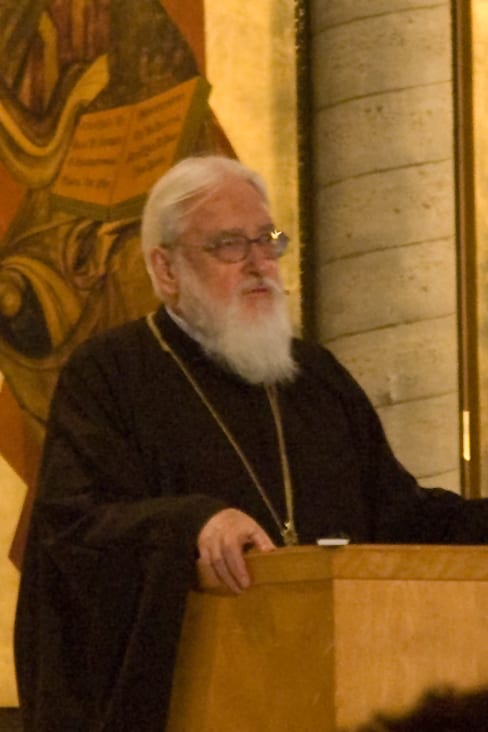 This was a public response to a public critique of a paper on my site by my friend William Klimon: Contraception: Early Church Teaching, and subsequent follow-up expressed opinions. It occurred during the first half of March 2001. My opponents’ words will be in blue, green, and purple.
*****
Thanks for your critique. I much appreciate its reasonableness and amiable, inquisitive nature.
On Dave Armstrong’s “Orthodoxy” page, under the “Doctrinal and moral compromises” section, there is an article decrying the “changing standards” of Orthodoxy on the issue of artificial contraception. The article, written by William Klimon, gives only two pieces of evidence in support of this premise, with both evidences being impugnable at best.
The first piece of evidence submitted is an examination of the book The Orthodox Church, by Bishop Kallistos [Ware]. Comparing various editions from over the years (he quotes from the 1963, 1984, and 1993 editions), Klimon comes to the conclusion that this book “reveals” an “alarming departure from Orthodox and previously universal Christian Tradition”. In an attempt to validate this as something more than one theologian’s opinion, Klimon says that the book is “a widely-cited and authoritative source on Orthodox teaching”. The book is most certainly popular among those new to Orthodoxy, that is not disputed. However, I would like to know on what basis Klimon calls The Orthodox Church an “authoritative source on Orthodox teaching”? Does the number of citations make something authoritative? And what exactly is meant by “authoritative” in this context? Surely Mr. Klimon is not calling Bishop Kallistos infallible; so what we are left with is a man who has written a popular book.
Indeed it is a widely-cited and standard popular source of Orthodox teaching and distinctives. This can hardly be denied. No one is saying that it is the equivalent of dogma or statements of bishops and jurisdictions, etc. Nevertheless, if Metr. Kallistos states in his book the existence of certain sociological realities within Orthodoxy, I think he should be accorded the benefit of the doubt, as a high-placed, well-known, and influential person in those ranks. I should think that the burden of demonstrating otherwise (as to the facts) would fall upon the person who questions the sociological / ecclesiological observation (that presumably including you in this present instance).
In my experience (I have several Orthodox friends, and have dialogued with many also), it is common knowledge that the Orthodox, broadly speaking, permit contraception (as they do divorce). This (concerning contraception) has been admitted to me by more “traditional” Orthodox friends, such as those in ROCOR. I saw you casually admit it, too, in another post (which is the whole point; the fact is not disputed even by you).
It is also true that ROCOR itself prohibits contraception, I believe. But that doesn’t mean that it is representative of Orthodoxy as a whole. It is not. ROCOR doesn’t even recognize the validity of sacraments of some other major Orthodox jurisdictions, let alone those of Catholicism or Protestantism. That is not the mainstream Orthodox position, as I understand it (though admittedly it is confusing, as almost everything in Orthodoxy seems to be).
As to “official” Orthodoxy, well, you tell me (you should figure this out if you are considering converting, and if you have any concerns as to moral theology in Orthodoxy, as I did before I converted to Catholicism). This has been a long-running problem, and I have yet to receive a satisfactory explanation for how to resolve competing factions within Orthodoxy.
Of course, Catholicism, in contrast, has this means in the papacy, as well as in Ecumenical Councils and things like the Catechism of the Catholic
Church. There is no doubt as to our teaching. Contraception is, and always has been, a mortal sin, according to — most notably — the papal encyclical Humanae Vitae in 1968; also Casti Connubii in 1930. These documents are infallible in the ordinary magisterium, and thus binding upon all Catholics. That remains true no matter how many lay Catholics and dissenting theologians ignore the prohibition, which was universal among all Christians before the Anglicans first broke down the Christian consensus in 1930. Catholicism is not a matter of majority vote, trendiness, and faddism, but of magisterium, dogma, and apostolic Tradition.
The Orthodox Christian Information Center has a critique on Bishop Kallistos’ work, and advises people “to approach The Orthodox Church and, in particular, this new, revised version with extreme caution”. The critique goes on to say that:
Likewise, when it comes to birth control, we can see an obvious shift of moral ground in Bishop Kallistos’ views. Whereas in 1963, His Grace said that artificial contraception was forbidden in the Orthodox Church, he now remarks that “today a less strict view is coming to prevail” (p. 296). This is an area in which there really are differences of opinion even among Traditionalist Orthodox, and on which it is probably best to avoid making bold pronouncements.
Now you’re merely strengthening my case (and William Klimon’s); see how it is admitted that the compromise is now in place even amongst self-proclaimed traditionalist Orthodox? What more need be said? My Church does make “bold pronouncements,” and this is one of its glories and marks of identity, but even some of the more orthodox Orthodox (in their self-understanding) will not take a firm stand. Nor can there be any means to prohibit contraception amongst all Orthodox, even if this were desired. What would it be, pray tell? The different Orthodox groups can’t even unite institutionally, let alone on a moral issue such as this one.
This is a major reason why I am a Catholic and not an Orthodox. I wanted apostolic, early Christianity in its fullness, including moral teaching. I don’t want to have anything to do with fashionable compromises and the moral relativism and sexual liberalism of our own age. Contraception was, in fact, the first issue which started me on the road to Catholicism (having been heavily involved in the pro-life movement). The documented legal, philosophical, psychological, and social connection between contraception and abortion is even more alarming and disturbing with regard to such a position.
But it is manifestly unwise to challenge a widely accepted standard–that of clear opposition to the free use of contraceptives by Christian couples–with what is “trendy” or “is coming to prevail.” This is not an Orthodox view of how the Church comes to guide its Faithful.
Then why the reluctance to make “bold pronouncements”? This, to me, encapsulates one of the serious problems in Orthodoxy and indeed in all groups other than the Catholic Church, which alone preserves traditional theological and moral teaching in its glorious, undiluted fullness.
G.K. Chesterton is very popular as well, and “often-cited”. That doesn’t make his work infallible, and it only makes it authoritative in-so-far as it
is correct: once it errs on a point he is no longer authoritative on that point.
I agree. We aren’t arguing that, anyway. It is a red herring. But he can be trusted for sociological pronouncements on Catholicism-at-large, just as Metr. Kallistos can be for Orthodoxy-at-large (if you disagree, then please explain why). That is the relevant issue here, not whether popularizers are speaking dogmatically. They clearly are not. If “official” Orthodoxy opposes contraception as we do, in some magisterial statement, then you go do some research (I’m too busy), ask them and report back to us. I will be watching with great interest. Nothing you have shown to me thus far suggests otherwise (quite the contrary).
If Orthodox apologists, priests, theologians, or whatever can’t even report to you conclusively and authoritatively what the true Orthodox position on this matter is (if indeed there is none and it is up for grabs), then my case is yet stronger. On the other hand, if you personally wish to accept contraception as a perfectly moral practice, then you have to explain why no Christian group accepted this notion until 1930. Luther and Calvin, e.g., thought it was murder (going far beyond even the Catholic position).
The same principle can be seen in the book The Orthodox Church; this book was never declared to be authoritative, and certainly not binding. Like the Didache or On the Incarnation, it is a text that is helpful, nothing more. It may be often-cited, but it is not authoritative in any binding way.
I understand that. But does it actually reflect the state of affairs on contraception? As far as I understand the situation to be, it does. You are welcome to demonstrate otherwise, by your own research into the matter. All of this will end up on my website, whatever the outcome of your inquiries, because I think it is a crucial moral issue, and also a clear line dividing Orthodoxy and Catholicism (to our vast advantage).
The second piece of “evidence” is even less persuasive, with the entire evidence being stated thusly: “I have heard Orthodox clerics today, on the other hand, encourage the use of contraception. There is a ‘green’ streak in Orthodoxy that has led some, e.g., to jump on the overpopulation bandwagon.”
What kind of argument is that?
Technically speaking, it is not an argument, but another sociological observation, which can then be verified or falsified (which would be arguments).
I have heard Catholic priests say it’s okay to use contraceptives, and I’m sure if I did a survey I could get some of them to admit that they affirmed the idea that the world is overpopulated. Does that then mean that the Catholic Church has compromised on a moral issue? Certainly not, it’s not a valid position regardless of what church you are examining.
That’s right. Bingo! You have hit upon the big difference here. We have resolved the issue, and it matters not if 99% of all professed Catholics dissent. It is resolved dogmatically, and will not change (just like female priests, abortion, the sinfulness of homosexual acts, and a host of other issues). Praise God! But Orthodoxy apparently has not, and I would say cannot make a similar pronouncement, because it has no uniting structural and dogmatic authority to do so. And therein lies a much larger problem of ecclesiology and authority per se.
So, going on these two questionable pieces of evidence, Mr. Klimon feels justified saying that “Clearly, Orthodoxy is compromising with the spirit of the age with regard to this issue of the permissibility of the use of artificial contraception and methods of birth control.” You’ll have to forgive me if I don’t see things as being so clear.
You may not, but many Orthodox do see this. Not only Metr. Kallistos, but even the “traditionalist” you cite above plainly admits it, and many Orthodox I have dialogued with do also.
I’m sure there is more “evidence” out there, so if you know of some, please present it.
I have a little bit more, which I will cite below. Now I shall cite The Orthodox Church: 455 Questions and Answers, by Fr. Stanley S. Harakas (Minneapolis: Light & Life Publishing Co., 1987, 40-42). I think it is most enlightening (and tragic). Words from the book will be in brown:
[Question no.] 56. What beliefs does the Orthodox Church have about birth control?
Within modern Orthodox Christianity, varying views on the subject exist . . . . .
What should be noted at the beginning is that this lack of clarity has its roots in some of the tradition of the church itself. Basically, it is to
be found in a varying understanding of sex in the life of the Christian . . . . .
He goes on to recount a positive tradition regarding sex as a blessing, gift, sacrament, etc.
[T]he powerful influence of monasticism has tended not only to lower the estimation of married life, but also to equate sex in general to a condition not quite fitting and appropriate for Christians, if not, in fact, sinful. At its extreme, this view held that marriage itself was nothing but ‘legalized fornication.’
I would argue that this is a gross and slanderous caricature of monasticism — both Orthodox and Catholic –, and typical of a trendy, modernist revisionist approach to the history of Christianity, including within itself the typical animus against the celibacy requirements for Catholic priests in the western, Latin rite.
Both these views have been held and promulgated through the years within the church, even though they are mutually inconsistent. This inconsistency has been reflected in approaches to the question of contraception . . .
He proceeds to contrast the “negative” view of sex, which he calls the “Natural Law” view, with the more positive one which includes contraception, called the “Sacramental View”:
The approach of Fr. [Chrysostom] Zafiris’ article and that supported in Fr. John Meyendorff’s book Marriage: an Orthodox Perspective, places the emphasis for the meaning of sex in general and contraception in particular on the whole experience of marriage as a holy, interpersonal relationship within the total framework of the Christian life. The approach sees marriage and the sex within it as having many purposes, none of which is seen as the crucial and exclusive purpose . . .
That is, procreative and unitive, as in the Catholic perspective. We forbid the deliberate frustration of the former by artificial means, during fertile periods. We do not forbid sex for unitive reasons during non-fertile periods, nor limiting numbers of children, nor spacing children (for properly serious reasons), as is often wrongly supposed.
[W]thin this perspective contraception is not condemned, but rather it is seen as a means for the furthering of the goals and purposes of marriage as understood by the church.
. . . against the unanimous teaching of the early and medieval and even 19th-century Christian Church at large, which spectacularly and inexplicably “got it wrong,” I guess, according to Fr. Harakas and others in Orthodoxy who follow this line of thought.
Normally, it would be wrong to use contraceptives to avoid the birth of any children. However, once children have been born, the use of contraceptives by the parents does not seem to violate any fundamental Christian understanding of marriage.
WHICH IS MORE CORRECT?
As we have indicated, there is evidence in the history of the church to provide support for both approaches. That is why there is still discussion and controversy. Even our archdiocese has responded differently at different times. In older issues of the archdiocese ‘yearbook’ a strong negative attitude was expressed. In more recent issues, a position was taken, indicating that this was a private matter, involving the couple alone, which was to be discussed with the Father Confessor.
This exactly verifies Metr. Kallistos Ware’s point, and ours. This is an absolutely classic example of the theologically liberal, modernist mindset. What was once a morally absolute evil and sin has now become — in our own enlightened, progressive age –, merely a “private matter” (i.e., optional and permissible). This is quintessential liberal relativistic ethics, and the secularist separation of “private” from public virtue and morality, which is also a crucial plank of current pro-abortion rhetoric and propagandizing. This buys one of the underlying principles of the sexual revolution — as to individual sexual autonomy — hook, line, and sinker.
It’s very sad and distressing to see this in a major work purportedly (actually?) expressing the viewpoints of Orthodoxy. It’s no wonder that Fr. Harakas also accepts deliberate abortion in cases of rape and danger to the life of the mother, in the same book. He is at least logically consistent, if not in line with the history of Christian morality.
What we are saying is that if a married couple has children, or is spacing the birth of their children, and wishes to continue sexual relations
in the subsequent years as an expression of their continuing love for each other, and for the deepening of their personal and marital unity, the
Orthodoxy of contraception is affirmed.
. . . typical, high-sounding, liberal rhetoric, entirely missing the cogent and relevant moral and historical points, filled with non sequiturs, and based on a grossly exaggerated false dichotomy of two supposed competing traditions on sex in Church history: viz., the “sex as quasi-evil and a regrettable duty / monastic” theory and the “sacramental, unitive, positive, holistic” school which, of course is perfectly in line, we are told, with the contraceptive anti-child mentality, which itself happens to coincide with the Planned Parenthood, eugenicist, abortionist mentality and zeitgeist of our own time. Just a coincidence . . .
Fr. Harakas also touched on contraception in his treatment of abortion on pages 1-2. Incidentally, he chooses to first present his teaching about abortion in the context of a question having to do with rape only (also the classic pro-abort strategy to legitimize abortion; to open the door to abortion-on-demand, just as the Anglicans first justified contraception in hard cases only, in 1930. Human nature never changes). At least he does treat it more generally in the next question.
His little treatise contains such stupid, inane, and scandalous statements such as:
Regardless of what the Church or moralists may say, it is understandable why women who have been raped feel so terrible.
. . . as if this is some extraordinary, newfound realization among killjoy, cruel, puritanical, “moralist” anti-sex Christians: that a woman who has been raped would feel “so terrible”.
He goes on to advocate murdering a resultant child on the grounds that it may not yet be implanted in the womb, which is both a biologically and morally irrelevant consideration. Conception may have occurred; if it has, an abortion is murder, pure and simple. A soul has already been directly created by God, and all the genetic material that is needed for the entire life of the child is present. Fr. Harakas would do good to realize that this morally bankrupt position is “so terrible” as well. Especially it would “feel so terrible” to God and to the child being murdered, however young he or she might be.
Then he writes about contraception:
Because of a lack of a clear understanding of the reproductive process, methods which were contraceptive in intent and form were often included in this prohibition [of abortion, in the early Church]. Some Orthodox teachers, bishops, and clergy still maintain this to be true [gee, I wonder how many “some” is?]. Many others [ah, a majority?], however, are able to distinguish between contraception and abortion as two very different issues. Some of these bishops, theologians, and canonists [much more authoritative than Metr. Kallistos] now hold [now? Why now?] that birth control methods may be used by married couples . . . Also, the Church could only accept the practice of birth control in marriage and in a way which would not preclude the birth of some children, since one of the purposes of marriage is the procreation of children.
There you have it. If Fr. Harakas, too, is wrong about the sociological and moral/doctrinal situation in the Orthodox Church vis-a-vis contraception, then this needs to be demonstrated. Even as eminent of a theologian as John Meyendorff has compromised with the traditional teaching on this score. I think it smells to high heaven, and this is a major reason why I chose Catholicism over Orthodoxy, when it came time for me to choose.
***
I sent this message to a mutual acquaintance some time ago: I read your interaction with Armstrong on the Catholic Convert board. He’s overboard with many of his claims.
I was challenged directly (in my own e-mail) in that last exchange, so I replied. You’re welcome to reply to any of my “overboard” claims. You’re entitled to your opinion; if you think my opinions are hogwash and nonsense, that’s fine. But I am interested in actual responses, which I will be happy to publish on my website, in order to give the “other side” a hearing.
Did you read what he posted from Fr Hopko on his web site? It strongly defended the sanctity of life and the unacceptability of elective abortion. Because the Orthodox Church does not see everything as a black and white matter of law does not mean it has “clearly departed from the unanimous early Church teaching” on the matter.
My best friend heard him discuss abortion rather shockingly and flippantly, in person. I have shown several Orthodox departures from traditional Christian teaching on abortion, from high-placed Orthodox. I realize the teaching overall is still quite solid, but these developments are alarming to me. I think they should be to you, too.
Well, that’s hearsay at this point. To publicly slam someone from hearsay is sorta like…gossip, isn’t it?
It’s not hearsay. It is a firsthand “ear witness” report of Fr. Hopko speaking of his own beliefs (and representing his church’s beliefs), from my best friend, John McAlpine, the most trustworthy person I know. If you want, I can have him write down what was said (I know he did at one time but I don’t seem to have it in my files). My wife was also there, but her memory isn’t nearly as good as my friend John’s is. She corroborates the main outlines of the story when he recounts it.
For one thing I doubt seriously that we have unanimous testimony from the early Church on special cases such as life of the mother.
Perhaps not. I wonder, though, if you could find an instance of any father who advocated direct killing of a preborn child in order to save the life of the mother. I doubt it. Today, it is a false dilemma. I was told personally by an abortionist that such a scenario virtually never happens anymore.
We are to be guided by the Holy Spirit, not a decree from the legal authorities in all matters. The position of the Orthodox Church on abortion has not changed since its foundation with Christ and the Apostles.
Where does one find the “official” position? Is it binding on all the different jurisdictions?
For a Roman Catholic apologist to charge the Orthodox Church with “…principles of theological liberalism, or even secular moral relativism, and is a flat-out compromise and betrayal of traditional Christian moral and ethical teaching,” is laughable.
That statement was in a particular context. You are free to critique anything I write with more than just “this is nonsense/laughable” type statements. That would be a nice change from the usual routine from people who disagree but offer me no substance or alternatives to ponder.
This is especially true in light of the loopholes Rome’s magisterium sometimes finds in her “unbreakable” laws.
We can talk all day about “Rome” but that is not the current subject, which is Orthodoxy. One thing at a time.
He also wrote:
And there are hard historical facts such as that in the five major schisms between east and west prior to 1054, the east was in the wrong every time, according to their own later teaching. Rome was firm; Rome stayed the course against the heretical winds and fire.
I’m not sure what “five major schisms” he’s referring to specifically, but the error of the heretic Honorius is enough to make me choke on that one.
Arian schisms: 343-398
over St. John Chrysostom: 404-415
Acacian schism: 484-519
Monotheletism: 640-681
Iconoclasm controversy: 726-787, 815-843
I have several papers on Honorius on my Papacy web page; one a very in-depth treatment by a scholar. He may have been a heretic, but he didn’t
publicly proclaim his heresy; absolutely not as any sort of magisterial or infallible pronouncement. Popes can possibly be personal heretics. We just don’t think they will ever be allowed to make heresy binding on the faithful.
We do not claim infallibility or the absence of error in New Rome, Old Rome, or any other particular see, so this hardly undermines the Orthodox position.
The point (in context) was that Rome was orthodox all the way through, while the East was all over the ballpark. That is fatal especially to the false, quite un-ecumenical claims of anti-Catholic brands of Orthodoxy to exclusive apostolic preeminence over against Rome. They have to deal with these massive heretical defections involving virtually the entire East on several occasions (such as with the Henoticon and the Robber Council of 449). We acknowledge the validity of Orthodox succession and sacraments/mysteries.
I would just add today: It seems that Dave thinks, since he is all but disarmed in applying the Protestant/Catholic paradigms against Orthodoxy,
My arguments against Orthodoxy are intended primarily against the anti-Catholic wing of it, which I find just as self-defeating as anti-Catholic Protestantism. And they don’t depend on “western” paradigms, but on historical and ethical ones accepted in common by east and west before the Schism of 1054.
that he has found a silver bullet in Christian ethics. That theory may suffice to justify his own choices but, I doubt that it’s going to carry much weight with anyone else who has examined the facts without an agenda.
The facts on the history of contraception are clear, admitted even by Catholic and Orthodox liberals who now dissent from the historical teaching. One need not have any “agenda” to point that out. You are welcome to prove otherwise. Divorce and remarriage is almost as clear in the early Church.
As a veteran of Protestant, Eastern Catholic, and Orthodox apologetic endeavors, it doesn’t with me.
Again, that’s fine, but if all you are concerned about is your own opinion, why post this in a public forum? I should hope that here you would be willing to back up your contentions with something other than baldly stated opinions. I don’t mind criticisms of my work at all. I just wish they would be accompanied by some counter-argument, evidence, proofs, demonstration, etc., much more often than they are. That’s what I often find severely irksome.
What I think on the contraception issue is probably irrelevant since I am sterile. But here’s what I think anyway…
Whether it’s NFP or ABC, they both frustrate conception. One method uses timing based on the woman’s hormonal system, another method alters the woman’s hormonal system. Both have the same ends although the means differ slightly. What is bogus is the NFP propaganda about people who use ABC necessarily not being open to life. I know plenty of couples where, guess what, either the pill didn’t work, or something else failed and they ended up pregnant. Of those I knew, none of them had an abortion. They were all open to life. Since the goal of using NFP is generally contraception, I don’t see a big difference.
What Fr. Hopko was writing about is something some people don’t understand–it’s a thing called mercy. Some folks understand law but not mercy. Externals over internals. On Fridays it’s okay to pig out on a $30.00 lobster dinner, but don’t dare eat a bite of bacon. It’s better to go to lunch and have a big fried fish dinner than to sin by eating a humble bologna sandwich on rye.
Okay, back to mercy… Although RC fundamentalists tell me that the most important verse in Matthew is Matt 16:18,19, I believe the most important verse is Matthew 9:13. It’s so important that Matthew quotes the Lord twice saying it exactly the same way (cf Mt 12:7). Learn what this means, “I desire mercy, not sacrifice.” That’s what Eastern oikonomia is all about. For instance, it would generally be a sin to smoke dope.
But, if someone had cancer and was in chemo, I think smoking or eating dope would be good for them if it helped with their nausea or other associated problems caused by chemo. Generally it would be sinful for people to be shooting up morphine. But, if they are in really bad pain, that’s what the doctor might give them. The doctor is giving them a shot of mercy. Sometimes people have too hard of a load to bear. Other folks take a smoldering wick and snuff it out with their laws which they always put above mercy.
It’s not mercy to sanction sin in the “name” of mercy (which is no mercy at all if in fact it is leading someone on the road to hell, and if it separates him from God). Bottom line is: is it a sin or not? It’s always hard to be righteous rather than a sinner. No one argues with that.
Contraception is a mortal sin in Catholicism (as it used to be for all Christian groups before 1930). For you to deny that it is such or to try to undermine it (by ethically equating contraception and NFP) is an exercise in disobedience, pure and simple. Whether you understand it fully or not is a different matter. As a Catholic you are bound to accept Catholic infallible teaching, of which this is one. There is plenty for you to read
out there if you really want to understand the Catholic rationale.
The “mercy argument,” wrongly used and applied, has been used to justify everything from abortion to euthanasia. I am shocked to see a Catholic using it as an argument against a particular Catholic moral teaching.
If I am to be deemed a “legalist” and terribly unmerciful in pointing this out, so be it. If Catholic liberal theologians, bishops and priests had not been lax in their duty of teaching these things, then I likely would not have the unpleasant and unpopular task of pointing it out.
Well, I think the Council of Florence, and Pope Eugene IV (the foot fetishist) were heretical when they wrote in Cantante Domino/Decree to the Copts that if one is circumcised he can in no way achieve salvation–even if he doesn’t mean anything salvific by it. There, I’m going to Hell Annas or should I call you Caiaphus?
Call me whatever you like but you’re not a “Catholic” if you continue to maintain these beliefs. What keeps you here? You defend the Orthodox over against Catholics at every turn; why not go join them? Again, I am mystified at such blatant inconsistencies in stated adherences when there is so clearly an option available which “fits” one’s beliefs — in this instance even one which offers all the sacraments and apostolic succession and much else of great and commendable worth. “If it looks like a duck, smells like a duck, sounds like a duck . . . ”
What do you want to do: stay in the Catholic Church but fight her defenders like myself tooth and nail every time we point out something where your beliefs and that of Mother Church do not coincide? I just don’t get it.
. . . If I defend the Orthodox at every turn it’s because there are plenty of Roman fundamentalists always attacking my Eastern brothers.
***
If one looks at the article by William Klimon posted on your web site, one would see the title: “Contraception: Early Church vs. Eastern Orthodoxy.” Doesn’t this strongly imply that what is in question here is the Holy Orthodox Catholic Church?
Indeed. And to the extent that there has been a significant shift away from the traditional teaching, there is no inaccuracy in this, since the problem remains in Orthodoxy of who or what speaks authoritatively for all of it. I’m merely going by the reports Orthodox themselves are making (e.g., Metr. Kallistos, Fr. Harakas).
And in this article it is said that certain individual Orthodox clergy have shown an “alarming departure from Orthodox (and previously universal) Christian Tradition. And again, “Clearly Orthodoxy is compromising with the spirit of the age…”
Taking your thesis at face value, if that is indeed the case, I’m left wondering how that impacts the Church and justifies Klimon’s polemic. My bet is that if I look around a little bit I can find in one of your dialogs a comment that says, in effect, “whatever any person says contrary to Catholic teaching is not Catholic and has no bearing on the truth of the organization or her heirarchy.” I’m glad we agree on that.
Yes we do. But you neglect to see that Catholicism has a way to resolve doctrinal and moral/ethical conflicts. Orthodoxy either does not, or if it does, I have not been told what that is, and would be delighted to be so informed.
If these teachers have departed from Orthodox Tradition and embraced the spirit of the age, they are no longer Orthodox. I just wish you wouldn’t compromise your “proofs of Catholicism” by putting up such obvious double-standard arguments.
It’s not a double standard at all, as I have explained in many papers, but based on the reasoning briefly recounted above. So it is your opinion that Fr. Hopko is no longer Orthodox? And Fr. Harakas and whomever else sanctions contraception? Other Orthodox friends of mine have said as much, but thus far, I don’t know how they can authoritatively make such a judgment, given the divisions in Orthodoxy.
I wish you or someone else would answer my sincere probing questions on this matter. I’ve been through this discussion at least 20 times now (I used to moderate my own list, and we had many Orthodox on it). All I ever get is this accusation of a double standard, which is entirely fallacious. I am interested in how these things are explained within an Orthodox framework with no reference to the Catholic Church (if you can restrain yourself for just one post :-).
Our position on the matter is clear. It’s called Humanae Vitae. What is it that makes yours clear, in your opinion? And on what basis do we make the determination that Fr. Hopko and other dissidents are “no longer Orthodox”?
William Klimon is Eastern Catholic, by the way, as are many of my friends. Strange if I have such a supposed prejudice against them, as [the person in purple] seems to assume. I happen to think there is a huge difference between expressing honest disagreements and being “anti” some group or person. But there are different factions within Eastern Catholicism, just as there are within Western Catholicism. Some hold to the dogma of papal infallibility just as strongly as I do (and I contend that they are consistent).
Others think it is an expendable doctrine, and are, in my opinion, “wannabe Orthodox.” Some think eastern and western views on the filioque question are able to be synthesized. Others think the west apostatized, etc. But this nonsense that I and others are “prejudiced” against Eastern Catholics or Orthodox simply because we hold various opinions and point out what a few obligatory dogmas are for all Catholics, is a bunch of hogwash. I think it is rather more plausible (judging by behavior and words spoken) that if there is any “prejudice” at play here, it is more likely against western, Latin, Roman Catholicism. I’ve seen this again and again firsthand.
So sure, I have lots of papers about Orthodoxy on my site (do you think Orthodox never write about Catholicism????!!!!), but they were mostly directed against the anti-Catholic wing of Orthodoxy. I also have things like a defense of theosis and attempts to achieve reconciliation on the matter of the filioque. I’ve had an Orthodox priest as a guest in my home (and I’ve been at his Bible study); I’ve attended chrismations, and soon-to-be-Orthodox friends were present at my reception into the Catholic Church. I spoke to Frank Schaeffer on the phone (quite amiably) for 45 minutes on one occasion. I heard Frank and also Fr. Gillquist speak. One acquaintance of mine is one of the leading architects of traditional Orthodox churches in the country. He once did a slide show in my home.
I could go on and on, but this snide insinuation that I am somehow a “Roman” bigot against Eastern Catholics and Orthodox is demonstrably false and a damnable lie. If I am a bigot merely because I have some honest disagreements, then obviously those who honestly disagree with Western Catholic teachings must also be bigots and hatemongers or what-not, and that is absurd and ridiculous. I wish we could just discuss the issues without all this rancor, either blatant or just underneath the surface. Most of this is more applicable to [the person in purple], not yourself, but this comes up again and again in Orthodox-Catholic discussions, so I am expressing my disgust in a general way.
***
Addendum (3-5-20)
It turns out that Metr. Kallistos Ware is quite the liberal / heterodox dissident, after all:
“Met. Kallistos Ware Comes Out for Homosexual ‘Marriage'” (Orthodox Net blog, 6-11-18)
I’m personally very saddened to learn of this. It doesn’t, however, immediately invalidate his sociological statements on Eastern Orthodoxy, with regard to compromises on contraception. These have to be judged on their own merits.
***
Related Reading
Contraception: Early Church Teaching(William Klimon) [1998]
Dialogue: Contraception vs. NFP: Crucial Ethical Distinctions [2-16-01]
Biblical Evidence Against Contraception [5-3-06]
Dialogue: Contraception & Natural Family Planning (NFP) [5-16-06]
The Bible on the Blessing of [Many] Children [3-9-09]
Orthodoxy & Contraception: Continuity or Compromise? [2015]
***
Unfortunately, Money Trees Do Not Exist: If you have been aided in any way by my work, or think it is valuable and worthwhile, please strongly consider financially supporting it (even $10 / month — a mere 33 cents a day — would be very helpful). I have been a full-time Catholic apologist since Dec. 2001, and have been writing Christian apologetics since 1981 (see my Resume). My work has been proven (by God’s grace alone) to be fruitful, in terms of changing lives (see the tangible evidences from unsolicited “testimonies”). I have to pay my bills like all of you: and have a (homeschooling) wife and two children still at home to provide for, and a mortgage to pay.
*
My book royalties from three bestsellers in the field (published in 2003-2007) have been decreasing, as has my overall income, making it increasingly difficult to make ends meet. I provide over 2700 free articles here, for the purpose of your edification and education, and have written 50 books. It’ll literally be a struggle to survive financially until Dec. 2020, when both my wife and I will be receiving Social Security. If you cannot contribute, I ask for your prayers (and “likes” and links and shares). Thanks!
*
See my information on how to donate (including 100% tax-deductible donations). It’s very simple to contribute to my apostolate via PayPal, if a tax deduction is not needed (my “business name” there is called “Catholic Used Book Service,” from my old bookselling days 17 or so years ago, but send to my email: [email protected]). Another easy way to send and receive money (with a bank account or a mobile phone) is through Zelle. Again, just send to my e-mail address. May God abundantly bless you.
*
***
(originally posted on 3-21-01)
*
Photo credit: Narsil (2-26-08). Metropolitan Kallistos Ware (b. 1936), speaking at Ascension Greek Orthodox Cathedral of Oakland, California, on Saturday, February 23rd, 2008 [Wikimedia Commons / Creative Commons Attribution-Share Alike 3.0 Unported license. Subject to disclaimers]

*
***
Previous Post
March 4, 2020
Schisms & Heresies in Eastern Christianity Before 1054
Next Post

March 5, 2020 Blessed Virgin Mary Will Soon be Promoted to Godhood?
Browse Our Archives
Select a Category & Last Things About Me Anti-Catholicism Atheism & Agnosticism Baptism and Sacramentalism Bible and Tradition Blessed Virgin Mary Books by Dave Armstrong C. S. Lewis Calvinism & General Protestantism Catholic Apologetics Catholic Apologists Catholic conversion Catholic converts Christmas Church (Ecclesiology) Church History Conversion and Converts Development of Doctrine Eastern Orthodoxy Ecumenism & Christian Unity Eucharist & Liturgy Fathers of the Church French Translations G. K. Chesterton Hell Hell & Satan Hell & Satan & Last Things Heresies & Comparative Religion Holistic Health Inquisition & Crusades & Scandals James White Jews & Judaism & Old Testament John Calvin John Henry Newman Liberal / Modernist Theology Life Issues Literary Resume Lutheranism Mariology Martin Luther Music Orthodoxy Papacy & Infallibility Personal Page Philosophy & Science Political & Ethical & Moral Issues Protestant Persecution & Intolerance Protestantism Purgatory Purgatory & Penance Romantic & Imaginative Theology Saints & Purgatory & Penance Salvation Salvation & Justification Satan & Last Things Sexuality and Gender Issues Spanish Translations Traditionalism vs. Radical Catholic Reactionaries Traducciones al español / tradução para português Trinitarianism & Christology Uncategorized Videos
Select a Month November 2026 October 2026 September 2026 August 2026 July 2026 June 2026 May 2026 April 2026 March 2026 February 2026 January 2026 December 2025 November 2025 October 2025 September 2025 August 2025 July 2025 June 2025 May 2025 April 2025 March 2025 February 2025 January 2025 December 2024 November 2024 October 2024 September 2024 August 2024 July 2024 June 2024 May 2024 April 2024 March 2024 February 2024 January 2024 December 2023 November 2023 October 2023 September 2023 August 2023 July 2023 June 2023 May 2023 April 2023 March 2023 February 2023 January 2023 December 2022 November 2022 October 2022 September 2022 August 2022 July 2022 June 2022 May 2022 April 2022 March 2022 February 2022 January 2022 December 2021 November 2021 October 2021 September 2021 August 2021 July 2021 June 2021 May 2021 April 2021 March 2021 February 2021 January 2021 December 2020 November 2020 October 2020 September 2020 August 2020 July 2020 June 2020 May 2020 April 2020 March 2020 February 2020 January 2020 December 2019 November 2019 October 2019 September 2019 August 2019 July 2019 June 2019 May 2019 April 2019 March 2019 February 2019 January 2019 December 2018 November 2018 October 2018 September 2018 August 2018 July 2018 June 2018 May 2018 April 2018 March 2018 February 2018 January 2018 December 2017 November 2017 October 2017 September 2017 August 2017 July 2017 June 2017 May 2017 April 2017 March 2017 February 2017 January 2017 December 2016 November 2016 October 2016 September 2016 August 2016 July 2016 June 2016 May 2016 April 2016 March 2016 February 2016 January 2016 December 2015 November 2015 October 2015 September 2015 August 2015 July 2015 June 2015 May 2015 April 2015 March 2015 February 2015 January 2015 December 2014 November 2014 October 2014 September 2014 August 2014 July 2014 June 2014 April 2014 March 2014 February 2014 January 2014 December 2013 November 2013 October 2013 September 2013 August 2013 July 2013 June 2013 April 2013 March 2013 February 2013 January 2013 December 2012 November 2012 October 2012 September 2012 August 2012 July 2012 June 2012 May 2012 April 2012 March 2012 February 2012 January 2012 December 2011 November 2011 October 2011 September 2011 August 2011 July 2011 June 2011 April 2011 March 2011 February 2011 October 2010 September 2010 August 2010 July 2010 April 2010 March 2010 December 2009 October 2009 August 2009 July 2009 June 2009 May 2009 March 2009 February 2009 October 2008 September 2008 April 2008 March 2008 February 2008 January 2008 December 2007 November 2007 October 2007 May 2007 March 2007 February 2007 January 2007 November 2006 October 2006 September 2006 August 2006 July 2006 June 2006 May 2006 April 2006 March 2006 February 2006 October 2005 June 2005 April 2005 February 2005 July 2004 May 2004 April 2004
Follow Us!
TAKE THE
Religious Wisdom Quiz
A shepherd leads his flock beside still waters and through the valley of death's shadow. What is this shepherd's identity?
Select your answer to see how you score.
The Apostles David The Lord The Prophet
Books by This Author Books by Dave Armstrong
Related posts from Biblical Evidence for Catholicism
Filioque & Twelve Eastern Church Fathers
Biblical Evidence for Catholicism

Is the Onan Story About Contraception?
Biblical Evidence for Catholicism

Pedro Gabriel's Masterful "Heresy Disguised as Tradition"
Biblical Evidence for Catholicism

Bible on Marriage and Sexuality
Biblical Evidence for Catholicism
TRENDING AT PATHEOS Catholic

Were Early Christians Drinking Psychedelic Wine?
The Secret Sacrament the Church Took Away The early Christian church was...

As we in the United States approach the national Thanksgiving holiday...

‘Fjord’ Director Mungiu on Religious Family, Bias, Tolerance
Cristian Mungiu’s new film “Fjord” follows a Christian family trying to make...

Miller’s Station UMC| 21 November 2026| Anchor Verse Luke 1: 26-38; 46-56...

Spirituality without Supernaturalism

Finding Gratitude in the Growth You Didn't Choose
I Wouldn't Have Chosen This My life has had many twists and...
view all Catholic blogs
Ad-Free & Subscriber Log-In Subscription Support
- About Us
- 2026 Calendar
- Videos
- Podcasts
- Library of World Religions
- Faith In Media Tracker
- Advertise With Us
- Write for Us
- Privacy Policy
- Terms of Service
- Do Not Sell My Data
- Contact Us
- Radiant Digital
- Manage Newsletter Subscriptions
- Unsubscribe From Notifications
- Sitemap
Copyright 2008-2026, Patheos. All rights reserved.
Subscription Support Ad-Free & Subscriber Log-In
Follow Patheos