
BuddhistCatholicContemplativeEvangelicalGeneral ChristianHinduJewishLatter-day SaintMuslimNew VisionsProgressive Christian
Beliefs
- Buddhist
- Catholic
- Contemplative
- Evangelical
- General Christian
- Hindu
- Jewish
- Latter-day Saint
- More Voices
- Muslim
- New Visions
- Pagan
- Progressive Christian
Topics
- Religion News
- Food and Religion
- Sports and Religion
- Religious Art
- Religious Music and Entertainment
- Religious Events
- History and Religion
- Style and Religion
- Politics and Religion
- Women in Religion
- Recreation Outdoors and Religion
- Business Finance and Religion
- Careers Workplace and Religion
- Education and Religion
- Family Parenting and Religion
- Health Fitness and Religion
- Home and Religion
- Relationships and Religion
- Technology and Religion
- Travel and Religion
Columnists
- Buddhist Columnists
- Business Finance and Religion Columnists
- Careers Workplace and Religion Columnists
- Catholic Columnists
- Contemplative Columnists
- Education and Religion Columnists
- Evangelists Columnists
- Family Parenting and Religion Columnists
- General Christian Columnists
- Health Fitness and Religion Columnists
- Hindu Columnists
- History and Religion Columnists
- Home and Religion Columnists
- Jewish Columnists
- More Voices Columnists
- Latter Day Columnists
- Muslim Columnists
- New Visions Columnists
- Nonreligious Columnists
- Pagan Columnists
- Politics and Religion Columnists
- Progressive Columnists
- Recreation Outdoors and Religion Columnists
- Relationships and Religion Columnists
- Religion News Columnists
- Religious Art Columnists
- Religious Events Columnists
- Religious Music and Entertainment Columnists
- Sports and Religion Columnists
- Style and Religion Columnists
- Technology and Religion Columnists
- Travel and Religion Columnists
- Women in Religion Columnists
Resource Library
- 2026 Calendar
- Library of World Religions
- The 100 Most Holy Places on Earth
- Patheos Answers
- Podcasts
- Videos
- Faith Leaders Database
- Anglican Episcopalian
- Bahai
- Baptist
- Buddhism
- Christianity
- Confucianism
- Eastern Orthodoxy
- Hinduism
- Holiness and Pentecostal
- ISKCON
- Islam
- Judaism
- Lutheran
- Methodist
- The Church of Jesus Christ of Latter-day Saints
- New Age
- Paganism
- Presbytarian and Reformed
- Protestantism
- Religion Behind the Scenes
- Roman Catholic
- Scientology
- Shia Islam
- Sikhism
- Sufism
- Sunni Islam
- Taoism
- Zen
- See all religions
Research Tools
 Ad-Free & Subscriber Log-In Subscription Support
Ad-Free & Subscriber Log-In Subscription Support
Follow Patheos 

- Trending:
- Forgiveness
- |
- Marriage
- |
- Consciousness
- |
- Death Penalty
- |
- Election
- |
- Halloween

-
About
-
Catholic Apologetics
-
Church History
-
Great Apologists
-
Christian Worldview
-
Protestantism & Misc.
- Home
- Catholic
- History and Religion
- St. Cardinal Newman on English Anti-Catholic Prejudice
St. Cardinal Newman on English Anti-Catholic Prejudice
Last updated on: June 6, 2026 at 12:41 am by Dave Armstrong
St. Cardinal Newman on English Anti-Catholic Prejudice 2026-06-06T00:41:26-04:00 Dave Armstrong
Patheos Explore the world's faith through different perspectives on religion and spirituality! Patheos has the views of the prevalent religions and spiritualities of the world.
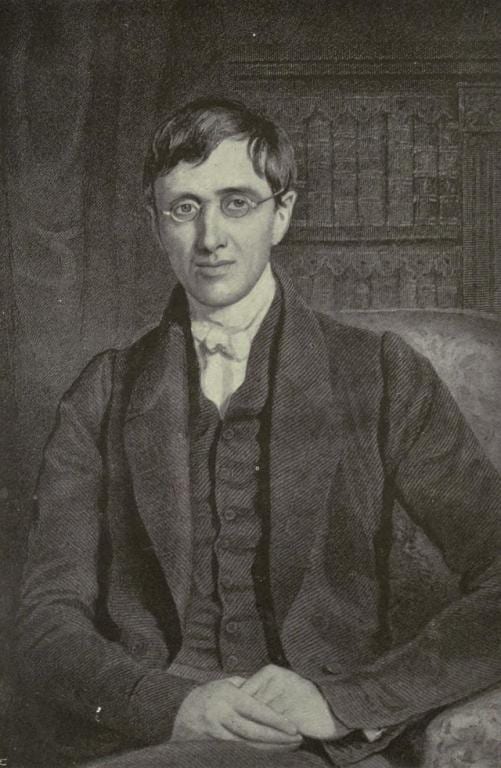
The following was taken from Newman’s book, Lectures on the Present Position of Catholics in England (1851). What struck me was the remarkable similarity of the traits of this species of virulent prejudice, compared to the two widespread “Derangement Syndromes” present today: the ones against Pope Francis and President Trump.
Back in 1851 Americans were vigorously and tragically applying this prejudicial mentality to not only Catholics, but (enslaved) black people, Native Americans, and Irish and other immigrants coming into the country (e.g., the Chinese railroad workers, and Mexican Americans). The general traits and overall dispositions are strikingly identical in all these cases.
I have collected excerpts from the Preface and Lectures I and II: between pages 1 and 45 in the 1918 edition (London: Longmans, Green and Co.): which I am privileged to have in my own library. Line breaks below mean a break in the text; i.e., distinct excerpts which stand alone.
*****
The Author repeats here, what he has several times observed in the course of the Volume itself, that his object has not been to prove the divine origin of Catholicism, but to remove some of the moral and intellectual impediments which prevent Protestants from acknowledging it. Protestants cannot be expected to do justice to a religion whose professors they hate and scorn. It has been objected to the Author, as regards both this and other of his works, that he succeeds better in demolition than in construction; and he has been challenged to draw out a proof of the truth of the Catholic Faith. Persons who so speak, should consider the state of the case more accurately:—that he has not attempted the task to which they invite him, does not arise from any misgiving whatever in his mind about the strength of his cause, but about the disposition of his audience. He has a most profound misgiving about their fairness as judges, founded on his sense of the misconceptions concerning Catholicism which generally pre-occupy the English mind. Irresistible as the proof seems to him to be, so as even to master and carry away the intellect as soon as it is stated, so that Catholicism is almost its own evidence, yet it requires, as the great philosopher of antiquity reminds us, as being a moral proof, a rightly-disposed recipient. While a community is overrun with prejudices, it is as premature to attempt to prove that doctrine to be true which is the object of them, as it would be to think of building in the aboriginal forest till its trees had been felled.
Catholics would have cause to congratulate themselves, though they were able to proceed no further than to persuade Protestants to argue out one point before going on to another. . . . It would be much to hinder them from eluding a defeat on one point by digressing upon three or four others, and then presently running back to the first, and then to and fro, to second, third and fourth, and treating each in turn as if quite a fresh subject on which not a word had yet been said.
It is no easy accomplishment in a Catholic to know his religion so perfectly, as to be able to volunteer a defence of it.
I am going to inquire why it is, that, in this intelligent nation, and in this rational nineteenth century, we Catholics are so despised and hated by our own countrymen, with whom we have lived all our lives, that they are prompt to believe any story, however extravagant, that is told to our disadvantage; as if beyond a doubt we were, every one of us, either brutishly deluded or preternaturally hypocritical, and they themselves, on the contrary were in comparison of us absolute specimens of sagacity, wisdom, uprightness, manly virtue, and enlightened Christianity. I am not inquiring why they are not Catholics themselves, but why they are so angry with those who are. Protestants differ amongst themselves, without calling each other fools and knaves.
I am neither attacking another’s belief just now, nor defending myself: I am not engaging in controversy, though controversy is good in its place: I do but propose to investigate how Catholics came to be so trodden under foot, and spurned by a people which is endowed by nature with many great qualities, moral and intellectual; how it is that we are cried out against by the very stones, and bricks, and tiles, and chimney-pots of a populous busy place, such as this town which we inhabit.
There are two sides to everything; there is a Catholic side of the argument, and there is a Protestant.
[T]here is a Protestant side, and there is a Catholic side—and if you have heard but one of them, you will think nothing at all can be said on the other. If, then, a person listens only to Protestantism, and does not give fair play to the Catholic reply to it, of course he thinks Protestantism very rational and straightforward, and Catholics very absurd . . .
Anything will become plausible, if you read all that can be said in its favour, and exclude all that can be said against it. Thus it comes to pass that, in a measure, every one (as I may say) has his own sphere of ideas and method of thought, in which he lives, and as to which he differs from every one else; and, unless he be a philosopher, he will be apt to consider his own view of things, his own principles, his own tastes, to be just and right, and to despise others altogether. He despises other men, and other modes of opinion and action, simply because he does not understand them. . . . Taking men as they are commonly found, one man is not equal to the task of appreciating the circle of ideas and the atmosphere of thought which is the life of another; and yet he will commonly be forward in criticising and condemning it; condemning it, not as having heard what it has to say for itself, but simply and precisely for the very opposite reason, because he has not.
This is but a sample of what meets us in life on every hand; the young have their own view of things, the old have theirs; high and low, trader and farmer, each has his own, by which he measures everything else, and which is proved to be but a view, and not a reality, because there are so many other views just as good as it is. What is true of individuals is true of nations; however plausible, however distinct, however complete the national view of this or that matter may be, it does not follow that it is not a mere illusion, if it has not been duly measured with other views of the same matter. No conclusion is trustworthy which has not been tried by enemy as well as friend; no traditions have a claim upon us which shrink from criticism, and dare not look a rival in the face. Now this is precisely the weak point of Protestantism in this country. It is jealous of being questioned; it resents argument; it flies to State protection; it is afraid of the sun; it forbids competition. How can you detect the sham, but by comparing it with the true? Your artificial flowers have the softness and brilliancy of nature, till you bring in the living article, fresh from the garden; you detect the counterfeit coin by ringing it with the genuine. So is it in religion. Protestantism is at best but a fine piece of wax-work, which does not look dead, only because it is not confronted by that Church which really breathes and lives. The living Church is the test and the confutation of all false churches; therefore get rid of her at all hazards; tread her down, gag her, dress her like a felon, starve her, bruise her features, if you would keep up your mumbo-jumbo in its place of pride. By no manner of means give her fair play: you dare not. The dazzling brightness of her glance, the sanctity beaming from her countenance, the melody of her voice, the grace of her movements, will be too much for you. Blacken her; make her Cinderella in the ashes; do not hear a word she says. Do not look on her, but daub her in your own way; keep up the good old sign-post representation of her. Let her be a lion rampant, a griffin, a wivern, or a salamander. She shall be red or black; she shall be always absurd, always imbecile, always malicious, always tyrannical.
We [the English] rule Popery to be what we say it is, not by history, but by Act of Parliament; not by sight or hearing, but by the national will.
She is considered too absurd to be inquired into, and too corrupt to be defended, and too dangerous to be treated with equity and fair dealing. She is the victim of a prejudice which perpetuates itself, and gives birth to what it feeds upon.
Catholics are treated with scorn and injustice simply because, though they have a good deal to say in their defence, they have never patiently been heard.
[T]he Homilies of the Church of England say, that “in the pit of damnable idolatry all the world, as it were, drowned, continued until our age” (that is, the Reformation), “by the space of above 800 years . . . so that laity and clergy, learned and unlearned, all ages, sects, and degrees of men, women, and children, of whole Christendom (an horrible and most dreadful thing to think), have been at once drowned in abominable idolatry, of all other vices most detested of God, and most damnable to man.”
However, all are not satisfied to learn by rote what they are to affirm on matters so important, and to feed all their life long on the traditions of the nursery. They examine for themselves, and then forthwith we have another side of the question in dispute.
I will take an instance of modern times. If there be any set of men in the whole world who are railed against as the pattern of all that is evil, it is the Jesuit body. It is vain to ask their slanderers what they know of them; did they ever see a Jesuit? can they say whether there are many or few? what do they know of their teaching? “Oh! it is quite notorious,” they reply: “you might as well deny the sun in heaven; it is notorious that the Jesuits are a crafty, intriguing, unscrupulous, desperate, murderous, and exceedingly able body of men; a secret society, ever plotting against liberty, and government, and progress, and thought, and the prosperity of England. Nay, it is awful; they disguise themselves in a thousand shapes, as men of fashion, farmers, soldiers, labourers, butchers, and pedlars; they prowl about with handsome stocks, and stylish waistcoats, and gold chains about their persons, in fustian jackets, as the case may be; and they do not hesitate to shed the blood of any one whatever, prince or peasant, who stands in their way.” Who can fathom the inanity of such statements?—which are made and therefore, I suppose, believed, not merely by the ignorant, but by educated men, who ought to know better, and will have to answer for their false witness. But all this is persisted in; and it is affirmed that they were found to be too bad even for Catholic countries, the governments of which, it seems, in the course of the last century, forcibly obliged the Pope to put them down.
Protestants take it for granted, that the history of the monks is a sore point with us; that it is simply one of our difficulties; that it at once puts us on the defensive, and is, in consequence, a brilliant and effective weapon in controversy. They fancy that Catholics can do nothing when monks are mentioned, but evade, explain away, excuse, deny, urge difference of times, and at the utmost make them out not quite so bad as they are reported; They think monks are the very types and emblems of laziness, uselessness, ignorance, stupidity, fanaticism, and profligacy. They think it a paradox to say a word in their favour, and they have converted their name into a title of reproach. As a Jesuit means a knave, so a monk means a bigot.
Audi alteram partem, hear both sides, is generally an Englishman’s maxim; but there is one subject on which he has intractable prejudices, and resolutely repudiates any view but that which is familiar to him from his childhood. Rome is his Nazareth; “Can any good come out of Nazareth?” settles the question with him; happy, rather, if he could be brought to imitate the earnest inquirer in the Gospel, who, after urging this objection, went on nevertheless to obey the invitation which it elicited, “Come and see!”
Were I, indeed, skilled in legal matters, I could have made it far more natural, plausible, and complete; but, as for its extravagance, I say deliberately, and have means of knowing what I say, having once been a Protestant, and being now a Catholic—knowing what is said and thought of Catholics, on the one hand, and, on the other, knowing what they really are—I deliberately assert that no absurdities contained in the above sketch can equal—nay, that no conceivable absurdities can surpass—the absurdities which are firmly believed of by sensible, kind-hearted, well-intentioned Protestants. Such is the consequence of having looked at things all on one side, and shutting the eyes to the other.
This phenomenon is what I in part brought before you in my last Lecture: I said we were thought dupes and rogues, because we were not known: because our countrymen would not be at the pains, or could not stand the shock of realizing that there are two sides to every question, and that in this particular question, perhaps, they had taken the false side.
Englishmen go by that very mode of information in its worst shape, which they are so fond of imputing against Catholics; they go by tradition, immemorial, unauthenticated tradition. . . . Englishmen entertain their present monstrous notions of us, mainly because those notions are received on information not authenticated, but immemorial. This it is that makes them entertain those notions; they talk much of free inquiry; but towards us they do not dream of practising it; they have been taught what they hold in the nursery, in the school-room, in the lecture-class, from the pulpit, from the newspaper, in society. Each man teaches the other: “How do you know it?” “Because he told me.” “And how does he know it?” “Because I told him;” or, at very best advantage, “We both know it, because it was so said when we were young; because no one ever said the contrary; because I recollect what a noise, when I was young, the Catholic Relief Bill made; because my father and the old clergyman said so, and Lord Eldon, and George the Third; and there was Mr. Pitt obliged to give up office, and Lord George Gordon, long before that, made a riot, and the Catholic Chapels were burnt down all over the country.” Well, these are your grounds for knowing it; and how did these energetic Protestants whom you have mentioned know it themselves? Why, they were told by others before them, and those others by others again a great time back; and there the telling and teaching is lost in fog; and this is mainly what has to be said for the anti-Catholic notions in question. Now this is to believe on tradition.
***
If you like what you read, and enjoy Newman’s brilliant and unmatched English prose, I have collected three volumes of his quotations (available for as low as $2.99):
The Quotable Newman: A Definitive Guide to His Central Thoughts and Ideas (Aug. 2011 / 12 October 2012, 415p)
*
The Quotable Newman, Vol. II (Aug. 2013, 290p)
*
Cardinal Newman: Q & A in Theology, Church History, and Conversion (May 2015, 367p)
*
***
Previous Post

February 14, 2020
Loving Ourselves (Since God Loves Us So Much!)
Next Post
February 17, 2020 "Anti-Catholic": Scholars Use it Both as a Noun & Adjective
Browse Our Archives
Select a Category & Last Things About Me Anti-Catholicism Atheism & Agnosticism Baptism and Sacramentalism Bible and Tradition Blessed Virgin Mary Books by Dave Armstrong C. S. Lewis Calvinism & General Protestantism Catholic Apologetics Catholic Apologists Catholic conversion Catholic converts Christmas Church (Ecclesiology) Church History Conversion and Converts Development of Doctrine Eastern Orthodoxy Ecumenism & Christian Unity Eucharist & Liturgy Fathers of the Church French Translations G. K. Chesterton Hell Hell & Satan Hell & Satan & Last Things Heresies & Comparative Religion Holistic Health Inquisition & Crusades & Scandals James White Jews & Judaism & Old Testament John Calvin John Henry Newman Liberal / Modernist Theology Life Issues Literary Resume Lutheranism Mariology Martin Luther Music Orthodoxy Papacy & Infallibility Personal Page Philosophy & Science Political & Ethical & Moral Issues Protestant Persecution & Intolerance Protestantism Purgatory Purgatory & Penance Romantic & Imaginative Theology Saints & Purgatory & Penance Salvation Salvation & Justification Satan & Last Things Sexuality and Gender Issues Spanish Translations Traditionalism vs. Radical Catholic Reactionaries Traducciones al español / tradução para português Trinitarianism & Christology Uncategorized Videos
Select a Month October 2026 September 2026 August 2026 July 2026 June 2026 May 2026 April 2026 March 2026 February 2026 January 2026 December 2025 November 2025 October 2025 September 2025 August 2025 July 2025 June 2025 May 2025 April 2025 March 2025 February 2025 January 2025 December 2024 November 2024 October 2024 September 2024 August 2024 July 2024 June 2024 May 2024 April 2024 March 2024 February 2024 January 2024 December 2023 November 2023 October 2023 September 2023 August 2023 July 2023 June 2023 May 2023 April 2023 March 2023 February 2023 January 2023 December 2022 November 2022 October 2022 September 2022 August 2022 July 2022 June 2022 May 2022 April 2022 March 2022 February 2022 January 2022 December 2021 November 2021 October 2021 September 2021 August 2021 July 2021 June 2021 May 2021 April 2021 March 2021 February 2021 January 2021 December 2020 November 2020 October 2020 September 2020 August 2020 July 2020 June 2020 May 2020 April 2020 March 2020 February 2020 January 2020 December 2019 November 2019 October 2019 September 2019 August 2019 July 2019 June 2019 May 2019 April 2019 March 2019 February 2019 January 2019 December 2018 November 2018 October 2018 September 2018 August 2018 July 2018 June 2018 May 2018 April 2018 March 2018 February 2018 January 2018 December 2017 November 2017 October 2017 September 2017 August 2017 July 2017 June 2017 May 2017 April 2017 March 2017 February 2017 January 2017 December 2016 November 2016 October 2016 September 2016 August 2016 July 2016 June 2016 May 2016 April 2016 March 2016 February 2016 January 2016 December 2015 November 2015 October 2015 September 2015 August 2015 July 2015 June 2015 May 2015 April 2015 March 2015 February 2015 January 2015 December 2014 November 2014 October 2014 September 2014 August 2014 July 2014 June 2014 April 2014 March 2014 February 2014 January 2014 December 2013 November 2013 October 2013 September 2013 August 2013 July 2013 June 2013 April 2013 March 2013 February 2013 January 2013 December 2012 November 2012 October 2012 September 2012 August 2012 July 2012 June 2012 May 2012 April 2012 March 2012 February 2012 January 2012 December 2011 November 2011 October 2011 September 2011 August 2011 July 2011 June 2011 April 2011 March 2011 February 2011 October 2010 September 2010 August 2010 July 2010 April 2010 March 2010 December 2009 October 2009 August 2009 July 2009 June 2009 May 2009 March 2009 February 2009 October 2008 September 2008 April 2008 March 2008 February 2008 January 2008 December 2007 November 2007 October 2007 May 2007 March 2007 February 2007 January 2007 November 2006 October 2006 September 2006 August 2006 July 2006 June 2006 May 2006 April 2006 March 2006 February 2006 October 2005 June 2005 April 2005 February 2005 July 2004 May 2004 April 2004
Follow Us!
TAKE THE
Religious Wisdom Quiz
Who prayed for rain after a long drought and sent his servant to look seven times?
Select your answer to see how you score.
Elijah Isaiah Samuel Hosea
Books by This Author Books by Dave Armstrong
Related posts from Biblical Evidence for Catholicism

Three More Anti-Catholic Lies About Catholicism (#6-4)
Biblical Evidence for Catholicism

Top Ten Anti-Catholic Lies (#10-7)
Biblical Evidence for Catholicism

A Few "Worst" & "Best" Arguments vs. Protestantism
Biblical Evidence for Catholicism

"Baptism" & Romans 10 (Engwer's Silly Word Games)
Biblical Evidence for Catholicism
TRENDING AT PATHEOS Catholic

I was strolling through the top floor of the brand new Parthenon...

What Does Gêvâh Mean For Kimberley Guifoyle &...
This week, a lot of the news is focused on Kimberly Guilfoyle....

INNER CIRCLE: Profound Mystery (Of Christ In All...
Ephesians 5:31-32 “For this reason, a man will leave his father and...

Do Not Rejoice When Your Enemy Falls: The...
Turning an execution into a public spectacle is a disturbing expression of...

'The Chosen' S6 Trailer: The Passion Gets Very...
Not many watching 'The Chosen' worry about spoilers, but just because they...

The purpose-driven labor priest
A labor activist reads Rick Warren and it gets me wondering about...
view all Catholic blogs
Ad-Free & Subscriber Log-In Subscription Support
- About Us
- 2026 Calendar
- Videos
- Podcasts
- Library of World Religions
- Faith In Media Tracker
- Advertise With Us
- Write for Us
- Privacy Policy
- Terms of Service
- Do Not Sell My Data
- Contact Us
- Radiant Digital
- Manage Newsletter Subscriptions
- Unsubscribe From Notifications
- Sitemap
Copyright 2008-2026, Patheos. All rights reserved.
Subscription Support Ad-Free & Subscriber Log-In
Follow Patheos