
BuddhistCatholicContemplativeEvangelicalGeneral ChristianHinduJewishLatter-day SaintMuslimNew VisionsProgressive Christian
Beliefs
- Buddhist
- Catholic
- Contemplative
- Evangelical
- General Christian
- Hindu
- Jewish
- Latter-day Saint
- More Voices
- Muslim
- New Visions
- Pagan
- Progressive Christian
Topics
- Religion News
- Food and Religion
- Sports and Religion
- Religious Art
- Religious Music and Entertainment
- Religious Events
- History and Religion
- Style and Religion
- Politics and Religion
- Women in Religion
- Recreation Outdoors and Religion
- Business Finance and Religion
- Careers Workplace and Religion
- Education and Religion
- Family Parenting and Religion
- Health Fitness and Religion
- Home and Religion
- Relationships and Religion
- Technology and Religion
- Travel and Religion
Columnists
- Buddhist Columnists
- Business Finance and Religion Columnists
- Careers Workplace and Religion Columnists
- Catholic Columnists
- Contemplative Columnists
- Education and Religion Columnists
- Evangelists Columnists
- Family Parenting and Religion Columnists
- General Christian Columnists
- Health Fitness and Religion Columnists
- Hindu Columnists
- History and Religion Columnists
- Home and Religion Columnists
- Jewish Columnists
- More Voices Columnists
- Latter Day Columnists
- Muslim Columnists
- New Visions Columnists
- Nonreligious Columnists
- Pagan Columnists
- Politics and Religion Columnists
- Progressive Columnists
- Recreation Outdoors and Religion Columnists
- Relationships and Religion Columnists
- Religion News Columnists
- Religious Art Columnists
- Religious Events Columnists
- Religious Music and Entertainment Columnists
- Sports and Religion Columnists
- Style and Religion Columnists
- Technology and Religion Columnists
- Travel and Religion Columnists
- Women in Religion Columnists
Resource Library
- 2026 Calendar
- Library of World Religions
- The 100 Most Holy Places on Earth
- Patheos Answers
- Podcasts
- Videos
- Faith Leaders Database
- Anglican Episcopalian
- Bahai
- Baptist
- Buddhism
- Christianity
- Confucianism
- Eastern Orthodoxy
- Hinduism
- Holiness and Pentecostal
- ISKCON
- Islam
- Judaism
- Lutheran
- Methodist
- The Church of Jesus Christ of Latter-day Saints
- New Age
- Paganism
- Presbytarian and Reformed
- Protestantism
- Religion Behind the Scenes
- Roman Catholic
- Scientology
- Shia Islam
- Sikhism
- Sufism
- Sunni Islam
- Taoism
- Zen
- See all religions
Research Tools
 Ad-Free & Subscriber Log-In Subscription Support
Ad-Free & Subscriber Log-In Subscription Support
Follow Patheos 

- Trending:
- Forgiveness
- |
- Marriage
- |
- Consciousness
- |
- Death Penalty
- |
- Election
- |
- Halloween

-
About
-
Catholic Apologetics
-
Church History
-
Great Apologists
-
Christian Worldview
-
Protestantism & Misc.
- Home
- Catholic
- History and Religion
- Salesian Apologetics #4: Infallible Ecumenical Councils
Salesian Apologetics #4: Infallible Ecumenical Councils
Last updated on: June 6, 2026 at 12:41 am by Dave Armstrong
Salesian Apologetics #4: Infallible Ecumenical Councils 2026-06-06T00:41:26-04:00 Dave Armstrong
Patheos Explore the world's faith through different perspectives on religion and spirituality! Patheos has the views of the prevalent religions and spiritualities of the world.
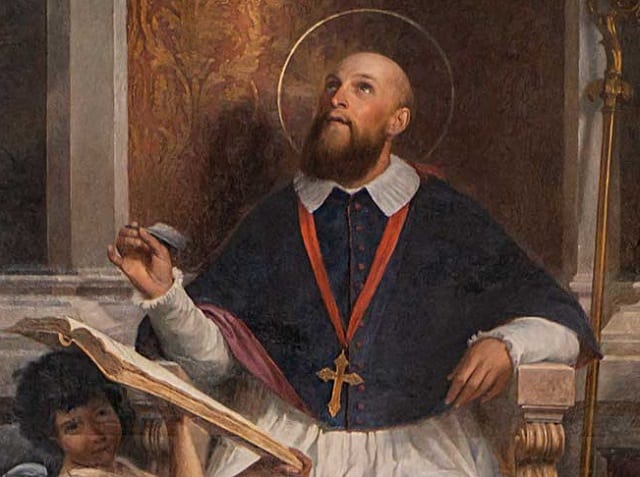
This is one of a series of extensive excerpts (with my occasional commentary) from The Catholic Controversy (1596): a classic of Catholic apologetics (originally a collection of pamphlets), written by St. Francis de Sales (1567-1622): a Doctor of the Church [see all the installments by searching “Salesian Apologetics #” on my blog sidebar search function]. Any comments of mine (apart from lists of related links) will be in blue. The rest is from the online, public domain text (3rd revised edition, New York: Benziger Brothers, 1909; translated by Henry Benedict Mackey, O.S.B.).
What I present is an edited abridgment, designed for modern readers: so I will dispense with the constant tedious use of ellipses (“. . .”). I will cite the section of the book used, so that anyone who desires it may consult the full text and/or particular contexts, patristic references (which I omit), etc. I will follow the custom of my paperback TAN Books edition: of italicizing scriptural passages.
*****
Part II, Article IV: Chapter 2: How Holy and Sacred is the Authority of Universal Councils
We are speaking then here of a Council such as that, in which there is the authority of S. Peter, both in the beginning and in the conclusion, and of the other Apostles and pastors who may choose to assist, or if not of all at least of a notable part ; in which discussion is free, that is, in which any one who chooses may declare his mind with regard to the question under discussion ; in which the pastors have the judicial voice. Such, in fact, as those four first were of which S. Gregory made so great account that he made this protestation concerning them : ” I declare that like the four books of the Holy Gospel do I receive and venerate the four Councils.”
Let us then consider a little how strong their authority should be over the understanding of Christians. And see how the Apostles speak of them : It has seemed good to the Holy Ghost and to us [Acts 15:28; Jerusalem Council]. Therefore the authority of councils ought to be revered as resting on the action of the Holy Ghost. For if against that Pharisaic heresy the Holy Ghost, doctor and guide of his Church, assisted the assembly, we must also believe that on all like occasions he will still assist the meetings of pastors, to regulate by their mouth both our actions and our beliefs. It is the same Church, as dear to the heavenly Spouse as she was then, in greater need than she was then, — what reason therefore can there be why he should not give her the same assistance as he gave her then on like occasion ?
Consider, I beg you, the importance of the Gospel words : And if he will not hear the Church, let him he to thee as the heathen and the publican [Mt 18:17]. And when can we hear the Church more distinctly than by the voice of a general Council, where the heads of the Church come together to state and resolve difficulties ? The body speaks not by its legs, nor by its hands, but only by its head, and so, how can the Church better pronounce sentence than by its heads ? But Our Lord explains himself : Again I say to you, that if two of you shall agree on earth concerning anything whatsoever they shall ask, it shall be done for them by my Father who is in heaven. . . . For where there are two or three gathered together in my name, there am I in the midst of them [Mt 18:19-20].
If two or three being gathered together in the name of Our Lord, when need is, have so particular an assistance from him that he is in the midst of them as a general in the midst of his army, as a doctor and regent among his disciples, if the Father infallibly gives them a gracious hearing concerning what they ask, how would he refuse his Holy Spirit to the general assembly of the pastors of the Church ?
Again, if the legitimate assembly of the pastors and heads of the Church could once be surprised by error, how would the word of the Master be verified : The gates of hell shall not prevail against it [Mt 16:18]? How could error and hellish strength more triumphantly seize upon the Church than by having subdued doctors, pastors, and captains, with the general ? And this word : I am with you all days even to the consummation of the world [Mt 28:20] — what would become of it ? And how would the Church be the pillar and ground of truth [1 Tim 3:15] if its bases and foundations support error and falsehood ? Doctors and pastors are the visible foundations of the Church, on whose ministry the rest is supported.
Finally, what stricter command have we than to take our food from the hand of our pastors ? Does not S. Paul say that the Holy Ghost has placed them over the flock to rule us [Acts 20:28] and that Our Lord has given them to us that we may not he tossed to and fro, and carried about with every wind of doctrine [?] [Eph 4:14] What respect then must we not pay to the ordinances and canons which emanate from their general assembly ? It is true that taken separately their teachings are subject to correction, but when they are together and when all the ecclesiastical authority is collected into one, who shall dispute the sentence which comes forth ? If the salt lose its savour, wherewith shall it be preserved ? If the chiefs are blind, who shall lead the others ? If the pillars are falling, who shall hold them up ?
In a word, what has the Church more grand, more certain, more solid, for the overthrow of heresy, than the judgment of General Councils ? The Scripture, — Beza will say. But I have already shown that ” heresy is of the understanding not of the Scripture, the fault lies in the meaning, not in the words.” [St. Hilary of Poitiers] Who knows not how many passages the Arian brought forward ? What was there to be said against him except that he understood them wrongly ? But he is quite right to believe that it is you who interpret wrongly, not he, you that are mistaken, not he ; that his appeal to the analogy of the faith is more sound than yours, so long as they are but private individuals who oppose his novelties. Yes, if one deprive the Councils of supreme authority in decision and declarations necessary for the understanding of the Holy Word, this Holy Word will be as much profaned as texts of Aristotle, and our articles of religion will be subject to never-ending revision, and from being safe and steady Christians we shall become wretched academics.
Athanasius says that ” the word of the Lord by the Ecumenical Council of Nice remains for ever.” S. Gregory Nazianzen, speaking of the Apollinarists who boasted of having been recognised by a Catholic council : — ” If either now,” says he, ” or formerly, they have been received, let them prove it and we will agree, for it will be clear that they assent to the right doctrine, and it cannot be otherwise.” S. Augustine says that the celebrated question about Baptism pressed by the Donatists made some Bishops doubt, ” until the whole world in plenary council formulated beyond all doubt what was most wholesomely believed.” ” The decision of the priestly Council (of Nice),” says Rufinus, ” is conveyed to Constantine. He venerates it as settled by God, in such sense that if any one were to oppose it he would be working his own destruction, as opposing himself to God.”
But if any one supposes that because he can produce analogies, texts of Scripture, Greek and Hebrew words, he is therefore allowed to make doubtful again what has already been determined by General Councils, he must bring patents from heaven duly signed and sealed, or else he must admit that anybody else may do as he does, that everything is at the mercy of our rash speculations, that everything is uncertain and subject to the variety of the judgments and considerations of men. The Wise Man gives us other counsel : The words of the wise are as goads, and as nails deeply fastened in, which by the counsel of masters are given from one shepherd. More than these, my son, require not [Ecc 12:11-12].
Part II, Article IV: Chapter 3: How the Ministers Have Despised and Violated the Authority of Councils
Luther in the book which he has composed on the Councils is not content with tearing down the stones that are visible, but goes so far as to sap the very foundations of the Church. Who would credit this of Luther, that great and glorious reformer, as Beza calls him ? How does he treat the great Council of Nice ? Because the Council forbids those who have mutilated themselves to be received into the clerical ministry, and presently again forbids ecclesiastics to keep in their houses other women besides their mothers or their sisters : — ” Pressed on this point,” says Luther, ” I do not allow [the presence of] the Holy Spirit in this Council. And why ? Is there no other work for the Holy Spirit to do in Councils than to bind and burden his ministers by making impossible, dangerous, unnecessary laws ? ” He makes exception for no Council, but seriously holds that the Curé alone can do as much as a Council. Such is the opinion of this great reformer.
Beza says in the Epistle to the King of France, that your reform will refuse the authority of no Council; so far he speaks well, but what follows spoils all : ” provided,” says he, ” that the Word of God test it.” But, for God’s sake, when will they cease darkening the question ! The Councils, after the fullest consultation, when the test has been made by the holy touchstone of the Word of God, decide and define some article. If after all this another test has to be tried before their determination is received, will not another also be wanted ? Who will not want to apply his test, and whenever will the matter be settled ? After the test has been applied by the Council, Beza and his disciples want to try again ? And who shall stop another from asking as much, in order to see if the Council’s test has been properly tried ? And why not a third to know if the second is faithful ? — and then a fourth, to test the third ?
Everything must be done over again, and posterity will never trust antiquity but will go ever turning upside down the holiest articles of the faith in the wheel of their understandings. We are not hesitating as to whether we should receive a doctrine at haphazard, or should test it by the application of God’s Word. But what we say is that when a Council has applied this test, our brains have not now to revise but to believe. Once let the canons of Councils be submitted to the test of private individuals, — as many persons, so many tastes, so many opinions.
The article of the real presence of Our Lord in the most Holy Sacrament had been received under the test of many Councils. Luther wished to make another trial, Zwingle another trial on that of Luther, Brentius another on these, Calvin another, — as many tests so many opinions. But, I beseech you, if the test as applied by a General Council be not enough to settle the minds of men, how shall the authority of some nobody be able to do it ? That is too great an ambition.
Some of the most learned ministers of Lausanne, these late years. Scripture and analogy of faith in hand, oppose the doctrine of Calvin concerning justification. To bear the attack of their arguments no new reasons appear, though some wretched little tracts, insipid and void of doctrine, are set a-going. How are these men treated ? They are persecuted, driven away, threatened. Why is this ? ” Because they teach a doctrine contrary to the profession of faith of our Church.” Gracious heavens ! the doctrine of the Council of Nice, after an approbation of thirteen hundred years, is to be submitted to the tests of Luther, Calvin, and Beza, and there shall be no trial made of the Calvinistic doctrine, quite new, entirely doubtful, patched up and inconsistent !
Why, at least, may not each one try it for himself ? If that of Nice has not been able to quiet your brains, why would you, by your statements impose quiet on the brains of your companions, who are as good as you, as wise and as consistent ? Behold the iniquitousness of these judges ; to give liberty to their own opinions they lower the ancient Councils, while with their own opinions they would bridle those of others. They seek their own glory, be sure of that ; and just as much as they take away from the Ancients do they attribute to themselves.
Beza in the Epistle to the King of France and in the fore-mentioned Treatise, says that the Council of Nice was a true Council if ever there was one. He says the truth, never did good Christian doubt about it, nor about the other first three ; but if it be such, why does Calvin call that sentence in the Symbol of the Council — Deum de Deo lumen de lumine — hard ? And how is it that that word consubstantialem was so offensive to Luther — ” My soul hates this word homoousion ; ” a word, however, which so entirely approved itself to that great Council ?
How is it you do not maintain the reality of the body of Our Lord in the holy Sacrament, that you call superstition the most holy sacrifice of the same precious body of Our Saviour which is offered by the priests, and that you will make no difference between the bishop and the priest, — since all this is so expressly not defined but presupposed, there, as perfectly well known in the Church ? Never would Luther, or Peter Martyr, or Ochin have been ministers of yours, if they had remembered the acts of the great Council of Chalcedon ; for it is most expressly forbidden there for religious men and women to marry.
The Council of Constantinople attributes the primacy to the Pope of Rome, and presupposes this as a thing of universal knowledge ; so does that of Chalcedon. But is there any article in which we differ from you, which has not been several times condemned either in holy General Councils, or in particular ones received generally ? And yet your ministers have resuscitated them, without shame, without scruple, not otherwise than though they were certain holy deposits and treasures hidden to Antiquity, or by Antiquity most curiously locked up in order that we might have the benefit of them in this age.
I am well aware that in the Councils there are articles concerning Ecclesiastical order and discipline, which can be changed and are but temporary. But it is not for private persons to interfere with them ; the same authority which drew them up is required for abrogating them ; if anybody else tries to do so it is in vain, and the authority is not the same unless it is a Council, or the general Head, or the custom of the whole Church. As to decrees on doctrines of faith they are invariable; what is once true is so unto eternity ; and the Councils call canons (that is, rules) what they determine in this, because they are inviolable rules for our faith.
But all this is to be understood of true Councils, either general or provincial, approved by General Councils or the Apostolic See. Such as was not that of the four hundred prophets assembled by Ahab [1 Kings 22:6]: for it was neither general, since those of Juda were not called to it, nor duly assembled, for it had no priestly authority. And those prophets were not legitimate or acknowledged as such by Josaphat, King of Juda, when he said : Is there not here some prophet of the Lord that we may inquire by him ? [1 Kings 22:7] — as if he would say that the others were not prophets of the Lord. Such, again, was not the assembly of the priests against Our Lord ; which was so far from having warrant in Scripture for the assistance of the Holy Spirit, that on the contrary it had been declared a private one by the Prophets ; and truly right reason required that when the King was present his lieutenants should lose authority, and that the High Priest being present the dignity of the vicar should be reduced to the condition of the rest.
Besides, it had not the form of a Council ; it was a tumultuous meeting, wanting in the requisite order, without authority from the supreme head of the Church, who was Our Lord, there present with a visible presence, whom they were bound to acknowledge. In truth, when the great sacrificer is visibly present, the vicar cannot be called chief; when the governor of a fortress is present, it is for him, not for his lieutenant, to give the word. Besides all this, the synagogue was to be changed and transferred at that time, and this its crime had been predicted. But the Catholic Church is never to be transferred, so long as the world shall be world ; we are not waiting for any third legislator, nor any other priesthood ; but she is to be eternal.
And yet Our Lord did this honour to the sacrificial dignity of Aaron that in spite of all the bad intention of those who held it the High Priest prophesied and uttered a most certain judgment (that it is expedient one man should die for the people, and the whole nation perish not) [Jn 11:50-51], which he spoke not of himself and by chance, but he prophesied, says the Evangelist, being the High Priest of that year.
Thus Our Lord would conduct the Synagogue and the priestly authority with singular honour to its tomb, when he made it give place to the Catholic Church and the Evangelic priesthood : and then when the Synagogue came to an end (which was in the resolution to put Our Lord to death), the Church was founded in that very death : I have finished the work which thou gavest me to do [Jn 17:4], said Our Lord after the Supper. And in the Supper Our Lord had instituted the New Testament ; so that the Old, with its ceremonies and its priesthood, lost its force and its privileges, though the confirmation of the New was only made by the death of the testator, as S. Paul says [Heb 9].
My intention has been to destroy the force of the two objections which are raised against the infallible authority of Councils and of the Church, the others will be answered in our treatment of particular points of Catholic doctrine. There is nothing so certain but that it can meet with opposition, but truth remains firm and is glorified by the assaults of what is contrary to it.
***
Related Reading:
Dialogue on the Logic of Catholic Infallible Authority [6-4-96]
Pope Silvester and the Council of Nicaea (vs. James White) [August 1997]
Conciliar Infallibility: Summary from Church Documents [6-5-98]
Infallibility, Councils, and Levels of Church Authority: Explanation of the Subtleties of Church Teaching and Debate with Several Radical Catholic Reactionaries [7-30-99; terminology updated, and a few minor changes made on 7-31-18]
Jerusalem Council vs. Sola Scriptura [9-2-04]
The Analogy of an Infallible Bible to an Infallible Church [11-6-05; rev. 7-25-15; published at National Catholic Register: 6-16-17]
The Bible on Papal & Church Infallibility [5-16-06]
Protestant Historian Philip Schaff: The Church Fathers Believed in Conciliar Infallibility Based on the Jerusalem Council (Acts 15) [Facebook, 10-8-07]
Papal Participation in the First Seven Ecumenical Councils [4-22-09]
Popes & Early Ecumenical Councils (vs. Calvin #16) [6-15-09]
Authority and Infallibility of Councils (vs. Calvin #26) [8-25-09]
Books by Dave Armstrong: Biblical Proofs for an Infallible Church and Papacy [2012]
“Armstrong vs. Geisler” #10: Ecclesiology (Jerusalem Council) [3-2-17]
“Reply to Calvin” #2: Infallible Church Authority [3-3-17]
Jerusalem Council (Acts 15) Decrees: Universally Binding? [11-21-19]
***
Unfortunately, Money Trees Do Not Exist: If you have been aided in any way by my work, or think it is valuable and worthwhile, please strongly consider financially supporting it (even $10 / month — a mere 33 cents a day — would be very helpful). I have been a full-time Catholic apologist since Dec. 2001, and have been writing Christian apologetics since 1981 (see my Resume). My work has been proven (by God’s grace alone) to be fruitful, in terms of changing lives (see the tangible evidences from unsolicited “testimonies”). I have to pay my bills like all of you: and have a (homeschooling) wife and two children still at home to provide for, and a mortgage to pay.
*
My book royalties from three bestsellers in the field (published in 2003-2007) have been decreasing, as has my overall income, making it increasingly difficult to make ends meet. I provide over 2700 free articles here, for the purpose of your edification and education, and have written 50 books. It’ll literally be a struggle to survive financially until Dec. 2020, when both my wife and I will be receiving Social Security. If you cannot contribute, I ask for your prayers (and “likes” and links and shares). Thanks!
*
See my information on how to donate (including 100% tax-deductible donations). It’s very simple to contribute to my apostolate via PayPal, if a tax deduction is not needed (my “business name” there is called “Catholic Used Book Service,” from my old bookselling days 17 or so years ago, but send to my email: [email protected]). Another easy way to send and receive money (with a bank account or a mobile phone) is through Zelle. Again, just send to my e-mail address. May God abundantly bless you.
*
***
Photo credit: St. Francis de Sales [Bosco Austalasia / Salesian Journeying with the young]
***
Previous Post
February 5, 2020
Salesian Apologetics #3: Rule of Faith Isn't the Bible Alone
Next Post
February 6, 2020 Salesian Apologetics #5: Authority of Church Fathers
Browse Our Archives
Select a Category & Last Things About Me Anti-Catholicism Atheism & Agnosticism Baptism and Sacramentalism Bible and Tradition Blessed Virgin Mary Books by Dave Armstrong C. S. Lewis Calvinism & General Protestantism Catholic Apologetics Catholic Apologists Catholic conversion Catholic converts Christmas Church (Ecclesiology) Church History Conversion and Converts Development of Doctrine Eastern Orthodoxy Ecumenism & Christian Unity Eucharist & Liturgy Fathers of the Church French Translations G. K. Chesterton Hell Hell & Satan Hell & Satan & Last Things Heresies & Comparative Religion Holistic Health Inquisition & Crusades & Scandals James White Jews & Judaism & Old Testament John Calvin John Henry Newman Liberal / Modernist Theology Life Issues Literary Resume Lutheranism Mariology Martin Luther Music Orthodoxy Papacy & Infallibility Personal Page Philosophy & Science Political & Ethical & Moral Issues Protestant Persecution & Intolerance Protestantism Purgatory Purgatory & Penance Romantic & Imaginative Theology Saints & Purgatory & Penance Salvation Salvation & Justification Satan & Last Things Sexuality and Gender Issues Spanish Translations Traditionalism vs. Radical Catholic Reactionaries Traducciones al español / tradução para português Trinitarianism & Christology Uncategorized Videos
Select a Month October 2026 September 2026 August 2026 July 2026 June 2026 May 2026 April 2026 March 2026 February 2026 January 2026 December 2025 November 2025 October 2025 September 2025 August 2025 July 2025 June 2025 May 2025 April 2025 March 2025 February 2025 January 2025 December 2024 November 2024 October 2024 September 2024 August 2024 July 2024 June 2024 May 2024 April 2024 March 2024 February 2024 January 2024 December 2023 November 2023 October 2023 September 2023 August 2023 July 2023 June 2023 May 2023 April 2023 March 2023 February 2023 January 2023 December 2022 November 2022 October 2022 September 2022 August 2022 July 2022 June 2022 May 2022 April 2022 March 2022 February 2022 January 2022 December 2021 November 2021 October 2021 September 2021 August 2021 July 2021 June 2021 May 2021 April 2021 March 2021 February 2021 January 2021 December 2020 November 2020 October 2020 September 2020 August 2020 July 2020 June 2020 May 2020 April 2020 March 2020 February 2020 January 2020 December 2019 November 2019 October 2019 September 2019 August 2019 July 2019 June 2019 May 2019 April 2019 March 2019 February 2019 January 2019 December 2018 November 2018 October 2018 September 2018 August 2018 July 2018 June 2018 May 2018 April 2018 March 2018 February 2018 January 2018 December 2017 November 2017 October 2017 September 2017 August 2017 July 2017 June 2017 May 2017 April 2017 March 2017 February 2017 January 2017 December 2016 November 2016 October 2016 September 2016 August 2016 July 2016 June 2016 May 2016 April 2016 March 2016 February 2016 January 2016 December 2015 November 2015 October 2015 September 2015 August 2015 July 2015 June 2015 May 2015 April 2015 March 2015 February 2015 January 2015 December 2014 November 2014 October 2014 September 2014 August 2014 July 2014 June 2014 April 2014 March 2014 February 2014 January 2014 December 2013 November 2013 October 2013 September 2013 August 2013 July 2013 June 2013 April 2013 March 2013 February 2013 January 2013 December 2012 November 2012 October 2012 September 2012 August 2012 July 2012 June 2012 May 2012 April 2012 March 2012 February 2012 January 2012 December 2011 November 2011 October 2011 September 2011 August 2011 July 2011 June 2011 April 2011 March 2011 February 2011 October 2010 September 2010 August 2010 July 2010 April 2010 March 2010 December 2009 October 2009 August 2009 July 2009 June 2009 May 2009 March 2009 February 2009 October 2008 September 2008 April 2008 March 2008 February 2008 January 2008 December 2007 November 2007 October 2007 May 2007 March 2007 February 2007 January 2007 November 2006 October 2006 September 2006 August 2006 July 2006 June 2006 May 2006 April 2006 March 2006 February 2006 October 2005 June 2005 April 2005 February 2005 July 2004 May 2004 April 2004
Follow Us!
TAKE THE
Religious Wisdom Quiz
Who prayed for rain after a long drought and sent his servant to look seven times?
Select your answer to see how you score.
Elijah Isaiah Samuel Hosea
Books by This Author Books by Dave Armstrong
Related posts from Biblical Evidence for Catholicism

Jesus Founded the [Catholic] Church. If Not Him,...
Biblical Evidence for Catholicism

Jerusalem Council vs. James White & Sola Scriptura
Biblical Evidence for Catholicism

Matthew 16 & the Papacy (vs. Patrick O'Brien)
Biblical Evidence for Catholicism

Apostolic Succession: 40 Biblical Arguments
Biblical Evidence for Catholicism
TRENDING AT PATHEOS Catholic

I was strolling through the top floor of the brand new Parthenon...

What Does Gêvâh Mean For Kimberley Guifoyle &...
This week, a lot of the news is focused on Kimberly Guilfoyle....

INNER CIRCLE: Profound Mystery (Of Christ In All...
Ephesians 5:31-32 “For this reason, a man will leave his father and...

Do Not Rejoice When Your Enemy Falls: The...
Turning an execution into a public spectacle is a disturbing expression of...

'The Chosen' S6 Trailer: The Passion Gets Very...
Not many watching 'The Chosen' worry about spoilers, but just because they...

The purpose-driven labor priest
A labor activist reads Rick Warren and it gets me wondering about...
view all Catholic blogs
Ad-Free & Subscriber Log-In Subscription Support
- About Us
- 2026 Calendar
- Videos
- Podcasts
- Library of World Religions
- Faith In Media Tracker
- Advertise With Us
- Write for Us
- Privacy Policy
- Terms of Service
- Do Not Sell My Data
- Contact Us
- Radiant Digital
- Manage Newsletter Subscriptions
- Unsubscribe From Notifications
- Sitemap
Copyright 2008-2026, Patheos. All rights reserved.
Subscription Support Ad-Free & Subscriber Log-In
Follow Patheos