
BuddhistCatholicContemplativeEvangelicalGeneral ChristianHinduJewishLatter-day SaintMuslimNew VisionsProgressive Christian
Beliefs
- Buddhist
- Catholic
- Contemplative
- Evangelical
- General Christian
- Hindu
- Jewish
- Latter-day Saint
- More Voices
- Muslim
- New Visions
- Pagan
- Progressive Christian
Topics
- Religion News
- Food and Religion
- Sports and Religion
- Religious Art
- Religious Music and Entertainment
- Religious Events
- History and Religion
- Style and Religion
- Politics and Religion
- Women in Religion
- Recreation Outdoors and Religion
- Business Finance and Religion
- Careers Workplace and Religion
- Education and Religion
- Family Parenting and Religion
- Health Fitness and Religion
- Home and Religion
- Relationships and Religion
- Technology and Religion
- Travel and Religion
Columnists
- Buddhist Columnists
- Business Finance and Religion Columnists
- Careers Workplace and Religion Columnists
- Catholic Columnists
- Contemplative Columnists
- Education and Religion Columnists
- Evangelists Columnists
- Family Parenting and Religion Columnists
- General Christian Columnists
- Health Fitness and Religion Columnists
- Hindu Columnists
- History and Religion Columnists
- Home and Religion Columnists
- Jewish Columnists
- More Voices Columnists
- Latter Day Columnists
- Muslim Columnists
- New Visions Columnists
- Nonreligious Columnists
- Pagan Columnists
- Politics and Religion Columnists
- Progressive Columnists
- Recreation Outdoors and Religion Columnists
- Relationships and Religion Columnists
- Religion News Columnists
- Religious Art Columnists
- Religious Events Columnists
- Religious Music and Entertainment Columnists
- Sports and Religion Columnists
- Style and Religion Columnists
- Technology and Religion Columnists
- Travel and Religion Columnists
- Women in Religion Columnists
Resource Library
- 2026 Calendar
- Library of World Religions
- The 100 Most Holy Places on Earth
- Patheos Answers
- Podcasts
- Videos
- Faith Leaders Database
- Anglican Episcopalian
- Bahai
- Baptist
- Buddhism
- Christianity
- Confucianism
- Eastern Orthodoxy
- Hinduism
- Holiness and Pentecostal
- ISKCON
- Islam
- Judaism
- Lutheran
- Methodist
- The Church of Jesus Christ of Latter-day Saints
- New Age
- Paganism
- Presbytarian and Reformed
- Protestantism
- Religion Behind the Scenes
- Roman Catholic
- Scientology
- Shia Islam
- Sikhism
- Sufism
- Sunni Islam
- Taoism
- Zen
- See all religions
Research Tools
 Ad-Free & Subscriber Log-In Subscription Support
Ad-Free & Subscriber Log-In Subscription Support
Follow Patheos 

- Trending:
- Forgiveness
- |
- Marriage
- |
- Consciousness
- |
- Death Penalty
- |
- Election
- |
- Halloween

-
About
-
Catholic Apologetics
-
Church History
-
Great Apologists
-
Christian Worldview
-
Protestantism & Misc.
- Home
- Catholic
- History and Religion
- Salesian Apologetics #3: Rule of Faith Isn’t the Bible Alone
Salesian Apologetics #3: Rule of Faith Isn’t the Bible Alone
Last updated on: February 6, 2020 at 1:05 pm by Dave Armstrong
Salesian Apologetics #3: Rule of Faith Isn’t the Bible Alone 2020-02-06T13:05:34-04:00 Dave Armstrong
Patheos Explore the world's faith through different perspectives on religion and spirituality! Patheos has the views of the prevalent religions and spiritualities of the world.
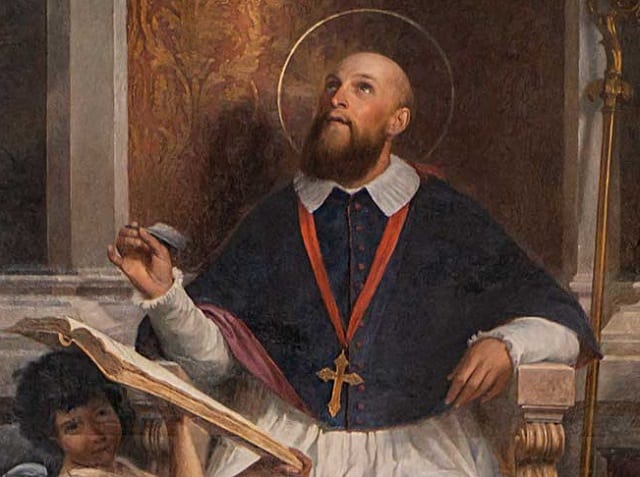
This is one of a series of extensive excerpts (with my occasional commentary) from The Catholic Controversy (1596): a classic of Catholic apologetics (originally a collection of pamphlets), written by St. Francis de Sales (1567-1622): a Doctor of the Church [see all the installments by searching “Salesian Apologetics #” on my blog sidebar search function]. Any comments of mine (apart from lists of related links) will be in blue. The rest is from the online, public domain text (3rd revised edition, New York: Benziger Brothers, 1909; translated by Henry Benedict Mackey, O.S.B.).
What I present is an edited abridgment, designed for modern readers: so I will dispense with the constant tedious use of ellipses (“. . .”). I will cite the section of the book used, so that anyone who desires it may consult the full text and/or particular contexts, patristic references (which I omit), etc. I will follow the custom of my paperback TAN Books edition: of italicizing scriptural passages.
*****
Part II, Article III: Chapter 1: That we Need Some Other Rule Besides the Word of God
Once when Absalom [2 Sam 15:2-4] wished to form a faction against his good father [David], he sat in the way near the gate, and said to all who went by : There is no man appointed by the king to hear thee … O that they would make me judge over the land, that all that have business might come to me, and I might do them justice. Thus did he undermine the loyalty of the Israelites. But how many Absaloms have there been in our age, who, to seduce and distract the people from obedience to the Church, and to lead Christians into revolt, have cried up and down the ways of Germany and of France : There is no one appointed by the Lord to hear and resolve differences concerning faith and religion ; the Church has no power in this matter ! If you consider well, Christians, you will see that whoever holds this language wishes to be judge himself, though he does not openly say so, more cunning than Absalom.
I have seen one of the most recent books of Theodore Beza, entitled : Of the true, essential and visible marks of the true Catholic Church ; he seems to me to aim at making himself, with his colleagues, judge of all the differences which are between us ; he says that the conclusion of all his argument is that “the true Christ is the only true and perpetual mark of the Catholic Church,” — understanding by true Christ, he says, Christ as he has most perfectly declared himself from the beginning, whether in the Prophetic or Apostolic writings, in what belongs to our salvation.
Higher up he had admitted that there were great difficulties in the Holy Scriptures, but not in things which touch faith. In the margin he places this warning, which he has put almost everywhere in the text : ” The interpretation of Scripture must not be drawn elsewhere than from the Scripture itself, by comparing passages one with another, and adapting them to the analogy of the faith.” And in the Epistle to the King of France : ” We ask that the appeal be made to the holy canonical Scriptures, and that, if there be any doubt as to the interpretation of them, the correspondence and relation which should exist among these passages of Scripture and the articles of faith, be the judge.”
He there receives the Fathers as of authority just as far as they should find their foundation in the Scriptures. He continues : ” As to the point of doctrine we cannot appeal to any irreproachable judge save the Lord himself, who has declared all his counsel concerning our salvation by the Apostles and the Prophets.” He says again that ” his party are not such as would disavow a single Council worthy of the name, general or particular, ancient or later, (take note)—” provided,” says he, ” that the touchstone, which is the word of God, be used to try it.”
That, in one word, is what all these reformers want — to take Scripture as judge. And to this we answer Amen : but we say that our difference is not there ; it is here, that in the disagreements we shall have over the interpretation, and which will occur at every two words, we shall need a judge. They answer that we must decide the interpretation of Scripture by collating passage with passage and the whole with the Symbol of faith. Amen, Amen, we say : but we do not ask how we ought to interpret the Scripture, but — who shall be the judge ?
For after having compared passages with passages, and the whole with the Symbol of the faith, we find by this passage : Thou art Peter, and upon this rock I will build my Church, and the gates of hell shall not prevail against it, and I will give to thee the keys of the kingdom of heaven (Matt, xvi.), that S. Peter has been chief minister and supreme steward in the Church of God : you say, on your side that this passage : The kings of the nations lord it over them . . . but you not so (Luke xxii.), or this other (for they are all so weak that I know not what may be your main authority) : No one can lay another foundation &c. (i Cor. iii. 11), compared with the other passages and the analogy of the faith makes you detest a chief minister.
The two of us follow one same way in our enquiry concerning the truth in this question — namely, whether there is in the Church a Vicar General of Our Lord — and yet I have arrived at the affirmative, and you, you have ended in the negative; who now shall judge of our difference? Here lies the essential point as between you and me. I quite admit, be it said in passing, that he who shall enquire of Theodore Beza will say that you have reasoned better than I, but on what does he rely for this judgment except on what seems good to himself, according to the pre-judgment he has formed of the matter long ago ? — and he may say what he likes, for who has made him judge between you and me ?
Recognise, Christians, the spirit of division : your people send you to the Scriptures ; — we are there before you came into the world, and what we believe, we find there clear and plain. But, — it must be properly understood, adapting passage to passage, the whole to the Creed ; — we are at this now fifteen hundred years and more. You are mistaken, answers Luther. Who told you so ? Scripture. What Scripture ? Such and such, collated so, and fitted to the Creed. On the contrary, say I, it is you, Luther, who are mistaken : the Scripture tells me so, in such and such a passage, nicely joined and adjusted to such and such a Scripture, and to the articles of the faith.
I am not in doubt, as to whether we must give belief to the holy Word ; — who knows not that it is in the supreme degree of certitude ? What exercises me is the understanding of this Scripture — the consequences and conclusions drawn from it, which being different beyond number and very often contradictory on the same point, so that each one chooses his own, one here the other there — who shall make me see truth through so many vanities ? Who shall give me to see this Scripture in its native colour ? For the neck of this dove changes its appearance as often as those who look upon it change position and distance.
The Scripture is a most holy and infallible touchstone ; every proposition, which stands this test”^ I accept as most faithful and sound. But what am I to do, when I have in my hands this proposition : the natural body of our Lord is really, substantially and actually in the Holy Sacrament of the Altar. I have it touched at every angle and on every side, by the express and purest word of God, and by the Apostles’ Creed. There is no place when I do not rub it a hundred times, if you like. And the more I examine it the finer gold and purer metal do I recognise it to be made of. You say that having done the same you find base metal in it. What do you want me to do ? All these masters have handled it already, and all have come to the same decision as I, and with such assurance, that in general assemblies of the craft, they have turned out all who said differently.
Good heavens ! who shall resolve our doubts ? We must not speak again of the touchstone or it will be said : The wicked walk round about (Ps. xi. 9). We must have some one to take it up, and to test the piece himself; then he must give judgment, and we must submit, both of us, and argue no more. Otherwise each one will believe what he likes. Let us take care lest with regard to these words we be drawing the Scripture after our notions, instead of following it. If the salt hath lost its savour, with what shall it he salted (Matt. V. 13) ? If the Scripture be the subject of our disagreement, who shall decide ?
Ah ! whoever says that Our Lord has placed us in the bark of his Church, at the mercy of the winds and of the tide, instead of giving us a skilful pilot perfectly at home, by nautical art, with chart and com pass, such a one says that he wishes our destruction. Let him have placed therein the most excellent compass and the most correct chart in the world, what use are these if no one knows how to gain from them some infallible rule for directing the ship ? Of what use is the best of rudders if there is no steersman to move it as the ship’s course requires ? But if every one is allowed to turn it in the direction he thinks good, who sees not that we are lost ?
It is not the Scripture which requires a foreign light or rule, as Beza thinks we believe ; it is our glosses; our conclusions, understandings, interpretations, conjectures, additions, and other such workings of man’s brain, which, being unable to be quiet, is ever busied about new inventions. Certainly we do not want a judge to decide between us and God, as he seems to infer in his Letter. It is between a man such as Calvin, Luther, Beza, and another such as Eck, Fisher, More ; for we do not ask whether God understands the Scripture better than we do, but whether Calvin understands it better than S. Augustine or S. Cyprian.
S. Hilary says excellently : ” Heresy is in the understanding, not in the Scripture, and the fault is in the meaning, not in the words.” and S. Augustine : ” Heresies arise simply from this, that good Scriptures are ill-understood, and what is ill-understood in them is also rashly and presumptuously given forth.” It is a true Michol’s game; it is to cover a statue, made expressly, with the clothes of David (I Sam xix.) He who looks at it thinks he has seen David, but he is deceived, David is not there. Heresy covers up, in the bed of its brain, the statue of its own opinion in the clothes of Holy Scripture. He who sees this doctrine thinks he has seen the Holy Word of God, but he is mistaken ; it is not there. The words are there, but not the meaning.
” The Scriptures,” says S. Jerome, ” consist not in the reading but in the understanding “: that is, faith is not in the knowing the words but the sense. And it is here that I think I have thoroughly proved that we have need of another rule for our faith, besides the rule of Holy Scripture. I say as much of Traditions ; for if each one will bring forward Traditions, and we have no judge on earth to make in the last resort the difference between those which are to be received and those which are not, where, I pray you, shall we be ? We have clear examples. Calvin finds that the Apocalypse is to be received, Luther denies it ; the same with the Epistle of S. James. [Luther considered removing both from his Bible, but in the end did not] Who shall reform these opinions of the reformers ? Either the one or the other is ill formed, who shall put it right ? Here is a second necessity which we have of another rule besides the Word of God.
There is, however, a very great difference between the first rules and this one. For the first rule, which is the Word of God, is a rule infallible in itself, and most sufficient to regulate all the understandings in the world. The second is not properly a rule of itself, but only in so far as it applies the first and proposes to us the right doctrine contained in the Holy Word. In the same way the laws are said to be a rule in civil causes. The judge is not so of himself, since his judging is conditioned by the ruling of the law ; yet he is, and may well be called, a rule, because the application of the laws being subject to variety, when he has once made it we must conform to it.
The Holy Word then is the first law of our faith; there remains the application of this rule, which being able to receive as many forms as there are brains in the world, in spite of all the analogies of the faith, there is need further of a second rule to regulate this application. There must be doctrine and there must be some one to propose it. The doctrine is in the Holy Word, but who shall propose it ? The way in which one deduces an article of faith is this : the Word of God declares that Baptism is necessary for salvation; therefore Baptism is necessary for salvation. The 1st Proposition cannot be gainsayed, we are at variance with Calvin about the 2nd ; — who shall reconcile us ? Who shall resolve our doubt ? If he who has authority to propose can err in his proposition all has to be done over again. There must therefore be some infallible authority in whose propounding we are obliged to acquiesce. The Word of God cannot err, He who proposes it cannot err; thus shall all be perfectly assured.
Part II, Article III: Chapter 2 (first part): That the Church is an Infallible Guide for Our Faith
Now is it not reasonable that no private individual should attribute to himself this infallible judgment on the interpretation or explanation of the Holy Word ? — otherwise, where should we be ? Who would be willing to submit to the yoke of a private individual ? Why of one rather than of another ? Let him talk as much as he will of analogy, of enthusiasm, of the Lord, of the Spirit, — all this shall never so bind my understanding as that, if I must sail at hazard, I will not jump into the vessel of my own judgment, rather than that of another, let him talk Greek, Hebrew, Latin, Tartar, Moorish, and whatever you like.
If we are to run the risk of erring, who would not choose to run it rather by following his own fancy, than by slavishly following that of Calvin or Luther ? Everybody shall give liberty to his wits to run promiscuously about amongst opinions the most diverse possible ; and, indeed, he will perhaps light on truth as soon as another will. But it is impious to believe that Our Lord has not left us some supreme judge on earth to whom we can address ourselves in our difficulties, and who is so infallible in his judgments that we cannot err.
I maintain that this judge is no other than the Church Catholic, which can in no way err in the interpretations and conclusions she makes with regard to the Holy Scripture, nor in the decisions she gives concerning the difficulties which are found therein. For who has ever heard this doubted of ?
***
Related Reading:
Sola Scriptura, the Old Testament, & Ancient Jewish Practice [1999]
Catholic “Three-Legged Stool”: Scripture, Tradition, & Church: Dialogue with an Anglican on the Catholic Rule of Faith (vs. Jon Jacobson) [10-31-02]
Sola Scriptura: Unbiblical!: Refutation of Dr. Richard Bennett [9-15-03]
Quick Ten-Step Refutation of Sola Scriptura [10-10-03]
“Moses’ Seat” & Jesus vs. Sola Scriptura (vs. James White) [12-27-03]
Sola Scriptura and Private Judgment Are Logically Circular [1-28-04; slight modifications and abridgment on 9-5-17]
Jerusalem Council vs. Sola Scriptura [9-2-04]
Analyzing Luther / Protestant Traditions of Men Inevitable [9-29-04]
Catholic Rule of Faith and Binding Authority: Old Testament Analogies [4-9-06]
1 Timothy 3:15: Sola Scriptura or Visible Church Authority? [10-2-07]
How Do Catholics Approach & Interpret Holy Scripture? [6-17-09]
Were Vernacular Bibles Unknown Before Luther? (+ later Facebook discussion) [6-15-11]
Reply to a Lutheran on Tradition & the Patristic Rule of Faith [1-10-12; additions on 2-20-18]
“Solo” Scriptura vs. Sola Scriptura: Reply to Keith Mathison [2012]
Exchanges on Sola Scriptura with Jerome Smith [2-13-14]
Dialogue on Authoritative Bible Interpretation in the New Testament (vs. Reformed Baptist Elder Jim Drickamer) [1-14-17]
Discussion on Sola Scriptura and the Rule of Faith [10-13-17]
***
Unfortunately, Money Trees Do Not Exist: If you have been aided in any way by my work, or think it is valuable and worthwhile, please strongly consider financially supporting it (even $10 / month — a mere 33 cents a day — would be very helpful). I have been a full-time Catholic apologist since Dec. 2001, and have been writing Christian apologetics since 1981 (see my Resume). My work has been proven (by God’s grace alone) to be fruitful, in terms of changing lives (see the tangible evidences from unsolicited “testimonies”). I have to pay my bills like all of you: and have a (homeschooling) wife and two children still at home to provide for, and a mortgage to pay.
*
My book royalties from three bestsellers in the field (published in 2003-2007) have been decreasing, as has my overall income, making it increasingly difficult to make ends meet. I provide over 2700 free articles here, for the purpose of your edification and education, and have written 50 books. It’ll literally be a struggle to survive financially until Dec. 2020, when both my wife and I will be receiving Social Security. If you cannot contribute, I ask for your prayers (and “likes” and links and shares). Thanks!
*
See my information on how to donate (including 100% tax-deductible donations). It’s very simple to contribute to my apostolate via PayPal, if a tax deduction is not needed (my “business name” there is called “Catholic Used Book Service,” from my old bookselling days 17 or so years ago, but send to my email: [email protected]). Another easy way to send and receive money (with a bank account or a mobile phone) is through Zelle. Again, just send to my e-mail address. May God abundantly bless you.
*
***
Photo credit: St. Francis de Sales [Bosco Austalasia / Salesian Journeying with the young]
***
Previous Post
February 5, 2020
Salesian Apologetics #2: Biblical Apostolic Tradition
Next Post
February 6, 2020 Salesian Apologetics #4: Infallible Ecumenical Councils
Browse Our Archives
Select a Category & Last Things About Me Anti-Catholicism Atheism & Agnosticism Baptism and Sacramentalism Bible and Tradition Blessed Virgin Mary Books by Dave Armstrong C. S. Lewis Calvinism & General Protestantism Catholic Apologetics Catholic Apologists Catholic conversion Catholic converts Christmas Church (Ecclesiology) Church History Conversion and Converts Development of Doctrine Eastern Orthodoxy Ecumenism & Christian Unity Eucharist & Liturgy Fathers of the Church French Translations G. K. Chesterton Hell Hell & Satan Hell & Satan & Last Things Heresies & Comparative Religion Holistic Health Inquisition & Crusades & Scandals James White Jews & Judaism & Old Testament John Calvin John Henry Newman Liberal / Modernist Theology Life Issues Literary Resume Lutheranism Mariology Martin Luther Music Orthodoxy Papacy & Infallibility Personal Page Philosophy & Science Political & Ethical & Moral Issues Protestant Persecution & Intolerance Protestantism Purgatory Purgatory & Penance Romantic & Imaginative Theology Saints & Purgatory & Penance Salvation Salvation & Justification Satan & Last Things Sexuality and Gender Issues Spanish Translations Traditionalism vs. Radical Catholic Reactionaries Traducciones al español / tradução para português Trinitarianism & Christology Uncategorized Videos
Select a Month October 2026 September 2026 August 2026 July 2026 June 2026 May 2026 April 2026 March 2026 February 2026 January 2026 December 2025 November 2025 October 2025 September 2025 August 2025 July 2025 June 2025 May 2025 April 2025 March 2025 February 2025 January 2025 December 2024 November 2024 October 2024 September 2024 August 2024 July 2024 June 2024 May 2024 April 2024 March 2024 February 2024 January 2024 December 2023 November 2023 October 2023 September 2023 August 2023 July 2023 June 2023 May 2023 April 2023 March 2023 February 2023 January 2023 December 2022 November 2022 October 2022 September 2022 August 2022 July 2022 June 2022 May 2022 April 2022 March 2022 February 2022 January 2022 December 2021 November 2021 October 2021 September 2021 August 2021 July 2021 June 2021 May 2021 April 2021 March 2021 February 2021 January 2021 December 2020 November 2020 October 2020 September 2020 August 2020 July 2020 June 2020 May 2020 April 2020 March 2020 February 2020 January 2020 December 2019 November 2019 October 2019 September 2019 August 2019 July 2019 June 2019 May 2019 April 2019 March 2019 February 2019 January 2019 December 2018 November 2018 October 2018 September 2018 August 2018 July 2018 June 2018 May 2018 April 2018 March 2018 February 2018 January 2018 December 2017 November 2017 October 2017 September 2017 August 2017 July 2017 June 2017 May 2017 April 2017 March 2017 February 2017 January 2017 December 2016 November 2016 October 2016 September 2016 August 2016 July 2016 June 2016 May 2016 April 2016 March 2016 February 2016 January 2016 December 2015 November 2015 October 2015 September 2015 August 2015 July 2015 June 2015 May 2015 April 2015 March 2015 February 2015 January 2015 December 2014 November 2014 October 2014 September 2014 August 2014 July 2014 June 2014 April 2014 March 2014 February 2014 January 2014 December 2013 November 2013 October 2013 September 2013 August 2013 July 2013 June 2013 April 2013 March 2013 February 2013 January 2013 December 2012 November 2012 October 2012 September 2012 August 2012 July 2012 June 2012 May 2012 April 2012 March 2012 February 2012 January 2012 December 2011 November 2011 October 2011 September 2011 August 2011 July 2011 June 2011 April 2011 March 2011 February 2011 October 2010 September 2010 August 2010 July 2010 April 2010 March 2010 December 2009 October 2009 August 2009 July 2009 June 2009 May 2009 March 2009 February 2009 October 2008 September 2008 April 2008 March 2008 February 2008 January 2008 December 2007 November 2007 October 2007 May 2007 March 2007 February 2007 January 2007 November 2006 October 2006 September 2006 August 2006 July 2006 June 2006 May 2006 April 2006 March 2006 February 2006 October 2005 June 2005 April 2005 February 2005 July 2004 May 2004 April 2004
Follow Us!
TAKE THE
Religious Wisdom Quiz
What book of the Bible comes after Genesis?
Select your answer to see how you score.
Deuteronomy Exodus Leviticus Numbers
Books by This Author Books by Dave Armstrong
Related posts from Biblical Evidence for Catholicism

A Few "Worst" & "Best" Arguments vs. Protestantism
Biblical Evidence for Catholicism

Jerusalem Council vs. James White & Sola Scriptura
Biblical Evidence for Catholicism

Biblical Perspicuity: Absurd Anti-Catholic "Defense"
Biblical Evidence for Catholicism

50 Biblical Disproofs of "Evident Clearness" of the...
Biblical Evidence for Catholicism
TRENDING AT PATHEOS Catholic

In "Irreplaceable," our book on vocation and technology, Trevor Sutton and I...

I was strolling through the top floor of the brand new Parthenon...

What Does Gêvâh Mean For Kimberley Guifoyle &...
This week, a lot of the news is focused on Kimberly Guilfoyle....

INNER CIRCLE: Profound Mystery (Of Christ In All...
Ephesians 5:31-32 “For this reason, a man will leave his father and...

Do Not Rejoice When Your Enemy Falls: The...
Turning an execution into a public spectacle is a disturbing expression of...

'The Chosen' S6 Trailer: The Passion Gets Very...
Not many watching 'The Chosen' worry about spoilers, but just because they...
view all Catholic blogs
Ad-Free & Subscriber Log-In Subscription Support
- About Us
- 2026 Calendar
- Videos
- Podcasts
- Library of World Religions
- Faith In Media Tracker
- Advertise With Us
- Write for Us
- Privacy Policy
- Terms of Service
- Do Not Sell My Data
- Contact Us
- Radiant Digital
- Manage Newsletter Subscriptions
- Unsubscribe From Notifications
- Sitemap
Copyright 2008-2026, Patheos. All rights reserved.
Subscription Support Ad-Free & Subscriber Log-In
Follow Patheos