
BuddhistCatholicContemplativeEvangelicalGeneral ChristianHinduJewishLatter-day SaintMuslimNew VisionsProgressive Christian
Beliefs
- Buddhist
- Catholic
- Contemplative
- Evangelical
- General Christian
- Hindu
- Jewish
- Latter-day Saint
- More Voices
- Muslim
- New Visions
- Pagan
- Progressive Christian
Topics
- Religion News
- Food and Religion
- Sports and Religion
- Religious Art
- Religious Music and Entertainment
- Religious Events
- History and Religion
- Style and Religion
- Politics and Religion
- Women in Religion
- Recreation Outdoors and Religion
- Business Finance and Religion
- Careers Workplace and Religion
- Education and Religion
- Family Parenting and Religion
- Health Fitness and Religion
- Home and Religion
- Relationships and Religion
- Technology and Religion
- Travel and Religion
Columnists
- Buddhist Columnists
- Business Finance and Religion Columnists
- Careers Workplace and Religion Columnists
- Catholic Columnists
- Contemplative Columnists
- Education and Religion Columnists
- Evangelists Columnists
- Family Parenting and Religion Columnists
- General Christian Columnists
- Health Fitness and Religion Columnists
- Hindu Columnists
- History and Religion Columnists
- Home and Religion Columnists
- Jewish Columnists
- More Voices Columnists
- Latter Day Columnists
- Muslim Columnists
- New Visions Columnists
- Nonreligious Columnists
- Pagan Columnists
- Politics and Religion Columnists
- Progressive Columnists
- Recreation Outdoors and Religion Columnists
- Relationships and Religion Columnists
- Religion News Columnists
- Religious Art Columnists
- Religious Events Columnists
- Religious Music and Entertainment Columnists
- Sports and Religion Columnists
- Style and Religion Columnists
- Technology and Religion Columnists
- Travel and Religion Columnists
- Women in Religion Columnists
Resource Library
- 2026 Calendar
- Library of World Religions
- The 100 Most Holy Places on Earth
- Patheos Answers
- Podcasts
- Videos
- Faith Leaders Database
- Anglican Episcopalian
- Bahai
- Baptist
- Buddhism
- Christianity
- Confucianism
- Eastern Orthodoxy
- Hinduism
- Holiness and Pentecostal
- ISKCON
- Islam
- Judaism
- Lutheran
- Methodist
- The Church of Jesus Christ of Latter-day Saints
- New Age
- Paganism
- Presbytarian and Reformed
- Protestantism
- Religion Behind the Scenes
- Roman Catholic
- Scientology
- Shia Islam
- Sikhism
- Sufism
- Sunni Islam
- Taoism
- Zen
- See all religions
Research Tools
 Ad-Free & Subscriber Log-In Subscription Support
Ad-Free & Subscriber Log-In Subscription Support
Follow Patheos 

- Trending:
- Forgiveness
- |
- Marriage
- |
- Consciousness
- |
- Death Penalty
- |
- Election
- |
- Halloween

-
About
-
Catholic Apologetics
-
Church History
-
Great Apologists
-
Christian Worldview
-
Protestantism & Misc.
- Home
- Catholic
- History and Religion
- Passover in Judaism & a Mass that Transcends Time
Passover in Judaism & a Mass that Transcends Time
Last updated on: June 6, 2026 at 12:41 am by Dave Armstrong
Passover in Judaism & a Mass that Transcends Time 2026-06-06T00:41:07-04:00 Dave Armstrong
Patheos Explore the world's faith through different perspectives on religion and spirituality! Patheos has the views of the prevalent religions and spiritualities of the world.
“Past Events Become Present Today”/ Survey of “Remember” in Scripture
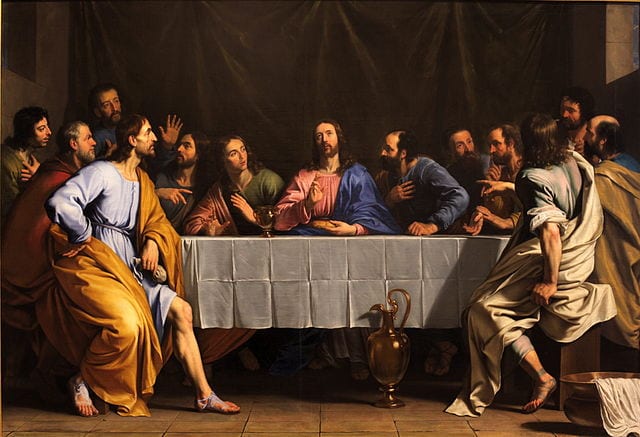
I have heard that Jews celebrating Passover believe that the past becomes present. As such, the Catholic sees a similarity to our notion of the Sacrifice of the Mass, and Jesus’ death on the cross becoming present, and in a very real sense, transcending time altogether. We also believe that the Last Supper, where the Holy Eucharist was initiated, was a Passover meal. Many common notions could be explored with regard to the development of traditional Jewish understanding and Christian belief that is related to these in some fashion. For example, one ecumenical Jewish site stated:
The Jewish conviction that at the Seder past events become present today is something that can resonate strongly with Catholics. The Catholic concept of anamnesis corresponds to the Hebrew term zecher. Both refer to the use of ritual to make the past a lived present reality.
The Hebrew word zecher (in Strong’s Concordance, zakar or zeker: words #2142-2145), are usually translated as remember or remembrance, or related terms. It seems to have a connotation of more than a mere remembrance. The thing remembered has a direct relation to the present. For example:
Exodus 2:24 (RSV) And God heard their groaning, and God remembered his covenant with Abraham, with Isaac, and with Jacob.
God “remembering” the covenant “made” it present insofar as it was still in force, thus enabling the Jews to win a battle. Of course, for God to “remember” anything is an anthropomorphism: God using expressions that human beings will understand. Since God knows everything at all times, to say that He “remembers” cannot be taken literally. If it were, this would imply a limitation of God’s knowledge. But this is how it is often expressed: God “remembers” the covenant, which is very much a present (or eternal) thing, so that past and present are in effect merged:
Genesis 9:15-16 I will remember my covenant which is between me and you and every living creature of all flesh; and the waters shall never again become a flood to destroy all flesh. [16] When the bow is in the clouds, I will look upon it and remember the everlasting covenant between God and every living creature of all flesh that is upon the earth.”
Exodus 6:5 Moreover I have heard the groaning of the people of Israel whom the Egyptians hold in bondage and I have remembered my covenant.
Psalm 106:45 He remembered for their sake his covenant, and relented according to the abundance of his steadfast love.
Ezekiel 16:60 yet I will remember my covenant with you in the days of your youth, and I will establish with you an everlasting covenant.
1 Maccabees 4:10 And now let us cry to Heaven, to see whether he will favor us and remember his covenant with our fathers and crush this army before us today.
Luke 1:54 He has helped his servant Israel, in remembrance of his mercy,
Luke 1:72 to perform the mercy promised to our fathers, and to remember his holy covenant,
The “remembrance” is perfectly harmonious with being “present” and “eternal.” It’s the classic biblical, Hebraic “both/and” outlook. Less “sacramental” Protestants, on the other hand, often draw the conclusion that because the terminology of “remembrance” is used in the Last Supper and the Mass, that, therefore, the Eucharist is solely a thing of the past, to be reflected upon, with mere symbolism of bread and wine (or grape juice), as opposed to being a present reality, and the actual Body and Blood of Christ under the outward appearance of bread and wine: a miracle.
*
The Passover was a way for the Jews to remember, or make again present, the Exodus and deliverance from Egypt. Thus, when it was instituted, Moses stated:
Exodus 13:3-10 And Moses said to the people, “Remember this day, in which you came out from Egypt, out of the house of bondage, for by strength of hand the LORD brought you out from this place; no leavened bread shall be eaten. [4] This day you are to go forth, in the month of Abib. [5] And when the LORD brings you into the land of the Canaanites, the Hittites, the Amorites, the Hivites, and the Jeb’usites, which he swore to your fathers to give you, a land flowing with milk and honey, you shall keep this service in this month. [6] Seven days you shall eat unleavened bread, and on the seventh day there shall be a feast to the LORD. [7] Unleavened bread shall be eaten for seven days; no leavened bread shall be seen with you, and no leaven shall be seen with you in all your territory. [8] And you shall tell your son on that day, `It is because of what the LORD did for me when I came out of Egypt.’ [9] And it shall be to you as a sign on your hand and as a memorial between your eyes, that the law of the LORD may be in your mouth; for with a strong hand the LORD has brought you out of Egypt. [10] You shall therefore keep this ordinance at its appointed time from year to year.”
Likewise, the Sabbath was an ongoing observance, but the word “remember” is applied to it:
Exodus 20:8 Remember the sabbath day, to keep it holy.
To “remember” all the commandments is to keep them in the present, and always:
Numbers 15:39-40 and it shall be to you a tassel to look upon and remember all the commandments of the LORD, to do them, not to follow after your own heart and your own eyes, which you are inclined to go after wantonly. [40] So you shall remember and do all my commandments, and be holy to your God.
Psalm 103:18 to those who keep his covenant and remember to do his commandments.
Psalm 119:55 I remember thy name in the night, O LORD, and keep thy law.
There was a spiritual, moral aspect to remembering, with regard to present conduct:
Deuteronomy 9:7 Remember and do not forget how you provoked the LORD your God to wrath in the wilderness; from the day you came out of the land of Egypt, until you came to this place, you have been rebellious against the LORD.
Deuteronomy 15:15 You shall remember that you were a slave in the land of Egypt, and the LORD your God redeemed you; therefore I command you this today.
Deuteronomy 16:12 You shall remember that you were a slave in Egypt; and you shall be careful to observe these statutes.
Deuteronomy 24:18, 22 but you shall remember that you were a slave in Egypt and the LORD your God redeemed you from there; therefore I command you to do this. . . . [22] You shall remember that you were a slave in the land of Egypt; therefore I command you to do this.
John 14:26 But the Counselor, the Holy Spirit, whom the Father will send in my name, he will teach you all things, and bring to your remembrance all that I have said to you.
2 Peter 3:2 that you should remember the predictions of the holy prophets and the commandment of the Lord and Savior through your apostles.
Jude 1:17 But you must remember, beloved, the predictions of the apostles of our Lord Jesus Christ;
Revelation 3:3 Remember then what you received and heard; keep that, and repent. If you will not awake, I will come like a thief, and you will not know at what hour I will come upon you.
God “remembers” our acts of worship and prayers:
Exodus 28:29 So Aaron shall bear the names of the sons of Israel in the breastpiece of judgment upon his heart, when he goes into the holy place, to bring them to continual remembrance before the LORD.
Exodus 30:16 And you shall take the atonement money from the people of Israel, and shall appoint it for the service of the tent of meeting; that it may bring the people of Israel to remembrance before the LORD, so as to make atonement for yourselves.
Psalm 20:3 May he remember all your offerings, and regard with favor your burnt sacrifices! [Selah]
Acts 10:31 saying, `Cornelius, your prayer has been heard and your alms have been remembered before God.
“Remembering” God is virtually a synonym for reverence and worship of God:
Psalm 6:5 For in death there is no remembrance of thee; in Sheol who can give thee praise?
Psalm 22:27 All the ends of the earth shall remember and turn to the LORD; and all the families of the nations shall worship before him.
Isaiah 17:10 For you have forgotten the God of your salvation, and have not remembered the Rock of your refuge; therefore, though you plant pleasant plants and set out slips of an alien god,
Jonah 2:7 When my soul fainted within me, I remembered the LORD; and my prayer came to thee, into thy holy temple.
Tobit 1:12 because I remembered God with all my heart.
Given all this background, the institution of the Holy Eucharist can now come into clearer focus:
Luke 22:19 And he took bread, and when he had given thanks he broke it and gave it to them, saying, “This is my body which is given for you. Do this in remembrance of me.”
1 Corinthians 11:24-25 and when he had given thanks, he broke it, and said, “This is my body which is for you. Do this in remembrance of me.” [25] In the same way also the cup, after supper, saying, “This cup is the new covenant in my blood. Do this, as often as you drink it, in remembrance of me.”
The Eucharist and Sacrifice of the Mass are present realities, not just bare symbolic, abstract thoughts. The Jewish Passover has this characteristic also. Rabbi Yossi Kenigsberg explains:
. . . on no other Jewish holiday are we instructed to have a formalized dialogue and discussion recollecting the relevant historical events of the time. Why did our sages provide us with the Haggadah text and prescribe this lengthy and detailed analysis of our Egyptian experience?
Besides celebrating our physical emancipation from slavery, on Pesach we also commemorate the anniversary of Jewish nationhood and identity. Since the Exodus represents the genesis of our Jewish collective identity, it is vital that we do everything possible to discover and reaffirm our Jewish consciousness at this juncture. In order to achieve this, we must feel a connection to our Jewish past, present and future. The objective of the seder and the Haggadah format is to facilitate the opportunity for us to develop an acute sense of affiliation with the past, present, and future of the Jewish experience. . . .
Throughout the trials and tribulations of Jewish history, God continuously intervenes on our behalf and we are confident that His divine protection will always embrace us. The fusion of the past, present, and future that we created on those first nights of Pesach will provide for us and for our children a glimpse into eternity.
In a book specifically about the Passover celebration, Martin Sicker provides further relevant insight:
The Haggadah then continues with a statement that is also found in the Mishnah that calls upon each participant in the Seder to share vicariously in the experience of the Exodus.
In every generation one is obliged to view oneself as though he [personally] had gone out from Egypt. As it is said: And thou shalt tell thy son in that day, saying: It is because of that which the Lord did for me when I came forth out of Egypt (Ex. 13:8).
The Haggadah then amplifies this teaching, providing an appropriate biblical prooftext in support of its elaboration.
The Holy One, blessed is He, did not redeem only our ancestors, but also redeemed us along with them. As it is said: And He brought us out from thence, that he might bring us in, to give us the land which He swore unto our fathers. (Deut. 6:23).
. . . The Mishnah calls upon each participant in the Seder to make an intellectual leap across the millennia and thereby to share directly in the experience of their ancestors. (A Passover Seder Companion and Analytic Introduction to the Haggadah, IUniverse, 2004, p. 104)
Another Jewish source concurs:
By participating in the Seder, we are vicariously reliving the Exodus from Egypt. Around our festival table, the past and present merge and the future is promising.
Rabbi Dan Fink provides a further eloquent explanation:
Our sages taught: “In every generation, it is incumbent upon us to see ourselves as if we, too, went out from Egypt.” Pesach is not about remembering the distant past; it is about re-experiencing that past in the present time. It is not the story of our ancestors long ago; it is our story. Our challenge is to consider what enslaves us — anything and everything from money to television to old, stale habits — and find ways to free ourselves from those burdens. The Hebrew word for Egypt, mitzrayim, means “a narrow place.” This spring festival of deliverance is the time of our own liberation, an opportunity to renew ourselves.
So this year, don’t ask, “When do we eat?” Savor the journey rather than kvetching your way to the destination. Find creative ways to make your seder a living, breathing experience of redemption. Raise other, better questions: “What can I do to change the world this year? What still enslaves me? How can I help hasten the redemption of others still in bondage?” It’s not about the food. It’s about the freedom. Experience it this year.
Citing some of the same passages from the Talmud, Jewish educator Jennie Rosenfeld wonderfully expresses the same notions:
. . . it is particularly difficult to imagine how anyone so historically removed from the Egyptian exile can personally experience the redemption from Egypt in the same way that the Jewish slaves experienced it. . . . If we use this season in order to tap into our personal need for redemption in the here and now, we can either vicariously relate to or truly experience yetziat mitzrayim (exodus from Egypt) in our own lives. . . .
One type of holiness is kedushat hazman, holiness of time; the time of year in which miracles occurred in the past has within it the potential for future miracles. Jewish holidays both commemorate past miracles and contain the kedushat hazman, the temporal holiness, which we can access to effect miracles now. . . . by believing in the miracle of yetziat mitzrayim, we can experience it again now in our personal lives. Every individual can tap into this season in order to leave his/her personal meitzar (place of narrowness or confinement) or mitzrayim. The fact that Pesach occurs in the spring, the season in which nature renews itself and the flowers begin to blossom, foreshadows this potential for personal growth.
These fascinating aspects of the Jewish self-understanding of Passover have obvious analogical implications relative to the Catholic Mass. The great Catholic writer Karl Adam exclaimed:
The Sacrifice of Calvary, as a great supra-temporal reality, enters into the immediate present. Space and time are abolished. The same Jesus is here present who died on the Cross. The whole congregation unites itself with His holy sacrificial will, and through Jesus present before it consecrates itself to the heavenly Father as a living oblation. So Holy Mass is a tremendously real experience, the experience of the reality of Golgotha. (The Spirit of Catholicism, translated by Dom Justin McCann, Garden City, New York: Doubleday Image, 1954; originally 1924 in German, 197)
In conclusion, here are my thoughts, from my (1996) book, A Biblical Defense of Catholicism (pp. 99-100):
Some verses in Revelation state that the “prayers of the saints” are being offered at the altar in the form of incense (8:3-4; cf. 5:8-9). But the climactic scene of this entire glorious portrayal of Heaven occurs in Revelation 5:1-7. Verse 6 describes “a Lamb standing as though it had been slain.” Since the Lamb (Jesus, of course) is revealed as sitting in the midst of God’s throne (5:6; 7:17; 22:1, 3; cf. Matt. 19:28; 25:31; Heb. 1:8), which is in front of the golden altar (Rev. 8:3), then it appears that the presentation of Christ to the Father as a sacrifice is an ongoing (from God’s perspective, timeless) occurrence, precisely as in Catholic teaching. Thus the Mass is no more than what occurs in Heaven, according to the clear revealed word of Scripture. When Hebrews speaks of a sacrifice made once (Heb. 7:27), this is from a purely human, historical perspective (which Catholicism acknowledges in holding that the Mass is a “re-presentation” of the one Sacrifice at Calvary). However, there is a transcendent aspect of the Sacrifice as well.
Jesus is referred to as the Lamb twenty-eight times throughout Revelation (compared with four times in the rest of the New Testament: John 1:29, 36; Acts 8:32; 1 Peter 1:19). Why, in Revelation (of all places), if the Crucifixion is a past event, and the Christian’s emphasis ought to be on the resurrected, glorious, kingly Jesus, as is stressed in Protestantism (as evidenced by a widespread disdain for, crucifixes)? Obviously, the heavenly emphasis is on Jesus’ Sacrifice, which is communicated by God to John as present and “now” (Rev. 5:6; cf. Heb. 7:24)
***
Related Reading:
Sacrifice of the Mass: A Biblical Overview [1994]
*
The Sacrifice of the Mass: Classic Catholic Reflections [1994]
*
Sacrifice of the Mass & Hebrews 8 (vs. James White) [3-31-04]
*
Lutherans, Corpus Christi, & Eucharistic Adoration [6-18-07]
*
The Timeless Crucifixion (Sacrifice of the Mass) [9-25-09]
*
Sacrifice of the Mass and NT Altars (vs. Calvin #49) [12-9-09]
*
“Altar”: Inconsistent Protestant Use of the Word [7-31-10]
*
Sacrifice of the Mass in the Synoptic and Pauline Consecration Formulas from the Last Supper [Ferdinand Prat, S. J., Facebook, 2-1-12]
*
Mass: Re-Sacrifice? (vs. Lutheran Pastor Ken Howes) [4-2-12]
*
Biblical Evidence for Priests [9-13-15]
St. Paul Was a Priest [9-15-15]
Luther Espoused Eucharistic Adoration [9-17-15]
Catholic Mass: “Re-Sacrifice” of Jesus? [11-19-15]
“Re-Presentation” vs. “Re-Sacrifice” in the Mass: Doctrinal History [4-4-18]
Eucharistic Adoration: Explicit & Undeniable Biblical Analogies [2-1-19]
*
***
Unfortunately, Money Trees Do Not Exist: If you have been aided in any way by my work, or think it is valuable and worthwhile, please strongly consider financially supporting it (even $10 / month — a mere 33 cents a day — would be very helpful). I have been a full-time Catholic apologist since Dec. 2001, and have been writing Christian apologetics since 1981 (see my Resume). My work has been proven (by God’s grace alone) to be fruitful, in terms of changing lives (see the tangible evidences from unsolicited “testimonies”). I have to pay my bills like all of you: and have a (homeschooling) wife and three children still at home to provide for, and a mortgage to pay.
*
My book royalties from three bestsellers in the field (published in 2003-2007) have been decreasing, as has my overall income, making it increasingly difficult to make ends meet. I provide over 2600 free articles here, for the purpose of your edification and education, and have written 50 books. It’ll literally be a struggle to survive financially until Dec. 2020, when both my wife and I will be receiving Social Security. If you cannot contribute, I ask for your prayers (and “likes” and links and shares). Thanks!
*
See my information on how to donate (including 100% tax-deductible donations). It’s very simple to contribute to my apostolate via PayPal, if a tax deduction is not needed (my “business name” there is called “Catholic Used Book Service,” from my old bookselling days 17 or so years ago, but send to my email: [email protected]). Another easy way to send and receive money (with a bank account or a mobile phone) is through Zelle. Again, just send to my e-mail address. May God abundantly bless you.
*
***
(originally 7-7-09)
Photo credit: The Last Supper, by Philippe de Champaigne (1602-1674) [public domain / Wikimedia Commons]

* * *
Jews & Judaism & Old Testament
Previous Post
January 13, 2020
Seidensticker Folly #36: Disease, Jesus, Paul, Miracles, & Demons
Next Post
January 14, 2020 Pope Francis: Strong Defender of Priestly Celibacy
Browse Our Archives
Select a Category & Last Things About Me Anti-Catholicism Atheism & Agnosticism Baptism and Sacramentalism Bible and Tradition Blessed Virgin Mary Books by Dave Armstrong C. S. Lewis Calvinism & General Protestantism Catholic Apologetics Catholic Apologists Catholic conversion Catholic converts Christmas Church (Ecclesiology) Church History Conversion and Converts Development of Doctrine Eastern Orthodoxy Ecumenism & Christian Unity Eucharist & Liturgy Fathers of the Church French Translations G. K. Chesterton Hell Hell & Satan Hell & Satan & Last Things Heresies & Comparative Religion Holistic Health Inquisition & Crusades & Scandals James White Jews & Judaism & Old Testament John Calvin John Henry Newman Liberal / Modernist Theology Life Issues Literary Resume Lutheranism Mariology Martin Luther Music Orthodoxy Papacy & Infallibility Personal Page Philosophy & Science Political & Ethical & Moral Issues Protestant Persecution & Intolerance Protestantism Purgatory Purgatory & Penance Romantic & Imaginative Theology Saints & Purgatory & Penance Salvation Salvation & Justification Satan & Last Things Sexuality and Gender Issues Spanish Translations Traditionalism vs. Radical Catholic Reactionaries Traducciones al español / tradução para português Trinitarianism & Christology Uncategorized Videos
Select a Month October 2026 September 2026 August 2026 July 2026 June 2026 May 2026 April 2026 March 2026 February 2026 January 2026 December 2025 November 2025 October 2025 September 2025 August 2025 July 2025 June 2025 May 2025 April 2025 March 2025 February 2025 January 2025 December 2024 November 2024 October 2024 September 2024 August 2024 July 2024 June 2024 May 2024 April 2024 March 2024 February 2024 January 2024 December 2023 November 2023 October 2023 September 2023 August 2023 July 2023 June 2023 May 2023 April 2023 March 2023 February 2023 January 2023 December 2022 November 2022 October 2022 September 2022 August 2022 July 2022 June 2022 May 2022 April 2022 March 2022 February 2022 January 2022 December 2021 November 2021 October 2021 September 2021 August 2021 July 2021 June 2021 May 2021 April 2021 March 2021 February 2021 January 2021 December 2020 November 2020 October 2020 September 2020 August 2020 July 2020 June 2020 May 2020 April 2020 March 2020 February 2020 January 2020 December 2019 November 2019 October 2019 September 2019 August 2019 July 2019 June 2019 May 2019 April 2019 March 2019 February 2019 January 2019 December 2018 November 2018 October 2018 September 2018 August 2018 July 2018 June 2018 May 2018 April 2018 March 2018 February 2018 January 2018 December 2017 November 2017 October 2017 September 2017 August 2017 July 2017 June 2017 May 2017 April 2017 March 2017 February 2017 January 2017 December 2016 November 2016 October 2016 September 2016 August 2016 July 2016 June 2016 May 2016 April 2016 March 2016 February 2016 January 2016 December 2015 November 2015 October 2015 September 2015 August 2015 July 2015 June 2015 May 2015 April 2015 March 2015 February 2015 January 2015 December 2014 November 2014 October 2014 September 2014 August 2014 July 2014 June 2014 April 2014 March 2014 February 2014 January 2014 December 2013 November 2013 October 2013 September 2013 August 2013 July 2013 June 2013 April 2013 March 2013 February 2013 January 2013 December 2012 November 2012 October 2012 September 2012 August 2012 July 2012 June 2012 May 2012 April 2012 March 2012 February 2012 January 2012 December 2011 November 2011 October 2011 September 2011 August 2011 July 2011 June 2011 April 2011 March 2011 February 2011 October 2010 September 2010 August 2010 July 2010 April 2010 March 2010 December 2009 October 2009 August 2009 July 2009 June 2009 May 2009 March 2009 February 2009 October 2008 September 2008 April 2008 March 2008 February 2008 January 2008 December 2007 November 2007 October 2007 May 2007 March 2007 February 2007 January 2007 November 2006 October 2006 September 2006 August 2006 July 2006 June 2006 May 2006 April 2006 March 2006 February 2006 October 2005 June 2005 April 2005 February 2005 July 2004 May 2004 April 2004
Follow Us!
TAKE THE
Religious Wisdom Quiz
Who prayed for rain after a long drought and sent his servant to look seven times?
Select your answer to see how you score.
Elijah Isaiah Samuel Hosea
Books by This Author Books by Dave Armstrong
Related posts from Biblical Evidence for Catholicism

Three More Anti-Catholic Lies About Catholicism (#6-4)
Biblical Evidence for Catholicism

Top Ten Anti-Catholic Lies (#10-7)
Biblical Evidence for Catholicism

The Mass & Development of Doctrine (vs. Wes...
Biblical Evidence for Catholicism

Miraculous Eucharist (vs. Francois Turretin #4)
Biblical Evidence for Catholicism
TRENDING AT PATHEOS Catholic

I was strolling through the top floor of the brand new Parthenon...

What Does Gêvâh Mean For Kimberley Guifoyle &...
This week, a lot of the news is focused on Kimberly Guilfoyle....

INNER CIRCLE: Profound Mystery (Of Christ In All...
Ephesians 5:31-32 “For this reason, a man will leave his father and...

Do Not Rejoice When Your Enemy Falls: The...
Turning an execution into a public spectacle is a disturbing expression of...

'The Chosen' S6 Trailer: The Passion Gets Very...
Not many watching 'The Chosen' worry about spoilers, but just because they...

The purpose-driven labor priest
A labor activist reads Rick Warren and it gets me wondering about...
view all Catholic blogs
Ad-Free & Subscriber Log-In Subscription Support
- About Us
- 2026 Calendar
- Videos
- Podcasts
- Library of World Religions
- Faith In Media Tracker
- Advertise With Us
- Write for Us
- Privacy Policy
- Terms of Service
- Do Not Sell My Data
- Contact Us
- Radiant Digital
- Manage Newsletter Subscriptions
- Unsubscribe From Notifications
- Sitemap
Copyright 2008-2026, Patheos. All rights reserved.
Subscription Support Ad-Free & Subscriber Log-In
Follow Patheos