
BuddhistCatholicContemplativeEvangelicalGeneral ChristianHinduJewishLatter-day SaintMuslimNew VisionsProgressive Christian
Beliefs
- Buddhist
- Catholic
- Contemplative
- Evangelical
- General Christian
- Hindu
- Jewish
- Latter-day Saint
- More Voices
- Muslim
- New Visions
- Pagan
- Progressive Christian
Topics
- Religion News
- Food and Religion
- Sports and Religion
- Religious Art
- Religious Music and Entertainment
- Religious Events
- History and Religion
- Style and Religion
- Politics and Religion
- Women in Religion
- Recreation Outdoors and Religion
- Business Finance and Religion
- Careers Workplace and Religion
- Education and Religion
- Family Parenting and Religion
- Health Fitness and Religion
- Home and Religion
- Relationships and Religion
- Technology and Religion
- Travel and Religion
Columnists
- Buddhist Columnists
- Business Finance and Religion Columnists
- Careers Workplace and Religion Columnists
- Catholic Columnists
- Contemplative Columnists
- Education and Religion Columnists
- Evangelists Columnists
- Family Parenting and Religion Columnists
- General Christian Columnists
- Health Fitness and Religion Columnists
- Hindu Columnists
- History and Religion Columnists
- Home and Religion Columnists
- Jewish Columnists
- More Voices Columnists
- Latter Day Columnists
- Muslim Columnists
- New Visions Columnists
- Nonreligious Columnists
- Pagan Columnists
- Politics and Religion Columnists
- Progressive Columnists
- Recreation Outdoors and Religion Columnists
- Relationships and Religion Columnists
- Religion News Columnists
- Religious Art Columnists
- Religious Events Columnists
- Religious Music and Entertainment Columnists
- Sports and Religion Columnists
- Style and Religion Columnists
- Technology and Religion Columnists
- Travel and Religion Columnists
- Women in Religion Columnists
Resource Library
- 2026 Calendar
- Library of World Religions
- The 100 Most Holy Places on Earth
- Patheos Answers
- Podcasts
- Videos
- Faith Leaders Database
- Anglican Episcopalian
- Bahai
- Baptist
- Buddhism
- Christianity
- Confucianism
- Eastern Orthodoxy
- Hinduism
- Holiness and Pentecostal
- ISKCON
- Islam
- Judaism
- Lutheran
- Methodist
- The Church of Jesus Christ of Latter-day Saints
- New Age
- Paganism
- Presbytarian and Reformed
- Protestantism
- Religion Behind the Scenes
- Roman Catholic
- Scientology
- Shia Islam
- Sikhism
- Sufism
- Sunni Islam
- Taoism
- Zen
- See all religions
Research Tools
 Ad-Free & Subscriber Log-In Subscription Support
Ad-Free & Subscriber Log-In Subscription Support
Follow Patheos 

- Trending:
- Forgiveness
- |
- Marriage
- |
- Consciousness
- |
- Death Penalty
- |
- Election
- |
- Halloween

-
About
-
Catholic Apologetics
-
Church History
-
Great Apologists
-
Christian Worldview
-
Protestantism & Misc.
- Home
- Catholic
- History and Religion
- Dialogue: “Pachamama” (?) Statues & Marian Iconography
Dialogue: “Pachamama” (?) Statues & Marian Iconography
Last updated on: December 24, 2019 at 2:32 pm by Dave Armstrong
Dialogue: “Pachamama” (?) Statues & Marian Iconography 2019-12-24T14:32:30-04:00 Dave Armstrong
Patheos Explore the world's faith through different perspectives on religion and spirituality! Patheos has the views of the prevalent religions and spiritualities of the world.
Words of Fr. Deacon Daniel G. Dozier will be in blue; those of Pete Vere in green. Both are Eastern Catholics. This took place on my Facebook page.
*****
So you want to argue in favor of a nude Icon of the Madonna?
I don’t. I personally don’t care for them. But that’s not the point at all, which is: were these statues consciously, idolatrously, blasphemously adored as gods (with the sanction of the pope and the Vatican), or were they not? There is no evidence that they were; therefore, the charge that this happened is gravely sinful.
I’m taking issue with the fact that if they are going to assert that these things plucked from its pagan are or can be legitimate “icons” of the Blessed Virgin Mary. Gospel inculturation is more than just taking statues of Apollo and calling it Christ. The image must also teach and be imbued with Christian symbolism so that it clearly is the Virgin Mary. Had this image been clothed and adorned with the language of Christian symbolism associated with the Theotokos, I do not think you would have any real outrage. But this is not a legitimate Christian icon and they are referring to it by its pagan title. This is a problem of their own making.
I know that this is your issue, but it’s not mine or what the bottom-line issue of the whole thing is. It’s not iconography, but rather, whether what happened was idolatry. That is what these people and the pope are being accused of; yet the accusers have never honestly examined all of the relevant evidence.
People don’t care about facts. We’re in a postmodern world now where they simply don’t matter. Everything is feelings, subjectivism, and emotion, leading to divisions and polarized tribes within the Church. When everything is subjective, honest differences can’t possibly be resolved, and so we are left with relentless suspicions and rumormongering.
But I think it is relevant to your main point. I can argue that by worshipping an idol of Zeus which I refer to as Zeus I am actually worshipping God the Father all I want, but in my words and deeds it just looks like I am worshipping Zeus. This is a problem of their own making, which was entirely avoidable.
Nope; it is a problem ultimately brought about by the unwillingness of the critics to examine what was going on, and to understand how a different culture expresses itself in Catholic worship.
Where I do agree is in criticizing the Vatican for not making a serious effort to explain what would inevitably be misunderstood (and was). There is a hostility to non-European piety that is deep enough that (in my opinion) what happened should have been anticipated and decisively dealt with, to avoid this debacle that we now have.
It should have been known that a significant sub-group of Catholics (reactionaries) have basically a Protestant and liberal Catholic outlook. So they make the accusation of idolatry without serious reason to, just as Luther and Calvin did in the 16th century.
See and I think you are being too generous to the Vatican organizers of the Amazonian Synod that was neither Amazonian nor a Synod. The problem is not with the reactionaries. The problem is that they (the organizers) do not understand Christian iconography.
I can grant that point (your last sentence; not that the reactionaries have no fault), but it is a relatively minor one in the whole controversy. “What is a proper icon?” is a legitimate concern, of course, but it is far from (and far less serious than) the question of “did rank idolatry and worship of a false god consciously occur, with the pope’s approval?”
The latter is what all these reactionaries are discussing; it is the controversy, and it’s why I as an apologist have devoted so much effort to it. Your concern is only a small secondary point, in terms of what they are concerned about.
In my own articles on the topic, I’m simply not dealing with iconography, Catholic aesthetics, and liturgical considerations, but with the question of whether the pope and the Vatican sanctioned idolatry in a way that would be outrageous, blasphemous, and heretical. There is no evidence that they did that, which in turn makes the repeated public charges even more ludicrous and outlandish and gravely sinful.
I think by their silence they sanctioned an unhelpful murkiness under the guise of inculturation, which is pretty irresponsible. I see my point as the central one that upends both the points of the reactionaries and the Vatican’s defense of their actions.
The reactionaries were reacting to the easily misunderstood actions of others (as I demonstrate above with my Zeus reference).
Let me see if I understand you correctly:
As best I can tell, you are contending that the statues were so far removed from the past history of iconography of the Blessed Virgin Mary, that this irresponsibility of the Vatican 1) allowing it at all, in light of this past history, and 2) not properly and helpfully explaining when controversy arose, is indeed the heart and origin of the whole controversy, and caused the reactionaries to understandably (though wrongly) charge idolatry, when there was in fact (?) none intended.
I don’t know what you think about what the practitioners intended, or if you thought idolatry took place regardless of their intentions (hence, my question mark).
***
Assuming the above is an accurate summary of your argument, where I would disagree is:
1) “they are referring to it [the statue] by its pagan title.”
The people themselves did not do so. They called it “our Lady of the Amazon.” The Vatican clarified the pope’s reference to “pachamamas”, but of course, the reactionaries never care about any clarification, which they instantly interpret in a cynical, doubting way. Other statements from the Vatican were conflicting and contradictory. But what we seem to know from the people in the ceremony is that the statues were NOT “pachamama” [which is not even an Amazonian phenomenon] and did represent the Blessed Virgin and/or “mother earth” (perhaps it can have a double application).
2) “it just looks like I am worshipping Zeus.”
This is a huge question. To our European Catholic (and Orthodox, and also Protestant-influenced) eyes, filled with the memories and continuing practice of 2000 years of European iconography, these statues look weird and even bizarre and thus we may instantly conclude that they must be idols. But who’s to say that vastly different non-European forms of Marian piety are not equally valid and proper and pious? Why should European art be the only standard for what is proper and pious and what is not?
In other words, there could indeed be at the very least, a bias in what such an icon “should” look like, and at worst, in some cases, actual prejudice against other Catholic cultures, because we personally don’t care for their own brand of icons and they are utterly “foreign” to us. So it “looks” like worship of an idol, because we can’t fathom a pious expression of Marian veneration with regard to a statue that we find repulsive and ugly and offensive.
A couple of thoughts. Yes, for the most part what you are saying reflects my thoughts, although I cannot say for certain that idolatrous worship was not interspersed in some of the liturgies at the Vatican, since, while I do not think they were deliberate on the Pope’s part, I think we witnessed some very strange ceremonies, including some that were led by the Franciscans. And it would be helpful of course if we had the actual texts that were used. I did not think the primary issue is a cultural one regarding the imagery. I have seen many images that were the Virgin Mary presented according to some of the artistic standards of indigenous people. What I saw was an attempt to truly integrate culture and faith, and there was some attempt at least to retain some core Christian symbolism. I really don’t see any of that in this particular case. Gospel inculturation needs to be more than just appropriation. There should at least be some effort made to ensure that the image is reflective of the received Christian tradition. I cannot simply bring a Statue of Liberty statuette to the Vatican and hand it to the Pope and say “This is Our Lady of the United States.” Icons especially should avoid all manner of ambiguity regarding their identity. It should be clear who the sacred person is. The Pachamama images are radically unclear to any Christian familiar with even a basic level of familiarity with Christian iconography.
So the problem is with the ambiguity of the image, it’s incorporation into strange and unfamiliar non-traditional rituals, and the employment of the Pachamama deity name in describing it, even in italics.
The video above by the same group shows once again that Mary was being referenced.
I think it depends what means by iconography. If we are going with the Byzantine understanding, or even the Coptic/Alexandrian understanding, then the Pachamama carvings are not icons since our Eastern grammar when it comes to iconography is quite strict.
So strict, in fact, that much of Western sacred art also would not qualify as iconography.
As far as repurposing a Zeus statue as God the Father… For all intents and purposes, isn’t this what Michelangelo did with his famous statue of King David? Basically he removed the wings from Apollo’s heels. [link to image]
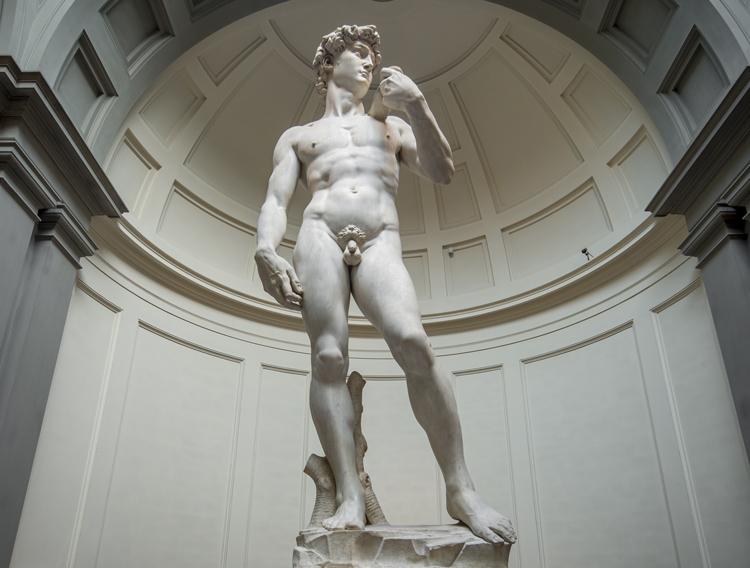
Additionally, Father Deacon Daniel, whereas we in the East–especially in Byzantium–have for the most part rejected portrayals of God the Father in our traditional iconography (with the exception of Rublev’s Trinity), Latins have never been as strict in their sacred art tradition.
Thus western sacred art has often portrayed God the Father in Zeus-like images and poses. Again, looking at Michelangelo, there’s his famous “Creation of Adam” painting in the Sistine Chapel that features God the Father in a very Zeus or Jupiter-like pose. [link to image]

In short, Deacon Daniel, I do not disagree with you that the Pachamama does not meet the strict grammar of traditional Eastern Christian iconography. But neither does not much of the western sacred art tradition.
Another famous piece by Michelangelo is the Pieta, which denies us communion with Christ according to our Byzantine grammar because the statue does not allow one to look into Our Lord’s eyes.
As you are well aware, but many of our Latin brothers and sisters following this discussion may not be, the reason saints are portrayed either in full-face or three-quarter profile in Byzantine iconography is so that both eyes are visible. This is because communion comes through the eyes.
Thus the traditional image of Our Lady of Guadalupe does not meet the traditional Byzantine standard since it often portrays the Blessed Mother with her eyes closed.
We would also have to reject traditional western images of Our Lady of Lourdes and Our Lady of Fatima, as well as the ubiquitous miraculous medal, since they portray the Blessed Theotokos without Christ embracing her or enthroned on her lap.
And given that we both live in North America, this traditional western image of the North American martyrs would also have to be jettisoned since it portrays two of the martyrs in side profile–which in traditional Byzantine iconography is reserved for Satan or Judas.
In short, Pachamama clearly is not Byzantine or Eastern iconography. That does not mean it cannot be repurposed within a Latin context. As noted above, Michelangelo has already repurposed Zeus for God the Father, and Apollo for King David.
Thank you, Pete. I would only say that, while King David is a sacred figure, would anyone really argue that Michelangelo’s King David, while artistic, constitutes liturgical art? I mean, it is certainly historic, but is it an object of sacred veneration, devotion and prayer? Not in the least.
I’m saying that sacred iconography is as much a matter of pedagogy and prayer, as it is cultural appropriation. And I see almost no pedagogy here.
Very interesting argument and input, Pete. Thanks. I was mainly noting that non-European Christians art may be very different, and who is to ultimately say that this is legitimate or not?
Would anything not two-dimensional be immediately disqualified as an icon, from the Eastern perspective?
I would actually love to see some artist/iconographer attempt to Christianize the image drawing on some common aspects of Eastern or Western tradition.
My apologies for not answering your question directly, but using some qualifiers to limit the question. The reason being my expertise is mainly in Byzantine iconography and does not extend to all Eastern Patrimonial Traditions. So while I can answer generally for the Byzantines, I am not familiar enough with Coptic, Armenian, or other Eastern Traditions to give an informed answer according to their iconology.
So according to the Byzantine tradition, icons are “two dimensional” because they represent how God sees us and not how we see ourselves. So it is God’s view from Eternity. This is also why various icons will show the same person or event from different perspectives, or different events that are related. Because God’s perspective is not limited by time and space.
The one exception is the Icon of Christ Sinai, the original which is I believe the oldest surviving icon of Christ in the world. Half of Christ’s face is two dimensional according to traditional iconography, while the other half is three-dimensional. This is to symbolize Christ’s two natures in one Person.
The wikipedia entry for the icon has some excellent comparisons showing the original icon, plus what each side looks mirrored.
Thanks; fascinating. Eastern Catholics and Orthodox don’t have statues, either, do they? And if these figures are statues, why, then, are we talking about iconography at all, strictly speaking? How would it apply? We could talk about Christian images and art, but not iconography, if we exclude statues from the category.
Or where am I wrong, here?
*
Fr Deacon Daniel – I would say that Michelangelo’s work (including David) is sacred art according to the Latin/Western Tradition, but does not meet the grammar of Eastern iconography. The same is true for much of Latin/Western sacred art.
This past week I was blessed to visit the Basilica of Ste Anne de Beaupre near Quebec City, Canada. It is in my opinion the most beautiful and spiritually inspiring western church in Canada or the United States. It probably the only Western church I would consider equal to Byzantine churches in its spiritual consistency awe-inducing spiritual inspiration.
I’m delighted to see that you believe one western church attains to the Eastern higher standards. :-)
What really struck me was the western iconography in the crypt, as well as the main Basilica. I cannot deny the inspiration of the Holy Spirit over its artists and that it inspires the pilgrim’s vision heavenward.
But on the strict question of whether or not it meets the grammar of Byzantine iconography, the answer is no. As you are well aware, Fr Deacon, being a Byzantine cleric and one whose ministry includes iconography, ours is a very strict grammar in the East–especially Byzantium. The Western iconography and other sacred art at this shrine do not meet our strict standard.
But that does not mean they are in any way wrong, or of no spiritual value, or a danger to the faith. Rather, they inspire within their particular context, which is Latin and Western.
Which brings us to Pachamama. Can it be converted to Byzantine iconography? Like you I have a difficult time seeing it. However, having attended the French Catholic school system as a child, many of my friends and classmates (and some teachers) were Indigenous. Thus I grew up around Indigenous Catholics and the inculturation of Indigenous art forms within local (Latin) Catholic churches.
Pachamama is similar to a wood carving of Madonna & Child that was popular among local Indigenous Catholic artists, and we actually had one in our house that hung next to our Sacred Heart statue. (My father is a Latin deacon). So I am not uncomfortable with the concept within a Western Indigenous Catholic context.
I would agree with you that in the context of Pachamama and statues we are talking Western Sacred Art, and not iconography. It is an important distinction.
What is often not understood by many Latins, Protestants, and even us Easterners is that iconography in the East is much more than sacred art is in the West. It is an entire theology that supports the Eucharist in tying together all other areas of theology. Icons are not just sacred images that inspire our gaze towards Eternity, but an entire language. As Easterners, we “read” icons like you as a Latin apologist would read a Bible commentary.
However, iconology in the West died in the aftermath of the Seventh Ecumenical Council (Second Nicea), which ironically vindicated the use of icons for sacred worship. The reason being the translations from Greek to Latin that ended up in the West were so poor and self-contradictory that Latins and their Frankish-Germanic daughter churches could make neither heads nor tails of them.
For example, one particularly popular but bad translation stated that it was idolatry to use icons in Divine Worship, but to deny their use was Christological heresy. So the West took the attitude that the East seems to have resolved the iconoclasm controversy that had been rocking it for several centuries, and they did not want to risk clarifying these contradictions lest the West accidentally re-ignite this controversy for a fourth time among Easterners.
So the West simply moved on to statues and realism in its sacred art tradition.
I would not argue that King David in this piece is even a form of Western liturgical art. It is certainly artistic and the subject is a sacred person, but it is not a liturgical icon.
That said, I have never argued that Western liturgical iconography needs to follow Eastern canons or practices, although we see that there were common early influences in Rome.
Regarding the Pachamama/Our Lady of the Amazon, I would also here say that it does not need to be Byzantine to be a true icon. But they could at least draw on some patrimony of Christian symbolism regarding the BVM, such as a halo and garments with color schemes that fit with Amazonian culture and their understanding of the sacred. Those simple changes would help clarify the identity of the sacred person being represented here.
Fair enough about Michelangelo’s King David that resembles Apollo. But what about his portrayal of God the Father in the Sistine Chapel that draws upon Zeus imagery from classical Greece? This very definitely is intended as sacred art, even though it draws upon Pagan imagery for artistic influence.
In terms of Pachamama as Our Lady of the Amazon, I think we need to be patient as God is patient and give time to inculturate. I am sure the Indigenous carving of Madonna & Child that became popular among Indigenous Catholics near where I grew up was not the first artistic attempt, but one of multiple attempts that was refined through prayer.
These statues in question are not “pachamama.” That is a completely different thing: usually portrayed as a woman on top of a mountain.

*
That being said, I do appreciate Fr Deacon Daniel’s clarification that he is not seeking to impose the Byzantine standard on the West when it comes to iconography. My response is would be that the western/Latin tradition of sacred art is much more broad so as to accommodate the Our Lady of the Amazon statue.
*
Yeah, that’s a variation of my own argument, except that I broadened it even more, to pointing out that there can be legitimate Catholic traditions in iconography and the larger category of sacred art that go beyond the usual European-dominated theology and spirituality (both Latin and Eastern Catholicism and also Orthodoxy and Protestantism to a lesser extent): to very different approaches from all of those, but still just as Catholic.
I think there was much too much tendency with this whole mess for critics to blithely assume that these statues were (to their eyes and understanding) “ugly” and/or “inappropriate.” But cultural background has a great deal to do with that perception.
Then it is a completely separate discussion, as to whether idolatry was actually taking place. Everything I’ve seen suggests to me that it was definitely not. On the other hand, if someone claims that it was taking place, then the pope participated, since the Vatican sponsored the tree-planting ceremony, and he blessed the statue (which the woman presenting to him called “Our Lady of the Amazon”).
He said there was no idolatry, so to claim otherwise would also essentially amount to calling him a liar.
[cites an article with Cardinal Schönborn saying the ceremony had to do with a “mother of life” archetype] Okaaay… Not seeing any real reference to the BVM. This is more of the same unhelpful ambiguity. If it’s not the BVM, it’s an idol. My point in sharing it was only to say that the ambiguity continues.
It’s very confusing, yet there is no hard evidence that this was idolatry of a pagan goddess. See Dr. Pedro Gabriel’s excellent series of investigative articles:
Paganism in the Vatican? Hermeneutic of suspicion at its peak (Dr. Pedro Gabriel, Where Peter Is, 10-16-19)
Our Lady of the Amazon, Pray for Us (10-16-19)
*
Our Lady of the Amazon – 2018 Video Footage Emerges (10-17-19)
*
Our Lady of the Amazon: solving the contradictions (10-26-19)
*
Pachamama – the missing piece of the puzzle (11-10-19)
*
It was clearly idolatry! (12-1-19)
*
Fr. Pacwa and divine signs (12-16-19)
*
In other words, I’m not using this article to argue “See, it’s not the Blessed Virgin Mary.” I’m simply making the point that there is a fundamental lack of clarity coming from even senior hierarchs. The Cardinal’s point (and their source is a German language interview) is illegitimate. It cannot simply be a vague “archetype” and legitimately receive the kind of veneration it did, not at least from a Catholic perspective. It’s either the Blessed Virgin Mary, or it is an idol.
*
I’m saying that the Cardinal’s argument even in the German language interview is illegitimate. My point is that there is no room for the kind of compromise with “archetypes” that he offers. No Catholic can defend what we saw unless it was the Blessed Virgin Mary. If it was not, to Hell and the Tiber with it.
*
By the way, I can accept (as I have said) that it was an early and crude attempt at an icon of the Blessed Virgin Mary with Christ in utero that I think is in desperate need of iconographical attention. I’m willing to stipulate that, despite the interpretation of the Cardinal.
*
I’m comfortable with your latter comment stating that you can accept the Pachamama statue as an early and crude attempt at a (presumably Western) icon of the Blessed Mother with Christ in utero. This is pretty much my view as well, coming from an area where Indigenous Catholic art is much more developed. So I am open to moving the conversation in that direction.
*
Oh, I’ve always agreed that clarity is lacking form the Vatican on this. My primary concern remains what it always has been: did idolatry occur or not, and what is the proof from the folks who claim that it did (it remains utterly absent; all is appearances, subjective guesses, and innuendo). Anyone is capable of studying the issue for themselves, just as in all the controversies about this pope.
But people prefer to listen to biased Catholic media sources: many of them reactionary. The most in-depth, informative articles for the position that no idolatry occurred are by Dr. Pedro Gabriel.
“No Catholic can defend what we saw unless it was the BVM.”
*
“It’s either the BVM, or it is an idol.”
Those aren’t the only choices. It could be a non-idolatrous ceremony having to do with “Mother Earth” (in a Catholic sense that does have a long history, going back to St. Francis and the fathers and positively referenced by Pope St. John Paul II). There is evidence to suggest that even if “Pachamama” was referenced at all, it was in this sense, not a “pagan goddess” sense.
It could be a dual application of Mother Earth and the Blessed Virgin Mary, just as we often see dual applications in Scripture: such as Revelation 12, which references both Mary and the Church.
In the ceremony, they lifted their hands up to heaven, did a deep bow for just a few seconds, and resumed worship of God with hands uplifted. No one was worshiping or adoring any figure present.
I believe it was intended as Mary because of the statement of a woman in the ceremony. But it could also have had to do with “Mother Earth.” Neither thing is necessarily idolatrous. The pope said it was not. That’s good enough for me. For those who dislike Francis, his word is obviously not good enough (nor is the report of the woman in the ceremony).
But it’s simply not the case that it is either the Blessed Virgin Mary or idolatry of a pagan goddess. Vatican and high cleric reports are obviously confused, but this doesn’t prove that idolatry occurred. Cdl. Schönborn gave his opinion. What he holds — consistent with all other opinions from prelates — is that it was not idolatry. That’s what all the interpretations have in common.
Yet people are still out there saying that it was, and not providing adequate reason to do so. The inadequacy of the rationales exists no matter how confused or not able to be perfectly harmonized various people in high places may be.
Yeah, not going there with you, Dave.
*
Not going where?!
*
Thanks for the great dialogue, my two esteemed brothers in Christ & His Church. Not sure where Fr. Deacon Daniel doesn’t want to “go” but I thought we were still making progress in dialogue, and I hope he does go “there” (wherever “there” is).
*
We eventually got right back to the question of whether idolatry occurred: which has always been my primary concern in all this. If there is still strong suspicion that it did, then (from my perspective) we are at an impasse, and unless people read the best literature on both sides of the question (Dr. Pedro Gabriel on the “no!” side), it will remain an impasse, like so many of the endless debates in the church today (connected to Pope Francis) have.
*
I think it’s very sad and ought not be. We are able to ascertain the facts of the matter, no matter how much the Vatican and a hostile Catholic media have done to assure that unnecessary confusion continues. We’re all orthodox Catholics (little “o”) and should be able to come to agreement, and be able to freely disagree where disagreements are okay and permitted.
*
Always a pleasure!
*
I cannot accept the idea of venerating “Mother Earth.” The dual symbolism is fine, if interpreted the way you suggest in Revelation 12 with the Virgin Mary as the symbolic embodiment of creation and church.
*
As a Secular Franciscan I’m just fine with the poetry of St Francis and his expression of familial and fraternal relations with creatures altogether worshipping the Lord.
*
I didn’t claim it was venerating Mother Earth. If that is the charge, it has to be substantiated as well. There could be a possible idolatrous, pantheistic sense of that (in this instance and generally). It has to be proven. Or it could be in the St. Francis sense. We can’t simply assume things. That’s been the problem all through this fiasco.
*
Related Reading:
*
“Pachamama” [?] Statues: Marian Veneration or Blasphemous Idolatry? [11-5-19]
“Pachamama” Fiasco: Hysterical Reactionaryism, as Usual [11-8-19]
“Pachamama” Confusion: Fault of Vatican or Catholic Media? [11-12-19]
Anti-“Pachamama” Doc: “Usual Suspect” Reactionaries Sign [11-14-19]
Vatican II –> Alleged “Pachamama” Idolatry, Sez Fanatics [11-15-19]
Bishops Viganò & Schneider Reject Authority of Vatican II [11-22-19]
Viganò, Schneider, Pachamama, & VCII (vs. Janet E. Smith) [11-25-19]
Is “Mother Earth” a Catholic Concept (Church Fathers)? (guest post by Rosemarie Scott) [12-17-19]
“Pachamama” Redux (vs. Peter Kwasniewski & Janet Smith) [12-17-19]
Pope Francis’ Deep Devotion to Mary (Esp. Mary Mediatrix) [12-23-19]
***
Unfortunately, Money Trees Do Not Exist: If you have been aided in any way by my work, or think it is valuable and worthwhile, please strongly consider financially supporting it (even $10 / month — a mere 33 cents a day — would be very helpful). I have been a full-time Catholic apologist since Dec. 2001, and have been writing Christian apologetics since 1981 (see my Resume). My work has been proven (by God’s grace alone) to be fruitful, in terms of changing lives (see the tangible evidences from unsolicited “testimonies”). I have to pay my bills like all of you: and have a (homeschooling) wife and three children still at home to provide for, and a mortgage to pay.
*
My book royalties from three bestsellers in the field (published in 2003-2007) have been decreasing, as has my overall income, making it increasingly difficult to make ends meet. I provide over 2600 free articles here, for the purpose of your edification and education, and have written 50 books. It’ll literally be a struggle to survive financially until Dec. 2020, when both my wife and I will be receiving Social Security. If you cannot contribute, I ask for your prayers (and “likes” and links and shares). Thanks!
*
See my information on how to donate (including 100% tax-deductible donations). It’s very simple to contribute to my apostolate via PayPal, if a tax deduction is not needed (my “business name” there is called “Catholic Used Book Service,” from my old bookselling days 17 or so years ago, but send to my email: [email protected]). Another easy way to send and receive money (with a bank account or a mobile phone) is through Zelle. Again, just send to my e-mail address. May God abundantly bless you.
*
***
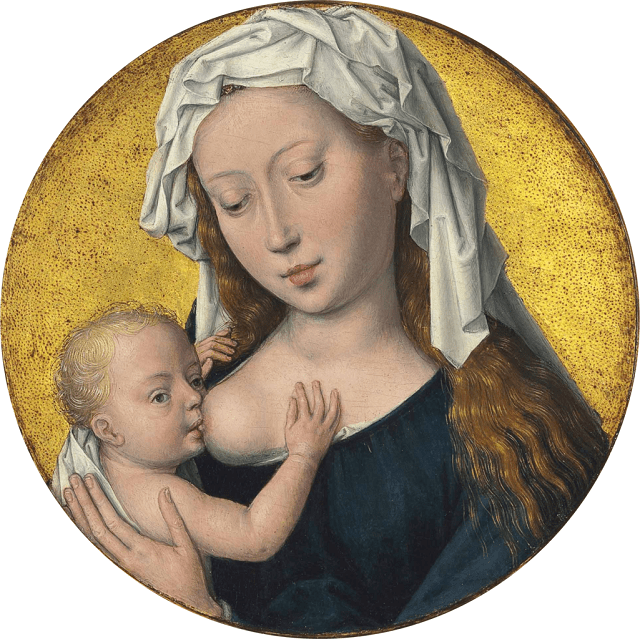
Photo credit: The Virgin Mary Nursing the Christ Child (bet. 1487-1490), by Hans Memling (c. 1433-1494) [public domain / Wikimedia Commons]

***
Traditionalism vs. Radical Catholic Reactionaries
Previous Post
December 23, 2019
Pope Francis' Deep Devotion to Mary (Esp. Mary Mediatrix)
Next Post
December 26, 2019 "Christianity Today" Treats Trump & Evangelicals Disgracefully
Browse Our Archives
Select a Category & Last Things About Me Anti-Catholicism Atheism & Agnosticism Baptism and Sacramentalism Bible and Tradition Blessed Virgin Mary Books by Dave Armstrong C. S. Lewis Calvinism & General Protestantism Catholic Apologetics Catholic Apologists Catholic conversion Catholic converts Christmas Church (Ecclesiology) Church History Conversion and Converts Development of Doctrine Eastern Orthodoxy Ecumenism & Christian Unity Eucharist & Liturgy Fathers of the Church French Translations G. K. Chesterton Hell Hell & Satan Hell & Satan & Last Things Heresies & Comparative Religion Holistic Health Inquisition & Crusades & Scandals James White Jews & Judaism & Old Testament John Calvin John Henry Newman Liberal / Modernist Theology Life Issues Literary Resume Lutheranism Mariology Martin Luther Music Orthodoxy Papacy & Infallibility Personal Page Philosophy & Science Political & Ethical & Moral Issues Protestant Persecution & Intolerance Protestantism Purgatory Purgatory & Penance Romantic & Imaginative Theology Saints & Purgatory & Penance Salvation Salvation & Justification Satan & Last Things Sexuality and Gender Issues Spanish Translations Traditionalism vs. Radical Catholic Reactionaries Traducciones al español / tradução para português Trinitarianism & Christology Uncategorized Videos
Select a Month October 2026 September 2026 August 2026 July 2026 June 2026 May 2026 April 2026 March 2026 February 2026 January 2026 December 2025 November 2025 October 2025 September 2025 August 2025 July 2025 June 2025 May 2025 April 2025 March 2025 February 2025 January 2025 December 2024 November 2024 October 2024 September 2024 August 2024 July 2024 June 2024 May 2024 April 2024 March 2024 February 2024 January 2024 December 2023 November 2023 October 2023 September 2023 August 2023 July 2023 June 2023 May 2023 April 2023 March 2023 February 2023 January 2023 December 2022 November 2022 October 2022 September 2022 August 2022 July 2022 June 2022 May 2022 April 2022 March 2022 February 2022 January 2022 December 2021 November 2021 October 2021 September 2021 August 2021 July 2021 June 2021 May 2021 April 2021 March 2021 February 2021 January 2021 December 2020 November 2020 October 2020 September 2020 August 2020 July 2020 June 2020 May 2020 April 2020 March 2020 February 2020 January 2020 December 2019 November 2019 October 2019 September 2019 August 2019 July 2019 June 2019 May 2019 April 2019 March 2019 February 2019 January 2019 December 2018 November 2018 October 2018 September 2018 August 2018 July 2018 June 2018 May 2018 April 2018 March 2018 February 2018 January 2018 December 2017 November 2017 October 2017 September 2017 August 2017 July 2017 June 2017 May 2017 April 2017 March 2017 February 2017 January 2017 December 2016 November 2016 October 2016 September 2016 August 2016 July 2016 June 2016 May 2016 April 2016 March 2016 February 2016 January 2016 December 2015 November 2015 October 2015 September 2015 August 2015 July 2015 June 2015 May 2015 April 2015 March 2015 February 2015 January 2015 December 2014 November 2014 October 2014 September 2014 August 2014 July 2014 June 2014 April 2014 March 2014 February 2014 January 2014 December 2013 November 2013 October 2013 September 2013 August 2013 July 2013 June 2013 April 2013 March 2013 February 2013 January 2013 December 2012 November 2012 October 2012 September 2012 August 2012 July 2012 June 2012 May 2012 April 2012 March 2012 February 2012 January 2012 December 2011 November 2011 October 2011 September 2011 August 2011 July 2011 June 2011 April 2011 March 2011 February 2011 October 2010 September 2010 August 2010 July 2010 April 2010 March 2010 December 2009 October 2009 August 2009 July 2009 June 2009 May 2009 March 2009 February 2009 October 2008 September 2008 April 2008 March 2008 February 2008 January 2008 December 2007 November 2007 October 2007 May 2007 March 2007 February 2007 January 2007 November 2006 October 2006 September 2006 August 2006 July 2006 June 2006 May 2006 April 2006 March 2006 February 2006 October 2005 June 2005 April 2005 February 2005 July 2004 May 2004 April 2004
Follow Us!
TAKE THE
Religious Wisdom Quiz
What famous cathedral is in Paris, known for its flying buttresses and rose windows?
Select your answer to see how you score.
Notre Dame St. Paul's St. Peter's Canterbury
Books by This Author Books by Dave Armstrong
Related posts from Biblical Evidence for Catholicism

Bible & Catholicism on Mortal Sin (vs. John...
Biblical Evidence for Catholicism

Does Catholic Intercession of Saints Require Omniscience?
Biblical Evidence for Catholicism

Capabilities of Heavenly Saints: Protestant Commentaries
Biblical Evidence for Catholicism

Revelation 5 & 8 (Intercession of Saints &...
Biblical Evidence for Catholicism
TRENDING AT PATHEOS Catholic

In "Irreplaceable," our book on vocation and technology, Trevor Sutton and I...

I was strolling through the top floor of the brand new Parthenon...

What Does Gêvâh Mean For Kimberley Guifoyle &...
This week, a lot of the news is focused on Kimberly Guilfoyle....

INNER CIRCLE: Profound Mystery (Of Christ In All...
Ephesians 5:31-32 “For this reason, a man will leave his father and...

Do Not Rejoice When Your Enemy Falls: The...
Turning an execution into a public spectacle is a disturbing expression of...

'The Chosen' S6 Trailer: The Passion Gets Very...
Not many watching 'The Chosen' worry about spoilers, but just because they...
view all Catholic blogs
Ad-Free & Subscriber Log-In Subscription Support
- About Us
- 2026 Calendar
- Videos
- Podcasts
- Library of World Religions
- Faith In Media Tracker
- Advertise With Us
- Write for Us
- Privacy Policy
- Terms of Service
- Do Not Sell My Data
- Contact Us
- Radiant Digital
- Manage Newsletter Subscriptions
- Unsubscribe From Notifications
- Sitemap
Copyright 2008-2026, Patheos. All rights reserved.
Subscription Support Ad-Free & Subscriber Log-In
Follow Patheos