
BuddhistCatholicContemplativeEvangelicalGeneral ChristianHinduJewishLatter-day SaintMuslimNew VisionsProgressive Christian
Beliefs
- Buddhist
- Catholic
- Contemplative
- Evangelical
- General Christian
- Hindu
- Jewish
- Latter-day Saint
- More Voices
- Muslim
- New Visions
- Pagan
- Progressive Christian
Topics
- Religion News
- Food and Religion
- Sports and Religion
- Religious Art
- Religious Music and Entertainment
- Religious Events
- History and Religion
- Style and Religion
- Politics and Religion
- Women in Religion
- Recreation Outdoors and Religion
- Business Finance and Religion
- Careers Workplace and Religion
- Education and Religion
- Family Parenting and Religion
- Health Fitness and Religion
- Home and Religion
- Relationships and Religion
- Technology and Religion
- Travel and Religion
Columnists
- Buddhist Columnists
- Business Finance and Religion Columnists
- Careers Workplace and Religion Columnists
- Catholic Columnists
- Contemplative Columnists
- Education and Religion Columnists
- Evangelists Columnists
- Family Parenting and Religion Columnists
- General Christian Columnists
- Health Fitness and Religion Columnists
- Hindu Columnists
- History and Religion Columnists
- Home and Religion Columnists
- Jewish Columnists
- More Voices Columnists
- Latter Day Columnists
- Muslim Columnists
- New Visions Columnists
- Nonreligious Columnists
- Pagan Columnists
- Politics and Religion Columnists
- Progressive Columnists
- Recreation Outdoors and Religion Columnists
- Relationships and Religion Columnists
- Religion News Columnists
- Religious Art Columnists
- Religious Events Columnists
- Religious Music and Entertainment Columnists
- Sports and Religion Columnists
- Style and Religion Columnists
- Technology and Religion Columnists
- Travel and Religion Columnists
- Women in Religion Columnists
Resource Library
- 2026 Calendar
- Library of World Religions
- The 100 Most Holy Places on Earth
- Patheos Answers
- Podcasts
- Videos
- Faith Leaders Database
- Anglican Episcopalian
- Bahai
- Baptist
- Buddhism
- Christianity
- Confucianism
- Eastern Orthodoxy
- Hinduism
- Holiness and Pentecostal
- ISKCON
- Islam
- Judaism
- Lutheran
- Methodist
- The Church of Jesus Christ of Latter-day Saints
- New Age
- Paganism
- Presbytarian and Reformed
- Protestantism
- Religion Behind the Scenes
- Roman Catholic
- Scientology
- Shia Islam
- Sikhism
- Sufism
- Sunni Islam
- Taoism
- Zen
- See all religions
Research Tools
 Ad-Free & Subscriber Log-In Subscription Support
Ad-Free & Subscriber Log-In Subscription Support
Follow Patheos 

- Trending:
- Forgiveness
- |
- Marriage
- |
- Consciousness
- |
- Death Penalty
- |
- Election
- |
- Halloween

-
About
-
Catholic Apologetics
-
Church History
-
Great Apologists
-
Christian Worldview
-
Protestantism & Misc.
- Home
- Catholic
- History and Religion
- “Ambiguity”: Classic Reactionary Talking Point & Mantra
“Ambiguity”: Classic Reactionary Talking Point & Mantra
Last updated on: June 6, 2026 at 12:41 am by Dave Armstrong
“Ambiguity”: Classic Reactionary Talking Point & Mantra 2026-06-06T00:41:07-04:00 Dave Armstrong
Patheos Explore the world's faith through different perspectives on religion and spirituality! Patheos has the views of the prevalent religions and spiritualities of the world.
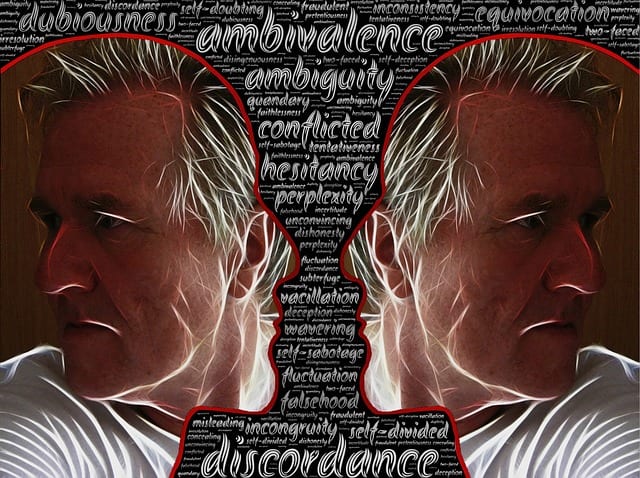
This is one of the absolutely classic, textbook marks of the radical Catholic reactionary mindset and mentality. I have observed and commented upon it for over 20 years. It’s mostly used to characterize the Vatican II documents, but also applied to things like the Catechism and utterances of Pope Francis (particularly Amoris Laetitia). Recently (on 11-2-19), Bishop Athanasius Schneider trotted it out, in his criticisms of Vatican II (which I documented):
Here, Schneider points to the contradictions in the conciliar texts. At one place, in its document Dignitatis Humanae, the Council teaches “every person has the obligation to seek the truth, and this is the Catholic Church,” Schneider says, “but then further down it says that you have freedom of religion rooted in your nature.” This teaching is “not clear,” it is “ambiguous,” as the prelate explains, and the consequences after the Council were “that almost all Catholic seminaries and theological faculties, and the episcopate and even the Holy See” promoted “a right of every person to choose his own religion.” . . .
“This is already rooted here [in the Vatican Council],” Bishop Schneider states. “If you have a right by God given to you, by nature, also to be able to choose acts of idolatry – like the Pachamama – when it is rooted in your dignity of man even to choose a Pachamama religion: this is the last consequence of this expression of the Council text,” he explains. The expression of the text was “ambiguous” and needed to be “formulated in a different way” to “avoid these applications in the life of the Church, which we also had in the Assisi meeting of Pope John Paul II in 1986 and the other meetings, where even idolatrous religions were invited to pray in their own manner – that is to say in their idolatrous manner – for peace.” . . .
“Remnant” website writer Christopher Ferrara, a signatory to the recent Filial Correction, pontificated in 2009:
The Council, for all its vexing ambiguity, excessive irenicism, and wholly unwarranted optimism about “the modern world,” imposed no new doctrine or dogma on the Church and thus could not have proposed any doctrines contrary to prior Church teaching. Ambiguity, optimism and irenicism do not a single doctrine make. . . . the Council’s ambiguity-laden Sacrosanctum Concilium.. . .
Filial Correction signatory Joseph Shaw, in a debate with Dr. Robert Fastiggi and Dr. Dawn Eden Goldstein (October 2017), stated:
The contention of the Correctio Filialis is that the statements of Amoris which concern us are ambiguous: they can be read in accordance with the Ordinary Magisterium, which we would obviously accept, or they can be read as contradicting the Ordinary Magisterium.
Dr. Peter Kwasniewski, in his article, “RIP, Vatican II Catholicism (1962-2018)”: scandalously and outrageously published at One Peter Five (10-9-18), opined:
I was tired of living in the newly built, supposedly more energy-efficient and environmentally sound but in reality flimsy, drafty, fluorescent, insect-infested, falling-apart building produced by the only ecumenical council that made no solemn definitions and issued no solemn condemnations. I came to see, . . . that the hijackers were not the ones after the Council, but the ones inside the Council who cleverly steered it toward the progressivism and modernism they secretly longed for, deliberately planting “time bombs” throughout the documents – ambiguous phrases that could be turned this way or that, and which were turned this way and that in the neverending turf war between liberals and “conservatives” of every stripe, at every level. . . .
I’d like to collect a few of my observations through the years (in no particular order) about how reactionaries use this accusation to tear down the teachings of an ecumenical council:
*****
We are informed that God did not prevent Vatican II from falling into the hands of evil schemers and heterodox conspirators, though only in the sense of ambiguity, not formal heresy. [Reactionaries] apparently believe that all previous councils were authoritative and binding, whereas Vatican II is a mess. What did God do, forget His promise, or go to sleep? We are to believe that all the other ecumenical councils somehow managed to escape this fate? (Reflections on Radical Catholic Reactionaries [Dec. 2002], p. 102, #229)
I guess Holy Scripture also suffers from these same manifest deficiencies of “ambiguity.” How many falsehoods it has spawned! Look at Protestantism, the “Bible Only” version of Christianity, with all its rival schools of thought. Away with the Bible, then! After all, so many heretical cults have derived false doctrines from various “ambiguous” interpretations of the biblical texts. If it weren’t for the Bible, surely they wouldn’t even exist. Therefore, the Bible must have caused them. (Ibid., p. 102, #230)
The “ambiguity” argument is exceedingly nebulous and subjective by its very nature. If one points out that such-and-such a doctrine can be shown to have an orthodox pedigree and consistent development, the [reactionary] replies that the conciliar conspirators placed ambiguous language in it, in order for it to be subverted later. In other words, their cynical interpretation is always the “winner” because they have the simplistic, sloganistic, and easy sleight-of-hand of “ambiguity” always ready and at their disposal. (Ibid., p. 103, #234)
I deny this concept of quasi-defectibility, since ecumenical councils cannot depart from the faith in this fashion, if indeed they are ecumenical councils. Thus, the only rational recourse for reactionaries who despise Vatican II is to prove that it is not a valid ecumenical council in the first place — surely an impossible task. Knowing that this is impossible (so I would hypothesize), they resort to the empty charge of “ambiguity” and “compromise,” so as to denigrate the council whose teachings they so detest, for erroneous reasons. It’s valid, yet somehow simultaneously reprehensible and a departure from previous Catholicism — precisely as they believe about recent popes, and the New Mass. It is a foolish game, a dangerous and unnecessary one, and spiritually dangerous to souls. (Ibid., p. 92, #204)
It remains obviously true that the council and it’s so-called “spirit” or (heterodox) interpretation are not identical. Reactionaries want to attribute every stupid, modernist teaching of the last fifty years to the council itself. If it can’t be traced to actual teaching, then the subterfuge of deliberate “ambiguity” is utilized for the Cause. Reactionaries have created their own little box no one can penetrate. No one can disagree without themselves being stamped with the “scarlet letter” of “modernism” or the ubiquitous charge of denial of reality (the hallmark of mental illness). (Ibid., p. 94-95, #210)
I don’t find Vatican II particularly “ambiguous.” I find it nuanced and complex, and I don’t think those are bad things; I fully expect them from spiritually mature persons and churches. (Ibid., p. 105, #241)
Subtlety and complexity are distinct from a deliberate ambiguity inherently lending itself to a heterodox interpretation. The book of Revelation might be said to be “ambiguous.” St. Paul’s writings are “ambiguous” in many places. But we don’t deny their inspiration because of it. Likewise, we don’t change our view of the nature of ecumenical councils because we have to exercise our brains a bit in order to understand one of them. An exhaustive study of the works of St. Augustine alone would offer more than enough challenge for anyone to synthesize it all. Difficulty of interpretation or application does not equal essential flaw. (Ibid., p. 105, #242)
How is it that the Holy Spirit could prevent all the ecumenical councils from the 4th to the 19th century from error, yet when it comes to another indisputably ecumenical council, Vatican II, it is a free-for-all and a successful modernist “conspiracy of ambiguity“? Was the Holy Spirit on leave from 1962-1965? I don’t buy it. One must exercise faith. The modernists have not succeeded in perverting a single doctrine of the Catholic faith. Nor will they ever do so. If history teaches us anything, it is that. If Reactionaries can’t see that with the eyes of faith, they have no business remaining Catholic. If they do see it, on the other hand, they have no business trashing Vatican II with impunity, the way they do. It’s scandalous and contemptible. (Ibid., pp. 106-107, #247)
The entire reactionary argument concerning the alleged “ambiguity” of Vatican II rests on an obvious and glaring fallacy: viz.,
P1 The Council says x (in its actual words).
P2 The “conservatives” (i.e., orthodox Catholics) interpret the words in a Catholic sense, consistent with sacred tradition.
P3 The liberals (or, modernists) interpret the words in a heterodox, un-Catholic, revolutionary sense.
C1 The words of the council must therefore lend themselves — in their essence, intrinsically, and objectively — to either interpretation.
C2 Since both readings occur in fact, therefore the council is deliberately ambiguous, and “compromises the faith.”
The fallacy lies in C1, leading to further false assertion C2. It is not established by logic; nor is it proven that the council is the sole (or even primary) cause of what comes after it. One can see how fallacious this is, using the analogy of the Bible:
PP1 The Bible says x (in its actual words).
PP2 Catholics interpret the words in a Catholic sense, consistent with sacred tradition.
PP3 Protestants, and heretics such as Jehovah’s Witnesses or Mormons interpret (many of) the words in a heterodox, un-Catholic sense.
CC1 The words of the Bible must therefore lend themselves — in their essence, intrinsically, and objectively — to either the Catholic or the heretical interpretation.
CC2 Since both readings occur in fact, therefore the Bible is deliberately ambiguous, and “compromises the faith.”
The reasoning is precisely the same in both cases. All Christian sects and heresies appeal to the Bible (and here we encounter the doctrinal and hermeneutical relativism of sola Scriptura). Likewise, liberals appeal to Vatican II. We would expect no less, since they also appeal to Scripture (even homosexual activists try to find support for their abominable viewpoints in Scripture, with some of the worst, twisted exegesis known to man). Pro-abortionists find abortion in the U.S. Constitution, under a supposed “right to privacy” — rather like the ersatz liberal alleged “spirit” of Vatican II. Just as the Bible in no wise teaches what they claim it does, so it is the case that Vatican II does not teach their damnable heresies, either.
One must look at the objective words of the council, interpreted through cross-reference within its own documents, and the historical precedent of Catholic orthodoxy, just as one does with the Bible: through exegesis, hermeneutics, and the appeal to the apostolic tradition as a norm of authentic interpretation. Reactionaries have it exactly backwards — they locate the meaning of the conciliar documents in the liberal distortions and “co-opting” of them, which makes no sense at all; in fact, it is scandalous, coming from those who claim to be upholding tradition. It is as unseemly as taking a Mormon interpretation of Scripture as the criterion for proper biblical hermeneutics, then condemning the Bible because of the heretical and false nature of Mormon teaching. (Ibid., pp. 107-109, #249)
Biblical vs. conciliar “ambiguity” — another analogy:
The Bible is said (by agnostics, atheists, stuffed-shirt professors, and modernists) to be full of many irreconcilable contradictions, which are considered to be evidence of its untrustworthiness and lack of divine inspiration and infallibility.
Likewise, infallible councils and papal pronouncements (especially since “1958” — which seems to be the “magic” year of transformation) are said (by modernists, reactionaries, Orthodox, and Protestants) to be full of many irreconcilable contradictions, which are considered to be evidence of their untrustworthiness and lack of divine guidance and infallibility. (Ibid., p. 109, #250 [partial] )
Some of the better-known reactionaries say we should all forget that the ambiguous and controversial Second Vatican Council “ever happened.” I don’t see a whole lot of difference there; do you? What is the practical difference between saying something has explicit error and saying it is so bad we should get rid of it and forget about it and pursue another course? How can one follow a council while at the same time saying it should never have happened? I shake my head in befuddlement. (Mass Movements: Radical Catholic Reactionaries, the New Mass, and Ecumenism (Dec. 2012, p. 33)
*
[L]iberal dissidents deliberately distorted it [Vatican II] for their own nefarious purposes. That says nothing about the documents themselves. I don’t find them difficult to understand at all. But if one doesn’t like what they read, and wants to maintain a surfacey “obedience” to an ecumenical council, then we come up with the rationalizing, special pleading nonsense of the inveterately “ambiguous” texts. Reactionaries and some “traditionalists” are merely ditching what they don’t like, regardless of what the Church says about it.
*
This is exactly what Luther did with Catholic tradition as a whole (admittedly to a much greater degree, but the principle of authority is very similar), when he defected and started up a new movement. I see little difference in principle at all. He claims that he was the “reformer”; bringing things back to the good old days; restoring the gospel that had supposedly been lost or at least deeply hidden, and getting rid of the crusty barnacles of mere traditions of men.
Reactionaries and some “traditionalists” think they are the bearers of the authentic tradition, and if popes and councils disagree with you, so much the worse for them; they’re wrong (just as Luther freely, breezily said that various councils were). That is Luther, through and through, my friend, and I know something about that because I have been researching and writing about the man for seventeen years, and just published a book about him. (Ibid., pp. 34-35)
The fact of the matter is that those who question Vatican II and talk claptrap about its supposedly “ambiguous” nature and so forth, tend to go further and further right into schism or awful close to same. It’s been that way all through history. The ones who denied Nicaea (325) were the Arian heretics. Those who opposed Ephesus (431) and Chalcedon (451) went off into Nestorianism and Monophysitism. Later dissenters from councils were iconoclasts or Monothelites. Dollinger and his rationalistic allies didn’t like papal infallibility at Vatican I in 1870 so they split and formed the Old Catholics, who subsequently became liberal.
So why should our time be different? Now the ones who don’t like Vatican II adopt a curious mixture of modernism and Protestantism. Meanwhile, the ordinary faithful Catholic accepts in faith that God knows what He is doing in the latest conciliar and papal developments. (Ibid., p. 68)
Protestant “reformer” (Luther’s successor) Philip Melanchthon used the same terminology and same reasoning that the reactionaries do, with regard to the Council of Trent. He wrote in a letter to Archbishop Cranmer (c. April Fool’s Day 1548):
The Council of Trent makes its crafty Decrees, in order to protect its errors by ambiguous expressions. Such sophistry ought to be far away from the Church. [source / Latin source: Lib. iii., Ep. 42 bis, col. 523: Latin = ambigue]
Likewise, John Calvin used the same reasoning, in his Acts of the Council of Trent with the Antidote (1547). Writing about the canons on justification, . . . Canon 10, his usual anti-Catholic affinities take over:
Could these anathemas take effect, all who are not versed in the sophistical art would pay dearly for their simplicity. They formerly asserted in their decrees that the righteousness of God was the only formal cause of Justification; now they anathematize those who say that we are formally righteous by the obedience of Christ. But it is in another sense. I see it or scent it. But how few are there who will not be misled by the ambiguity?
Along the same lines, Martin Luther regarded one of his primary debate opponents, Erasmus, as a conniving, sneaky, “ambiguous” thinker. Luther wrote of him:
This observation fixes in me a determination (let others do as they please) not to believe Erasmus, even if he should openly confess in plain words, — that Christ is God. But I would address to him that sophistical saying of Chrysippus, ‘If you lie, you lie even when you speak the truth.’ . . . Our king of ambiguity, however, sits upon his ambiguous throne in security, and destroys us stupid Christians with a double destruction. First, it is his will, and it is a great pleasure to him, to offend us by his ambiguous words: and indeed he would not like it, if we stupid blocks were not offended. And next, when he sees that we are offended, and have run against his insidious figures of speech, and begin to exclaim against him, he then begins to triumph and rejoice that the desired prey has been caught in his snares. (Letter to Nikolaus von Amsdorf, 11 March? 1534)
Luther apparently believed (in conjunction with the above descriptions) that Erasmus had denied Christ’s divinity and the Holy Trinity [Dave, now: sound familiar? Now we hear idiotic claims that Pope Francis supposedly denies things like this], which is patently absurd. In other insults, he ridiculously calls Erasmus an atheist.
What goes around, comes around. Nothing new under the sun . . . How Protestant “reformers” Melanchthon and Calvin regarded Trent as “ambiguous” is how Catholic reactionaries today (like Dr. Joseph Shaw) regard both Vatican II and Amoris laetitia. How Luther thought of Erasmus is, in this way, quite similar to how Dr. Shaw and Correctio signatories view Pope Francis. “Ambiguity” and rampant arbitrary, non-conclusive subjectivism rule the day. Once again, they think — in a very important area, involving Catholic magisterial authority — strikingly like Protestant revolutionaries and “reformers” who opposed the Church almost 500 years ago. [these three “Reformer” excerpts were documented on 10-11-17]
*
The main thing to me is your denial that the Council was heretical. You say the same about Vatican II. This is God’s protection (all the more noteworthy given the modernist presence at Vatican II). To me that is the bottom line. The “ambiguity” is in miscomprehension and/or misapplication (or wholesale distortion and twisting) of the actual conciliar teaching. Something is either “orthodox” or it is not. “Ambiguity” is extremely subjective and not particularly relevant, in my opinion, once one concedes that a Council is orthodox in the first place.
That is the absurdity and equivocation of the reactionary position, as I repeatedly argued. The sedevacantists are at least consistent, not having to engage in special pleading of the most objectionable sort. Not having the guts to simply pronounce the hated Council invalid, instead we receive from you guys this balderdash of “ambiguity,” which then becomes a convenient “club” to bash the Council with impunity, not allowing (like all conspiratorial theories) of any rational disproof. Thus the very methods of the enemy are adopted: the ambiguities of the reactionaries ironically far surpass those of the modernists. [24 January 2000]
This is a classic tactic of the reactionary mindset: to posit a deliberate “ambiguity” in the Council, according to conspiratorial scenarios and the devious designs of the liberals. No informed, orthodox Catholic I know will deny that the modernists had insidious designs, or at least dangerously false beliefs sincerely-held (heresy is always with us – bishops and theologians not being immune to it). What we assert is that heresy can never subvert an Ecumenical Council, ratified by a pope. God simply won’t let that happen. This is a tenet of faith, and is part and parcel of Catholic ecclesiology. Reactionaries don’t talk in this fashion about any other Ecumenical Council. They single this one out, even though its validity and legitimacy is based on precisely the same criteria as all the others (in fact, I believe it had the greatest number of bishops present, by far). Knowing this, they adopt the equivocating, hair-splitting scenario of “ambiguous but not technically heterodox.”
Nice try . . . This is clearly rationalization and special pleading which allows no rational response, as it is so nebulous and subjective by its very nature. If one points out that such-and-such a doctrine can be shown to have an orthodox pedigree and consistent development, the reactionary simply replies that the Council conspirators placed ambiguous language in it, in order for it to be subverted later. In other words, their cynical interpretation is always the “winner” because they have this simplistic and easy sleight-of-hand of “ambiguity” always ready and at their disposal. But the only reasonable way to determine orthodoxy is to simply look at the conciliar words (and those of previous Councils) themselves (which – strangely enough – these scathing critiques rarely take the time to do). Actual words are objective tools, just as one engages in exegesis and cross-referencing when interpreting Sacred Scripture.
As always, the reactionary wants to have it both ways, and adopts a fortress mentality whereby any challenger to the self-proclaimed “orthodoxy” is automatically written off as a modernist, or modernist dupe, and patronized as a “conservative,” simply because we don’t play the game in this irrational, Alice in Wonderland fashion, where words – like a wax nose – can always be shaped according to the skeptical whims of the anti-conciliar party line. And that is one of the more striking instances of irony in this whole debate: criticizing alleged all-encompassing “ambiguity” in the Council, they hypocritically become far more truly ambiguous in the logic-torturing and circular theories they invent in order to bolster their own preconceived notions. I have noted this on many occasions in my Internet debates. [2000]
Critics of Pope Francis are now saying exactly the same thing about him: he’s sneaky, “jesuitical’; won’t say what he really means; if he expresses something orthodox, it’s a mere fooler to keep the people hoodwinked, etc., etc. [3-26-18]
[Phil] Lawler is much more motivated to crank out the lie that Pope Francis is a lying equivocator, speaking out of both sides of his mouth. This is the clear insinuation of much of his rhetoric. It was present in his book and is in subsequent articles. The lightly veiled implication is that when Pope Francis states orthodox notions, he doesn’t really mean it (wink wink nod nod). That’s just to fool people, you see.
Someone like Chris Ferrara (an extreme reactionary, not far from sedevacantism) says this quite brazenly and openly. Lawler (of much less bombastic temperament) prefers to play games and mostly insinuate it — which assuredly he does — with nuance and subtlety: which I think is even more contemptible than what Ferrara does.
At times, Lawler comes right out and says that he believes the pope is deliberately speaking out of both sides of his mouth (which amounts to deception and lying, and an evil motivation: pure and simple). Here is a typical example, from his article, “Confusion—now about hell—is the hallmark of this pontificate” (3-29-18):
In Lost Shepherd I wrote: “The confusion in Amoris Laetitia is not a bug; it is a feature.” Pope Francis realized that he cannot directly contradict the perennial teaching of the Church, put forth so clearly by St. John Paul II. But he could and did create confusion about that teaching, and thereby provided new maneuvering room for those who are unhappy with the Church’s stand.
By the same logic, Pope Francis cannot deny the existence of hell without directly contradicting the teaching of the Church. But he can create confusion, and he has done so once again. Did he deny, or at least question, the existence of hell? We don’t know.
Now I ask you directly, dear reader: is this what you wish to / choose to believe: that the Holy Father is a deliberate liar and deceiver: purposely seeking to overthrow Catholic tradition and to be a dissident “radical” modernist (yes, Phil used that word, too, in his book)? We know that this is what Phil Lawler believes, since in the Introduction to his book, Lost Shepherd, he wrote that Pope Francis:
. . . [is] leading the Church away from the ancient sources of the Faith. . . . a source of division. . . . encouraged beliefs and practices that are incompatible with the prior teachings of the Church. . . . he has violated the sacred trust that is given to Peter’s successors. . . . a Roman pontiff who disregarded so easily what the Church has always taught and believed and practiced on such bedrock issues as the nature of marriage and of the Eucharist . . . a danger to the Faith . . .
I continue to maintain that Lawler has not proven his extraordinary accusations. He loves to repeat them. That’s what all mere propagandists and gossip-column type journalists do, because they know it works. But repetition itself is neither argument, nor does it strengthen a real and substantive, serious argument. Lawler simply hasn’t proven his case (which is one reason why he’s totally unwilling to defend it over against someone like me, who has substantively criticized it). [4-28-18]
In my opinion, he [Phil Lawler] has absolutely failed to demonstrate that Pope Francis is deliberately trying to subvert or overthrow Catholic tradition. That hasn’t been even remotely proven in this book [Lost Shepherd].
There were insinuations here and there that the pope is talking out of both sides of his mouth and being two-faced: not saying what he “really” means. But anyone can say that about any person at any time and attempt to “prove” any theory whatever. That would be like saying, “Armstrong really loves Lawler’s book. He’s just saying the opposite to fool all of us.” Personally, I prefer hard facts, not “jesuitical” conspiracy theories. [2-26-18]
***
Related Reading:
Dr. Joseph Shaw Apes “Reformers” (“Ambiguous” Catholic Documents) (The Good Ol’ “Ambiguity” Card Utilized with Regard to Both Vatican II and Amoris laetitia) [10-11-17]
Dr. Fastiggi & Dr. Goldstein Debate Dr. Shaw Regarding Pope Francis [10-9-17]
Debate on the Reactionary Group, The Remnant [1-24-00]
*
Critique of The Remnant [2000]
***
Unfortunately, Money Trees Do Not Exist: If you have been aided in any way by my work, or think it is valuable and worthwhile, please strongly consider financially supporting it (even $10 / month — a mere 33 cents a day — would be very helpful). I have been a full-time Catholic apologist since Dec. 2001, and have been writing Christian apologetics since 1981 (see my Resume). My work has been proven (by God’s grace alone) to be fruitful, in terms of changing lives (see the tangible evidences from unsolicited “testimonies”). I have to pay my bills like all of you: and have a (homeschooling) wife and three children still at home to provide for, and a mortgage to pay.
*
My book royalties from three bestsellers in the field (published in 2003-2007) have been decreasing, as has my overall income, making it increasingly difficult to make ends meet. I provide over 2600 free articles here, for the purpose of your edification and education, and have written 50 books. It’ll literally be a struggle to survive financially until Dec. 2020, when both my wife and I will be receiving Social Security. If you cannot contribute, I ask for your prayers (and “likes” and links and shares). Thanks!
*
See my information on how to donate (including 100% tax-deductible donations). It’s very simple to contribute to my apostolate via PayPal, if a tax deduction is not needed (my “business name” there is called “Catholic Used Book Service,” from my old bookselling days 17 or so years ago, but send to my email: [email protected]). Another easy way to send and receive money (with a bank account or a mobile phone) is through Zelle. Again, just send to my e-mail address. May God abundantly bless you.
***
Photo credit: johnhain (6-7-15):” ambivalence, ambiguity” [Pixabay / Pixabay License]
***
Traditionalism vs. Radical Catholic Reactionaries
Radical Catholic Reactionaries
Previous Post

December 4, 2019
Radical Catholic Reactionaries: People, Organizations, & Websites
Next Post

December 6, 2019 "Armstrong's Handbook of Apologetics": a Cyber-"Book"
Browse Our Archives
Select a Category & Last Things About Me Anti-Catholicism Atheism & Agnosticism Baptism and Sacramentalism Bible and Tradition Blessed Virgin Mary Books by Dave Armstrong C. S. Lewis Calvinism & General Protestantism Catholic Apologetics Catholic Apologists Catholic conversion Catholic converts Christmas Church (Ecclesiology) Church History Conversion and Converts Development of Doctrine Eastern Orthodoxy Ecumenism & Christian Unity Eucharist & Liturgy Fathers of the Church French Translations G. K. Chesterton Hell Hell & Satan Hell & Satan & Last Things Heresies & Comparative Religion Holistic Health Inquisition & Crusades & Scandals James White Jews & Judaism & Old Testament John Calvin John Henry Newman Liberal / Modernist Theology Life Issues Literary Resume Lutheranism Mariology Martin Luther Music Orthodoxy Papacy & Infallibility Personal Page Philosophy & Science Political & Ethical & Moral Issues Protestant Persecution & Intolerance Protestantism Purgatory Purgatory & Penance Romantic & Imaginative Theology Saints & Purgatory & Penance Salvation Salvation & Justification Satan & Last Things Sexuality and Gender Issues Spanish Translations Traditionalism vs. Radical Catholic Reactionaries Traducciones al español / tradução para português Trinitarianism & Christology Uncategorized Videos
Select a Month October 2026 September 2026 August 2026 July 2026 June 2026 May 2026 April 2026 March 2026 February 2026 January 2026 December 2025 November 2025 October 2025 September 2025 August 2025 July 2025 June 2025 May 2025 April 2025 March 2025 February 2025 January 2025 December 2024 November 2024 October 2024 September 2024 August 2024 July 2024 June 2024 May 2024 April 2024 March 2024 February 2024 January 2024 December 2023 November 2023 October 2023 September 2023 August 2023 July 2023 June 2023 May 2023 April 2023 March 2023 February 2023 January 2023 December 2022 November 2022 October 2022 September 2022 August 2022 July 2022 June 2022 May 2022 April 2022 March 2022 February 2022 January 2022 December 2021 November 2021 October 2021 September 2021 August 2021 July 2021 June 2021 May 2021 April 2021 March 2021 February 2021 January 2021 December 2020 November 2020 October 2020 September 2020 August 2020 July 2020 June 2020 May 2020 April 2020 March 2020 February 2020 January 2020 December 2019 November 2019 October 2019 September 2019 August 2019 July 2019 June 2019 May 2019 April 2019 March 2019 February 2019 January 2019 December 2018 November 2018 October 2018 September 2018 August 2018 July 2018 June 2018 May 2018 April 2018 March 2018 February 2018 January 2018 December 2017 November 2017 October 2017 September 2017 August 2017 July 2017 June 2017 May 2017 April 2017 March 2017 February 2017 January 2017 December 2016 November 2016 October 2016 September 2016 August 2016 July 2016 June 2016 May 2016 April 2016 March 2016 February 2016 January 2016 December 2015 November 2015 October 2015 September 2015 August 2015 July 2015 June 2015 May 2015 April 2015 March 2015 February 2015 January 2015 December 2014 November 2014 October 2014 September 2014 August 2014 July 2014 June 2014 April 2014 March 2014 February 2014 January 2014 December 2013 November 2013 October 2013 September 2013 August 2013 July 2013 June 2013 April 2013 March 2013 February 2013 January 2013 December 2012 November 2012 October 2012 September 2012 August 2012 July 2012 June 2012 May 2012 April 2012 March 2012 February 2012 January 2012 December 2011 November 2011 October 2011 September 2011 August 2011 July 2011 June 2011 April 2011 March 2011 February 2011 October 2010 September 2010 August 2010 July 2010 April 2010 March 2010 December 2009 October 2009 August 2009 July 2009 June 2009 May 2009 March 2009 February 2009 October 2008 September 2008 April 2008 March 2008 February 2008 January 2008 December 2007 November 2007 October 2007 May 2007 March 2007 February 2007 January 2007 November 2006 October 2006 September 2006 August 2006 July 2006 June 2006 May 2006 April 2006 March 2006 February 2006 October 2005 June 2005 April 2005 February 2005 July 2004 May 2004 April 2004
Follow Us!
TAKE THE
Religious Wisdom Quiz
I am the resurrection and the life. Whoever believes in me will live, even though they do what?
Select your answer to see how you score.
Suffer Die Fall Sin
Books by This Author Books by Dave Armstrong
Related posts from Biblical Evidence for Catholicism

Was Peter "Any Old" Apostle? 10 Anti-Papal Arguments
Biblical Evidence for Catholicism

Jesus Founded the [Catholic] Church. If Not Him,...
Biblical Evidence for Catholicism

Jerusalem Council vs. James White & Sola Scriptura
Biblical Evidence for Catholicism

11 Protestant Objections to Papal Authority Debunked
Biblical Evidence for Catholicism
TRENDING AT PATHEOS Catholic

The First Eucharistic Controversy: Christ’s Real Presence
For Catholics, the Eucharist is the source and summit of the Christian...

How to Make a Decision When You Can't...
Main point: It’s much more valuable to stay close to God so...

Archdiocese Hosts Military Marriage Retreat in Germany
RASTATT, Germany — The transient military lifestyle, with its frequent deployments and...

Nearly every morning, I make the drive to Detroit with my high-school-age...

The Real AI Story Is Adoption Without Trust
Artificial intelligence has crossed a political threshold. It is no longer a...

A new article, written by Jeff Lindsay and Gale L. Pooley,...
view all Catholic blogs
Ad-Free & Subscriber Log-In Subscription Support
- About Us
- 2026 Calendar
- Videos
- Podcasts
- Library of World Religions
- Faith In Media Tracker
- Advertise With Us
- Write for Us
- Privacy Policy
- Terms of Service
- Do Not Sell My Data
- Contact Us
- Radiant Digital
- Manage Newsletter Subscriptions
- Unsubscribe From Notifications
- Sitemap
Copyright 2008-2026, Patheos. All rights reserved.
Subscription Support Ad-Free & Subscriber Log-In
Follow Patheos