
BuddhistCatholicContemplativeEvangelicalGeneral ChristianHinduJewishLatter-day SaintMuslimNew VisionsProgressive Christian
Beliefs
- Buddhist
- Catholic
- Contemplative
- Evangelical
- General Christian
- Hindu
- Jewish
- Latter-day Saint
- More Voices
- Muslim
- New Visions
- Pagan
- Progressive Christian
Topics
- Religion News
- Food and Religion
- Sports and Religion
- Religious Art
- Religious Music and Entertainment
- Religious Events
- History and Religion
- Style and Religion
- Politics and Religion
- Women in Religion
- Recreation Outdoors and Religion
- Business Finance and Religion
- Careers Workplace and Religion
- Education and Religion
- Family Parenting and Religion
- Health Fitness and Religion
- Home and Religion
- Relationships and Religion
- Technology and Religion
- Travel and Religion
Columnists
- Buddhist Columnists
- Business Finance and Religion Columnists
- Careers Workplace and Religion Columnists
- Catholic Columnists
- Contemplative Columnists
- Education and Religion Columnists
- Evangelists Columnists
- Family Parenting and Religion Columnists
- General Christian Columnists
- Health Fitness and Religion Columnists
- Hindu Columnists
- History and Religion Columnists
- Home and Religion Columnists
- Jewish Columnists
- More Voices Columnists
- Latter Day Columnists
- Muslim Columnists
- New Visions Columnists
- Nonreligious Columnists
- Pagan Columnists
- Politics and Religion Columnists
- Progressive Columnists
- Recreation Outdoors and Religion Columnists
- Relationships and Religion Columnists
- Religion News Columnists
- Religious Art Columnists
- Religious Events Columnists
- Religious Music and Entertainment Columnists
- Sports and Religion Columnists
- Style and Religion Columnists
- Technology and Religion Columnists
- Travel and Religion Columnists
- Women in Religion Columnists
Resource Library
- 2026 Calendar
- Library of World Religions
- The 100 Most Holy Places on Earth
- Patheos Answers
- Podcasts
- Videos
- Faith Leaders Database
- Anglican Episcopalian
- Bahai
- Baptist
- Buddhism
- Christianity
- Confucianism
- Eastern Orthodoxy
- Hinduism
- Holiness and Pentecostal
- ISKCON
- Islam
- Judaism
- Lutheran
- Methodist
- The Church of Jesus Christ of Latter-day Saints
- New Age
- Paganism
- Presbytarian and Reformed
- Protestantism
- Religion Behind the Scenes
- Roman Catholic
- Scientology
- Shia Islam
- Sikhism
- Sufism
- Sunni Islam
- Taoism
- Zen
- See all religions
Research Tools
 Ad-Free & Subscriber Log-In Subscription Support
Ad-Free & Subscriber Log-In Subscription Support
Follow Patheos 

- Trending:
- Forgiveness
- |
- Marriage
- |
- Consciousness
- |
- Death Penalty
- |
- Election
- |
- Halloween

-
About
-
Catholic Apologetics
-
Church History
-
Great Apologists
-
Christian Worldview
-
Protestantism & Misc.
- Home
- Catholic
- History and Religion
- Vs. James White #14: Word of God / the Lord Usually Oral
Vs. James White #14: Word of God / the Lord Usually Oral
Last updated on: June 6, 2026 at 12:40 am by Dave Armstrong
Vs. James White #14: Word of God / the Lord Usually Oral 2026-06-06T00:40:46-04:00 Dave Armstrong
Patheos Explore the world's faith through different perspectives on religion and spirituality! Patheos has the views of the prevalent religions and spiritualities of the world.
+ White’s Own Erroneous Definition of Sola Scriptura in 1990 (at the same time I got it right)
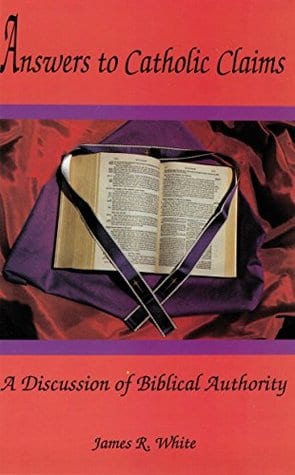
Reformed Baptist anti-Catholic apologist Bishop “Dr.” [???] James White wrote a book in 1990, entitled, Answers to Catholic Claims (Southbridge, Massachusetts: Crowne Publications). He was kind enough to give me a free copy in 1995 at the time of our lengthy postal debate. Bishop White’s words will be in blue.
*****
I’ll be going through this book in order to offer refutations of several of its own more outrageous “claims.” One thing I noticed right away was on the “Acknowledgements” page: “All translations of Scripture, unless otherwise noted, are the author’s own.” I find this highly odd and irregular (not to mention, more than a bit arrogant). I’ve been writing apologetics since 1981 and studying the Bible since 1977, and I don’t recall ever seeing such a thing in a Christian book. It’s quite possible that I don’t recall such an instance, if I ever did see it.
But in any event, this is certainly a very rare thing. Why would White do this? There are many fine Bible translations out there, without his having to come up with his own for this book. It’s one of the many mysteries and inexplicable things about White’s apologetics that will almost certainly never be explained by the good bishop.
He did the same in his other book published in 1990, The Fatal Flaw. By 1996, however, he had changed his tune, with his book, The Roman Catholic Controversy (published by Bethany House). It used primarily the New American Standard Bible (the version I mostly utilized to first read the entire Bible in the early 80s), and also the New International and King James versions.
For his 2001 book, The God Who Justifies (Bethany House), he mostly used the New English Translation, as well as many others (not, alas, including his own). I guess, by then, he came to realize that the scores of translators who worked on these versions were bigger experts than he was on the biblical text and how it should best be rendered in English. Live and learn . . .
In vainly seeking to establish that the Old Testament Jews believed in sola Scriptura and a Bible Only view (excluding oral tradition), White cites (on pp. 12-13) Psalm 119:89 and Isaiah 40:8 (“For ever, O LORD, thy word is firmly fixed in the heavens” and “the word of our God will stand for ever” in RSV), and stated that “Psalm 119 is sufficient to demonstrate the reverence for the Word of God held at the time by those faithful to the Lord” (p. 13); and, “their respect for the Scriptures was based upon their belief that these words were God’s words, these teachings were God’s teachings” (p. 13).
What White seems oblivious to is the fact that “word of God in the Old Testament usually did not refer to Holy Scripture. I recently addressed this in a critique of a debate of his on sola Scriptura:
As far as the terminology “word of God” in the Old Testament, it actually only appears three times in RSV. In 1 Samuel 9:27 and 1 Kings 12:22 it is clearly oral in nature (right from God to a person who proclaims it) and not referring to Scripture. In Proverbs 30:5 it’s not clear that it is written Scripture, either.
“Thy word” appears more times, and mostly in Psalm 119, and many times (2 Sam 7:28; 1 Ki 8:26; 18:36; 2 Chr 6:17 it refers to oral revelation from God to persons: not originally written as Scripture. It’s not absolutely clear that “thy word” in Psalms 119 must refer to written Scripture. I actually think that it probably does, while at the same time noting that the phraseology is not confined to descriptions of only Scripture.
It’s much more clear with regard to the phrase “word of the Lord”: which appears 243 times in the Old Testament in the RSV. These instances are overwhelmingly oral: usually God speaking to prophets and other notable people: Abraham (Gen 15:1), Joshua (Josh 8:27), Samuel (1 Sam 3:21), Nathan (2 Sam 7:4), Gad (2 Sam 24:11), Solomon (1 Ki 6:11), Ahi’jah (1 Ki 14:18), Jehu (1 Ki 16:1), Elijah (1 Ki 18:1), Shemai’ah (2 Chr 11:2), Jeremiah (2 Chr 36:21), Isaiah (Is 38:4), Ezekiel (Ezek 1:3), Hosea (Hos 1:1), Joel (Joel 1:1), Jonah (Jon 1:1), Micah (Mic 1:1), Zephaniah (Zeph 1:1), Haggai (Hag 1:1), Zechariah (Zech 1:1), and Malachi (Mal 1:1).
Note: “And the word of the LORD was rare in those days; there was no frequent vision” (1 Sam 3:1). And the book of Psalms sometimes uses it in an obviously non-Scriptural way: “By the word of the LORD the heavens were made, and all their host by the breath of his mouth” (33:6). Now, with all this “oral communication” going on, clearly, “word of God” / “word of the Lord” / “Thy word” is not confined to written Scripture. And just because one Psalm (119) seems to refer to written Scripture, it doesn’t follow that these terms always referred to inspired writing. Therefore, plainly “oral traditions” existed in Old Testament times, contrary to White’s fanciful imagination.
In fact, mainstream Judaism believed that Moses received oral tradition on Mt. Sinai alongside the written. This was what the Pharisees believed (which Paul more than once called himself). The Sadducees, who were sort of the theological liberals of the time (denying, e.g., the resurrection of the body), denied it. They were the Jewish sola Scripturists. I have an article that discusses many possible Old Testament references to oral tradition or the oral Torah. And I have written about how the Old Testament Jews denied sola Scriptura. (two instances of bolded italics added presently)
It is worth noting that at this stage of the game (as a curiosity piece or a bit of “relevant trivia”), that the Right Reverend Bishop White was utilizing a definition of sola Scriptura that contradicts his own later view, and the standard definition used by Protestant apologists today. In other words, he himself held some semblance of the view of what is called (notably by Keith Mathison) solo Scriptura: a radical Bible Only position:
The Christian is to look to Scripture alone as his authority, . . . (p. iii; describing what he mistakenly thought was John Calvin’s view)
The concept of the Bible being the sole authority for the Church, the Reformers taught, was not only clearly taught in the early Church itself, but it flowed logically and necessarily from the nature of the Bible as God’s inspired Word. (p. 12)
He offers similar non-precise, flawed references to the essence and nature of sola Scriptura in his other book from 1990, The Fatal Flaw: “the Word of God as my authority” and as “the sole and sufficient source of all that is the Christian faith” (p. xi).
White has chided and insulted me for now 24 years as an ignoramus and an idiot regarding anything theological. How ironic, then (if he is correct), that I was using the proper definition of sola Scriptura when I wrote the first chapter of my first book, A Biblical Defense of Catholicism in 1990 or 1991. Here’s how I defined it (p. 4):
The concept of sola Scriptura, it must be noted, is not in principle opposed to the importance and validity of Church history, Tradition, ecumenical councils, or the authority of Church Fathers and prominent theologians. The difference lies in the relative position of authority held by Scripture and Church institutions and proclamations. In theory, the Bible judges all of these, since, for the Evangelical Protestant, it alone is infallible and the Church, popes and councils are not.
See how my definition is much more precise and detailed (and accurate) than White’s 1990 definitions? It’s because I drew from Martin Luther (On the Councils and the Churches, 1539) and R. C. Sproul (one of White’s own heroes and mentors). I also remember reading (as a Protestant) Baptist theologian Bernard Ramm, who dealt with the extreme Bible Only view as false.
I did my homework and got it right. White (despite a Master’s degree from Fuller Seminary) had not done so. In 1991, I had a better and more accurate understanding of what sola Scriptura means than he did. In White’s mind, this could never ever happen. But it did! And I confess that this is very amusing and entertaining to me, given White’s triumphant “know-it-all” rhetoric and constant condescension towards Catholics.
Bishop White also claimed in 1995 that I had never truly been a Protestant. Some years later he stated that I converted without proper knowledge of what I was rejecting (ignorance is bliss . . .). After I produced a long list of the books I had read as a Protestant, he then switched on a dime and asserted that I was guilty of “knowing deception” (which means that he then thought I was even more wicked).
In 1996, in his book, The Roman Catholic Controversy, he had finally gotten it right: i.e., that the Bible is the only “infallible rule of faith for the Church” (p. 59: his italics; my bolding), and he offered far more articulate and detailed explanations (which are quite good for both sides to grasp the subtleties of the false doctrine of sola Scriptura). Then he blasts others (especially Catholic apologists!) for getting it wrong, just as he had, six years earlier:
Few Protestants today can define sola scriptura briefly, succinctly, or even accurately. And it is my experience that this same problem plagues Roman Catholics as well. It is particularly pernicious in its impact among the defenders of the Roman Catholic system. . . . most of the time they spend their time attacking (or defending) straw men. (p. 56)
The funny thing here is that White, in effect is also condemning (without saying so, of course) his own flawed definition in 1990. But back to Answers to Catholic Claims:
Throughout the body of the New Testament, it is plainly perceived that the simple citation of the Old Testament Scriptures was enough to end the argument. (pp. 13-14)
I agree for the most part, but I would add that the New Testament and Jesus don’t always cite from the 39 Old Testament books that Catholics and Protestants agree are canonical. My friend David Palm wrote a classic article in 1995, published in This Rock (Catholic Answers), called, “Oral Tradition in the New Testament.” He gave several examples of citations of non-Old Testament materials:
Scripture says that Joseph and Mary returned to Nazareth after their sojourn in Egypt, “that what was spoken by the prophets might be fulfilled, ‘He shall be called a Nazarene.’” (Matt. 2:23). All commentators admit that the phrase “He shall be called a Nazarene” is not found anywhere in the Old Testament. . . .
Just before launching into a blistering denunciation of the scribes and Pharisees, Jesus delivers this command to the crowds: “The scribes and Pharisees sit on Moses’ seat; so practice and observe whatever they tell you, but not what they do; for they preach, but do not practice” (Matt. 23:2-3). . . . One searches in vain for any reference to this seat of Moses in the Old Testament. . . .
“All drank the same supernatural drink. For they drank from the supernatural Rock which followed them, and the Rock was Christ” (1 Cor. 10:4). The Old Testament says nothing about any movement of the rock that Moses struck to provide water for the Israelites (Ex. 17:1-7, Num. 20:2-13), but in rabbinic Tradition the rock actually followed them on their journey through the wilderness. . . .
“When the archangel Michael, contending with the devil, disputed about the body of Moses, he did not presume to pronounce a reviling judgment upon him, but said, ‘The Lord rebuke you.’ ” (Jude 9). As H. Willmering says in A Catholic Commentary on Holy Scripture, “This incident is not mentioned in Scripture, but may have been a Jewish oral tradition, which is well known to the readers of this epistle.” . . .
Paul dips into rabbinic tradition to supply the names, Jannes and Jambres, of the magicians who opposed Moses in Pharoah’s court (2 Tim. 3:8). In the Old Testament, these individuals are anonymous (Ex. 7:8ff.). James tells us that because of Elijah’s prayer there was no rain in Israel for three years (Jas. 5:17), but the Old Testament account of Elijah’s altercation with King Ahab says nothing of him praying (1 Kgs. 17). (my bolding added)
See also the related papers of mine:
Dialogue on “Tradition” in the New Testament (vs. Dr. Eric Svendsen) [1996]
“Tradition” Isn’t a Dirty Word [late 90s; rev. 8-16-16]
“Moses’ Seat” & Jesus vs. Sola Scriptura (vs. James White) [12-27-03]
Binding, Authoritative Tradition According to St. Paul [2004]
James White’s Critique of My Book, The Catholic Verses: Part I: The Binding Authority of Tradition [12-30-04]
Refutation of James White: Moses’ Seat, the Bible, and Tradition (Introduction: #1) (+Part II | Part III | Part IV | Part V | Part VI) [5-12-05]
Biblical Evidence for Apostolic Oral Tradition [2-20-09]
25 Brief Arguments for Binding Catholic Tradition [2009]
Tradition, Succession, Apostolic Deposit (vs. Calvin #25) [7-1-09]
Tradition, Church, & the Rule of Faith (vs. Calvin #27) [7-6-09]
Biblical Evidence for True Apostolic Tradition (vs. “Traditions of Men”) [6-23-11]
The Bereans and Searching the Scriptures: Sola Scriptura? [National Catholic Register, 5-5-19]
*
Anglican Newman on Oral & Written Apostolic Tradition [10-12-19]
*
Oral Tradition According to Great Historic Apologists [10-18-19]
*
Moreover, I have documented, in a three-part series in 2005 (one / two / three), many examples of plausible New Testament citations (or at least strong reflection of the thought) from the deuterocanon (or so-called “Apocrypha”): the seven books that Protestants arbitrarily threw out of the Bible.
On page 14, White cites 1 Peter 1:23 [wrongly listed as 2:23] (“the living and abiding word of God” — RSV) and 1 Thessalonians 2:13 (“you accepted it not as the word of men but as what it really is, the word of God”).
Again, I don’t deny that many references to “word of God” in the New Testament are referring to the written Old Testament or even sometimes, to what would become recognized as the New Testament. But the majority of these instances (as in the Old Testament) clearly refer to oral proclamation and preaching, or a more or less private (teacher-to-pupil) passing-on of sacred apostolic tradition. This is what White ignores: but it is as plain and “perspicuous” as the sun at noon on a clear day in summer.
White only provides part of the whole picture. He is cynically selective. This is a frequent flaw in Protestant apologetics, and I will expose it every time I run across it. In fact, we observe that both of the passages that White sets forth (see two paragraphs above) in favor of his view, explain themselves in context as referring to something other than the written Bible. 1 Peter 1:25 clarifies: “That word is the good news which was preached to you”. This was the proclamation of the gospel which was uniquely a phenomenon during and immediately after the life and dearth of Jesus.
It was not yet Scripture at the time that Peter wrote this, and not all of it would have made it into Scripture. Some of it clearly was: for example, Peter’s sermon at Pentecost, which is recorded in Acts 2: likely in part. Not all of it would later become part of the Bible. But it was no less “the word of God.” It still was that, because the phrase goes beyond the written word only, and the Bible. It also applies to the words of (usually) prophets in the Old Testament, and that of apostles in the New.
Likewise, 1 Thessalonians 2:13 itself refers to “the word of God which you heard from us.” He brings up Hebrews 4:12 also on p. 14, which refers to the “word of God.” But whether this is undeniably Scripture is at least debatable, since in the same book, an oral meaning is mentioned: “Remember your leaders, those who spoke to you the word of God” (13:7).
Biblical confirmation that “word of God” or “word of the Lord” in the New Testament (as in the Old Testament) refers far more often to oral preaching and proclamation than to written Scripture, is abundant:
Luke 3:2 in the high-priesthood of Annas and Ca’iaphas, the word of God came to John the son of Zechari’ah in the wilderness;
Luke 5:1 While the people pressed upon him to hear the word of God, he was standing by the lake of Gennes’aret. [i.e., all of Jesus’ words would be the “word of God” but not all — by a long shot — would be included in Scripture]
Acts 4:31 And when they had prayed, the place in which they were gathered together was shaken; and they were all filled with the Holy Spirit and spoke the word of God with boldness.
Acts 6:2 And the twelve summoned the body of the disciples and said, “It is not right that we should give up preaching the word of God to serve tables.
Acts 6:7 And the word of God increased; and the number of the disciples multiplied greatly in Jerusalem, . . .
Acts 8:25 Now when they had testified and spoken the word of the Lord, they returned to Jerusalem, preaching the gospel to many villages of the Samaritans.
Acts 12:24 But the word of God grew and multiplied. [the Bibles kept getting bigger and bigger?]
Acts 13:5 . . . they proclaimed the word of God . . .
Acts 13:7 / 13:44 . . . hear the word of God.
Acts 13:46 . . . It was necessary that the word of God should be spoken first to you . . .
Acts 15:35 But Paul and Barnabas remained in Antioch, teaching and preaching the word of the Lord, . . .
Acts 15:36 . . . in every city where we proclaimed the word of the Lord, . . .
Acts 16:32 . . . they spoke the word of the Lord . . .
Acts 17:13 . . . the word of God was proclaimed by Paul . . .
Acts 19:10 . . . all the residents of Asia heard the word of the Lord . . .
Philippians 1:14 . . . speak the word of God . . .
1 Thessalonians 1:8 . . . the word of the Lord sounded forth from you . . .
Bishop White trots out the usual [alleged] “classic proof” of sola Scriptura: 2 Timothy 3:14-17, on pp. 14-15. I have dealt with it (along with other treatments) in these two papers:
Sola Scriptura, 2 Tim 3:16-17, & “Man of God” [1-27-12]
Answer to Sola Scriptura “Prooftexts” 2 Timothy 3:16-17 & Romans 16:15-16 (vs. David T. King) [6-26-12]
White writes about this passage:
Paul counsels Timothy to abide or remain in what he has been taught, knowing from whom he learned it. Roman Catholics might think this refers to “sacred tradition” that would exist side-by-side with, but contain other “revelation” than, the Holy Scriptures. But this is not born [sic] out by the text, for the message he has received in the Gospel is to be found in the Sacred Scriptures themselves. The content of the teaching Timothy has received is identical with, not separate from, that found in the Word of God. (p. 15)
The last two sentences cannot be established from Scripture itself. They are simply manifestations of an extra-biblical Protestant tradition (of men, as it were). I showed in my first book, A Biblical Defense of Catholicism (completed in 1996), “that the concepts of Tradition, Gospel, and Word of God (as well as other terms) are essentially synonymous. All are predominantly oral, and all are referred to as being delivered and received” (p. 12). Here are the biblical evidences for this (for Protestant ears, quite jolting!) that I submitted in support of my assertion:
1 Corinthians 11:2 Maintain the traditions . . . . even as I have delivered them to you.
2 Thessalonians 2:15 Hold to the traditions . . . . taught . . . by word of mouth or by letter.
2 Thessalonians 3:6 . . . the tradition that you received from us.
1 Corinthians 15:1 . . . the gospel, which you received . . .
Galatians 1:9 . . . the gospel . . . which you received.
1 Thessalonians 2:9 We preached to you the gospel of God.
Acts 8:14 Samaria had received the word of God . . .
1 Thessalonians 2:13 You received the word of God, which you heard from us, . . .
2 Peter 2:21 . . . the holy commandment delivered to them.
Jude 3 . . . the faith which was once for all delivered to the saints.
I concluded (and still agree with this today: 23 years later):
In St. Paul’s two letters to the Thessalonians alone, we see that three of the above terms are used interchangeably. Clearly then, tradition is not a dirty word in the Bible, particularly for St. Paul. If, on the other hand, one wants to maintain that it is, then gospel and Word of God are also bad words! Thus, the commonly asserted dichotomy between the gospel and Tradition, or between the Bible and Tradition, is unbiblical itself and must be discarded by the truly biblically-minded person as (quite ironically) a corrupt tradition of men. (p. 13)
***
Unfortunately, Money Trees Do Not Exist: If you have been aided in any way by my work, or think it is valuable and worthwhile, please strongly consider financially supporting it (even $10 / month — a mere 33 cents a day — would be very helpful). I have been a full-time Catholic apologist since Dec. 2001, and have been writing Christian apologetics since 1981 (see my Resume). My work has been proven (by God’s grace alone) to be fruitful, in terms of changing lives (see the tangible evidences from unsolicited “testimonies”). I have to pay my bills like all of you: and have a (homeschooling) wife and three children still at home to provide for, and a mortgage to pay.
*
My book royalties from three bestsellers in the field (published in 2003-2007) have been decreasing, as has my overall income, making it increasingly difficult to make ends meet. I provide over 2600 free articles here, for the purpose of your edification and education, and have written 50 books. It’ll literally be a struggle to survive financially until Dec. 2020, when both my wife and I will be receiving Social Security. If you cannot contribute, I ask for your prayers (and “likes” and links and shares). Thanks!
*
See my information on how to donate (including 100% tax-deductible donations). It’s very simple to contribute to my apostolate via PayPal, if a tax deduction is not needed (my “business name” there is called “Catholic Used Book Service,” from my old bookselling days 17 or so years ago, but send to my email: [email protected]). Another easy way to send and receive money (with a bank account or a mobile phone) is through Zelle. Again, just send to my e-mail address. May God abundantly bless you.
***
Photo credit: from the Goodreads page for this book (4.37 average out of 5, for 41 ratings!).
***
preaching the word of the Lord
Previous Post

November 16, 2019
Vs. James White #13: Jesus Taught Invocation of Saints
Next Post

November 18, 2019 Vs. James White #15: Canon & "Catholic" Traditions
Browse Our Archives
Select a Category & Last Things About Me Anti-Catholicism Atheism & Agnosticism Baptism and Sacramentalism Bible and Tradition Blessed Virgin Mary Books by Dave Armstrong C. S. Lewis Calvinism & General Protestantism Catholic Apologetics Catholic Apologists Catholic conversion Catholic converts Christmas Church (Ecclesiology) Church History Conversion and Converts Development of Doctrine Eastern Orthodoxy Ecumenism & Christian Unity Eucharist & Liturgy Fathers of the Church French Translations G. K. Chesterton Hell Hell & Satan Hell & Satan & Last Things Heresies & Comparative Religion Holistic Health Inquisition & Crusades & Scandals James White Jews & Judaism & Old Testament John Calvin John Henry Newman Liberal / Modernist Theology Life Issues Literary Resume Lutheranism Mariology Martin Luther Music Orthodoxy Papacy & Infallibility Personal Page Philosophy & Science Political & Ethical & Moral Issues Protestant Persecution & Intolerance Protestantism Purgatory Purgatory & Penance Romantic & Imaginative Theology Saints & Purgatory & Penance Salvation Salvation & Justification Satan & Last Things Sexuality and Gender Issues Spanish Translations Traditionalism vs. Radical Catholic Reactionaries Traducciones al español / tradução para português Trinitarianism & Christology Uncategorized Videos
Select a Month October 2026 September 2026 August 2026 July 2026 June 2026 May 2026 April 2026 March 2026 February 2026 January 2026 December 2025 November 2025 October 2025 September 2025 August 2025 July 2025 June 2025 May 2025 April 2025 March 2025 February 2025 January 2025 December 2024 November 2024 October 2024 September 2024 August 2024 July 2024 June 2024 May 2024 April 2024 March 2024 February 2024 January 2024 December 2023 November 2023 October 2023 September 2023 August 2023 July 2023 June 2023 May 2023 April 2023 March 2023 February 2023 January 2023 December 2022 November 2022 October 2022 September 2022 August 2022 July 2022 June 2022 May 2022 April 2022 March 2022 February 2022 January 2022 December 2021 November 2021 October 2021 September 2021 August 2021 July 2021 June 2021 May 2021 April 2021 March 2021 February 2021 January 2021 December 2020 November 2020 October 2020 September 2020 August 2020 July 2020 June 2020 May 2020 April 2020 March 2020 February 2020 January 2020 December 2019 November 2019 October 2019 September 2019 August 2019 July 2019 June 2019 May 2019 April 2019 March 2019 February 2019 January 2019 December 2018 November 2018 October 2018 September 2018 August 2018 July 2018 June 2018 May 2018 April 2018 March 2018 February 2018 January 2018 December 2017 November 2017 October 2017 September 2017 August 2017 July 2017 June 2017 May 2017 April 2017 March 2017 February 2017 January 2017 December 2016 November 2016 October 2016 September 2016 August 2016 July 2016 June 2016 May 2016 April 2016 March 2016 February 2016 January 2016 December 2015 November 2015 October 2015 September 2015 August 2015 July 2015 June 2015 May 2015 April 2015 March 2015 February 2015 January 2015 December 2014 November 2014 October 2014 September 2014 August 2014 July 2014 June 2014 April 2014 March 2014 February 2014 January 2014 December 2013 November 2013 October 2013 September 2013 August 2013 July 2013 June 2013 April 2013 March 2013 February 2013 January 2013 December 2012 November 2012 October 2012 September 2012 August 2012 July 2012 June 2012 May 2012 April 2012 March 2012 February 2012 January 2012 December 2011 November 2011 October 2011 September 2011 August 2011 July 2011 June 2011 April 2011 March 2011 February 2011 October 2010 September 2010 August 2010 July 2010 April 2010 March 2010 December 2009 October 2009 August 2009 July 2009 June 2009 May 2009 March 2009 February 2009 October 2008 September 2008 April 2008 March 2008 February 2008 January 2008 December 2007 November 2007 October 2007 May 2007 March 2007 February 2007 January 2007 November 2006 October 2006 September 2006 August 2006 July 2006 June 2006 May 2006 April 2006 March 2006 February 2006 October 2005 June 2005 April 2005 February 2005 July 2004 May 2004 April 2004
Follow Us!
TAKE THE
Religious Wisdom Quiz
What famous cathedral is in Paris, known for its flying buttresses and rose windows?
Select your answer to see how you score.
Notre Dame St. Paul's St. Peter's Canterbury
Books by This Author Books by Dave Armstrong
Related posts from Biblical Evidence for Catholicism

A Few "Worst" & "Best" Arguments vs. Protestantism
Biblical Evidence for Catholicism

Jerusalem Council vs. James White & Sola Scriptura
Biblical Evidence for Catholicism

Biblical Perspicuity: Absurd Anti-Catholic "Defense"
Biblical Evidence for Catholicism

50 Biblical Disproofs of "Evident Clearness" of the...
Biblical Evidence for Catholicism
TRENDING AT PATHEOS Catholic

In "Irreplaceable," our book on vocation and technology, Trevor Sutton and I...

I was strolling through the top floor of the brand new Parthenon...

What Does Gêvâh Mean For Kimberley Guifoyle &...
This week, a lot of the news is focused on Kimberly Guilfoyle....

INNER CIRCLE: Profound Mystery (Of Christ In All...
Ephesians 5:31-32 “For this reason, a man will leave his father and...

Do Not Rejoice When Your Enemy Falls: The...
Turning an execution into a public spectacle is a disturbing expression of...

'The Chosen' S6 Trailer: The Passion Gets Very...
Not many watching 'The Chosen' worry about spoilers, but just because they...
view all Catholic blogs
Ad-Free & Subscriber Log-In Subscription Support
- About Us
- 2026 Calendar
- Videos
- Podcasts
- Library of World Religions
- Faith In Media Tracker
- Advertise With Us
- Write for Us
- Privacy Policy
- Terms of Service
- Do Not Sell My Data
- Contact Us
- Radiant Digital
- Manage Newsletter Subscriptions
- Unsubscribe From Notifications
- Sitemap
Copyright 2008-2026, Patheos. All rights reserved.
Subscription Support Ad-Free & Subscriber Log-In
Follow Patheos