
BuddhistCatholicContemplativeEvangelicalGeneral ChristianHinduJewishLatter-day SaintMuslimNew VisionsProgressive Christian
Beliefs
- Buddhist
- Catholic
- Contemplative
- Evangelical
- General Christian
- Hindu
- Jewish
- Latter-day Saint
- More Voices
- Muslim
- New Visions
- Pagan
- Progressive Christian
Topics
- Religion News
- Food and Religion
- Sports and Religion
- Religious Art
- Religious Music and Entertainment
- Religious Events
- History and Religion
- Style and Religion
- Politics and Religion
- Women in Religion
- Recreation Outdoors and Religion
- Business Finance and Religion
- Careers Workplace and Religion
- Education and Religion
- Family Parenting and Religion
- Health Fitness and Religion
- Home and Religion
- Relationships and Religion
- Technology and Religion
- Travel and Religion
Columnists
- Buddhist Columnists
- Business Finance and Religion Columnists
- Careers Workplace and Religion Columnists
- Catholic Columnists
- Contemplative Columnists
- Education and Religion Columnists
- Evangelists Columnists
- Family Parenting and Religion Columnists
- General Christian Columnists
- Health Fitness and Religion Columnists
- Hindu Columnists
- History and Religion Columnists
- Home and Religion Columnists
- Jewish Columnists
- More Voices Columnists
- Latter Day Columnists
- Muslim Columnists
- New Visions Columnists
- Nonreligious Columnists
- Pagan Columnists
- Politics and Religion Columnists
- Progressive Columnists
- Recreation Outdoors and Religion Columnists
- Relationships and Religion Columnists
- Religion News Columnists
- Religious Art Columnists
- Religious Events Columnists
- Religious Music and Entertainment Columnists
- Sports and Religion Columnists
- Style and Religion Columnists
- Technology and Religion Columnists
- Travel and Religion Columnists
- Women in Religion Columnists
Resource Library
- 2026 Calendar
- Library of World Religions
- The 100 Most Holy Places on Earth
- Patheos Answers
- Podcasts
- Videos
- Faith Leaders Database
- Anglican Episcopalian
- Bahai
- Baptist
- Buddhism
- Christianity
- Confucianism
- Eastern Orthodoxy
- Hinduism
- Holiness and Pentecostal
- ISKCON
- Islam
- Judaism
- Lutheran
- Methodist
- The Church of Jesus Christ of Latter-day Saints
- New Age
- Paganism
- Presbytarian and Reformed
- Protestantism
- Religion Behind the Scenes
- Roman Catholic
- Scientology
- Shia Islam
- Sikhism
- Sufism
- Sunni Islam
- Taoism
- Zen
- See all religions
Research Tools
 Ad-Free & Subscriber Log-In Subscription Support
Ad-Free & Subscriber Log-In Subscription Support
Follow Patheos 

- Trending:
- Forgiveness
- |
- Marriage
- |
- Consciousness
- |
- Death Penalty
- |
- Election
- |
- Halloween

-
About
-
Catholic Apologetics
-
Church History
-
Great Apologists
-
Christian Worldview
-
Protestantism & Misc.
- Home
- Catholic
- History and Religion
- Rome, the Biblical Canon, & Tradition (vs. Turretinfan & James White)
Rome, the Biblical Canon, & Tradition (vs. Turretinfan & James White)
Last updated on: June 6, 2026 at 12:40 am by Dave Armstrong
Rome, the Biblical Canon, & Tradition (vs. Turretinfan & James White) 2026-06-06T00:40:46-04:00 Dave Armstrong
Patheos Explore the world's faith through different perspectives on religion and spirituality! Patheos has the views of the prevalent religions and spiritualities of the world.
. . . Observed in the Views of John of Damascus (aka John Damascene: c. 676-749)
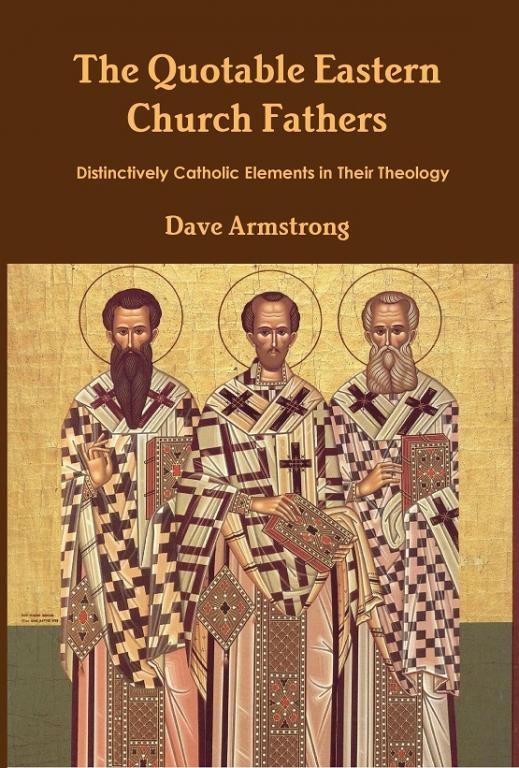
[book and purchase information]
“Turretinfan”: a rabid anti-Catholic just as James White is, posted the following article on James White’s blog: “Did Hippo, Carthage, or Rome’s Bishop Settle the Canon?” (8-25-09). It has a number of glaring falsehoods. We can assume that James White endorses his thinking, since he hosted this article. Turretinfan’s words will be in blue.
***
Some Roman Catholics are under the false impression that the councils of Hippo (A.D. 393) and/or Carthage (A.D. 397) authoritatively settled the canon of Scripture for the church – either directly or by endorsement by one or more Roman bishops. To be deep in history, however, is to cease to be so naive.
Right. Well, it ain’t just us saying this, but reputable Protestant scholarship as well:
Pope Innocent I concurred with and sanctioned the canonical ruling of the councils (in 393 and 397) of Hippo and Carthage (Letter to Exsuperius, Bishop of Toulouse) in 405. He also reiterated this in 414. Carthage and Hippo were preceded by a Roman Council (382) of identical opinion, and were further ratified by Pope Gelasius I in 495, as well as the 6th Council of Carthage in 419.
The Protestant reference work, Oxford Dictionary of the Christian Church (2nd edition, edited by F. L. Cross & E. A. Livingstone, Oxford University Press, 1983, 232) states:
- A council probably held at Rome in 382 under St. Damasus gave a complete list of the canonical books of both the Old Testament and the New Testament (also known as the ‘Gelasian Decree’ because it was reproduced by Gelasius in 495), which is identical with the list given at Trent.
The list from 382 — which The Oxford Dictionary of the Christian Church deemed as “identical with the list given at Trent” includes: Wisdom, Ecclesiasticus, Tobit, Judith, and 1 and 2 Maccabees. Baruch was included as part of Jeremiah, as in St. Athanasius’ list of 15 years previously. This is indeed identical with the Tridentine list, and comprises the seven “extra” deuterocanonical books in Catholic Bibles which Protestants reject from the canon as “apocryphal.” Nevertheless, there they are in the Council of 382.
The Council of Carthage accepted the same list, as detailed by Brooke Foss Westcott (A General Survey of the History of the Canon of the New Testament, Grand Rapids, Michigan Baker Book House, 1980, reprinted from 6th edition of 1889, 440).
How is that for being “deep in history”?
Turretinfan then notes that John of Damascus accepted the 27 New Testament books but also included the epistles of Clement (thus, that there was supposedly “not a “catholic” (universal) canon of the New Testament even as late as the 8th century”). But in Catholic teaching, individual Church fathers are not infallible.
This is why we have always appealed to councils and papal decrees, to determine what was and is officially held by the Church. Since the biblical canon is never listed in the Bible, this is truly a matter solely for the Church and apostolic tradition (which is a perpetual serious internal difficulty and conundrum for Protestants).
Turretinfan then sums up John of Damascus’ view of the Old Testament canon:
You will notice that this is just the same (if we understand his “two books of Esdra” to refer to Ezra and Nehemiah, which seems probable and if we further assume that Lamentations is viewed as a part of Jeremiah, which is also probable) as our canon of the Old Testament, including the relegation of Wisdom and Sirach to a lesser status (useful, but not inspired).
In other words, he tries to force-fit John of Damascus’ canonical views into the Protestant model (which removed seven books from Scripture: the deuterocanon). Nice try, but no cigar. Turretinfan cites An Exact Exposition of the Orthodox Faith from John of Damascus. In the same work, the Church father cites 2 Maccabees with regard to the characteristics of God, and cites Baruch and Wisdom as “Scripture”:
He is all-seeing [2 Maccabees 10:5]: for nothing can escape Him, and over all He keepeth watch. (An Exact Exposition of the Orthodox Faith, I, 9; NPNF2-9)
[I]t is to be observed that the holy Scripture often uses the past tense instead of the future, as for example here: Thereafter He was seen upon the earth and dwelt among men. [Baruch 3:38] (Ibid., IV, 6; NPNF2-9)
The divine Scripture likewise saith that the souls of the just are in God’s hand [Wisdom 3:1] and death cannot lay hold of them. (Ibid., IV, 17; NPNF2-9)
Turretinfan cites the same work again, demonstrating that “John of Damascus (iconophile though he may have been) shares a very high view of Scripture.” Yes, of course he did, because all of the fathers did. Then he concludes:
Scriptures tell us what to believe and how to live. I would be very interested if someone wanted to try to find any comparable statement by John Damascene on oral tradition or (with still lower probability) the interpretative tradition of “the church.”
What I find interesting is that Turretinfan (a lawyer and no dummy: whatever else are his numerous faults in research and theology), seems unable to look up himself, what John of Damascus thought of tradition and the authority of the Catholic Church. He has to appeal to others to “try to find” these elements. This is truly pathetic, and in this way, he is ultra-typical of anti-Catholic Protestant polemicists, seeking to defend sola Scriptura.
They will cite only what a Church father says about Holy Scripture, and then ignore what the same father says about apostolic tradition and Church authority and apostolic succession. This is selective to the point of being either outright deceptive or extraordinarily incompetent. I’ve noted this glaring and recurring fault many many times through the years. A half-truth is little better than a lie.
For my part, I had little trouble at all locating the requested passages in John of Damascus (it was all freely available online), in compiling my book, The Quotable Eastern Church Fathers:
Neither can one expression [of a Church father] overturn the tradition of the whole Church which is spread throughout the world. (Apologia Against Those Who Decry Holy Images, I; translated by Mary H. Allies, London: Thomas Baker, 1898)
It is not in writing only that they have bequeathed to us the tradition of the Church, but also in certain unwritten examples. . . . Both are of equal value for the soul’s growth. No one will dispute this who has considered even a little the discipline of the Church. For if we neglect unwritten customs, as not having much weight we bury in oblivion the most pertinent facts connected with the Gospel. These are the great Basil’s words. How do we know the Holy place of Calvary, or the Holy Sepulchre? Does it not rest on a tradition handed down from father to son? It is written that our Lord was crucified on Calvary, and buried in a tomb, which Joseph hewed out of the rock; (Mt. 27.60) but it is unwritten tradition which identifies these spots, and does more things of the same kind. Whence come the three immersions at baptism, praying with face turned towards the east, and the tradition of the mysteries? Hence St Paul says, “Therefore, brethren, stand fast, and hold the traditions which you have learned either by word, or by our epistle.” (II Thess. 2.15) As, then, so much has been handed down in the Church, and is observed down to the present day, why disparage images? (Ibid., I)
We do not change the boundaries marked out by our fathers (Prov. 22.28): we keep the tradition we have received. If we begin to lay down the law to the Church, even in the smallest thing, the whole edifice will fall to the ground in no short time. (Ibid., II)
Many things, therefore, being handed down to the Church by unwritten tradition and kept up to the present day, why do you speak slightingly of images? The Manicheans followed a gospel according to Thomas, and you will follow that of Leo. I do not admit an emperor’s tyrannical action in domineering over the Church. The emperor has not received the power to bind and loose. I know of the Emperor Valens, a Christian in name, who persecuted the true faith, Zeno and Anastasius, Heraclius and Constantine of Sicily, and Bardaniskus, called Philip. I am not to be persuaded that the Church is set in order by imperial edicts, but by patristic traditions, written and unwritten. As the written Gospel has been preached in the whole world, so has it been an unwritten tradition in the whole world to represent in image Christ, the incarnate God, and the saints, to adore the Cross, and to pray towards the east. (Ibid., II)
Listen to me, people of all nations, men, women, and children, all of you who bear the Christian name: If any one preach to you something contrary to what the Catholic Church has received from the holy apostles and fathers and councils, and has kept down to the present day, do not heed him. Do not receive the serpent’s counsel, as Eve did, to whom it was death. If an angel or an emperor teaches you anything contrary to what you have received, shut your ears. I have refrained so far from saying, as the holy apostle said, “Let him be anathema,” (Gal. 1.8) in the hope of amendment. (Ibid., II)
So, then, in expectation of His coming we worship towards the East. But this tradition of the apostles is unwritten. For much that has been handed down to us by tradition is unwritten. . . . But this [veneration of images] is an unwritten tradition, just as is also the worshipping towards the East and the worship of the Cross, and very many other similar things. . . . Moreover that the Apostles handed down much that was unwritten, Paul, the Apostle of the Gentiles, tells us in these words: Therefore, brethren, stand fast and hold the traditions which ye have been taught of us, whether by word or by epistle. [2 Thess 2:15] And to the Corinthians he writes, Now I praise you, brethren, that ye remember me in all things, and keep the traditions as I have delivered them to you.” [1 Cor 11:2] (An Exact Exposition of the Orthodox Faith, IV, 12 and 16; NPNF2-9)
I will be glad to assist Turretinfan or James White or any other anti-Catholic (or ecumenical) Protestant anytime in the future if they have difficulty with indices, the alphabet, word-searches, Google, online books, or related aspects, in locating what a particular Church father believed on a given “Catholic” (or “Romish”) topic. Glad to be of service.
In the meantime, I highly recommend that they cease and desist in their academically dishonest method of extremely selective (virtually, cynical) citation, to the exclusion of other “Catholic” related passages in the same Church father.
***
Unfortunately, Money Trees Do Not Exist: If you have been aided in any way by my work, or think it is valuable and worthwhile, please strongly consider financially supporting it (even $10 / month — a mere 33 cents a day — would be very helpful). I have been a full-time Catholic apologist since Dec. 2001, and have been writing Christian apologetics since 1981 (see my Resume). My work has been proven (by God’s grace alone) to be fruitful, in terms of changing lives (see the tangible evidences from unsolicited “testimonies”). I have to pay my bills like all of you: and have a (homeschooling) wife and three children still at home to provide for, and a mortgage to pay.
*
My book royalties from three bestsellers in the field (published in 2003-2007) have been decreasing, as has my overall income, making it increasingly difficult to make ends meet. I provide over 2600 free articles here, for the purpose of your edification and education, and have written 50 books. It’ll literally be a struggle to survive financially until Dec. 2020, when both my wife and I will be receiving Social Security. If you cannot contribute, I ask for your prayers. Thanks! See my information on how to donate (including 100% tax-deductible donations). It’s very simple to contribute to my apostolate via PayPal, if a tax deduction is not needed (my “business name” there is called “Catholic Used Book Service,” from my old bookselling days 17 or so years ago, but send to my email: [email protected]). Another easy way to send and receive money (with a bank account or a mobile phone) is through Zelle. Again, just send to my e-mail address. May God abundantly bless you.
***
Previous Post
November 6, 2019
Am I Too Soft on Modernists & Too Hard on Reactionaries?
Next Post
November 7, 2019 Vs. James White #12: Mary the Woman of Revelation 12
Browse Our Archives
Select a Category & Last Things About Me Anti-Catholicism Atheism & Agnosticism Baptism and Sacramentalism Bible and Tradition Blessed Virgin Mary Books by Dave Armstrong C. S. Lewis Calvinism & General Protestantism Catholic Apologetics Catholic Apologists Catholic conversion Catholic converts Christmas Church (Ecclesiology) Church History Conversion and Converts Development of Doctrine Eastern Orthodoxy Ecumenism & Christian Unity Eucharist & Liturgy Fathers of the Church French Translations G. K. Chesterton Hell Hell & Satan Hell & Satan & Last Things Heresies & Comparative Religion Holistic Health Inquisition & Crusades & Scandals James White Jews & Judaism & Old Testament John Calvin John Henry Newman Liberal / Modernist Theology Life Issues Literary Resume Lutheranism Mariology Martin Luther Music Orthodoxy Papacy & Infallibility Personal Page Philosophy & Science Political & Ethical & Moral Issues Protestant Persecution & Intolerance Protestantism Purgatory Purgatory & Penance Romantic & Imaginative Theology Saints & Purgatory & Penance Salvation Salvation & Justification Satan & Last Things Sexuality and Gender Issues Spanish Translations Traditionalism vs. Radical Catholic Reactionaries Traducciones al español / tradução para português Trinitarianism & Christology Uncategorized Videos
Select a Month October 2026 September 2026 August 2026 July 2026 June 2026 May 2026 April 2026 March 2026 February 2026 January 2026 December 2025 November 2025 October 2025 September 2025 August 2025 July 2025 June 2025 May 2025 April 2025 March 2025 February 2025 January 2025 December 2024 November 2024 October 2024 September 2024 August 2024 July 2024 June 2024 May 2024 April 2024 March 2024 February 2024 January 2024 December 2023 November 2023 October 2023 September 2023 August 2023 July 2023 June 2023 May 2023 April 2023 March 2023 February 2023 January 2023 December 2022 November 2022 October 2022 September 2022 August 2022 July 2022 June 2022 May 2022 April 2022 March 2022 February 2022 January 2022 December 2021 November 2021 October 2021 September 2021 August 2021 July 2021 June 2021 May 2021 April 2021 March 2021 February 2021 January 2021 December 2020 November 2020 October 2020 September 2020 August 2020 July 2020 June 2020 May 2020 April 2020 March 2020 February 2020 January 2020 December 2019 November 2019 October 2019 September 2019 August 2019 July 2019 June 2019 May 2019 April 2019 March 2019 February 2019 January 2019 December 2018 November 2018 October 2018 September 2018 August 2018 July 2018 June 2018 May 2018 April 2018 March 2018 February 2018 January 2018 December 2017 November 2017 October 2017 September 2017 August 2017 July 2017 June 2017 May 2017 April 2017 March 2017 February 2017 January 2017 December 2016 November 2016 October 2016 September 2016 August 2016 July 2016 June 2016 May 2016 April 2016 March 2016 February 2016 January 2016 December 2015 November 2015 October 2015 September 2015 August 2015 July 2015 June 2015 May 2015 April 2015 March 2015 February 2015 January 2015 December 2014 November 2014 October 2014 September 2014 August 2014 July 2014 June 2014 April 2014 March 2014 February 2014 January 2014 December 2013 November 2013 October 2013 September 2013 August 2013 July 2013 June 2013 April 2013 March 2013 February 2013 January 2013 December 2012 November 2012 October 2012 September 2012 August 2012 July 2012 June 2012 May 2012 April 2012 March 2012 February 2012 January 2012 December 2011 November 2011 October 2011 September 2011 August 2011 July 2011 June 2011 April 2011 March 2011 February 2011 October 2010 September 2010 August 2010 July 2010 April 2010 March 2010 December 2009 October 2009 August 2009 July 2009 June 2009 May 2009 March 2009 February 2009 October 2008 September 2008 April 2008 March 2008 February 2008 January 2008 December 2007 November 2007 October 2007 May 2007 March 2007 February 2007 January 2007 November 2006 October 2006 September 2006 August 2006 July 2006 June 2006 May 2006 April 2006 March 2006 February 2006 October 2005 June 2005 April 2005 February 2005 July 2004 May 2004 April 2004
Follow Us!
TAKE THE
Religious Wisdom Quiz
What city did David capture and make the capital of Israel?
Select your answer to see how you score.
Bethlehem Samaria Jerusalem Hebron
Books by This Author Books by Dave Armstrong
Related posts from Biblical Evidence for Catholicism

Three More Anti-Catholic Lies About Catholicism (#6-4)
Biblical Evidence for Catholicism

Top Ten Anti-Catholic Lies (#10-7)
Biblical Evidence for Catholicism

A Few "Worst" & "Best" Arguments vs. Protestantism
Biblical Evidence for Catholicism

17 Church Fathers on Purgatory (Esp. 1 Cor...
Biblical Evidence for Catholicism
TRENDING AT PATHEOS Catholic

I was strolling through the top floor of the brand new Parthenon...

What Does Gêvâh Mean For Kimberley Guifoyle &...
This week, a lot of the news is focused on Kimberly Guilfoyle....

INNER CIRCLE: Profound Mystery (Of Christ In All...
Ephesians 5:31-32 “For this reason, a man will leave his father and...

Do Not Rejoice When Your Enemy Falls: The...
Turning an execution into a public spectacle is a disturbing expression of...

'The Chosen' S6 Trailer: The Passion Gets Very...
Not many watching 'The Chosen' worry about spoilers, but just because they...

The purpose-driven labor priest
A labor activist reads Rick Warren and it gets me wondering about...
view all Catholic blogs
Ad-Free & Subscriber Log-In Subscription Support
- About Us
- 2026 Calendar
- Videos
- Podcasts
- Library of World Religions
- Faith In Media Tracker
- Advertise With Us
- Write for Us
- Privacy Policy
- Terms of Service
- Do Not Sell My Data
- Contact Us
- Radiant Digital
- Manage Newsletter Subscriptions
- Unsubscribe From Notifications
- Sitemap
Copyright 2008-2026, Patheos. All rights reserved.
Subscription Support Ad-Free & Subscriber Log-In
Follow Patheos