
BuddhistCatholicContemplativeEvangelicalGeneral ChristianHinduJewishLatter-day SaintMuslimNew VisionsProgressive Christian
Beliefs
- Buddhist
- Catholic
- Contemplative
- Evangelical
- General Christian
- Hindu
- Jewish
- Latter-day Saint
- More Voices
- Muslim
- New Visions
- Pagan
- Progressive Christian
Topics
- Religion News
- Food and Religion
- Sports and Religion
- Religious Art
- Religious Music and Entertainment
- Religious Events
- History and Religion
- Style and Religion
- Politics and Religion
- Women in Religion
- Recreation Outdoors and Religion
- Business Finance and Religion
- Careers Workplace and Religion
- Education and Religion
- Family Parenting and Religion
- Health Fitness and Religion
- Home and Religion
- Relationships and Religion
- Technology and Religion
- Travel and Religion
Columnists
- Buddhist Columnists
- Business Finance and Religion Columnists
- Careers Workplace and Religion Columnists
- Catholic Columnists
- Contemplative Columnists
- Education and Religion Columnists
- Evangelists Columnists
- Family Parenting and Religion Columnists
- General Christian Columnists
- Health Fitness and Religion Columnists
- Hindu Columnists
- History and Religion Columnists
- Home and Religion Columnists
- Jewish Columnists
- More Voices Columnists
- Latter Day Columnists
- Muslim Columnists
- New Visions Columnists
- Nonreligious Columnists
- Pagan Columnists
- Politics and Religion Columnists
- Progressive Columnists
- Recreation Outdoors and Religion Columnists
- Relationships and Religion Columnists
- Religion News Columnists
- Religious Art Columnists
- Religious Events Columnists
- Religious Music and Entertainment Columnists
- Sports and Religion Columnists
- Style and Religion Columnists
- Technology and Religion Columnists
- Travel and Religion Columnists
- Women in Religion Columnists
Resource Library
- 2026 Calendar
- Library of World Religions
- The 100 Most Holy Places on Earth
- Patheos Answers
- Podcasts
- Videos
- Faith Leaders Database
- Anglican Episcopalian
- Bahai
- Baptist
- Buddhism
- Christianity
- Confucianism
- Eastern Orthodoxy
- Hinduism
- Holiness and Pentecostal
- ISKCON
- Islam
- Judaism
- Lutheran
- Methodist
- The Church of Jesus Christ of Latter-day Saints
- New Age
- Paganism
- Presbytarian and Reformed
- Protestantism
- Religion Behind the Scenes
- Roman Catholic
- Scientology
- Shia Islam
- Sikhism
- Sufism
- Sunni Islam
- Taoism
- Zen
- See all religions
Research Tools
 Ad-Free & Subscriber Log-In Subscription Support
Ad-Free & Subscriber Log-In Subscription Support
Follow Patheos 

- Trending:
- Forgiveness
- |
- Marriage
- |
- Consciousness
- |
- Death Penalty
- |
- Election
- |
- Halloween

-
About
-
Catholic Apologetics
-
Church History
-
Great Apologists
-
Christian Worldview
-
Protestantism & Misc.
- Home
- Catholic
- History and Religion
- Immaculate Conception of Mary (Classic Catholic Commentary)
Immaculate Conception of Mary (Classic Catholic Commentary)
Last updated on: June 5, 2026 at 11:55 pm by Dave Armstrong
Immaculate Conception of Mary (Classic Catholic Commentary) 2026-06-05T23:55:15-04:00 Dave Armstrong
Patheos Explore the world's faith through different perspectives on religion and spirituality! Patheos has the views of the prevalent religions and spiritualities of the world.
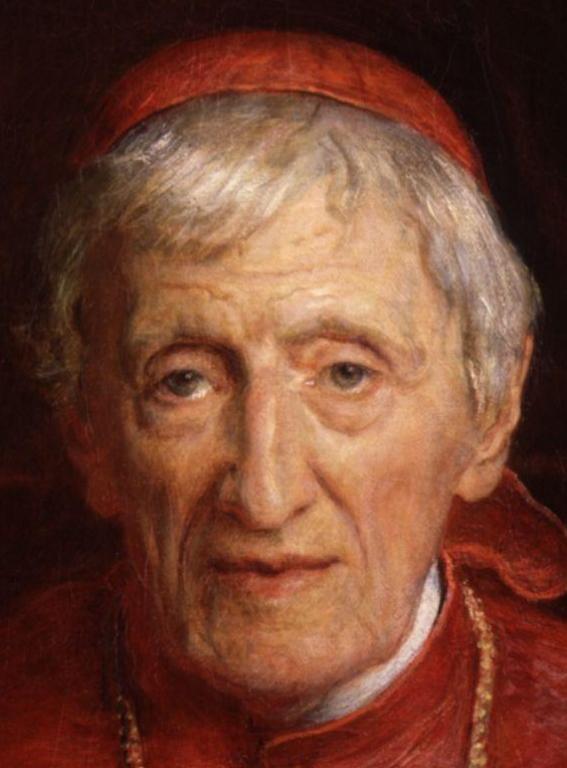
St. John Henry Cardinal Newman (1801-1890)
Newman, while still an Anglican, thirteen years before his conversion, preached a sermon at Oxford University, entitled, “The Reverence Due to the Virgin Mary” (March 25, 1832), which included these words:
Who can estimate the holiness and perfection of her, who was chosen to be the Mother of Christ? If to him that hath, more is given, and holiness and Divine favour go together (and this we are expressly told), what must have been the transcendent purity of her, whom the Creator Spirit condescended to overshadow with His miraculous presence? What must have been her gifts, who was chosen to be the only near earthly relative of the Son of God, the only one whom He was bound by nature to revere and look up to; the one appointed to train and educate Him, to instruct Him day by day, as He grew in wisdom and stature? This contemplation runs to a higher subject, did we dare follow it; for what, think you, was the sanctified state of that human nature, of which God formed His sinless Son; knowing as we do, `that which is born of the flesh is flesh’ (1 Jn 3:6), and that `none can bring a clean thing out of an unclean?’ (Job 14:4). (Parochial and Plain Sermons, San Francisco: Ignatius Press, 1987 [orig. 1843], p. 309)
Later, as a Catholic, St. John Henry Newman wrote, with characteristically brilliant, rhetorical prose, a piece intended as a counter-argument to a hypothetical Protestant objector to the Immaculate Conception:
Does not the objector consider that Eve was created, or born, without original sin? Why does not this shock him? Would he have been inclined to worship Eve in that first estate of hers? Why, then, Mary?
Does he not believe that St. John the Baptist had the grace of God – i.e., was regenerated, even before his birth? What do we believe of Mary, but that grace was given her at a still earlier period? All we say is, that grace was given her from the first moment of her existence.
We do not say that she did not owe her salvation to the death of her Son. Just the contrary, we say that she, of all mere children of Adam, is in the truest sense the fruit and purchase of His Passion. He has done for her more than for anyone else. To others He gives grace and regeneration at a point in their earthly existence; to her, from the very beginning.
We do not make her nature different from others . . . certainly she would have been a frail being, like Eve, without the grace of God . . . It was not her nature which secured her perseverance, but the excess of grace which hindered Nature acting as Nature ever will act. There is no difference in kind between her and us, though an inconceivable difference of degree. She and we are both simply saved by the grace of Christ.
Thus, sincerely speaking, I really do not see what the difficulty is . . . The above statement is no private statement of my own. I never heard of any Catholic who ever had any other view . . .
Consider what I have said. Is it, after all, certainly irrational? Is it certainly against Scripture? Is it certainly against the primitive Fathers? Is it certainly idolatrous? I cannot help smiling as I put the questions . . .
Many, many doctrines are far harder than the Immaculate Conception. The doctrine of Original Sin is indefinitely harder. Mary just has not this difficulty. It is no difficulty to believe that a soul is united to the flesh without original sin; the great mystery is that any, that millions on millions, are born with it. Our teaching about Mary has just one difficulty less than our teaching about the state of mankind generally. (Meditations and Devotions, Harrison, New York: Roman Catholic Books, n.d. [orig. 1893], “Memorandum on the Immaculate Conception,” 151-152, 155-156)
Bishop William Bernard Ullathorne (1806-1889)
It is the divine maternity of Mary which explains both her perfect excellence and her perfect holiness. It is the key to all her gifts and privileges. For the excellence of each creature is to be found in the degree in which it resembles its Creator . . .
Mary was made as like to Him [Christ], as being a mere creature, she could be made. For, having no earthly father, Our Lord bore the human likeness of His mother in all His features. Or rather, she bore His likeness. And as, for thirty years of His life, her mind was the law which directed His obedience, and her will the guide, which regulated His actions, her soul was the perfect reflection of His conduct. And as all created holiness is derived from Jesus, and from the degree of our union with Jesus, of which union His sacred and life-giving flesh is the great instrument; we may understand something of the perfect holiness of the Mother of God, from the perfection of her union with her Son. For He was formed by the Holy Ghost of her flesh. And His blood, that saving blood which redeemed the world, was taken from her heart. And whilst the Godhead dwelt bodily in Him, He, for nine months, dwelt bodily in her. And all that time . . . the stream which nourished the growth of life in Jesus flowed from the heart of Mary, and, at each pulsation, flowed back again, and re-entered His Mother’s heart, enriching her with His divinest spirit. How pregnant is that blood of His with sanctifying grace, one drop of which might have redeemed the world . . . Next to that union by which Jesus is God and man in one person, there is no union so intimate as that of a mother with her child. (The Immaculate Conception of the Mother of God, Westminster, Maryland: Christian Classics, 1988 [orig. 1855], 6-7)
Certainly, He who preserved the three children from being touched by the fire in the midst of which they walked uninjured, and who preserved the bush unconsumed in the midst of a burning flame, could preserve Mary untouched from the burning fuel of concupiscence. He who took up Elijah in the fiery chariot, so that he tasted not of death, could, in the chariot of His ardent love, set Mary on high above the law of sin . . . And He who held back the waves of that Jordan, that the ark of the Old Testament might pass untouched and honoured through its bed, could hold back the wave of Adam, lest it overflow the ark of the New Testament beneath its defiling floods. For that we are born in the crime of Adam and with original sin, is not the result of absolute necessity, but of the divine will. And if He who ordained this penalty, had already solved it in part, when ere His birth, He sanctified the holy Precursor of His Coming; much more could he solve it altogether when He sanctified His holy Mother.
For He, who could have limited Adam’s sin unto himself, can ward off that sin from Mary. And what He could, that He willed to do. For why should He not have willed it? (Ibid., 32-33)
James Cardinal Gibbons (1834-1921)
Whenever God designs any person for some important work, He bestows on that person the graces and dispositions necessary for faithfully discharging it . . .
The Prophet Jeremiah was sanctified from his very birth because he was destined to be the herald of God’s law to the children of Israel: `Before I formed thee in the bowels of thy mother I knew thee, and before thou camest forth out of the womb I sanctified thee.’ (Jer 1:5) . . .
John the Baptist was `filled with the Holy Ghost even from his mother’s womb.’ (Lk 1:15). `He was a burning and a shining light’ (Jn 5:35) because he was chosen to prepare the way of the Lord.
The Apostles received the plenitude of grace; they were endowed with the gift of tongues and other privileges (Acts 2) before they commenced the work of the ministry. Hence St. Paul says: `Our sufficiency is from God, who hath made us fit ministers of the New Testament.’ (2 Cor 3:5-6) [other translations have “able,” “competent,” “qualified,”] . . .
There is none who filled any position so exalted, so sacred, as is the incommunicable office of Mother of Jesus; and there is no one, consequently, that needed so high a degree of holiness as she did.
For, if God thus sanctified His Prophets and Apostles as being destined to be the bearers of the Word of life, how much more sanctified must Mary have been, who was to bear the Lord and `Author of life’ (Acts 3:5) . . . If God said to His Priests of old: `Be ye clean, you that carry the vessels of the Lord’ (Is 3:2); nay, if the vessels themselves used in the divine service and churches are set apart by special consecration, we cannot conceive Mary to have been ever profaned by sin, who was the chosen vessel of election, even the Mother of God. (The Faith of Our Fathers, New York: P. J. Kenedy & Sons, revised edition, 1917, 135-137)
Louis Bouyer (1913-2004)
The case of the Virgin Mary . . . is certainly the one which best reveals the Catholic idea of sanctity, [yet] to Protestants it appears the height of idolatry . . .
If there is any Catholic belief that shows how much the Church believes in the sovereignty of grace, in its most gratuitous form, it is this one. It is remarkable that the Orthodox controversialists, contrary to the Protestants, reproach Catholics for admitting, in this one case of Our Lady, something analogous to what strict Calvinists admit for all the elect — a grace that saves us absolutely independently of us, not only without any merit of our own, but without any possibility of our cooperation, . . . whereas the Protestant view seems, not merely against reason, but completely absurd. To say that Mary is holy, with a super-eminent holiness, in virtue of a divine intervention previous to the first instant of her existence, is to affirm in her case as absolutely as possible that salvation is a grace, and purely a grace, of God. (The Spirit and Forms of Protestantism, translated by A. V. Littledale, London: Harvill Press, 1956, p. 247)
This faith of Mary’s, whereby the free act of fallen man effectively reversed Eve’s choice of unbelief and revolt, presupposes, on the part of God, his total repossession of his creature. For God to give himself as he intended, for his Word to take flesh of Mary, it was necessary that, in Mary, he should take back his creature wholly to himself . . .
Though the Immaculate Conception was the most excellent of all the graces given before Christ, it would be mistaken to look on it as a grace perfect in itself, sufficient in itself . . . It is . . . only the pre-condition of Christian grace; for this begins with Mary’s `fiat’, with the acceptance and the accomplishment of the Incarnation . . .
The whole course of the Old Testament culminates in the Immaculate Virgin. In her the ultimate realities of the New are first foreshadowed . . .
The New and Eternal Testament starts from her . . . She proclaims, prefigures, and realises, in a wholly unique manner, all the sanctity to be attained ultimately by the Church, when it shall have reached its perfection. The Virgin `without spot or wrinkle’ (Eph 5:27), to be presented to Christ at the end of time is the Church; but Mary, at the beginning of the new epoch, is already this Virgin without stain. She is, thus, the promise already fulfilled, the pledge already actualised, of what all of us together are to become . . .
All this goes to show that there is no ground for the Protestant apprehension that the Church’s worship of our Lady is a form of idolatry, for we venerate in her simply the glory promised by God to every creature. In consequence, we are in no danger of ever attributing to her any of that glory which God has said that he will never give to another (Is 42:8, 48:11). (The Seat of Wisdom, translated by A. V. Littledale, Chicago: Henry Regnery Co., 1965 [orig. 1960], 119-120, 126, 128-129)
***
Related Reading:
Blessed Virgin Mary & God’s Special Presence in Scripture [1994; from first draft of A Biblical Defense of Catholicism]
*
“All Have Sinned” vs. a Sinless, Immaculate Mary? [1996; revised and posted at National Catholic Register on 12-11-17]
*
Assumption & Immaculate Conception: Part of Apostolic Tradition (vs. James White) [June 1996]
*
Martin Luther’s Mariology (Particularly the Immaculate Conception) [4-23-03; revised 4-7-08]
*
Luke 1:28 (“Full of Grace”) & Immaculate Conception [2004]
*
Was Mary’s Immaculate Conception Absolutely Necessary? [1-5-05; published at National Catholic Register on 12-8-17]
*
Church Fathers: Mary is Sinless [7-16-08]
*
Immaculate Conception and Assumption: Why Defined So Late? [2-1-09]
*
The Bible: Mary Was Without Sin [4-1-09]
*
Mary: Ark of the New Covenant (Biblical Evidences) [7-9-09]
*
Is Mary Impeccable (Incapable of Sinning)? [10-16-09]
*
Zwingli’s Belief in Mary’s Sinlessness [9-30-10]
*
Luther & the “Immaculate Purification” of Mary [10-2-10]
*
Mary’s Immaculate Conception: A Biblical Argument [2010]
*
Annunciation: Was Mary Already Sublimely Graced? [10-8-11]
*
Martin Luther’s “Immaculate Purification” View of Mary [National Catholic Register, 12-31-16]
*
“Armstrong vs. Geisler” #6: Sinless Mary [3-1-17]
Scripture, Through an Angel, Reveals That Mary Was Sinless [National Catholic Register, 4-30-17]
Armstrong vs. Collins & Walls #3: Necessity of Immaculate Mary? [10-18-17]
Armstrong vs. Collins & Walls #4: Mary “Not a Genuine Human Being”? [10-19-17]
Mary’s Immaculate Conception: Necessary or “Fitting”? [12-8-17]
Amazing Parallels Between Mary and the Ark of the Covenant [National Catholic Register, 2-13-18]
Biblical Support for Mary’s Immaculate Conception [National Catholic Register, 10-29-18]
*
Unfortunately, Money Trees Do Not Exist: If you have been aided in any way by my work, or think it is valuable and worthwhile, please strongly consider financially supporting it (even $10 / month — a mere 33 cents a day — would be very helpful). I have been a full-time Catholic apologist since Dec. 2001, and have been writing Christian apologetics since 1981 (see my Resume). My work has been proven (by God’s grace alone) to be fruitful, in terms of changing lives (see the tangible evidences from unsolicited “testimonies”). I have to pay my bills like all of you: and have a (homeschooling) wife and three children still at home to provide for, and a mortgage to pay.
*
My book royalties from three bestsellers in the field (published in 2003-2007) have been decreasing, as has my overall income, making it increasingly difficult to make ends meet. I provide over 2500 free articles here, for the purpose of your edification and education, and have written 50 books. It’ll literally be a struggle to survive financially until Dec. 2020, when both my wife and I will start receiving Social Security. If you cannot contribute, I ask for your prayers. Thanks! See my information on how to donate (including 100% tax-deductible donations). It’s very simple to contribute to my apostolate via PayPal, if a tax deduction is not needed (my “business name” there is called “Catholic Used Book Service,” from my old bookselling days 17 or so years ago, but send to my email: [email protected]). Another easy way to send and receive money (with a bank account or a mobile phone) is through Zelle. Again, just send to my e-mail address. May God abundantly bless you.
***
(compiled and edited in 1994)
Photo credit: Close-up from an 1881 portrait of St. John Henry Cardinal Newman (1801-1890) by Sir John Everett Millais (1829-1896) [public domain / Wikimedia Commons]

***
Previous Post
October 30, 2019
Great Catholic Mystics on the Blessed Virgin Mary
Next Post

October 31, 2019 Debate: Masturbation Okay in Moderation or Intrinsically Wrong?
Browse Our Archives
Select a Category & Last Things About Me Anti-Catholicism Atheism & Agnosticism Baptism and Sacramentalism Bible and Tradition Blessed Virgin Mary Books by Dave Armstrong C. S. Lewis Calvinism & General Protestantism Catholic Apologetics Catholic Apologists Catholic conversion Catholic converts Christmas Church (Ecclesiology) Church History Conversion and Converts Development of Doctrine Eastern Orthodoxy Ecumenism & Christian Unity Eucharist & Liturgy Fathers of the Church French Translations G. K. Chesterton Hell Hell & Satan Hell & Satan & Last Things Heresies & Comparative Religion Holistic Health Inquisition & Crusades & Scandals James White Jews & Judaism & Old Testament John Calvin John Henry Newman Liberal / Modernist Theology Life Issues Literary Resume Lutheranism Mariology Martin Luther Music Orthodoxy Papacy & Infallibility Personal Page Philosophy & Science Political & Ethical & Moral Issues Protestant Persecution & Intolerance Protestantism Purgatory Purgatory & Penance Romantic & Imaginative Theology Saints & Purgatory & Penance Salvation Salvation & Justification Satan & Last Things Sexuality and Gender Issues Spanish Translations Traditionalism vs. Radical Catholic Reactionaries Traducciones al español / tradução para português Trinitarianism & Christology Uncategorized Videos
Select a Month October 2026 September 2026 August 2026 July 2026 June 2026 May 2026 April 2026 March 2026 February 2026 January 2026 December 2025 November 2025 October 2025 September 2025 August 2025 July 2025 June 2025 May 2025 April 2025 March 2025 February 2025 January 2025 December 2024 November 2024 October 2024 September 2024 August 2024 July 2024 June 2024 May 2024 April 2024 March 2024 February 2024 January 2024 December 2023 November 2023 October 2023 September 2023 August 2023 July 2023 June 2023 May 2023 April 2023 March 2023 February 2023 January 2023 December 2022 November 2022 October 2022 September 2022 August 2022 July 2022 June 2022 May 2022 April 2022 March 2022 February 2022 January 2022 December 2021 November 2021 October 2021 September 2021 August 2021 July 2021 June 2021 May 2021 April 2021 March 2021 February 2021 January 2021 December 2020 November 2020 October 2020 September 2020 August 2020 July 2020 June 2020 May 2020 April 2020 March 2020 February 2020 January 2020 December 2019 November 2019 October 2019 September 2019 August 2019 July 2019 June 2019 May 2019 April 2019 March 2019 February 2019 January 2019 December 2018 November 2018 October 2018 September 2018 August 2018 July 2018 June 2018 May 2018 April 2018 March 2018 February 2018 January 2018 December 2017 November 2017 October 2017 September 2017 August 2017 July 2017 June 2017 May 2017 April 2017 March 2017 February 2017 January 2017 December 2016 November 2016 October 2016 September 2016 August 2016 July 2016 June 2016 May 2016 April 2016 March 2016 February 2016 January 2016 December 2015 November 2015 October 2015 September 2015 August 2015 July 2015 June 2015 May 2015 April 2015 March 2015 February 2015 January 2015 December 2014 November 2014 October 2014 September 2014 August 2014 July 2014 June 2014 April 2014 March 2014 February 2014 January 2014 December 2013 November 2013 October 2013 September 2013 August 2013 July 2013 June 2013 April 2013 March 2013 February 2013 January 2013 December 2012 November 2012 October 2012 September 2012 August 2012 July 2012 June 2012 May 2012 April 2012 March 2012 February 2012 January 2012 December 2011 November 2011 October 2011 September 2011 August 2011 July 2011 June 2011 April 2011 March 2011 February 2011 October 2010 September 2010 August 2010 July 2010 April 2010 March 2010 December 2009 October 2009 August 2009 July 2009 June 2009 May 2009 March 2009 February 2009 October 2008 September 2008 April 2008 March 2008 February 2008 January 2008 December 2007 November 2007 October 2007 May 2007 March 2007 February 2007 January 2007 November 2006 October 2006 September 2006 August 2006 July 2006 June 2006 May 2006 April 2006 March 2006 February 2006 October 2005 June 2005 April 2005 February 2005 July 2004 May 2004 April 2004
Follow Us!
TAKE THE
Religious Wisdom Quiz
What is the distinctive cup used in receiving communion in many traditions?
Select your answer to see how you score.
Plate Jug Bowl Chalice
Books by This Author Books by Dave Armstrong
Related posts from Biblical Evidence for Catholicism

Holy Ground: Why Mary Had NO Other Children...
Biblical Evidence for Catholicism
Protestant Confessions & "Ever-Virgin" Mary
Biblical Evidence for Catholicism

Mary Wife of Clopas (Jn 19:25): Mary's Sister-in-Law?
Biblical Evidence for Catholicism

Jesus Had Four Brothers? The Bible Sez No!
Biblical Evidence for Catholicism
TRENDING AT PATHEOS Catholic

Janie Learns the Way of the Cross: A...
Teaching children about Jesus' Passion can be challenging. Many parents and educators...

Looking For Good Catholic Writing - October 2026
He alone extends the heavens, and he walks upon the waves of...

In "Irreplaceable," our book on vocation and technology, Trevor Sutton and I...

I was strolling through the top floor of the brand new Parthenon...

What Does Gêvâh Mean For Kimberley Guifoyle &...
This week, a lot of the news is focused on Kimberly Guilfoyle....

INNER CIRCLE: Profound Mystery (Of Christ In All...
Ephesians 5:31-32 “For this reason, a man will leave his father and...
view all Catholic blogs
Ad-Free & Subscriber Log-In Subscription Support
- About Us
- 2026 Calendar
- Videos
- Podcasts
- Library of World Religions
- Faith In Media Tracker
- Advertise With Us
- Write for Us
- Privacy Policy
- Terms of Service
- Do Not Sell My Data
- Contact Us
- Radiant Digital
- Manage Newsletter Subscriptions
- Unsubscribe From Notifications
- Sitemap
Copyright 2008-2026, Patheos. All rights reserved.
Subscription Support Ad-Free & Subscriber Log-In
Follow Patheos