
BuddhistCatholicContemplativeEvangelicalGeneral ChristianHinduJewishLatter-day SaintMuslimNew VisionsProgressive Christian
Beliefs
- Buddhist
- Catholic
- Contemplative
- Evangelical
- General Christian
- Hindu
- Jewish
- Latter-day Saint
- More Voices
- Muslim
- New Visions
- Pagan
- Progressive Christian
Topics
- Religion News
- Food and Religion
- Sports and Religion
- Religious Art
- Religious Music and Entertainment
- Religious Events
- History and Religion
- Style and Religion
- Politics and Religion
- Women in Religion
- Recreation Outdoors and Religion
- Business Finance and Religion
- Careers Workplace and Religion
- Education and Religion
- Family Parenting and Religion
- Health Fitness and Religion
- Home and Religion
- Relationships and Religion
- Technology and Religion
- Travel and Religion
Columnists
- Buddhist Columnists
- Business Finance and Religion Columnists
- Careers Workplace and Religion Columnists
- Catholic Columnists
- Contemplative Columnists
- Education and Religion Columnists
- Evangelists Columnists
- Family Parenting and Religion Columnists
- General Christian Columnists
- Health Fitness and Religion Columnists
- Hindu Columnists
- History and Religion Columnists
- Home and Religion Columnists
- Jewish Columnists
- More Voices Columnists
- Latter Day Columnists
- Muslim Columnists
- New Visions Columnists
- Nonreligious Columnists
- Pagan Columnists
- Politics and Religion Columnists
- Progressive Columnists
- Recreation Outdoors and Religion Columnists
- Relationships and Religion Columnists
- Religion News Columnists
- Religious Art Columnists
- Religious Events Columnists
- Religious Music and Entertainment Columnists
- Sports and Religion Columnists
- Style and Religion Columnists
- Technology and Religion Columnists
- Travel and Religion Columnists
- Women in Religion Columnists
Resource Library
- 2026 Calendar
- Library of World Religions
- The 100 Most Holy Places on Earth
- Patheos Answers
- Podcasts
- Videos
- Faith Leaders Database
- Anglican Episcopalian
- Bahai
- Baptist
- Buddhism
- Christianity
- Confucianism
- Eastern Orthodoxy
- Hinduism
- Holiness and Pentecostal
- ISKCON
- Islam
- Judaism
- Lutheran
- Methodist
- The Church of Jesus Christ of Latter-day Saints
- New Age
- Paganism
- Presbytarian and Reformed
- Protestantism
- Religion Behind the Scenes
- Roman Catholic
- Scientology
- Shia Islam
- Sikhism
- Sufism
- Sunni Islam
- Taoism
- Zen
- See all religions
Research Tools
 Ad-Free & Subscriber Log-In Subscription Support
Ad-Free & Subscriber Log-In Subscription Support
Follow Patheos 

- Trending:
- Forgiveness
- |
- Marriage
- |
- Consciousness
- |
- Death Penalty
- |
- Election
- |
- Halloween

-
About
-
Catholic Apologetics
-
Church History
-
Great Apologists
-
Christian Worldview
-
Protestantism & Misc.
- Home
- Catholic
- History and Religion
- C. S. Lewis Believed in Purgatory & Prayer for the Dead
C. S. Lewis Believed in Purgatory & Prayer for the Dead
Last updated on: June 5, 2026 at 11:54 pm by Dave Armstrong
C. S. Lewis Believed in Purgatory & Prayer for the Dead 2026-06-05T23:54:56-04:00 Dave Armstrong
Patheos Explore the world's faith through different perspectives on religion and spirituality! Patheos has the views of the prevalent religions and spiritualities of the world.
In his fictional book, The Great Divorce (New York: Macmillan, 1946, 39), Lewis portrays the damned (including some near-damned, as it were) making a trip to the outskirts of heaven. One of the spirits is told: “You have been in Hell; though if you don’t go back you may call it Purgatory.” This theme was expanded later in the book (p. 67):
“If they leave that grey town behind it will not have been Hell. To any that leaves it, it is Purgatory. And perhaps ye had better not call this country Heaven. Not Deep Heaven, ye understand.” (Here he smiled at me). “Ye can call it the Valley of the Shadow of Life. And yet to those who stay here it will have been Heaven from the first. And ye can call those sad streets in the town yonder the Valley of the Shadow of Death: but to those who remain there they will have been Hell even from the beginning.”
Here is Lewis’ most explicit, extended treatment of the topic of purgatory, followed by an interesting short exposition from his famous semi-catechetical work, Mere Christianity:
Of course I pray for the dead. The action is so spontaneous, so all but inevitable, that only the most compulsive theological case against it would deter me. And I hardly know how the rest of my prayers would survive if those for the dead were forbidden. At our age the majority of those we love best are dead. What sort of intercourse with God could I have if what I love best were unmentionable to Him? . . .
I believe in purgatory. Mind you, the Reformers had good reasons for throwing doubt on “the Romish doctrine concerning Purgatory” as that Romish doctrine had then become. . . .
The right view returns magnificently in Newman’s Dream. [1] There, if I remember it rightly, the saved soul, at the very foot of the throne, begs to be taken away and cleansed. It cannot bear for a moment longer “With its darkness to affront that light.” Religion has reclaimed Purgatory.
Our souls demand Purgatory, don’t they? Would it not break the heart if God said to us, “It is true, my son, that your breath smells and your rags drip with mud and slime, but we are charitable here and no one will upbraid you with these things, nor draw away from you. Enter into the joy”? Should we not reply, “With submission, sir, and if there is no objection, I’d rather be cleaned first.” “It may hurt, you know” — “Even so, sir.”
I assume that the process of purification will normally involve suffering. Partly from tradition; partly because most real good that has been done me in this life has involved it. . . .
My favourite image on this matter comes from the dentist’s chair. I hope that when the tooth of life is drawn and I am “coming round,” a voice will say, “Rinse your mouth out with this.” This will be Purgatory. The rinsing may take longer than I can now imagine. The taste of this may be more fiery and astringent than my present sensibility could endure. (Letters to Malcolm: Chiefly on Prayer, New York: Harcourt Brace Jovanovich, 1964, 107-109)
“Make no mistake,” He says, “if you let me, I will make you perfect. The moment you put yourself in My hands, that is what you are in for. Nothing less, or other, than that. You have free will, and if you choose, you can push Me away. But if you do not push Me away, understand that I am going to see this job through. Whatever suffering it may cost you in your earthly life, whatever inconceivable purification it may cost you after death, whatever it costs Me, I will never rest, nor let you rest, until you are literally perfect — until My Father can say without reservation that He is well pleased with you, as He said He was well pleased with me. This I can do and will do. But I will not do anything less.” (Mere Christianity, New York: Macmillan, 1960, 172)
Lewis wrote about purgatory after the death of his wife, Joy:
How do I know that all her anguish is past? I never believed before — I thought it immensely improbable — that the faithfulest soul could leap straight into perfection and peace the moment death has rattled in the throat. It would be wishful thinking with a vengeance to take up that belief now . . . I know there are not only tears to be dried but stains to be scoured. . . .
But suppose that what you are up against is a surgeon whose intentions are wholly good. The kinder and more conscientious he is, the more inexorably he will go on cutting. If he yielded to your entreaties, if he stopped before the operation was complete, all the pain up to that point would have been useless. But is it credible that such extremities of torture should be necessary for us? Well, take your choice. The tortures occur. If they are unnecessary, then there is no God or a bad one. If there is a good God, then these tortures are necessary. For no even moderately good Being could possibly inflict or permit them if they weren’t.
Either way, we’re for it.
What do people mean when they say, “I am not afraid of God because I know He is good?” Have they never even been to a dentist? (A Grief Observed, New York: Bantam, 1976, 48-51)
In a letter to Sister Penelope, C.S.M.V., written on 17 September 1963, only nine weeks or so before his death, Lewis stated:
If you die first, and if “prison visiting” is allowed, come down and look me up in Purgatory. (W. H. Lewis, editor, Letters of C. S. Lewis, New York: Harcourt Brace Jovanovich, 1966 [revised and enlarged Harvest edition edited by Walter Hooper, 1993], 509)
The following excerpts are from: The Collected Letters of C. S. Lewis, Vol. II: Books, Broadcasts, and the War, 1931-1949, edited by Walter Hooper, HarperSanFrancisco, 2004:
Of course we should pray for the dead as I’m sure they do for us. (Letter to Mrs Percival Wiseman, 20 March 1944, p. 608)
[Y]ou, and she, will be in my prayers. (Letter to Arthur Greeves, 20 January 1949, p. 908; referring to his recently deceased mother)
I have never seen any more difficulty about praying for the dead than for the living, and it is quite clear that God wishes us to do that. (Letter to Rhona Bodle, 26 October 1949, p. 989)
More related comments are to be found in The Collected Letters of C. S. Lewis, Vol. III: Narnia, Cambridge, and Joy 1950-1963, edited by Walter Hooper, HarperSanFrancisco, 2007:
Purgatory: a process by which the work of redemption continues, and first perhaps begins to be noticeable after death. (Letter to Mrs Johnson, 8 November 1952, p. 245)
[S]urely there is one person you very much want to pray for: your husband himself. . . . it seems to me quite possible that you can now help more than while he was alive. . . . Your present prayers for your husband are still part of the married life. (Letter to Phyllis Elinor Sandeman, 22 December 1953, pp. 392-393)
The doctrine of purgation after death is one of many held by the Roman Church which I consider to be intrinsically probable but which, since it is not clearly stated in Scripture, nor included in the early creeds, I do not think they have any warrant for enforcing. (Letter to Mr Allcock, 24 March 1955, pp. 587-588)
[Dave: I beg to respectfully differ as to whether it is “clearly stated in Scripture”; see:
25 Bible Passages on Purgatory [1996]
A Biblical Argument for Purgatory (Matthew 5:25-26) [10-13-04]
Purgatory: Refutation of James White (1 Corinthians 3:10-15) [3-3-07]
Luther: Purgatory “Quite Plain” in 2 Maccabees [3-5-09]
50 Bible Passages on Purgatory & Analogous Processes [2009]
Raising of Tabitha: Proof of Purgatory (Tony Gerring) (see also in-depth Facebook discussion) [3-20-15]
50 Biblical Indications That Purgatory is Real [National Catholic Register, 10-24-16]
25 Descriptive and Clear Bible Passages About Purgatory [National Catholic Register, 5-7-17] ]
My wife died in July. I should be grateful if you would sometimes mention both her and me in your prayers. (Letter to Father Quinlan, 16 September 1960, p. 1185)
Thanks for your sympathy. I hope we both have your prayers (or don’t you pray for the dead?). (Letter to Alastair Fowler, 24 October 1960, p. 1201)
Thank you very much for your prayers for my wife. (Letter to Robin Anstey, 2 November 1960, p. 1206)
I know that you pour forth your prayers both for my dearly-longed-for wife and also for me . . . (Letter to Don Luigi Pedrollo, 8 April 1961, p. 1253)
Pray for us both. (Letter to Dom Bede Griffiths, 3 December 1961, p. 1300)
I’ve found the passage — 1 Cor. 15:20. Also 1 Pet 3:19-20, bears indirectly on the subject. It implies that something can be done for the dead. If so, why should we not pray for them? (Letter to Mary Van Deusen, 28 December 1961, p. 1307)
[actually the first passage Lewis refers to appears to be the following:
1 Corinthians 15:29 (RSV) Otherwise, what do people mean by being baptized on behalf of the dead? If the dead are not raised at all, why are people baptized on their behalf?
1 Peter 3:19-20 . . . he went and preached to the spirits in prison, [20] who formerly did not obey, when God’s patience waited in the days of Noah, during the building of the ark, in which a few, that is, eight persons, were saved through water. ]
* * * * *
[1] Here is the passage from St. John Henry Cardinal Newman’s poem The Dream of Gerontius (1865) that Lewis refers to (from “§ 4. Soul”):
Angel [partial stanza]
So is it now with thee, who hast not lost
Thy hand or foot, but all which made up man.
So will it be, until the joyous day
Of resurrection, when thou wilt regain
All thou hast lost, new-made and glorified.
How, even now, the consummated Saints
See God in heaven, I may not explicate;
Meanwhile, let it suffice thee to possess
Such means of converse as are granted thee,
Though, till that Beatific Vision, thou art blind;
For e’en thy purgatory, which comes like fire,
Is fire without its light.
Soul
His will be done!
I am not worthy e’er to see again
The face of day; far less His countenance,
Who is the very sun. Natheless in life,
When I looked forward to my purgatory,
It ever was my solace to believe,
That, ere I plunged amid the avenging flame,
I had one sight of Him to strengthen me.
Angel
Nor rash nor vain is that presentiment;
Yes,—for one moment thou shalt see thy Lord.
Thus will it be: what time thou art arraign’d
Before the dread tribunal, and thy lot
Is cast for ever, should it be to sit
On His right hand among His pure elect,
Then sight, or that which to the soul is sight,
As by a lightning-flash, will come to thee,
And thou shalt see, amid the dark profound,
Whom thy soul loveth, and would fain approach,—
One moment; but thou knowest not, my child,
What thou dost ask: that sight of the Most Fair
Will gladden thee, but it will pierce thee too.
Soul
Thou speakest darkly, Angel; and an awe
Falls on me, and a fear lest I be rash.
Angel
There was a mortal, who is now above
In the mid glory: he, when near to die,
Was given communion with the Crucified,—
Such, that the Master’s very wounds were stamp’d
Upon his flesh; and, from the agony
Which thrill’d through body and soul in that embrace,
Learn that the flame of the Everlasting Love
Doth burn ere it transform …
***
Related Reading:
C. S. Lewis’ Views on Christian Unity & Ecumenism [6-16-03]Contraception: Chesterton, C. S. Lewis, & Teddy Roosevelt [2-21-04]
C. S. Lewis’ Childhood in Belfast & Contra-Catholicism (Biographers and/or Friends Kreeft, Pearce, Derrick, and Possibly Tolkien Think This is Why Lewis Never Became a Catholic) [6-26-12]
Why Didn’t C. S. Lewis Become a Catholic? [8-29-14]
Dialogue on Why C. S. Lewis Didn’t “Pope” [9-1-15]
C. S. Lewis vs. St. Paul on Future Binding Church Authority [National Catholic Register, 1-22-17]
Why C. S. Lewis Never Became a Catholic [National Catholic Register, 3-5-17]
C. S. Lewis on Inevitable Development of Doctrine [2-17-19]
C. S. Lewis on Catholicism (Correspondence: 1934-1947) [9-13-19]
*
C. S. Lewis Practiced Confession to an Anglican Priest [10-7-19]
*
C. S. Lewis Believed in the Sacrament of Confirmation [10-10-19]
*
C. S. Lewis & the Invocation & Communion of Saints [10-10-19]
*
C. S. Lewis Believed in Vicarious, Redemptive Suffering [10-17-19]
*
Masturbation: C. S. Lewis Explains Why it is Wrong [10-28-19]
*
C. S. Lewis: Views on Procreation & Contraception [11-1-19]
*
***
Unfortunately, Money Trees Do Not Exist: If you have been aided in any way by my work, or think it is valuable and worthwhile, please strongly consider financially supporting it (even $10 / month — a mere 33 cents a day — would be very helpful). I have been a full-time Catholic apologist since Dec. 2001, and have been writing Christian apologetics since 1981 (see my Resume). My work has been proven (by God’s grace alone) to be fruitful, in terms of changing lives (see the tangible evidences from unsolicited “testimonies”). I have to pay my bills like all of you: and have a (homeschooling) wife and three children still at home to provide for, and a mortgage to pay.
My book royalties from three bestsellers in the field (published in 2003-2007) have been decreasing, as has my overall income, making it increasingly difficult to make ends meet. I provide over 2500 free articles here, for the purpose of your edification and education, and have written 50 books. It’ll literally be a struggle to survive financially until Dec. 2020, when both my wife and I will start receiving Social Security. If you cannot contribute, I ask for your prayers. Thanks! See my information on how to donate (including 100% tax-deductible donations). It’s very simple to contribute to my apostolate via PayPal, if a tax deduction is not needed (my “business name” there is called “Catholic Used Book Service,” from my old bookselling days 17 or so years ago). May God abundantly bless you.
***
(originally 6-22-10; many more selections and links to my own papers on purgatory were added on 10-8-19)
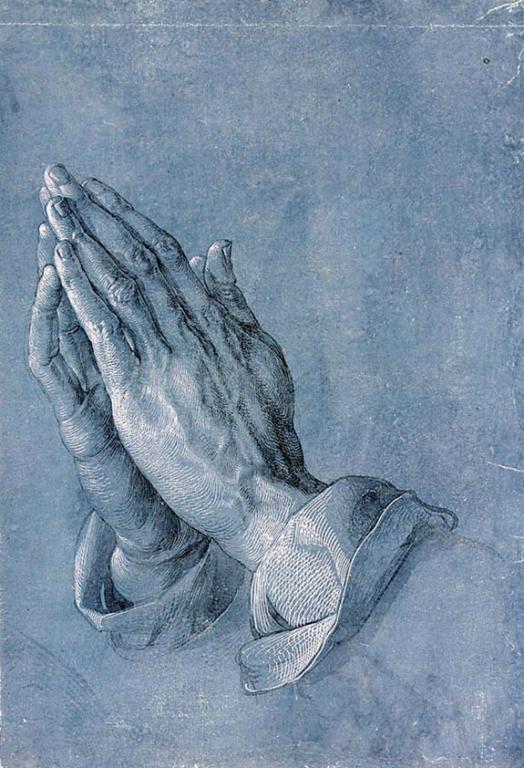
Photo credit: Praying Hands, by Albrecht Dürer (1508) [public domain / Wikimedia Commons]

***
C. S. Lewis & prayer for the dead
Previous Post

October 7, 2019
C. S. Lewis Practiced Confession to an Anglican Priest
Next Post

October 8, 2019 Is Sacred Tradition "Inspired"? No; Only Sacred Scripture Is
Browse Our Archives
Select a Category & Last Things About Me Anti-Catholicism Atheism & Agnosticism Baptism and Sacramentalism Bible and Tradition Blessed Virgin Mary Books by Dave Armstrong C. S. Lewis Calvinism & General Protestantism Catholic Apologetics Catholic Apologists Catholic conversion Catholic converts Christmas Church (Ecclesiology) Church History Conversion and Converts Development of Doctrine Eastern Orthodoxy Ecumenism & Christian Unity Eucharist & Liturgy Fathers of the Church French Translations G. K. Chesterton Hell Hell & Satan Hell & Satan & Last Things Heresies & Comparative Religion Holistic Health Inquisition & Crusades & Scandals James White Jews & Judaism & Old Testament John Calvin John Henry Newman Liberal / Modernist Theology Life Issues Literary Resume Lutheranism Mariology Martin Luther Music Orthodoxy Papacy & Infallibility Personal Page Philosophy & Science Political & Ethical & Moral Issues Protestant Persecution & Intolerance Protestantism Purgatory Purgatory & Penance Romantic & Imaginative Theology Saints & Purgatory & Penance Salvation Salvation & Justification Satan & Last Things Sexuality and Gender Issues Spanish Translations Traditionalism vs. Radical Catholic Reactionaries Traducciones al español / tradução para português Trinitarianism & Christology Uncategorized Videos
Select a Month October 2026 September 2026 August 2026 July 2026 June 2026 May 2026 April 2026 March 2026 February 2026 January 2026 December 2025 November 2025 October 2025 September 2025 August 2025 July 2025 June 2025 May 2025 April 2025 March 2025 February 2025 January 2025 December 2024 November 2024 October 2024 September 2024 August 2024 July 2024 June 2024 May 2024 April 2024 March 2024 February 2024 January 2024 December 2023 November 2023 October 2023 September 2023 August 2023 July 2023 June 2023 May 2023 April 2023 March 2023 February 2023 January 2023 December 2022 November 2022 October 2022 September 2022 August 2022 July 2022 June 2022 May 2022 April 2022 March 2022 February 2022 January 2022 December 2021 November 2021 October 2021 September 2021 August 2021 July 2021 June 2021 May 2021 April 2021 March 2021 February 2021 January 2021 December 2020 November 2020 October 2020 September 2020 August 2020 July 2020 June 2020 May 2020 April 2020 March 2020 February 2020 January 2020 December 2019 November 2019 October 2019 September 2019 August 2019 July 2019 June 2019 May 2019 April 2019 March 2019 February 2019 January 2019 December 2018 November 2018 October 2018 September 2018 August 2018 July 2018 June 2018 May 2018 April 2018 March 2018 February 2018 January 2018 December 2017 November 2017 October 2017 September 2017 August 2017 July 2017 June 2017 May 2017 April 2017 March 2017 February 2017 January 2017 December 2016 November 2016 October 2016 September 2016 August 2016 July 2016 June 2016 May 2016 April 2016 March 2016 February 2016 January 2016 December 2015 November 2015 October 2015 September 2015 August 2015 July 2015 June 2015 May 2015 April 2015 March 2015 February 2015 January 2015 December 2014 November 2014 October 2014 September 2014 August 2014 July 2014 June 2014 April 2014 March 2014 February 2014 January 2014 December 2013 November 2013 October 2013 September 2013 August 2013 July 2013 June 2013 April 2013 March 2013 February 2013 January 2013 December 2012 November 2012 October 2012 September 2012 August 2012 July 2012 June 2012 May 2012 April 2012 March 2012 February 2012 January 2012 December 2011 November 2011 October 2011 September 2011 August 2011 July 2011 June 2011 April 2011 March 2011 February 2011 October 2010 September 2010 August 2010 July 2010 April 2010 March 2010 December 2009 October 2009 August 2009 July 2009 June 2009 May 2009 March 2009 February 2009 October 2008 September 2008 April 2008 March 2008 February 2008 January 2008 December 2007 November 2007 October 2007 May 2007 March 2007 February 2007 January 2007 November 2006 October 2006 September 2006 August 2006 July 2006 June 2006 May 2006 April 2006 March 2006 February 2006 October 2005 June 2005 April 2005 February 2005 July 2004 May 2004 April 2004
Follow Us!
TAKE THE
Religious Wisdom Quiz
What does the Bible say about greed?
Select your answer to see how you score.
It leads to ruin It is always wise It is best It helps you win
Books by This Author Books by Dave Armstrong
Related posts from Biblical Evidence for Catholicism

Bible & Catholicism on Mortal Sin (vs. John...
Biblical Evidence for Catholicism

Does Catholic Intercession of Saints Require Omniscience?
Biblical Evidence for Catholicism

Eternal Hell: Biblical? 25 Verses Say So
Biblical Evidence for Catholicism

Capabilities of Heavenly Saints: Protestant Commentaries
Biblical Evidence for Catholicism
TRENDING AT PATHEOS Catholic

Janie Learns the Way of the Cross: A...
Teaching children about Jesus' Passion can be challenging. Many parents and educators...

Looking For Good Catholic Writing - October 2026
He alone extends the heavens, and he walks upon the waves of...

In "Irreplaceable," our book on vocation and technology, Trevor Sutton and I...

I was strolling through the top floor of the brand new Parthenon...

What Does Gêvâh Mean For Kimberley Guifoyle &...
This week, a lot of the news is focused on Kimberly Guilfoyle....

INNER CIRCLE: Profound Mystery (Of Christ In All...
Ephesians 5:31-32 “For this reason, a man will leave his father and...
view all Catholic blogs
Ad-Free & Subscriber Log-In Subscription Support
- About Us
- 2026 Calendar
- Videos
- Podcasts
- Library of World Religions
- Faith In Media Tracker
- Advertise With Us
- Write for Us
- Privacy Policy
- Terms of Service
- Do Not Sell My Data
- Contact Us
- Radiant Digital
- Manage Newsletter Subscriptions
- Unsubscribe From Notifications
- Sitemap
Copyright 2008-2026, Patheos. All rights reserved.
Subscription Support Ad-Free & Subscriber Log-In
Follow Patheos