
BuddhistCatholicContemplativeEvangelicalGeneral ChristianHinduJewishLatter-day SaintMuslimNew VisionsProgressive Christian
Beliefs
- Buddhist
- Catholic
- Contemplative
- Evangelical
- General Christian
- Hindu
- Jewish
- Latter-day Saint
- More Voices
- Muslim
- New Visions
- Pagan
- Progressive Christian
Topics
- Religion News
- Food and Religion
- Sports and Religion
- Religious Art
- Religious Music and Entertainment
- Religious Events
- History and Religion
- Style and Religion
- Politics and Religion
- Women in Religion
- Recreation Outdoors and Religion
- Business Finance and Religion
- Careers Workplace and Religion
- Education and Religion
- Family Parenting and Religion
- Health Fitness and Religion
- Home and Religion
- Relationships and Religion
- Technology and Religion
- Travel and Religion
Columnists
- Buddhist Columnists
- Business Finance and Religion Columnists
- Careers Workplace and Religion Columnists
- Catholic Columnists
- Contemplative Columnists
- Education and Religion Columnists
- Evangelists Columnists
- Family Parenting and Religion Columnists
- General Christian Columnists
- Health Fitness and Religion Columnists
- Hindu Columnists
- History and Religion Columnists
- Home and Religion Columnists
- Jewish Columnists
- More Voices Columnists
- Latter Day Columnists
- Muslim Columnists
- New Visions Columnists
- Nonreligious Columnists
- Pagan Columnists
- Politics and Religion Columnists
- Progressive Columnists
- Recreation Outdoors and Religion Columnists
- Relationships and Religion Columnists
- Religion News Columnists
- Religious Art Columnists
- Religious Events Columnists
- Religious Music and Entertainment Columnists
- Sports and Religion Columnists
- Style and Religion Columnists
- Technology and Religion Columnists
- Travel and Religion Columnists
- Women in Religion Columnists
Resource Library
- 2026 Calendar
- Library of World Religions
- The 100 Most Holy Places on Earth
- Patheos Answers
- Podcasts
- Videos
- Faith Leaders Database
- Anglican Episcopalian
- Bahai
- Baptist
- Buddhism
- Christianity
- Confucianism
- Eastern Orthodoxy
- Hinduism
- Holiness and Pentecostal
- ISKCON
- Islam
- Judaism
- Lutheran
- Methodist
- The Church of Jesus Christ of Latter-day Saints
- New Age
- Paganism
- Presbytarian and Reformed
- Protestantism
- Religion Behind the Scenes
- Roman Catholic
- Scientology
- Shia Islam
- Sikhism
- Sufism
- Sunni Islam
- Taoism
- Zen
- See all religions
Research Tools
 Ad-Free & Subscriber Log-In Subscription Support
Ad-Free & Subscriber Log-In Subscription Support
Follow Patheos 

- Trending:
- Forgiveness
- |
- Marriage
- |
- Consciousness
- |
- Death Penalty
- |
- Election
- |
- Halloween

-
About
-
Catholic Apologetics
-
Church History
-
Great Apologists
-
Christian Worldview
-
Protestantism & Misc.
- Home
- Catholic
- History and Religion
- C. S. Lewis: A Life of Extraordinary Charity & Selflessness
C. S. Lewis: A Life of Extraordinary Charity & Selflessness
Last updated on: June 5, 2026 at 11:55 pm by Dave Armstrong
C. S. Lewis: A Life of Extraordinary Charity & Selflessness 2026-06-05T23:55:15-04:00 Dave Armstrong
Patheos Explore the world's faith through different perspectives on religion and spirituality! Patheos has the views of the prevalent religions and spiritualities of the world.
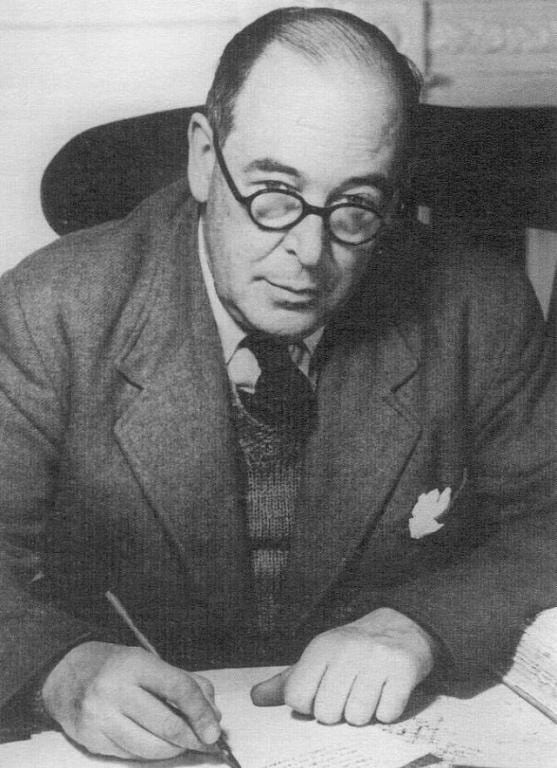
I’ve been reading through the two volumes of Collected Letters of C. S. Lewis (running from 1931-1963) — edited by Walter Hooper –: some 2500 pages worth of endless treasures and insights. One thing I’ve learned about Lewis is that he exhibited very strong signs of exceptional sanctity.
It may not be how we usually think of the apologetics and fantasy writer titan, but it is a delightful thing to behold. I shall examine five different ways that C. S. Lewis showed forth the love of Christ and profound signs of a life of deeply committed discipleship. Here is the bibliographical information:
The Collected Letters of C. S. Lewis, Vol. II: Books, Broadcasts, and the War, 1931-1949, edited by Walter Hooper, HarperSanFrancisco, 2004.
The Collected Letters of C. S. Lewis, Vol. III: Narnia, Cambridge, and Joy 1950-1963, edited by Walter Hooper, HarperSanFrancisco, 2007.
1) Humility I’ll start with Lewis’ self-effacing descriptions of himself and his fame:
I am going to be (if I live long enough) one of those men who was a famous writer in his forties and dies unknown . . . (12-20-51: Vol. 3, 150)
I don’t wonder that you got fogged in Pilgrim’s Regress [published in 1933]. It was my first religious book and I didn’t then know how to make things easy. . . . in those days I never dreamed I would become a ‘popular’ author and hoped for no readers outside a small ‘highbrow’ circle. (1-19-53: Vol. 3, 282-283)
As to the reward for printed work (apart from money) one’s first good reviews are very sweet — perhaps dangerously so — and fame has one really solid good about it in so far as it makes some strangers approach you with a friendliness they would not have felt otherwise. . . . The rest is all in the order of those things which it is painful to miss but not really nice to get. (7-16-53: Vol. 3, 346)
2) Endless Letter-Writing Lewis notes very often in his writing about how many letters he had to answer, and how his writing hand literally ached from rheumatism (which began as early as his 30s): so much so that he also often mentions how his writing is barely legible as a result. His usual habit was to correspond for two to three hours in the morning hours before his work as an Oxford don began.
The letters he received greatly increased as a result of his broadcast talks and his ever-more popular works of lay apologetics and fantasy fiction. Of course this was for no pay, and it was a considerable sacrifice of his time and effort. Why did he do it? Well, he explains why:
You may put out of your head any idea of ‘not having a claim’ on any help I can give. Every human being, still more every Christian, has an absolute claim on me for any service I can render them without neglecting other duties. (4-30-41: Vol. 2, 482)
[A]s the aftermath of those Broadcast Talks I gave early last summer [these later became part of the book Mere Christianity] I had an enormous pile of letters from strangers to answer. . . . many from serious inquirers whom it was a duty to answer fully. So letter writing has loomed pretty large! (12-23-41: Vol. 2, 504)
Can’t write more as I have um-teen letters to get through before I settle down to scholarship papers. (April 1942: Vol. 2, 518)
I’ve been having great luck with my books lately . . . but the catch is it increases the amount of letters one has to write almost beyond endurance. (January 1943: Vol. 2, 549)
3) Charitable Giving Editor and Lewis friend Walter Hooper referred to Lewis’ extraordinary generosity (vol. 2, 483, italics reversed from the original):
Lewis . . . would not accept the money [for the original installments of Screwtape Letters in The Guardian], Instead, he sent the editor of The Guardian a list of widows and orphans to whom the [money] was to be paid. He did the same with the fees the BBC paid for the ‘Mere Christianity’ broadcasts, and those The Guardian paid for the weekly instalments of The Great Divorce in 1944-5. . . . from then until his marriage in 1957 Lewis made anonymous gifts of two-thirds of his income.
4) Mrs. Moore Alice von Hildebrand, in a wonderfully informative article about this aspect of C. S. Lewis’ life, noted:
“Jack,” as Lewis was known to his family, enlisted during the First World War while still a teenager. While undergoing training, he befriended a young man named Paddy Moore, who had a divorced mother and younger sister, Maureen, back at home. The young men promised each other that if one of them were to be killed in combat, the other would look after his friend’s parent. (Jack’s father was a widower.)
Paddy was killed in the war, and Mrs. Janie Moore and her daughter Maureen shortly after started to live with Lewis. Maureen eventually married, but Mrs. Moore — increasingly invalid in her later years –, continued to live with him until shortly before her death in 1951. In his letters he constantly referred to her as his “mother” (not even using the quotation marks) and made reference to harrowing “domestic” problems that were a constant source of anxiety and misery.
She had been placed in a nursing home for some months before her death, which was another financial burden that Lewis bore; and he visited her for an hour each day there until she died.
Mrs. Moore was (far as I can tell) a lifelong atheist and notoriously cranky in temperament and difficult to get along with. Lewis’ older brother Warnie, who also lived with him most of the time (minus periods of military obligations) was quite disgusted with Mrs. Moore: whom he once referred to as “that horrid woman”. C. S. Lewis was nevertheless charitable in referring to her in his letters. Only after she died did he share some of what he willingly endured, out of obligation to his old war buddy:
I have lived most of it [his private life] . . . in a house which was hardly ever at peace for 24 hours, amidst senseless wranglings, lyings, backbitings, follies, and scares. I never went home without a feeling of terror as to what appalling situation might have developed in my absence. Only now that it is over (tho’ a different trouble has taken its place) [Warnie’s problem drinking] do I begin to realize quite how bad it was. (4-18-51: Vol. 3, 108)
She was an unbeliever and, in later years, very jealous, exacting, and irascible, but always tender to the poor and to animals. (1-10-52: Vol. 3, 158)
5) Oxford, Cambridge, & Lewis’ Domestic Life Lewis had been offered a prestigious professorship at Cambridge University in 1954: a new chair essentially created with him in mind (Professor of Medieval and Renaissance English). This had never happened to him at Oxford, where he was a mere don, whose daily tasks consisted of innumerable tutoring of students, occasional lectures, and hours upon hours of correcting and grading papers.
He did this for 29 years; at the same time under a cloud of jealousy and anti-Christian, elitist suspicion from many of his peers: due to his popularity as a lay Christian apologist. Lewis described his own Magdalen College at Oxford as “leftist, atheist, cynical, hard-boiled” (11-1-54: Vol. 3, 521), while he regarded Cambridge as “much more congenial socially & spiritually” (12-4-54: Vol. 3, 539). He felt that:
The Christian Faith, as I think, counts for more among Cambridge men than among us; Communists are rarer and those plaguey philosophers whom we call Logical Positivists are not so powerful. (12-5-54: Vol. 3, 540)
[Cambridge is] Much more old-fashioned and less hard-boiled . . . (12-10-54: Vol. 3, 541)
His good friend J. R. R. Tolkien was determined to use his considerable influence for Lewis’ benefit at Cambridge and noted in a letter dated 5-18-54 that “Oxford has not, I think, treated him very well” but that, nevertheless, Lewis was “incapable of ‘dudgeon’, or of showing resentment” (Vol. 3, 475). Lewis — in a letter the following year — verified Tolkien’s assessment of his constitutional inability to become bitter, even in the face of real injustices:
I’m sorry about your two jealous colleagues. I suppose the only way with thorns in the flesh (until one can get them out) is not to press on the place where they are embedded: i.e. to stop one’s thoughts ( . . . read St. Francois de Sales’ chapter on Meekness towards oneself) whenever one finds them moving towards unpleasant people. (6-21-55: Vol. 3, 622)
Despite all these factors (not to mention a raise in salary to three times as much as he was making, for considerably less work and a lot more well-deserved academic recognition), Lewis initially turned down the offer, for the following reason:
Domestic necessities govern all our lives at present, and by moving I should lose an invaluable servant [Fred Paxford, his gardener and handyman]. (5-12-54: Vol. 3, 470)
In light of how unselfish and generous Lewis was, as seen above, I think it is reasonable to assume that his primary concern was his gardener losing his job, and that that is why he initially turned down this chance of a lifetime. But his brother Warnie was in Lewis’ thoughts and rationale as well:
The more I look at it the less possible it seems to transport the peculiar domestic set-up of my brother, our man, and myself. There is a whole network of conveniences and life-lines slowly built up here (my brother, in your ear, is not always in perfect psychological health) which I really dare not abandon. (5-15-54: Vol. 3, 474)
It was Tolkien who convinced Lewis two days later to take the job, with the understanding that he could continue to live in his house on weekends and holidays (weekly commuting back to Oxford). Tolkien wrote:
It was as I thought: the chief obstacle is domestic. He has a house and some dependants — including his brother. He will not contemplate closing that establishment. (5-18-54: Vol. 3, 475)
Once Cambridge gave him three rooms to live in during the school week, and allowed him to commute to Oxford, Lewis’ objections vanished. But he would not have accepted had it involved hardship for his brother and servant. Lewis wrote afterwards:
As long as my normal housekeeping can be at Oxford, and that the life-lines I told you of are intact, and it is a question of rooms in Cambridge . . . I could manage well. I can both work and sleep in trains . . . (5-19-54: Vol. 3, 476)
***
This is C. S. Lewis, the profoundly moving disciple of Christ, and model for all of us in how to conduct our daily lives: placing the needs of others above our own. From the biblical (i.e., God’s) perspective, the wise man will inevitably also be a righteous man. There is no disconnect or dissociation. Lewis was both exceedingly wise and holy, by the historic Christian standard. It thrills and gratifies me to no end, both to learn of this (in glorious detail) and to share it with my own readers.
***
Unfortunately, Money Trees Do Not Exist: If you have been aided in any way by my work, or think it is valuable and worthwhile, please strongly consider financially supporting it (even $10 / month — a mere 33 cents a day — would be very helpful). I have been a full-time Catholic apologist since Dec. 2001, and have been writing Christian apologetics since 1981 (see my Resume). My work has been proven (by God’s grace alone) to be fruitful, in terms of changing lives (see the tangible evidences from unsolicited “testimonies”). I have to pay my bills like all of you: and have a (homeschooling) wife and three children still at home to provide for, and a mortgage to pay.
*
My book royalties from three bestsellers in the field (published in 2003-2007) have been decreasing, as has my overall income, making it increasingly difficult to make ends meet. I provide over 2500 free articles here, for the purpose of your edification and education, and have written 50 books. It’ll literally be a struggle to survive financially until Dec. 2020, when both my wife and I will start receiving Social Security. If you cannot contribute, I ask for your prayers. Thanks! See my information on how to donate (including 100% tax-deductible donations). It’s very simple to contribute to my apostolate via PayPal, if a tax deduction is not needed (my “business name” there is called “Catholic Used Book Service,” from my old bookselling days 17 or so years ago, but send to my email: [email protected]). May God abundantly bless you.
***
Photo credit: [Flickr / public domain]
***
Previous Post

October 18, 2019
Oral Tradition According to Great Historic Apologists
Next Post

October 21, 2019 Biblical "Truth" (vs. "Primary & Secondary" Doctrines)
Browse Our Archives
Select a Category & Last Things About Me Anti-Catholicism Atheism & Agnosticism Baptism and Sacramentalism Bible and Tradition Blessed Virgin Mary Books by Dave Armstrong C. S. Lewis Calvinism & General Protestantism Catholic Apologetics Catholic Apologists Catholic conversion Catholic converts Christmas Church (Ecclesiology) Church History Conversion and Converts Development of Doctrine Eastern Orthodoxy Ecumenism & Christian Unity Eucharist & Liturgy Fathers of the Church French Translations G. K. Chesterton Hell Hell & Satan Hell & Satan & Last Things Heresies & Comparative Religion Holistic Health Inquisition & Crusades & Scandals James White Jews & Judaism & Old Testament John Calvin John Henry Newman Liberal / Modernist Theology Life Issues Literary Resume Lutheranism Mariology Martin Luther Music Orthodoxy Papacy & Infallibility Personal Page Philosophy & Science Political & Ethical & Moral Issues Protestant Persecution & Intolerance Protestantism Purgatory Purgatory & Penance Romantic & Imaginative Theology Saints & Purgatory & Penance Salvation Salvation & Justification Satan & Last Things Sexuality and Gender Issues Spanish Translations Traditionalism vs. Radical Catholic Reactionaries Traducciones al español / tradução para português Trinitarianism & Christology Uncategorized Videos
Select a Month October 2026 September 2026 August 2026 July 2026 June 2026 May 2026 April 2026 March 2026 February 2026 January 2026 December 2025 November 2025 October 2025 September 2025 August 2025 July 2025 June 2025 May 2025 April 2025 March 2025 February 2025 January 2025 December 2024 November 2024 October 2024 September 2024 August 2024 July 2024 June 2024 May 2024 April 2024 March 2024 February 2024 January 2024 December 2023 November 2023 October 2023 September 2023 August 2023 July 2023 June 2023 May 2023 April 2023 March 2023 February 2023 January 2023 December 2022 November 2022 October 2022 September 2022 August 2022 July 2022 June 2022 May 2022 April 2022 March 2022 February 2022 January 2022 December 2021 November 2021 October 2021 September 2021 August 2021 July 2021 June 2021 May 2021 April 2021 March 2021 February 2021 January 2021 December 2020 November 2020 October 2020 September 2020 August 2020 July 2020 June 2020 May 2020 April 2020 March 2020 February 2020 January 2020 December 2019 November 2019 October 2019 September 2019 August 2019 July 2019 June 2019 May 2019 April 2019 March 2019 February 2019 January 2019 December 2018 November 2018 October 2018 September 2018 August 2018 July 2018 June 2018 May 2018 April 2018 March 2018 February 2018 January 2018 December 2017 November 2017 October 2017 September 2017 August 2017 July 2017 June 2017 May 2017 April 2017 March 2017 February 2017 January 2017 December 2016 November 2016 October 2016 September 2016 August 2016 July 2016 June 2016 May 2016 April 2016 March 2016 February 2016 January 2016 December 2015 November 2015 October 2015 September 2015 August 2015 July 2015 June 2015 May 2015 April 2015 March 2015 February 2015 January 2015 December 2014 November 2014 October 2014 September 2014 August 2014 July 2014 June 2014 April 2014 March 2014 February 2014 January 2014 December 2013 November 2013 October 2013 September 2013 August 2013 July 2013 June 2013 April 2013 March 2013 February 2013 January 2013 December 2012 November 2012 October 2012 September 2012 August 2012 July 2012 June 2012 May 2012 April 2012 March 2012 February 2012 January 2012 December 2011 November 2011 October 2011 September 2011 August 2011 July 2011 June 2011 April 2011 March 2011 February 2011 October 2010 September 2010 August 2010 July 2010 April 2010 March 2010 December 2009 October 2009 August 2009 July 2009 June 2009 May 2009 March 2009 February 2009 October 2008 September 2008 April 2008 March 2008 February 2008 January 2008 December 2007 November 2007 October 2007 May 2007 March 2007 February 2007 January 2007 November 2006 October 2006 September 2006 August 2006 July 2006 June 2006 May 2006 April 2006 March 2006 February 2006 October 2005 June 2005 April 2005 February 2005 July 2004 May 2004 April 2004
Follow Us!
TAKE THE
Religious Wisdom Quiz
Who asked Jesus, "What is truth?"
Select your answer to see how you score.
Caiaphas Pilate Nicodemus Herod
Books by This Author Books by Dave Armstrong
Related posts from Biblical Evidence for Catholicism

Bible & Catholicism on Mortal Sin (vs. John...
Biblical Evidence for Catholicism

Dialogue on Eternal Security / Absolute Assurance
Biblical Evidence for Catholicism

"Faith Alone" Dialogue with a Calvinist
Biblical Evidence for Catholicism

Exegesis of 75 NT Faith [Alone?] & Works...
Biblical Evidence for Catholicism
TRENDING AT PATHEOS Catholic

I was strolling through the top floor of the brand new Parthenon...

What Does Gêvâh Mean For Kimberley Guifoyle &...
This week, a lot of the news is focused on Kimberly Guilfoyle....

INNER CIRCLE: Profound Mystery (Of Christ In All...
Ephesians 5:31-32 “For this reason, a man will leave his father and...

Do Not Rejoice When Your Enemy Falls: The...
Turning an execution into a public spectacle is a disturbing expression of...

'The Chosen' S6 Trailer: The Passion Gets Very...
Not many watching 'The Chosen' worry about spoilers, but just because they...

The purpose-driven labor priest
A labor activist reads Rick Warren and it gets me wondering about...
view all Catholic blogs
Ad-Free & Subscriber Log-In Subscription Support
- About Us
- 2026 Calendar
- Videos
- Podcasts
- Library of World Religions
- Faith In Media Tracker
- Advertise With Us
- Write for Us
- Privacy Policy
- Terms of Service
- Do Not Sell My Data
- Contact Us
- Radiant Digital
- Manage Newsletter Subscriptions
- Unsubscribe From Notifications
- Sitemap
Copyright 2008-2026, Patheos. All rights reserved.
Subscription Support Ad-Free & Subscriber Log-In
Follow Patheos