
BuddhistCatholicContemplativeEvangelicalGeneral ChristianHinduJewishLatter-day SaintMuslimNew VisionsProgressive Christian
Beliefs
- Buddhist
- Catholic
- Contemplative
- Evangelical
- General Christian
- Hindu
- Jewish
- Latter-day Saint
- More Voices
- Muslim
- New Visions
- Pagan
- Progressive Christian
Topics
- Religion News
- Food and Religion
- Sports and Religion
- Religious Art
- Religious Music and Entertainment
- Religious Events
- History and Religion
- Style and Religion
- Politics and Religion
- Women in Religion
- Recreation Outdoors and Religion
- Business Finance and Religion
- Careers Workplace and Religion
- Education and Religion
- Family Parenting and Religion
- Health Fitness and Religion
- Home and Religion
- Relationships and Religion
- Technology and Religion
- Travel and Religion
Columnists
- Buddhist Columnists
- Business Finance and Religion Columnists
- Careers Workplace and Religion Columnists
- Catholic Columnists
- Contemplative Columnists
- Education and Religion Columnists
- Evangelists Columnists
- Family Parenting and Religion Columnists
- General Christian Columnists
- Health Fitness and Religion Columnists
- Hindu Columnists
- History and Religion Columnists
- Home and Religion Columnists
- Jewish Columnists
- More Voices Columnists
- Latter Day Columnists
- Muslim Columnists
- New Visions Columnists
- Nonreligious Columnists
- Pagan Columnists
- Politics and Religion Columnists
- Progressive Columnists
- Recreation Outdoors and Religion Columnists
- Relationships and Religion Columnists
- Religion News Columnists
- Religious Art Columnists
- Religious Events Columnists
- Religious Music and Entertainment Columnists
- Sports and Religion Columnists
- Style and Religion Columnists
- Technology and Religion Columnists
- Travel and Religion Columnists
- Women in Religion Columnists
Resource Library
- 2026 Calendar
- Library of World Religions
- The 100 Most Holy Places on Earth
- Patheos Answers
- Podcasts
- Videos
- Faith Leaders Database
- Anglican Episcopalian
- Bahai
- Baptist
- Buddhism
- Christianity
- Confucianism
- Eastern Orthodoxy
- Hinduism
- Holiness and Pentecostal
- ISKCON
- Islam
- Judaism
- Lutheran
- Methodist
- The Church of Jesus Christ of Latter-day Saints
- New Age
- Paganism
- Presbytarian and Reformed
- Protestantism
- Religion Behind the Scenes
- Roman Catholic
- Scientology
- Shia Islam
- Sikhism
- Sufism
- Sunni Islam
- Taoism
- Zen
- See all religions
Research Tools
 Ad-Free & Subscriber Log-In Subscription Support
Ad-Free & Subscriber Log-In Subscription Support
Follow Patheos 

- Trending:
- Forgiveness
- |
- Marriage
- |
- Consciousness
- |
- Death Penalty
- |
- Election
- |
- Halloween

-
About
-
Catholic Apologetics
-
Church History
-
Great Apologists
-
Christian Worldview
-
Protestantism & Misc.
- Home
- Catholic
- History and Religion
- Loftus Atheist Error #7: Christian Influence on Science
Loftus Atheist Error #7: Christian Influence on Science
Last updated on: June 6, 2026 at 12:40 am by Dave Armstrong
Loftus Atheist Error #7: Christian Influence on Science 2026-06-06T00:40:11-04:00 Dave Armstrong
Patheos Explore the world's faith through different perspectives on religion and spirituality! Patheos has the views of the prevalent religions and spiritualities of the world.
I continue my critiques of Why I Became an Atheist, by John W. Loftus.
I first ran across former Christian minister Loftus back in 2006. We dialogued about the problem of evil, and whether God was in time. During that period I also replied to an online version of his deconversion: which (like my arguments about God and time) he didn’t care for at all. I’ve critiqued many atheist deconversion stories, and maintain a very extensive web page about atheism. In 2007 I critiqued his “Outsider Test of Faith” series: to which he gave no response. Loftus’ biggest objection to my critique of his descent into atheism was that I responded to what he called a “brief testimony.” He wrote in December 2006 (his words in blue henceforth):
Deconversion stories are piecemeal. They cannot give a full explanation for why someone left the faith. They only give hints at why they left the faith. It requires writing a whole book about why someone left the faith to understand why they did, and few people do that. I did. If you truly want to critique my deconversion story then critique my book. . . . I challenge you to really critique the one deconversion story that has been published in a book. . . . Do you accept my challenge?
I declined at that time, mainly (but not solely) for the following stated reason:
If you send me your book in an e-file for free, I’d be more than happy to critique it. I won’t buy it, and I refuse to type long portions of it when it is possible to cut-and-paste. That is an important factor since my methodology is Socratic and point-by-point. . . . You railed against that, saying that it was a “handout.” I responded that you could have any of my (14 completed) books in e-book form for free.
Throughout August 2019, I critiqued Dr. David Madison, a prominent contributor to Loftus’ website, Debunking Christianity, no less than 35 times. As of this writing, they remain completely unanswered. I was simply providing (as a courtesy) links to my critiques underneath each article of Dr. Madison’s, till Loftus decided I couldn’t do that (after having claimed that I “hate” atheists and indeed, everyone I disagree with). I replied at length regarding his censorship on his website. Loftus’ explanation for the complete non-reply to my 35 critiques was this: “We know we can respond. It’s just that we don’t have the time to do so. Plus, it’s pretty clear our time would be better spent doing something else than wrestling in the mud with you.” Meanwhile, I discovered that Dr. Madison wrote glowingly about Loftus on 1-23-17:
When the history of Christianity’s demise is written (it will fade eventually away, as do all religions), your name will feature prominently as one who helped bring the world to its senses. Your legacy is secure and is much appreciated.
This was underneath an article where Loftus claimed: “I’ve kicked this dead rodent of the Christian faith into a lifeless blob so many times there is nothing left of it.” I hadn’t realized that Loftus had single-handedly managed to accomplish the stupendous feat of vanquishing the Hideous Beast of Christianity (something the Roman Empire, Muslims, Communists, and many others all miserably failed to do). Loftus waxed humbly and modestly ten days later: “I cannot resist the supposition that my books are among the best. . . . Every one of my books is unique, doing what few other atheist books have done, if any of them.”
These last three cited statements put me “over the edge” and I decided to buy a used copy of his book, Why I Became an Atheist (revised version, 2012, 536 pages) and critique it, as he wanted me to do in 2006. Moreover, on 8-27-07 he made a blanket challenge about the original version of this book: “I challenge someone to try this with my book. I might learn a few things, and that’s always a goal of mine. Pick it up and deal with as many arguments in it that you can. Deal with them all if you can.” His wish is granted (I think he will at length regret it), and this will be my primary project (as a professional apologist) in the coming weeks.
Despite all his confident bluster, I fully expect him to ignore my critiques: just like Madison and “Bible Basher” Bob Seidensticker, who also has ignored 35 of my critiques (that he requested I do). If Loftus decides to defend his views, I’m here; always have been. And I won’t flee for the hills, like atheists habitually do, when faced with substantive criticism.
The words of John Loftus will be in blue.
*****
John Loftus’ chapter 6 is entitled, “The Lessons of Galileo, Science, and Religion” (pp. 127-145).
The amount of error in the usual atheist analysis of “science and Christianity” is so vast, and the misrepresentations and often deliberate, glaring historical omissions so innumerable, that I could literally write for a week about them. But I have neither the time nor the energy, so I will have to make a relatively limited reply. For a much different view: a thinking Christian approach to science, see my extensive web page on science and philosophy, and my book, Science and Christianity: Close Partners or Mortal Enemies? (available for only $3.99 as an e-book).
Neil DeGrasse Tyson . . . [said] “I have yet to see a successful prediction about the physical world that was inferred or extrapolated from the content of any religious document. . . . Whenever people have used religious documents to make detailed predictions about the physical world they have been famously wrong.” (p. 132)
Atheist Bob Seidensticker, in one of his countless trashings of Christianity, taunted:
10. Germs? What germs?
The Bible isn’t a reliable source of health information. . . . physical health and basic hygienic precautions are not obvious and are worth a mention somewhere. How about telling us that boiling water minimizes disease? Or how to site latrines to safeguard the water supply?
Five minutes searching on Google would have prevented Bob from spewing more ignorance about the Bible. The Bible Ask site has an article, “Did the Bible teach the germs theory?” (5-30-16):
The Bible writers did not write a medical textbook. However, there are numerous rules for sanitation, quarantine, and other medical procedures (found in the first 5 book of the OT) . . .
Ignaz Philipp Semmelweis (1818 –1865), who was a Hungarian physician, . . . [He] proposed the practice of washing hands with chlorinated lime solutions in 1847 . . . He published a book of his findings in Etiology, Concept and Prophylaxis of Childbed Fever. Despite various publications of his successful results, Semmelweis’s suggestions were not accepted by the medical community of his time.
Why was Semmelweis research rejected? Because germs were virtually a foreign concept for the Europeans in the middle-19th-century. . . .
Had the medical community paid attention to God’s instructions that were given 3000 years before, many lives would have been saved. The Lord gave the Israelites hygienic principles against the contamination of germs and taught the necessity to quarantine the sick (Numbers 19:11-12). And the book of Leviticus lists a host of diseases and ways where a person would come in contact with germs (Leviticus 13:46).
Germs were no new discovery in 1847. And for this fact, Roderick McGrew testified in the Encyclopedia of Medical History: “The idea of contagion was foreign to the classic medical tradition and found no place in the voluminous Hippocratic writings. The Old Testament, however, is a rich source for contagionist sentiment, especially in regard to leprosy and venereal disease” (1985, pp. 77-78).
Some other interesting facts regarding the Bible and germ theory:
- The Bible contained instructions for the Israelites to wash their bodies and clothes in running water if they had a discharge, came in contact with someone else’s discharge, or had touched a dead body. They were also instructed about objects that had come into contact with dead things, and about purifying items with an unknown history with either fire or running water. They were also taught to bury human waste outside the camp, and to burn animal waste (Num 19:3-22; Lev. 11:1-47; 15:1-33; Deut 23:12).
2. Leviticus 13 and 14 mention leprosy on walls and on garments. Leprosy is a bacterial disease, and can survive for three weeks or longer apart from the human body. Thus, God commanded that the garments of leprosy victims should be burned (Lev 13:52).
3. It was not until 1873 that leprosy was shown to be an infectious disease rather than hereditary. Of course, the laws of Moses already were aware of that (Lev 13, 14, 22; Num 19:20). It contains instructions about quarantine and about quarantined persons needing to thoroughly shave and wash. Priests who cared for them also were instructed to change their clothes and wash thoroughly. The Israelites were the only culture to practice quarantine until the 19th century, when medical advances discovered the biblical medical principles and practices.
4. Hippocrates, the “father of medicine” (born 460 BC), thought “bad air” from swampy areas was the cause of disease.
See also: “Old Testament Laws About Infectious Diseases.”
Let me close with a paraphrase of an idea from AronRa: When the answer is known, science knows it. But when science doesn’t know it, neither does religion.
That’s not true. As shown, Hippocrates, the pagan Greek “father of medicine” didn’t understand the causes of contagious disease. Nor did medical science until the 19th century. But the hygienic principles that would have prevented the spread of such diseases were in the Bible: in the Laws of Moses.
[R]eligious beliefs are always the ones that have been forced to integrate with science, and not the other way around, so why not just admit science sets the boundaries for what we believe? (p. 134)
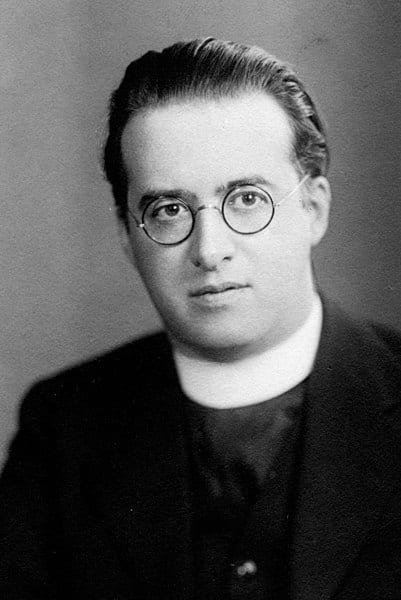
I just showed numerous examples regarding germ theory, disease, and medicine, that already put the lie to this broad claim. Another example that readily comes to mind would be Big Bang cosmology. The consensus among scientists before that came around was the steady state theory of cosmology (an eternal universe). Even Einstein accepted that. Then a Belgian Catholic priest by the name of Fr. Georges Lemaître (1894-1966), who was also a mathematician, astronomer, and professor of physics at the Catholic University of Louvain, developed the Big Bang Theory. The Wikipedia article on him states:
He was the first to identify that the recession of nearby galaxies can be explained by a theory of an expanding universe, which was observationally confirmed soon afterwards by Edwin Hubble. He was the first to derive what is now known as Hubble’s law, or the Hubble–Lemaître law, and made the first estimation of what is now called the Hubble constant, which he published in 1927, two years before Hubble’s article. Lemaître also proposed what later became known as the “Big Bang theory” of the origin of the universe, initially calling it the “hypothesis of the primeval atom“. . . .
At this time [1931], Einstein, while not taking exception to the mathematics of Lemaître’s theory, refused to accept that the universe was expanding; Lemaître recalled his commenting “Vos calculs sont corrects, mais votre physique est abominable“ (“Your calculations are correct, but your physics is atrocious”). . . .
After Hubble’s discovery was published, Einstein quickly and publicly endorsed Lemaître’s theory, helping both the theory and its proposer get fast recognition.
That is all scientific work, so how does it tie into the Bible (which — we agree — is not and was not intended to be a “science book”)? Well, the Bible taught ex nihilo creation:
Genesis 1:1 (RSV) In the beginning God created the heavens and the earth.
Thus, in this instance, science had to adjust to a long-held tenet of Christianity, rather than vice versa, and what John Loftus claimed above (falling into the trap of asserting a universal negative again) is a falsehood. The agnostic astronomer Robert Jastrow (1925-2008) observed about this:
For the scientist who has lived by his faith in the power of reason, the story ends like a bad dream. He has scaled the mountains of ignorance, he is about to conquer the highest peak; as he pulls himself over the final rock, he is greeted by a band of theologians who have been sitting there for centuries. (God and the Astronomers, 1978)
Now we see how the astronomical evidence supports the Biblical view of the origin of the world. The details differ, but the essential elements in the astronomical and Biblical accounts of Genesis are the same: the chain of events leading to man commenced suddenly and sharply at a definite moment in time, in a flash of light and energy. (The Enchanted Loom, 1981)
As Richard Carrier says, “Theologians have been wrong every time so far. Why keep betting on them?” I just don’t see why we should. (p. 135).
Really? I’ve already provided several contrary examples. Loftus and Carrier need to get up to speed and to stop saying dumb things. Here’s another example that runs counter to their bigoted proclamations. Aristotle thought that time extended to an infinite past and into an infinite future. But Christian theologian St. Augustine (354-430), according to the Stanford University web page, “Spacetime Before Einstein”:
. . . put a theological twist on Lucretius’ argument for the relational nature of time in his Confessions, emphasizing that “God created the world with time, not in time”. Time came into existence along with matter, in other words — a viewpoint that interestingly foreshadows the one held by big-bang cosmologists today.
Eric Rosenfield, in his article, “An Analysis of the Concept of Time in the Confessions, Book 11 by Augustine of Hippo” elaborates:
In 1917, Albert Einstein completed work on the General Theory of Relativity, one of the rules of which states that time is fundamentally bound to matter and gravity, and that without matter there would be no time. Oddly, this concept was presaged almost 1,300 years before that when Bishop Augustine of Hippo (later St. Augustine) put forth the idea that when God created the Heavens and the Earth, he created time itself as well. Before Augustine, no one that we know of had tried to consider “time” as being something changeable, something that could start and stop; after all, we always perceive time as moving forward, and contemplating temporality as being finite or malleable seems unnatural, and the implications headache-rousing. Plato and Aristotle both regarded time as being infinite. Yet it was Augustine’s application of the methods of the principles of Grecian philosophy and reason to the Christian concept of God that forced him to arrive at his conclusions. . . .
[W]hat’s really strange about Augustine’s interpretation of the eternal nature of the Beginning is that, when taken entirely apart from the Bible, it resonates not only with Relativity (Augustine saying that for the Word to happen in time there must have been something that experiences time being roughly analogous to Einstein saying that matter and time are linked, and without one you would not have the other) but also with modern Big Bang Theory. Briefly, according to Big Bang Theory, because matter and time are so inextricably bound, when all the matter in the universe was compressed into a single point it formed what’s called a “quantum singularity” in which, the math shows, the curvature of time and space became infinite. This means the Big Bang singularity exists at all times at once, in all places at once much like Augustine’s God – the singularity that created the universe is all around us, all the time, forever.
Isaac Newton was still getting it wrong some 1300 years later, according to Internet Encyclopedia of Philosophy (“Time”):
In about 1700, Isaac Newton claimed future time is infinite and that, although God created the material world some finite time ago, there was an infinite period of past time before that.
But Loftus cites Richard Carrier’s whoppers again (one of many dumb things Carrier has uttered, that he chose to include in his book):
“Christianity was bad for science, it put a stop to scientific progress for a thousand years, and even after that it made science’s recovery difficult, painful, and slow.” (p. 141)
Right. He must live in an alternate universe. I have documented “33 Empiricist Christian Thinkers Before 1000 AD”. As one example among many, both Augustine and Aquinas opposed astrology. On the other hand, many great early scientists (also Christians) were obsessed with astrology, including Galileo, Kepler, and Tycho Brahe, while Isaac Newton (an Arian) was fascinated with alchemy.
For examples of “scientific Christians” long before modern science was born, see Hermann of Reichenau (1013–1054) and Adelard of Bath (c. 1080-c. 1152). When modern science did get off the ground, of course it was Christianity that was overwhelmingly in the forefront of that. Christians or theists founded 115 scientific fields. There were at least 244 priest-scientists. And here are 152 lay Catholic scientists. 35 lunar craters were named to honor Jesuit scientists.
*
The so-called “Enlightenment” (the supposedly “reasonable” people), by contrast, murdered Lavoisier, the father of chemistry, and several other prominent French scientists and philosophers (namely, Philippe-Frédéric de Dietrich, Nicolas de Condorcet, Jean Baptiste Gaspard Bochart de Saron, Guillaume-Chrétien de Lamoignon de Malesherbes, and Félix Vicq d’Azyr). The murderous spree against scientists was later revived by the Soviet and Chinese atheist Communists.
Galileo, on the other hand (the only example of a “scientific martyr” that we ever seem to hear about) lived his life under house arrest in luxurious palaces of his supporters. Galileo and other scientists of his general time, got many things wrong, too (just as some in the Church had, in condemning Galileo’s premature overconfidence).
The Catholic Church produced modern science, including heliocentrism (formulated by the Catholic Copernicus). One (sub-infallible) Catholic tribunal at one point of our history, got science wrong (while a pious Catholic who was wrongly persecuted: Galileo, got some major things right, but also other things wrong, and another Catholic, St. Robert Bellarmine, had the more modern, accurate understanding of scientific method).
As for heliocentrism, it need not be pointed out that Nicolaus Copernicus was the key figure who changed that, and he was a Catholic cleric, and his work was enthusiastically supported by the pope of the time and the Church (though later with Galileo there were some silly things said). Even a cursory glance at Wikipedia (“Heliocentrism”) reveals that Catholics were forerunners of heliocentrism:
European scholarship in the later medieval period actively received astronomical models developed in the Islamic world and by the 13th century was well aware of the problems of the Ptolemaic model. In the 14th century, bishop Nicole Oresme [c. 1320-1382] discussed the possibility that the Earth rotated on its axis, while Cardinal Nicholas of Cusa [1401-1464] in his Learned Ignorance asked whether there was any reason to assert that the Sun (or any other point) was the center of the universe. In parallel to a mystical definition of God, Cusa wrote that “Thus the fabric of the world (machina mundi) will quasi have its center everywhere and circumference nowhere.” . . .
The state of knowledge on planetary theory received by Copernicus [1473-1543] is summarized in Georg von Peuerbach‘s Theoricae Novae Planetaru (printed in 1472 by Regiomontanus [1436-1476] ). By 1470, the accuracy of observations by the Vienna school of astronomy, of which Peuerbach and Regiomontanus were members, was high enough to make the eventual development of heliocentrism inevitable, and indeed it is possible that Regiomontanus did arrive at an explicit theory of heliocentrism before his death in 1476, some 30 years before Copernicus. . . .
Science wasn’t content to accept the notion that epilepsy was demon possession or that sicknesses were sent by God to punish people. (p. 142)
*
The entry on “Health” in Baker’s Evangelical Dictionary of Biblical Theology reveals that ordinary medicinal remedies were widely practiced in Bible times. There wasn’t solely a belief that sin or demons caused all disease (as Bob Seidensticker often implies in his anti-Christian writings, and in this paper: “According to the Bible, evil spirits cause disease.”). There was also a natural cause-and-effect understanding:
Ordinary means of healing were of most diverse kinds. Balm ( Gen 37:25 ) is thought to have been an aromatic resin (or juice) with healing properties; oil was the universal emollient ( Isa 1:6 ), and was sometimes used for wounds with cleansing wine ( Luke 10:34 ). Isaiah recommended a fig poultice for a boil ( 38:21 ); healing springs and saliva were thought effectual ( Mark 8:23 ; John 5 ; 9:6-7 ). Medicine is mentioned ( Prov 17:22 ) and defended as “sensible” ( Sirach 38:4). Wine mixed with myrrh was considered sedative ( Mark 15:23 ); mint, dill, and cummin assisted digestion ( Matt 23:23 ); other herbs were recommended for particular disorders. Most food rules had both ritual and dietary purposes, while raisins, pomegranates, milk, and honey were believed to assist restoration. . . . [St. Paul: “use a little wine for the sake of your stomach and your frequent ailments”: 1 Timothy 5:23]
Luke’s constant care of Paul reminds us that nonmiraculous means of healing were not neglected in that apostolic circle. Wine is recommended for Timothy’s weak stomach [St. Paul: “use a little wine for the sake of your stomach and your frequent ailments”: 1 Timothy 5:23], eye-salve for the Thyatiran church’s blindness (metaphorical, but significant).
Doctors today often note how the patient’s disposition and attitude has a strong effect on his health or recovery. The mind definitely influences the body. Solomon understood this in several of his Proverbs: written around 950 BC (Prov 14:30; 15:30; 16:24; 17:22).
Rest assured that science is not infallible, either, and has taught atrocious things (even in the 20th century) like Piltdown Man and Nebraska Man as authentic hominid fossils (one was a hoax and the other was an ancient pig’s tooth), eugenics, and phrenology.
Albert Einstein (a sort of pantheist or panentheist) cared very little for the materialist / atheist scientific mindset:
My religiosity consists of a humble admiration of the infinitely superior spirit that reveals itself in the little that we can comprehend about the knowable world. That deeply emotional conviction of the presence of a superior reasoning power, which is revealed in the incomprehensible universe, forms my idea of God. (To a banker in Colorado, 1927. Cited in the New York Times obituary, April 19, 1955)
Everyone who is seriously involved in the pursuit of science becomes convinced that a spirit is manifest in the laws of the universe — a spirit vastly superior to that of man . . . In this way the pursuit of science leads to a religious feeling of a special sort . . . (To student Phyllis Right, who asked if scientists pray; January 24, 1936)
In view of such harmony in the cosmos which I, with my limited human mind, am able to recognize, there are yet people who say there is no God. (to German anti-Nazi diplomat and author Hubertus zu Lowenstein around 1941)
Then there are the fanatical atheists . . . They are creatures who can’t hear the music of the spheres. (August 7, 1941)
In view of such harmony in the cosmos which I, with my limited human mind, am able to recognize, there are yet people who say there is no God. But what makes me really angry is that they quote me for support of such views. (c. 1941)
***
Photo credit: Fr. Georges Lemaître: father of Big Bang cosmology, around the mid 1930s [public domain / Wikimedia Commons]

***
alleged biblical contradictions
Previous Post

September 9, 2019
Loftus Atheist Error #6: Is God "Love" or a "Moral Monster"?
Next Post

September 10, 2019 Loftus Atheist Error #8: Ancient Jews, "Body" of God, & Polytheism
Browse Our Archives
Select a Category & Last Things About Me Anti-Catholicism Atheism & Agnosticism Baptism and Sacramentalism Bible and Tradition Blessed Virgin Mary Books by Dave Armstrong C. S. Lewis Calvinism & General Protestantism Catholic Apologetics Catholic Apologists Catholic conversion Catholic converts Christmas Church (Ecclesiology) Church History Conversion and Converts Development of Doctrine Eastern Orthodoxy Ecumenism & Christian Unity Eucharist & Liturgy Fathers of the Church French Translations G. K. Chesterton Hell Hell & Satan Hell & Satan & Last Things Heresies & Comparative Religion Holistic Health Inquisition & Crusades & Scandals James White Jews & Judaism & Old Testament John Calvin John Henry Newman Liberal / Modernist Theology Life Issues Literary Resume Lutheranism Mariology Martin Luther Music Orthodoxy Papacy & Infallibility Personal Page Philosophy & Science Political & Ethical & Moral Issues Protestant Persecution & Intolerance Protestantism Purgatory Purgatory & Penance Romantic & Imaginative Theology Saints & Purgatory & Penance Salvation Salvation & Justification Satan & Last Things Sexuality and Gender Issues Spanish Translations Traditionalism vs. Radical Catholic Reactionaries Traducciones al español / tradução para português Trinitarianism & Christology Uncategorized Videos
Select a Month October 2026 September 2026 August 2026 July 2026 June 2026 May 2026 April 2026 March 2026 February 2026 January 2026 December 2025 November 2025 October 2025 September 2025 August 2025 July 2025 June 2025 May 2025 April 2025 March 2025 February 2025 January 2025 December 2024 November 2024 October 2024 September 2024 August 2024 July 2024 June 2024 May 2024 April 2024 March 2024 February 2024 January 2024 December 2023 November 2023 October 2023 September 2023 August 2023 July 2023 June 2023 May 2023 April 2023 March 2023 February 2023 January 2023 December 2022 November 2022 October 2022 September 2022 August 2022 July 2022 June 2022 May 2022 April 2022 March 2022 February 2022 January 2022 December 2021 November 2021 October 2021 September 2021 August 2021 July 2021 June 2021 May 2021 April 2021 March 2021 February 2021 January 2021 December 2020 November 2020 October 2020 September 2020 August 2020 July 2020 June 2020 May 2020 April 2020 March 2020 February 2020 January 2020 December 2019 November 2019 October 2019 September 2019 August 2019 July 2019 June 2019 May 2019 April 2019 March 2019 February 2019 January 2019 December 2018 November 2018 October 2018 September 2018 August 2018 July 2018 June 2018 May 2018 April 2018 March 2018 February 2018 January 2018 December 2017 November 2017 October 2017 September 2017 August 2017 July 2017 June 2017 May 2017 April 2017 March 2017 February 2017 January 2017 December 2016 November 2016 October 2016 September 2016 August 2016 July 2016 June 2016 May 2016 April 2016 March 2016 February 2016 January 2016 December 2015 November 2015 October 2015 September 2015 August 2015 July 2015 June 2015 May 2015 April 2015 March 2015 February 2015 January 2015 December 2014 November 2014 October 2014 September 2014 August 2014 July 2014 June 2014 April 2014 March 2014 February 2014 January 2014 December 2013 November 2013 October 2013 September 2013 August 2013 July 2013 June 2013 April 2013 March 2013 February 2013 January 2013 December 2012 November 2012 October 2012 September 2012 August 2012 July 2012 June 2012 May 2012 April 2012 March 2012 February 2012 January 2012 December 2011 November 2011 October 2011 September 2011 August 2011 July 2011 June 2011 April 2011 March 2011 February 2011 October 2010 September 2010 August 2010 July 2010 April 2010 March 2010 December 2009 October 2009 August 2009 July 2009 June 2009 May 2009 March 2009 February 2009 October 2008 September 2008 April 2008 March 2008 February 2008 January 2008 December 2007 November 2007 October 2007 May 2007 March 2007 February 2007 January 2007 November 2006 October 2006 September 2006 August 2006 July 2006 June 2006 May 2006 April 2006 March 2006 February 2006 October 2005 June 2005 April 2005 February 2005 July 2004 May 2004 April 2004
Follow Us!
TAKE THE
Religious Wisdom Quiz
What Christian group refers to their leaders as "General Superintendents"?
Select your answer to see how you score.
Orthodox Nazarene Catholic Methodist
Books by This Author Books by Dave Armstrong
Related posts from Biblical Evidence for Catholicism

God, Modern Physics, & Dark Energy: An Analogy
Biblical Evidence for Catholicism

General Debate on Christianity with an Atheist
Biblical Evidence for Catholicism

Parting of the Red Sea & Lake Erie...
Biblical Evidence for Catholicism

Can Atheists Be Saved? Surprising Biblical Data
Biblical Evidence for Catholicism
TRENDING AT PATHEOS Catholic

Pope Leo Celebrates Mass for Nurses & Docs...
I don't have any idea how he did it, but Pope Leo...

The Sermon on the Mount, Part I: Matthew...
The Sermon on the Mount, Part I (Matthew 4:12-5:12) St. Matthew moves...

What's up from Crossway: Reviewing some of their latest A few weeks...

Janie Learns the Way of the Cross: A...
Teaching children about Jesus' Passion can be challenging. Many parents and educators...

Looking For Good Catholic Writing - October 2026
He alone extends the heavens, and he walks upon the waves of...

In "Irreplaceable," our book on vocation and technology, Trevor Sutton and I...
view all Catholic blogs
Ad-Free & Subscriber Log-In Subscription Support
- About Us
- 2026 Calendar
- Videos
- Podcasts
- Library of World Religions
- Faith In Media Tracker
- Advertise With Us
- Write for Us
- Privacy Policy
- Terms of Service
- Do Not Sell My Data
- Contact Us
- Radiant Digital
- Manage Newsletter Subscriptions
- Unsubscribe From Notifications
- Sitemap
Copyright 2008-2026, Patheos. All rights reserved.
Subscription Support Ad-Free & Subscriber Log-In
Follow Patheos