
BuddhistCatholicContemplativeEvangelicalGeneral ChristianHinduJewishLatter-day SaintMuslimNew VisionsProgressive Christian
Beliefs
- Buddhist
- Catholic
- Contemplative
- Evangelical
- General Christian
- Hindu
- Jewish
- Latter-day Saint
- More Voices
- Muslim
- New Visions
- Pagan
- Progressive Christian
Topics
- Religion News
- Food and Religion
- Sports and Religion
- Religious Art
- Religious Music and Entertainment
- Religious Events
- History and Religion
- Style and Religion
- Politics and Religion
- Women in Religion
- Recreation Outdoors and Religion
- Business Finance and Religion
- Careers Workplace and Religion
- Education and Religion
- Family Parenting and Religion
- Health Fitness and Religion
- Home and Religion
- Relationships and Religion
- Technology and Religion
- Travel and Religion
Columnists
- Buddhist Columnists
- Business Finance and Religion Columnists
- Careers Workplace and Religion Columnists
- Catholic Columnists
- Contemplative Columnists
- Education and Religion Columnists
- Evangelists Columnists
- Family Parenting and Religion Columnists
- General Christian Columnists
- Health Fitness and Religion Columnists
- Hindu Columnists
- History and Religion Columnists
- Home and Religion Columnists
- Jewish Columnists
- More Voices Columnists
- Latter Day Columnists
- Muslim Columnists
- New Visions Columnists
- Nonreligious Columnists
- Pagan Columnists
- Politics and Religion Columnists
- Progressive Columnists
- Recreation Outdoors and Religion Columnists
- Relationships and Religion Columnists
- Religion News Columnists
- Religious Art Columnists
- Religious Events Columnists
- Religious Music and Entertainment Columnists
- Sports and Religion Columnists
- Style and Religion Columnists
- Technology and Religion Columnists
- Travel and Religion Columnists
- Women in Religion Columnists
Resource Library
- 2026 Calendar
- Library of World Religions
- The 100 Most Holy Places on Earth
- Patheos Answers
- Podcasts
- Videos
- Faith Leaders Database
- Anglican Episcopalian
- Bahai
- Baptist
- Buddhism
- Christianity
- Confucianism
- Eastern Orthodoxy
- Hinduism
- Holiness and Pentecostal
- ISKCON
- Islam
- Judaism
- Lutheran
- Methodist
- The Church of Jesus Christ of Latter-day Saints
- New Age
- Paganism
- Presbytarian and Reformed
- Protestantism
- Religion Behind the Scenes
- Roman Catholic
- Scientology
- Shia Islam
- Sikhism
- Sufism
- Sunni Islam
- Taoism
- Zen
- See all religions
Research Tools
 Ad-Free & Subscriber Log-In Subscription Support
Ad-Free & Subscriber Log-In Subscription Support
Follow Patheos 

- Trending:
- Forgiveness
- |
- Marriage
- |
- Consciousness
- |
- Death Penalty
- |
- Election
- |
- Halloween

-
About
-
Catholic Apologetics
-
Church History
-
Great Apologists
-
Christian Worldview
-
Protestantism & Misc.
- Home
- Catholic
- History and Religion
- C. S. Lewis on Catholicism (Correspondence: 1934-1947)
C. S. Lewis on Catholicism (Correspondence: 1934-1947)
Last updated on: September 13, 2019 at 12:08 pm by Dave Armstrong
C. S. Lewis on Catholicism (Correspondence: 1934-1947) 2019-09-13T12:08:18-04:00 Dave Armstrong
Patheos Explore the world's faith through different perspectives on religion and spirituality! Patheos has the views of the prevalent religions and spiritualities of the world.
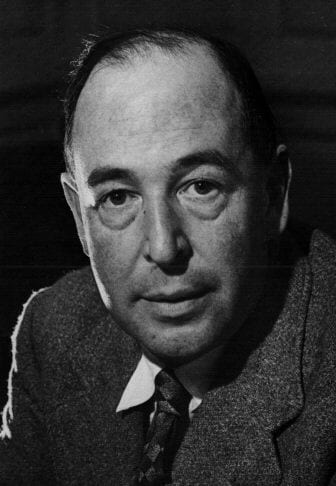
From: The Collected Letters of C. S. Lewis: Volume II: Books, Broadcasts, and the War, 1931-1949 (edited by Walter Hooper, HarperSanFrancisco, 2004)
To Dom Bede Griffiths, 4 April 1934:
I had better say once and for all that I do not intend to discuss with you in the future, if I can help it, any of the questions at issue between our respective churches. . . . I do not think there is any thing distressing for either of us in agreeing to be silent on this matter: I have had a Catholic [Tolkien] among my most intimate friends for many years and a great deal of our conversation has been religious. When all is said (and truly said) about the divisions in Christendom, there remains, by God’s mercy, an enormous common ground. It is abstaining from one tree in the whole garden.
To Arthur Greeves, 7 December 1935:
Sheed and Ward have bought the [Pilgrim’s] Regress from Dent. I didn’t much like having a book of mine, and specially a religious book, brought out by a Papist publisher . . . I have been well punished: for Sheed, without any authority from me, has put a blurb on the inside of the jacket which says ‘This story begins in Puritania (Mr Lewis was brought up in Ulster)’ — thus implying that the book is an attack on my own country and my own religion . . . the blurb is a damnable lie told to try and make Dublin riff-raff buy the book.
To Dom Bede Griffiths, 20 February 1936:
One of the most important differences between us is our estimate of the importance of the differences. You, in your charity, are anxious to convert me: but I am not in the least anxious to convert you. You think my specifically Protestant beliefs a tissue of damnable errors: I think your specifically Catholic beliefs a mass of comparatively harmless human tradition which may be fatal to certain souls under special conditions, but which I think suitable for you. I therefore feel no duty to attack you . . . With other Catholics I find no difficulty in deriving much edification from religious talk on the common ground: but you refuse to show any interest except in differences.
To Dom Bede Griffiths, 29 April 1938:
About our differences: I feel that whenever two members of different communions succeed in sharing the spiritual life so far as they can now share it, and are thus forced to regard each other as Christians, they are really helping on re-union by producing the conditions without which official reunion would be quite barren. I feel sure that this is the layman’s chief contribution to the task, and some of us here are being enabled to perform it.
To Dom Bede Griffiths, 8 May 1939:
A united Christendom should be the answer to the new Paganism. But how reconciliation of the Churches, as opposed to conversions of individuals from a church to another, is to come about, I confess I cannot see. I am inclined to think that the immediate task is vigorous cooperation on the basis of what even now is common — combined, of course, with full admission of the differences. An experienced unity on some things might then prove the prelude to a confessional unity on all things. Nothing would give such strong support to the Papal claims as the spectacle of a Pope actually functioning as head of Christendom.
To Warnie Lewis, 29 March 1940:
This week I received a letter from my former pupil Mrs Neylan . . . who is trembling on the verge of Christianity . . . and asks what to read and (more difficult still) who to see. I felt almost overwhelmed by the responsibility of my reply, and naturally the more because the two other people whose conversion had something to do with me [Dom Bede Griffiths and George Sayer] became Papists!
To H. Lyman Stebbins, 8 May 1945:
My position about the Churches can best be made plain by an imaginary example. Suppose I want to find out the correct interpretation of Plato’s teaching. What I am most confident in accepting is that interpretation which is common to all Platonists down all the centuries . . . Any purely modern views which claim to have discovered for the first time what Plato meant, and say that everyone from Aristotle down has misunderstood him, I reject out of hand.
But there is something else I would also reject. If there were an ancient Platonic Society still existing at Athens and claiming to be the exclusive trustees of Plato’s meaning, I should approach them with great respect. But if I found that their teaching in many ways was curiously unlike his actual text and unlike what ancient interpreters said, and in some cases could not be traced back to within 1000 years of his time, I should reject these exclusive claims: while still ready, of course, to take any particular thing they taught on its merits.
I do the same with Christianity. What is most certain is the vast mass of doctrine which I find agreed on by Scripture, the fathers, the Middle Ages, modern R.C.’s, modern Protestants. That is true ‘catholic’ doctrine. Mere ‘modernism’ I reject at once.
The Roman Church where it differs from this universal tradition and specially from apostolic Christianity I reject. Thus their theology about the Blessed virgin Mary I reject because it seems utterly foreign to the New testament where indeed the words ‘Blessed is the womb that bore thee’ receive a rejoinder pointing in exactly the opposite direction. Their papalism seems equally foreign to the attitude of St Paul towards St Peter in the epistles. The doctrine of transubstantiation insists in defining in a way which the N.T. seems to me not to countenance. In a word, the whole set-up of modern Romanism seems to me to be as much a provincial or local variation from the central, ancient tradition as any particular Protestant sect is. I must therefore reject their claim: tho’ this does not mean rejecting particular things they say.
[Stebbins became a Catholic a year later and in 1968 founded Catholics United for the Faith]
To Daphne Harwood, 11 September 1945:
R.C.’s keep on writing to tell me (like you) that it is a pity that ‘knowing so much I should be held back from knowing so much more’!
To Don Giovanni Calabria, 6 September 1947:
Be assured that for me too the schism in the body of Christ is both a source of grief and a matter of prayers, being a most serious stumbling block to those coming in and one which makes even the faithful weaker in repelling the common foe. However, I am a layman, indeed the most lay of laymen, and least skilled in the deeper questions of sacred theology. I have tried to do the only thing that I think myself able to do: that is, to leave completely aside the subtler questions about which the Roman Church and Protestants disagree among themselves — things which are to be treated by bishops and learned men — and in my own books to expound, rather, those things which still, by God’s grace, after so many sins and errors, are shared by us. Nor is this a pointless task; for I find that people are unaware how many matters we even now agree on . . . Over and above that work, it has always seemed to me that I should maintain as much fraternal intercourse as possible with all those who call themselves Christians. If all were actively to do this, might we not hope that this unity of love and action over many years would precede — not to say foster — an eventual reunification of doctrines. Thirdly, there remain — what is most efficacious — prayers.
Related Reading:
C. S. Lewis’ Views on Christian Unity & Ecumenism [6-16-03]
C. S. Lewis’ Childhood in Belfast & Contra-Catholicism (Biographers and/or Friends Kreeft, Pearce, Derrick, and Possibly Tolkien Think This is Why Lewis Never Became a Catholic) [6-26-12]
Why Didn’t C. S. Lewis Become a Catholic? [8-29-14]
Dialogue on Why C. S. Lewis Didn’t “Pope” [9-1-15]
C. S. Lewis vs. St. Paul on Future Binding Church Authority [National Catholic Register, 1-22-17]
Why C. S. Lewis Never Became a Catholic [National Catholic Register, 3-5-17]
***
Photo credit: C. S. Lewis (by Arthur Strong, 1947) [Wikimedia Commons / Fair Use image used for the Wikipedia article on Lewis]

***
Previous Post

September 13, 2019
Alvin Plantinga: Reply to the Evidential Problem of Evil
Next Post

September 14, 2019 Anti-Catholic James White: Many Critiques Forthcoming
Browse Our Archives
Select a Category & Last Things About Me Anti-Catholicism Atheism & Agnosticism Baptism and Sacramentalism Bible and Tradition Blessed Virgin Mary Books by Dave Armstrong C. S. Lewis Calvinism & General Protestantism Catholic Apologetics Catholic Apologists Catholic conversion Catholic converts Christmas Church (Ecclesiology) Church History Conversion and Converts Development of Doctrine Eastern Orthodoxy Ecumenism & Christian Unity Eucharist & Liturgy Fathers of the Church French Translations G. K. Chesterton Hell Hell & Satan Hell & Satan & Last Things Heresies & Comparative Religion Holistic Health Inquisition & Crusades & Scandals James White Jews & Judaism & Old Testament John Calvin John Henry Newman Liberal / Modernist Theology Life Issues Literary Resume Lutheranism Mariology Martin Luther Music Orthodoxy Papacy & Infallibility Personal Page Philosophy & Science Political & Ethical & Moral Issues Protestant Persecution & Intolerance Protestantism Purgatory Purgatory & Penance Romantic & Imaginative Theology Saints & Purgatory & Penance Salvation Salvation & Justification Satan & Last Things Sexuality and Gender Issues Spanish Translations Traditionalism vs. Radical Catholic Reactionaries Traducciones al español / tradução para português Trinitarianism & Christology Uncategorized Videos
Select a Month October 2026 September 2026 August 2026 July 2026 June 2026 May 2026 April 2026 March 2026 February 2026 January 2026 December 2025 November 2025 October 2025 September 2025 August 2025 July 2025 June 2025 May 2025 April 2025 March 2025 February 2025 January 2025 December 2024 November 2024 October 2024 September 2024 August 2024 July 2024 June 2024 May 2024 April 2024 March 2024 February 2024 January 2024 December 2023 November 2023 October 2023 September 2023 August 2023 July 2023 June 2023 May 2023 April 2023 March 2023 February 2023 January 2023 December 2022 November 2022 October 2022 September 2022 August 2022 July 2022 June 2022 May 2022 April 2022 March 2022 February 2022 January 2022 December 2021 November 2021 October 2021 September 2021 August 2021 July 2021 June 2021 May 2021 April 2021 March 2021 February 2021 January 2021 December 2020 November 2020 October 2020 September 2020 August 2020 July 2020 June 2020 May 2020 April 2020 March 2020 February 2020 January 2020 December 2019 November 2019 October 2019 September 2019 August 2019 July 2019 June 2019 May 2019 April 2019 March 2019 February 2019 January 2019 December 2018 November 2018 October 2018 September 2018 August 2018 July 2018 June 2018 May 2018 April 2018 March 2018 February 2018 January 2018 December 2017 November 2017 October 2017 September 2017 August 2017 July 2017 June 2017 May 2017 April 2017 March 2017 February 2017 January 2017 December 2016 November 2016 October 2016 September 2016 August 2016 July 2016 June 2016 May 2016 April 2016 March 2016 February 2016 January 2016 December 2015 November 2015 October 2015 September 2015 August 2015 July 2015 June 2015 May 2015 April 2015 March 2015 February 2015 January 2015 December 2014 November 2014 October 2014 September 2014 August 2014 July 2014 June 2014 April 2014 March 2014 February 2014 January 2014 December 2013 November 2013 October 2013 September 2013 August 2013 July 2013 June 2013 April 2013 March 2013 February 2013 January 2013 December 2012 November 2012 October 2012 September 2012 August 2012 July 2012 June 2012 May 2012 April 2012 March 2012 February 2012 January 2012 December 2011 November 2011 October 2011 September 2011 August 2011 July 2011 June 2011 April 2011 March 2011 February 2011 October 2010 September 2010 August 2010 July 2010 April 2010 March 2010 December 2009 October 2009 August 2009 July 2009 June 2009 May 2009 March 2009 February 2009 October 2008 September 2008 April 2008 March 2008 February 2008 January 2008 December 2007 November 2007 October 2007 May 2007 March 2007 February 2007 January 2007 November 2006 October 2006 September 2006 August 2006 July 2006 June 2006 May 2006 April 2006 March 2006 February 2006 October 2005 June 2005 April 2005 February 2005 July 2004 May 2004 April 2004
Follow Us!
TAKE THE
Religious Wisdom Quiz
Which book of the Bible contains the most chapters of any prophetic book?
Select your answer to see how you score.
Daniel Ezekiel Isaiah Jeremiah
Books by This Author Books by Dave Armstrong
Related posts from Biblical Evidence for Catholicism

On Protestant Explanations of Catholic Conversion
Biblical Evidence for Catholicism
C. S. Lewis’ Argument for God from Desire
Biblical Evidence for Catholicism

C. S. Lewis: More Evidences of Anti-Catholic Prejudice
Biblical Evidence for Catholicism
C. S. Lewis: Biggest Cheerleader for "Lord of...
Biblical Evidence for Catholicism
TRENDING AT PATHEOS Catholic

The First Eucharistic Controversy: Christ’s Real Presence
For Catholics, the Eucharist is the source and summit of the Christian...

What a Stop Sign Can Teach Us About...
How to Make a Decision When You Can't Hear God Main point:...

Archdiocese Hosts Military Marriage Retreat in Germany
RASTATT, Germany — The transient military lifestyle, with its frequent deployments and...

Nearly every morning, I make the drive to Detroit with my high-school-age...

The Real AI Story Is Adoption Without Trust
Artificial intelligence has crossed a political threshold. It is no longer a...

A new article, written by Jeff Lindsay and Gale L. Pooley,...
view all Catholic blogs
Ad-Free & Subscriber Log-In Subscription Support
- About Us
- 2026 Calendar
- Videos
- Podcasts
- Library of World Religions
- Faith In Media Tracker
- Advertise With Us
- Write for Us
- Privacy Policy
- Terms of Service
- Do Not Sell My Data
- Contact Us
- Radiant Digital
- Manage Newsletter Subscriptions
- Unsubscribe From Notifications
- Sitemap
Copyright 2008-2026, Patheos. All rights reserved.
Subscription Support Ad-Free & Subscriber Log-In
Follow Patheos