
BuddhistCatholicContemplativeEvangelicalGeneral ChristianHinduJewishLatter-day SaintMuslimNew VisionsProgressive Christian
Beliefs
- Buddhist
- Catholic
- Contemplative
- Evangelical
- General Christian
- Hindu
- Jewish
- Latter-day Saint
- More Voices
- Muslim
- New Visions
- Pagan
- Progressive Christian
Topics
- Religion News
- Food and Religion
- Sports and Religion
- Religious Art
- Religious Music and Entertainment
- Religious Events
- History and Religion
- Style and Religion
- Politics and Religion
- Women in Religion
- Recreation Outdoors and Religion
- Business Finance and Religion
- Careers Workplace and Religion
- Education and Religion
- Family Parenting and Religion
- Health Fitness and Religion
- Home and Religion
- Relationships and Religion
- Technology and Religion
- Travel and Religion
Columnists
- Buddhist Columnists
- Business Finance and Religion Columnists
- Careers Workplace and Religion Columnists
- Catholic Columnists
- Contemplative Columnists
- Education and Religion Columnists
- Evangelists Columnists
- Family Parenting and Religion Columnists
- General Christian Columnists
- Health Fitness and Religion Columnists
- Hindu Columnists
- History and Religion Columnists
- Home and Religion Columnists
- Jewish Columnists
- More Voices Columnists
- Latter Day Columnists
- Muslim Columnists
- New Visions Columnists
- Nonreligious Columnists
- Pagan Columnists
- Politics and Religion Columnists
- Progressive Columnists
- Recreation Outdoors and Religion Columnists
- Relationships and Religion Columnists
- Religion News Columnists
- Religious Art Columnists
- Religious Events Columnists
- Religious Music and Entertainment Columnists
- Sports and Religion Columnists
- Style and Religion Columnists
- Technology and Religion Columnists
- Travel and Religion Columnists
- Women in Religion Columnists
Resource Library
- 2026 Calendar
- Library of World Religions
- The 100 Most Holy Places on Earth
- Patheos Answers
- Podcasts
- Videos
- Faith Leaders Database
- Anglican Episcopalian
- Bahai
- Baptist
- Buddhism
- Christianity
- Confucianism
- Eastern Orthodoxy
- Hinduism
- Holiness and Pentecostal
- ISKCON
- Islam
- Judaism
- Lutheran
- Methodist
- The Church of Jesus Christ of Latter-day Saints
- New Age
- Paganism
- Presbytarian and Reformed
- Protestantism
- Religion Behind the Scenes
- Roman Catholic
- Scientology
- Shia Islam
- Sikhism
- Sufism
- Sunni Islam
- Taoism
- Zen
- See all religions
Research Tools
 Ad-Free & Subscriber Log-In Subscription Support
Follow Patheos 

- Trending:
- Advent
- |
- Forgiveness
- |
- Thanksgiving
- |
- Election
- |
- Seasonal Holidays
- |
- Marriage

-
About
-
Catholic Apologetics
-
Church History
-
Great Apologists
-
Christian Worldview
-
Protestantism & Misc.
- Home
- Catholic
- History and Religion
- Mary Mediatrix: Dialogue w Evangelical Protestant
Mary Mediatrix: Dialogue w Evangelical Protestant
Last updated on: August 10, 2019 at 12:36 pm by Dave Armstrong
Mary Mediatrix: Dialogue w Evangelical Protestant 2019-08-10T12:36:54-04:00 Dave Armstrong
Patheos Explore the world's faith through different perspectives on religion and spirituality! Patheos has the views of the prevalent religions and spiritualities of the world.
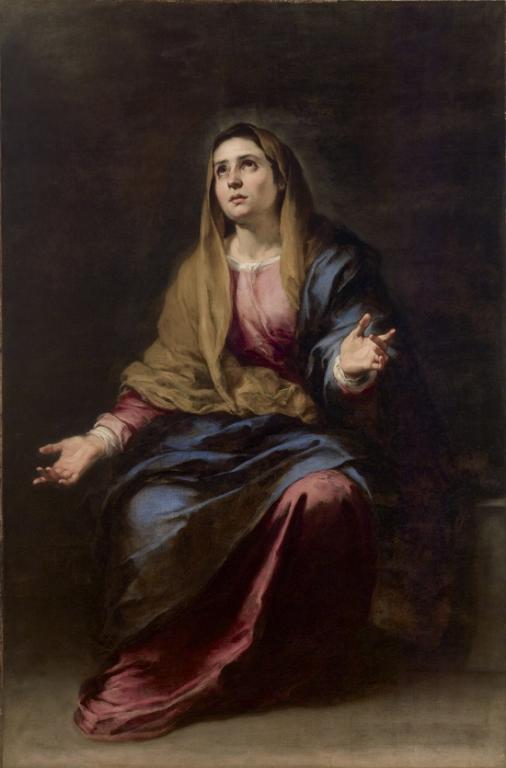
This dialogue came about as a result of Jack DisPennett‘s critique of my paper, The Blessed Virgin Mary: Biblical & Catholic Overview. His words will be in blue.
*****
See the section above on Eusebius about the lack of such an “important” doctrine from the early church. Either Eusebius was too dense to note such an important doctrine (which is doubtful since he is a very respected Church figure) or the early Christians were missing out on a very important channel of Grace.
I dealt with relatively late developments above. But this notion was not as completely lacking as you suppose. St. Irenaeus (130-202), in his famous Against Heresies (bet. 180-199) — 200 years before the New Testament Canon was defined for all time — wrote:
[S]o also Mary . . . being obedient, was made the cause of salvation for herself and for the whole human race . . . Thus, the knot of Eve’s disobedience was loosed by the obedience of Mary. What the virgin Eve had bound in unbelief, the Virgin Mary loosed through faith. (3,22,4; from W. A. Jurgens, The Faith of the Early Fathers, Collegeville, Minnesota: Liturgical Press, 1970, vol. 1, 93, #224)
[F]or in no other way can that which is tied be untied unless the very windings of the knot are gone through in reverse: so that the first joints are loosed through the second, and the second in turn free the first . . . Thus, then, the knot of the disobedience of Eve was untied through the obedience of Mary. (Against Heresies, III, 22,4; from William Most, Mary in Our Life, Garden City, New York: Doubleday Image, 1954, 25)
If we think of the thing as a regular knot, then it is obvious that the last part of the knot tied (Adam’s sin) would have to be untied first (by Christ) and then Eve’s part of the knot would be untied. But we do have a perfect analogy of this, because of Christ’s obedience, the Church is then being sanctified (made perfect, holy) thereby loosing Eve’s sin. Hence, if you want to use this analogy, I don’t think Mary need be part of it at all. But the whole concept of knots does seem to be misleading, I think.
You’re missing the whole point of the analogy, which is the human element in both sin and redemption, by analogy:
1a. Eve (a secondary agent of Satan’s designs) disobeys God, sins, and thus helps to bring about the Fall, along with Adam.
1b. Mary (the second Eve and secondary agent of God’s designs) obeys God and thus helps bring about the Redemption from sin and the Fall, along with the second Adam, Jesus, by bearing the Incarnate Son who is the Redeemer.
2a. Adam (a secondary agent of Satan’s designs) sins and brings about the Fall.
2b. Jesus (agent of God’s designs, as He is God), as the second Adam, undoes the Fall and brings about Redemption.
It’s true that only the second pair of propositions is directly expressed in Scripture. But the first pair follows by close analogy to the first, which is why this thought appeared very early on in the Fathers.
Catholic apologist Fr. William Most comments:
Mary, says St. Irenaeus, undoes the work of Eve. Now it was not just in a remote way that Eve had been involved in original sin: she shared in the very ruinous act itself. Similarly, it would seem, Mary ought to share in the very act by which the knot is untied – that is, in Calvary itself. (in Most, ibid., 25)
Just as the human race was bound over to death through a virgin, so was it saved through a virgin: the scale was balanced — a virgin’s disobedience by a virgin’s obedience. (Against Heresies, V, 19, 1; cited in Most, ibid., 274)
It never says that Eve was a virgin at the time. It doesn’t say that she wasn’t, either, but this argument is nevertheless speculative.
You missed the point again. There is no speculation at all here. St. Irenaeus in this context is talking about the Annunciation and Mary’s obedience to bear Jesus Christ: to become the Theotokos. That is the Eve-Mary parallel: Eve disobeyed when she ate the forbidden fruit; Mary obeyed the angel Gabriel and God when she was asked to consent to her wonderful mission as the Mother of God. Protestants accept the Virgin Birth, and Mary was a virgin at the time of the Annunciation (Luke 1:26-27 and ff.).
Nor is this doctrine entirely unbiblical, as you suppose. Numerous passages speak of Christians participating in some sense in the dustribution of grace, and the “saving” of others (which are all that Mary’s role as Mediatrix involves, albeit more preeminently). I presented the following arguments elsewhere:
Ephesians 3:2 assuming that you have heard of the stewardship of God’s grace that was given to me for you…
1 Corinthians 9:22 I have become all things to all men, that I might by all means save some.
1 Timothy 4:16 Take heed to yourself and to your teaching: hold to that, for by so doing you will save both yourself and your hearers.
In the Bible, giving “salvation” to other people is done by either preaching the Gospel to them (1 Cor 9:22) so that they are saved, or by living a holy life so that people are attracted to Christ because of your good conduct. (1 Peter 3:1) In all cases, it is Christ who is completely doing the saving; we are just messengers.
But that’s largely what I was arguing. God saves, but He uses human agents to spread His grace, whereby we are saved. You in effect concede the point altogether when you say that we indeed participate in this distribution of grace and sometimes salvation, by evangelizing and being holy (a good witness). We aren’t contending that Mary saves anyone, but that God can use her in the application of His grace which alone saves anyone. I gave plenty of scriptural support for those notions, but you have not counter-exegeted them, so they stand unchallenged and unrefuted.
I don’t think that the Catholic understanding of a “store of merit” from the saints whereby we receive indulgences are what those above passages are talking about at all.
I gave my biblical arguments (above and below). It is no counter-argument to say what you say here: it is just a bald statement. The two verses you do mention above are in no way contradictory to Catholic thought in this regard. So you have really offered no disproof whatever.
It is also to be noted that the “seven spirits who are before his [God’s] throne” seem to participate in distributing God’s grace as well (Rev 1:4). If Paul, Timothy, and “seven spirits” can be so used and honored, why not Mary, the Mother of God? What is the fundamental objection, other than prior antipathy to so-called “Catholic excess?” If one objectively examines the thing itself as at least a biblical possibility, I see no problem whatever with it.
The only way I can think of that Mary could “save” people is by appearing to them in dreams and exhorting them to embrace the divine word, as Eusebius relates to us that the martyr Potamiaena did. I just don’t believe in a “store of merit” as Catholics do.
I deal with biblical arguments for merit and penitential issues elsewhere. To pursue this would be to switch the subject from biblical evidence for Marian doctrine, to biblical evidence for penance and merit, or from biblical theology to systematic theology. I urge readers to pursue those papers for my answers.
Mary’s secondary (to Christ) and wholly derivative function as the Mediatrix is no more a violation of Jesus’ unique mediatorship than any number of functions He sanctions and allows among His Body, the Church. We pray for each other, thus acting as mediators. One could just as easily say, “Why ask your fellow Christians to pray for you when you can ask Jesus?” as “Why do you ask for Mary’s prayers when you can go directly to Jesus?” Yet God commands us to pray for one another. God is Creator, but he gives us the privilege of procreation, in childbirth and parenthood. Jesus is the “chief” Shepherd of His flock (John 10:11-16, 1 Peter 5:4), yet He assigns lesser shepherds to watch over His own (John 21:15-17, Ephesians 4:11). And He is the supreme Judge, but He bids us to judge as well (Matthew 19:28, 1 Corinthians 6:2-3, Revelation 20:4). Many other similar examples can be found in the Bible.
I believe I stated clearly somewhere in my original writing that I was not against ASKING Mary to pray for you; what I am against is vain repetitions to Mary,
Who decides what constitutes vain repetition? Where is that in the Bible. Failing answers to those questions, you are saying little or nothing of any substance. See:
“Vain Repetition”: Jesus Shows What it’s Not [2013]
*
Is the Rosary “Vain Repetition”? [5-24-16]
*
Lutheran Pastor Bashes Prayer to Mary and the Rosary (“Vain Repetition”) [5-5-17]
*
The Rosary: ‘Vain Repetition’ or Biblical Prayer? [National Catholic Register, 3-16-18]
*
semi-divine titles given to Mary,
We do no such thing. What is semi-divine, anyway? One is either divine or not. We believe Mary is a creature; therefore she is on no way, shape or form divine. Nor does Mother of God imply that, or Mediatrix, or any other Marian title.
and overemphasizing Mary in prayer. I will go into this further when I respond to the Rosary.
This would only apply if indeed the Catholic Church taught that Mary should replace Christ, or that asking her intercession is somehow in conflict with ultimately beseeching and praying to Jesus, just as Protestants deny that asking a pastor to pray for them is in conflict with asking God to grant some desire or need.
However, I do think that using the title “Co-redemptrix” is very misleading and should be done away with.
The popes hardly use it much at all anymore, precisely because it is so misunderstood; not because the view itself is erroneous.
In the English language, the prefix “Co” often implies equality with the other person, as in “co-owner” or “co-pilot.”
Yes; this is a problem of translation from Latin to English, and a loss of meaning, leading to a misunderstanding. I’ve dealt with it in other papers.
I also think that it is wrong to use Mediatrix as a title; sure, we are all little mediators; we can intercede for one another. But none of us can claim that as our title, since there is only one “Mediator” between man and God, the man Christ Jesus. All other mediators are “little mediators” and get their authority to mediate handed to them by Christ; hence, no one else besides Him should have “mediator” or “mediatrix” as his/her title.
You illustrate that you can accept the concept, by your statement: “All other mediators are ‘little mediators’ and get their authority to mediate handed to them by Christ.” What doesn’t follow is that we mustn’t use mediatrix because of Jesus’ unique mediatorship. We use words similarly all the time. God is the Creator. But we are procreators when we have children. God made that all possible, and in a sense, created each child. But we participated, didn’t we (as argued above)? God is the King, but we have human kings. He is our Father, and we have earthly fathers, etc. There is no inherent conflict or discord here. You have grasped the concept, as we believe it. The rest is just semantics and playing with words.
Furthermore, the Bible explicitly states that Christians in general are God’s “helpers” or “fellow workers” (Greek, synergos):
2 Corinthians 6:1 Working together with him, then, we entreat you not to accept the grace of God in vain. (cf. Mark 16:20)
1 Corinthians 3:9 For we are God’s fellow workers . . .
Why then, is it unthinkable for Mary to be a “fellow worker” with Jesus (albeit in a much more extraordinary fashion)? No one claims that the above verses teach our equality with God, simply because we work with Him, and are His fellow workers. Likewise, the Blessed Virgin is in no wise equal to God in function when she is a Mediatrix or Co-Redemptrix.
Of course it doesn’t imply equality with God, but it still exalts Mary to too high of a level, a level that I think I have proved is not Biblical.
I don’t see how you have proven that. I showed that the fundamental concepts involved are applied by St. Paul to himself. It is only a matter of degree. Mary is preeminent among creatures, but she is still a creature, and in no way on a level with God.
I think that it is dangerous to give all of these laudatory titles to mere mortal people; the New Testament gives such laudatory titles to the Members of the Trinity.
The New Testament calls Jesus Savior and Redeemer. We don’t call Mary *Savior,*and even Co-Redemptrix, rightly-understood, in no way implies that Mary is a Redeemer as Jesus is.
I would conclude that such doctrine seems to insinuate a heavenly rankings system in which God is supreme and yet Mary stands at the top of the, having more grace, love, and godliness than any other created being.
Indeed it does. And it has much scriptural warrant or analogy, which you again largely ignore.
While I don’t deny that there may be such a heavenly “rankings system,” it seems that Christ would rather not tell us who will sit at His right and left hand (Matthew 20:23).
That was directed to His disciples, in the context of silly discussions about who was the greatest. Jesus was the King of Israel and successor to David, who was an archetype of the Messiah. It is said of Bathsheba, David’s wife, and mother of King Solomon, his son, that Solomon bowed down to her, and that she had a throne on his right (1 Kings 2:19; cf. 15:2,10). The queen-mother was the most important woman in the king’s court, and they were often named in the biblical history of the kings of Judah.
Yes, but Jesus’ whole ministry was all about blowing to pieces peoples’ traditional fleshly understanding of things.
This is merely what I would call a “pious Protestant platitude,” with little content. You asked about someone sitting at Jesus’ right hand, and I gave a biblical analogy, which related to Mary as both Spiritual Mother and the Queen of Heaven. But you don’t have much appreciation for biblical typology, which is all-too-common amongst Protestants, over against the Fathers, who used it all the time (and the ancient Jews).
Jesus said that His mother and brothers were those who did the will of God.
I dealt with this sort of rather-common but exceedingly weak Protestant “objection” in my paper: “Did Jesus Renounce Marian Veneration? (Lk 11:27-28)”.
Jesus was more worried about the spiritual than the physical, and this is why He cut down the distinctions between Jew and Gentile, between rich and poor, etc.
I don’t see how this is relevant to our discussion.
He cared for His mother, yes, but He never insinuated that her carrying Him in her womb gave her a special position of grace as a mediatrix.
His goal was to proclaim the Kingdom of God and make Himself known (which was His mother’s goal, too). But the absence in the Bible of Jesus saying something like: “Venerate my mother because she is the mediatrix of all graces” is no more troublesome than His never saying in Scripture: “I am God the Son, the Second Person of the Trinity, equal in power, glory, and essence with My Father, with Two Natures (the Hypostatic Union) in my one Person.”
Both notions are developments in theology, and both (in terms of full understanding) are mostly post-biblical developments, based on the reflection of the Church and the guidance of the Holy Spirit of the Church into all truth. The Church was working on and developing Christology all the way up to 451 and the Council of Chalcedon (the Hypostatic Union), some 400 years after Jesus’ death. Development is a fact of Christianity, and Mariology is one area which has exhibited much development, even up to our own times.
Jesus couldn’t even guarantee that two of His closest disciples would sit near Him in His Glory, because He knew that their mere earthly relationship with Him does not give them privilege over others who might come later in history who might be closer to Him in the Spirit.
Jesus can do whatever He wants. He could make weak St. Peter the Rock and build His Church upon the notion of a human leader. Likewise, He can choose to give His mother whatever honor He deems fitting and in accordance with His purposes in salvation history. I have given plenty of Scripture, but you keep giving me your own opinions, which don’t — with all due respect — count for much if they clash with Scripture itself.
***
Related Reading:
Mary Mediatrix: A Biblical Explanation [1999]
Mary Mediatrix vs. Jesus Christ the Sole Mediator? [1-30-03]
Mary Mediatrix & the Bible (vs. Dr. Robert Bowman) [8-1-03]
Mary Mediatrix and the Church Fathers (+ Documentation That James White Accepts the Scholarship of the Protestant Church Historians I Cite [J. N. D. Kelly and Philip Schaff] ) [9-7-05]
*
Biblical Evidence for Mary Mediatrix [11-25-08]
*
Mary Mediatrix: A Biblical & Theological Primer [9-15-15]
Mary Mediatrix: Close Biblical Analogies [National Catholic Register, 8-14-17]
Mary Mediatrix & Jesus (Mere Vessels vs. Sources) [8-15-17]
***
(originally 1-21-02)
Photo credit: Dolorosa (1660), by Bartolomé Esteban Murillo (1617-1682) [public domain / Wikimedia Commons]

***
Previous Post

August 9, 2019
Mary's Assumption: Dialogue w Evangelical Protestant
Next Post

August 10, 2019 The Border Wall: "Dialogue is Dead" Example #419
Browse Our Archives
Select a Category & Last Things About Me Anti-Catholicism Atheism & Agnosticism Baptism and Sacramentalism Bible and Tradition Blessed Virgin Mary Books by Dave Armstrong C. S. Lewis Calvinism & General Protestantism Catholic Apologetics Catholic Apologists Catholic conversion Catholic converts Christmas Church (Ecclesiology) Church History Conversion and Converts Development of Doctrine Eastern Orthodoxy Ecumenism & Christian Unity Eucharist & Liturgy Fathers of the Church French Translations G. K. Chesterton Hell Hell & Satan Hell & Satan & Last Things Heresies & Comparative Religion Holistic Health Inquisition & Crusades & Scandals James White Jews & Judaism & Old Testament John Calvin John Henry Newman Liberal / Modernist Theology Life Issues Literary Resume Lutheranism Mariology Martin Luther Music Orthodoxy Papacy & Infallibility Personal Page Philosophy & Science Political & Ethical & Moral Issues Protestant Persecution & Intolerance Protestantism Purgatory Purgatory & Penance Romantic & Imaginative Theology Saints & Purgatory & Penance Salvation Salvation & Justification Satan & Last Things Sexuality and Gender Issues Spanish Translations Traditionalism vs. Radical Catholic Reactionaries Traducciones al español / tradução para português Trinitarianism & Christology Uncategorized Videos
Select a Month November 2026 October 2026 September 2026 August 2026 July 2026 June 2026 May 2026 April 2026 March 2026 February 2026 January 2026 December 2025 November 2025 October 2025 September 2025 August 2025 July 2025 June 2025 May 2025 April 2025 March 2025 February 2025 January 2025 December 2024 November 2024 October 2024 September 2024 August 2024 July 2024 June 2024 May 2024 April 2024 March 2024 February 2024 January 2024 December 2023 November 2023 October 2023 September 2023 August 2023 July 2023 June 2023 May 2023 April 2023 March 2023 February 2023 January 2023 December 2022 November 2022 October 2022 September 2022 August 2022 July 2022 June 2022 May 2022 April 2022 March 2022 February 2022 January 2022 December 2021 November 2021 October 2021 September 2021 August 2021 July 2021 June 2021 May 2021 April 2021 March 2021 February 2021 January 2021 December 2020 November 2020 October 2020 September 2020 August 2020 July 2020 June 2020 May 2020 April 2020 March 2020 February 2020 January 2020 December 2019 November 2019 October 2019 September 2019 August 2019 July 2019 June 2019 May 2019 April 2019 March 2019 February 2019 January 2019 December 2018 November 2018 October 2018 September 2018 August 2018 July 2018 June 2018 May 2018 April 2018 March 2018 February 2018 January 2018 December 2017 November 2017 October 2017 September 2017 August 2017 July 2017 June 2017 May 2017 April 2017 March 2017 February 2017 January 2017 December 2016 November 2016 October 2016 September 2016 August 2016 July 2016 June 2016 May 2016 April 2016 March 2016 February 2016 January 2016 December 2015 November 2015 October 2015 September 2015 August 2015 July 2015 June 2015 May 2015 April 2015 March 2015 February 2015 January 2015 December 2014 November 2014 October 2014 September 2014 August 2014 July 2014 June 2014 April 2014 March 2014 February 2014 January 2014 December 2013 November 2013 October 2013 September 2013 August 2013 July 2013 June 2013 April 2013 March 2013 February 2013 January 2013 December 2012 November 2012 October 2012 September 2012 August 2012 July 2012 June 2012 May 2012 April 2012 March 2012 February 2012 January 2012 December 2011 November 2011 October 2011 September 2011 August 2011 July 2011 June 2011 April 2011 March 2011 February 2011 October 2010 September 2010 August 2010 July 2010 April 2010 March 2010 December 2009 October 2009 August 2009 July 2009 June 2009 May 2009 March 2009 February 2009 October 2008 September 2008 April 2008 March 2008 February 2008 January 2008 December 2007 November 2007 October 2007 May 2007 March 2007 February 2007 January 2007 November 2006 October 2006 September 2006 August 2006 July 2006 June 2006 May 2006 April 2006 March 2006 February 2006 October 2005 June 2005 April 2005 February 2005 July 2004 May 2004 April 2004
Follow Us!
TAKE THE
Religious Wisdom Quiz
Which northern king made golden calves for worship at Bethel and Dan?
Select your answer to see how you score.
Jeroboam Omri Jehu Ahab
Books by This Author Books by Dave Armstrong
Related posts from Biblical Evidence for Catholicism
Does Catholic Intercession of Saints Require Omniscience?
Biblical Evidence for Catholicism

Capabilities of Heavenly Saints: Protestant Commentaries
Biblical Evidence for Catholicism
Revelation 5 & 8 (Intercession of Saints &...
Biblical Evidence for Catholicism

Holy Ground: Why Mary Had NO Other Children...
Biblical Evidence for Catholicism
TRENDING AT PATHEOS Catholic

"Why Do Churches Talk So Much About Money?"
If you were inclined to do so, you could probably find any...

Watch and Pray: On Mark 13:33-37
Jesus said to his disciples: “Be watchful! Be alert! You do not...

Debate on Purgatory & Biblical Evidences for It
This is from a combox on my video channel, Catholic Bible Highlights....

Set the table for the coming King
On Thursday we visited my sister-in-law for Thanksgiving, and throughout the entire...

If I Stop Becoming, Will I Disappear?
(At our most recent half day Zen retreat, Dr Chris Hoff, a...

A Modest Proposal for President Trump
Trump should just quit the loser Republicans who failed him so badly...
view all Catholic blogs
Ad-Free & Subscriber Log-In Subscription Support
- About Us
- 2026 Calendar
- Videos
- Podcasts
- Library of World Religions
- Faith In Media Tracker
- Advertise With Us
- Write for Us
- Privacy Policy
- Terms of Service
- Do Not Sell My Data
- Contact Us
- Radiant Digital
- Manage Newsletter Subscriptions
- Unsubscribe From Notifications
- Sitemap
Copyright 2008-2026, Patheos, part of the Radiant Digital network of media brands. All rights reserved.
Subscription Support Ad-Free & Subscriber Log-In
Follow Patheos