
BuddhistCatholicContemplativeEvangelicalGeneral ChristianHinduJewishLatter-day SaintMuslimNew VisionsProgressive Christian
Beliefs
- Buddhist
- Catholic
- Contemplative
- Evangelical
- General Christian
- Hindu
- Jewish
- Latter-day Saint
- More Voices
- Muslim
- New Visions
- Pagan
- Progressive Christian
Topics
- Religion News
- Food and Religion
- Sports and Religion
- Religious Art
- Religious Music and Entertainment
- Religious Events
- History and Religion
- Style and Religion
- Politics and Religion
- Women in Religion
- Recreation Outdoors and Religion
- Business Finance and Religion
- Careers Workplace and Religion
- Education and Religion
- Family Parenting and Religion
- Health Fitness and Religion
- Home and Religion
- Relationships and Religion
- Technology and Religion
- Travel and Religion
Columnists
- Buddhist Columnists
- Business Finance and Religion Columnists
- Careers Workplace and Religion Columnists
- Catholic Columnists
- Contemplative Columnists
- Education and Religion Columnists
- Evangelists Columnists
- Family Parenting and Religion Columnists
- General Christian Columnists
- Health Fitness and Religion Columnists
- Hindu Columnists
- History and Religion Columnists
- Home and Religion Columnists
- Jewish Columnists
- More Voices Columnists
- Latter Day Columnists
- Muslim Columnists
- New Visions Columnists
- Nonreligious Columnists
- Pagan Columnists
- Politics and Religion Columnists
- Progressive Columnists
- Recreation Outdoors and Religion Columnists
- Relationships and Religion Columnists
- Religion News Columnists
- Religious Art Columnists
- Religious Events Columnists
- Religious Music and Entertainment Columnists
- Sports and Religion Columnists
- Style and Religion Columnists
- Technology and Religion Columnists
- Travel and Religion Columnists
- Women in Religion Columnists
Resource Library
- 2026 Calendar
- Library of World Religions
- The 100 Most Holy Places on Earth
- Patheos Answers
- Podcasts
- Videos
- Faith Leaders Database
- Anglican Episcopalian
- Bahai
- Baptist
- Buddhism
- Christianity
- Confucianism
- Eastern Orthodoxy
- Hinduism
- Holiness and Pentecostal
- ISKCON
- Islam
- Judaism
- Lutheran
- Methodist
- The Church of Jesus Christ of Latter-day Saints
- New Age
- Paganism
- Presbytarian and Reformed
- Protestantism
- Religion Behind the Scenes
- Roman Catholic
- Scientology
- Shia Islam
- Sikhism
- Sufism
- Sunni Islam
- Taoism
- Zen
- See all religions
Research Tools
 Ad-Free & Subscriber Log-In Subscription Support
Ad-Free & Subscriber Log-In Subscription Support
Follow Patheos 

- Trending:
- Forgiveness
- |
- Marriage
- |
- Consciousness
- |
- Death Penalty
- |
- Election
- |
- Halloween

-
About
-
Catholic Apologetics
-
Church History
-
Great Apologists
-
Christian Worldview
-
Protestantism & Misc.
- Home
- Catholic
- History and Religion
- Madison vs. Jesus #9: Clueless Re Rebellion & Judgment
Madison vs. Jesus #9: Clueless Re Rebellion & Judgment
Last updated on: August 7, 2019 at 11:44 am by Dave Armstrong
Madison vs. Jesus #9: Clueless Re Rebellion & Judgment 2019-08-07T11:44:33-04:00 Dave Armstrong
Patheos Explore the world's faith through different perspectives on religion and spirituality! Patheos has the views of the prevalent religions and spiritualities of the world.
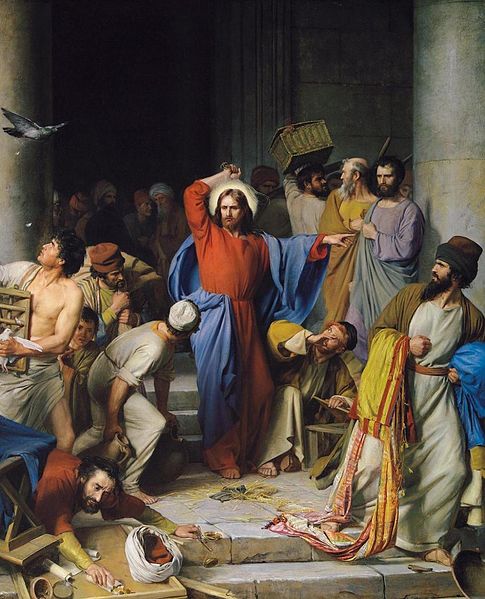
This is an installment of my series of replies to an article by Dr. David Madison: a pastor in the Methodist Church for nine years, who has a PhD in Biblical Studies from Boston University. It’s called, “Things We Wish Jesus Hadn’t Said” (Debunking Christianity, 7-21-19). His words will be in blue below. Dr. Madison makes several “generic” digs at Jesus and Christianity, in the written portion (it details a series of 12 podcasts):
A challenge for Christians: If you’re so sure Jesus existed, then you have some explaining to do. A major frustration is that, while believers are indignant at all the talk about Jesus not existing, they don’t know the issues that fuel the skepticism—and are unwilling to inform themselves.
Yes, I’m up to the “challenge.” No problem at all. I’m not threatened or “scared” by this in the slightest. It’s what I do, as an apologist. The question is whether Dr. Madison is up to interacting with counter-critiques? Or will he act like the voluminous anti-theist atheist polemicist Bob Seidensticker?: who directly challenged me in one of his own comboxes to respond to his innumerable attack-pieces against Christianity and the Bible, and then courageously proceeded to utterly ignore my 35 specific critiques of his claims as of this writing. We shall soon see which course Dr. Madison will decide to take. Anyway, he also states in his post and combox:
[S]o many of the words of Jesus are genuinely shocking. These words aren’t proclaimed much from the pulpit, . . . Hence the folks in the pews have absorbed and adored an idealized Jesus. Christian apologists make their livings refiguring so many of the things Jesus supposedly said.
The gospels are riddled with contradictions and bad theology, and Jesus is so frequently depicted as a cult fanatic—because cult fanatics wrote the gospels. We see Jesus only through their theological filters. I just want to grab hold of Christian heads (standing behind them, with a hand on each ear) and force them to look straight ahead, unflinchingly, at the gospels, and then ask “Tell me what you see!” uncoached by apologist specialists, i.e., priests and pastors, who’ve had a lot of practice making bad texts look good. . . . I DO say, “Deal with the really bad stuff in the gospels.” Are you SURE you’ve not make a big mistake endorsing this particular Lord and Savior? That’s the whole point of this series of Flash Podcasts, because a helluva lot of Christians would agree, right away, that these quotes are bad news—if no one told then that they’ve been attributed to Jesus.
Of course, Dr. Madison — good anti-theist atheist that he is — takes the view that we are not at all sure whether Jesus in fact said anything recorded in the Gospels in the first place. I don’t play that game, because there is no end to it. It’s like trying to pin jello to the wall. The atheist always has their convenient out (when refuted in argument about some biblical text) that Jesus never said it anyway [wink wink and sly patronizing grin], and/or that the biblical text in question was simply added later by dishonest ultra-biased Christian partisans and propagandists. It’s a silly and ultimately intellectually dishonest game, and so I always refuse to play it with atheists or anyone else, because there is no way to “win” with such an absurdly stacked, purely subjective deck.
In my defense of biblical texts, I start with the assumption that the manuscripts we have are quite sufficient for us to know what is in the Bible (believe it or not). Going on from there, I simply defend particular [supposedly “difficult”] texts, and note with appropriate argumentation, that “here, the Bible teaches so-and-so,” etc. I deal with the texts as they exist. I don’t get into the endlessly arbitrary, subjective games that atheists and theologically liberal biblical skeptics play with the texts, in their self-serving textual criticism.
Dr. Madison himself (fortunately) grants my outlook in terms of practical “x vs. y” debate purposes: “For the sake of argument, I’m willing to say, okay, Jesus was real and, yes, we have gospels that tell the story.” And in the combox: “So, we can go along with their insistence that he did exist. We’ll play on their field, i.e., the gospels.”
Good! So we shall examine his cherry-picked texts and see whether his interpretations of them can stand up to scrutiny. He is issuing challenges, and I as an apologist will be dishing a bunch of my own right back to him. Two can play this game. I will be dealing honestly with his challenges. Will he return the favor, and engage in serious and substantive dialogue? Again, we’ll soon know what his reaction will be. A true dialogue is of a confident, inquisitive, “nothing to fear and everything to gain” back-and-forth and interactive nature, not merely “ships passing in the night” or what I call “mutual monologue.”
*****
Dr. Madison’s ninth podcast of twelve is entitled: “On Matthew 10:14-15, towns that reject the message of the Kingdom of God will be destroyed.” Here is the “offending” passage:
Matthew 10:14-15 (RSV) And if any one will not receive you or listen to your words, shake off the dust from your feet as you leave that house or town. [15] Truly, I say to you, it shall be more tolerable on the day of judgment for the land of Sodom and Gomor’rah than for that town.
. . . two brutal verses . . . if you turned them away, would you deserve destruction on the day of judgment? . . . sounds vindictive and petty, no? . . . Doesn’t this sound like typical cult fanaticism, [that] we’ve heard from religious cranks forever? “If you don’t believe me, you’ll be sorry’ you’ll be damned.” And Jesus is supposed to be all about love and compassion, right? . . . Don’t be so confident that Jesus was a good guy, and that he was a great moral teacher. These verses undercut that.
Dr. Madison apparently doesn’t grasp or comprehend (agree or disagree) the notion of ultimate justice and God as Judge at all. It’s not that complicated. I tackled this general area in a reply to another atheist, entitled, “God’s Judgment of Sin: Analogies for an Atheist Inquirer” (9-6-18). Here are some excerpts (slightly abridged):
God as the Creator has the “prerogative” to judge His creation when they have gone astray.
We have earthly judges (by analogy) who do the same thing. A criminal commits a crime. He is given a fair trial, found guilty, and is then judged, if deemed guilty.
But it’s inconceivable that God is the Cosmic Judge?
Imagine if everyone on earth were like an SS agent (think, Heinrich Himmler). We took out people like that in World War II and everyone thought it was quite moral. But if God does it, suddenly it’s immoral.
Well, with the Flood and Sodom and Gomorrah, that’s what the Bible says took place: the level of immorality was virtually universal and beyond repair. So God judged. I don’t have the slightest problem with it. I think it’s exactly what we would expect in a God Who is both perfectly loving and a just judge.
In a blanket judgment by God there will be children who are killed as well. But they are not necessarily condemned to hell. God judges each soul individually. So yes, they may have to die young as a result of being in a hyper-corrupt culture (below the age of reason and guilt, as we Catholic say), but they have an eternal life in front of them and God will judge them justly in that respect.
In the atheist view, on the other hand, there is no ultimate justice at all. Since we are doing Nazi analogies, it would be as if the Nazis had won World War II and were ruling the world right now, doing all the evil they did while they were in power. In a world without God, there would be no ultimate justice. These Nazis would die and cease to exist. They would pay no penalty for their great evils (not even in this life if they aren’t defeated). Their victims would die and cease to exist as well, and never receive any good things. All they had was an earthy life which was a living hell under Nazi rule.
There is no justice or meaning or “happy ending” in that scenario. Many people in the world have a terrible life: and very often because of despotic rulers or bad social or religious systems. In the Christian worldview the unrepentant bad guys are judged for their evil (and will end up in hell). People who accept God’s grace spend eternity with God in heaven, in great bliss and joy, with no more suffering.
That is meaningful and just.
I also wrote in a similar article, “Is God an Unjust Judge? Dialogue with an Atheist” (10-30-17):
The Bible says that God is Love and the life of Jesus illustrates that rather dramatically. The Bible also teaches that He is the judge of the world. The two are not mutually exclusive. We don’t say that human judges are wicked and evil because they pass sentence (following jury verdicts) for someone to go to jail. We recognize that as due punishment for crimes.
God judges, as the Creator. He desires that none perish, but He does judge folks for the sins that they willingly commit. He doesn’t cause anyone to sin, but He judges them for their sins.
And in another paper of mine, “Dialogue w Atheists on Hell & Whether God is Just” (12-5-06; originally posted at Debunking Christianity), I argued by analogy:
When a criminal rebels against the laws of a society and is caught, convicted, and imprisoned for life, we don’t say that the “cause” of his imprisonment was the laws of the state that he violated, and rail against the very notion of law as the horrible, unjust cause of this guy’s suffering! He brought about his own demise by going astray. Likewise, with human beings, God, and hell.
The penalty for very serious crime in a civil sense is life imprisonment. That’s just how it is. Law itself is not to be blamed.
The penalty for very serious sin and rebellion against God in spiritual reality is eternal torment in hell. That’s just how it is. God (the ground of moral law) is not to be blamed for that. . . .
Because God is Creator He also has the prerogative to judge. This is analogous to our experience. Society takes it upon itself to judge the criminal and punish him if he supersedes the “just” laws that govern the society, in order to prevent chaos and suffering. If that is true of human society (one man to another), it is all the more of God, because He is ontologically above us (Creator and created).
So it is perfectly sensible and moral to posit (apart from the data of revelation) a notion of God judging both individuals and nations. God’s omniscience is such that He can determine if an entire nation has gone bad (“beyond repair,” so to speak) and should be punished. And He did so. Now, even in a wicked nation there may be individuals who are exceptions to the rule. So some innocent people will be killed. But this is like our human experience as well. In wartime, we go to war against an entire nation. In so doing, even if it is unintentional, some innocent non-combatants will be killed. . . .
Again, the societal analogy is perfectly apt. If someone rebels at every turn against every societal norm and law and appropriate behavior and so forth, is society to be blamed? Say someone grows up thinking that serial rape is fine and dandy and shouldn’t be prevented at all. So he goes and does this. Eventually, the legal system catches up with him and he gets his punishment. He rebelled against what most people think is wrong, and more than deserved his punishment.
We don’t say that there should be no punishment. We don’t blame society for his suffering in prison. We don’t deny that society has a right to judge such persons. So if mere human beings can judge each other, why cannot God judge His creation, and (particularly) those of His creation that have rebelled against Him at every turn? What is so incomprehensible about that? One may not believe it, but there is no radical incoherence or inconsistency or monstrous injustice or immorality in this Christian (and Jewish) viewpoint (which is what is always claimed by the critics).
An analogy I’ve used many times is to compare God to a Governor of a state. He or she have the power to pardon criminals. But the criminal has to accept the pardon. They can refuse it. People who choose to go to hell, do so of their own accord. It never had to happen. God, like the Governor, offers them free grace and salvation if they will but repent and accept it. But many choose to reject this free offer of salvation, which is universal (unlike Governors’ pardons).
It’s as absurd to judge God because people rebel against Him and end up in hell, as it would be to blame a Governor because a prisoner ludicrously refuses to be pardoned.
***
Photo credit: Jesus casting out the money changers at the temple, by Carl Bloch (1834-1890) [public domain / Wikimedia Commons]

***
alleged biblical contradictions
Previous Post

August 7, 2019
Madison vs. Jesus #8: Holy Eucharist as "Grotesque Magic"?
Next Post

August 7, 2019 Madison vs. Jesus #10: Universal Answered Prayer & Healing?
Browse Our Archives
Select a Category & Last Things About Me Anti-Catholicism Atheism & Agnosticism Baptism and Sacramentalism Bible and Tradition Blessed Virgin Mary Books by Dave Armstrong C. S. Lewis Calvinism & General Protestantism Catholic Apologetics Catholic Apologists Catholic conversion Catholic converts Christmas Church (Ecclesiology) Church History Conversion and Converts Development of Doctrine Eastern Orthodoxy Ecumenism & Christian Unity Eucharist & Liturgy Fathers of the Church French Translations G. K. Chesterton Hell Hell & Satan Hell & Satan & Last Things Heresies & Comparative Religion Holistic Health Inquisition & Crusades & Scandals James White Jews & Judaism & Old Testament John Calvin John Henry Newman Liberal / Modernist Theology Life Issues Literary Resume Lutheranism Mariology Martin Luther Music Orthodoxy Papacy & Infallibility Personal Page Philosophy & Science Political & Ethical & Moral Issues Protestant Persecution & Intolerance Protestantism Purgatory Purgatory & Penance Romantic & Imaginative Theology Saints & Purgatory & Penance Salvation Salvation & Justification Satan & Last Things Sexuality and Gender Issues Spanish Translations Traditionalism vs. Radical Catholic Reactionaries Traducciones al español / tradução para português Trinitarianism & Christology Uncategorized Videos
Select a Month October 2026 September 2026 August 2026 July 2026 June 2026 May 2026 April 2026 March 2026 February 2026 January 2026 December 2025 November 2025 October 2025 September 2025 August 2025 July 2025 June 2025 May 2025 April 2025 March 2025 February 2025 January 2025 December 2024 November 2024 October 2024 September 2024 August 2024 July 2024 June 2024 May 2024 April 2024 March 2024 February 2024 January 2024 December 2023 November 2023 October 2023 September 2023 August 2023 July 2023 June 2023 May 2023 April 2023 March 2023 February 2023 January 2023 December 2022 November 2022 October 2022 September 2022 August 2022 July 2022 June 2022 May 2022 April 2022 March 2022 February 2022 January 2022 December 2021 November 2021 October 2021 September 2021 August 2021 July 2021 June 2021 May 2021 April 2021 March 2021 February 2021 January 2021 December 2020 November 2020 October 2020 September 2020 August 2020 July 2020 June 2020 May 2020 April 2020 March 2020 February 2020 January 2020 December 2019 November 2019 October 2019 September 2019 August 2019 July 2019 June 2019 May 2019 April 2019 March 2019 February 2019 January 2019 December 2018 November 2018 October 2018 September 2018 August 2018 July 2018 June 2018 May 2018 April 2018 March 2018 February 2018 January 2018 December 2017 November 2017 October 2017 September 2017 August 2017 July 2017 June 2017 May 2017 April 2017 March 2017 February 2017 January 2017 December 2016 November 2016 October 2016 September 2016 August 2016 July 2016 June 2016 May 2016 April 2016 March 2016 February 2016 January 2016 December 2015 November 2015 October 2015 September 2015 August 2015 July 2015 June 2015 May 2015 April 2015 March 2015 February 2015 January 2015 December 2014 November 2014 October 2014 September 2014 August 2014 July 2014 June 2014 April 2014 March 2014 February 2014 January 2014 December 2013 November 2013 October 2013 September 2013 August 2013 July 2013 June 2013 April 2013 March 2013 February 2013 January 2013 December 2012 November 2012 October 2012 September 2012 August 2012 July 2012 June 2012 May 2012 April 2012 March 2012 February 2012 January 2012 December 2011 November 2011 October 2011 September 2011 August 2011 July 2011 June 2011 April 2011 March 2011 February 2011 October 2010 September 2010 August 2010 July 2010 April 2010 March 2010 December 2009 October 2009 August 2009 July 2009 June 2009 May 2009 March 2009 February 2009 October 2008 September 2008 April 2008 March 2008 February 2008 January 2008 December 2007 November 2007 October 2007 May 2007 March 2007 February 2007 January 2007 November 2006 October 2006 September 2006 August 2006 July 2006 June 2006 May 2006 April 2006 March 2006 February 2006 October 2005 June 2005 April 2005 February 2005 July 2004 May 2004 April 2004
Follow Us!
TAKE THE
Religious Wisdom Quiz
I made a rash vow that cost me my only child after a military victory. Who am I?
Select your answer to see how you score.
Jephthah Samson Gideon Barak
Books by This Author Books by Dave Armstrong
Related posts from Biblical Evidence for Catholicism

Capabilities of Heavenly Saints: Protestant Commentaries
Biblical Evidence for Catholicism

17 Church Fathers on Purgatory (Esp. 1 Cor...
Biblical Evidence for Catholicism

Exchanges on 1 Corinthians 3:10-15 & Purgatory
Biblical Evidence for Catholicism
Does Catholic Purgatory Require Literal Fire?
Biblical Evidence for Catholicism
TRENDING AT PATHEOS Catholic

The Sermon on the Mount, Part I: Matthew...
The Sermon on the Mount, Part I (Matthew 4:12-5:12) St. Matthew moves...

What's up from Crossway: Reviewing some of their latest A few weeks...

Janie Learns the Way of the Cross: A...
Teaching children about Jesus' Passion can be challenging. Many parents and educators...

Looking For Good Catholic Writing - October 2026
He alone extends the heavens, and he walks upon the waves of...

In "Irreplaceable," our book on vocation and technology, Trevor Sutton and I...

I was strolling through the top floor of the brand new Parthenon...
view all Catholic blogs
Ad-Free & Subscriber Log-In Subscription Support
- About Us
- 2026 Calendar
- Videos
- Podcasts
- Library of World Religions
- Faith In Media Tracker
- Advertise With Us
- Write for Us
- Privacy Policy
- Terms of Service
- Do Not Sell My Data
- Contact Us
- Radiant Digital
- Manage Newsletter Subscriptions
- Unsubscribe From Notifications
- Sitemap
Copyright 2008-2026, Patheos. All rights reserved.
Subscription Support Ad-Free & Subscriber Log-In
Follow Patheos