
BuddhistCatholicContemplativeEvangelicalGeneral ChristianHinduJewishLatter-day SaintMuslimNew VisionsProgressive Christian
Beliefs
- Buddhist
- Catholic
- Contemplative
- Evangelical
- General Christian
- Hindu
- Jewish
- Latter-day Saint
- More Voices
- Muslim
- New Visions
- Pagan
- Progressive Christian
Topics
- Religion News
- Food and Religion
- Sports and Religion
- Religious Art
- Religious Music and Entertainment
- Religious Events
- History and Religion
- Style and Religion
- Politics and Religion
- Women in Religion
- Recreation Outdoors and Religion
- Business Finance and Religion
- Careers Workplace and Religion
- Education and Religion
- Family Parenting and Religion
- Health Fitness and Religion
- Home and Religion
- Relationships and Religion
- Technology and Religion
- Travel and Religion
Columnists
- Buddhist Columnists
- Business Finance and Religion Columnists
- Careers Workplace and Religion Columnists
- Catholic Columnists
- Contemplative Columnists
- Education and Religion Columnists
- Evangelists Columnists
- Family Parenting and Religion Columnists
- General Christian Columnists
- Health Fitness and Religion Columnists
- Hindu Columnists
- History and Religion Columnists
- Home and Religion Columnists
- Jewish Columnists
- More Voices Columnists
- Latter Day Columnists
- Muslim Columnists
- New Visions Columnists
- Nonreligious Columnists
- Pagan Columnists
- Politics and Religion Columnists
- Progressive Columnists
- Recreation Outdoors and Religion Columnists
- Relationships and Religion Columnists
- Religion News Columnists
- Religious Art Columnists
- Religious Events Columnists
- Religious Music and Entertainment Columnists
- Sports and Religion Columnists
- Style and Religion Columnists
- Technology and Religion Columnists
- Travel and Religion Columnists
- Women in Religion Columnists
Resource Library
- 2026 Calendar
- Library of World Religions
- The 100 Most Holy Places on Earth
- Patheos Answers
- Podcasts
- Videos
- Faith Leaders Database
- Anglican Episcopalian
- Bahai
- Baptist
- Buddhism
- Christianity
- Confucianism
- Eastern Orthodoxy
- Hinduism
- Holiness and Pentecostal
- ISKCON
- Islam
- Judaism
- Lutheran
- Methodist
- The Church of Jesus Christ of Latter-day Saints
- New Age
- Paganism
- Presbytarian and Reformed
- Protestantism
- Religion Behind the Scenes
- Roman Catholic
- Scientology
- Shia Islam
- Sikhism
- Sufism
- Sunni Islam
- Taoism
- Zen
- See all religions
Research Tools
 Ad-Free & Subscriber Log-In Subscription Support
Ad-Free & Subscriber Log-In Subscription Support
Follow Patheos 

- Trending:
- Forgiveness
- |
- Marriage
- |
- Consciousness
- |
- Death Penalty
- |
- Election
- |
- Halloween

-
About
-
Catholic Apologetics
-
Church History
-
Great Apologists
-
Christian Worldview
-
Protestantism & Misc.
- Home
- Catholic
- History and Religion
- Madison vs. Jesus #12: Discipleship & Jewish Burial Customs
Madison vs. Jesus #12: Discipleship & Jewish Burial Customs
Last updated on: August 8, 2019 at 11:36 am by Dave Armstrong
Madison vs. Jesus #12: Discipleship & Jewish Burial Customs 2019-08-08T11:36:47-04:00 Dave Armstrong
Patheos Explore the world's faith through different perspectives on religion and spirituality! Patheos has the views of the prevalent religions and spiritualities of the world.
This is an installment of my series of replies to an article by Dr. David Madison: a pastor in the Methodist Church for nine years, who has a PhD in Biblical Studies from Boston University. It’s called, “Things We Wish Jesus Hadn’t Said” (Debunking Christianity, 7-21-19). His words will be in blue below. Dr. Madison makes several “generic” digs at Jesus and Christianity, in the written portion (it details a series of 12 podcasts):
A challenge for Christians: If you’re so sure Jesus existed, then you have some explaining to do. A major frustration is that, while believers are indignant at all the talk about Jesus not existing, they don’t know the issues that fuel the skepticism—and are unwilling to inform themselves.
Yes, I’m up to the “challenge.” No problem at all. I’m not threatened or “scared” by this in the slightest. It’s what I do, as an apologist. The question is whether Dr. Madison is up to interacting with counter-critiques? Or will he act like the voluminous anti-theist atheist polemicist Bob Seidensticker?: who directly challenged me in one of his own comboxes to respond to his innumerable attack-pieces against Christianity and the Bible, and then courageously proceeded to utterly ignore my 35 specific critiques of his claims as of this writing. We shall soon see which course Dr. Madison will decide to take. Anyway, he also states in his post and combox:
[S]o many of the words of Jesus are genuinely shocking. These words aren’t proclaimed much from the pulpit, . . . Hence the folks in the pews have absorbed and adored an idealized Jesus. Christian apologists make their livings refiguring so many of the things Jesus supposedly said.
The gospels are riddled with contradictions and bad theology, and Jesus is so frequently depicted as a cult fanatic—because cult fanatics wrote the gospels. We see Jesus only through their theological filters. I just want to grab hold of Christian heads (standing behind them, with a hand on each ear) and force them to look straight ahead, unflinchingly, at the gospels, and then ask “Tell me what you see!” uncoached by apologist specialists, i.e., priests and pastors, who’ve had a lot of practice making bad texts look good. . . . I DO say, “Deal with the really bad stuff in the gospels.” Are you SURE you’ve not make a big mistake endorsing this particular Lord and Savior? That’s the whole point of this series of Flash Podcasts, because a helluva lot of Christians would agree, right away, that these quotes are bad news—if no one told then that they’ve been attributed to Jesus.
Of course, Dr. Madison — good anti-theist atheist that he is — takes the view that we are not at all sure whether Jesus in fact said anything recorded in the Gospels in the first place. I don’t play that game, because there is no end to it. It’s like trying to pin jello to the wall. The atheist always has their convenient out (when refuted in argument about some biblical text) that Jesus never said it anyway [wink wink and sly patronizing grin], and/or that the biblical text in question was simply added later by dishonest ultra-biased Christian partisans and propagandists. It’s a silly and ultimately intellectually dishonest game, and so I always refuse to play it with atheists or anyone else, because there is no way to “win” with such an absurdly stacked, purely subjective deck.
In my defense of biblical texts, I start with the assumption that the manuscripts we have are quite sufficient for us to know what is in the Bible (believe it or not). Going on from there, I simply defend particular [supposedly “difficult”] texts, and note with appropriate argumentation, that “here, the Bible teaches so-and-so,” etc. I deal with the texts as they exist. I don’t get into the endlessly arbitrary, subjective games that atheists and theologically liberal biblical skeptics play with the texts, in their self-serving textual criticism.
Dr. Madison himself (fortunately) grants my outlook in terms of practical “x vs. y” debate purposes: “For the sake of argument, I’m willing to say, okay, Jesus was real and, yes, we have gospels that tell the story.” And in the combox: “So, we can go along with their insistence that he did exist. We’ll play on their field, i.e., the gospels.”
Good! So we shall examine his cherry-picked texts and see whether his interpretations of them can stand up to scrutiny. He is issuing challenges, and I as an apologist will be dishing a bunch of my own right back to him. Two can play this game. I will be dealing honestly with his challenges. Will he return the favor, and engage in serious and substantive dialogue? Again, we’ll soon know what his reaction will be. A true dialogue is of a confident, inquisitive, “nothing to fear and everything to gain” back-and-forth and interactive nature, not merely “ships passing in the night” or what I call “mutual monologue.”
*****
Dr. Madison’s 12th podcast of twelve is entitled: “On Luke 9:59-62, Jesus’ rude retort, ‘Let the dead bury their dead’ “. Here is the passage:
Luke 9:59-62 (RSV) To another he said, “Follow me.” But he said, “Lord, let me first go and bury my father.” [60] But he said to him, “Leave the dead to bury their own dead; but as for you, go and proclaim the kingdom of God.” [61] Another said, “I will follow you, Lord; but let me first say farewell to those at my home.” [62] Jesus said to him, “No one who puts his hand to the plow and looks back is fit for the kingdom of God.”
The negatives about Jesus in the Gospels are ignored. . . . The Gospel writers . . . were cult propagandists. . . . Of course, cults don’t want you to say farewell to your family. That would indicate divided loyalty. We can be sure that this Jesus script was invented by Luke because it’s not found in Matthew’s version of the story.
The same thought is found in Matthew:
Matthew 8:19-22 And a scribe came up and said to him, “Teacher, I will follow you wherever you go.” [20] And Jesus said to him, “Foxes have holes, and birds of the air have nests; but the Son of man has nowhere to lay his head.” [21] Another of the disciples said to him, “Lord, let me first go and bury my father.” [22] But Jesus said to him, “Follow me, and leave the dead to bury their own dead.”
Does that mean that now it isn’t “invented” because Matthew has it, too?
Even when I was a kid, I thought [this] was a terrible thing to say. . . . Why aren’t Christians bothered — I mean, really upset — by such nasty words? C’mon! It’s really mean to say, let someone else bury your father. . . . Are the good things good enough to cancel out all the bad stuff he’s said, or that the Gospel writers invented?
Dr. Madison seems to think this is some sort of silver bullet, since he has now done some variation of the [supposed] “hostility to family and wife” polemic now four times (installments one, four, five, and twelve [this current one] ). It takes up fully a third of his series thus far. He loves to insinuate that this is all fanatic cult-like behavior: to separate initiates from their previous strongest allegiance of family. People who do that are wacko, extremist nuts — so Dr. Madison reasons — ; therefore, Jesus is also a nut (or those who supposedly invented Him). I’ve thoroughly answered the charge, and it is seen over and over that there is nothing to it (it’s simply non-literal literary devices), but we’ll provide a bit more now, at no extra charge.
Catholic apologist Phillip Campbell writes on his Unam Sanctam Catholicam site (7-30-18):
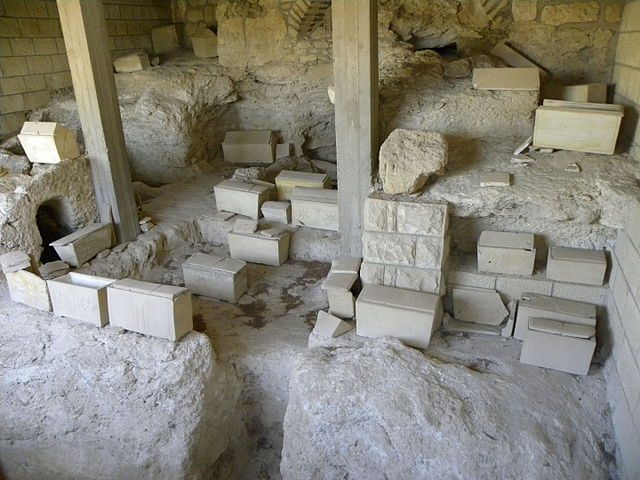
The issue revolves around the Jewish practice of “second burial” common in Palestine in Jesus’ time. In Jesus’ time, after a Jewish person had died, he would be immediately interred in the family burial cave or plot. The immediate period of mourning was seven days (shi’va), followed by a less intense mourning period of 30 days, called shloshim. However, the mourning period was not totally concluded until all the flesh had rotted off the body. This process usually took a year. At that time, the bones would be gathered and re-internment, or “second burial” (likkut aẓamot) would take place. The bones would be gathered together, placed in an ossuary (small chest-like container) and re-interred.
If the phrase “let me first go and bury my father” refers to this custom, then the man is asking Jesus for time to wait for the year-long likkut azamot mourning period to end so he can re-inter his father. Jesus essentially tells him, “You have already buried your father in the family tomb and honored him. There are others who can see to technicality of the re-internment.” . . .
[This] view has the benefit of taking into account Jewish burial customs has practiced in Jesus’ own day. It makes sense of Jesus’ objection; I noted above Jesus’ objection doesn’t make a lot of sense if the man is only asking for a few hours. But if the passage is referring to second burial, he could be asking for as much as 12 months leave, in which case it makes a lot more sense why Christ would object. The father is already buried in the family tomb with the remains of all the other family members; when Jesus says, “Let the dead bury their own dead,” he’s essentially making a joke, saying, “Your dad’s bones aren’t going anywhere. They are safe in the family tomb with all your other ancestors. I’m sure they’ll keep him company”; in other words, “Let the dead (your other ancestors in the family tomb) take care of your father’s bones until someone else in the family shows up to bury them.”
Gordon Franz (Archaeology and Biblical Research 5/2 [1992] 54-58) examines and exegetes the text in even greater detail, along the same lines; mentioning relevant scholarly articles and related Bible passages:
In the first century, when a person died, they normally were taken and buried immediately in the family burial cave that had been hewn out of bedrock. [For the archaeology of Jewish tombs during the New Testament period, see Rahmani 1958, 1961, 1982a]. This custom is based on the injunction found in the Mosaic Law, not to leave the corpse on an executed person on the tree overnight (Deut. 21:22-23). Two examples of immediate burials are found in the New Testament: Jesus (John 19:31) and Ananias and Sapphira (Acts 5:6-10).
Immediately after the burial, the family would separate itself and mourn for seven days. This mourning period was called shiv’ah. It would have been impossible for the disciples to make their request if their father had just died. If they were the eldest sons, they were obligated by custom to immediately bury their fathers. . . . the disciples would have been acting contrary to normal first-century Jewish burial practices.
An Interpretation Based on First-Century Jewish Burial Practices
McCane suggests an interpretation that is consistent with first-century Jewish burial practices (1990:40-41). After a body was placed in a burial cave, it was left to decompose. The family mourned for seven days. This initial mourning period was followed by a less intense 30-day period of mourning, called shloshim. However, the entire mourning period was not fully over until the flesh of the deceased had decomposed, usually about a year later. The Jerusalem Talmud states: When the flesh had wasted away, the bones were collected and placed in chests (ossuaries). On that day (the son) mourned, but the following day he was glad, because his forebears rested from judgment (Moed Qatan 1:5).
The final act of mourning, the gathering of the bones into a bone box called an ossuary, was called “ossilegium,” or “secondary burial.” It is this act, I believe, that is in view in our Lord’s response. [For a good discussion of secondary burials, see Meyers 1971; Rahmani 1981. On ossuaries, see Rahmani 1982b]. The disciples’ request and Jesus’ response makes good sense in light of the Jewish custom of secondary burial. When the disciples requested time to bury their fathers they were actually asking for time to finish the rite of secondary burial. Their father had died, been placed in the family burial cave, and the sons had sat shiv’ah and most likely shloshim. They had requested anywhere from a few weeks to up to 11 months to finish the ritual of ossilegium before they returned to Jesus.
Jesus’ sharp answer also fits well with secondary burial. The fathers had been buried in the family burial caves and their bodies were slowly decomposing. In the tombs, along with the fathers, were other family members who had died, some awaiting secondary burial, others already placed in ossuaries. When Jesus stated: “Let the dead bury their own dead,” He was referring to two different kinds of dead in the tomb: the bones of the deceased which had already been neatly placed in ossuaries and the fathers who had yet to be reburied. The phrase “own dead” indicates that the fathers were included among the dead.
[. . .]
The Reason for Jesus’ Response
Why would Jesus respond in a seemingly harsh manner? The purpose of His response may have been twofold. The first purpose was to encourage the disciples to faithfully follow Him. The second purpose and perhaps more importantly, was to teach correct theology.
The concept of gathering the bones of one’s ancestors is deeply embedded in the Hebrew Scriptures and reflected in Israelite burial practices (Gen. 49:29; Judges 2:10; 16:31; I Kings 11:21, 43, etc.). However, by New Testament times, the concept had taken on a new meaning. According to the Rabbinic sources, the decomposition of the flesh atoned for the sins of the dead person (a kind of purgatory) and the final stage of this process was gathering the bones and placing them in an ossuary (Meyers 1971: 80-85). Jesus confronts this contrary theology. Only faith in Christ’s redemptive work on the cross can atone for sin, not rotting flesh or any other work or merit of our own (Heb. 9:22, 26; Acts 4:12; Eph. 2:8, 9). Jesus may have rebuked these two disciples rather harshly because they were following the corrupted practice of secondary burial.
Conclusion
An amplified (interpretive) rendering of this statement might be: Look, you have already honored your father by giving him a proper burial in the family sepulcher. Now, instead of waiting for the flesh to decompose, this can never atone for sin, go and preach the Kingdom of God and tell of the only true means of atonement, faith alone in Christ. Let the bones of you dead father’s ancestors gather his bones and place them in an ossuary. You follow me! This interpretation allows for Jesus to have upheld the fifth commandment, takes the text at face value, and does justice to the Jewish burial practices of the first century. The interpretation is therefore consistent theologically, Biblically, and historically, and answers the critics accurately.
Bibiography
McCane, B.
1990 “Let the Dead Bury Their Own Dead”: Secondary Burial and Matt. 8:21-22. Harvard Theological Review 83:31-43.
Meyers, Eric
1971 Jewish Ossuaries: Reburial and Rebirth. Rome: Biblical Institute.
Rahmani, Levi
1958 A Jewish Tomb on Shahin Hill, Jerusalem. Israel Exploration Journal 8: 101-105.
1961 Jewish Rock-Cut Tombs in Jerusalem. Atiqot 3: 93-120.
1981 Ancient Jerusalem’s Funerary Customs and Tombs: Part One. Biblical Archaeologist 44: 171-177.
1982a Ancient Jerusalem’s Funerary Customs and Tombs: Part Three. Biblical Archaeologist 45: 43-53.
1982b Ancient Jerusalem’s Funerary Customs and Tombs: Part Four. Biblical Archaeologist 45: 109-119.
***
Photo credit: Ian Scott (5-21-09). First-century CE Jewish ossuaries at the Dominus Flevit church on the Mount of Olives. . . . An ossuary is a stone box that would hold the bones of a deceased person after they had been in a tomb long enough that the flesh had decayed. . . . During the Hellenistic and Roman periods [there was a] secondary burial in individual ossuaries that would be placed in any available corners around the tomb. [Wikimedia Commons / Creative Commons Attribution-Share Alike 2.0 Generic license]

***
Jews & Judaism & Old Testament
alleged biblical contradictions
Previous Post
August 8, 2019
Madison vs. Jesus #11: He's Not the Prince of Peace?
Next Post

August 9, 2019 Mary Mother of God: Dialogue w Evangelical Protestant
Browse Our Archives
Select a Category & Last Things About Me Anti-Catholicism Atheism & Agnosticism Baptism and Sacramentalism Bible and Tradition Blessed Virgin Mary Books by Dave Armstrong C. S. Lewis Calvinism & General Protestantism Catholic Apologetics Catholic Apologists Catholic conversion Catholic converts Christmas Church (Ecclesiology) Church History Conversion and Converts Development of Doctrine Eastern Orthodoxy Ecumenism & Christian Unity Eucharist & Liturgy Fathers of the Church French Translations G. K. Chesterton Hell Hell & Satan Hell & Satan & Last Things Heresies & Comparative Religion Holistic Health Inquisition & Crusades & Scandals James White Jews & Judaism & Old Testament John Calvin John Henry Newman Liberal / Modernist Theology Life Issues Literary Resume Lutheranism Mariology Martin Luther Music Orthodoxy Papacy & Infallibility Personal Page Philosophy & Science Political & Ethical & Moral Issues Protestant Persecution & Intolerance Protestantism Purgatory Purgatory & Penance Romantic & Imaginative Theology Saints & Purgatory & Penance Salvation Salvation & Justification Satan & Last Things Sexuality and Gender Issues Spanish Translations Traditionalism vs. Radical Catholic Reactionaries Traducciones al español / tradução para português Trinitarianism & Christology Uncategorized Videos
Select a Month October 2026 September 2026 August 2026 July 2026 June 2026 May 2026 April 2026 March 2026 February 2026 January 2026 December 2025 November 2025 October 2025 September 2025 August 2025 July 2025 June 2025 May 2025 April 2025 March 2025 February 2025 January 2025 December 2024 November 2024 October 2024 September 2024 August 2024 July 2024 June 2024 May 2024 April 2024 March 2024 February 2024 January 2024 December 2023 November 2023 October 2023 September 2023 August 2023 July 2023 June 2023 May 2023 April 2023 March 2023 February 2023 January 2023 December 2022 November 2022 October 2022 September 2022 August 2022 July 2022 June 2022 May 2022 April 2022 March 2022 February 2022 January 2022 December 2021 November 2021 October 2021 September 2021 August 2021 July 2021 June 2021 May 2021 April 2021 March 2021 February 2021 January 2021 December 2020 November 2020 October 2020 September 2020 August 2020 July 2020 June 2020 May 2020 April 2020 March 2020 February 2020 January 2020 December 2019 November 2019 October 2019 September 2019 August 2019 July 2019 June 2019 May 2019 April 2019 March 2019 February 2019 January 2019 December 2018 November 2018 October 2018 September 2018 August 2018 July 2018 June 2018 May 2018 April 2018 March 2018 February 2018 January 2018 December 2017 November 2017 October 2017 September 2017 August 2017 July 2017 June 2017 May 2017 April 2017 March 2017 February 2017 January 2017 December 2016 November 2016 October 2016 September 2016 August 2016 July 2016 June 2016 May 2016 April 2016 March 2016 February 2016 January 2016 December 2015 November 2015 October 2015 September 2015 August 2015 July 2015 June 2015 May 2015 April 2015 March 2015 February 2015 January 2015 December 2014 November 2014 October 2014 September 2014 August 2014 July 2014 June 2014 April 2014 March 2014 February 2014 January 2014 December 2013 November 2013 October 2013 September 2013 August 2013 July 2013 June 2013 April 2013 March 2013 February 2013 January 2013 December 2012 November 2012 October 2012 September 2012 August 2012 July 2012 June 2012 May 2012 April 2012 March 2012 February 2012 January 2012 December 2011 November 2011 October 2011 September 2011 August 2011 July 2011 June 2011 April 2011 March 2011 February 2011 October 2010 September 2010 August 2010 July 2010 April 2010 March 2010 December 2009 October 2009 August 2009 July 2009 June 2009 May 2009 March 2009 February 2009 October 2008 September 2008 April 2008 March 2008 February 2008 January 2008 December 2007 November 2007 October 2007 May 2007 March 2007 February 2007 January 2007 November 2006 October 2006 September 2006 August 2006 July 2006 June 2006 May 2006 April 2006 March 2006 February 2006 October 2005 June 2005 April 2005 February 2005 July 2004 May 2004 April 2004
Follow Us!
TAKE THE
Religious Wisdom Quiz
Who was King Saul's father?
Select your answer to see how you score.
Job Rehoboam Methuselah Kish
Books by This Author Books by Dave Armstrong
Related posts from Biblical Evidence for Catholicism

God, Modern Physics, & Dark Energy: An Analogy
Biblical Evidence for Catholicism
Reply to Protestants: Invalid Catholic Authority?
Biblical Evidence for Catholicism
2nd Reply to Anglican Sean Luke on Catholicism...
Biblical Evidence for Catholicism

History of Required Celibacy Disproves Catholicism?
Biblical Evidence for Catholicism
TRENDING AT PATHEOS Catholic

Swimfan: Forgotten Aughts Pleasures
This is a recovery effort. In 2002, My Big Fat Greek Wedding...

Top Three Anti-Catholic Lies About Catholicism
This is my initial transcript for the video, "THE 3 WORST...

Pope Leo Celebrates Mass for Nurses & Docs...
I don't have any idea how he did it, but Pope Leo...

The Sermon on the Mount, Part I: Matthew...
The Sermon on the Mount, Part I (Matthew 4:12-5:12) St. Matthew moves...

What's up from Crossway: Reviewing some of their latest A few weeks...

Janie Learns the Way of the Cross: A...
Teaching children about Jesus' Passion can be challenging. Many parents and educators...
view all Catholic blogs
Ad-Free & Subscriber Log-In Subscription Support
- About Us
- 2026 Calendar
- Videos
- Podcasts
- Library of World Religions
- Faith In Media Tracker
- Advertise With Us
- Write for Us
- Privacy Policy
- Terms of Service
- Do Not Sell My Data
- Contact Us
- Radiant Digital
- Manage Newsletter Subscriptions
- Unsubscribe From Notifications
- Sitemap
Copyright 2008-2026, Patheos. All rights reserved.
Subscription Support Ad-Free & Subscriber Log-In
Follow Patheos