
BuddhistCatholicContemplativeEvangelicalGeneral ChristianHinduJewishLatter-day SaintMuslimNew VisionsProgressive Christian
Beliefs
- Buddhist
- Catholic
- Contemplative
- Evangelical
- General Christian
- Hindu
- Jewish
- Latter-day Saint
- More Voices
- Muslim
- New Visions
- Pagan
- Progressive Christian
Topics
- Religion News
- Food and Religion
- Sports and Religion
- Religious Art
- Religious Music and Entertainment
- Religious Events
- History and Religion
- Style and Religion
- Politics and Religion
- Women in Religion
- Recreation Outdoors and Religion
- Business Finance and Religion
- Careers Workplace and Religion
- Education and Religion
- Family Parenting and Religion
- Health Fitness and Religion
- Home and Religion
- Relationships and Religion
- Technology and Religion
- Travel and Religion
Columnists
- Buddhist Columnists
- Business Finance and Religion Columnists
- Careers Workplace and Religion Columnists
- Catholic Columnists
- Contemplative Columnists
- Education and Religion Columnists
- Evangelists Columnists
- Family Parenting and Religion Columnists
- General Christian Columnists
- Health Fitness and Religion Columnists
- Hindu Columnists
- History and Religion Columnists
- Home and Religion Columnists
- Jewish Columnists
- More Voices Columnists
- Latter Day Columnists
- Muslim Columnists
- New Visions Columnists
- Nonreligious Columnists
- Pagan Columnists
- Politics and Religion Columnists
- Progressive Columnists
- Recreation Outdoors and Religion Columnists
- Relationships and Religion Columnists
- Religion News Columnists
- Religious Art Columnists
- Religious Events Columnists
- Religious Music and Entertainment Columnists
- Sports and Religion Columnists
- Style and Religion Columnists
- Technology and Religion Columnists
- Travel and Religion Columnists
- Women in Religion Columnists
Resource Library
- 2026 Calendar
- Library of World Religions
- The 100 Most Holy Places on Earth
- Patheos Answers
- Podcasts
- Videos
- Faith Leaders Database
- Anglican Episcopalian
- Bahai
- Baptist
- Buddhism
- Christianity
- Confucianism
- Eastern Orthodoxy
- Hinduism
- Holiness and Pentecostal
- ISKCON
- Islam
- Judaism
- Lutheran
- Methodist
- The Church of Jesus Christ of Latter-day Saints
- New Age
- Paganism
- Presbytarian and Reformed
- Protestantism
- Religion Behind the Scenes
- Roman Catholic
- Scientology
- Shia Islam
- Sikhism
- Sufism
- Sunni Islam
- Taoism
- Zen
- See all religions
Research Tools
 Ad-Free & Subscriber Log-In Subscription Support
Ad-Free & Subscriber Log-In Subscription Support
Follow Patheos 

- Trending:
- Forgiveness
- |
- Marriage
- |
- Consciousness
- |
- Death Penalty
- |
- Election
- |
- Halloween

-
About
-
Catholic Apologetics
-
Church History
-
Great Apologists
-
Christian Worldview
-
Protestantism & Misc.
- Home
- Catholic
- History and Religion
- David Madison vs. Paul and Romans #2: Chapter 2
David Madison vs. Paul and Romans #2: Chapter 2
Last updated on: August 26, 2019 at 1:28 pm by Dave Armstrong
David Madison vs. Paul and Romans #2: Chapter 2 2019-08-26T13:28:04-04:00 Dave Armstrong
Patheos Explore the world's faith through different perspectives on religion and spirituality! Patheos has the views of the prevalent religions and spiritualities of the world.
God’s Fair Judgment / Soteriology / God Knowing Our Thoughts / Chosen People
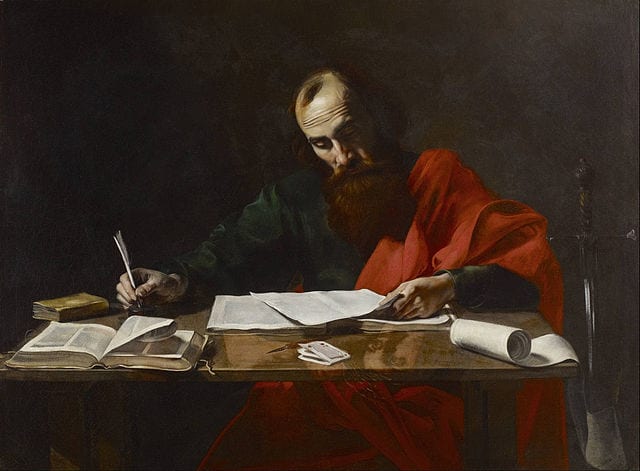
This is an installment of my replies to a series of articles on the epistle to the Romans (written by St. Paul) by Dr. David Madison: an atheist who was a Methodist minister for nine years: with a Ph.D. in Biblical Studies from Boston University. His summary article is called, “Bad Bible Theology: Paul’s Letter to the Romans: Let me count the ways…that Paul got it wrong” (2-26-18). He devotes a paper to each chapter. Unless he repeats himself (a bad habit of his) or descends to sheer biblical skepticism (which I have less than no interest in), I will reply to all.
The introduction is basically a catalogue of rank insults, where he calls St. Paul “a crank” and a “delusional cult fanatic” and “the prototype for Christian crazies” and “an obsessive-compulsive mediocre thinker and bad theologian” and “an embarrassment.” He adds: “how can anyone take this guy seriously?” That about covers the “content” there. Bears poop in the woods, brats throw fits, squirrels walk telephone lines, and the prevalent anti-theist brand of atheists insult Christians. Ho hum. What else is new?
Dr. Madison’s words will be in blue below.
*****
Dr. Madison calls his critique of Romans chapter 2, “Is the Church really filled with hypocrites? No.: But the apostle Paul noticed a few… “ (2-10-17).
Paul goes on this rant against hypocrites although he had never visited the congregation in Rome. Near the end of the letter, in chapter 16, he says “hi” to quite a few people whom he knows there, so maybe he had reports of unsavory conduct. In 1:11 he had written, “I long to see you, that I may impart to you some spiritual gift to strengthen you.” Hence his strong words against hypocrisy; maybe he’s giving advance warning?
We can give him credit for impatience with hypocrisy, but then nasty Paul resumes the rant. God will run out of patience: “…for those who are self-seeking and who obey not the truth but wickedness, there will be wrath and fury. There will be anguish and distress for everyone who does evil” (vv.8-9). Wrath, fury, anguish, distress. Paul’s message here reminds us of John the Baptist’s severe words for the religious leaders who came out to hear him preach: “You brood of vipers! Who warned you to flee the wrath to come? …even now the axe is lying at the root of the trees; every tree therefore that does not bear good fruit is cut down and thrown into the fire.” (Matthew 3:7-10) Yes, there are Hallmark moments in Paul’s letters, but there is uncompressing severity as well. Don’t get carried away bragging about a ‘god of love’ in the New Testament.
I dealt with this false idea that God’s judgment or reference to it by His creatures (like Paul) is somehow supposedly immediately an evil, wicked thing, in the previous installment. No need to go over old ground . . . But we see that Dr. Madison will often be repeating himself once again: a hallmark of his attack against the Gospel of Mark also.
Can It Be? A Hint at Secular Ethics?
Again, to his credit, Paul saw that being in God’s favor didn’t depend on being Jewish, i.e., in the company of those who had heard God’s law for centuries. “For it is not the hearers of the law who are righteous in God’s sight, but the doers of the law who will be justified” (v. 13). No matter who you are, you can qualify, and I find vv. 14-15 startling; did Paul really realize what he was saying: “When Gentiles, who do not possess the law, do instinctively what the law requires, these, though not having the law, are a law to themselves. They show that what the law requires is written on their hearts, to which their own conscience also bears witness…” Do instinctively…written on their hearts…their own conscience bears witness? Atheists who argue that we don’t need religion to behave morally embrace these very concepts.
I wondered aloud in my previous reply how Dr. Madison would deal with this. I thought he might deny that Paul wrote it. Instead, he gives him credit, and calls this “secular ethics.” It may be part of secular ethics (although those don’t usually reference God), but it is also Christian ethics and always has been. I give Dr. Madison credit as well, for recognizing and praising this portion that he would agree with. Not bad: to be written by “a crank” and a “the prototype for Christian crazies” huh?
I noted this passage way back in 2003, in one of my more “conciliatory” papers about atheism.
But Paul is caught in a major contradiction here, because he really doesn’t mean what he says in verse 10, i.e., that glory, honor and peace are for everyone who does good. The heart of Pauline theology, so earnestly embraced by Luther, was justification by faith, as stated so bluntly by Paul in Romans 10:9: “If you confess with your lips that Jesus is Lord and believe in your heart that God raised him from the dead, you will be saved.” No amount of ‘doing good’ will do the trick.
There is no contradiction. This is simply Dr. Madison the former Methodist, interpreting Paul the way Protestants do. Paul teaches precisely what Catholics hold, regarding justification and salvation, as I have shown in many papers:
St. Paul on Justification, Sanctification, & Salvation [1996]
Romans 2-4 & “Works of the Law”: Patristic Interpretation [2-16-01]
St. Paul on Grace, Faith, & Works (50 Passages) [8-6-08]
Justification: Not by Faith Alone, & Ongoing (Romans 4, James 2, and Abraham’s Multiple Justifications) [10-15-11]
St. Paul’s Use of the Term “Gift” & Infused Justification [2013]
“Catholic Justification” in James & Romans [11-18-15]
Philippians 2:12 & “Work[ing] Out” One’s Salvation [1-26-16]
‘Doers of the Law’ Are Justified, Says St. Paul [National Catholic Register, 5-22-19]
The Invasion-of-Privacy God
No surprise: personal monotheism is stated here with a vengeance. Paul is confident that, on the Day of Judgment, “…God, through Jesus Christ, will judge the secret thoughts of all.” (v. 16) God will judge your thoughts! The theologians who came up with this idea discovered the formula for terrorizing people.
“The theologians” didn’t come up with anything. This was part of God’s revelation. It’s called omniscience: i.e., God knows everything. Thus, this would include human thoughts. It was taught in the Old Testament long before Paul was born:
1 Chronicles 28:9 (RSV) …the LORD searches all hearts, and understands every plan and thought.… (cf. 1 Ki 8:39; 2 Chr 6:30; Ps 44:21; Is 66:18; Ezek 11:5; Mt 6:8; Lk 16:15; Acts 1:24; Rom 8:27; Heb 4:13)
Psalm 147:5 Great is our LORD, and abundant in power; his understanding is beyond measure. (cf. Job 36:4; 37:16; Is 40:28; 46:10; 48:3; Acts 15:18)
I suppose it would be a source of terror for unrepentant sinners on judgment day. But of course, that’s not God‘s fault. They chose to reject Him.
Jesus was in the same camp (at least as depicted by those who created the fictional Galilean peasant); he claimed that the hairs of our head are numbered—and the deity knows as well the thought-crimes inside our skulls: lust is the equivalent of adultery.
Yes He was. This hits upon a major component of atheism, or the subjective reasons for atheism. The atheist (or any unrepentant, active sinner) doesn’t like the idea of God watching over them and knowing what they are doing. That goes against the desire for human autonomy and freedom that we all have or tend to have. And so the easiest way to get rid of this “cosmic supervision” is to deny that God exists.
I once had a parishioner who was worried that people were watching her through the TV. Crazy, yes, but just drop the TV, and that’s what personal monotheism is: God is always watching you. Who thinks it’s cool to have cameras—installed by the state, our boss, landlord or a god—spying on us in our bedrooms and bathrooms—indeed, everywhere? And with the capacity for getting inside our heads. This evil theology should be off-putting to decent people.
See what I mean? Dr. Madison demonstrates for one and all precisely what I just stated (and I am answering as I read: as is my usual custom and modus operandi). I would say that “decent” Christians aren’t offended by this. It’s simply part of Who God is: omnipotent, omniscient, omnipresent, and omnibenevolent. This knowledge (of God and our awareness of it) should cause us to reform our bad behavior. But if a person doesn’t want to do that, then he or she would be hostile to all these related ideas: hence also to God; and so they reject Him and deny that He exists.
As for the folks who have lost their faith and mourn its passing, Christopher Hitchens asked why—why would you want it back? Personal monotheism is totalitarianism: you can’t even have ‘secret thoughts’ without God knowing. Heaven, Hitchens said, is a celestial North Korea. He couldn’t imagine anyone yearning for it.
Right. I submit that he can’t imagine anyone who wants to hold on to sinful behavior and thoughts, contrary to God’s will, liking the idea that God knows all their thoughts.
Paul and Jesus should rub people the wrong way because they claimed to be on a first name basis with the Invasion-of-Privacy god. Beware all who position themselves this way—and posture accordingly. They rate themselves as supremely qualified to tell the rest of us what to do. As we go through the Letter to the Romans we will see that Paul specializes in just that.
God’s messengers tell us what God revealed about Himself. Why would anyone expect otherwise (on the assumption that God exists)? So, don’t blame them; blame the God Who motivates and sends them.
A Positive Note at the End
Paul had little patience with the notion of Chosen People. So being circumcised was irrelevant; this outward mark on the flesh counted for nothing:
Well, it wasn’t nothing when Paul had Timothy (half Jewish and half Gentile) circumcised (Acts 16:1-3).
“Rather, a person is a Jew who is one inwardly, and real circumcision is a matter of the heart—it is spiritual and not literal. Such a person receives praise not from others but from God” (v.29).
A nice sentiment indeed . . .
All this shows is that Paul agreed that all the rituals of the Mosaic Law were not binding on Gentiles. But it doesn’t follow that the Jews were not the chosen people, or that Paul denied that they were. Romans 11 puts the lie to the latter:
Romans 11:1-2 I ask, then, has God rejected his people? By no means! I myself am an Israelite, a descendant of Abraham, a member of the tribe of Benjamin. [2] God has not rejected his people whom he foreknew. . . .
Romans 11:17-18 But if some of the branches were broken off, and you, a wild olive shoot, were grafted in their place to share the richness of the olive tree, [18] do not boast over the branches. If you do boast, remember it is not you that support the root, but the root that supports you.
Romans 11:26-29 and so all Israel will be saved; as it is written, “The Deliverer will come from Zion, he will banish ungodliness from Jacob”; [27] “and this will be my covenant with them when I take away their sins.” [28] As regards the gospel they are enemies of God, for your sake; but as regards election they are beloved for the sake of their forefathers. [29] For the gifts and the call of God are irrevocable.
See also Romans 3:
Romans 3:1-4 Then what advantage has the Jew? Or what is the value of circumcision? [2] Much in every way. To begin with, the Jews are entrusted with the oracles of God. [3] What if some were unfaithful? Does their faithlessness nullify the faithfulness of God? [4] By no means! Let God be true though every man be false, as it is written, “That thou mayest be justified in thy words, and prevail when thou art judged.”
Romans 3:31 Do we then overthrow the law by this faith? By no means! On the contrary, we uphold the law.
***
Photo credit: Saint Paul Writing His Epistles (c. 1620), attributed to Valentin de Boulogne (1591-1632) [public domain / Wikimedia Commons]

***
alleged biblical contradictions
Bad Bible Theology: Paul’s Letter to the Romans
Previous Post
August 22, 2019
David Madison: Synoptics vs. John Re Jesus' Will & Passion?
Next Post

August 26, 2019 "Who is My Mother?": Beginning of "Familial Church"
Browse Our Archives
Select a Category & Last Things About Me Anti-Catholicism Atheism & Agnosticism Baptism and Sacramentalism Bible and Tradition Blessed Virgin Mary Books by Dave Armstrong C. S. Lewis Calvinism & General Protestantism Catholic Apologetics Catholic Apologists Catholic conversion Catholic converts Christmas Church (Ecclesiology) Church History Conversion and Converts Development of Doctrine Eastern Orthodoxy Ecumenism & Christian Unity Eucharist & Liturgy Fathers of the Church French Translations G. K. Chesterton Hell Hell & Satan Hell & Satan & Last Things Heresies & Comparative Religion Holistic Health Inquisition & Crusades & Scandals James White Jews & Judaism & Old Testament John Calvin John Henry Newman Liberal / Modernist Theology Life Issues Literary Resume Lutheranism Mariology Martin Luther Music Orthodoxy Papacy & Infallibility Personal Page Philosophy & Science Political & Ethical & Moral Issues Protestant Persecution & Intolerance Protestantism Purgatory Purgatory & Penance Romantic & Imaginative Theology Saints & Purgatory & Penance Salvation Salvation & Justification Satan & Last Things Sexuality and Gender Issues Spanish Translations Traditionalism vs. Radical Catholic Reactionaries Traducciones al español / tradução para português Trinitarianism & Christology Uncategorized Videos
Select a Month October 2026 September 2026 August 2026 July 2026 June 2026 May 2026 April 2026 March 2026 February 2026 January 2026 December 2025 November 2025 October 2025 September 2025 August 2025 July 2025 June 2025 May 2025 April 2025 March 2025 February 2025 January 2025 December 2024 November 2024 October 2024 September 2024 August 2024 July 2024 June 2024 May 2024 April 2024 March 2024 February 2024 January 2024 December 2023 November 2023 October 2023 September 2023 August 2023 July 2023 June 2023 May 2023 April 2023 March 2023 February 2023 January 2023 December 2022 November 2022 October 2022 September 2022 August 2022 July 2022 June 2022 May 2022 April 2022 March 2022 February 2022 January 2022 December 2021 November 2021 October 2021 September 2021 August 2021 July 2021 June 2021 May 2021 April 2021 March 2021 February 2021 January 2021 December 2020 November 2020 October 2020 September 2020 August 2020 July 2020 June 2020 May 2020 April 2020 March 2020 February 2020 January 2020 December 2019 November 2019 October 2019 September 2019 August 2019 July 2019 June 2019 May 2019 April 2019 March 2019 February 2019 January 2019 December 2018 November 2018 October 2018 September 2018 August 2018 July 2018 June 2018 May 2018 April 2018 March 2018 February 2018 January 2018 December 2017 November 2017 October 2017 September 2017 August 2017 July 2017 June 2017 May 2017 April 2017 March 2017 February 2017 January 2017 December 2016 November 2016 October 2016 September 2016 August 2016 July 2016 June 2016 May 2016 April 2016 March 2016 February 2016 January 2016 December 2015 November 2015 October 2015 September 2015 August 2015 July 2015 June 2015 May 2015 April 2015 March 2015 February 2015 January 2015 December 2014 November 2014 October 2014 September 2014 August 2014 July 2014 June 2014 April 2014 March 2014 February 2014 January 2014 December 2013 November 2013 October 2013 September 2013 August 2013 July 2013 June 2013 April 2013 March 2013 February 2013 January 2013 December 2012 November 2012 October 2012 September 2012 August 2012 July 2012 June 2012 May 2012 April 2012 March 2012 February 2012 January 2012 December 2011 November 2011 October 2011 September 2011 August 2011 July 2011 June 2011 April 2011 March 2011 February 2011 October 2010 September 2010 August 2010 July 2010 April 2010 March 2010 December 2009 October 2009 August 2009 July 2009 June 2009 May 2009 March 2009 February 2009 October 2008 September 2008 April 2008 March 2008 February 2008 January 2008 December 2007 November 2007 October 2007 May 2007 March 2007 February 2007 January 2007 November 2006 October 2006 September 2006 August 2006 July 2006 June 2006 May 2006 April 2006 March 2006 February 2006 October 2005 June 2005 April 2005 February 2005 July 2004 May 2004 April 2004
Follow Us!
TAKE THE
Religious Wisdom Quiz
Proverbs warns against what kind of woman as a symbol of temptation?
Select your answer to see how you score.
Widow Mother-in-law Queen Adulterous woman
Books by This Author Books by Dave Armstrong
Related posts from Biblical Evidence for Catholicism

God, Modern Physics, & Dark Energy: An Analogy
Biblical Evidence for Catholicism

General Debate on Christianity with an Atheist
Biblical Evidence for Catholicism

Can Atheists Be Saved? Surprising Biblical Data
Biblical Evidence for Catholicism
Can Atheists Be Saved? YES! (Possibly Some ....
Biblical Evidence for Catholicism
TRENDING AT PATHEOS Catholic

The Sermon on the Mount, Part I: Matthew...
The Sermon on the Mount, Part I (Matthew 4:12-5:12) St. Matthew moves...

What's up from Crossway: Reviewing some of their latest A few weeks...

Janie Learns the Way of the Cross: A...
Teaching children about Jesus' Passion can be challenging. Many parents and educators...

Looking For Good Catholic Writing - October 2026
He alone extends the heavens, and he walks upon the waves of...

In "Irreplaceable," our book on vocation and technology, Trevor Sutton and I...

I was strolling through the top floor of the brand new Parthenon...
view all Catholic blogs
Ad-Free & Subscriber Log-In Subscription Support
- About Us
- 2026 Calendar
- Videos
- Podcasts
- Library of World Religions
- Faith In Media Tracker
- Advertise With Us
- Write for Us
- Privacy Policy
- Terms of Service
- Do Not Sell My Data
- Contact Us
- Radiant Digital
- Manage Newsletter Subscriptions
- Unsubscribe From Notifications
- Sitemap
Copyright 2008-2026, Patheos. All rights reserved.
Subscription Support Ad-Free & Subscriber Log-In
Follow Patheos