
BuddhistCatholicContemplativeEvangelicalGeneral ChristianHinduJewishLatter-day SaintMuslimNew VisionsProgressive Christian
Beliefs
- Buddhist
- Catholic
- Contemplative
- Evangelical
- General Christian
- Hindu
- Jewish
- Latter-day Saint
- More Voices
- Muslim
- New Visions
- Pagan
- Progressive Christian
Topics
- Religion News
- Food and Religion
- Sports and Religion
- Religious Art
- Religious Music and Entertainment
- Religious Events
- History and Religion
- Style and Religion
- Politics and Religion
- Women in Religion
- Recreation Outdoors and Religion
- Business Finance and Religion
- Careers Workplace and Religion
- Education and Religion
- Family Parenting and Religion
- Health Fitness and Religion
- Home and Religion
- Relationships and Religion
- Technology and Religion
- Travel and Religion
Columnists
- Buddhist Columnists
- Business Finance and Religion Columnists
- Careers Workplace and Religion Columnists
- Catholic Columnists
- Contemplative Columnists
- Education and Religion Columnists
- Evangelists Columnists
- Family Parenting and Religion Columnists
- General Christian Columnists
- Health Fitness and Religion Columnists
- Hindu Columnists
- History and Religion Columnists
- Home and Religion Columnists
- Jewish Columnists
- More Voices Columnists
- Latter Day Columnists
- Muslim Columnists
- New Visions Columnists
- Nonreligious Columnists
- Pagan Columnists
- Politics and Religion Columnists
- Progressive Columnists
- Recreation Outdoors and Religion Columnists
- Relationships and Religion Columnists
- Religion News Columnists
- Religious Art Columnists
- Religious Events Columnists
- Religious Music and Entertainment Columnists
- Sports and Religion Columnists
- Style and Religion Columnists
- Technology and Religion Columnists
- Travel and Religion Columnists
- Women in Religion Columnists
Resource Library
- 2026 Calendar
- Library of World Religions
- The 100 Most Holy Places on Earth
- Patheos Answers
- Podcasts
- Videos
- Faith Leaders Database
- Anglican Episcopalian
- Bahai
- Baptist
- Buddhism
- Christianity
- Confucianism
- Eastern Orthodoxy
- Hinduism
- Holiness and Pentecostal
- ISKCON
- Islam
- Judaism
- Lutheran
- Methodist
- The Church of Jesus Christ of Latter-day Saints
- New Age
- Paganism
- Presbytarian and Reformed
- Protestantism
- Religion Behind the Scenes
- Roman Catholic
- Scientology
- Shia Islam
- Sikhism
- Sufism
- Sunni Islam
- Taoism
- Zen
- See all religions
Research Tools
 Ad-Free & Subscriber Log-In Subscription Support
Ad-Free & Subscriber Log-In Subscription Support
Follow Patheos 

- Trending:
- Forgiveness
- |
- Marriage
- |
- Consciousness
- |
- Death Penalty
- |
- Election
- |
- Halloween

-
About
-
Catholic Apologetics
-
Church History
-
Great Apologists
-
Christian Worldview
-
Protestantism & Misc.
- Home
- Catholic
- History and Religion
- Maximilian Kolbe’s “Flowery” Marian Veneration & the Bible
Maximilian Kolbe’s “Flowery” Marian Veneration & the Bible
Last updated on: July 9, 2019 at 3:57 pm by Dave Armstrong
Maximilian Kolbe’s “Flowery” Marian Veneration & the Bible 2019-07-09T15:57:14-04:00 Dave Armstrong
Patheos Explore the world's faith through different perspectives on religion and spirituality! Patheos has the views of the prevalent religions and spiritualities of the world.
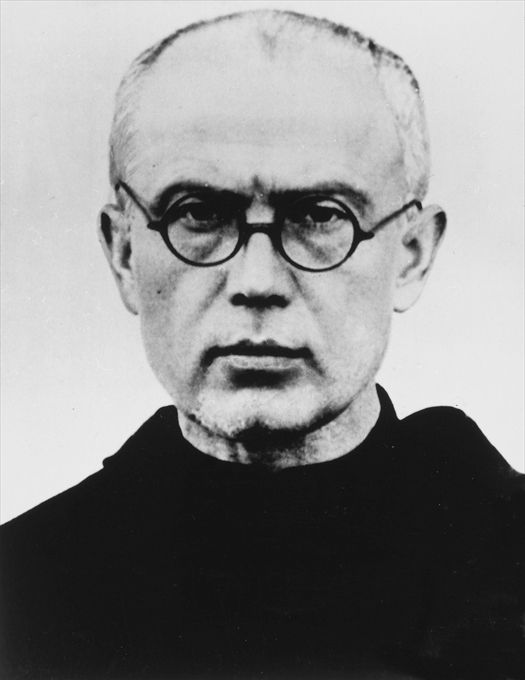
The Marian piety of St. Maximilian Kolbe (1894-1941) has also been criticized as supposedly placing Mary above Jesus. One shocked Protestant correspondent asked me why Fr. Kolbe desired to “praise and glorify Mary and die for her alone.”
Catholic devotional language involving Mary is often misunderstood, because it is usually read out of context, and in isolation from what the same person elsewhere expressed about God. One must understand that it is not to be — should never be — interpreted in exclusion of Jesus and God the Father.
As so often in these discussions with critics of Catholic Mariology, a prayer or other writing is cited that was picked up from a second-hand source, often without any documentation, so that a person could check out the entire context. Passages in isolation often seem to imply a great many things that in fact they were not intended to imply, but out of context, we cannot fully understand them. Here, for example, is the saint’s Act of Consecration to Mary:
Allow me to praise You, O most holy Virgin, with my personal commitment and sacrifice.
Allow me to live, work, suffer, be consumed and die for You, just for You.
Allow me to bring the whole world to you.
Allow me to contribute to Your ever greater exaltation, to Your greatest possible exaltation.
Allow me to give You such glory that no one else has ever given You up to now.
Allow others to surpass me in zeal for Your exaltation, and me to surpass them, so that by means of such noble rivalry Your glory may increase ever more profoundly, ever more rapidly, ever more intensely as He Who has exalted You so indescribably above all other beings Himself desires.
In You alone has God been adored beyond compare, more than in all His saints.
For You God has created the world. For You God has also called me to existence. For what reason have I merited this fortune?
Oh, allow me to praise You, O most holy Virgin!
Now, of course, this is horrifying to Protestant ears because Protestants are quite unaccustomed to Catholic Marian devotional language, and thus tend to project the very worst notions onto it. It could hardly be otherwise, in a theological system that forbids the communion and veneration of saints altogether. In such a system, if an adherent sees language like this attributed to a creature, they will immediately assume that it is meant in an idolatrous fashion, in a way that is deliberately meant to exclude or denigrate God.
But that is the false assumption. St. Maximilian Kolbe, in line with all orthodox Catholics, does not intend at all to usurp God’s unique role and replace it with Mary. We see that in the mentions of God in this very prayer (“He Who has exalted You,” “In You alone has God been adored beyond compare, more than in all His saints”).
In Catholic thought, the saint is not placed in opposition to God, but rather, is seen as an “exhibit” or “”product” of the glory and grace of God, through whom God is to be adored.
I understand that the language of prayers like the one above will be thought by most Protestants to be extreme and excessive. There isn’t much anyone can do about that, because it is fully to be expected, due to the different premises with which Catholics and Protestants approach the topic of Mary. But what we can do is examine the larger context and also show what St. Maximilian Kolbe says about God elsewhere in his writings, just as he mentions God here, and gives the key perspective of how his words are to be properly interpreted.
My Protestant friend had cited the last part only, of St. Maximilian’s Prayer to the Immaculate. Here is a longer excerpt:
Who are you, my Queen? Who are you, Immaculate? I cannot understand what it means to be a creature of God.
Immaculate… I turn to you in a humble prayer: Grant me the gift to praise you, Blessed Virgin… Help me understand and express what God prepared in you and through you.
Immaculate, Queen of heaven and earth, I know I am unworthy to approach you, to fall on my knees in front of you, but since I love you so much, let me ask you, you who are so good, to tell me who you are, because I have the desire to know you more
and more, without limits, and to love you with increasing fervor.
Grant me the gift to praise you, Blessed Virgin.
Let me glorify you by my sacrifice.
May I live, work, suffer, be consumed and die for you and you alone!
(Quoted in the Revue du Rosaire, February 1973)
But because the entire first part wasn’t cited in the excerpt, one would miss the mention of God: “Help me understand and express what God prepared in you and through you.”
This places the emphasis squarely on God, as the source of Mary’s holiness, so that it is not an idolatrous statement (which means, by definition, putting something in place of God, or above God). The statement above is not unlike (in theme or concept) several in the Bible:
Acts 14:26 (RSV) and from there they sailed to Antioch, where they had been commended to the grace of God for the work which they had fulfilled.
Acts 20:24 But I do not account my life of any value nor as precious to myself, if only I may accomplish my course and the ministry which I received from the Lord Jesus, to testify to the gospel of the grace of God.
1 Corinthians 1:4 I give thanks to God always for you because of the grace of God which was given you in Christ Jesus,
1 Corinthians 3:10 According to the grace of God given to me, like a skilled master builder I laid a foundation, and another man is building upon it. Let each man take care how he builds upon it.
1 Corinthians 15:10 But by the grace of God I am what I am, and his grace toward me was not in vain. On the contrary, I worked harder than any of them, though it was not I, but the grace of God which is with me.
2 Corinthians 1:12 For our boast is this, the testimony of our conscience that we have behaved in the world, and still more toward you, with holiness and godly sincerity, not by earthly wisdom but by the grace of God.
2 Corinthians 6:1 Working together with him, then, we entreat you not to accept the grace of God in vain.
Ephesians 2:10 For we are his workmanship, created in Christ Jesus for good works, which God prepared beforehand, that we should walk in them.
That describes Mary: who was hailed by an angel and described as “full of grace” (Luke 1:28).
A survey of St. Maximilian Kolbe’s Mariology shows how it is not opposed to God and His proper place as the exalted Creator, alone to be adored, at all. For example, his Novena in Honor of the Immaculate Conception contains the following portions about God (I haven’t indicated all text breaks with ellipses; these are lengthy excerpts):
Intercede for us with our Lord Jesus Christ.
Because you bore his Son, pray to the Father for us. Through the spotless conception of the Virgin, 0 God, you made ready a dwelling place worthy of your Son. In anticipation of your Son’s death you preserved her from every stain. Please purify us by her intercession, so that we might find our way to you. We ask this through Christ our Lord.
Day 1: The Immaculata’s Relationship to the Trinity
Reading: From all eternity the Father begets the Son, and the Holy Spirit proceeds from the Father and Son. This life of the most Holy Trinity is re-echoed in numberless and various ways by the creatures that issue from God’s hands.… Every act of love in God comes forth from the Father through the Son and the Holy Spirit. God creates, maintains in existence, gives life and growth in the natural as well as in the supernatural order. In his love God supports in existence all his innumerable limited created resemblances; and the love-reaction that is provoked in the creature can return to the Father only through the Holy Spirit and the Son… Among creatures, the summit of this love that goes back to God is the Immaculata, the one being totally with-out any stain of sin, all beautiful, all divine. At no time did her will ever deviate from God’s will. With all its strength, her will was always at one with his. In her there came about the marvelous union of God with creation (Kolbe’s “Sketches for a Book,” 1940).
Meditation: Cultivating a personal relationship with each member of the Holy Trinity is an obligation for every individual. May the Immaculata’s love-response to each of the Three Divine Persons serve as a model and stimulus for each of us.
Day 2: The Immaculata as Spouse of the Holy Spirit
Reading: United to the Holy Spirit as his Spouse, the Immaculata is one with God in an incomparably more perfect way than can be predicated of any other creature. What sort of union is this? It is above all an interior union, a union of her essence with the “essence” of the Holy Spirit. The Holy Spirit dwells in her, lives in her. This was true from the first instant of her existence. It was always true; it will always be true. In what does this life of the Spirit in Mary consist? He himself is uncreated Love in her; the Love of the Father and of the Son, the Love by which God loves himself, the very love of the most Holy Trinity. He is a fruitful love, a “Conception.” Among creatures made in God’s image the union brought about by married love is the most intimate of all (cf. Mt 19:6). In a much more precise, more interior, more essential manner, the Holy Spirit lives in the soul of the Immaculata, in the depths of her very being. He makes her fruitful, from the very first instant of her existence, all during her life, and for all eternity (“Sketches for a book,” 17 February 1941).
Meditation: To grow in daily awareness of the Holy Spirit’s presence within us is a constant challenge that God gives to each and all of us. May the Immaculata’s perfect life in the Holy Spirit cause a sharpening of our own attentiveness to his presence at the core of our inner selves.
Day 3: The Immaculata’s Place in God’s Plan of Creation and Salvation
Reading: The Immaculata appears in this world, without the least stain of sin, the masterpiece of God’s hands, full of grace. God, the most Holy Trinity, beholds the lowliness (i.e., the humility, the root of all her other virtues) of his handmaid, and “does great things” for her (cf. Lk 1:49). God the Father gives her his own Son to be her Son; God the Son descends into her womb; and God the Holy Spirit forms the body of Christ in the womb of this most pure virgin. “And the Word was made flesh” (Jn 1:14). The Immaculata becomes the Mother of God. The fruit of the love of God in his Trinitarian life and of Mary the Immaculata, is Christ, the God-man. Hence forth all the other sons of God must be modeled after this first Son of God, the God-man, the infinite One. They must reproduce his traits; by imitating Christ souls reach sanctity.… This is the union brought about by the spousal love of the soul for Christ, through its re-semblance to him, and by God’s action. But if anyone does not wish to have Mary Immaculate for his Mother, he will not have Christ for his Brother.… Since the firstborn Son, the God-man was conceived only with the specific consent of the most Blessed Virgin, the same must hold true for all men, who must be conformed to their first model in all things (“Sketches for a book,” 1940).
Meditation: From all eternity, God has designed a unique plan for each one of us, no two being identical. His ultimate aim is that we all be fully united to the Lord. May the Immaculata, from her unique position in God’s plan, foster our growing conformity to Christ.
The Immaculate Virgin, of course, was created by God; she is a creature; she is a conception; still, she is the Immaculate Conception!
Day 5: The Immaculata’s Dignity as a Human Person
Reading: The Mother of God is a creature. It follows that all she is, she has from God. But she is God’s most perfect creature. For this reason, the homage paid to her is, by the very nature of the case, paid to God him-self. If we admire a statue, we honor the artist who created this masterpiece. If we honor Mary most holy we honor God. The more we pay homage to the divine perfections found in Mary, the more perfect is our homage to God; this is perfectly in order, since God created her in the highest state of perfection (Conference, 9 April 1938).
Meditation: The greatness of every work of art is directly proportionate to the mastery of the artist who forms it. Accordingly, the dignity of every human person derives from God who has created each of us in his image. May the Immaculata teach us always to mirror, as she did, the dignity and perfection of our God.
Day 7: The Immaculata’s Discipleship
Reading: The Immaculata is God’s instrument. With full consciousness and total willingness she allows God to govern her; she consents to his will, desires only what he desires, and acts according to his will in the most perfect manner, without failing, without ever turning aside from his will. She makes perfect use of the powers and privileges God has given her, so as to fulfill always and in everything whatever God wants of her, purely for love of God, One and Three. This love of God reaches such a peak that it bears the divine fruits proper to God’s own love. Her love for God brings her to such a level of union with him that she becomes the Mother of God. The Father confides to her his Son; the Son descends into her womb; and the Holy Spirit fashions out of her perfectly pure body the very body of Jesus (“Sketches for a book,” 1940).
Meditation: The only way to guarantee that we are on the “right track” in our everyday activities is to listen to God’s Word and live it out. That’s discipleship! May the Immaculata’s discipleship of total conformity to God’s Word inspire us to be similar instruments of his will.
She is, then, God’s creature, God’s image, God’s child, and in all these respects she is all this in the most perfect manner possible among the ranks of mere creatures (“Sketches for a book,” 1940). Intelligent creatures love God in a conscious manner; through this love they unite themselves more and more closely with him, and so find their way back to him. The creature most completely filled with this love, filled with God himself, was the Immaculata.
Teach, lead and guide me to Jesus.
The overwhelming emphasis on God is clear. Here is a Novena to the Holy Spirit by St. Maximilian:
O my God, my only happiness — how can I come to know you more perfectly? I see your creatures and I am enchanted; I give thanks and I love you, but these do not suffice for me, as you know so well; but I do not see or hear you. I desire to become like you according to your will, but how? You are most pure Spirit, and I am flesh. Make known to me how I, a person of flesh, must perfect myself and become like you, most Holy Spirit, to be raised to the divine life.
I don’t expect that the arguments above and fuller documentation could immediately make a Protestant comfortable with some of the most explicit expressions of Catholic Marian devotion. But I do think it is quite sufficient to dispel any notion that Mary is being idolatrously placed in God’s position and that God is neglected. To the contrary, I see God being praised, honored, and exalted as much, if not much more so, than any Protestant praises I have ever encountered or read about.
But Catholics do not cease all veneration of saints, because we have a fuller, more biblical theology, and understand that God is praised through His creatures, just as when a painting is praised, it is really the painter who receives the praise.
In fact, it is little known that the Bible repeatedly states that God’s creatures would even share in His glory:
Psalm 149:4-5, 9 For the LORD takes pleasure in his people; he adorns the humble with victory. [5] Let the faithful exult in glory; let them sing for joy on their couches.… [9]… This is glory for all his faithful ones. Praise the LORD!
Isaiah 60:1-2 Arise, shine; for your light has come, and the glory of the LORD has risen upon you. [2] For behold, darkness shall cover the earth, and thick darkness the peoples; but the LORD will arise upon you, and his glory will be seen upon you.
Daniel 5:18 O king, the Most High God gave Nebuchadnez’zar your father kingship and greatness and glory and majesty;
Mark 10:37 And they said to him, “Grant us to sit, one at your right hand and one at your left, in your glory.”
John 5:44 How can you believe, who receive glory from one another and do not seek the glory that comes from the only God?
John 17:22 The glory which thou hast given me I have given to them, that they may be one even as we are one,
Romans 2:6-7, 9-10 For he will render to every man according to his works: [7] to those who by patience in well-doing seek for glory and honor and immortality, he will give eternal life;… [9] There will be tribulation and distress for every human being who does evil, the Jew first and also the Greek, [10] but glory and honor and peace for every one who does good, the Jew first and also the Greek.
Romans 5:2 Through him we have obtained access to this grace in which we stand, and we rejoice in our hope of sharing the glory of God.
Romans 9:22-23 What if God, desiring to show his wrath and to make known his power, has endured with much patience the vessels of wrath made for destruction, [23] in order to make known the riches of his glory for the vessels of mercy, which he has prepared beforehand for glory,
2 Corinthians 3:18 And we all, with unveiled face, beholding the glory of the Lord, are being changed into his likeness from one degree of glory to another; for this comes from the Lord who is the Spirit.
1 Thessalonians 2:12 to lead a life worthy of God, who calls you into his own kingdom and glory.
2 Thessalonians 2:14 To this he called you through our gospel, so that you may obtain the glory of our Lord Jesus Christ.
1 Peter 4:14 If you are reproached for the name of Christ, you are blessed, because the spirit of glory and of God rests upon you.
1 Peter 5:1 So I exhort the elders among you, as a fellow elder and a witness of the sufferings of Christ as well as a partaker in the glory that is to be revealed. (cf. 5:4)
2 Peter 1:3 His divine power has granted to us all things that pertain to life and godliness, through the knowledge of him who called us to his own glory and excellence,
“Glorifying Mary,” then, as seen in Catholic Marian piety and devotional literature, must be understood in the framework of this backdrop of Scripture. It is not separate from or “other than” or “besides” God (which would be idolatry); it is precisely because of Him, and His work from beginning to end.
If every Christian believer partakes of God’s glory (Jn 17:22; Rom 2:10; 2 Cor 3:18; 1 Thess 2:12; 1 Pet 4:14), what is wrong in noting that the Blessed Virgin Mary has an extraordinary amount of this same glory (and grace), and extolling that as a supreme example of what God’s grace makes possible in His creatures?
***
(originally from 2010)
Photo credit: St. Maximilian Kolbe, 1939 [public domain / Wikimedia Commons]

***
Previous Post

July 9, 2019
Reactionary Catholic Rejection of Vatican II: A Survey
Next Post

July 10, 2019 Dialogue on the Anti-Catholic Definition of "Christian"
Browse Our Archives
Select a Category & Last Things About Me Anti-Catholicism Atheism & Agnosticism Baptism and Sacramentalism Bible and Tradition Blessed Virgin Mary Books by Dave Armstrong C. S. Lewis Calvinism & General Protestantism Catholic Apologetics Catholic Apologists Catholic conversion Catholic converts Christmas Church (Ecclesiology) Church History Conversion and Converts Development of Doctrine Eastern Orthodoxy Ecumenism & Christian Unity Eucharist & Liturgy Fathers of the Church French Translations G. K. Chesterton Hell Hell & Satan Hell & Satan & Last Things Heresies & Comparative Religion Holistic Health Inquisition & Crusades & Scandals James White Jews & Judaism & Old Testament John Calvin John Henry Newman Liberal / Modernist Theology Life Issues Literary Resume Lutheranism Mariology Martin Luther Music Orthodoxy Papacy & Infallibility Personal Page Philosophy & Science Political & Ethical & Moral Issues Protestant Persecution & Intolerance Protestantism Purgatory Purgatory & Penance Romantic & Imaginative Theology Saints & Purgatory & Penance Salvation Salvation & Justification Satan & Last Things Sexuality and Gender Issues Spanish Translations Traditionalism vs. Radical Catholic Reactionaries Traducciones al español / tradução para português Trinitarianism & Christology Uncategorized Videos
Select a Month October 2026 September 2026 August 2026 July 2026 June 2026 May 2026 April 2026 March 2026 February 2026 January 2026 December 2025 November 2025 October 2025 September 2025 August 2025 July 2025 June 2025 May 2025 April 2025 March 2025 February 2025 January 2025 December 2024 November 2024 October 2024 September 2024 August 2024 July 2024 June 2024 May 2024 April 2024 March 2024 February 2024 January 2024 December 2023 November 2023 October 2023 September 2023 August 2023 July 2023 June 2023 May 2023 April 2023 March 2023 February 2023 January 2023 December 2022 November 2022 October 2022 September 2022 August 2022 July 2022 June 2022 May 2022 April 2022 March 2022 February 2022 January 2022 December 2021 November 2021 October 2021 September 2021 August 2021 July 2021 June 2021 May 2021 April 2021 March 2021 February 2021 January 2021 December 2020 November 2020 October 2020 September 2020 August 2020 July 2020 June 2020 May 2020 April 2020 March 2020 February 2020 January 2020 December 2019 November 2019 October 2019 September 2019 August 2019 July 2019 June 2019 May 2019 April 2019 March 2019 February 2019 January 2019 December 2018 November 2018 October 2018 September 2018 August 2018 July 2018 June 2018 May 2018 April 2018 March 2018 February 2018 January 2018 December 2017 November 2017 October 2017 September 2017 August 2017 July 2017 June 2017 May 2017 April 2017 March 2017 February 2017 January 2017 December 2016 November 2016 October 2016 September 2016 August 2016 July 2016 June 2016 May 2016 April 2016 March 2016 February 2016 January 2016 December 2015 November 2015 October 2015 September 2015 August 2015 July 2015 June 2015 May 2015 April 2015 March 2015 February 2015 January 2015 December 2014 November 2014 October 2014 September 2014 August 2014 July 2014 June 2014 April 2014 March 2014 February 2014 January 2014 December 2013 November 2013 October 2013 September 2013 August 2013 July 2013 June 2013 April 2013 March 2013 February 2013 January 2013 December 2012 November 2012 October 2012 September 2012 August 2012 July 2012 June 2012 May 2012 April 2012 March 2012 February 2012 January 2012 December 2011 November 2011 October 2011 September 2011 August 2011 July 2011 June 2011 April 2011 March 2011 February 2011 October 2010 September 2010 August 2010 July 2010 April 2010 March 2010 December 2009 October 2009 August 2009 July 2009 June 2009 May 2009 March 2009 February 2009 October 2008 September 2008 April 2008 March 2008 February 2008 January 2008 December 2007 November 2007 October 2007 May 2007 March 2007 February 2007 January 2007 November 2006 October 2006 September 2006 August 2006 July 2006 June 2006 May 2006 April 2006 March 2006 February 2006 October 2005 June 2005 April 2005 February 2005 July 2004 May 2004 April 2004
Follow Us!
TAKE THE
Religious Wisdom Quiz
Who prayed for rain after a long drought and sent his servant to look seven times?
Select your answer to see how you score.
Elijah Isaiah Samuel Hosea
Books by This Author Books by Dave Armstrong
Related posts from Biblical Evidence for Catholicism

Three More Anti-Catholic Lies About Catholicism (#6-4)
Biblical Evidence for Catholicism

Top Ten Anti-Catholic Lies (#10-7)
Biblical Evidence for Catholicism

Does Catholic Intercession of Saints Require Omniscience?
Biblical Evidence for Catholicism

Revelation 5 & 8 (Intercession of Saints &...
Biblical Evidence for Catholicism
TRENDING AT PATHEOS Catholic

I was strolling through the top floor of the brand new Parthenon...

What Does Gêvâh Mean For Kimberley Guifoyle &...
This week, a lot of the news is focused on Kimberly Guilfoyle....

INNER CIRCLE: Profound Mystery (Of Christ In All...
Ephesians 5:31-32 “For this reason, a man will leave his father and...

Do Not Rejoice When Your Enemy Falls: The...
Turning an execution into a public spectacle is a disturbing expression of...

'The Chosen' S6 Trailer: The Passion Gets Very...
Not many watching 'The Chosen' worry about spoilers, but just because they...

The purpose-driven labor priest
A labor activist reads Rick Warren and it gets me wondering about...
view all Catholic blogs
Ad-Free & Subscriber Log-In Subscription Support
- About Us
- 2026 Calendar
- Videos
- Podcasts
- Library of World Religions
- Faith In Media Tracker
- Advertise With Us
- Write for Us
- Privacy Policy
- Terms of Service
- Do Not Sell My Data
- Contact Us
- Radiant Digital
- Manage Newsletter Subscriptions
- Unsubscribe From Notifications
- Sitemap
Copyright 2008-2026, Patheos. All rights reserved.
Subscription Support Ad-Free & Subscriber Log-In
Follow Patheos