
BuddhistCatholicContemplativeEvangelicalGeneral ChristianHinduJewishLatter-day SaintMuslimNew VisionsProgressive Christian
Beliefs
- Buddhist
- Catholic
- Contemplative
- Evangelical
- General Christian
- Hindu
- Jewish
- Latter-day Saint
- More Voices
- Muslim
- New Visions
- Pagan
- Progressive Christian
Topics
- Religion News
- Food and Religion
- Sports and Religion
- Religious Art
- Religious Music and Entertainment
- Religious Events
- History and Religion
- Style and Religion
- Politics and Religion
- Women in Religion
- Recreation Outdoors and Religion
- Business Finance and Religion
- Careers Workplace and Religion
- Education and Religion
- Family Parenting and Religion
- Health Fitness and Religion
- Home and Religion
- Relationships and Religion
- Technology and Religion
- Travel and Religion
Columnists
- Buddhist Columnists
- Business Finance and Religion Columnists
- Careers Workplace and Religion Columnists
- Catholic Columnists
- Contemplative Columnists
- Education and Religion Columnists
- Evangelists Columnists
- Family Parenting and Religion Columnists
- General Christian Columnists
- Health Fitness and Religion Columnists
- Hindu Columnists
- History and Religion Columnists
- Home and Religion Columnists
- Jewish Columnists
- More Voices Columnists
- Latter Day Columnists
- Muslim Columnists
- New Visions Columnists
- Nonreligious Columnists
- Pagan Columnists
- Politics and Religion Columnists
- Progressive Columnists
- Recreation Outdoors and Religion Columnists
- Relationships and Religion Columnists
- Religion News Columnists
- Religious Art Columnists
- Religious Events Columnists
- Religious Music and Entertainment Columnists
- Sports and Religion Columnists
- Style and Religion Columnists
- Technology and Religion Columnists
- Travel and Religion Columnists
- Women in Religion Columnists
Resource Library
- 2026 Calendar
- Library of World Religions
- The 100 Most Holy Places on Earth
- Patheos Answers
- Podcasts
- Videos
- Faith Leaders Database
- Anglican Episcopalian
- Bahai
- Baptist
- Buddhism
- Christianity
- Confucianism
- Eastern Orthodoxy
- Hinduism
- Holiness and Pentecostal
- ISKCON
- Islam
- Judaism
- Lutheran
- Methodist
- The Church of Jesus Christ of Latter-day Saints
- New Age
- Paganism
- Presbytarian and Reformed
- Protestantism
- Religion Behind the Scenes
- Roman Catholic
- Scientology
- Shia Islam
- Sikhism
- Sufism
- Sunni Islam
- Taoism
- Zen
- See all religions
Research Tools
 Ad-Free & Subscriber Log-In Subscription Support
Ad-Free & Subscriber Log-In Subscription Support
Follow Patheos 

- Trending:
- Forgiveness
- |
- Marriage
- |
- Consciousness
- |
- Death Penalty
- |
- Election
- |
- Halloween

-
About
-
Catholic Apologetics
-
Church History
-
Great Apologists
-
Christian Worldview
-
Protestantism & Misc.
- Home
- Catholic
- History and Religion
- Scientific & Empiricist Church Fathers: To Augustine (d. 430)
Scientific & Empiricist Church Fathers: To Augustine (d. 430)
Last updated on: June 6, 2026 at 12:39 am by Dave Armstrong
Scientific & Empiricist Church Fathers: To Augustine (d. 430) 2026-06-06T00:39:32-04:00 Dave Armstrong
Patheos Explore the world's faith through different perspectives on religion and spirituality! Patheos has the views of the prevalent religions and spiritualities of the world.
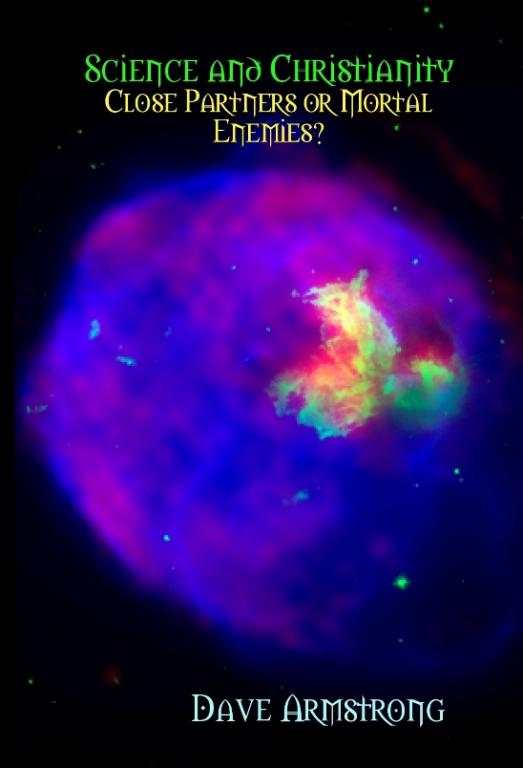
From my 2010 book, Science and Christianity: Close Partners or Mortal Enemies? (pp. 19-28). Follow the link for book and purchase information: available for as low as $2.99. I have not checked all the links. Some may be defunct after nine years. Generally, Amazon, Google Books, and Wikipedia links are pretty stable and unchanging.
[New Introduction] Many people (particularly atheists) seem to have this notion that the early Church and the Church fathers were hostile to empirical inquiry, the study of processes of the natural world, and science (such as it existed at all in those times), and even lacked intellectual curiosity about such matters. The “dark ages” (so we are told) was supposedly caused by Christianity (another huge and ridiculous myth). The historical truth is quite otherwise, as I shall show in this paper and a follow-up one.
Christians and Church fathers were as “scientific” as anyone else (if not much more so), and certainly we could find much error and folly among the pagan thinkers of this period: if anyone is inclined to do a fair-minded comparison. Atheists are too often inclined to highlight the scientific errors of historic Christians and the truths held by pagans and non-Christians (in other words, a double standard presentation). I’m in favor of highlighting the whole truth and nothing but the truth, rather than doing a silly, cynical selective analysis specifically designed to make Christians look like anti-scientific troglodyte ignoramuses.
*****
In a momentous move, Clement of Alexandria (ca. 150-ca. 215) and his disciple Origen of Alexandria (ca. 185-ca. 254) laid down the basic approach that others would follow. Greek philosophy was neither inherently good nor bad, but was one or the other depending on how it was used by Christians. . . . Philosophy and science could be studied as “handmaidens to theology” . . . The handmaiden concept of Greek learning was widely adopted and became the standard Christian attitude toward secular learning. That Christians chose to accept pagan learning within limits was a momentous decision. . . . Their education was heavily infiltrated by Latin and Greek pagan literature and philosophy. . . . Christians realized that they could not turn their backs on Greek learning. (Edward Grant, The Foundations of Modern Science in the Middle Ages: Their Religious, Institutional and Intellectual Contexts [Cambridge, 1996], pp. 3-4)
On a spectrum of pagan values, from cosmic religion to Gnostic repudiation of the cosmos, the church fathers chose a middle position. There can be no doubt that biblical teaching about the creation as God’s handiwork was influential in determining where on the spectrum Christians would land, and therefore it is clear that their Christianity was highly relevant to the issue . . . It seems unlikely, therefore, that the advent of Christianity did anything to diminish the support given to scientific activity or the number of people involved in it. (David Lindberg, in Lindberg and Ronald Numbers, editors, God and Nature: Historical Essays on the Encounter Between Christianity and Science [Univ. of California Press, 1986], pp. 32-33)
Other historians have pointed out that although the Church Fathers subordinated the claims of science to the demands of faith, they rarely rejected Greco-Roman science and philosophy outright. . . . The dominant position was somewhere between that of Tertullian and Gregory [Nazianzus]: science and human reason in general were useful to the Christian as long as knowledge about the natural world never supplanted love of God or contradicted the tenets of religious belief. (Elspeth Whitney, Medieval Science and Technology [Greenwood, 2004], p. 5)
[T]he vast majority of Christian leaders looked favorably on the Greco-Roman medical tradition, viewing it as a divine gift, an aspect of divine providence, the use of which was legitimate and perhaps even obligatory. Basil of Caesarea (ca. 330-79) spoke for many of the church fathers when he wrote that “we must take great care to employ this medical art, if it should be necessary . . .”
[H]ow did the presence and influence of the Christian church affect knowledge of, and attitudes toward, nature? The standard answer, developed in the eighteenth and nineteenth centuries and widely propagated in the twentieth, maintains that Christianity presented serious obstacles to the advancement of science and, indeed, sent the scientific enterprise into a tailspin from which it did not recover for more than a thousand years. The truth, as we shall see, is dramatically different, far more complicated, and a great deal more interesting. . .
Naturally enough, the kind and level of education and intellectual effort favored by the church fathers was that which supported the mission of the church as they perceived it. But this mission, interestingly, did not include the suppression of scientific investigations and ideas.
If we compare the early church with a modern research university or the National Science Foundation, the church will prove to have failed abysmally as a supporter of science and natural philosophy. But such a comparison is obviously unfair. If, instead, we compare the support given to the study of nature by the early church with the support available from any other contemporary social institution, it will become apparent that the church was the major patron of scientific learning. Its patronage may have been limited and selective, but limited and selective patronage is a far cry from opposition.
The contribution of the religious culture of the early Middle Ages to the scientific movement was thus primarily one of preservation and transmission. The monasteries served as the transmitters of literacy and a thin version of the classical tradition (including science or natural philosophy) through a period when literacy and scholarship were severely threatened. Without them, Western Europe would not have had more science, but less. (David Lindberg, The Beginnings of Western Science [Univ. of Chicago Press, 2nd ed., 2008], pp. 325 and 148-150, 156-157)
St. Clement of Rome (d. c. 101; pope) He accepted a good deal of Greek mathematics and astronomy, including belief that the earth was spherical. Unlike Aristotle, however, for him the earth was not eternal and it was sharply distinguished from the divine. Both the heavens and the earth were created and they were orderly: “the sun, the moon and the dancing stars . . . circle in harmony within the bounds assigned to them.” [source: Tripp]
St. Clement of Alexandria (c. 150-c. 215)
[T]he catechetical school of Alexandria . . . acquired the character of a Christian academy in which all Greek science was studied and made to do apologetic service in favour of the Christian cause. Under Clement and Origen it reached the acme of its renown . . . (Otto Bardenhewer and Thomas Joseph Shahan, Patrology: The Lives and Works of the Fathers of the Church [Herder, 1908], p. 127; see also the citation from Edward Grant above)
Origen (c. 185-c. 254) He accepted the sphericity of the earth [source: Hannam: ”The Myth of the Flat Earth”] See also the previous entry and the citation from Edward Grant above.
St. Gregory Nazianzus (329-389; bishop and Doctor of the Church) He wrote:
For as we ought not to neglect the heavens, and earth, and air, and all such things, because some have wrongly seized upon them, and honour God’s works instead of God: but to real what advantage we can from them for our life and enjoyment . . . from the works of nature apprehending the Worker . . . as we know that neither fire, nor food, nor iron, nor any other of the elements, is of itself most useful, or most harmful, except according to the will of those who use it; and as we have compounded healthful drugs from certain of the reptiles; so from secular literature we have received principles of enquiry and speculation . . . (David Lindberg, in Lindberg and Ronald Numbers, editors, God and Nature: Historical Essays on the Encounter between Christianity and Science [Univ. of California Press, 1986], p. 29; citing The Panegyric on St. Basil: from the Schaff / Wace 38-volume translation of the Church fathers, vol. 7, 398-399)
St. Basil the Great (c. 330-379; bishop and Doctor of the Church) In contrast to Aristotle, he believed the heavens and the earth were made up of the same materials: earth, air, fire and water, and also questioned the Aristotelian view that divine spirits in the heavenly bodies must continue imparting motion directly to everything that moves. By analogy with a child’s top, he spoke of the heavenly bodies, “which after the first impulse, continue their revolutions, turning upon themselves when once fixed in their centre; thus nature, receiving the impulse of this first command, follows without interruption the course of the ages”. Basil’s spinning top provides an early formulation of the idea of impetus. His views on creation allow for the principle of the conservation of momentum, or of inertia, that appeared repeatedly in Christian thinkers over the next twelve centuries. [source: Tripp] He believed in a spherical earth. [source]
”If you observe carefully the members even of the animals, you will find that the Creator has added nothing superfluous, and that He has not omitted anything necessary.” He drew lessons from the migration of fish, the stealth of the octopus, the function of the elephant’s trunk, the behavior of dogs tracking wild animals, and the existence of both poisonous and edible plants. All play their designated role in nature, even poisonous plants, for as Basil argued, “there is no one plant without worth, not one without use. Either it provides food for some animal, or has been sought out for us by the medical profession for the relief of certain diseases.” Thus did Basil respond to those who wondered why God would create poisonous plants capable of killing humans. (Edward Grant, The Foundations of Modern Science in the Middle Ages: Their Religious, Institutional and Intellectual Contexts [Cambridge, 1996], p. 6; primary sources unable to be accessed in Google Books)
St. Gregory of Nyssa (c. 335-c. 394; bishop) He wrote about the spherical earth:
As, when the sun shines above the earth, the shadow is spread over its lower part, because its spherical shape makes it impossible for it to be clasped all round at one and the same time by the rays, and necessarily, on whatever side the sun’s rays may fall on some particular point of the globe, if we follow a straight diameter, we shall find shadow upon the opposite point, and so, continuously, at the opposite end of the direct line of the rays shadow moves round that globe, keeping pace with the sun, so that equally in their turn both the upper half and the under half of the earth are in light and darkness. (On the Soul and the Resurrection)
St. Ambrose (c. 336-397; bishop and Doctor of the Church) He believed in a spherical earth. [source: Hannam: ”The Myth of the Flat Earth”] [source]
[H]is work is full of observation of the facts of the natural world. He has minute descriptions of quails and storks and swallows, of bees and crickets, of trees and their modes of reproduction, of evaporation and the action of rain, of human anatomy and physiology. (Edward K. Rand, Founders of the Middle Ages [New York: Dover Publications, 1957; originally 1928, 93)
St. Jerome (c. 343-420; priest and Doctor of the Church) He referred to the earth as a “sphere” in his Letter 124 to Avitas (5).
St. Augustine (354-430; bishop and Doctor of the Church) He was the dominant thinker of the first thousand years of Christian history. For him, the universe, being the creation of God, was not eternal but finite in space and time. Time itself had its created beginning. . . . The Greek notion of cyclic returns was ridiculous, and eliminated the possibility of happiness. [source: Tripp] He wrote, about science and Scripture:
Usually, even a non-Christian knows something about the earth, the heavens, and the other elements of this world, about the motion and orbit of the stars and even their size and relative positions, about the predictable eclipses of the sun and moon, the cycles of the years and the seasons, about the kinds of animals, shrubs, stones, and so forth, and this knowledge he hold to as being certain from reason and experience. Now, it is a disgraceful and dangerous thing for an infidel to hear a Christian, presumably giving the meaning of Holy Scripture, talking nonsense on these topics; and we should take all means to prevent such an embarrassing situation, in which people show up vast ignorance in a Christian and laugh it to scorn. The shame is not so much that an ignorant individual is derided, but that people outside the household of faith think our sacred writers held such opinions, and, to the great loss of those for whose salvation we toil, the writers of our Scripture are criticized and rejected as unlearned men. If they find a Christian mistaken in a field which they themselves know well and hear him maintaining his foolish opinions about our books, how are they going to believe those books in matters concerning the resurrection of the dead, the hope of eternal life, and the kingdom of heaven, when they think their pages are full of falsehoods and on facts which they themselves have learnt from experience and the light of reason? Reckless and incompetent expounders of Holy Scripture bring untold trouble and sorrow on their wiser brethren when they are caught in one of their mischievous false opinions and are taken to task by those who are not bound by the authority of our sacred books. For then, to defend their utterly foolish and obviously untrue statements, they will try to call upon Holy Scripture for proof and even recite from memory many passages which they think support their position, although they understand neither what they say nor the things about which they make assertion. (From: The Literal Meaning of Genesis [De Genesi ad litteram libri duodecim], Bk. I, ch. 19, 39: translation by J. H. Taylor, in Ancient Christian Writers [Newman Press, 1982], volume 41, pp. 42-43)
In the same work (p. 33), Augustine refers to the spherical earth:
[T]here was nothing to prevent the massive watery sphere from having day on one side by the presence of light, and on the other side, night by the absence of light. Thus, in the evening, darkness would pass to that side from which light would be turning to the other. (Bk. I, ch. 12, 25)
And he wrote about the moon being illuminated by the sun:
[I]t is not the heavenly body itself that changes but the illumined surface of it. . . . it is always full, though it does not always appear so to the inhabitants of earth. The same explanation holds even if it is illumined by the rays of the sun. . . . It is only when it is opposite the sun that the whole of its illuminated surface is visible to us. (Bk. II, ch. 11, 31, pp. 68-69)
He rejected astrology (something that Galileo and Kepler still had not done 1200 years later), partially on the basis of observation of twins:
[L]et us . . . wholeheartedly reject all subtleties of astrologers and their so-called scientific observations . . . which they fancy established by their theories. . . . with headstrong impiety they treat evil-doing that is justly reprehensible as if God were to blame as the maker of the stars, and not man as the author of his own sins. . . .
What more absurd and stupid than, after assenting to the foregoing argument, to say that the influence and power of stars is only over the lives of men? Such a theory is refuted by the case of those twins that spend their lives in different circumstances, one prosperous and the other wretched . . .(Bk. II, ch. 17, 35-36, p. 71)
John F. McCarthy elaborates on St. Augustine’s positing of something not unlike theistic evolution:
This theory of primordial packages of forms later to emerge (often referred to by commentators as “seminal reasons”) is certainly developmental, but does not correspond with Darwinian evolution. Essential to Augustine’s theory is the idea that the order later to emerge was instilled by God in the beginning. Augustine also requires subsequent interventions by God to “plant” the forms whose “numbers” had already been instilled. Thus, as St. Thomas [Aquinas] points out, the ability of the earth to produce living forms was visualized by Augustine as a passive potency which disposed the matter to receive the forms but did not create the forms themselves. Augustine’s theory of primordial packages deserves more ample meditation and analysis in another place, especially with reference to theories of the development of living things, . . . Genesis 1:6-8 witnesses in several ways to the creative action of God. As the divine Fashioner of the universe, God guided the energies that He had invested in the primal matter by his creative intervention on the first day to bring the cosmos to its structured state. This is the unfolding of the active potency contained in St. Augustine’s “primordial packages.” But there is also implied in these verses an upward progress in the order of inorganic being which seems to have required additional creative divine interventions. (A Neo-Patristic Return to the First Four Days of Creation, Part IV; see also Parts One, Two, Three, Five, and Six)
See also, ”How Augustine Reined in Science,” Kenneth J. Howell (This Rock, March 1998); Davis A. Young, ”The Contemporary Relevance of Augustine’s View of Creation,” and Andrew J. Brown, ”The Relevance of Augustine’s View of Creation Re-Evaluated” (PDF).
***
Science and Christianity: Close Partners or Mortal Enemies?
science in the early middle ages
Previous Post

June 17, 2019
Swearing & Post-Boomer Generations: Literary Progress?
Next Post

June 18, 2019 23 Catholic Medieval Proto-Scientists: 12th-13th Centuries
Browse Our Archives
Select a Category & Last Things About Me Anti-Catholicism Atheism & Agnosticism Baptism and Sacramentalism Bible and Tradition Blessed Virgin Mary Books by Dave Armstrong C. S. Lewis Calvinism & General Protestantism Catholic Apologetics Catholic Apologists Catholic conversion Catholic converts Christmas Church (Ecclesiology) Church History Conversion and Converts Development of Doctrine Eastern Orthodoxy Ecumenism & Christian Unity Eucharist & Liturgy Fathers of the Church French Translations G. K. Chesterton Hell Hell & Satan Hell & Satan & Last Things Heresies & Comparative Religion Holistic Health Inquisition & Crusades & Scandals James White Jews & Judaism & Old Testament John Calvin John Henry Newman Liberal / Modernist Theology Life Issues Literary Resume Lutheranism Mariology Martin Luther Music Orthodoxy Papacy & Infallibility Personal Page Philosophy & Science Political & Ethical & Moral Issues Protestant Persecution & Intolerance Protestantism Purgatory Purgatory & Penance Romantic & Imaginative Theology Saints & Purgatory & Penance Salvation Salvation & Justification Satan & Last Things Sexuality and Gender Issues Spanish Translations Traditionalism vs. Radical Catholic Reactionaries Traducciones al español / tradução para português Trinitarianism & Christology Uncategorized Videos
Select a Month October 2026 September 2026 August 2026 July 2026 June 2026 May 2026 April 2026 March 2026 February 2026 January 2026 December 2025 November 2025 October 2025 September 2025 August 2025 July 2025 June 2025 May 2025 April 2025 March 2025 February 2025 January 2025 December 2024 November 2024 October 2024 September 2024 August 2024 July 2024 June 2024 May 2024 April 2024 March 2024 February 2024 January 2024 December 2023 November 2023 October 2023 September 2023 August 2023 July 2023 June 2023 May 2023 April 2023 March 2023 February 2023 January 2023 December 2022 November 2022 October 2022 September 2022 August 2022 July 2022 June 2022 May 2022 April 2022 March 2022 February 2022 January 2022 December 2021 November 2021 October 2021 September 2021 August 2021 July 2021 June 2021 May 2021 April 2021 March 2021 February 2021 January 2021 December 2020 November 2020 October 2020 September 2020 August 2020 July 2020 June 2020 May 2020 April 2020 March 2020 February 2020 January 2020 December 2019 November 2019 October 2019 September 2019 August 2019 July 2019 June 2019 May 2019 April 2019 March 2019 February 2019 January 2019 December 2018 November 2018 October 2018 September 2018 August 2018 July 2018 June 2018 May 2018 April 2018 March 2018 February 2018 January 2018 December 2017 November 2017 October 2017 September 2017 August 2017 July 2017 June 2017 May 2017 April 2017 March 2017 February 2017 January 2017 December 2016 November 2016 October 2016 September 2016 August 2016 July 2016 June 2016 May 2016 April 2016 March 2016 February 2016 January 2016 December 2015 November 2015 October 2015 September 2015 August 2015 July 2015 June 2015 May 2015 April 2015 March 2015 February 2015 January 2015 December 2014 November 2014 October 2014 September 2014 August 2014 July 2014 June 2014 April 2014 March 2014 February 2014 January 2014 December 2013 November 2013 October 2013 September 2013 August 2013 July 2013 June 2013 April 2013 March 2013 February 2013 January 2013 December 2012 November 2012 October 2012 September 2012 August 2012 July 2012 June 2012 May 2012 April 2012 March 2012 February 2012 January 2012 December 2011 November 2011 October 2011 September 2011 August 2011 July 2011 June 2011 April 2011 March 2011 February 2011 October 2010 September 2010 August 2010 July 2010 April 2010 March 2010 December 2009 October 2009 August 2009 July 2009 June 2009 May 2009 March 2009 February 2009 October 2008 September 2008 April 2008 March 2008 February 2008 January 2008 December 2007 November 2007 October 2007 May 2007 March 2007 February 2007 January 2007 November 2006 October 2006 September 2006 August 2006 July 2006 June 2006 May 2006 April 2006 March 2006 February 2006 October 2005 June 2005 April 2005 February 2005 July 2004 May 2004 April 2004
Follow Us!
TAKE THE
Religious Wisdom Quiz
Which book of the Bible has the most chapters?
Select your answer to see how you score.
Proverbs Genesis Psalms Isaiah
Books by This Author Books by Dave Armstrong
Related posts from Biblical Evidence for Catholicism

17 Church Fathers on Purgatory (Esp. 1 Cor...
Biblical Evidence for Catholicism

Deuterocanon & Javier Perdomo's Straw Men
Biblical Evidence for Catholicism

St. Athanasius & the Deuterocanon (vs. Javier Perdomo)
Biblical Evidence for Catholicism
Chrysostom vs. Faith Alone (vs. Lutheran Will Weedon)
Biblical Evidence for Catholicism
TRENDING AT PATHEOS Catholic

The Sermon on the Mount, Part I: Matthew...
The Sermon on the Mount, Part I (Matthew 4:12-5:12) St. Matthew moves...

What's up from Crossway: Reviewing some of their latest A few weeks...

Janie Learns the Way of the Cross: A...
Teaching children about Jesus' Passion can be challenging. Many parents and educators...

Looking For Good Catholic Writing - October 2026
He alone extends the heavens, and he walks upon the waves of...

In "Irreplaceable," our book on vocation and technology, Trevor Sutton and I...

I was strolling through the top floor of the brand new Parthenon...
view all Catholic blogs
Ad-Free & Subscriber Log-In Subscription Support
- About Us
- 2026 Calendar
- Videos
- Podcasts
- Library of World Religions
- Faith In Media Tracker
- Advertise With Us
- Write for Us
- Privacy Policy
- Terms of Service
- Do Not Sell My Data
- Contact Us
- Radiant Digital
- Manage Newsletter Subscriptions
- Unsubscribe From Notifications
- Sitemap
Copyright 2008-2026, Patheos. All rights reserved.
Subscription Support Ad-Free & Subscriber Log-In
Follow Patheos