
BuddhistCatholicContemplativeEvangelicalGeneral ChristianHinduJewishLatter-day SaintMuslimNew VisionsProgressive Christian
Beliefs
- Buddhist
- Catholic
- Contemplative
- Evangelical
- General Christian
- Hindu
- Jewish
- Latter-day Saint
- More Voices
- Muslim
- New Visions
- Pagan
- Progressive Christian
Topics
- Religion News
- Food and Religion
- Sports and Religion
- Religious Art
- Religious Music and Entertainment
- Religious Events
- History and Religion
- Style and Religion
- Politics and Religion
- Women in Religion
- Recreation Outdoors and Religion
- Business Finance and Religion
- Careers Workplace and Religion
- Education and Religion
- Family Parenting and Religion
- Health Fitness and Religion
- Home and Religion
- Relationships and Religion
- Technology and Religion
- Travel and Religion
Columnists
- Buddhist Columnists
- Business Finance and Religion Columnists
- Careers Workplace and Religion Columnists
- Catholic Columnists
- Contemplative Columnists
- Education and Religion Columnists
- Evangelists Columnists
- Family Parenting and Religion Columnists
- General Christian Columnists
- Health Fitness and Religion Columnists
- Hindu Columnists
- History and Religion Columnists
- Home and Religion Columnists
- Jewish Columnists
- More Voices Columnists
- Latter Day Columnists
- Muslim Columnists
- New Visions Columnists
- Nonreligious Columnists
- Pagan Columnists
- Politics and Religion Columnists
- Progressive Columnists
- Recreation Outdoors and Religion Columnists
- Relationships and Religion Columnists
- Religion News Columnists
- Religious Art Columnists
- Religious Events Columnists
- Religious Music and Entertainment Columnists
- Sports and Religion Columnists
- Style and Religion Columnists
- Technology and Religion Columnists
- Travel and Religion Columnists
- Women in Religion Columnists
Resource Library
- 2026 Calendar
- Library of World Religions
- The 100 Most Holy Places on Earth
- Patheos Answers
- Podcasts
- Videos
- Faith Leaders Database
- Anglican Episcopalian
- Bahai
- Baptist
- Buddhism
- Christianity
- Confucianism
- Eastern Orthodoxy
- Hinduism
- Holiness and Pentecostal
- ISKCON
- Islam
- Judaism
- Lutheran
- Methodist
- The Church of Jesus Christ of Latter-day Saints
- New Age
- Paganism
- Presbytarian and Reformed
- Protestantism
- Religion Behind the Scenes
- Roman Catholic
- Scientology
- Shia Islam
- Sikhism
- Sufism
- Sunni Islam
- Taoism
- Zen
- See all religions
Research Tools
 Ad-Free & Subscriber Log-In Subscription Support
Ad-Free & Subscriber Log-In Subscription Support
Follow Patheos 

- Trending:
- Forgiveness
- |
- Marriage
- |
- Consciousness
- |
- Death Penalty
- |
- Election
- |
- Halloween

-
About
-
Catholic Apologetics
-
Church History
-
Great Apologists
-
Christian Worldview
-
Protestantism & Misc.
- Home
- Catholic
- History and Religion
- Radical Catholic Reactionaries: Essential Characteristics
Radical Catholic Reactionaries: Essential Characteristics
Last updated on: June 6, 2026 at 12:22 am by Dave Armstrong
Radical Catholic Reactionaries: Essential Characteristics 2026-06-06T00:22:02-04:00 Dave Armstrong
Patheos Explore the world's faith through different perspectives on religion and spirituality! Patheos has the views of the prevalent religions and spiritualities of the world.

Chapter 1 (pp. 11-18) of my book, Reflections on Radical Catholic Reactionaries (December 2002; revised second edition: 17 August 2013; slightly revised again in December 2023 for the purpose of the free online version). Anyone who reads this book should first read the following three introductory articles, in order to fully understand the definitions and sociological categories I am employing:
Introduction (on the book page)
Definitions: Radical Catholic Reactionaries, Mainstream “Traditionalists,” and Supposed “Neo-Catholics” [revised 8-6-13]
Radical Catholic Reactionaries: What They Are Not [9-28-21]
If you’re still confused and unclear as to my meanings and intent after that, read one or more of these articles:
Rationales for My Self-Coined Term, “Radical Catholic Reactionaries” [8-6-13]
My Coined Term, “Radical Catholic Reactionary”: Clarifications [10-5-17]
Clarifying My Coined Term, “Radical Catholic Reactionary” [4-3-20]
This book is modeled after the method and structure of the French mathematician and Catholic apologist Blaise Pascal’s classic, Pensées (“thoughts”). Catholic apologist and philosopher Peter Kreeft described this masterpiece as “raw pearls” and “more like ‘sayings’ than a book . . . ‘Sayings’ reflect and approximate the higher, the mode of Christ and Socrates and Buddha. That’s why Socrates is the greatest philosopher, according to St. Thomas (S.T. III, 42, 4).”
I am not intending to compare myself or my own “thoughts” or their cogency or import in any way, shape, or form, to those of Pascal, let alone to Socrates or our Lord Jesus! I am merely utilizing the unconventional structure of the Pensées, which harmonizes well, I believe, with the approach that I have taken with regard to the present subject. I have sought to analyze (minus proper names, a la Trent) the premises, presuppositions, logical and ecclesiological “bottom lines” and (in a word), the spirit of a false and divisive radical Catholic reactionary strain of thought held by a distinctive sociological sub-group of Catholics.
*****
1. Many radical Catholic reactionaries believe that the Novus Ordo / “New” / ordinary form Mass is either invalid or “objectively offensive to God.”
2. Many reactionaries believe that the Second Vatican Council is qualitatively different from preceding councils, or invalid, or intrinsically heretical (modernist), or shot-through with modernist “ambiguity,” or a corruption or “evolution” of received Catholic dogma — as opposed to a consistent (Newmanian and Vincentian and Thomistic) development — so that it is not binding on Catholics, and may be routinely opposed, and not obeyed.
3. Many reactionaries believe that Vatican II is the root and central cause of the present modernist crisis; as opposed to the machinations of theological liberals and heterodox, who “hijacked” or “co-opted,” distorted and twisted the orthodox, papally-approved council for their own wicked ends.
4. Many reactionaries believe that the pontificates of John XXIII, Paul VI, and John Paul II are qualitatively different from those preceding them, or that they have knowingly (or even unknowingly, as dupes) presided over the destruction of the traditional Catholic faith, passed down from the apostles, or that they are material or formal heretics.
5. Many reactionaries believe that (authentic Catholic) ecumenism, or the notion of religious liberty, or salvation (formally) outside the Church, properly understood in light of sacred tradition — as promulgated and developed especially by Vatican II — are radical innovations not present (not even in kernel form) in previous received apostolic Catholic tradition.
6. Many reactionaries believe that the Catholic Church could actually institutionally depart from the true faith (defectibility). This includes conspiratorial notions that the Church could be substantially and institutionally overthrown by movements such as Freemasonry, the New World Order, radical secularism or humanism, “Enlightenment” philosophies, Protestantizing elements, etc.
7. We are told that if it weren’t for the noble reactionary warriors, who act as “salt” and offset “reckless modernist innovations,” the Church would quickly succumb to the forces of modernism and heresy. Of course such reasoning neglects to see that it is not for them to determine orthodoxy in the first place. That is the function of the magisterium, which includes Vatican II and the papacy. Reactionaries thus saw off the very limb they sit on. Why can’t they see the internal contradiction of all this? Reactionaryism derives from these quite fallible and weak presuppositions and the ever-expanding falsehoods that inexorably flow from them. We should pray for people who have put themselves in such a despairing, almost hopeless (and unnecessary) position. By all means, we should fight modernism and heresy, but we mustn’t ever despair of the very means God has provided for us.
8. The harm done to the Church by reactionary falsehoods and slanders is every bit as severe as that which the modernists commit. Modernists know (in their quiet moments) that their movement has peaked and is declining rapidly. It was inevitable; the average age of the revolutionaries at the forefront of the Revolt is now 70 or so, if not even older. Reactionaries, on the other hand, labor under the illusion that their movement is rising, and will “save” the Church. These are mere delusions of grandeur. I think the reactionary movement is the stench in God’s nostrils, not Vatican II or the great Pope John Paul II. Reactionaries have it exactly backwards. If they can judge popes so severely, orthodox Catholics certainly may rightly judge and condemn their movement.
9. Those who toy with schism and disobedience and private judgment (in the name of “Catholic tradition”) end up playing with true tradition, and constructing an ossified pseudo-tradition of their own making (the biblical traditions of men), immune to any development after, say, 1958.
10. Reactionaries are always appealing to canon lawyers. But they will contradict each other. The authority of the Church resides in the magisterium of pope, councils, and bishops. Reactionaries disagree on this point. Like the false witnesses against Jesus (Mark 14:55-59), they are divided amongst themselves, and contradict each other — a sure sign of error (and the mark of sectarianism and schism). But in another sense, the same schismatic spirit dominates and rules all of the species of reactionaryism and creates many affinities and similarities. They are united in their disdain for the Church, after all: the actual Church, warts (and tares) and all. But how could anyone who understands human nature ever naively expect it to be perfect on earth in the first place?
11. It is difficult to write about all the different forms of reactionaryism in a broad sense without, at times, over-generalizing. The same difficulty is present in the effort to critique “Protestantism,” which also consists of many variations and competing sub-groups. I do not intend to account for, or deal with every particular variation (nor to name any). The Council of Trent, and Pope Pius IX, and Pope St. Pius X wrote in a similar general, sweeping style with regard to errors.
12. I’m not an expert on the minutiae and technicalities of canon law, or the intricacies of the ecclesiological arguments of St. Thomas Aquinas or St. Robert Bellarmine or Fr. Reginald Garrigou-Lagrange. I think all those things (and people) are wonderful (I am not in the least disparaging them), but no one need become an expert on such matters simply in order to express an opinion of the shortcomings and radical inconsistencies of reactionaryism (as is often virtually demanded before engaging in such critiques). Neither Chesterton nor Belloc nor Muggeridge (all much-loved by reactionaries and myself) were theologians, by any means, but that doesn’t stop Catholics from reading them and receiving immense benefit from their insights (C. S. Lewis provides an analogous conservative Anglican example). I claim the same prerogatives as they — to comment on Catholic affairs even though not formally trained in theology, let alone specific areas of it, such as canon law. I take for granted that the vast majority of serious, committed, orthodox, magisterial Catholics will quickly recognize the impiety and imprudence — if not always technically heterodox nature — of the opinions that I am presently critiquing.
13. If reactionaries can take it upon themselves to judge (and in effect, disobey) bishops and popes — their spiritual superiors, then certainly I cannot be criticized when I merely judge (in large part) fellow laymen — or priests who are harshly or rashly judging their superiors in the Church.
14. Reactionaries continue to “identify with the oppressor” (modernism) that they purport to be opposing, by adopting (consciously, willfully or not) so many of its tenets, such as selective espousal of councils and papal decrees (“cafeteria Catholicism”) — even preconciliar papal teaching. For example: modernists don’t like Humanae Vitae; reactionaries despise Ut Unum Sint — by this reasoning, could not the modernists who favor contraception argue that Paul VI was in error, just as reactionaries claim concerning John Paul II?
15. Other modernist notions reflected by the reactionary are: the loss of faith, hyper-rationalism, disobedience, laxity and compromise with regard to the dangers of errors to the theological “right” (whereas the modernist is lax about errors to the left), a marked lack of charity towards orthodox Catholics (so-called “conservatives”), the Holy Father, and other Christians, sinful judgmentalism and condescension, exaggerated self-importance (one might describe that as the prideful spirit), and a spiritually unhealthy perpetual gloominess, suspiciousness, cynicism, and skepticism.
16. Likewise, the reactionary claims to be so against Protestantism, yet adheres to many of its distinguishing tenets: private judgment, despairing of God’s promises, defectibility, a disdain for true, development and the mind of the Church, a Pharisaic, legalistic mentality and methodology (characteristic of some fundamentalist groups), inability to distinguish excesses from essence, insufficient understanding of causation, and the schismatic and sectarian spirit.
17. Orthodox Catholicism, on the other hand, is thoroughly opposed to modernism, yet without hypocritically embracing many of its tenets, yielding up an ecumenical council to the devil, and largely without all the other harmful tendencies and beliefs just outlined. Orthodox Catholics are sinners, too, of course, but they don’t institutionalize and formalize clear errors, as the reactionary does.
18. I consider the reactionary influence equally as dangerous as modernism (though obviously not in numbers of adherents), if not more so, because many reactionaries have the outward appearance (and in many aspects and ways, the actuality) of being orthodox, devout, faithful Catholics, yet they spread (sincerely, I freely grant) the poison of skepticism and disbelief in Catholic authority — just as Luther and all the schismatics and heretics throughout history did. The very fact that reactionaries can masquerade as perfectly orthodox Catholics, makes them that much more dangerous, as all error has an element of truth in it, in order to deceive (in terms of diabolical spiritual warfare, if not conscious personal motives) the gullible and uninformed. Many Catholics can readily comprehend the folly and vapidity of modernist nonsense (when they truly see it in its ugly brazenness), but they cannot so quickly discern the far more subtle, complex, and “ambiguous” errors of reactionaryism.
19. The reactionary should know better, whereas many modernists and liberals were never properly taught in the first place and often have the excuse of ignorance. The Catholic Church needs the zeal, sincerity, traditionalism (in the right sense of the word), and concern for liturgical purity and orthodoxy of many reactionaries on our side, in the battle for pure orthodoxy and for the Church. Reactionaries, “traditionalists,” and orthodox, self-described “Catholics” have much in common, and we should all rejoice in that.
20. Catholic reactionaryism of the common sort today is largely a problem of faulty thinking, but also of a loss of supernatural faith (in the full Catholic sense).
21. Once a false idea takes hold in a group, it spreads like wildfire or cancer. Reactionaryism reminds me (sociologically) of my former days in the charismatic denomination Assemblies of God. Though it formally decried the “name-it-claim-it, hyper-faith, God always heals” heretical teachings, yet there were people everywhere to be found within Assembly of God ranks who believed in those things, because it was tolerated and not severely rebuked.
22. Reactionaryism is a corruption and departure from legitimate Catholic tradition (at least in part). Orthodox Catholics (including mainstream “traditionalists”) are obedient to both the pope and the actual Catholic tradition, not the fairy-tale, distorted, self-serving, revisionist version of the quasi-schismatics, in bondage to a sectarian mindset. Reactionaries are posing as either the Church, or the elite of the Church, the esoteric “insiders” who have it all together, while the rest of us are compromised, and don’t know it, or don’t care. Many reactionaries go around saying that they had a conversion to Catholicism; then underwent a second conversion to so-called “traditional” Catholicism (so that now they are really true blue Catholics). Reactionaries are the “anti-Catholic” faction of Catholicism.
23. When I brought to the table — in defense of my positions — Fr. William Most, Fr. Ludwig Ott, and the old Catholic Encyclopedia, I was told by one reactionary that they are not infallible (therefore, easily to be dismissed). Why, then, does the reactionary think he has hit a home run when he cites St. Robert Bellarmine as a “witness” for some of his positions? He is as fallible as anyone else when he speaks for himself. I am asking for official Catholic documents.
24. The separatist and quasi-schismatic reactionary position is irrational, incoherent, and unable to be consistently maintained. I maintain that the problem is lack of faith and of historical perspective, faulty ecclesiology, and the adoption of the Protestant principle of private judgment, as well as the liberal principle of selective espousal of theological dogmas.
25. We must look at the root assumptions of a position and vigorously critique those. We need not engage reactionaries in canon law disputes or obscure liturgical minutiae or conspiratorial schemes. It’s the premises that need to be examined. They ultimately cause the differences of opinion.
26. I am merely pointing out what I believe to be the logical outcome of the reactionary position, and the presuppositional similarities with both liberalism and Protestantism. One can make an argument that some position has internal tensions and inconsistencies, that (if correct and accurate) ought to cause its possessor to question it’s truthfulness as an overall worldview. Our starting assumption and presumption that the reactionary is in good faith and sincerely troubled by various problems in the Church, guides the way we respond. Our goal is to show that this view is at odds with orthodox Catholicism at certain points, not to ascertain the state of someone’s soul or their heart (which we should avoid like the plague in all apologetic efforts).
27. Reactionaries are victims of harmful thought. I would like to see them have the peace and joy, bright optimism and idealism, and love for the Church (today’s Church, with all its problems) that we can possess, by God’s grace and through faith.
28. I immediately ask three primary questions of anyone who calls himself a Catholic “traditionalist”:
Is the Novus Ordo Mass valid?
Is Vatican II a valid and binding ecumenical council?
Is Pope John Paul II a valid pope?
Unfortunately, I do think that reactionaries often want to play a sort of sub-conscious “game” of (in effect, or logical reduction of their position) seeing how close they can get to the “edge” (schism) without going over it (like a wobbly tightrope walker). If one affirms these three tenets they would still not be formally or canonically schismatic, as far as I understand, yet they could very well (and often do, in my experience) possess what can be called a “quasi-schismatic mentality.” This allows one to criticize pope, Mass, and council alike all day long, with never-ending moaning and groaning and breast-beating, sometimes in conspiratorial, apocalyptic, Chicken Little proportions. This is not helpful for the life of the Church, and in some respects it is as bad or worse than being a schismatic, for it is still within the Church, adversely affecting the faith and outlook of others.
29. I think the reactionary approach becomes a lot like fundamentalist legalism: “you can’t dance, drink, or chew, or associate with those who do.” “You can’t show any appreciation for any aspect of truth present in other religions, lest you become an indifferentist” (or cause others to stumble and think you are, even if you are not). One doesn’t have to make such choices, because they are false dilemmas.
30. Reactionaries seem unable to view things from another presuppositional framework. Error stems from deficient thinking, at least where the persons involved are otherwise decent, well-meaning, sincere folks.
***
*
*****
*
Photo credit: geralt (4-5-15) [Pixabay / Pixabay Content License]
*
Practical Matters: Perhaps some of my 4,500+ free online articles (the most comprehensive “one-stop” Catholic apologetics site) or fifty-three books have helped you (by God’s grace) to decide to become Catholic or to return to the Church, or better understand some doctrines and why we believe them.
*
Or you may believe my work is worthy to support for the purpose of apologetics and evangelism in general. If so, please seriously consider a much-needed financial contribution. I’m always in need of more funds: especially monthly support. “The laborer is worthy of his wages” (1 Tim 5:18, NKJV). 1 December 2021 was my 20th anniversary as a full-time Catholic apologist, and February 2022 marked the 25th anniversary of my blog.
*
PayPal donations are the easiest: just send to my email address: [email protected]. You’ll see the term “Catholic Used Book Service”, which is my old side-business. To learn about the different methods of contributing, including 100% tax deduction, etc., see my page: About Catholic Apologist Dave Armstrong / Donation Information. Thanks a million from the bottom of my heart!
*
***
*
Summary: Chapter 1 (pp. 11-18) of my book, Reflections on Radical Catholic Reactionaries (December 2002; revised in December 2023 for the free online version).
Traditionalism vs. Radical Catholic Reactionaries
Radical Catholic Reactionaries
Previous Post
June 12, 2019
Did Jesus, St. Paul, & the Prophets Use Sarcasm? Yes
Next Post
June 13, 2019 Indefectibility of the Church: Reflections & Thoughts
Browse Our Archives
Select a Category & Last Things About Me Anti-Catholicism Atheism & Agnosticism Baptism and Sacramentalism Bible and Tradition Blessed Virgin Mary Books by Dave Armstrong C. S. Lewis Calvinism & General Protestantism Catholic Apologetics Catholic Apologists Catholic conversion Catholic converts Christmas Church (Ecclesiology) Church History Conversion and Converts Development of Doctrine Eastern Orthodoxy Ecumenism & Christian Unity Eucharist & Liturgy Fathers of the Church French Translations G. K. Chesterton Hell Hell & Satan Hell & Satan & Last Things Heresies & Comparative Religion Holistic Health Inquisition & Crusades & Scandals James White Jews & Judaism & Old Testament John Calvin John Henry Newman Liberal / Modernist Theology Life Issues Literary Resume Lutheranism Mariology Martin Luther Music Orthodoxy Papacy & Infallibility Personal Page Philosophy & Science Political & Ethical & Moral Issues Protestant Persecution & Intolerance Protestantism Purgatory Purgatory & Penance Romantic & Imaginative Theology Saints & Purgatory & Penance Salvation Salvation & Justification Satan & Last Things Sexuality and Gender Issues Spanish Translations Traditionalism vs. Radical Catholic Reactionaries Traducciones al español / tradução para português Trinitarianism & Christology Uncategorized Videos
Select a Month October 2026 September 2026 August 2026 July 2026 June 2026 May 2026 April 2026 March 2026 February 2026 January 2026 December 2025 November 2025 October 2025 September 2025 August 2025 July 2025 June 2025 May 2025 April 2025 March 2025 February 2025 January 2025 December 2024 November 2024 October 2024 September 2024 August 2024 July 2024 June 2024 May 2024 April 2024 March 2024 February 2024 January 2024 December 2023 November 2023 October 2023 September 2023 August 2023 July 2023 June 2023 May 2023 April 2023 March 2023 February 2023 January 2023 December 2022 November 2022 October 2022 September 2022 August 2022 July 2022 June 2022 May 2022 April 2022 March 2022 February 2022 January 2022 December 2021 November 2021 October 2021 September 2021 August 2021 July 2021 June 2021 May 2021 April 2021 March 2021 February 2021 January 2021 December 2020 November 2020 October 2020 September 2020 August 2020 July 2020 June 2020 May 2020 April 2020 March 2020 February 2020 January 2020 December 2019 November 2019 October 2019 September 2019 August 2019 July 2019 June 2019 May 2019 April 2019 March 2019 February 2019 January 2019 December 2018 November 2018 October 2018 September 2018 August 2018 July 2018 June 2018 May 2018 April 2018 March 2018 February 2018 January 2018 December 2017 November 2017 October 2017 September 2017 August 2017 July 2017 June 2017 May 2017 April 2017 March 2017 February 2017 January 2017 December 2016 November 2016 October 2016 September 2016 August 2016 July 2016 June 2016 May 2016 April 2016 March 2016 February 2016 January 2016 December 2015 November 2015 October 2015 September 2015 August 2015 July 2015 June 2015 May 2015 April 2015 March 2015 February 2015 January 2015 December 2014 November 2014 October 2014 September 2014 August 2014 July 2014 June 2014 April 2014 March 2014 February 2014 January 2014 December 2013 November 2013 October 2013 September 2013 August 2013 July 2013 June 2013 April 2013 March 2013 February 2013 January 2013 December 2012 November 2012 October 2012 September 2012 August 2012 July 2012 June 2012 May 2012 April 2012 March 2012 February 2012 January 2012 December 2011 November 2011 October 2011 September 2011 August 2011 July 2011 June 2011 April 2011 March 2011 February 2011 October 2010 September 2010 August 2010 July 2010 April 2010 March 2010 December 2009 October 2009 August 2009 July 2009 June 2009 May 2009 March 2009 February 2009 October 2008 September 2008 April 2008 March 2008 February 2008 January 2008 December 2007 November 2007 October 2007 May 2007 March 2007 February 2007 January 2007 November 2006 October 2006 September 2006 August 2006 July 2006 June 2006 May 2006 April 2006 March 2006 February 2006 October 2005 June 2005 April 2005 February 2005 July 2004 May 2004 April 2004
Follow Us!
TAKE THE
Religious Wisdom Quiz
Who said, "As for me, I know that my redeemer lives"?
Select your answer to see how you score.
Job Abraham Moses Joseph
Books by This Author Books by Dave Armstrong
Related posts from Biblical Evidence for Catholicism

Book: Martin Luther: Dissenter and Defender
Biblical Evidence for Catholicism
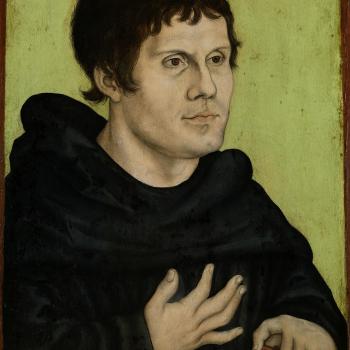
"Martin Luther: Dissenter & Defender": Introduction
Biblical Evidence for Catholicism
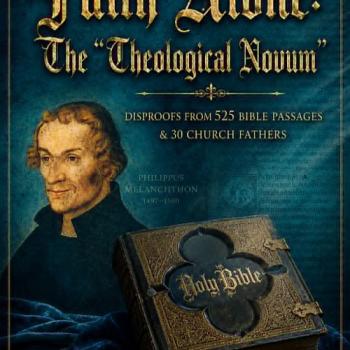
Introducing "Faith Alone: The 'Theological Novum'”
Biblical Evidence for Catholicism
Faith Alone: The "Theological Novum" (Dave Armstrong Book)
Biblical Evidence for Catholicism
TRENDING AT PATHEOS Catholic

I was strolling through the top floor of the brand new Parthenon...

What Does Gêvâh Mean For Kimberley Guifoyle &...
This week, a lot of the news is focused on Kimberly Guilfoyle....

INNER CIRCLE: Profound Mystery (Of Christ In All...
Ephesians 5:31-32 “For this reason, a man will leave his father and...

Do Not Rejoice When Your Enemy Falls: The...
Turning an execution into a public spectacle is a disturbing expression of...

'The Chosen' S6 Trailer: The Passion Gets Very...
Not many watching 'The Chosen' worry about spoilers, but just because they...

The purpose-driven labor priest
A labor activist reads Rick Warren and it gets me wondering about...
view all Catholic blogs
Ad-Free & Subscriber Log-In Subscription Support
- About Us
- 2026 Calendar
- Videos
- Podcasts
- Library of World Religions
- Faith In Media Tracker
- Advertise With Us
- Write for Us
- Privacy Policy
- Terms of Service
- Do Not Sell My Data
- Contact Us
- Radiant Digital
- Manage Newsletter Subscriptions
- Unsubscribe From Notifications
- Sitemap
Copyright 2008-2026, Patheos. All rights reserved.
Subscription Support Ad-Free & Subscriber Log-In
Follow Patheos