
BuddhistCatholicContemplativeEvangelicalGeneral ChristianHinduJewishLatter-day SaintMuslimNew VisionsProgressive Christian
Beliefs
- Buddhist
- Catholic
- Contemplative
- Evangelical
- General Christian
- Hindu
- Jewish
- Latter-day Saint
- More Voices
- Muslim
- New Visions
- Pagan
- Progressive Christian
Topics
- Religion News
- Food and Religion
- Sports and Religion
- Religious Art
- Religious Music and Entertainment
- Religious Events
- History and Religion
- Style and Religion
- Politics and Religion
- Women in Religion
- Recreation Outdoors and Religion
- Business Finance and Religion
- Careers Workplace and Religion
- Education and Religion
- Family Parenting and Religion
- Health Fitness and Religion
- Home and Religion
- Relationships and Religion
- Technology and Religion
- Travel and Religion
Columnists
- Buddhist Columnists
- Business Finance and Religion Columnists
- Careers Workplace and Religion Columnists
- Catholic Columnists
- Contemplative Columnists
- Education and Religion Columnists
- Evangelists Columnists
- Family Parenting and Religion Columnists
- General Christian Columnists
- Health Fitness and Religion Columnists
- Hindu Columnists
- History and Religion Columnists
- Home and Religion Columnists
- Jewish Columnists
- More Voices Columnists
- Latter Day Columnists
- Muslim Columnists
- New Visions Columnists
- Nonreligious Columnists
- Pagan Columnists
- Politics and Religion Columnists
- Progressive Columnists
- Recreation Outdoors and Religion Columnists
- Relationships and Religion Columnists
- Religion News Columnists
- Religious Art Columnists
- Religious Events Columnists
- Religious Music and Entertainment Columnists
- Sports and Religion Columnists
- Style and Religion Columnists
- Technology and Religion Columnists
- Travel and Religion Columnists
- Women in Religion Columnists
Resource Library
- 2026 Calendar
- Library of World Religions
- The 100 Most Holy Places on Earth
- Patheos Answers
- Podcasts
- Videos
- Faith Leaders Database
- Anglican Episcopalian
- Bahai
- Baptist
- Buddhism
- Christianity
- Confucianism
- Eastern Orthodoxy
- Hinduism
- Holiness and Pentecostal
- ISKCON
- Islam
- Judaism
- Lutheran
- Methodist
- The Church of Jesus Christ of Latter-day Saints
- New Age
- Paganism
- Presbytarian and Reformed
- Protestantism
- Religion Behind the Scenes
- Roman Catholic
- Scientology
- Shia Islam
- Sikhism
- Sufism
- Sunni Islam
- Taoism
- Zen
- See all religions
Research Tools
 Ad-Free & Subscriber Log-In Subscription Support
Ad-Free & Subscriber Log-In Subscription Support
Follow Patheos 

- Trending:
- Forgiveness
- |
- Marriage
- |
- Consciousness
- |
- Death Penalty
- |
- Election
- |
- Halloween

-
About
-
Catholic Apologetics
-
Church History
-
Great Apologists
-
Christian Worldview
-
Protestantism & Misc.
- Home
- Catholic
- History and Religion
- Catholics & Origins: Irreducible Complexity or Theistic Evolution?
Catholics & Origins: Irreducible Complexity or Theistic Evolution?
Last updated on: June 6, 2026 at 12:10 am by Dave Armstrong
Catholics & Origins: Irreducible Complexity or Theistic Evolution? 2026-06-06T00:10:18-04:00 Dave Armstrong
Patheos Explore the world's faith through different perspectives on religion and spirituality! Patheos has the views of the prevalent religions and spiritualities of the world.
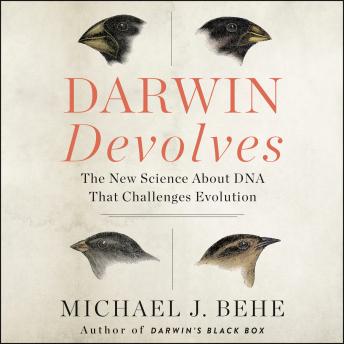
I ran across the article, “Two Catholic Scientists Debate Intelligent Design” (Pat Flynn, Chronicles of Strength.com). The two scientists are:
Dr. Stacy Trasancos: a convert to Catholicism and a nationally-recognized author, speaker, and educator on the topic of theology and science. She has a PhD in chemistry and an MA in dogmatic theology. She is a teaching fellow for Bishop Robert Barron’s new Word on Fire Institute and regularly appears on Catholic Answers Live to answer questions about faith and science. She is the author of three books: Particles of Faith, Science Was Born of Christianity, and 20 Answers: Bioethics.
Michael J. Behe: Professor of Biological Sciences at Lehigh University in Pennsylvania. He received his Ph.D. in Biochemistry from the University of Pennsylvania in 1978. Behe’s current research involves delineation of design and natural selection in protein structures. In his career he has authored over 40 technical papers and two books, Darwin’s Black Box: The Biochemical Challenge to Evolution and The Edge of Evolution: The Search for the Limits of Darwinism, which argue that living system at the molecular level are best explained as being the result of deliberate intelligent design. His current book is Darwin Devolves: The New Science About DNA That Challenges Evolution.
The 90-minute debate can be listened to at the above link, or downloaded.
I would likely (before listening to it) side with Dr. Behe. Catholics (even deists, for that matter) must believe that God created in some fashion. We can’t consistently hold a purely materialistic position (as if science of empiricism alone can explain absolutely everything). Every Christian, theist, and deist believes that God is a creator. So the question at hand in a debate like this between two Catholic scientists is as follows:
Did God create scientific laws and processes and forces that were able in and of themselves to bring about the Big Bang, the origin of the entire universe and of life and all subsequent evolution?
Or are these scientific laws and natural processes (in our present understanding) inadequate to explain and fully account for the origins of things?
My position (which is not held unconditionally) is #2. I don’t see that the laws and processes of science as we know them can adequately explain the design that we see. There are too many serious unanswered questions. It could have possibly been the case (per #1): as the way God created things. But I think that in fact (by the best lights of understanding that I have) it is not, because science is stumped as to the fundamentals of the origins of the universe and of life.
Therefore, God had to intervene at some point. I think it’s minimal involvement (after His initial creation of matter), but I believe that He had to bring about (as “Designer”) some of the marvelous processes that have no plausible explanation according to science as we know it (at least thus far).
I have (technically) been an agnostic as to evolution for many years now. I have no fundamental or moral or biblical objection to it. God could have possibly used these processes as His method to create. I don’t think it is a priori impossible. But I don’t believe that it is an adequate explanation by itself, in a materialistic sense. Nor can a materialistic universe explain itself: its own origin.
And so I think that a fully scientific outlook reserves judgment if propositions are not believed to have been adequately proven or made more plausible than any other explanation, by science alone (just as the agnostic as to the existence of God reserves judgment, thinking that sufficient evidence is lacking).
Many people seem to think that Dr. Behe is some sort of creationist. He is not. He believes in common descent. But he is saying that science alone cannot explain the marvelous design and intricacies and complexities that he observes at a molecular level. He challenges folks who disagree to explain how they came about, and he finds their solutions wanting and falling far short of “most plausible hypothesis” status.
Dr. Trasancos and Dr. Behe would agree as Catholics that God created the universe and the laws of science, which operate more or less on their own. But Dr. Behe contends that these natural processes alone cannot explain everything that is posited by standard Darwinian evolutionary theory. I agree. And I will continue to agree until scientists skeptical of Dr. Behe’s opinion show in detail how he is wrong.
Michael Behe’s responses to critiques of his work are always goldmines of information, and fun to read as well. Criticism of his latest book, Darwin Devolves, and his replies, are collected on a web page about the book. Here is an altogether characteristic excerpt from one of his articles listed there: “A Response to My Lehigh Colleagues, Part 3” (Evolution News, 2-26-19),
Lang and Rice [see their review] are welcome to think up all the evolutionary pathways they want, and join the long line of critics who have tried and (as I briefly show in Darwin Devolves and at much greater length elsewhere; see here, here, here, here, here, here, and here) failed over the years to figure out how irreducibly complex functional systems could be produced by random, undirected processes. Yet they don’t even try. The penultimate section of the long review is entitled “Two Examples to Illustrate the Evolution of Complexity.” (Hmm. Do you, dear reader, notice that an important word is missing from that title?) The reviewers dredge up a couple of old experiments that, at the time they were first published, were furiously spun as grave problems for irreducible complexity. (One sure way to get an otherwise-unremarkable paper noticed over the past several decades has been to claim it refutes those bothersome ID folks.) However, the results were actually quite modest and the relevance to ID claims nonexistent, as I wrote at the time. For those who want the details, click on the following links. Suffice it to say here that the first example cited by the reviewers (an investigation of a complex molecular machine called a vacuolar ATPase) at the very best concerned sideways evolution — no new functions, let alone new complex machinery, were involved. With the second example, a virus in a lab evolution experiment swapped out a binding site for a certain protein in the membrane of E. coli for a binding site for a second, homologous protein. In the process several E. coli genes were broken to help the bacterium survive.
Color me unimpressed. Yet it’s reasonable to think that, in preparation for writing the review, Lang and Rice would search for the very best studies that have so far been produced that they think challenge irreducible complexity and intelligent design. Perhaps they found them.
In the Conclusion of their review Lang and Rice raise a plaintive cry, first celebrating in general the skepticism of scientists and then bemoaning the skepticism of the public toward grand Darwinian claims.
Scientists — by nature or by training — are skeptics. Even the most time honored theories are reevaluated as new data come to light. …
[O]ver 150 years after On the Origin of Species — less than 20% of Americans accept that humans evolved by natural and unguided processes. It is hard to think of any other discipline where mainstream acceptance of its core paradigm is more at odds with the scientific consensus. …
Why evolution by natural selection is difficult for so many to accept is beyond the scope of this review; however, it is not for a lack of evidence: the data (only some of which we present here) are more than sufficient to convince any open minded skeptic that unguided evolution is capable of generating complex systems.
Perhaps I can help. After all, I used to believe that a Darwinian process did indeed build the wonders of life; I had no particular animus against it. Yet I believed it on the say-so of my instructors and the authority of science, not on hard evidence. When I read a book criticizing Darwin’s theory from an agnostic viewpoint it startled me, and I then began a literature search for real evidence that random mutation and natural selection could really do what was claimed for them. I came up completely empty. In the over thirty years since then, I’ve only become more convinced of the inadequacy of Darwinism, and more persuaded of the need for intelligent design at ever-deeper levels of biology, as detailed in my books.
I’ve often found a similar mentality in criticism of my own Catholic apologetics work; for example, most recently, “replies” to my critiques against Taylor Marshall’s reactionary screed, Infiltration. The general mentality is precisely the same. A bunch of people believe a certain point of view. Someone dares to criticize it. And as a result we observe lots of name-calling, caricature, misrepresentation of arguments, basic miscomprehensions, etc.
What is invariably missing is any direct interaction with actual argumentation. This is what has occurred with Dr. Behe for many years, and is happening to me right now. For innumerable examples of this “ad hominem minus rational argument”mentality, see the many “replies” to my Amazon review of Infiltration.
So I know the feeling very well. But the frustration is perhaps worth it (I think Dr. Behe would agree) if for nothing else than to realize that the supposed evolutionary arguments for the origins of biological entities (the very proposed mechanism of evolution) remain as unexplained and mysterious as they ever were.
This is why I think that the truly scientific mind must take at the very least an agnostic position as regards such processes of origination (even if God isn’t posited at all, as Designer), until these things are properly and fully explained scientifically and naturally, because if they aren’t, the basic building block of evolution: random mutations as the supposed mechanism of natural selection, abysmally fail as a grand explanation.
***
Photo credit: book cover of Michael Behe’s Darwin Devolves, from audiobooks.com. Google Images considers this to be “labeled for reuse.”
***
Previous Post

June 15, 2019
On Homeschooling & Dilapidated Public Education
Next Post

June 17, 2019 Swearing & Post-Boomer Generations: Literary Progress?
Browse Our Archives
Select a Category & Last Things About Me Anti-Catholicism Atheism & Agnosticism Baptism and Sacramentalism Bible and Tradition Blessed Virgin Mary Books by Dave Armstrong C. S. Lewis Calvinism & General Protestantism Catholic Apologetics Catholic Apologists Catholic conversion Catholic converts Christmas Church (Ecclesiology) Church History Conversion and Converts Development of Doctrine Eastern Orthodoxy Ecumenism & Christian Unity Eucharist & Liturgy Fathers of the Church French Translations G. K. Chesterton Hell Hell & Satan Hell & Satan & Last Things Heresies & Comparative Religion Holistic Health Inquisition & Crusades & Scandals James White Jews & Judaism & Old Testament John Calvin John Henry Newman Liberal / Modernist Theology Life Issues Literary Resume Lutheranism Mariology Martin Luther Music Orthodoxy Papacy & Infallibility Personal Page Philosophy & Science Political & Ethical & Moral Issues Protestant Persecution & Intolerance Protestantism Purgatory Purgatory & Penance Romantic & Imaginative Theology Saints & Purgatory & Penance Salvation Salvation & Justification Satan & Last Things Sexuality and Gender Issues Spanish Translations Traditionalism vs. Radical Catholic Reactionaries Traducciones al español / tradução para português Trinitarianism & Christology Uncategorized Videos
Select a Month October 2026 September 2026 August 2026 July 2026 June 2026 May 2026 April 2026 March 2026 February 2026 January 2026 December 2025 November 2025 October 2025 September 2025 August 2025 July 2025 June 2025 May 2025 April 2025 March 2025 February 2025 January 2025 December 2024 November 2024 October 2024 September 2024 August 2024 July 2024 June 2024 May 2024 April 2024 March 2024 February 2024 January 2024 December 2023 November 2023 October 2023 September 2023 August 2023 July 2023 June 2023 May 2023 April 2023 March 2023 February 2023 January 2023 December 2022 November 2022 October 2022 September 2022 August 2022 July 2022 June 2022 May 2022 April 2022 March 2022 February 2022 January 2022 December 2021 November 2021 October 2021 September 2021 August 2021 July 2021 June 2021 May 2021 April 2021 March 2021 February 2021 January 2021 December 2020 November 2020 October 2020 September 2020 August 2020 July 2020 June 2020 May 2020 April 2020 March 2020 February 2020 January 2020 December 2019 November 2019 October 2019 September 2019 August 2019 July 2019 June 2019 May 2019 April 2019 March 2019 February 2019 January 2019 December 2018 November 2018 October 2018 September 2018 August 2018 July 2018 June 2018 May 2018 April 2018 March 2018 February 2018 January 2018 December 2017 November 2017 October 2017 September 2017 August 2017 July 2017 June 2017 May 2017 April 2017 March 2017 February 2017 January 2017 December 2016 November 2016 October 2016 September 2016 August 2016 July 2016 June 2016 May 2016 April 2016 March 2016 February 2016 January 2016 December 2015 November 2015 October 2015 September 2015 August 2015 July 2015 June 2015 May 2015 April 2015 March 2015 February 2015 January 2015 December 2014 November 2014 October 2014 September 2014 August 2014 July 2014 June 2014 April 2014 March 2014 February 2014 January 2014 December 2013 November 2013 October 2013 September 2013 August 2013 July 2013 June 2013 April 2013 March 2013 February 2013 January 2013 December 2012 November 2012 October 2012 September 2012 August 2012 July 2012 June 2012 May 2012 April 2012 March 2012 February 2012 January 2012 December 2011 November 2011 October 2011 September 2011 August 2011 July 2011 June 2011 April 2011 March 2011 February 2011 October 2010 September 2010 August 2010 July 2010 April 2010 March 2010 December 2009 October 2009 August 2009 July 2009 June 2009 May 2009 March 2009 February 2009 October 2008 September 2008 April 2008 March 2008 February 2008 January 2008 December 2007 November 2007 October 2007 May 2007 March 2007 February 2007 January 2007 November 2006 October 2006 September 2006 August 2006 July 2006 June 2006 May 2006 April 2006 March 2006 February 2006 October 2005 June 2005 April 2005 February 2005 July 2004 May 2004 April 2004
Follow Us!
TAKE THE
Religious Wisdom Quiz
Who was Jacob's first wife?
Select your answer to see how you score.
Rachel Dinah Leah Rebekah
Books by This Author Books by Dave Armstrong
Related posts from Biblical Evidence for Catholicism

God, Modern Physics, & Dark Energy: An Analogy
Biblical Evidence for Catholicism
C. S. Lewis’ Argument for God from Desire
Biblical Evidence for Catholicism

Parting of the Red Sea & Lake Erie...
Biblical Evidence for Catholicism

Deus me curou! (Úlcera, alergias alimentares)
Biblical Evidence for Catholicism
TRENDING AT PATHEOS Catholic

The Sermon on the Mount, Part I: Matthew...
The Sermon on the Mount, Part I (Matthew 4:12-5:12) St. Matthew moves...

What's up from Crossway: Reviewing some of their latest A few weeks...

Janie Learns the Way of the Cross: A...
Teaching children about Jesus' Passion can be challenging. Many parents and educators...

Looking For Good Catholic Writing - October 2026
He alone extends the heavens, and he walks upon the waves of...

In "Irreplaceable," our book on vocation and technology, Trevor Sutton and I...

I was strolling through the top floor of the brand new Parthenon...
view all Catholic blogs
Ad-Free & Subscriber Log-In Subscription Support
- About Us
- 2026 Calendar
- Videos
- Podcasts
- Library of World Religions
- Faith In Media Tracker
- Advertise With Us
- Write for Us
- Privacy Policy
- Terms of Service
- Do Not Sell My Data
- Contact Us
- Radiant Digital
- Manage Newsletter Subscriptions
- Unsubscribe From Notifications
- Sitemap
Copyright 2008-2026, Patheos. All rights reserved.
Subscription Support Ad-Free & Subscriber Log-In
Follow Patheos