
BuddhistCatholicContemplativeEvangelicalGeneral ChristianHinduJewishLatter-day SaintMuslimNew VisionsProgressive Christian
Beliefs
- Buddhist
- Catholic
- Contemplative
- Evangelical
- General Christian
- Hindu
- Jewish
- Latter-day Saint
- More Voices
- Muslim
- New Visions
- Pagan
- Progressive Christian
Topics
- Religion News
- Food and Religion
- Sports and Religion
- Religious Art
- Religious Music and Entertainment
- Religious Events
- History and Religion
- Style and Religion
- Politics and Religion
- Women in Religion
- Recreation Outdoors and Religion
- Business Finance and Religion
- Careers Workplace and Religion
- Education and Religion
- Family Parenting and Religion
- Health Fitness and Religion
- Home and Religion
- Relationships and Religion
- Technology and Religion
- Travel and Religion
Columnists
- Buddhist Columnists
- Business Finance and Religion Columnists
- Careers Workplace and Religion Columnists
- Catholic Columnists
- Contemplative Columnists
- Education and Religion Columnists
- Evangelists Columnists
- Family Parenting and Religion Columnists
- General Christian Columnists
- Health Fitness and Religion Columnists
- Hindu Columnists
- History and Religion Columnists
- Home and Religion Columnists
- Jewish Columnists
- More Voices Columnists
- Latter Day Columnists
- Muslim Columnists
- New Visions Columnists
- Nonreligious Columnists
- Pagan Columnists
- Politics and Religion Columnists
- Progressive Columnists
- Recreation Outdoors and Religion Columnists
- Relationships and Religion Columnists
- Religion News Columnists
- Religious Art Columnists
- Religious Events Columnists
- Religious Music and Entertainment Columnists
- Sports and Religion Columnists
- Style and Religion Columnists
- Technology and Religion Columnists
- Travel and Religion Columnists
- Women in Religion Columnists
Resource Library
- 2026 Calendar
- Library of World Religions
- The 100 Most Holy Places on Earth
- Patheos Answers
- Podcasts
- Videos
- Faith Leaders Database
- Anglican Episcopalian
- Bahai
- Baptist
- Buddhism
- Christianity
- Confucianism
- Eastern Orthodoxy
- Hinduism
- Holiness and Pentecostal
- ISKCON
- Islam
- Judaism
- Lutheran
- Methodist
- The Church of Jesus Christ of Latter-day Saints
- New Age
- Paganism
- Presbytarian and Reformed
- Protestantism
- Religion Behind the Scenes
- Roman Catholic
- Scientology
- Shia Islam
- Sikhism
- Sufism
- Sunni Islam
- Taoism
- Zen
- See all religions
Research Tools
 Ad-Free & Subscriber Log-In Subscription Support
Ad-Free & Subscriber Log-In Subscription Support
Follow Patheos 

- Trending:
- Forgiveness
- |
- Marriage
- |
- Consciousness
- |
- Death Penalty
- |
- Election
- |
- Halloween

-
About
-
Catholic Apologetics
-
Church History
-
Great Apologists
-
Christian Worldview
-
Protestantism & Misc.
- Home
- Catholic
- History and Religion
- C. S. Lewis’ Views on Christian Unity & Ecumenism
C. S. Lewis’ Views on Christian Unity & Ecumenism
Last updated on: September 14, 2019 at 10:37 pm by Dave Armstrong
C. S. Lewis’ Views on Christian Unity & Ecumenism 2019-09-14T22:37:15-04:00 Dave Armstrong
Patheos Explore the world's faith through different perspectives on religion and spirituality! Patheos has the views of the prevalent religions and spiritualities of the world.
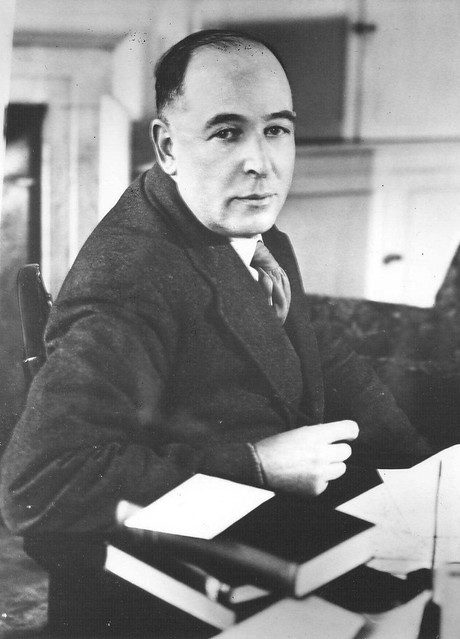
I think C. S. Lewis’s approach to ecumenism was quite wise. He had many close friends (several of the “Inklings”) who were (or eventually would become) Catholic, including George Sayer, who wrote a highly-acclaimed biography (Jack: C. S. Lewis and His Times, 1988), Jim Dundas-Grant, Humphrey Havard, Fr. Gervase Mathew, Dom Bede Griffiths, Christopher Derrick, Fr. Walter Hooper, Sheldon Vanauken, Fr. Martin D’Arcy, and J. R. R. Tolkien, who helped him to convert to Christianity, by describing it as a “true myth.”
Lewis himself held many views similar or identical to Catholic teaching (e.g., on purgatory), as somewhat of an Anglo-Catholic. In 1953 Lewis wrote the following in a letter to a friend who had become a Catholic:
Though you have taken a way which is not for me I nevertheless can congratulate you — I suppose because your faith and joy are so obviously increased. Naturally, I do not draw from that the same conclusions as you, but . . . I believe we are very near to one another . . . In the present divided state of Christendom, those who are at the heart of each division are all closer to one another than those who are at the fringes . . . Let us by all means pray for one another: it is perhaps the only form of “work for reunion” which never does anything but good. God bless you. (Letters to an American Lady, Grand Rapids, Michigan: Eerdmans, 1967 — letter from 1953, 11-12)
I am very much of this mind myself: I feel that people who are trying their best to follow the orthodox Christian traditions of their own denominations are kindred spirits in many, many ways, whereas the liberals and so-called “traditionalists” of my own camp, Catholicism (as well as the nominal Catholics not very committed to their walk with Jesus as a disciple), often seem like strangers to me. In my mind, I have much more in common with an ecumenical Calvinist or Anglican. I think that gets to what Lewis was trying to express. He made other similarly wise utterances in this regard:
That the whole cause of schism lies in sin I do not hold to be certain. I grant that no schism is without sin but the one proposition does not necessarily follow the other . . . what would I think of your Thomas More and of our William Tyndale? All the writings of the one and all the writings of the other I have lately read right through. Both of them seem to me most saintly men and to have loved God with their whole heart: I am not worthy to undo the shoes of either of them. Nevertheless they disagree and (what racks and astounds me) their disagreement seems to me to spring not from their vices nor from their ignorance but rather from their virtues and the depths of their faith, so that the more they were at their best the more they were at variance. I believe the judgement of God on their dissension is more profoundly hidden than it appears to you to be: for His judgements are indeed an abyss. (Letters: C.S. Lewis / Don Giovanni Calabria [25 November 1947], 37, 39)
Tomorrow I am crossing over (if God so have pleased) to Ireland: my birthplace and dearest refuge so far as charm of landscape goes, and temperate climate, although most dreadful because of the strife, hatred and often civil war between dissenting faiths. These indeed both yours and ours “know not by what Spirit they are led.” They take lack of charity for zeal and mutual ignorance for orthodoxy . . . Let us, however, with mutual prayers pray with all our power for that charity which “covers a multitude of sins.” (Ibid., [10 August 1953], 39)
‘That they all may be one’ is a petition which in my prayers I never omit. While the wished-for unity of doctrine and order is missing, all the more eagerly let us try to keep the bond of charity. (Ibid., 71)
All who profess themselves Christians are bound to offer prayers for the reunion of the Church now, alas, torn and divided. (Ibid., 99)
As a Christian, I am very much aware that our divisions grieve the Holy Spirit and hold back the work of Christ; as a logician I realize that when two churches affirm opposing positions, these cannot be reconciled.
But because I was an unbeliever for a long time, I perceived something which perhaps those brought up in the Church do not see. Even when I feared and detested Christianity, I was struck by its essential unity, which, in spite of its divisions, it has never lost. I trembled on recognizing the same unmistakable aroma coming from the writings of Dante and Bunyan, Thomas Aquinas and William Law.
Since my conversion, it has seemed my particular task to tell the outside world what all Christians believe. Controversy I leave to others: that is the business of theologians. I think that you and I, the laity, simple soldiers of the Faith, will best serve the cause of reconciliation not so much by contributing to such debates, but by our prayers, and by sharing all that can already be shared of Christian life.
If the unity of charity and intention between us were strong enough, perhaps our doctrinal differences would be resolved sooner; without that spiritual unity, a doctrinal agreement between our religious leaders would be sterile.
In the meantime, it will be apparent that the man who is most faithful in living the Christian life in his own church is spiritually the closest to the faithful believers in other confessions: because the geography of the spiritual world is very different from that of the physical world. In the latter, countries touch each other at their borders, in the former, at their center. It is the lukewarm and indifferent in each country who are furthest from all other countries. (Preface to the French edition of La Problem de la Souffrance, 1950)
. . . such silence need not mean that I myself am sitting on the fence. Sometimes I am. There are questions at issue between Christians to which I do not think we have been told the answer. There are some to which I may never know the answer: if I asked them in a better world, I might (for all I know) be answered as a far greater questioner was answered: “what is that to thee? Follow thou Me”. But there are other questions as to which I am definitely on one side of the fence and yet say nothing. For I was not writing to expound something I could call “my religion” but to expound “mere” Christianity, which is what it is and what it was long before I was born and whether I like it or not (Preface to Mere Christianity, New York: Macmillan, 1952, 7)
I hope no reader will suppose that “mere” Christianity is here put forward as an alternative to the creeds of the existing communions –- as if a man could adopt it in preference to Congregationalism or Greek Orthodoxy or anything else. It is more like a hall out of which doors open into several rooms. If I can bring anyone into that hall I shall have done what I attempted. But it is in the rooms, not in the hall, that there are fires and chairs and meals. The hall is a place to wait in, a place from which to try the various doors, not a place to live in…When you do get into your room you will find that the long wait has done you some kind of good which you would not have had otherwise. But you must regard it as waiting, not as camping. You must keep on praying for light: and of course, even in the hall you must begin trying to obey the rules which are common to the whole house. And above all you must be asking which door is the true one; not which pleases you best by its paint and paneling. In plain language, th question should never be: “Do I like that kind of service?” but “Are these doctrines true: Is holiness here? Does my conscience move me towards this? Is my reluctance to knock at this door due to my pride, or my mere taste, or my personal dislike of this particular doorkeeper?”
When you have reached your own room, be kind to those who have chosen different doors and to those who are still in the hall. If they are wrong they need your prayers all the more; and if they are your enemies, then you are under orders to pray for them. That is one of the rules common to the whole house. (Ibid., 11-12)
In his essay, “Christian Reunion” (Christian Reunion and Other Essays, edited by Walter Hooper, London: Collins, 1990, 17-19) Lewis wrote:
The real reason why I cannot be in communion with you [Catholics] is not my disagreement with this or that Roman doctrine, but that to accept your Church means, not to accept a given body of doctrine, but to accept in advance any doctrine your Church hereafter produces. It is like being asked to agree not only to what a man has said but also to what he is going to say.
Lewis thus remains firmly in the Protestant camp insofar as he cherishes the right of private judgment more than the notion of submission to a higher human ecclesiastical authority, believed in faith to be protected from error and thus worthy of one’s allegiance without fear of being led astray (i.e., the Protestant Rule of faith rather than the Catholic one). One can only wonder, however, what he would have thought about present-day Anglicanism? We know that he was firmly opposed, for example, to women priests.
And I remain in the Catholic camp for the opposite reasons, and I think G. K. Chesterton’s observation is true:
It is impossible, I hope, for any Catholic to write any book on any subject . . . without showing that he is a Catholic. (Prefatory Note to The Everlasting Man, 1925 — one of the books which most influenced Lewis)
Yet I find myself in close agreement with (my favorite writer) Anglican C. S. Lewis’s ecumenical sentiments above, and that gives me hope for a type of ecumenism that is respectful of the distinctives of different Christian communions (so that it is not liberal) but also is passionately committed to as much unity and “community” as is possible (so that it is biblical and charitable).
John Wesley’s famous Letter to a Roman Catholic, dated July 18, 1749, and published in Dublin, in the context of great inter-faith bitterness, expresses the same wonderful spirit:
Brotherly love is utterly destroyed and each side, looking on the other as monsters, gives way to anger, hatred, malice, to every unkind affection . . . Can nothing be done, even allowing us on both sides to retain our own opinions, for the softening our hearts towards one another, the giving a check to this flood of unkindness? . . . Be our opinions right or be they wrong, these tempers are undeniably wrong . . .I think you deserve the tenderest regard I can show . . . How much more, if you are a person fearing God (as without question many of you are) . . .
Let us resolve, first, not to hurt one another, to do nothing unkind or unfriendly to each other . . . Let us resolve, secondly, God being our helper, to speak nothing harsh or unkind of each other . . . to say all the good we can, both of and to one another . . . Let us, thirdly, resolve to harbour no unkind thought, no unfriendly temper towards each other . . . Let us, fourthly, endeavor to help each other on in whatever we are agreed leads to the Kingdom. So far as we can, let us always rejoice to strengthen each other’s hands in God.
Obviously, I don’t think any of this rules out my own calling of apologetics (Lewis and I would likely disagree on that because he saw himself as an exponent of “mere Christianity” rather than as an advocate of Anglicanism or any other Christian communion — though I did write two books from a strictly “generic Christian” perspective, even titling one Mere Christian Apologetics). I think apologetics can be done with charity — as Lewis himself aptly demonstrated (though some will always be offended by it no matter how charitable one tries to be). And I think that disagreeing with a man’s ideas is not the same as insulting him or being “disrespectful,” etc.
That said, I wholeheartedly endorse what I quoted above.
***
Related Reading:
C. S. Lewis’ Childhood in Belfast & Contra-Catholicism (Biographers and/or Friends Kreeft, Pearce, Derrick, and Possibly Tolkien Think This is Why Lewis Never Became a Catholic) [6-26-12]
Why Didn’t C. S. Lewis Become a Catholic? [8-29-14]
Dialogue on Why C. S. Lewis Didn’t “Pope” [9-1-15]
C. S. Lewis vs. St. Paul on Future Binding Church Authority [National Catholic Register, 1-22-17]
Why C. S. Lewis Never Became a Catholic [National Catholic Register, 3-5-17]
C. S. Lewis on Catholicism (Correspondence: 1934-1947) [9-13-19]
***
(originally from 16 June 2003)
Photo credit: Levan Ramishvili; uploaded on 7-12-18. C. S. Lewis: c. 1940 [Flickr / Public domain]
***
Previous Post

June 8, 2019
Taylor Marshall Fans Continue Insults, Sans Argument
Next Post

June 9, 2019 My Respect for Protestants / Catholic Ecumenical Principles
Browse Our Archives
Select a Category & Last Things About Me Anti-Catholicism Atheism & Agnosticism Baptism and Sacramentalism Bible and Tradition Blessed Virgin Mary Books by Dave Armstrong C. S. Lewis Calvinism & General Protestantism Catholic Apologetics Catholic Apologists Catholic conversion Catholic converts Christmas Church (Ecclesiology) Church History Conversion and Converts Development of Doctrine Eastern Orthodoxy Ecumenism & Christian Unity Eucharist & Liturgy Fathers of the Church French Translations G. K. Chesterton Hell Hell & Satan Hell & Satan & Last Things Heresies & Comparative Religion Holistic Health Inquisition & Crusades & Scandals James White Jews & Judaism & Old Testament John Calvin John Henry Newman Liberal / Modernist Theology Life Issues Literary Resume Lutheranism Mariology Martin Luther Music Orthodoxy Papacy & Infallibility Personal Page Philosophy & Science Political & Ethical & Moral Issues Protestant Persecution & Intolerance Protestantism Purgatory Purgatory & Penance Romantic & Imaginative Theology Saints & Purgatory & Penance Salvation Salvation & Justification Satan & Last Things Sexuality and Gender Issues Spanish Translations Traditionalism vs. Radical Catholic Reactionaries Traducciones al español / tradução para português Trinitarianism & Christology Uncategorized Videos
Select a Month October 2026 September 2026 August 2026 July 2026 June 2026 May 2026 April 2026 March 2026 February 2026 January 2026 December 2025 November 2025 October 2025 September 2025 August 2025 July 2025 June 2025 May 2025 April 2025 March 2025 February 2025 January 2025 December 2024 November 2024 October 2024 September 2024 August 2024 July 2024 June 2024 May 2024 April 2024 March 2024 February 2024 January 2024 December 2023 November 2023 October 2023 September 2023 August 2023 July 2023 June 2023 May 2023 April 2023 March 2023 February 2023 January 2023 December 2022 November 2022 October 2022 September 2022 August 2022 July 2022 June 2022 May 2022 April 2022 March 2022 February 2022 January 2022 December 2021 November 2021 October 2021 September 2021 August 2021 July 2021 June 2021 May 2021 April 2021 March 2021 February 2021 January 2021 December 2020 November 2020 October 2020 September 2020 August 2020 July 2020 June 2020 May 2020 April 2020 March 2020 February 2020 January 2020 December 2019 November 2019 October 2019 September 2019 August 2019 July 2019 June 2019 May 2019 April 2019 March 2019 February 2019 January 2019 December 2018 November 2018 October 2018 September 2018 August 2018 July 2018 June 2018 May 2018 April 2018 March 2018 February 2018 January 2018 December 2017 November 2017 October 2017 September 2017 August 2017 July 2017 June 2017 May 2017 April 2017 March 2017 February 2017 January 2017 December 2016 November 2016 October 2016 September 2016 August 2016 July 2016 June 2016 May 2016 April 2016 March 2016 February 2016 January 2016 December 2015 November 2015 October 2015 September 2015 August 2015 July 2015 June 2015 May 2015 April 2015 March 2015 February 2015 January 2015 December 2014 November 2014 October 2014 September 2014 August 2014 July 2014 June 2014 April 2014 March 2014 February 2014 January 2014 December 2013 November 2013 October 2013 September 2013 August 2013 July 2013 June 2013 April 2013 March 2013 February 2013 January 2013 December 2012 November 2012 October 2012 September 2012 August 2012 July 2012 June 2012 May 2012 April 2012 March 2012 February 2012 January 2012 December 2011 November 2011 October 2011 September 2011 August 2011 July 2011 June 2011 April 2011 March 2011 February 2011 October 2010 September 2010 August 2010 July 2010 April 2010 March 2010 December 2009 October 2009 August 2009 July 2009 June 2009 May 2009 March 2009 February 2009 October 2008 September 2008 April 2008 March 2008 February 2008 January 2008 December 2007 November 2007 October 2007 May 2007 March 2007 February 2007 January 2007 November 2006 October 2006 September 2006 August 2006 July 2006 June 2006 May 2006 April 2006 March 2006 February 2006 October 2005 June 2005 April 2005 February 2005 July 2004 May 2004 April 2004
Follow Us!
TAKE THE
Religious Wisdom Quiz
What is the meaning of the word "Golgotha"?
Select your answer to see how you score.
Peaceful Garden River of Blood City of Bread Place of the Skull
Books by This Author Books by Dave Armstrong
Related posts from Biblical Evidence for Catholicism

Jesus Founded the [Catholic] Church. If Not Him,...
Biblical Evidence for Catholicism

Jerusalem Council vs. James White & Sola Scriptura
Biblical Evidence for Catholicism

Biblical Perspicuity: Absurd Anti-Catholic "Defense"
Biblical Evidence for Catholicism

50 Biblical Disproofs of "Evident Clearness" of the...
Biblical Evidence for Catholicism
TRENDING AT PATHEOS Catholic

I was strolling through the top floor of the brand new Parthenon...

What Does Gêvâh Mean For Kimberley Guifoyle &...
This week, a lot of the news is focused on Kimberly Guilfoyle....

INNER CIRCLE: Profound Mystery (Of Christ In All...
Ephesians 5:31-32 “For this reason, a man will leave his father and...

Do Not Rejoice When Your Enemy Falls: The...
Turning an execution into a public spectacle is a disturbing expression of...

'The Chosen' S6 Trailer: The Passion Gets Very...
Not many watching 'The Chosen' worry about spoilers, but just because they...

The purpose-driven labor priest
A labor activist reads Rick Warren and it gets me wondering about...
view all Catholic blogs
Ad-Free & Subscriber Log-In Subscription Support
- About Us
- 2026 Calendar
- Videos
- Podcasts
- Library of World Religions
- Faith In Media Tracker
- Advertise With Us
- Write for Us
- Privacy Policy
- Terms of Service
- Do Not Sell My Data
- Contact Us
- Radiant Digital
- Manage Newsletter Subscriptions
- Unsubscribe From Notifications
- Sitemap
Copyright 2008-2026, Patheos. All rights reserved.
Subscription Support Ad-Free & Subscriber Log-In
Follow Patheos