
BuddhistCatholicContemplativeEvangelicalGeneral ChristianHinduJewishLatter-day SaintMuslimNew VisionsProgressive Christian
Beliefs
- Buddhist
- Catholic
- Contemplative
- Evangelical
- General Christian
- Hindu
- Jewish
- Latter-day Saint
- More Voices
- Muslim
- New Visions
- Pagan
- Progressive Christian
Topics
- Religion News
- Food and Religion
- Sports and Religion
- Religious Art
- Religious Music and Entertainment
- Religious Events
- History and Religion
- Style and Religion
- Politics and Religion
- Women in Religion
- Recreation Outdoors and Religion
- Business Finance and Religion
- Careers Workplace and Religion
- Education and Religion
- Family Parenting and Religion
- Health Fitness and Religion
- Home and Religion
- Relationships and Religion
- Technology and Religion
- Travel and Religion
Columnists
- Buddhist Columnists
- Business Finance and Religion Columnists
- Careers Workplace and Religion Columnists
- Catholic Columnists
- Contemplative Columnists
- Education and Religion Columnists
- Evangelists Columnists
- Family Parenting and Religion Columnists
- General Christian Columnists
- Health Fitness and Religion Columnists
- Hindu Columnists
- History and Religion Columnists
- Home and Religion Columnists
- Jewish Columnists
- More Voices Columnists
- Latter Day Columnists
- Muslim Columnists
- New Visions Columnists
- Nonreligious Columnists
- Pagan Columnists
- Politics and Religion Columnists
- Progressive Columnists
- Recreation Outdoors and Religion Columnists
- Relationships and Religion Columnists
- Religion News Columnists
- Religious Art Columnists
- Religious Events Columnists
- Religious Music and Entertainment Columnists
- Sports and Religion Columnists
- Style and Religion Columnists
- Technology and Religion Columnists
- Travel and Religion Columnists
- Women in Religion Columnists
Resource Library
- 2026 Calendar
- Library of World Religions
- The 100 Most Holy Places on Earth
- Patheos Answers
- Podcasts
- Videos
- Faith Leaders Database
- Anglican Episcopalian
- Bahai
- Baptist
- Buddhism
- Christianity
- Confucianism
- Eastern Orthodoxy
- Hinduism
- Holiness and Pentecostal
- ISKCON
- Islam
- Judaism
- Lutheran
- Methodist
- The Church of Jesus Christ of Latter-day Saints
- New Age
- Paganism
- Presbytarian and Reformed
- Protestantism
- Religion Behind the Scenes
- Roman Catholic
- Scientology
- Shia Islam
- Sikhism
- Sufism
- Sunni Islam
- Taoism
- Zen
- See all religions
Research Tools
 Ad-Free & Subscriber Log-In Subscription Support
Ad-Free & Subscriber Log-In Subscription Support
Follow Patheos 

- Trending:
- Forgiveness
- |
- Marriage
- |
- Consciousness
- |
- Death Penalty
- |
- Election
- |
- Halloween

-
About
-
Catholic Apologetics
-
Church History
-
Great Apologists
-
Christian Worldview
-
Protestantism & Misc.
- Home
- Catholic
- History and Religion
- Papal Critics Concede: No Proof of Canonical Papal Heresy
Papal Critics Concede: No Proof of Canonical Papal Heresy
Last updated on: May 10, 2019 at 2:51 pm by Dave Armstrong
Papal Critics Concede: No Proof of Canonical Papal Heresy 2019-05-10T14:51:58-04:00 Dave Armstrong
Patheos Explore the world's faith through different perspectives on religion and spirituality! Patheos has the views of the prevalent religions and spiritualities of the world.
Let’s cut to the quick. The bottom-line questions at hand are:
Is Pope Francis a heretic, or demonstrably guilty of espousing or promulgating specific heretical tenets?
On what canonical / theological basis does one incontrovertibly establish this charge?
Even a reactionary signatory to the Easter Letter like Dr. Peter Kwasniewski (one of 13 out of 19 documented original signatories with strong reactionary leanings) will go part of the way in acknowledging that there is an honest, legitimate case to be made against the main thrust of the letter. Remember him? I just summed up (yesterday) some of the opinions he (similar to twelve other signatories) has held, that go far, far beyond merely what Pope Francis believes, or allegedly believes, or has done:
[Vatican II itself is a seedbed of] progressivism and modernism [and] John Paul II and Benedict XVI . . . were swimming in a lake of Kool-Aid rather than the ocean of Tradition . . . [and] were conflicted and inconsistent progressives.
Bergoglio [Pope Francis] is the distillation of all the worst tendencies in Roncalli [Pope St. John XXIII], Montini [Pope St. Paul VI], Wojtyła [Pope St. John Paul II], and Ratzinger [Pope Benedict XVI] . . .
[The Pauline / “New” / ordinary form Mass is] so radical a deconstruction and reconstruction of the Roman liturgy that it does not exist in the same tradition of organic development. It is a new departure, a new thing, not a revision of the old thing . . .
Just a bit of background there (sorry for the “off-topic” diversion . . .). So, anyway, as I was saying, even Kwasniewski will concede this much:
The authors in the “sympathetic critiques” category make some good points worthy of further consideration. . . . their disagreements with the Open Letter have more to do with the nature of the arguments to be made, the forum in which to make them, and the ramifications for future steps.
Okay; I thought it might be worthwhile to briefly survey the statements of these four papal critics that Kwasniewski cites and links to, concerning the pope’s alleged heresies (adding two more to the mix, for good measure).
Phil Lawler (no admirer of this pope at all, as can readily be seen in his article I shall cite), opined:
I fear that this letter does more harm than good, compounding the problem that loyal Catholics now face.
Well, is the Pope a heretic? I am not qualified to address that question. As a matter of fact, I don’t know who is. . . .
To their credit, the authors of the Easter Letter recognize the need for an authoritative statement, for a judgment by the world’s bishops. But if that is their goal, should they not have approached sympathetic bishops privately, quietly, to make their case? Because by taking their arguments to the mass media, they have made it less likely that bishops would support them.
Peter Kwasniewski, one of the principal authors of the letter, now says that the document lists “instances of heresy that cannot be denied.” This, I’m afraid, is a demonstrably false statement. The “instances of heresy” mentioned in the letter have been denied, and repeatedly. The authors of the letter are convinced of their own arguments, but they have not convinced others. In fact they have not convinced me, and if they cannot persuade a sympathetic reader, they are very unlikely to convince a skeptical world. . . .
It will be easier, now, to classify anyone who challenges the Pope as a member of the same group that is making charges of heresy. Consequently life will be more difficult for those of us who are not calling for the deposition of the Roman Pontiff, but simply for a clarification of Church teaching.
. . . the claim that the Pope has committed heresy is at best a leap of logic . . . their suggestion that the Pope’s controversial appointments are evidence of heresy is ludicrous. . . .
But what is it that we want bishops to say? That the Pope is a heretic? I, for one, would be content if bishops made it clear that the Church’s teaching has not changed, will not change, cannot change on fundamental questions such as the inviolability of the marriage bond and sanctity of the Eucharist. (“Is the Pope a heretic? The danger of asking the wrong question”, Catholic Culture, 5-3-19)
Thomas Weinandy, O.F.M. Cap. (who is not at all averse to strong criticism of Pope Francis) offers an equally skeptical and definite analysis:
[T]he fact that Pope Francis articulates these positions in an ambiguous manner makes it almost impossible to accuse him rightly of heresy. (This is, in a sense, a saving grace.) Those who interpret his ambiguous teaching in a manner not in keeping with the Catholic faith may be heretical, but the pope is not, even if the pope appears to give silent approval to their erroneous interpretations. Thus, I think that the letter’s authors have gone beyond what is objectively warranted. . . . the manner in which they were presented, the conclusions drawn, and the actions proposed will not help rectify the present crisis within the Church.
. . . because the open letter is extreme in its appraisal and intemperate in its approach, more than likely it will make it more difficult for bishops, and even cardinals, to address present concerns. While they may be displeased, and even annoyed, with Pope Francis’s ambiguity and the manner in which he conducts his Petrine ministry, yet they rightly are nowhere near judging Francis a heretic and will remain silent about the letter.
. . . the open letter throws this work of the Spirit into jeopardy, for now those who have undertaken this battle will more easily be tarred with the brush of extremism. (“Is Pope Francis a Heretic?”, First Things, 5-7-19)
Joseph Shaw is the third “sympathetic” critic that Kwasniewski mentions. Somehow (I can’t resist noting), he is qualified to critique the pope’s theology and bandy about the most fine-tuned questions of possible heresy, even though he is a mere philosopher. Ed Feser (see below) is a philosopher as well, as is Peter Kwasniewski himself; and Phil Lawler is a journalist, who majored in Government and did graduate work in political philosophy.
But they are free and qualified (so they blithely assume) to critique the pope (minus theological training) all day long and into the night, whereas Catholic apologist Jimmy Akin (Bachelor’s degree in philosophy and some grad school), who has written now four critiques of the Easter Letter (one / two / three / four) cannot do so at all, because, you see, he has — so we’re told — no credentials to do so. Readers may try to figure out this peculiar “logic.” It’s beyond my pay grade. But in any event, Joseph Shaw writes:
In order to uncover the Pope’s intentions, the letter has to make what its authors think are reasonable interpretations of different documents and papal actions, such as of promoting or praising individuals known to have certain views. If this is a promulgation of heresy, it is promulgation by drift: it is the drift of papal works, papal actions, and papal policy, which is the problem.
The lack of clarity here is one reason why I, and no doubt others, have not signed this letter, although I signed earlier documents (and here) calling on Pope Francis to clarify his teaching. It seems to me to go beyond what can be clearly and simply stated about Pope Francis’ teaching. (“Can Pope Francis really be accused of committing heresy?”, LifeSite News, 5-7-19)
Ed Feser chimes in similarly:
[W]hether and how a pope can be charged with formal heresy, and what the consequences would be if he were guilty of it, are simply much less clear-cut canonically and theologically than the letter implies. Some of the Church’s greatest theologians have speculated about the matter, and while there are serious arguments for various possible positions, there is no theological consensus and no magisterial teaching which resolves the issue. Moreover, a pope falling into formal heresy would be about as grave a crisis for the Church as can be imagined. So, maximum caution is called for before making such a charge, and in my opinion it is simply rash flatly to accuse the pope of “the canonical delict of heresy,” as the letter does.
Some of the arguments deployed are also ill-advised, to say the least. For example, it was foolish to appeal to the allegedly sinister shape of the staff that the pope used in a particular mass as evidence of heretical intent. To be sure, the open letter does not make much of this, but it is a bad argument, and the letter’s critics have understandably pounced on it. (“Some comments on the open letter”, 5-6-19)
I shall also cite canon lawyer Edward Peters: no stranger to criticism of Pope Francis. He is in this same category of “sympathetic critics.” And here is his expressed opinion:
[A]s an outline of a canonical case against a pope for heresy, the letter stumbles in several crucial respects. Most seriously, it fails to grapple with the “principle of benignity” in the interpretation of law and evidence.
For many centuries canon law has expressly demanded that “in penal matters the more benign interpretation must be followed” (Regula Iuris 49), meaning, in brief, that the benefit of the doubt is to be accorded the accused in a criminal case. This interpretive principle goes beyond canon law: it is fundamental to the Western legal tradition.
The principle of benignity demands that, in every facet of the penal process, one must, for example, construe penal norms as narrowly as is reasonably possible (c 18) and judge the accused only and strictly in accord with law (c 221 § 3). But the letter consistently fails to appreciate, or even allude to, the principle of benignity as it impacts any penal matter, let alone one involving a pope.
The letter claims, for example, after reciting several statements by Francis, that “understood in their most obvious sense, the statements listed above are heretical.” But that assertion, even if it were factually correct, is canonically irrelevant for, per the principle of benignity, if an orthodox interpretation exists for an ambiguous theological assertion, that benign interpretation must be ascribed to the words of the accused – regardless of whether the accused actually intended such an interpretation. . . .
Heresy cases are not impossible under canon law, but they are, and are meant to be, very difficult. . . . But as a canonical brief for a papal heresy case, I find it unconvincing. (“The heresy letter is intelligent, but doesn’t quite convince”, Catholic Herald, 5-9-19)
Likewise, Fr. Raymond J. de Souza, in the midst of a flurry of critical remarks about the pope’s teachings and style and lack of clarification, etc., flatly conceded that there is no compelling charge of heresy here:
A certain consensus has emerged that where there is smoke there is usually fire, but in this case there is plenty of smoke but no real fire. And calling for the fire brigade when there isn’t a fire actually raging may lead to a certain complacency about all the smoke in the air.
I agree with the consensus that Pope Francis is not guilty of heresy, in part due to the fact his teaching style is not sufficiently clear as to sustain such a charge.
I would not make the charge myself. (“The Puzzling Pontificate of Pope Francis”, National Catholic Register, 5-9-19)
Many of these same people have complained that the pope and bishops have not made clear that Amoris Laetitia, in particular, is completely orthodox (if indeed it is). Fr. de Souza seems to think that this is untrue: “the Holy Father himself, echoed by many senior bishops, has insisted that no doctrinal change has been made.” So they have done it, but people simply refuse to accept their authoritative determination.
My friend, Dr. Robert Fastiggi, a systematic theologian and editor and translator of the latest version of Denzinger and the revised version of Ludwig Ott’s Fundamentals of Catholic Dogma, has shown that the answers to the concerns are already present in the document itself, and he has written several additional helpful and highly relevant articles:
Does Amoris Laetitia 303 Really Undermine Catholic Moral Teaching? (Robert Fastiggi & Dawn Eden Goldstein, La Stampa / Vatican Insider, 9-26-17)
Dr. Robert Fastiggi Defends Amoris Laetitia Against Critics (Dave Armstrong, Biblical Evidence for Catholicism, 10-3-17)
Critics of Amoris laetitia ignore Ratzinger’s rules for faithful theological discourse (Robert Fastiggi & Dawn Eden Goldstein, La Stampa / Vatican Insider, 10-4-17)
Dr. Fastiggi & Dr. Goldstein Debate Dr. Shaw Regarding Pope Francis (Dave Armstrong, Biblical Evidence for Catholicism, 10-9-17)
Dr. Fastiggi Replies to Dr. Brugger Regarding Amoris Laetitia (Dave Armstrong, Biblical Evidence for Catholicism, 10-12-17)
Responding to the Five Dubia from Amoris Laetitia Itself (Dr. Robert Fastiggi, Vatican Insider / La Stampa, 3-9-18)
And many others have shown that it is orthodox, too, as seen in my lengthy collection of defenses of Pope Francis.
As a matter of record, since it is a concern of all these people, that the pope clarify confusion and questions raised, I agree generally, that he should do so, and that (ideally and for the sake of peace and unity and clarity) he should have answered the dubia. I passionately argued this in National Catholic Register (9-30-17).
Dr. Kwasniewski wouldn’t be himself if he didn’t sling around the accusation of “ultramontanist!”: to be applied to anyone who dares defend the Holy Father. He unsuccessfully tried this game in his debate with me on “the reform of the reform” (of the Mass). And so he writes in his present eloquent but relentlessly fallacious and sophistical screed: “The open letter has stirred conservatives to a frenzy because they can’t bear the thought of a heretic on the throne of Peter.”
I don’t know who he is talking about (he conveniently didn’t cite anyone along these lines, which is what one does when one wishes to broad-brush and caricature). Speaking for myself, I have always contended that it is theoretically and even actually possible, apart from “infallible ex cathedra pronouncements,” as Kwasniewski agrees. I wrote a paper about this very topic over eleven years ago (12-1-07), entitled: Resisting Heretic Popes: Classic Catholic Reflections. I stated therein:
The notion of popes possibly being heretics (and what to do in that eventuality) is nothing new or alarming. . . .
There are several acknowledgements of this hypothetical scenario both before and after Gratian (12th century): . . .
One famous example of a pope being resisted for heresy is the incident regarding Pope John XXII (1249-1334). . . .
I have cited popes and some of the greatest teachers in the Church, including St. Thomas Aquinas, showing that popes could indeed be resisted if they went too far.
So, nothing new here whatsoever (big yawn). I was writing about this stuff six years before Pope Francis became pope, and long before that, too. This brings us back around — full circle — to the question at hand:
Is Pope Francis a heretic, or demonstrably guilty of espousing or promulgating specific heretical tenets?
On what canonical / theological basis does one incontrovertibly establish this charge?
As has been made clear above, from six people not averse at all to criticizing Pope Francis, and also “Jimmy” [cowboy-hat-wearing hick from the Ozarks] Akins (Fr. Rutler’s ridiculous way of citing his name), the answer is a resounding “no!” or at the very least the legal-type judgment: of “not proven beyond a reasonable doubt.”
Kwasniewski, undaunted, sees “seven manifestly heretical propositions”. For him, in his uncannily Luther-like ire and zeal, “Francis runs circles around Honorius. Francis is an unprecedented trial for the Church of God.” He’s entitled to his opinion (however silly and groundless). We’re also entitled to ours.
***
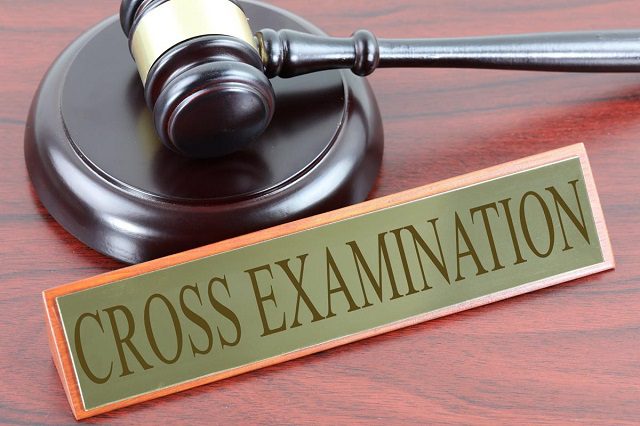
Photo credit: Cross Examination by Nick Youngson [CC BY-SA 3.0 Alpha Stock Images / The Blue Diamond Gallery]
***
Radical Catholic Reactionaries
Previous Post

May 9, 2019
Ecclesiological Errors of "Easter Letter" Reactionaries Summed Up
Next Post

May 10, 2019 Dialogue: Christian Witness, Trump, & Prudential Voting
Browse Our Archives
Select a Category & Last Things About Me Anti-Catholicism Atheism & Agnosticism Baptism and Sacramentalism Bible and Tradition Blessed Virgin Mary Books by Dave Armstrong C. S. Lewis Calvinism & General Protestantism Catholic Apologetics Catholic Apologists Catholic conversion Catholic converts Christmas Church (Ecclesiology) Church History Conversion and Converts Development of Doctrine Eastern Orthodoxy Ecumenism & Christian Unity Eucharist & Liturgy Fathers of the Church French Translations G. K. Chesterton Hell Hell & Satan Hell & Satan & Last Things Heresies & Comparative Religion Holistic Health Inquisition & Crusades & Scandals James White Jews & Judaism & Old Testament John Calvin John Henry Newman Liberal / Modernist Theology Life Issues Literary Resume Lutheranism Mariology Martin Luther Music Orthodoxy Papacy & Infallibility Personal Page Philosophy & Science Political & Ethical & Moral Issues Protestant Persecution & Intolerance Protestantism Purgatory Purgatory & Penance Romantic & Imaginative Theology Saints & Purgatory & Penance Salvation Salvation & Justification Satan & Last Things Sexuality and Gender Issues Spanish Translations Traditionalism vs. Radical Catholic Reactionaries Traducciones al español / tradução para português Trinitarianism & Christology Uncategorized Videos
Select a Month October 2026 September 2026 August 2026 July 2026 June 2026 May 2026 April 2026 March 2026 February 2026 January 2026 December 2025 November 2025 October 2025 September 2025 August 2025 July 2025 June 2025 May 2025 April 2025 March 2025 February 2025 January 2025 December 2024 November 2024 October 2024 September 2024 August 2024 July 2024 June 2024 May 2024 April 2024 March 2024 February 2024 January 2024 December 2023 November 2023 October 2023 September 2023 August 2023 July 2023 June 2023 May 2023 April 2023 March 2023 February 2023 January 2023 December 2022 November 2022 October 2022 September 2022 August 2022 July 2022 June 2022 May 2022 April 2022 March 2022 February 2022 January 2022 December 2021 November 2021 October 2021 September 2021 August 2021 July 2021 June 2021 May 2021 April 2021 March 2021 February 2021 January 2021 December 2020 November 2020 October 2020 September 2020 August 2020 July 2020 June 2020 May 2020 April 2020 March 2020 February 2020 January 2020 December 2019 November 2019 October 2019 September 2019 August 2019 July 2019 June 2019 May 2019 April 2019 March 2019 February 2019 January 2019 December 2018 November 2018 October 2018 September 2018 August 2018 July 2018 June 2018 May 2018 April 2018 March 2018 February 2018 January 2018 December 2017 November 2017 October 2017 September 2017 August 2017 July 2017 June 2017 May 2017 April 2017 March 2017 February 2017 January 2017 December 2016 November 2016 October 2016 September 2016 August 2016 July 2016 June 2016 May 2016 April 2016 March 2016 February 2016 January 2016 December 2015 November 2015 October 2015 September 2015 August 2015 July 2015 June 2015 May 2015 April 2015 March 2015 February 2015 January 2015 December 2014 November 2014 October 2014 September 2014 August 2014 July 2014 June 2014 April 2014 March 2014 February 2014 January 2014 December 2013 November 2013 October 2013 September 2013 August 2013 July 2013 June 2013 April 2013 March 2013 February 2013 January 2013 December 2012 November 2012 October 2012 September 2012 August 2012 July 2012 June 2012 May 2012 April 2012 March 2012 February 2012 January 2012 December 2011 November 2011 October 2011 September 2011 August 2011 July 2011 June 2011 April 2011 March 2011 February 2011 October 2010 September 2010 August 2010 July 2010 April 2010 March 2010 December 2009 October 2009 August 2009 July 2009 June 2009 May 2009 March 2009 February 2009 October 2008 September 2008 April 2008 March 2008 February 2008 January 2008 December 2007 November 2007 October 2007 May 2007 March 2007 February 2007 January 2007 November 2006 October 2006 September 2006 August 2006 July 2006 June 2006 May 2006 April 2006 March 2006 February 2006 October 2005 June 2005 April 2005 February 2005 July 2004 May 2004 April 2004
Follow Us!
TAKE THE
Religious Wisdom Quiz
Who asked Jesus, "What is truth?"
Select your answer to see how you score.
Caiaphas Pilate Nicodemus Herod
Books by This Author Books by Dave Armstrong
Related posts from Biblical Evidence for Catholicism

Was Peter "Any Old" Apostle? 10 Anti-Papal Arguments
Biblical Evidence for Catholicism

11 Protestant Objections to Papal Authority Debunked
Biblical Evidence for Catholicism

Matthew 16 & the Papacy (vs. Patrick O'Brien)
Biblical Evidence for Catholicism
Inspired Prophets: An Analogy to Infallible Popes
Biblical Evidence for Catholicism
TRENDING AT PATHEOS Catholic

I was strolling through the top floor of the brand new Parthenon...

What Does Gêvâh Mean For Kimberley Guifoyle &...
This week, a lot of the news is focused on Kimberly Guilfoyle....

INNER CIRCLE: Profound Mystery (Of Christ In All...
Ephesians 5:31-32 “For this reason, a man will leave his father and...

Do Not Rejoice When Your Enemy Falls: The...
Turning an execution into a public spectacle is a disturbing expression of...

'The Chosen' S6 Trailer: The Passion Gets Very...
Not many watching 'The Chosen' worry about spoilers, but just because they...

The purpose-driven labor priest
A labor activist reads Rick Warren and it gets me wondering about...
view all Catholic blogs
Ad-Free & Subscriber Log-In Subscription Support
- About Us
- 2026 Calendar
- Videos
- Podcasts
- Library of World Religions
- Faith In Media Tracker
- Advertise With Us
- Write for Us
- Privacy Policy
- Terms of Service
- Do Not Sell My Data
- Contact Us
- Radiant Digital
- Manage Newsletter Subscriptions
- Unsubscribe From Notifications
- Sitemap
Copyright 2008-2026, Patheos. All rights reserved.
Subscription Support Ad-Free & Subscriber Log-In
Follow Patheos