
BuddhistCatholicContemplativeEvangelicalGeneral ChristianHinduJewishLatter-day SaintMuslimNew VisionsProgressive Christian
Beliefs
- Buddhist
- Catholic
- Contemplative
- Evangelical
- General Christian
- Hindu
- Jewish
- Latter-day Saint
- More Voices
- Muslim
- New Visions
- Pagan
- Progressive Christian
Topics
- Religion News
- Food and Religion
- Sports and Religion
- Religious Art
- Religious Music and Entertainment
- Religious Events
- History and Religion
- Style and Religion
- Politics and Religion
- Women in Religion
- Recreation Outdoors and Religion
- Business Finance and Religion
- Careers Workplace and Religion
- Education and Religion
- Family Parenting and Religion
- Health Fitness and Religion
- Home and Religion
- Relationships and Religion
- Technology and Religion
- Travel and Religion
Columnists
- Buddhist Columnists
- Business Finance and Religion Columnists
- Careers Workplace and Religion Columnists
- Catholic Columnists
- Contemplative Columnists
- Education and Religion Columnists
- Evangelists Columnists
- Family Parenting and Religion Columnists
- General Christian Columnists
- Health Fitness and Religion Columnists
- Hindu Columnists
- History and Religion Columnists
- Home and Religion Columnists
- Jewish Columnists
- More Voices Columnists
- Latter Day Columnists
- Muslim Columnists
- New Visions Columnists
- Nonreligious Columnists
- Pagan Columnists
- Politics and Religion Columnists
- Progressive Columnists
- Recreation Outdoors and Religion Columnists
- Relationships and Religion Columnists
- Religion News Columnists
- Religious Art Columnists
- Religious Events Columnists
- Religious Music and Entertainment Columnists
- Sports and Religion Columnists
- Style and Religion Columnists
- Technology and Religion Columnists
- Travel and Religion Columnists
- Women in Religion Columnists
Resource Library
- 2026 Calendar
- Library of World Religions
- The 100 Most Holy Places on Earth
- Patheos Answers
- Podcasts
- Videos
- Faith Leaders Database
- Anglican Episcopalian
- Bahai
- Baptist
- Buddhism
- Christianity
- Confucianism
- Eastern Orthodoxy
- Hinduism
- Holiness and Pentecostal
- ISKCON
- Islam
- Judaism
- Lutheran
- Methodist
- The Church of Jesus Christ of Latter-day Saints
- New Age
- Paganism
- Presbytarian and Reformed
- Protestantism
- Religion Behind the Scenes
- Roman Catholic
- Scientology
- Shia Islam
- Sikhism
- Sufism
- Sunni Islam
- Taoism
- Zen
- See all religions
Research Tools
 Ad-Free & Subscriber Log-In Subscription Support
Ad-Free & Subscriber Log-In Subscription Support
Follow Patheos 

- Trending:
- Forgiveness
- |
- Marriage
- |
- Consciousness
- |
- Death Penalty
- |
- Election
- |
- Halloween

-
About
-
Catholic Apologetics
-
Church History
-
Great Apologists
-
Christian Worldview
-
Protestantism & Misc.
- Home
- Catholic
- History and Religion
- Melanchthon Flaws Verified By Biographer Manschreck
Melanchthon Flaws Verified By Biographer Manschreck
Last updated on: May 9, 2019 at 11:01 am by Dave Armstrong
Melanchthon Flaws Verified By Biographer Manschreck 2019-05-09T11:01:38-04:00 Dave Armstrong
Patheos Explore the world's faith through different perspectives on religion and spirituality! Patheos has the views of the prevalent religions and spiritualities of the world.
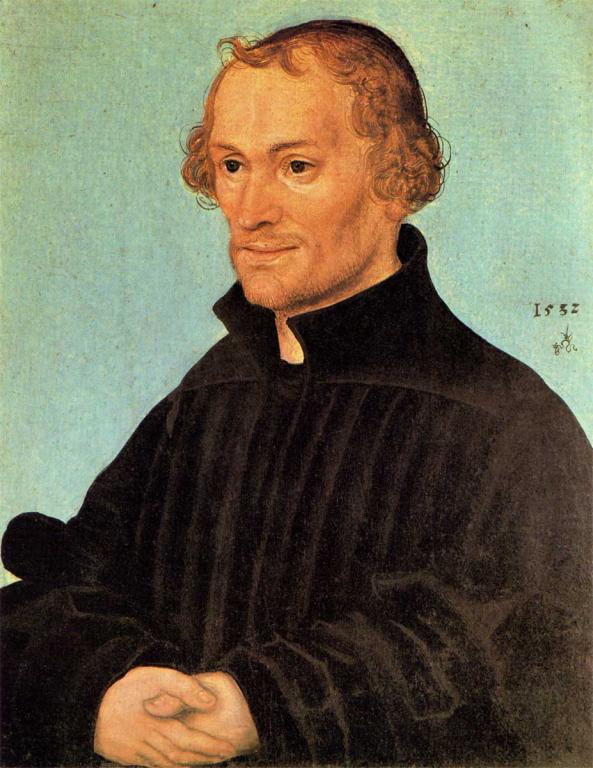
Philip Melanchthon (1497-1560) was Martin Luther’s best friend and successor as the leader of early Lutheranism.
I made the following comment:
As for Melanchthon’s “complexity”: yes, he sure was: a mild-mannered humanist who was too much of a wimp to even stand up to his friend Luther, yet who was in favor of killing peaceful Anabaptists, those who rejected the Real Presence of Christ in the Eucharist (the very belief that he himself later came to hold!), and those who held that some heathen might be saved. He described the Calvin-instigated burning of Michael Servetus as “‘a pious and memorable example to all posterity.” A very complex man indeed: and typical of the first generation of Protestants: not exactly renowned for their exceptional holiness, doctrinal orthodoxy or religious toleration.
I received some flak for this. I defend it in the following manner:
My intent and purpose in making my one paragraph “summary” of this “reformer’s” character was distorted by others. First of all, I didn’t claim in the first place that it was summing up the entire man or his character. Rather, it was a semi-sarcastic, critical remark about his “complexity” (i.e., including his ethical contradictions and unsavory behaviors).
Secondly, I either already have, or easily can, back up everything I wrote in that paragraph, with solid documentation: virtually all from Protestant or otherwise non-Catholic historians. I’ve already done that concerning his fascination with astrology. I’ve done it regarding his espousal of the death penalty for denial of the Real Presence in the Eucharist (and later adoption of the same condemned belief himself). The sources were impeccable.
For the latter, I heavily used, for example, Clyde Manschreck, the (Protestant) biographer of Melanchthon, right from his preface to his translation of Melanchthon’s own systematic theology (Loci communes), which has been in my own personal library for years. This is a serious citation. I amply proved my point from impeccable, solid academic, non-Catholic (so I won’t be accused of simply citing biased Catholics) sources.
Thirdly, Manschreck himself writes paragraphs that are arguably scarcely different from the one I wrote about Melanchthon, highlighting what I view as his glaring faults or questionable attributes. For example, in the 1985 Encyclopedia Britannica article on Melanchthon (also in my own library):
Succeeding generations have questioned Melanchthon’s approval of the death penalty for the radical Reformers, the Anabaptists, and an anti-Trinitarian, Michael Servetus; his approval of war to defend the Gospel; his condoning of polygamy for the English king Henry VIII and Philip the Magnanimous, landgrave of Hesse . . .
Note that this is five major “shots” at faults of Melanchthon, on one long sentence. It’s exactly the same as what I did, except that he was talking about how others (possibly including himself, but we can’t tell) questioned these aspects of Melanchthon, whereas I was speaking for myself: what I personally disapproved of. So how is it any different? If I am to be pilloried as an incompetent, profoundly-biased Catholic hack for my paragraph, why not also Melanchthon biographer Manschreck? I’ll even do a comparison:
A) Manschreck criticism of some of Melanchthon’s more glaring faults:
“Approval” of the death penalty for the Anabaptists.
“Approval” of the death penalty for Michael Servetus.
“approval of war to defend the Gospel”.
“condoning of polygamy for the English king Henry VIII”.
“condoning of polygamy for . . . Philip the Magnanimous, landgrave of Hesse”.
So we have capital punishment (twice), defending the gospel with physical violence, and polygamy (twice). Most folks today think this is pretty bad stuff. But I am tarred and feathered if I dare to bring this up or some similar thing. Here is what I claimed in my paragraph:
B) Armstrong criticism of some of Melanchthon’s more glaring faults (see the paragraph at the top):
[nothing more than what Calvin repeatedly states in personal letters to him]
Approval of the death penalty for peaceful Anabaptists. [Manschreck’s #1]
Approval of the death penalty for rejection of the Real Presence of Christ in the Eucharist. [merely a variation of #2]
Later adoption of the same belief (denial of the Real Presence) that he earlier had people killed for. [an expansion of the sin of #3]
Approval of the death penalty for a belief that some heathen might be saved. [merely a variation of #2]
Approval of death penalty for Michael Servetus. [Manschreck’s #2]
So in my list we have approval of the death penalty (four times), later belief in a tenet for which he advocated a death penalty, and being a wimp, compared to Manschreck’s capital punishment (twice), war for the gospel, and condoned polygamy (twice). Where’s the beef? What’s this huge, chasm-like difference?
Then I added a general concluding statement: “typical of the first generation of Protestants: not exactly renowned for their exceptional holiness, doctrinal orthodoxy or religious toleration.” I had in mind mainly the Protestant leaders, and should have stated that. Their religious intolerance is undeniable, and is excoriated by many Protestant historians such as Roland Bainton and Philip Schaff. As a Catholic, I simply rendered my opinion that the early Protestants were not particularly more holy and righteous than the Catholics of the time, considered en masse. Melanchthon and Luther themselves make a host of statements about this. And I think I have offered ample historical proof in many papers.
I do this because the Protestant myth of origins always asserts that the Catholics were thoroughly corrupt and the Protestants were saintly “reformers” with only the highest motivations. But it’s fine and dandy for Protestants to harp on historical Catholic errors and sins till Kingdom come. If Manschreck says basically the same thing, it’s cool; no problem at all. But if I do it, it is Chicken Little. Certainly some remotely fair-minded, rational reader who is reading this can see the clear, blatant double standard here. It’s not rocket science.
None of this, therefore, should be in the least objectionable. Most of it has been casually stated (and decried) by Protestant observers such as Manschreck. It can all be proven. #1 is utterly obvious to all: all comment on Melanchthon’s “mild-mannered” personality. #2, #3, and #5 are all contained in the 1530 and 1536 “memoranda” written by Melanchthon and agreed-to and signed also by Luther. That is simply documented historical fact. So is #4. I documented that from Manschreck and other Protestant historians. It’s undeniable. #6 is historical fact. Melanchthon wrote it in a letter that we have. Everything is thus proven and indisputable. These are historical facts, not subjective mush.
I no more meant my paragraph as a summing-up of Melanchthon’s entire character than Manschreck did.
***
(originally 4-6-08)
Photo credit: Philipp Melanchthon (1532), by Lucas Cranach the Elder (1472-1553) [public domain / Wikimedia Commons]

***
Previous Post
May 8, 2019
Martin Luther's ("Catholic") Mariology in a Nutshell
Next Post
May 9, 2019 Calvin's Self-Contradictory Trashing of Monasticism
Browse Our Archives
Select a Category & Last Things About Me Anti-Catholicism Atheism & Agnosticism Baptism and Sacramentalism Bible and Tradition Blessed Virgin Mary Books by Dave Armstrong C. S. Lewis Calvinism & General Protestantism Catholic Apologetics Catholic Apologists Catholic conversion Catholic converts Christmas Church (Ecclesiology) Church History Conversion and Converts Development of Doctrine Eastern Orthodoxy Ecumenism & Christian Unity Eucharist & Liturgy Fathers of the Church French Translations G. K. Chesterton Hell Hell & Satan Hell & Satan & Last Things Heresies & Comparative Religion Holistic Health Inquisition & Crusades & Scandals James White Jews & Judaism & Old Testament John Calvin John Henry Newman Liberal / Modernist Theology Life Issues Literary Resume Lutheranism Mariology Martin Luther Music Orthodoxy Papacy & Infallibility Personal Page Philosophy & Science Political & Ethical & Moral Issues Protestant Persecution & Intolerance Protestantism Purgatory Purgatory & Penance Romantic & Imaginative Theology Saints & Purgatory & Penance Salvation Salvation & Justification Satan & Last Things Sexuality and Gender Issues Spanish Translations Traditionalism vs. Radical Catholic Reactionaries Traducciones al español / tradução para português Trinitarianism & Christology Uncategorized Videos
Select a Month October 2026 September 2026 August 2026 July 2026 June 2026 May 2026 April 2026 March 2026 February 2026 January 2026 December 2025 November 2025 October 2025 September 2025 August 2025 July 2025 June 2025 May 2025 April 2025 March 2025 February 2025 January 2025 December 2024 November 2024 October 2024 September 2024 August 2024 July 2024 June 2024 May 2024 April 2024 March 2024 February 2024 January 2024 December 2023 November 2023 October 2023 September 2023 August 2023 July 2023 June 2023 May 2023 April 2023 March 2023 February 2023 January 2023 December 2022 November 2022 October 2022 September 2022 August 2022 July 2022 June 2022 May 2022 April 2022 March 2022 February 2022 January 2022 December 2021 November 2021 October 2021 September 2021 August 2021 July 2021 June 2021 May 2021 April 2021 March 2021 February 2021 January 2021 December 2020 November 2020 October 2020 September 2020 August 2020 July 2020 June 2020 May 2020 April 2020 March 2020 February 2020 January 2020 December 2019 November 2019 October 2019 September 2019 August 2019 July 2019 June 2019 May 2019 April 2019 March 2019 February 2019 January 2019 December 2018 November 2018 October 2018 September 2018 August 2018 July 2018 June 2018 May 2018 April 2018 March 2018 February 2018 January 2018 December 2017 November 2017 October 2017 September 2017 August 2017 July 2017 June 2017 May 2017 April 2017 March 2017 February 2017 January 2017 December 2016 November 2016 October 2016 September 2016 August 2016 July 2016 June 2016 May 2016 April 2016 March 2016 February 2016 January 2016 December 2015 November 2015 October 2015 September 2015 August 2015 July 2015 June 2015 May 2015 April 2015 March 2015 February 2015 January 2015 December 2014 November 2014 October 2014 September 2014 August 2014 July 2014 June 2014 April 2014 March 2014 February 2014 January 2014 December 2013 November 2013 October 2013 September 2013 August 2013 July 2013 June 2013 April 2013 March 2013 February 2013 January 2013 December 2012 November 2012 October 2012 September 2012 August 2012 July 2012 June 2012 May 2012 April 2012 March 2012 February 2012 January 2012 December 2011 November 2011 October 2011 September 2011 August 2011 July 2011 June 2011 April 2011 March 2011 February 2011 October 2010 September 2010 August 2010 July 2010 April 2010 March 2010 December 2009 October 2009 August 2009 July 2009 June 2009 May 2009 March 2009 February 2009 October 2008 September 2008 April 2008 March 2008 February 2008 January 2008 December 2007 November 2007 October 2007 May 2007 March 2007 February 2007 January 2007 November 2006 October 2006 September 2006 August 2006 July 2006 June 2006 May 2006 April 2006 March 2006 February 2006 October 2005 June 2005 April 2005 February 2005 July 2004 May 2004 April 2004
Follow Us!
TAKE THE
Religious Wisdom Quiz
In 2 Corinthians, Paul describes a man being caught up to the third heaven. How many years before writing did this happen?
Select your answer to see how you score.
Ten years Fourteen years Seven years Twelve years
Books by This Author Books by Dave Armstrong
Related posts from Biblical Evidence for Catholicism

Does Catholic Intercession of Saints Require Omniscience?
Biblical Evidence for Catholicism

Protestant Confessions & "Ever-Virgin" Mary
Biblical Evidence for Catholicism

Jesus Founded the [Catholic] Church. If Not Him,...
Biblical Evidence for Catholicism

A Few "Worst" & "Best" Arguments vs. Protestantism
Biblical Evidence for Catholicism
TRENDING AT PATHEOS Catholic

I was strolling through the top floor of the brand new Parthenon...

What Does Gêvâh Mean For Kimberley Guifoyle &...
This week, a lot of the news is focused on Kimberly Guilfoyle....

INNER CIRCLE: Profound Mystery (Of Christ In All...
Ephesians 5:31-32 “For this reason, a man will leave his father and...

Do Not Rejoice When Your Enemy Falls: The...
Turning an execution into a public spectacle is a disturbing expression of...

'The Chosen' S6 Trailer: The Passion Gets Very...
Not many watching 'The Chosen' worry about spoilers, but just because they...

The purpose-driven labor priest
A labor activist reads Rick Warren and it gets me wondering about...
view all Catholic blogs
Ad-Free & Subscriber Log-In Subscription Support
- About Us
- 2026 Calendar
- Videos
- Podcasts
- Library of World Religions
- Faith In Media Tracker
- Advertise With Us
- Write for Us
- Privacy Policy
- Terms of Service
- Do Not Sell My Data
- Contact Us
- Radiant Digital
- Manage Newsletter Subscriptions
- Unsubscribe From Notifications
- Sitemap
Copyright 2008-2026, Patheos. All rights reserved.
Subscription Support Ad-Free & Subscriber Log-In
Follow Patheos