
BuddhistCatholicContemplativeEvangelicalGeneral ChristianHinduJewishLatter-day SaintMuslimNew VisionsProgressive Christian
Beliefs
- Buddhist
- Catholic
- Contemplative
- Evangelical
- General Christian
- Hindu
- Jewish
- Latter-day Saint
- More Voices
- Muslim
- New Visions
- Pagan
- Progressive Christian
Topics
- Religion News
- Food and Religion
- Sports and Religion
- Religious Art
- Religious Music and Entertainment
- Religious Events
- History and Religion
- Style and Religion
- Politics and Religion
- Women in Religion
- Recreation Outdoors and Religion
- Business Finance and Religion
- Careers Workplace and Religion
- Education and Religion
- Family Parenting and Religion
- Health Fitness and Religion
- Home and Religion
- Relationships and Religion
- Technology and Religion
- Travel and Religion
Columnists
- Buddhist Columnists
- Business Finance and Religion Columnists
- Careers Workplace and Religion Columnists
- Catholic Columnists
- Contemplative Columnists
- Education and Religion Columnists
- Evangelists Columnists
- Family Parenting and Religion Columnists
- General Christian Columnists
- Health Fitness and Religion Columnists
- Hindu Columnists
- History and Religion Columnists
- Home and Religion Columnists
- Jewish Columnists
- More Voices Columnists
- Latter Day Columnists
- Muslim Columnists
- New Visions Columnists
- Nonreligious Columnists
- Pagan Columnists
- Politics and Religion Columnists
- Progressive Columnists
- Recreation Outdoors and Religion Columnists
- Relationships and Religion Columnists
- Religion News Columnists
- Religious Art Columnists
- Religious Events Columnists
- Religious Music and Entertainment Columnists
- Sports and Religion Columnists
- Style and Religion Columnists
- Technology and Religion Columnists
- Travel and Religion Columnists
- Women in Religion Columnists
Resource Library
- 2026 Calendar
- Library of World Religions
- The 100 Most Holy Places on Earth
- Patheos Answers
- Podcasts
- Videos
- Faith Leaders Database
- Anglican Episcopalian
- Bahai
- Baptist
- Buddhism
- Christianity
- Confucianism
- Eastern Orthodoxy
- Hinduism
- Holiness and Pentecostal
- ISKCON
- Islam
- Judaism
- Lutheran
- Methodist
- The Church of Jesus Christ of Latter-day Saints
- New Age
- Paganism
- Presbytarian and Reformed
- Protestantism
- Religion Behind the Scenes
- Roman Catholic
- Scientology
- Shia Islam
- Sikhism
- Sufism
- Sunni Islam
- Taoism
- Zen
- See all religions
Research Tools
 Ad-Free & Subscriber Log-In Subscription Support
Ad-Free & Subscriber Log-In Subscription Support
Follow Patheos 

- Trending:
- Forgiveness
- |
- Marriage
- |
- Consciousness
- |
- Death Penalty
- |
- Election
- |
- Halloween

-
About
-
Catholic Apologetics
-
Church History
-
Great Apologists
-
Christian Worldview
-
Protestantism & Misc.
- Home
- Catholic
- History and Religion
- Luther & the Deuterocanon (So-Called “Apocrypha”)
Luther & the Deuterocanon (So-Called “Apocrypha”)
Last updated on: May 8, 2019 at 12:27 pm by Dave Armstrong
Luther & the Deuterocanon (So-Called “Apocrypha”) 2019-05-08T12:27:58-04:00 Dave Armstrong
Patheos Explore the world's faith through different perspectives on religion and spirituality! Patheos has the views of the prevalent religions and spiritualities of the world.
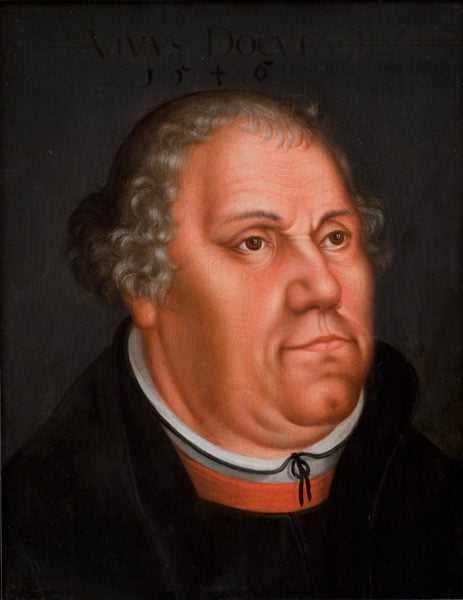
I looked through virtually every reference to deuterocanonical citations in the Index to Luther’s Works (vol. 55 — I have the entire set in hardcover) and found a few other things on my own. Luther cites as “Scripture” Ecclesiasticus (or Sirach) twelve times, referencing as many different passages. He cites Wisdom of Solomon in this way five times. He calls 1 Maccabees “Scripture” twice, and virtually equates the book of Judith with Scripture, saying that its words are to “be understood as though they were uttered in the Holy Spirit by a spiritual, holy poet or prophet” (in his 1534 Preface to this book). If I had my words described like that I’d be quite honored!
That’s a pretty significant departure from the views of later Protestants and almost all Protestants today. I find it fascinating. Perhaps you do, too.
In my 2014 book, The “Catholic” Luther : An Ecumenical Collection of His “Traditional” Utterances, I list all these references in their entirety. I only used quotations (save one instance, I think) where he used the word “Scripture” in the immediate context. Many other citations didn’t do that, but arguably were presented in a way that suggested scriptural status, since they were casually cited as authoritative, or alongside passages from books accepted by Protestants, or described with the introduction of “It is written” and other such “high-sounding” words.
In any event, I selected only the crystal-clear instances, so objectors will have no case whatsoever against them. They are what they are. Only Luther’s words appear below, in chronological order (except for the bibliographical source material):
*****
In the Psalms and in Scripture the word toil (labor v. 10) is taken in the sense of sin, because it afflicts and wearies the soul, as it is written (Wisd. Of Sol. 5:7): “We wearied ourselves in the way of iniquity, and we walk hard ways”; Ps. 17:4: . . . Ps. 107: . . . (First Lectures on the Psalms I: Psalms 1-75, c. Fall 1515, tr. Herbert J. A. Bouman; in LW, v. 10)
Hence it is correctly said that the understanding of Scripture is always profitable and has no end, for it says, “Be filled with my fruits” (Ecclus. 24:19). (First Lectures on the Psalms II: Psalms 76-126, c. Oct. 1516, tr. Herbert J. A. Bouman; in LW, v. 11)
Scripture attributes death to the devil. Wisd. of Sol. 2:24 says: “By the envy of the devil death came into the world.” And in Wisd. of Sol. 1:13-14 we read: “For God did not make death, neither has He pleasure in the destruction of the living. For He created all things that they might exist.” It is as if he were saying: “Death is not listed among the works of God at the beginning of Genesis.” Likewise in Ezek. 18:32: . . . (Lectures on Titus, Philemon, and Hebrews; tr. Jaroslav Pelikan [first two] and Walter A. Hansen; this citation from the Hebrews portion, April 1517 to March 1518; in LW, v. 29)
Now the Holy Scriptures administer comfort after a twofold fashion, by presenting to our view blessings and evils, most wholesomely intermingled; as the wise Preacher saith, “In the day of evil be mindful of the good, and in the day of good be mindful of the evil.” [Ecclus. 11:26] (The Fourteen of Consolation, 1520; Preface; tr. A. T. W. Steinhaeuser; in W1) [LW indicates 11:25 as the reference]
With this one thing the Scriptures, which hold all others in contempt, associate fear, saying, “Remember thy end, and thou shalt never do amiss.” [Ecclus. 7:40] (Ibid., Pt. I; ch. 2) [LW indicates 7:36 as the reference ]
So Scripture says, . . . “I have given him a bitter struggle in order that he may overcome” [Wisd. of Sol. 10:12]. (Concerning the Ministry, Sep. 1523, tr. Conrad Bergendoff; in LW, v. 40)
[A]ll heresies and errors in connection with the Scriptures have arisen, not from the simplicity of the words, . . . but from neglect of the simplicity of the words, and from tropes or inferences hatched out of men’s own heads. For example, I have never, so far as I recall, put such a forced interpretation on the words “Stretch out your hand to whatever you will” [Ecclus. 15:16] as to say, “Grace will stretch out your hand to what it wills”; nor have I said that “Get yourselves a new heart” [Ezek. 18:31] means “Grace will make you a new heart,” . . . (The Bondage of the Will, 1525, tr. Philip S. Watson and Benjamin Drewery; in LW, v. 33)
God confirms all this with many excellent examples in the Scriptures. . . . when Joseph and Azariah wanted to fight to gain honor for themselves, they were beaten [I Mac. 5:55-60]. And Amaziah, king of Judah, wanted to start a war against the king of Israel; but read II Kings 14 [:8-14] and see what happened to him. (Whether Soldiers, Too, Can Be Saved, 1526, tr. Charles M. Jacobs and Robert C. Schultz; in LW, v. 46)
Furthermore, the Scriptures admonish us to resist our flesh and our passions. Sirach 18 [:30] says, “Do not follow your base desires, but restrain your appetites.” Likewise, Romans 6 . . . (An Answer to Several Questions on Monastic Vows, 1526, tr. Robert C. Schultz; in LW, v. 46)
It is not the practice of medicine alone, however, but Scripture too that shows it to be a useful, comforting, and salutary estate, as well as a service acceptable to God, made and founded by him. In Ecclesiasticus 38 [:1-8] almost an entire chapter is devoted to praise of the physicians, . . . (A Sermon on Keeping Children in School, 1530, tr. Charles M. Jacobs and Robert C. Schultz; in LW, v. 46)
But how popishly he quotes the passage from Wisdom [7:9]: “In comparison with her, all gold is as a little sand,” and the passage from Ecclesiasticus 26 [:20 Vg]: “There is no weighing the value of a continent soul.” To them, Scripture in every passage means anything, according to whatever they want. (Prefaces I, ed. Christopher Boyd Brown, Commentary on Hermann Rab, “Specimen of Papist Theology and Doctrine,” 1531, tr. Benjamin T. G. Mayes; in LW, v. 59)
The Holy Scriptures also praise such good will, as in Ecclus. 25:2 f.: “In three things I was beautified, and stood up beautiful before the Lord and men, the concord of brethren, and friendship of neighbors, and a woman and her husband walking together in agreement.” (Selected Psalms III, this citation from Dec. 1531 was translated by Edward Sittler; in LW, v. 14)
Thus Scripture reports of the patriarch Jacob (Wisd. of Sol. 10:12): . . . (Commentaries on 1 Corinthians 7, 1 Corinthians 15 / Lectures on 1 Timothy; this citation from 1 Corinthians 15, April 1533, tr. Martin H. Bertram; in LW, v. 28)
[W]e will have to familiarize ourselves also with the language of Scripture. Scripture uses the term animale corpus, “a natural body,” . . . as we have it recorded also in Ecclus. 31 [:12 ff.].” (Ibid.)
[I]ts words and speech adhere to the same style as the other books of sacred Scripture. This book [1 Maccabees] would not have been unworthy of a place among them, because it is very necessary and helpful for an understanding of chapter 11 of the prophet Daniel. . . . the book is good for us Christians to read and to know. (Preface to the First Book of Maccabees, 1533, tr. E. Theodore Bachmann; in LW, v. 35)
[I]t is proper for the first book [of Maccabees] to be included among the sacred Scriptures, . . . (Preface to the Second Book of Maccabees, 1534, tr. E. Theodore Bachmann; in LW, v. 35)
[T]his [Judith] is a fine, good, holy, useful book, well worth reading by us Christians. For the words spoken by the persons in it should be understood as though they were uttered in the Holy Spirit by a spiritual, holy poet or prophet who, in presenting such persons in his play, preaches to us through them. (Preface to the Book of Judith, 1534, tr. E. Theodore Bachmann; in LW, v. 35)
Holy Scripture directs and advises us to be suspicious when it plainly states (Ps. 116:11): “All men are liars.” “A man’s enemies,” says the prophet (Micah 7:6), “are the men of his own house.” “Do not trust a friend” (Ecclus. 6:7). “Put not your trust in princes” (Ps. 146:3). . . . [cites Mic 7:5 and Mt 10:34] . . . These are clear words of Scripture. (Lectures on Genesis, Chapters 6-14, Dec. 1536, ed. Jaroslav Pelikan, tr. George V. Schick; in LW, v. 2)
[H]e who wants to read about these matters with profit should be convinced that Holy Scripture is divine wisdom, not the wisdom of men. . . . the more one draws and drinks from it, the more one thirsts for it, as Ecclesiasticus says (24:21, 20): “Those who eat me will hunger for more, and those who drink me will thirst for more. For my spirit is sweeter than honey, and my inheritance sweeter than the honeycomb”; for in that book are treated “things into which angels long to look,” as 1 Peter 1:12 states. (Lectures on Genesis, Chapters 21-25, May 1540, ed. Jaroslav Pelikan, tr. George V. Schick; in LW, v. 4)
[W]e shall say something about the doctrine and meaning of Holy Scripture concerning dreams, for it sometimes approves of dreams and at other times disapproves of them. Sirach 34:7 says: “Dreams have led many astray: and they have failed by putting their hope in them.” Solomon likewise says (Eccles. 5:7): “When dreams increase, empty words grow many: but do you fear God.” (Lectures on Genesis: Chapters 31-37, c. March 1544, tr. Paul D. Pahl; in LW, v. 6)
For this is attested in Holy Scripture, where we read: “The prayer of the humble pierces the clouds” (Ecclus. 35:17). Likewise (Dan. 9:23): “At the beginning of your supplications a Word went forth.” (Lectures on Genesis: Chapters 38-44, c. Sep. 1544, tr. Paul D. Pahl; in LW, v. 7)
SOURCES
LW Luther’s Works, American edition, edited by Jaroslav Pelikan (volumes 1-30) and Helmut T. Lehmann (volumes 31-55), St. Louis: Concordia Publishing House (volumes 1-30); Philadelphia: Fortress Press (volumes 31-55), starting in 1955.
W1 Works of Martin Luther, Volume I (Philadelphia: A. J. Holman Co.: 1915).
***
See Related Papers:
Deuterocanonical References (?) in the Gospels [7-13-05]
*
Deuterocanonical References (?): Acts-Ephesians [7-27-05]
*
Deuterocanonical References (?): Philippians-Revelation [8-10-05]
*
St. Jerome’s Deuterocanon “Anomalies” [11-27-07]
*
Calvin’s Citations of the “Apocrypha” [12-1-08]
*
Armstrong vs. Collins & Walls #9: “Apocrypha” (Jerome, Athanasius, Etc.) [10-21-17]
*
***
(originally from 2014)
*
Photo credit: Portrait of Martin Luther (after 1540), by Lucas Cranach the Younger (1515-1586) [public domain / Danish Wikipedia]

***
Previous Post
May 7, 2019
Jesus, Dylan, & Paul on the Disposing of Loved Ones
Next Post
May 8, 2019 Martin Luther's ("Catholic") Mariology in a Nutshell
Browse Our Archives
Select a Category & Last Things About Me Anti-Catholicism Atheism & Agnosticism Baptism and Sacramentalism Bible and Tradition Blessed Virgin Mary Books by Dave Armstrong C. S. Lewis Calvinism & General Protestantism Catholic Apologetics Catholic Apologists Catholic conversion Catholic converts Christmas Church (Ecclesiology) Church History Conversion and Converts Development of Doctrine Eastern Orthodoxy Ecumenism & Christian Unity Eucharist & Liturgy Fathers of the Church French Translations G. K. Chesterton Hell Hell & Satan Hell & Satan & Last Things Heresies & Comparative Religion Holistic Health Inquisition & Crusades & Scandals James White Jews & Judaism & Old Testament John Calvin John Henry Newman Liberal / Modernist Theology Life Issues Literary Resume Lutheranism Mariology Martin Luther Music Orthodoxy Papacy & Infallibility Personal Page Philosophy & Science Political & Ethical & Moral Issues Protestant Persecution & Intolerance Protestantism Purgatory Purgatory & Penance Romantic & Imaginative Theology Saints & Purgatory & Penance Salvation Salvation & Justification Satan & Last Things Sexuality and Gender Issues Spanish Translations Traditionalism vs. Radical Catholic Reactionaries Traducciones al español / tradução para português Trinitarianism & Christology Uncategorized Videos
Select a Month October 2026 September 2026 August 2026 July 2026 June 2026 May 2026 April 2026 March 2026 February 2026 January 2026 December 2025 November 2025 October 2025 September 2025 August 2025 July 2025 June 2025 May 2025 April 2025 March 2025 February 2025 January 2025 December 2024 November 2024 October 2024 September 2024 August 2024 July 2024 June 2024 May 2024 April 2024 March 2024 February 2024 January 2024 December 2023 November 2023 October 2023 September 2023 August 2023 July 2023 June 2023 May 2023 April 2023 March 2023 February 2023 January 2023 December 2022 November 2022 October 2022 September 2022 August 2022 July 2022 June 2022 May 2022 April 2022 March 2022 February 2022 January 2022 December 2021 November 2021 October 2021 September 2021 August 2021 July 2021 June 2021 May 2021 April 2021 March 2021 February 2021 January 2021 December 2020 November 2020 October 2020 September 2020 August 2020 July 2020 June 2020 May 2020 April 2020 March 2020 February 2020 January 2020 December 2019 November 2019 October 2019 September 2019 August 2019 July 2019 June 2019 May 2019 April 2019 March 2019 February 2019 January 2019 December 2018 November 2018 October 2018 September 2018 August 2018 July 2018 June 2018 May 2018 April 2018 March 2018 February 2018 January 2018 December 2017 November 2017 October 2017 September 2017 August 2017 July 2017 June 2017 May 2017 April 2017 March 2017 February 2017 January 2017 December 2016 November 2016 October 2016 September 2016 August 2016 July 2016 June 2016 May 2016 April 2016 March 2016 February 2016 January 2016 December 2015 November 2015 October 2015 September 2015 August 2015 July 2015 June 2015 May 2015 April 2015 March 2015 February 2015 January 2015 December 2014 November 2014 October 2014 September 2014 August 2014 July 2014 June 2014 April 2014 March 2014 February 2014 January 2014 December 2013 November 2013 October 2013 September 2013 August 2013 July 2013 June 2013 April 2013 March 2013 February 2013 January 2013 December 2012 November 2012 October 2012 September 2012 August 2012 July 2012 June 2012 May 2012 April 2012 March 2012 February 2012 January 2012 December 2011 November 2011 October 2011 September 2011 August 2011 July 2011 June 2011 April 2011 March 2011 February 2011 October 2010 September 2010 August 2010 July 2010 April 2010 March 2010 December 2009 October 2009 August 2009 July 2009 June 2009 May 2009 March 2009 February 2009 October 2008 September 2008 April 2008 March 2008 February 2008 January 2008 December 2007 November 2007 October 2007 May 2007 March 2007 February 2007 January 2007 November 2006 October 2006 September 2006 August 2006 July 2006 June 2006 May 2006 April 2006 March 2006 February 2006 October 2005 June 2005 April 2005 February 2005 July 2004 May 2004 April 2004
Follow Us!
TAKE THE
Religious Wisdom Quiz
How old was Abraham when Isaac was born?
Select your answer to see how you score.
90 years old 80 years old 100 years old 110 years old
Books by This Author Books by Dave Armstrong
Related posts from Biblical Evidence for Catholicism

A Few "Worst" & "Best" Arguments vs. Protestantism
Biblical Evidence for Catholicism

Deuterocanon & Javier Perdomo's Straw Men
Biblical Evidence for Catholicism

St. Athanasius & the Deuterocanon (vs. Javier Perdomo)
Biblical Evidence for Catholicism

Jerusalem Council vs. James White & Sola Scriptura
Biblical Evidence for Catholicism
TRENDING AT PATHEOS Catholic

Methodist Central Hall and Westminster Abbey
Situated on the same square is Methodist Central Hall and Westminster Abbey. ...

57th Dove Awards Honor Dolly Parton, Crown New...
On gospel music’s biggest night, the 57th annual GMA Dove Awards honored...

The First Eucharistic Controversy: Christ’s Real Presence
For Catholics, the Eucharist is the source and summit of the Christian...

What a Stop Sign Can Teach Us About...
How to Make a Decision When You Can't Hear God Main point:...

Archdiocese Hosts Military Marriage Retreat in Germany
RASTATT, Germany — The transient military lifestyle, with its frequent deployments and...

Nearly every morning, I make the drive to Detroit with my high-school-age...
view all Catholic blogs
Ad-Free & Subscriber Log-In Subscription Support
- About Us
- 2026 Calendar
- Videos
- Podcasts
- Library of World Religions
- Faith In Media Tracker
- Advertise With Us
- Write for Us
- Privacy Policy
- Terms of Service
- Do Not Sell My Data
- Contact Us
- Radiant Digital
- Manage Newsletter Subscriptions
- Unsubscribe From Notifications
- Sitemap
Copyright 2008-2026, Patheos. All rights reserved.
Subscription Support Ad-Free & Subscriber Log-In
Follow Patheos