
BuddhistCatholicContemplativeEvangelicalGeneral ChristianHinduJewishLatter-day SaintMuslimNew VisionsProgressive Christian
Beliefs
- Buddhist
- Catholic
- Contemplative
- Evangelical
- General Christian
- Hindu
- Jewish
- Latter-day Saint
- More Voices
- Muslim
- New Visions
- Pagan
- Progressive Christian
Topics
- Religion News
- Food and Religion
- Sports and Religion
- Religious Art
- Religious Music and Entertainment
- Religious Events
- History and Religion
- Style and Religion
- Politics and Religion
- Women in Religion
- Recreation Outdoors and Religion
- Business Finance and Religion
- Careers Workplace and Religion
- Education and Religion
- Family Parenting and Religion
- Health Fitness and Religion
- Home and Religion
- Relationships and Religion
- Technology and Religion
- Travel and Religion
Columnists
- Buddhist Columnists
- Business Finance and Religion Columnists
- Careers Workplace and Religion Columnists
- Catholic Columnists
- Contemplative Columnists
- Education and Religion Columnists
- Evangelists Columnists
- Family Parenting and Religion Columnists
- General Christian Columnists
- Health Fitness and Religion Columnists
- Hindu Columnists
- History and Religion Columnists
- Home and Religion Columnists
- Jewish Columnists
- More Voices Columnists
- Latter Day Columnists
- Muslim Columnists
- New Visions Columnists
- Nonreligious Columnists
- Pagan Columnists
- Politics and Religion Columnists
- Progressive Columnists
- Recreation Outdoors and Religion Columnists
- Relationships and Religion Columnists
- Religion News Columnists
- Religious Art Columnists
- Religious Events Columnists
- Religious Music and Entertainment Columnists
- Sports and Religion Columnists
- Style and Religion Columnists
- Technology and Religion Columnists
- Travel and Religion Columnists
- Women in Religion Columnists
Resource Library
- 2026 Calendar
- Library of World Religions
- The 100 Most Holy Places on Earth
- Patheos Answers
- Podcasts
- Videos
- Faith Leaders Database
- Anglican Episcopalian
- Bahai
- Baptist
- Buddhism
- Christianity
- Confucianism
- Eastern Orthodoxy
- Hinduism
- Holiness and Pentecostal
- ISKCON
- Islam
- Judaism
- Lutheran
- Methodist
- The Church of Jesus Christ of Latter-day Saints
- New Age
- Paganism
- Presbytarian and Reformed
- Protestantism
- Religion Behind the Scenes
- Roman Catholic
- Scientology
- Shia Islam
- Sikhism
- Sufism
- Sunni Islam
- Taoism
- Zen
- See all religions
Research Tools
 Ad-Free & Subscriber Log-In Subscription Support
Ad-Free & Subscriber Log-In Subscription Support
Follow Patheos 

- Trending:
- Forgiveness
- |
- Marriage
- |
- Consciousness
- |
- Death Penalty
- |
- Election
- |
- Halloween

-
About
-
Catholic Apologetics
-
Church History
-
Great Apologists
-
Christian Worldview
-
Protestantism & Misc.
- Home
- Catholic
- History and Religion
- Christian Mysteries (Like God’s Timelessness) & Reason
Christian Mysteries (Like God’s Timelessness) & Reason
Last updated on: April 30, 2019 at 3:17 pm by Dave Armstrong
Christian Mysteries (Like God’s Timelessness) & Reason 2019-04-30T15:17:52-04:00 Dave Armstrong
Patheos Explore the world's faith through different perspectives on religion and spirituality! Patheos has the views of the prevalent religions and spiritualities of the world.
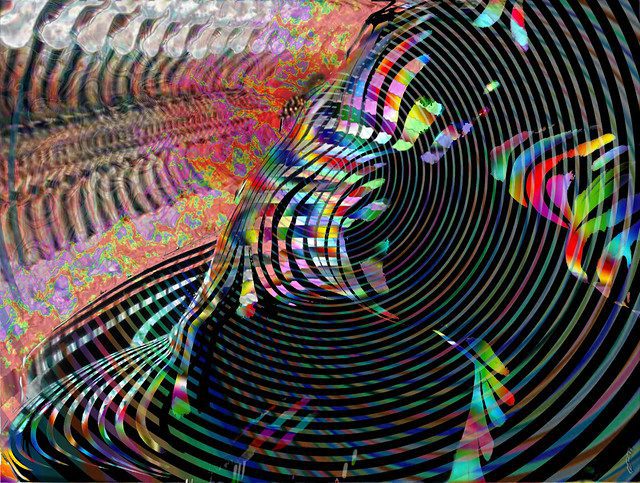
I believe these were originally notes jumbled together from various sources, so there is a lot of repetition. But that’s a good teaching tool, so I will leave it as it is.
*****
The Incarnation is the Great Exception to the timelessness and immateriality of the Triune God, since in it God enters human time and takes on human flesh. It’s in time and isn’t eternal. God can interact with the temporal order without being subject to it. But God the Son voluntarily “lowered himself” as it teaches in Philippians 2:5-11 (the kenosis).
Recently, I was disputing with someone who seemed to think that God was actually in time. But how could He be in time and create the universe? What would be the reference point with no matter to measure it? I think it is logically impossible, yet he believes this.
The Incarnation and Hypostatic Union are, on the other hand, in time. They had a beginning point, which was the conception of Jesus. Therefore, the glorification of Jesus’ resurrected Body is also a temporal event (which is, I think, a big component of the significance of the Ascension).
When we say “God never changes” we are talking about the Father, the Holy Spirit, and the Logos: all eternal and immaterial Persons of the Triune Godhead. Jesus is eternal, but He was not eternally the incarnate Messiah, with a body. That began when He was conceived in the Virgin Mary.
God the Father experiences all events as “now” but it doesn’t follow that Jesus was always in heaven with a glorified body. As far as I understand it (and I’m always perfectly willing to be corrected by Church teaching), that’s not true.
On the other hand, there is mystery even in the Incarnation because of the timeless aspect of the Cross. I wrote in my book, A Biblical Defense of Catholicism (p. 99):
Some verses in Revelation state that the “prayers of the saints” are being offered at the altar in the form of incense (8:3-4; cf. 5:8-9). But the climactic scene of this entire glorious portrayal of heaven occurs in Revelation 5:1-7. Verse 6 describes “a Lamb standing as though it had been slain.” Since the Lamb (Jesus, of course) is revealed as sitting in the midst of God’s throne (5:6, 7:17, 22:1,3; cf. Matthew 19:28, 25:31, Hebrews 1:8), which is in front of the golden altar (8:3), then it appears that the presentation of Christ to the Father as a Sacrifice is an ongoing (from God’s perspective, timeless) occurrence, precisely as in Catholic teaching. Thus the Mass is no more than what occurs in heaven, according to the clear revealed word of Scripture. When Hebrews speaks of a sacrifice made once (7:27), this is from a purely human, historical perspective (which Catholicism acknowledges in holding that the Mass is a “re-presentation” of the one Sacrifice at Calvary). However, there is a transcendent aspect of the Sacrifice as well.
A Christian, Catholic, biblical, theological mystery is not something we cannot comprehend at all; it is, rather, something that we can understand to a degree, but not totally. There are things about it we can indeed perfectly comprehend, within our inherent creaturely limitations and vantage point. We can grasp it to a degree by analogy, or parable, or approximation to something we do know. So it is false to believe that we can know nothing at all about such mysteries or that they are somehow in direct opposition to logical, rational thought. We can say a number of “correct” things about a Christian mystery, but in the end our knowledge is incomplete because we are finite creatures.
Even our esteemed Eastern Orthodox friends, who greatly emphasize the incomprehensibility of God (and often — wrongly — accuse Catholics of being “hyper-rational”), nevertheless engage in much sophisticated theology proper (of God). They accept dogmas just as we do. They have developed doctrines as we have, through rational reflection over centuries. They even develop their own distinctive doctrines of the last 1000 years, though many try to deny that they do this.
One example is the theology of St. Gregory Palamas concerning hesychasm, that I have written about. Many of the greatest theologians in the patristic period were from the East. But they recognize the ultimate mystery, and so do we Catholics.
We can make correct statements insofar as we can comprehend it a mystery, with our human limitations. For example, the Incarnation was an event in time, but the effect is timeless. We don’t have to conflate the two: deny that it was in time because it had a connection with the timelessness of the Father (and the Son, the Logos). Jesus was not eternally in heaven with a glorified body, because there was a time when He had no body at all. When He helped God the Father create the universe (in the past for us) He was a spirit. “Before Abraham was, I am” (John 8:58). We’re not forced to think illogically. We only have to recognize the limits of our rational understanding and to realize when simple faith necessarily kicks in.
Again, I reiterate that we can understand these things to an extent. We don’t have to regard them as literal gibberish utterly incomprehensible to us, as if they were some complicated scientific or mathematical formula or Sanskrit. Jesus was conceived in the Virgin Mary. He “became man.” That was an event in time. Prior to that, God did not have a physical body (in fact it was heresy to believe so: as Jehovah’s Witnesses and Mormons and others believe about the Father).
God can enter time because He is outside of time. He created time. He can interact with that which He created, by the nature of the case. It’s not contradictory. There is nothing illogical or impossible about it. God can enter time if He so chooses, just as He became a man. We can understand it to a large degree.
I’m very concerned that no impression is given that Catholic faith is irrational. It is not. Catholics believe (above all, St. Thomas Aquinas, who has often been proclaimed the preeminent Catholic theologian) that faith and reason exist in harmony, not conflict. The presence of mystery and things difficult to fully comprehend does not change this.
It’s like saying: “I can’t fully comprehend the theory of relativity; therefore it is irrational and contradictory.” That doesn’t follow. All this tells anyone is that I am limited in understanding that particular thing: not the logical or illogical status of the thing itself. Logic is something objective, outside of us.
What one does is take baby steps in trying to understand. So. for example, we could note the Doppler effect: where a car horn of a car passing by changes pitch. We heard a different pitch than the person in the car heard. The sound was relative to the person: yet this doesn’t entail a “contradiction.” This helps the layman start to understand how things can be relative to the observer, and that is one of the beginning premises of Einstein’s theory of relativity, that has been more or less proven by various scientific means in the last 100 years or so. Logic, however (at least classical logic) is not relative.
A true “logical impossibility” is a statement like the following ones:
God exists and doesn’t exist.
God created the earth and the moon to always be in the same place at the same time.
A square is a circle.
Dave Armstrong was born on July 30, 1958 and also on June 30, 1968.
The Detroit Lions won the Super Bowl (just a joke, folks!!!)
Christian mysteries are not examples of self-defeating “logical impossibilities” like these at all. To describe them as such only breeds confusion and creates the false impression that Christian and Catholic faith is an illogical or unreasonable thing, which it is not at all (and which idea many people use as an excuse to not accept Christianity and be a disciple). Christianity is far more logical and reasonable than any alternative atheist worldview, and Catholicism is (as you would fully expect me as a Catholic apologist to say!) the most reasonable and internally coherent Christian worldview.
We must not confuse the difficult to understand or the paradoxical, with the logically impossible. They are vastly different concepts. Hence, I have given examples of true logical impossibilities and showed how different they are from the theological notions under present consideration.
* * * * *
In true eternity (God’s perspective) there is no “before” and “after”. It’s de fide doctrine that God the Father is outside of time (as is the Holy Spirit and The Son — Logos). The relationship of the Incarnation to earthly time and eternity is where some paradox and mystery come in.
The question is what it means to be “timebound” at all in the Incarnation. This was an event in time (at least from our human perspective). It’s a paradox because we have a timeless God, yet He entered into time in the Incarnation. And then the Son ascended and entered into timelessness again. The difficulty is the exact way we describe these very difficult to comprehend things. If we are not careful, we can sometimes express things that are untrue. There are two different perspectives from which to analyze it: from the Father’s “eternal now” standpoint and the timebound nature of the Incarnation and the Ascension and Glorification of Jesus in heaven as an event (at least initially) in earthly time.
Jesus’ glorified body was not eternal. He didn’t have a body till the Incarnation. He didn’t have a glorified physical body until the Ascension. This was an event in earthly time. Jesus’ physical body is like a ray in geometry: eternal in one direction, but with a starting point. It is only (if we can speak this way) “relatively” eternal; not absolutely eternal (like God’s existence and attributes). Our eternity is relative to and lesser than God’s eternity, because we had a beginning and God did not. There is even a term for our “eternity”: it’s called “aeviternity”.
In other words, though God experiences and knows all things outside of time, as “now”, it doesn’t follow that the things themselves are outside of time. God would, for example, “see” me typing these very words. To him it is “now”; it is present for Him before it happens, as far as I myself experience it. But the fact that He experiences it as “now” doesn’t mean that it itself is a timeless event. It did happen in earthly time, and there was a time before which it occurred (right now it is 1:52 PM EST, etc.).
God experiences all things outside of time, “now”; but they are not themselves timeless, just as in the case of God “seeing” me writing these words. I wrote them in time, but for God it was not in time. But God, knowing all things, knows that it is indeed (as far as its own essence and nature) in time, in terms of earthly temporality. It was not an eternal act, and not of eternal duration. God knows what I will be doing at 6:23 today. For Him it already is; for me it is in the future and not yet known with certainty.
Likewise with the Incarnation. To God the Father it is timeless, but it is not so in and of itself. It is in time and had a starting point, just as we all did in being conceived (biologically). Because God is outside of time, He isn’t subject to the limitations of things that are in time (including us). We can dimly grasp this. C. S. Lewis described it as God being like an author of a book. He can lay down the book and then come back to it, and when he does so, the “world” of the book is always “present” to him. So in a sense the author enters into the different realm of the fictional world that he creates. But he transcends it. The fictional world has its own time, and the author’s time is different from it and goes beyond it. The author is outside of the time that he creates in his book.
* * * * *
Because things are difficult to understand, we mustn’t jump to the conclusion that they are illogical or incomprehensible, and that we can say nothing correct about them. This is untrue. If we can say nothing about mysteries at all, then we can have no dogma, and the Catholic faith would be reduced to a formless chaos. It would be completely, literally irrational, which means that it would be literally nonsense. And that is false. The Catholic faith is entirely reasonable. Mysteries go beyond reason, but do not contradict reason. If they did do that, I couldn’t rationally write about this issue right now. It would all be gibberish, because we could say nothing logical or reasonable about any mystery of the faith.
To believe otherwise would be radically contrary to the faith as it has been revealed to us, and explained by our greatest theologians and philosophers, like (above all) St. Thomas Aquinas, whose life work was to synthesize faith and reason, using Aristotle as a methodological model.
How could we have dogma at all if we thought faith and theological mystery was ultimately unreasonable and illogical? How could the Church have, through the centuries, thought about and developed dogma and described it in rational terms for human minds to comprehend? This would reduce all theology to nonsense (again, in a quite literal way: things that make no sense because they are supposedly completely incomprehensible).
Faith transcends reason but never contradicts it. The Holy Trinity is not “illogical” (it only is if one presupposes that every Being necessarily must have one Person only). Eternity is not irrational or illogical or unreasonable. There is nothing illogical about it. God had no beginning and has no end. He is immutable. How is that illogical? It’s tough to fully grasp, but we can go some distance. We can conceptualize a thing that always existed. We can imagine, for example, the universe itself as simply always having been there (even though now we’re pretty sure it had a beginning).
We consign faith to the realm of irrationality if we think like this, and that is a fatal move. If Catholicism is not rational, and indeed more rational than any other worldview, then we have no reason to follow it. Why would any Catholic want to think that? It would be futile to even try to explain the faith by reason and recourse to revelation, which is reasonable.
***
(originally 5-22-08)
Photo credit: new 1lluminati (11-14-12): Psychedelic Trip: To Infinity and Beyond: This Is the Afterlife [Flickr / CC BY 2.0 license]
***
Previous Post

April 30, 2019
Explaining the Pro-Life, Christian Vote for Trump Yet Again
Next Post

April 30, 2019 "Optional" Confirmation Class & Mass for Teenagers?
Browse Our Archives
Select a Category & Last Things About Me Anti-Catholicism Atheism & Agnosticism Baptism and Sacramentalism Bible and Tradition Blessed Virgin Mary Books by Dave Armstrong C. S. Lewis Calvinism & General Protestantism Catholic Apologetics Catholic Apologists Catholic conversion Catholic converts Christmas Church (Ecclesiology) Church History Conversion and Converts Development of Doctrine Eastern Orthodoxy Ecumenism & Christian Unity Eucharist & Liturgy Fathers of the Church French Translations G. K. Chesterton Hell Hell & Satan Hell & Satan & Last Things Heresies & Comparative Religion Holistic Health Inquisition & Crusades & Scandals James White Jews & Judaism & Old Testament John Calvin John Henry Newman Liberal / Modernist Theology Life Issues Literary Resume Lutheranism Mariology Martin Luther Music Orthodoxy Papacy & Infallibility Personal Page Philosophy & Science Political & Ethical & Moral Issues Protestant Persecution & Intolerance Protestantism Purgatory Purgatory & Penance Romantic & Imaginative Theology Saints & Purgatory & Penance Salvation Salvation & Justification Satan & Last Things Sexuality and Gender Issues Spanish Translations Traditionalism vs. Radical Catholic Reactionaries Traducciones al español / tradução para português Trinitarianism & Christology Uncategorized Videos
Select a Month October 2026 September 2026 August 2026 July 2026 June 2026 May 2026 April 2026 March 2026 February 2026 January 2026 December 2025 November 2025 October 2025 September 2025 August 2025 July 2025 June 2025 May 2025 April 2025 March 2025 February 2025 January 2025 December 2024 November 2024 October 2024 September 2024 August 2024 July 2024 June 2024 May 2024 April 2024 March 2024 February 2024 January 2024 December 2023 November 2023 October 2023 September 2023 August 2023 July 2023 June 2023 May 2023 April 2023 March 2023 February 2023 January 2023 December 2022 November 2022 October 2022 September 2022 August 2022 July 2022 June 2022 May 2022 April 2022 March 2022 February 2022 January 2022 December 2021 November 2021 October 2021 September 2021 August 2021 July 2021 June 2021 May 2021 April 2021 March 2021 February 2021 January 2021 December 2020 November 2020 October 2020 September 2020 August 2020 July 2020 June 2020 May 2020 April 2020 March 2020 February 2020 January 2020 December 2019 November 2019 October 2019 September 2019 August 2019 July 2019 June 2019 May 2019 April 2019 March 2019 February 2019 January 2019 December 2018 November 2018 October 2018 September 2018 August 2018 July 2018 June 2018 May 2018 April 2018 March 2018 February 2018 January 2018 December 2017 November 2017 October 2017 September 2017 August 2017 July 2017 June 2017 May 2017 April 2017 March 2017 February 2017 January 2017 December 2016 November 2016 October 2016 September 2016 August 2016 July 2016 June 2016 May 2016 April 2016 March 2016 February 2016 January 2016 December 2015 November 2015 October 2015 September 2015 August 2015 July 2015 June 2015 May 2015 April 2015 March 2015 February 2015 January 2015 December 2014 November 2014 October 2014 September 2014 August 2014 July 2014 June 2014 April 2014 March 2014 February 2014 January 2014 December 2013 November 2013 October 2013 September 2013 August 2013 July 2013 June 2013 April 2013 March 2013 February 2013 January 2013 December 2012 November 2012 October 2012 September 2012 August 2012 July 2012 June 2012 May 2012 April 2012 March 2012 February 2012 January 2012 December 2011 November 2011 October 2011 September 2011 August 2011 July 2011 June 2011 April 2011 March 2011 February 2011 October 2010 September 2010 August 2010 July 2010 April 2010 March 2010 December 2009 October 2009 August 2009 July 2009 June 2009 May 2009 March 2009 February 2009 October 2008 September 2008 April 2008 March 2008 February 2008 January 2008 December 2007 November 2007 October 2007 May 2007 March 2007 February 2007 January 2007 November 2006 October 2006 September 2006 August 2006 July 2006 June 2006 May 2006 April 2006 March 2006 February 2006 October 2005 June 2005 April 2005 February 2005 July 2004 May 2004 April 2004
Follow Us!
TAKE THE
Religious Wisdom Quiz
What does the Bible say about greed?
Select your answer to see how you score.
It leads to ruin It is always wise It is best It helps you win
Books by This Author Books by Dave Armstrong
Related posts from Biblical Evidence for Catholicism

God, Modern Physics, & Dark Energy: An Analogy
Biblical Evidence for Catholicism
Jesus Proved He Was God in Six Ways...
Biblical Evidence for Catholicism

Parting of the Red Sea & Lake Erie...
Biblical Evidence for Catholicism
18-Month Family Nightmare Over / 20 Signs from...
Biblical Evidence for Catholicism
TRENDING AT PATHEOS Catholic

Janie Learns the Way of the Cross: A...
Teaching children about Jesus' Passion can be challenging. Many parents and educators...

Looking For Good Catholic Writing - October 2026
He alone extends the heavens, and he walks upon the waves of...

In "Irreplaceable," our book on vocation and technology, Trevor Sutton and I...

I was strolling through the top floor of the brand new Parthenon...

What Does Gêvâh Mean For Kimberley Guifoyle &...
This week, a lot of the news is focused on Kimberly Guilfoyle....

INNER CIRCLE: Profound Mystery (Of Christ In All...
Ephesians 5:31-32 “For this reason, a man will leave his father and...
view all Catholic blogs
Ad-Free & Subscriber Log-In Subscription Support
- About Us
- 2026 Calendar
- Videos
- Podcasts
- Library of World Religions
- Faith In Media Tracker
- Advertise With Us
- Write for Us
- Privacy Policy
- Terms of Service
- Do Not Sell My Data
- Contact Us
- Radiant Digital
- Manage Newsletter Subscriptions
- Unsubscribe From Notifications
- Sitemap
Copyright 2008-2026, Patheos. All rights reserved.
Subscription Support Ad-Free & Subscriber Log-In
Follow Patheos