
BuddhistCatholicContemplativeEvangelicalGeneral ChristianHinduJewishLatter-day SaintMuslimNew VisionsProgressive Christian
Beliefs
- Buddhist
- Catholic
- Contemplative
- Evangelical
- General Christian
- Hindu
- Jewish
- Latter-day Saint
- More Voices
- Muslim
- New Visions
- Pagan
- Progressive Christian
Topics
- Religion News
- Food and Religion
- Sports and Religion
- Religious Art
- Religious Music and Entertainment
- Religious Events
- History and Religion
- Style and Religion
- Politics and Religion
- Women in Religion
- Recreation Outdoors and Religion
- Business Finance and Religion
- Careers Workplace and Religion
- Education and Religion
- Family Parenting and Religion
- Health Fitness and Religion
- Home and Religion
- Relationships and Religion
- Technology and Religion
- Travel and Religion
Columnists
- Buddhist Columnists
- Business Finance and Religion Columnists
- Careers Workplace and Religion Columnists
- Catholic Columnists
- Contemplative Columnists
- Education and Religion Columnists
- Evangelists Columnists
- Family Parenting and Religion Columnists
- General Christian Columnists
- Health Fitness and Religion Columnists
- Hindu Columnists
- History and Religion Columnists
- Home and Religion Columnists
- Jewish Columnists
- More Voices Columnists
- Latter Day Columnists
- Muslim Columnists
- New Visions Columnists
- Nonreligious Columnists
- Pagan Columnists
- Politics and Religion Columnists
- Progressive Columnists
- Recreation Outdoors and Religion Columnists
- Relationships and Religion Columnists
- Religion News Columnists
- Religious Art Columnists
- Religious Events Columnists
- Religious Music and Entertainment Columnists
- Sports and Religion Columnists
- Style and Religion Columnists
- Technology and Religion Columnists
- Travel and Religion Columnists
- Women in Religion Columnists
Resource Library
- 2026 Calendar
- Library of World Religions
- The 100 Most Holy Places on Earth
- Patheos Answers
- Podcasts
- Videos
- Faith Leaders Database
- Anglican Episcopalian
- Bahai
- Baptist
- Buddhism
- Christianity
- Confucianism
- Eastern Orthodoxy
- Hinduism
- Holiness and Pentecostal
- ISKCON
- Islam
- Judaism
- Lutheran
- Methodist
- The Church of Jesus Christ of Latter-day Saints
- New Age
- Paganism
- Presbytarian and Reformed
- Protestantism
- Religion Behind the Scenes
- Roman Catholic
- Scientology
- Shia Islam
- Sikhism
- Sufism
- Sunni Islam
- Taoism
- Zen
- See all religions
Research Tools
 Ad-Free & Subscriber Log-In Subscription Support
Ad-Free & Subscriber Log-In Subscription Support
Follow Patheos 

- Trending:
- Forgiveness
- |
- Marriage
- |
- Consciousness
- |
- Death Penalty
- |
- Election
- |
- Halloween

-
About
-
Catholic Apologetics
-
Church History
-
Great Apologists
-
Christian Worldview
-
Protestantism & Misc.
- Home
- Catholic
- History and Religion
- Protestant Revolt Was Largely Politically Motivated
Protestant Revolt Was Largely Politically Motivated
Last updated on: November 15, 2018 at 4:10 pm by Dave Armstrong
Protestant Revolt Was Largely Politically Motivated 2018-11-15T16:10:36-04:00 Dave Armstrong
Patheos Explore the world's faith through different perspectives on religion and spirituality! Patheos has the views of the prevalent religions and spiritualities of the world.
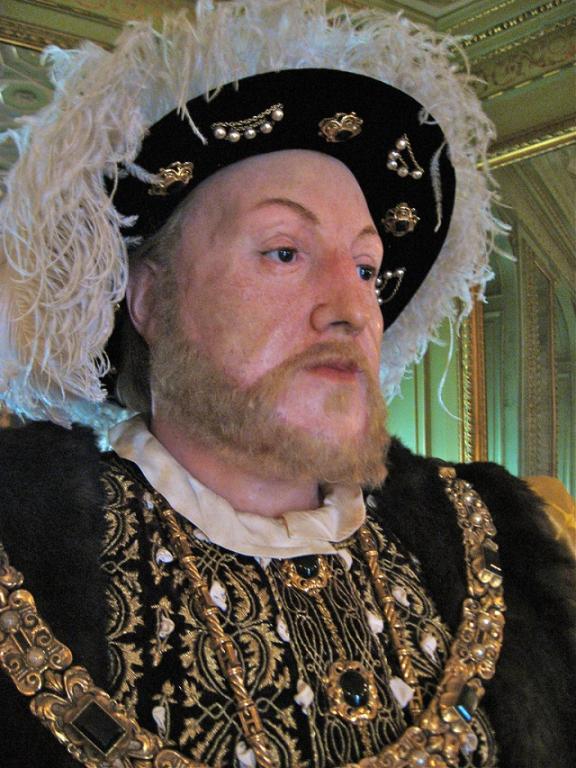 I mostly compiled citations from Catholic and Protestant scholars, in this section, which was part of my much longer original 1994 version of my first book, A Biblical Defense of Catholicism. The few interjections of my own will be in blue. The rest of the material (minus my category titles) consists of citations: which I won’t bother to indent.*
1. Summary
*
It was purely and simply by means of this league between the princes and the preachers and theologians that the new religion, thus thrust upon the people, was enabled to endure. Were it not for the princes and lords,’ says Luther, ‘we could not stand much longer. Let us then pray for our Elector, that he may be able to preserve the Church. (Janssen, V, 286)
No instructed Roman Catholic now denies the appalling condition of Western Christendom at the beginning of the 16th century . . . No instructed Protestant now denies that political and personal motives bulked very large in the Protestant Reformation. (Rumble and Carty, II, 66)
How could it ever be imagined that, in such revolutions, the new doctrines succeed, with the mass of mankind, by the force of their own inherent superiority as truths? . . . That Lutheranism carried all before it by its own mere power as an evidently truer theory of grace than what it displaced? . . . The mass of the German princes were utterly indifferent to religion as such, of any kind . . . But . . . when the monks walked out and set up as married men, the abbey, its buildings, its lands, were not left for all and sundry to occupy . . . All this went to the prince — the process dignified with the noble-sounding word ‘secularization’: the first theft, on the great scale, of a subjects’ property, where the state is the thief. Wherever the Reformation succeeds it does so because a government takes it up or because the party of the Reform succeeds in displacing the government. (Hughes, 206-207)
In Lutheran Europe civil courts became the only courts, secular power the only legal power. Secular rulers appointed Church personnel, appropriated Church property . . . The Church became subject to the state. The Lutheran movement, which thought to submit all life to theology, unwittingly, unwillingly, advanced that pervasive secularization which is a basic theme of modern life. (Durant, 377)
2. The State Church as the Protestant PanaceaA. Martin Luther
Luther . . . despised the common people . . . Luther had to transfer to the state most of the authority that had been held by the Church; therefore he defended the divine right of kings.
The hand that wields the secular sword is not a human hand but the hand of God. It is God, not man, who hangs, and breaks on the wheel, and decapitates, and flogs; it is God who wages war.
In this exaltation of the state . . . lay the seeds of the absolutist philosophies of Hobbes and Hegel, and a premonition of Imperial Germany. (Durant, 448)
B. Philip Melanchthon
Melanchthon followed Luther in . . . upholding the divine right of kings. (Durant, 457)
Melanchthon had afterwards abundant reason to regret his appeal to secular power . . . Hence his exclamation: ‘If only I could revive the jurisdiction of the bishops! For I see what sort of Church we shall have if the ecclesiastical constitution is destroyed.’ (Grisar, VI, 270; letter to Camerarius)
C. Zwingli and His Followers
In the eyes of Zwingli’s more radical supporters the movement had ended in reaction . . . Arising in an atmosphere of Christian liberty and congregational autonomy, it had swiftly hardened into a State Church. In his treatise Of Divine and Human Justice (1523), Zwingli accepted this as inevitable. Moreover, he now rejected the notion that any ideal society could be shaped within this sinful world . . . Like Luther he had been compelled to reconcile his social idealism with his need for the support of existing governments. (Dickens, 118)
Zwingli exalted the authority of the pious magistrate as ecclesiastical reformer in terms more decisive than those of Luther. Whereas Luther had primarily undertaken the task of restoring a Christocentric religion, Zwingli undertook a further phase of the Reformation: the systematic imposition of Christian discipline upon the community. The theocracy composed of magistrates and pastors was the invention of Zwingli’s Zurich, and it was bequeathed by them to Calvin, who consummated their experiment in Geneva. (Dickens, 118)
D. Martin Bucer
Martin Bucer had the most absolutist position of all:
Subjects, he said, must be submissive to all government whatever, without any distinction. Even when rulers gave commands which were contrary to God’s Word, the subjects must obey them, for it was to be presumed that it was God himself who was sharpening the rod for punishment. (Janssen, IV, 367-368)
This separation of God and government from morality was diabolically calculated (by Satan) to result in, for instance, Communism, Fascism, Nazism, and abortion on demand (because what’s legal must be “right”).
E. Norway and Sweden
Frederick I imposed Lutheranism upon Norway. In Sweden, Gustavus Vasa . . . king of Sweden . . . was a Catholic, and the people were much attached to the Catholic faith. But Gustavus needed money for his new kingdom, and to get it he decided to confiscate the estates of the Church. Not from religious conviction, but solely through political expediency, he decided to impose Lutheranism also by civil authority. (Rumble and Carty, II, 64)
F. German “Territorial” Religion
In 1556 the Pfalsgraf, Otto Heinrich, declared the doctrine of Luther to be the exclusive religion of the land. But his successor, Frederick III, only three years later, established Calvinism as the State religion. His son, Ludwig, however, in 1576 brought Lutheranism in again, and banished from the country all Calvinist ministers, teachers and officials. In 1583 the pendulum swung back once more, and Ludwig’s brother Johann re-established Calvinism. Thus the unhappy people, in the space of less than forty years, were compelled to change their religious faith four times, to say nothing of the original change from Catholicism to Protestantism! (Stoddard, 98)
3. The Unpopularity of Luther and Other Protestant Revolutionaries
From year to year the aversion of the people towards the new doctrine and its apostles had gone on increasing, even at Wittenberg, the hearth and centre of the innovation. (Janssen, V, 283-284)
If the Elector were to grant freedom of worship to the Catholics of his dominions, there would be great danger, the preachers feared, in view of the general feeling of the people that the old faith would gain a decisive victory over the new. (Janssen, V, 286)
Luther couldn’t even visit his father who was seriously ill, in February, 1530, for fear that the peasants would kill him:
You know well what sort of friendship lords and peasants entertain for me. (Janssen, V, 284; February 15, 1530)
The attachment of the people to Luther’s doctrine was no greater than to his person . . .
‘They accuse us of being rebels, of having destroyed the unity of the Church, and of being the authors of all the evils of the day . . . Many are saying, “Religion is going to the dogs; there is no reverence for God . . . What good has come out of the Gospel. Everything was formerly in a far better state.”‘ . . .
The people would willingly drive him, ‘together with the Gospel — sheer out of the country, or else starve him to death.’ (Janssen, V, 284-285)
The peasants themselves turned against the Reformation as a lure and a betrayal; some called Luther ‘Dr. Lugner’ — ‘Dr. Liar’ — and ‘toady of the princes.’ For years after the revolt he was so unpopular that he seldom dared leave Wittenberg . . .
‘All is forgotten that God has done for the world through me,’ he wrote (June 15. 1525); ‘now lords, priests, and peasants are all against me, and threaten my death.'” (Durant, 393)
‘The majority of Germans,’ wrote Melanchthon in 1548, ‘hate the Word of God as much as they hate us.’ (Janssen, XVI, 22)
4. The Political and Non-Popular Basis of the English “Reformation”
In England the Reformation, in every sense, depended on the initiative of the Crown . . . The Reformation of Edward VI’s reign was brought about by an alliance between politicians utterly worldly, devoid of morality, and Reformers so bigoted as to play blindly into their hands. (Hughes, 165, 196)
At Henry’s death a rickety child, his diseased little son Edward, nominally succeeded. But real power was . . . in the hands of the unscrupulous men who formed the Council. They rigorously pursued and increased the loot of religious endowments and even made an effort to impose a new Protestant religion repugnant to the vast majority of Englishmen (the secretary to the Government, who had all the evidence available, sets that majority at eleven-twelfths of the people). (Belloc, 12)
Never before in history, not even in Lutheran Germany, had the state engineered such a total confiscation of spiritual authority to its own advantage. (Daniel-Rops, 242-243)
The people escaped from an infallible pope into the arms of an absolute King. In a material sense they had not benefited . . . William Cobbett thought that,
viewed merely in its social aspect, the English Reformation was in reality the rising of the rich against the poor. (Durant, 577-578; Cobbett [1763?-1855] was an English working class leader and central figure for parliamentary reform)
How politics could react upon religion,” was “most strikingly demonstrated in England . . . No country . . . seemed more soundly orthodox . . . Yet the pope’s authority had hardly been called into doubt before it was altogether removed . . . That it took its origin in a political revolution, only the wilfully blind would deny . . . doctrine and belief were secondary matters. (Hurstfield, 80-81)
The English Reformation was emphatically a political revolution. (Chadwick, 97)
The Reformation in England was determined mainly by the interests of the Crown. (Lucas, 533)
SOURCES
Hilaire Belloc, Characters of the Reformation, Garden City, New York: Doubleday Image, 1958.
Owen Chadwick (Protestant), The Reformation, New York: Penguin, revised edition, 1972.
Henri Daniel-Rops, Henri, The Protestant Reformation, vol. 2, translated by Audrey Butler, Garden City, New York: Doubleday Image, 1961.
A. G. Dickens (Protestant), Reformation and Society in 16th-Century Europe, London: Harcourt, Brace & World, 1966.
Will Durant, Will (secularist), The Reformation, (volume 6 of 10-volume The Story of Civilization, 1967), New York: Simon & Schuster, 1957.
Hartmann Grisar, Luther, translated by E. M. Lamond, edited by Luigi Cappadelta, six volumes, London: Kegan Paul, Trench, Trubner & Co., 1917.
Philip Hughes, A Popular History of the Reformation, Garden City, New York: Doubleday Image, 1957.
Joel Hurstfield (Protestant), The Reformation Crisis, New York: Harper & Row, 1965.
Johannes Janssen, History of the German People From the Close of the Middle Ages, 16 volumes, translated by A. M. Christie, St. Louis: B. Herder, 1910 (originally 1891).
Henry S. Lucas (Protestant), The Renaissance and the Reformation, New York: Harper & Bros., 1934.
Leslie Rumble & Charles M. Carty, Radio Replies, three volumes., St. Paul, Minnesota: Radio Replies Press, 1940.
John L. Stoddard, Rebuilding a Lost Faith, New York: P. J. Kenedy & Sons, 1922.
***
(originally 6-11-91)
Photo credit: King Henry VIII: waxwork at Warwick Castle, photographed by Lisby (6-30-11) [Flickr / public domain]
***
Calvinism & General Protestantism
Previous Post
November 15, 2018
Debate: SCOTUS & GOP in Relation to Abortion Rates
Next Post
November 16, 2018 Old Liberal Moral Causes ("The Post") vs. Tabloid Liberalism
Browse Our Archives
Select a Category & Last Things About Me Anti-Catholicism Atheism & Agnosticism Baptism and Sacramentalism Bible and Tradition Blessed Virgin Mary Books by Dave Armstrong C. S. Lewis Calvinism & General Protestantism Catholic Apologetics Catholic Apologists Catholic conversion Catholic converts Christmas Church (Ecclesiology) Church History Conversion and Converts Development of Doctrine Eastern Orthodoxy Ecumenism & Christian Unity Eucharist & Liturgy Fathers of the Church French Translations G. K. Chesterton Hell Hell & Satan Hell & Satan & Last Things Heresies & Comparative Religion Holistic Health Inquisition & Crusades & Scandals James White Jews & Judaism & Old Testament John Calvin John Henry Newman Liberal / Modernist Theology Life Issues Literary Resume Lutheranism Mariology Martin Luther Music Orthodoxy Papacy & Infallibility Personal Page Philosophy & Science Political & Ethical & Moral Issues Protestant Persecution & Intolerance Protestantism Purgatory Purgatory & Penance Romantic & Imaginative Theology Saints & Purgatory & Penance Salvation Salvation & Justification Satan & Last Things Sexuality and Gender Issues Spanish Translations Traditionalism vs. Radical Catholic Reactionaries Traducciones al español / tradução para português Trinitarianism & Christology Uncategorized Videos
Select a Month October 2026 September 2026 August 2026 July 2026 June 2026 May 2026 April 2026 March 2026 February 2026 January 2026 December 2025 November 2025 October 2025 September 2025 August 2025 July 2025 June 2025 May 2025 April 2025 March 2025 February 2025 January 2025 December 2024 November 2024 October 2024 September 2024 August 2024 July 2024 June 2024 May 2024 April 2024 March 2024 February 2024 January 2024 December 2023 November 2023 October 2023 September 2023 August 2023 July 2023 June 2023 May 2023 April 2023 March 2023 February 2023 January 2023 December 2022 November 2022 October 2022 September 2022 August 2022 July 2022 June 2022 May 2022 April 2022 March 2022 February 2022 January 2022 December 2021 November 2021 October 2021 September 2021 August 2021 July 2021 June 2021 May 2021 April 2021 March 2021 February 2021 January 2021 December 2020 November 2020 October 2020 September 2020 August 2020 July 2020 June 2020 May 2020 April 2020 March 2020 February 2020 January 2020 December 2019 November 2019 October 2019 September 2019 August 2019 July 2019 June 2019 May 2019 April 2019 March 2019 February 2019 January 2019 December 2018 November 2018 October 2018 September 2018 August 2018 July 2018 June 2018 May 2018 April 2018 March 2018 February 2018 January 2018 December 2017 November 2017 October 2017 September 2017 August 2017 July 2017 June 2017 May 2017 April 2017 March 2017 February 2017 January 2017 December 2016 November 2016 October 2016 September 2016 August 2016 July 2016 June 2016 May 2016 April 2016 March 2016 February 2016 January 2016 December 2015 November 2015 October 2015 September 2015 August 2015 July 2015 June 2015 May 2015 April 2015 March 2015 February 2015 January 2015 December 2014 November 2014 October 2014 September 2014 August 2014 July 2014 June 2014 April 2014 March 2014 February 2014 January 2014 December 2013 November 2013 October 2013 September 2013 August 2013 July 2013 June 2013 April 2013 March 2013 February 2013 January 2013 December 2012 November 2012 October 2012 September 2012 August 2012 July 2012 June 2012 May 2012 April 2012 March 2012 February 2012 January 2012 December 2011 November 2011 October 2011 September 2011 August 2011 July 2011 June 2011 April 2011 March 2011 February 2011 October 2010 September 2010 August 2010 July 2010 April 2010 March 2010 December 2009 October 2009 August 2009 July 2009 June 2009 May 2009 March 2009 February 2009 October 2008 September 2008 April 2008 March 2008 February 2008 January 2008 December 2007 November 2007 October 2007 May 2007 March 2007 February 2007 January 2007 November 2006 October 2006 September 2006 August 2006 July 2006 June 2006 May 2006 April 2006 March 2006 February 2006 October 2005 June 2005 April 2005 February 2005 July 2004 May 2004 April 2004
Follow Us!
TAKE THE
Religious Wisdom Quiz
I made a rash vow that cost me my only child after a military victory. Who am I?
Select your answer to see how you score.
Jephthah Samson Gideon Barak
Books by This Author Books by Dave Armstrong
Related posts from Biblical Evidence for Catholicism

On Protestant Explanations of Catholic Conversion
Biblical Evidence for Catholicism

Does Catholic Intercession of Saints Require Omniscience?
Biblical Evidence for Catholicism

Protestant Confessions & "Ever-Virgin" Mary
Biblical Evidence for Catholicism

Jesus Founded the [Catholic] Church. If Not Him,...
Biblical Evidence for Catholicism
TRENDING AT PATHEOS Catholic

The Sermon on the Mount, Part I: Matthew...
The Sermon on the Mount, Part I (Matthew 4:12-5:12) St. Matthew moves...

What's up from Crossway: Reviewing some of their latest A few weeks...

Janie Learns the Way of the Cross: A...
Teaching children about Jesus' Passion can be challenging. Many parents and educators...

Looking For Good Catholic Writing - October 2026
He alone extends the heavens, and he walks upon the waves of...

In "Irreplaceable," our book on vocation and technology, Trevor Sutton and I...

I was strolling through the top floor of the brand new Parthenon...
view all Catholic blogs
Ad-Free & Subscriber Log-In Subscription Support
- About Us
- 2026 Calendar
- Videos
- Podcasts
- Library of World Religions
- Faith In Media Tracker
- Advertise With Us
- Write for Us
- Privacy Policy
- Terms of Service
- Do Not Sell My Data
- Contact Us
- Radiant Digital
- Manage Newsletter Subscriptions
- Unsubscribe From Notifications
- Sitemap
Copyright 2008-2026, Patheos. All rights reserved.
Subscription Support Ad-Free & Subscriber Log-In
Follow Patheos