
BuddhistCatholicContemplativeEvangelicalGeneral ChristianHinduJewishLatter-day SaintMuslimNew VisionsProgressive Christian
Beliefs
- Buddhist
- Catholic
- Contemplative
- Evangelical
- General Christian
- Hindu
- Jewish
- Latter-day Saint
- More Voices
- Muslim
- New Visions
- Pagan
- Progressive Christian
Topics
- Religion News
- Food and Religion
- Sports and Religion
- Religious Art
- Religious Music and Entertainment
- Religious Events
- History and Religion
- Style and Religion
- Politics and Religion
- Women in Religion
- Recreation Outdoors and Religion
- Business Finance and Religion
- Careers Workplace and Religion
- Education and Religion
- Family Parenting and Religion
- Health Fitness and Religion
- Home and Religion
- Relationships and Religion
- Technology and Religion
- Travel and Religion
Columnists
- Buddhist Columnists
- Business Finance and Religion Columnists
- Careers Workplace and Religion Columnists
- Catholic Columnists
- Contemplative Columnists
- Education and Religion Columnists
- Evangelists Columnists
- Family Parenting and Religion Columnists
- General Christian Columnists
- Health Fitness and Religion Columnists
- Hindu Columnists
- History and Religion Columnists
- Home and Religion Columnists
- Jewish Columnists
- More Voices Columnists
- Latter Day Columnists
- Muslim Columnists
- New Visions Columnists
- Nonreligious Columnists
- Pagan Columnists
- Politics and Religion Columnists
- Progressive Columnists
- Recreation Outdoors and Religion Columnists
- Relationships and Religion Columnists
- Religion News Columnists
- Religious Art Columnists
- Religious Events Columnists
- Religious Music and Entertainment Columnists
- Sports and Religion Columnists
- Style and Religion Columnists
- Technology and Religion Columnists
- Travel and Religion Columnists
- Women in Religion Columnists
Resource Library
- 2026 Calendar
- Library of World Religions
- The 100 Most Holy Places on Earth
- Patheos Answers
- Podcasts
- Videos
- Faith Leaders Database
- Anglican Episcopalian
- Bahai
- Baptist
- Buddhism
- Christianity
- Confucianism
- Eastern Orthodoxy
- Hinduism
- Holiness and Pentecostal
- ISKCON
- Islam
- Judaism
- Lutheran
- Methodist
- The Church of Jesus Christ of Latter-day Saints
- New Age
- Paganism
- Presbytarian and Reformed
- Protestantism
- Religion Behind the Scenes
- Roman Catholic
- Scientology
- Shia Islam
- Sikhism
- Sufism
- Sunni Islam
- Taoism
- Zen
- See all religions
Research Tools
 Ad-Free & Subscriber Log-In Subscription Support
Follow Patheos 

- Trending:
- Advent
- |
- Forgiveness
- |
- Thanksgiving
- |
- Election
- |
- Seasonal Holidays
- |
- Marriage

-
About
-
Catholic Apologetics
-
Church History
-
Great Apologists
-
Christian Worldview
-
Protestantism & Misc.
- Home
- Catholic
- History and Religion
- Resisting Heretic Popes: Classic Catholic Reflections
Resisting Heretic Popes: Classic Catholic Reflections
Last updated on: October 24, 2018 at 1:16 pm by Dave Armstrong
Resisting Heretic Popes: Classic Catholic Reflections 2018-10-24T13:16:52-04:00 Dave Armstrong
Patheos Explore the world's faith through different perspectives on religion and spirituality! Patheos has the views of the prevalent religions and spiritualities of the world.
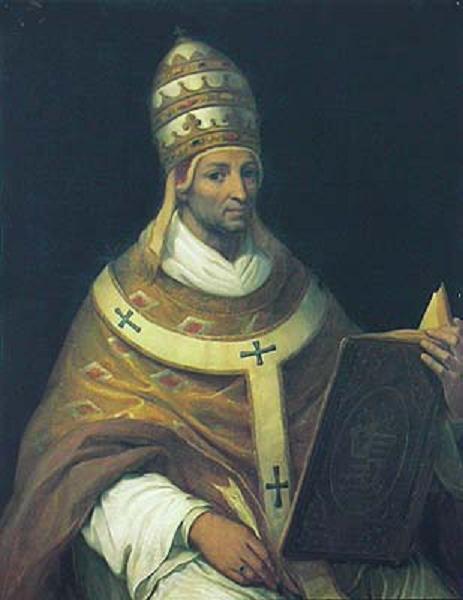
The notion of popes possibly being heretics (and what to do in that eventuality) is nothing new or alarming. For example, John Chapman, a prominent Catholic writer and defender of the papacy, writing in the 1913 Catholic Encyclopedia article “Pope Honorius I” — though he denies that Honorius violated papal infallibility because he did not make an erroneous ex cathedra proclamation –, states outright (my emphasis):
Hefele, with many others before and after him, held that Leo II by the same words explained the sense in which the sentence of Honorius was to be understood. Such a distinction between the pope’s view and the council’s view is not justified by close examination of the facts. At best such a system of defence was exceedingly precarious, for the milder reading of the Latin is just as likely to be original: “but by profane treachery attempted to pollute its purity”. In this form Honorius is certainly not exculpated, yet the pope declares that he did not actually succeed in polluting the immaculate Roman Church. However, in his letter to the Spanish King Erwig, he has: “And with them Honorius, who allowed the unspotted rule of Apostolic tradition, which he received from his predecessors, to be tarnished.” To the Spanish bishops he explains his meaning: “With Honorius, who did not, as became the Apostolic authority, extinguish the flame of heretical teaching in its first beginning, but fostered it by his negligence.” That is, he did not insist on the “two operations”, but agreed with Sergius that the whole matter should be hushed up. Pope Honorius was subsequently included in the lists of heretics anathematized by the Trullan Synod, and by the seventh and eighth ecumenical councils without special remark; also in the oath taken by every new pope from the eighth century to the eleventh in the following words: “Together with Honorius, who added fuel to their wicked assertions” (Liber diurnus, ii, 9). It is clear that no Catholic has the right to defend Pope Honorius. He was a heretic, not in intention, but in fact; and he is to be considered to have been condemned in the sense in which Origen and Theodore of Mopsuestia, who died in Catholic communion, never having resisted the Church, have been condemned. But he was not condemned as a Monothelite, nor was Sergius. And it would be harsh to regard him as a “private heretic”, for he admittedly had excellent intentions.
But that is not all. There are several acknowledgements of this hypothetical scenario both before and after Gratian (12th century):
Pope Innocent III (1160-1216)
The pope should not flatter himself about his power, nor should he rashly glory in his honour and high estate, because the less he is judged by man, the more he is judged by God. Still the less can the Roman Pontiff glory, because he can be judged by men, or rather, can be shown to be already judged, if for example he should wither away into heresy, because “he who does not believe is already judged.” (St. John 3:18) In such a case it should be said of him: ‘If salt should lose its savour, it is good for nothing but to be cast out and trampled under foot by men.’ (Sermo 4)
St. Thomas Aquinas (1225-1274)
There being an imminent danger for the Faith, prelates must be questioned, even publicly, by their subjects. Thus, St. Paul, who was a subject of St. Peter, questioned him publicly on account of an imminent danger of scandal in a matter of Faith. And, as the Glossa of St. Augustine puts it (Ad Galatas 2.14), ‘St. Peter himself gave the example to those who govern so that if sometimes they stray from the right way, they will not reject a correction as unworthy even if it comes from their subjects. (Summa Theologiae, IIa IIae, Q. 33, A. 4)
It is written: ‘We ought to obey God rather than men.’ Now sometimes the things commanded by a superior are against God. Therefore, superiors are not to be obeyed in all things. (Summa Theologiae, IIa IIae, Q. 104, A. 5)
Juan Cardinal de Torquemada, O. P. (1388-1468)
Although it clearly follows from the circumstances that the Pope can err at times, and command things which must not be done, that we are not to be simply obedient to him in all things, that does not show that he must not be obeyed by all when his commands are good. To know in what cases he is to be obeyed and in what not, it is said in the Acts of the Apostles: ‘One ought to obey God rather than man’; therefore, were the Pope to command anything against Holy Scripture, or the articles of faith, or the truth of the Sacraments, or the commands of the natural or divine law, he ought not to be obeyed, but in such commands, to be passed over.(Summa de Ecclesia)
Pope Adrian VI (1459-1523)
If by the Roman Church you mean its head or pontiff, it is beyond question that he can err even in matters touching the faith. He does this when he teaches heresy by his own judgement or decretal. In truth, many Roman pontiffs were heretics. The last of them was Pope John XXII († 1334).” (Quaest. in IV Sent.; quoted in Viollet, Papal Infallibility and the Syllabus, 1908).
Sylvester Prieras, O. P. (1456-1523)
What should be done in cases where the pope destroys the Church by his evil actions? . . . What should be done if the pope wishes unreasonably to abolish the laws of church or state?
He would certainly be in sin, and it would be unlawful to allow him to act in such a fashion, and likewise to obey him in matters which are evil; on the contrary, there is a duty to oppose him while administering a courteous rebuke.
Thus, were he to wish to distribute the Church’s wealth, or Peter’s Patrimony among his own relatives; were he to wish to destroy the church or to commit an act of similar magnitude, there would be a duty to prevent him, and likewise an obligation to oppose him and resist him. The reason being that he does not possess power in order to destroy, and thus it follows that if he is so doing it is lawful to oppose him.”
It is clear from the preceding that, if the pope by his commands, orders or by his actions is destroying the church, he may be resisted and the fulfilment of his commands prevented. The right of open resistance to prelates’ abuse of authority stems also from natural law. (Dialogus de Potestate Papae)
Tommaso Cardinal de Vio Gaetani Cajetan O. P. (1469-1534)
It is imperative to resist a pope who is openly destroying the Church. (De Comparata Auctoritate Papae et Concilio)
Francisco Suarez S. J. (1548-1617)
If the pope gives an order contrary to right customs, he should not be obeyed; if he attempts to do something manifestly opposed to justice and the common good, it will be lawful to resist him; if he attacks by force, by force he can be repelled, with a moderation appropriate to a just defence. (De Fide, Disp. X, Sec. VI, N. 16)
St. Robert Bellarmine, S. J. (1542-1621)
Just as it is lawful to resist the pope that attacks the body, it is also lawful to resist the one who attacks souls or who disturbs civil order, or, above all, who attempts to destroy the Church. I say that it is lawful to resist him by not doing what he orders and preventing his will from being executed. (De Romano Pontifice, Lib. II, Ch. 29)
Vatican I (1870)
For the Holy Ghost was promised to the successors of Peter not so that they might, by His revelation, make known some new doctrine, but that, by His assistance, they might religiously guard and faithfully expound the revelation or Deposit of Faith transmitted by the Apostles. (Pastor Aeternus, cap. 4)
Pope Pius IX (1792-1878)
If a future pope teaches anything contrary to the Catholic Faith, do not follow him. (Letter to Bishop Brizen)
One famous example of a pope being resisted for heresy is the incident regarding Pope John XXII (1249-1334). The Catholic Encyclopedia entry on him reads:
In the last years of John’s pontificate there arose a dogmatic conflict about the Beatific Vision, which was brought on by himself, and which his enemies made use of to discredit him. Before his elevation to the Holy See, he had written a work on this question, in which he stated that the souls of the blessed departed do not see God until after the Last Judgment. After becoming pope, he advanced the same teaching in his sermons. In this he met with strong opposition, many theologians, who adhered to the usual opinion that the blessed departed did see God before the Resurrection of the Body and the Last Judgment, even calling his view heretical. A great commotion was aroused in the University of Paris when the General of the Minorites and a Dominican tried to disseminate there the pope’s view. Pope John wrote to King Philip IV on the matter (November, 1333), and emphasized the fact that, as long as the Holy See had not given a decision, the theologians enjoyed perfect freedom in this matter. In December, 1333, the theologians at Paris, after a consultation on the question, decided in favour of the doctrine that the souls of the blessed departed saw God immediately after death or after their complete purification; at the same time they pointed out that the pope had given no decision on this question but only advanced his personal opinion, and now petitioned the pope to confirm their decision. John appointed a commission at Avignon to study the writings of the Fathers, and to discuss further the disputed question. In a consistory held on 3 January, 1334, the pope explicitly declared that he had never meant to teach aught contrary to Holy Scripture or the rule of faith and in fact had not intended to give any decision whatever. Before his death he withdrew his former opinion, and declared his belief that souls separated from their bodies enjoyed in heaven the Beatific Vision.
Obviously, in light of my own citations produced above, the pope’s power is not absolutely total. I have cited popes and some of the greatest teachers in the Church, including St. Thomas Aquinas, showing that popes could indeed be resisted if they went too far.
***
(originally 12-1-07)
Photo credit: Portrait of Pope John XXII, by Henri Auguste Calixte César Serrur (1794-1865) [public domain / Wikimedia Commons]

***
Inquisition & Crusades & Scandals
Previous Post
October 23, 2018
Seidensticker Folly #28: Lies About Bible "Contradictions"
Next Post
October 24, 2018 Papacy & Papal Infallibility: Classic Catholic Reflections
Browse Our Archives
Select a Category & Last Things About Me Anti-Catholicism Atheism & Agnosticism Baptism and Sacramentalism Bible and Tradition Blessed Virgin Mary Books by Dave Armstrong C. S. Lewis Calvinism & General Protestantism Catholic Apologetics Catholic Apologists Catholic conversion Catholic converts Christmas Church (Ecclesiology) Church History Conversion and Converts Development of Doctrine Eastern Orthodoxy Ecumenism & Christian Unity Eucharist & Liturgy Fathers of the Church French Translations G. K. Chesterton Hell Hell & Satan Hell & Satan & Last Things Heresies & Comparative Religion Holistic Health Inquisition & Crusades & Scandals James White Jews & Judaism & Old Testament John Calvin John Henry Newman Liberal / Modernist Theology Life Issues Literary Resume Lutheranism Mariology Martin Luther Music Orthodoxy Papacy & Infallibility Personal Page Philosophy & Science Political & Ethical & Moral Issues Protestant Persecution & Intolerance Protestantism Purgatory Purgatory & Penance Romantic & Imaginative Theology Saints & Purgatory & Penance Salvation Salvation & Justification Satan & Last Things Sexuality and Gender Issues Spanish Translations Traditionalism vs. Radical Catholic Reactionaries Traducciones al español / tradução para português Trinitarianism & Christology Uncategorized Videos
Select a Month November 2026 October 2026 September 2026 August 2026 July 2026 June 2026 May 2026 April 2026 March 2026 February 2026 January 2026 December 2025 November 2025 October 2025 September 2025 August 2025 July 2025 June 2025 May 2025 April 2025 March 2025 February 2025 January 2025 December 2024 November 2024 October 2024 September 2024 August 2024 July 2024 June 2024 May 2024 April 2024 March 2024 February 2024 January 2024 December 2023 November 2023 October 2023 September 2023 August 2023 July 2023 June 2023 May 2023 April 2023 March 2023 February 2023 January 2023 December 2022 November 2022 October 2022 September 2022 August 2022 July 2022 June 2022 May 2022 April 2022 March 2022 February 2022 January 2022 December 2021 November 2021 October 2021 September 2021 August 2021 July 2021 June 2021 May 2021 April 2021 March 2021 February 2021 January 2021 December 2020 November 2020 October 2020 September 2020 August 2020 July 2020 June 2020 May 2020 April 2020 March 2020 February 2020 January 2020 December 2019 November 2019 October 2019 September 2019 August 2019 July 2019 June 2019 May 2019 April 2019 March 2019 February 2019 January 2019 December 2018 November 2018 October 2018 September 2018 August 2018 July 2018 June 2018 May 2018 April 2018 March 2018 February 2018 January 2018 December 2017 November 2017 October 2017 September 2017 August 2017 July 2017 June 2017 May 2017 April 2017 March 2017 February 2017 January 2017 December 2016 November 2016 October 2016 September 2016 August 2016 July 2016 June 2016 May 2016 April 2016 March 2016 February 2016 January 2016 December 2015 November 2015 October 2015 September 2015 August 2015 July 2015 June 2015 May 2015 April 2015 March 2015 February 2015 January 2015 December 2014 November 2014 October 2014 September 2014 August 2014 July 2014 June 2014 April 2014 March 2014 February 2014 January 2014 December 2013 November 2013 October 2013 September 2013 August 2013 July 2013 June 2013 April 2013 March 2013 February 2013 January 2013 December 2012 November 2012 October 2012 September 2012 August 2012 July 2012 June 2012 May 2012 April 2012 March 2012 February 2012 January 2012 December 2011 November 2011 October 2011 September 2011 August 2011 July 2011 June 2011 April 2011 March 2011 February 2011 October 2010 September 2010 August 2010 July 2010 April 2010 March 2010 December 2009 October 2009 August 2009 July 2009 June 2009 May 2009 March 2009 February 2009 October 2008 September 2008 April 2008 March 2008 February 2008 January 2008 December 2007 November 2007 October 2007 May 2007 March 2007 February 2007 January 2007 November 2006 October 2006 September 2006 August 2006 July 2006 June 2006 May 2006 April 2006 March 2006 February 2006 October 2005 June 2005 April 2005 February 2005 July 2004 May 2004 April 2004
Follow Us!
TAKE THE
Religious Wisdom Quiz
Which king was known for his extravagant building projects and many wives?
Select your answer to see how you score.
Solomon Hezekiah David Ahab
Books by This Author Books by Dave Armstrong
Related posts from Biblical Evidence for Catholicism
Was Peter "Any Old" Apostle? 10 Anti-Papal Arguments
Biblical Evidence for Catholicism
11 Protestant Objections to Papal Authority Debunked
Biblical Evidence for Catholicism
Matthew 16 & the Papacy (vs. Patrick O'Brien)
Biblical Evidence for Catholicism
Inspired Prophets: An Analogy to Infallible Popes
Biblical Evidence for Catholicism
TRENDING AT PATHEOS Catholic

As was predicted many years ago, the Interpreter Foundation's website is...

"Why Do Churches Talk So Much About Money?"
If you were inclined to do so, you could probably find any...

Watch and Pray: On Mark 13:33-37
Jesus said to his disciples: “Be watchful! Be alert! You do not...

Debate on Purgatory & Biblical Evidences for It
This is from a combox on my video channel, Catholic Bible Highlights....

Set the table for the coming King
On Thursday we visited my sister-in-law for Thanksgiving, and throughout the entire...

If I Stop Becoming, Will I Disappear?
(At our most recent half day Zen retreat, Dr Chris Hoff, a...
view all Catholic blogs
Ad-Free & Subscriber Log-In Subscription Support
- About Us
- 2026 Calendar
- Videos
- Podcasts
- Library of World Religions
- Faith In Media Tracker
- Advertise With Us
- Write for Us
- Privacy Policy
- Terms of Service
- Do Not Sell My Data
- Contact Us
- Radiant Digital
- Manage Newsletter Subscriptions
- Unsubscribe From Notifications
- Sitemap
Copyright 2008-2026, Patheos, part of the Radiant Digital network of media brands. All rights reserved.
Subscription Support Ad-Free & Subscriber Log-In
Follow Patheos