
BuddhistCatholicContemplativeEvangelicalGeneral ChristianHinduJewishLatter-day SaintMuslimNew VisionsProgressive Christian
Beliefs
- Buddhist
- Catholic
- Contemplative
- Evangelical
- General Christian
- Hindu
- Jewish
- Latter-day Saint
- More Voices
- Muslim
- New Visions
- Pagan
- Progressive Christian
Topics
- Religion News
- Food and Religion
- Sports and Religion
- Religious Art
- Religious Music and Entertainment
- Religious Events
- History and Religion
- Style and Religion
- Politics and Religion
- Women in Religion
- Recreation Outdoors and Religion
- Business Finance and Religion
- Careers Workplace and Religion
- Education and Religion
- Family Parenting and Religion
- Health Fitness and Religion
- Home and Religion
- Relationships and Religion
- Technology and Religion
- Travel and Religion
Columnists
- Buddhist Columnists
- Business Finance and Religion Columnists
- Careers Workplace and Religion Columnists
- Catholic Columnists
- Contemplative Columnists
- Education and Religion Columnists
- Evangelists Columnists
- Family Parenting and Religion Columnists
- General Christian Columnists
- Health Fitness and Religion Columnists
- Hindu Columnists
- History and Religion Columnists
- Home and Religion Columnists
- Jewish Columnists
- More Voices Columnists
- Latter Day Columnists
- Muslim Columnists
- New Visions Columnists
- Nonreligious Columnists
- Pagan Columnists
- Politics and Religion Columnists
- Progressive Columnists
- Recreation Outdoors and Religion Columnists
- Relationships and Religion Columnists
- Religion News Columnists
- Religious Art Columnists
- Religious Events Columnists
- Religious Music and Entertainment Columnists
- Sports and Religion Columnists
- Style and Religion Columnists
- Technology and Religion Columnists
- Travel and Religion Columnists
- Women in Religion Columnists
Resource Library
- 2026 Calendar
- Library of World Religions
- The 100 Most Holy Places on Earth
- Patheos Answers
- Podcasts
- Videos
- Faith Leaders Database
- Anglican Episcopalian
- Bahai
- Baptist
- Buddhism
- Christianity
- Confucianism
- Eastern Orthodoxy
- Hinduism
- Holiness and Pentecostal
- ISKCON
- Islam
- Judaism
- Lutheran
- Methodist
- The Church of Jesus Christ of Latter-day Saints
- New Age
- Paganism
- Presbytarian and Reformed
- Protestantism
- Religion Behind the Scenes
- Roman Catholic
- Scientology
- Shia Islam
- Sikhism
- Sufism
- Sunni Islam
- Taoism
- Zen
- See all religions
Research Tools
 Ad-Free & Subscriber Log-In Subscription Support
Ad-Free & Subscriber Log-In Subscription Support
Follow Patheos 

- Trending:
- Forgiveness
- |
- Marriage
- |
- Consciousness
- |
- Death Penalty
- |
- Election
- |
- Halloween

-
About
-
Catholic Apologetics
-
Church History
-
Great Apologists
-
Christian Worldview
-
Protestantism & Misc.
- Home
- Catholic
- History and Religion
- Classic Catholic Reflections on Purgatory
Classic Catholic Reflections on Purgatory
Last updated on: July 29, 2018 at 4:44 pm by Dave Armstrong
Classic Catholic Reflections on Purgatory 2018-07-29T16:44:40-04:00 Dave Armstrong
Patheos Explore the world's faith through different perspectives on religion and spirituality! Patheos has the views of the prevalent religions and spiritualities of the world.
Servant of God John A. Hardon, S. J.
The place or condition in which the souls of the just are purified after death and before they can enter heaven. They may be purified of the guilt of their venial sins, as in this life, by an act of contrition deriving from charity and performed with the help of grace. This sorrow does not, however, affect the punishment for sins, because in the next world there is no longer any possibility of merit. The souls are certainly purified by atoning for the temporal punishments due to sin by their willing acceptance of suffering imposed by God. The sufferings in purgatory are not the same for all, but proportioned to each person’s degree of sinfulness. Moreover, these sufferings can be lessened in duration and intensity through the prayers and good works of the faithful on earth. Nor are the pains incompatible with great peace and joy, since the poor souls deeply love God and are sure they will reach heaven. As members of the Church Suffering, the souls in purgatory can intercede for the persons on earth, who are therefore encouraged to invoke their aid. Purgatory will not continue after the general judgment, but its duration for any particular soul continues until it is free from all guilt and punishment. Immediately on purification the soul is assumed into heaven. (Etym. Latin purgatorio, cleansing, purifying). (Pocket Catholic Dictionary, New York: Doubleday Image, 1980, 356-357)
C. S. Lewis (Protestant)
Of course I pray for the dead. The action is so spontaneous, so all but inevitable, that only the most compulsive theological case against it would deter me. And I hardly know how the rest of my prayers would survive if those for the dead were forbidden. At our age the majority of those we love best are dead. What sort of intercourse with God could I have if what I love best were unmentionable to Him? . . .
I believe in Purgatory . . . Our souls demand Purgatory, don’t they? Would it not break the heart if God said to us, ‘It is true, my son, that your breath smells and your rags drip with mud and slime, but we are charitable here and no one will upbraid you with these things, nor draw away from you. Enter into the joy’? Should we not reply, ‘With submission, sir, and if there is no objection, I’d rather be cleaned first.’ ‘It may hurt, you know’ — ‘Even so, sir.’
I assume that the process of purification will normally involve suffering. Partly from tradition; partly because most real good that has been done me in this life has involved it. But I don’t think suffering is the purpose of the purgation. I can well believe that people neither much worse nor much better than I will suffer less than I or more . . . The treatment given will be the one required, whether it hurts little or much.
My favourite image on this matter comes from the dentist’s chair. I hope that when the tooth of life is drawn and I am ‘coming round,’ a voice will say, ‘Rinse your mouth out with this.’ This will be Purgatory. The rinsing may take longer than I can now imagine. The taste of this may be more fiery and astringent than my present sensibility could endure . . . ( Letters to Malcolm: Chiefly on Prayer, New York: Harcourt Brace Jovanovich, 1964, 107-109)
Thomas Howard
The hesitancy about prayers for the dead generally runs something like this: the dead are certainly beyond our reach, and their fate is now in God’s hands. It is inappropriate to pray for them, since their story is finished.
The reply might run like this: which of our requests, big or small, does not touch something beyond our reach? And where else but in God’s hands is the fate of anyone, living or dead?
The notion that a man’s whole story is finished at the precise point of physical death and his destiny fixed and sealed is not made clear in the Bible. The text, `. . . it is appointed unto man once to die, but after this the judgment,’ in Hebrews 9:27, which is often advanced in discussions on this point, tells us nothing more than what is obvious: we die once, and then begins the whole business of `judgment,’ whatever that may entail for every soul. The Bible does not vouchsafe us much light on how, much less when, our stories reach completion in the realm beyond death.
What the Church prays for in its prayers for the dead is twofold. First, it prays for the believing dead, that the work of grace begun in them in this life will go on until they reach `the measure of the stature of the fullness of Christ’ (Eph 4:13). The Bible does not oblige us to think either that this work of grace halts in its tracks when physical death occurs or that it is suddenly rushed to miraculous completion . . . We deny death as an ultimate barrier.
Second, the Church prays for all the dead . . . They are still part of the huge fabric of Creation, and nothing in that fabric is beyond the scope of mercy. We cannot tell God what to do with them or speak with any certainty of what He is at any given point doing with them, but we can commend them to the mystery of His mercy, as we command all things thus. We must not be too hasty or fierce or cavalier in reaching conclusions about the judgment that Scripture spells out. God is the judge; we are priests, part of whose ministry is to offer prayer for all people. (Evangelical is Not Enough, Nashville: Nelson, 1984, 123-125)
Martin Scott
Many of us depart from this life not altogether saints and yet not altogether sinners. Moreover, some, who have been notoriously wicked repent at the last moment, and God has declared that He will not reject the penitent sinner. Such a penitent, although assured of God’s forgiveness, must nevertheless atone for his life-long transgressions. Unless there is a place beyond where atonement can be made, the death-bed penitent would entirely escape chastisement for sin. It is true that Christ forgave the sins of the thief on the cross, and also remitted the chastisement of them. He may do that with every sinner if He so wills. But that is not His ordinary way, as we know from Scripture. God forgave David his sin but chastised him dreadfully nevertheless. So, too, He punished Moses and others after He had pronounced forgiveness of their sins. We have, therefore, the fact that God is just and merciful, and also the fact that not all of us depart this life holy enough for companionship with God, and yet not wicked enough for perpetual banishment from His presence. Scripture declares that nothing defiled can enter heaven. They, therefore, who have lesser sins on their souls, or who have repented but not received chastisement in this life for their wickedness, must be made worthy of entrance into the all-holy presence of God in some place beyond this life. This is what is meant by Purgatory . . .
A patient of an incurable disease finds no solace in suffering, nothing but the dead weight of pain. But a patient who has the assurance of recovery willingly endures the surgeon’s knife or the unpleasant remedies of the physician. Purgatory is the vestibule of heaven. It is the certainty of eternal salvation. All its sufferings are inflicted in love and endured in love. It is because the souls in Purgatory love God so much that they suffer so much. In Purgatory they realize what God is, are drawn to Him most powerfully, and yet repelled from Him by the state of their souls. They cannot themselves hasten their union with God, since the time of meriting ends with life. But they can be helped by the charity of their friends on earth. By the communion of saints we on earth can offer to God our prayers, good works, alms-deeds and sacrifices of one kind and another, in their behalf. Above all, we may assist at the holy sacrifice of the Mass for them, and best of all we may have the holy sacrifice offered up especially for them . . .
God . . . shows His justice by requiring chastisement for wrong-doing, and His mercy by permitting us to go to the aid of those being chastised . . . (Things Catholics are Asked About, New York: P .J. Kenedy & Sons, 1927, 134-135, 141-142)
James Cardinal Gibbons
God ‘will render to every man according to his works,’ – to the pure and unsullied everlasting bliss; to the reprobate eternal damnation; to souls stained with minor faults a place of temporary purgation. I cannot recall any doctrine of the Christian religion more consoling to the human heart than the article of faith which teaches the efficacy of prayers for the faithful departed. It robs death of its sting. It encircles the chamber of mourning with a rainbow of hope It assuages the bitterness of our sorrow, and reconciles us to our loss. It keeps us in touch with the departed dead as correspondence keeps us in touch with the absent living. It preserves their memory fresh and green in our hearts. (The Faith of Our Fathers, New York: P. J. Kenedy & Sons, revised edition, 1917, 183-184)
Bertrand Conway
It is indeed strange that the Reformers should set aside such a body of testimony, both in Scripture and tradition, for Purgatory and prayers for the dead. But doctrine is so interwoven with doctrine in the consistent Gospel of Jesus Christ, that the denial of one central dogma logically means the denial of many others. Luther’s false theory of justification by faith alone led him to deny the distinction between mortal and venial sin, the fact of temporal punishment, the necessity of good works, the efficacy of indulgences, and the usefulness of prayers for the dead. If sin is not remitted, but only covered; if the `new man’ of the Gospel is Christ imputing His own justice to the still sinful man, it would indeed be useless to pray for the dead that they may be loosed from their sins. Luther’s denial of Purgatory implied either the cruel doctrine that the greater number of even devout Christians were lost, which accounts in some measure for the modern denial of eternal punishment, or the unwarranted assumption that God by `some sudden, magical change’ purifies the soul at the instant of death. (The Question Box, New York: Paulist Press, 1929, 395-396)
Karl Adam
The poor soul, having failed to make use of the easier and happier penance of this world, must now endure all the bitterness and all the dire penalties which are necessarily attached by the inviolable law of God’s justice to even the least sin, until she has tasted the wretchedness of sin to its dregs and has lost even the smallest attachment to it, until all that is fragmentary in her has attained completeness, in the perfection of the love of Christ. It is a long and painful process, `so as by fire.’ Is it real fire? We cannot tell; its true nature will certainly always remain hidden from us in this world. But we know this, that no penalty presses so hard upon the `poor souls’ as the consciousness that they are by their own fault long debarred from the blessed Vision of God. The more they are disengaged gradually in the whole compass of their being from their narrow selves, and the more freely and completely their hearts are opened to God, so much the more is the bitterness of their separation spiritualized and transfigured. It is home-sickness for their Father; and the further their purification proceeds, the more painfully are their souls scourged with its rods of fire . . .
Purgatory is only a thoroughfare to the Father, toilsome indeed and painful, but yet a thoroughfare, in which there is no standing still and which is illuminated by glad hope. For every step of the road brings the Father nearer. Purgatory is like the beginning of spring. Warm rays commence to fall on the hard soil and here and there awaken timid life . . . Countless souls are already awakening to the full day of eternal life . . . (The Spirit of Catholicism, translated by Justin McCann, revised edition, Garden City, New York: Doubleday Image, 1954 [orig. 1924], 110-111)
Servant of God John A. Hardon, S. J.
In spite of some popular notions to the contrary, the Church has never passed judgment as to whether purgatory is a place or in a determined space where the souls are cleansed. It simply understands the expression to mean the state or condition under which the faithful departed undergo purification . . .
The more something is desired, the more painful its absence, and the faithful departed intensely desire to possess God now that they are freed from temporal cares and no longer held down by the inertia of the body; they clearly see that their deprivation was personally blameworthy and might have been avoided if only they had prayed and done enough penance during life.
However, there is no comparison between this suffering and the pains of hell. It is temporary and therefore includes the assured hope of one day seeing the face of God; it is borne with patience, since the souls realize that purification is necessary, and they do not wish to have it otherwise; and it is accepted generously, out of love for God and with perfect submission to his will . . .
Parallel with their sufferings, the souls also experience intense spiritual joy . . . There are many reasons for this happiness. The souls are absolutely sure of their salvation. They have faith, hope, and great charity. They know themselves to be in divine friendship, confirmed in grace, and no longer able to offend God.
Although the souls in purgatory cannot merit, since they are no longer in the state of wayfarers, they are able to pray and obtain the fruit of prayer. Moreover, the efficacy of their prayers depends on their sanctity. This means that most probably they can obtain a relaxation of their own (certainly of other souls’) sufferings. They do this not directly but indirectly in obtaining from God the favor that people might pray for them and that suffrages made by the faithful might be applied to them.
However, it is not probable but certain that they can pray and obtain blessings for those living on earth. They are united, as the Second Vatican Council teaches, with the pilgrim Church in the Communion of Saints. We are therefore encouraged to invoke their aid, with the confidence of being heard by those who understand our needs so well from their own experience and who are grateful for the prayers and sacrifices we offer on their behalf. (The Catholic Catechism, Garden City, New York: Doubleday, 1975, 274-275, 278-280)
Blessed John Henry Cardinal Newman
In one sense, all Christians die with their work unfinished. Let them have chastened themselves all their lives long, and lived in faith and obedience, yet still there is much in them unsubdued, – much pride, much ignorance, much unrepented, unknown sin, much inconsistency, much irregularity in prayer, much lightness and frivolity of thought. Who can tell, then, but, in God’s mercy, the time of waiting between death and Christ’s coming, may be profitable to those who have been His true servants here, as a time of maturing that fruit of grace, but partly formed in them in this life – a school-time of contemplation, as this world is a discipline of active service? Such, surely, is the force of the Apostle’s words, that `He that hath begun a good work in us, will perform it until the day of Jesus Christ,’ until, not at, not stopping it with death, but carrying it on to the Resurrection. And this, which will be accorded to all Saints, will be profitable to each in proportion to the degree of holiness in which he dies . . .
It will be found, on the whole, that death is not the object put forward in Scripture for hope to rest upon, but the coming of Christ, as if the interval between death and His coming was by no means to be omitted in the process of our preparation for heaven. (Parochial and Plain Sermons, San Francisco: Ignatius Press, 1987 [originally 1843, during Newman’s Anglican period], 715-716; Sermon: “The Intermediate State,” 1836)
***
(originally 1994)
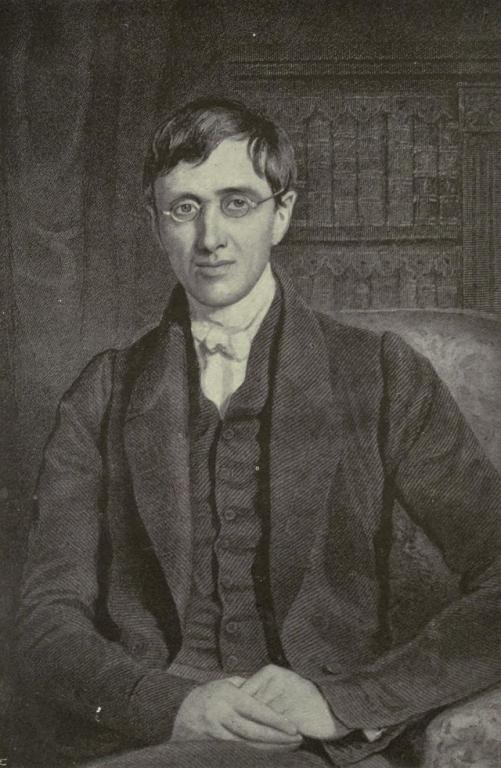
Photo credit: Blessed John Henry Cardinal Newman (1801-1890); portrait by William Charles Ross (1794-1860) [public domain / Wikimedia Commons]

***
Previous Post
July 29, 2018
Classic Reflections on the Communion of Saints
Next Post
July 29, 2018 Classic Catholic Reflections on Penance
Browse Our Archives
Select a Category & Last Things About Me Anti-Catholicism Atheism & Agnosticism Baptism and Sacramentalism Bible and Tradition Blessed Virgin Mary Books by Dave Armstrong C. S. Lewis Calvinism & General Protestantism Catholic Apologetics Catholic Apologists Catholic conversion Catholic converts Christmas Church (Ecclesiology) Church History Conversion and Converts Development of Doctrine Eastern Orthodoxy Ecumenism & Christian Unity Eucharist & Liturgy Fathers of the Church French Translations G. K. Chesterton Hell Hell & Satan Hell & Satan & Last Things Heresies & Comparative Religion Holistic Health Inquisition & Crusades & Scandals James White Jews & Judaism & Old Testament John Calvin John Henry Newman Liberal / Modernist Theology Life Issues Literary Resume Lutheranism Mariology Martin Luther Music Orthodoxy Papacy & Infallibility Personal Page Philosophy & Science Political & Ethical & Moral Issues Protestant Persecution & Intolerance Protestantism Purgatory Purgatory & Penance Romantic & Imaginative Theology Saints & Purgatory & Penance Salvation Salvation & Justification Satan & Last Things Sexuality and Gender Issues Spanish Translations Traditionalism vs. Radical Catholic Reactionaries Traducciones al español / tradução para português Trinitarianism & Christology Uncategorized Videos
Select a Month October 2026 September 2026 August 2026 July 2026 June 2026 May 2026 April 2026 March 2026 February 2026 January 2026 December 2025 November 2025 October 2025 September 2025 August 2025 July 2025 June 2025 May 2025 April 2025 March 2025 February 2025 January 2025 December 2024 November 2024 October 2024 September 2024 August 2024 July 2024 June 2024 May 2024 April 2024 March 2024 February 2024 January 2024 December 2023 November 2023 October 2023 September 2023 August 2023 July 2023 June 2023 May 2023 April 2023 March 2023 February 2023 January 2023 December 2022 November 2022 October 2022 September 2022 August 2022 July 2022 June 2022 May 2022 April 2022 March 2022 February 2022 January 2022 December 2021 November 2021 October 2021 September 2021 August 2021 July 2021 June 2021 May 2021 April 2021 March 2021 February 2021 January 2021 December 2020 November 2020 October 2020 September 2020 August 2020 July 2020 June 2020 May 2020 April 2020 March 2020 February 2020 January 2020 December 2019 November 2019 October 2019 September 2019 August 2019 July 2019 June 2019 May 2019 April 2019 March 2019 February 2019 January 2019 December 2018 November 2018 October 2018 September 2018 August 2018 July 2018 June 2018 May 2018 April 2018 March 2018 February 2018 January 2018 December 2017 November 2017 October 2017 September 2017 August 2017 July 2017 June 2017 May 2017 April 2017 March 2017 February 2017 January 2017 December 2016 November 2016 October 2016 September 2016 August 2016 July 2016 June 2016 May 2016 April 2016 March 2016 February 2016 January 2016 December 2015 November 2015 October 2015 September 2015 August 2015 July 2015 June 2015 May 2015 April 2015 March 2015 February 2015 January 2015 December 2014 November 2014 October 2014 September 2014 August 2014 July 2014 June 2014 April 2014 March 2014 February 2014 January 2014 December 2013 November 2013 October 2013 September 2013 August 2013 July 2013 June 2013 April 2013 March 2013 February 2013 January 2013 December 2012 November 2012 October 2012 September 2012 August 2012 July 2012 June 2012 May 2012 April 2012 March 2012 February 2012 January 2012 December 2011 November 2011 October 2011 September 2011 August 2011 July 2011 June 2011 April 2011 March 2011 February 2011 October 2010 September 2010 August 2010 July 2010 April 2010 March 2010 December 2009 October 2009 August 2009 July 2009 June 2009 May 2009 March 2009 February 2009 October 2008 September 2008 April 2008 March 2008 February 2008 January 2008 December 2007 November 2007 October 2007 May 2007 March 2007 February 2007 January 2007 November 2006 October 2006 September 2006 August 2006 July 2006 June 2006 May 2006 April 2006 March 2006 February 2006 October 2005 June 2005 April 2005 February 2005 July 2004 May 2004 April 2004
Follow Us!
TAKE THE
Religious Wisdom Quiz
Who was the major prophet during King Hezekiah's reign in Judah?
Select your answer to see how you score.
Daniel Ezekiel Jeremiah Isaiah
Books by This Author Books by Dave Armstrong
Related posts from Biblical Evidence for Catholicism

Bible & Catholicism on Mortal Sin (vs. John...
Biblical Evidence for Catholicism

Does Catholic Intercession of Saints Require Omniscience?
Biblical Evidence for Catholicism

Eternal Hell: Biblical? 25 Verses Say So
Biblical Evidence for Catholicism

Capabilities of Heavenly Saints: Protestant Commentaries
Biblical Evidence for Catholicism
TRENDING AT PATHEOS Catholic

Janie Learns the Way of the Cross: A...
Teaching children about Jesus' Passion can be challenging. Many parents and educators...

Looking For Good Catholic Writing - October 2026
He alone extends the heavens, and he walks upon the waves of...

In "Irreplaceable," our book on vocation and technology, Trevor Sutton and I...

I was strolling through the top floor of the brand new Parthenon...

What Does Gêvâh Mean For Kimberley Guifoyle &...
This week, a lot of the news is focused on Kimberly Guilfoyle....

INNER CIRCLE: Profound Mystery (Of Christ In All...
Ephesians 5:31-32 “For this reason, a man will leave his father and...
view all Catholic blogs
Ad-Free & Subscriber Log-In Subscription Support
- About Us
- 2026 Calendar
- Videos
- Podcasts
- Library of World Religions
- Faith In Media Tracker
- Advertise With Us
- Write for Us
- Privacy Policy
- Terms of Service
- Do Not Sell My Data
- Contact Us
- Radiant Digital
- Manage Newsletter Subscriptions
- Unsubscribe From Notifications
- Sitemap
Copyright 2008-2026, Patheos. All rights reserved.
Subscription Support Ad-Free & Subscriber Log-In
Follow Patheos