
BuddhistCatholicContemplativeEvangelicalGeneral ChristianHinduJewishLatter-day SaintMuslimNew VisionsProgressive Christian
Beliefs
- Buddhist
- Catholic
- Contemplative
- Evangelical
- General Christian
- Hindu
- Jewish
- Latter-day Saint
- More Voices
- Muslim
- New Visions
- Pagan
- Progressive Christian
Topics
- Religion News
- Food and Religion
- Sports and Religion
- Religious Art
- Religious Music and Entertainment
- Religious Events
- History and Religion
- Style and Religion
- Politics and Religion
- Women in Religion
- Recreation Outdoors and Religion
- Business Finance and Religion
- Careers Workplace and Religion
- Education and Religion
- Family Parenting and Religion
- Health Fitness and Religion
- Home and Religion
- Relationships and Religion
- Technology and Religion
- Travel and Religion
Columnists
- Buddhist Columnists
- Business Finance and Religion Columnists
- Careers Workplace and Religion Columnists
- Catholic Columnists
- Contemplative Columnists
- Education and Religion Columnists
- Evangelists Columnists
- Family Parenting and Religion Columnists
- General Christian Columnists
- Health Fitness and Religion Columnists
- Hindu Columnists
- History and Religion Columnists
- Home and Religion Columnists
- Jewish Columnists
- More Voices Columnists
- Latter Day Columnists
- Muslim Columnists
- New Visions Columnists
- Nonreligious Columnists
- Pagan Columnists
- Politics and Religion Columnists
- Progressive Columnists
- Recreation Outdoors and Religion Columnists
- Relationships and Religion Columnists
- Religion News Columnists
- Religious Art Columnists
- Religious Events Columnists
- Religious Music and Entertainment Columnists
- Sports and Religion Columnists
- Style and Religion Columnists
- Technology and Religion Columnists
- Travel and Religion Columnists
- Women in Religion Columnists
Resource Library
- 2026 Calendar
- Library of World Religions
- The 100 Most Holy Places on Earth
- Patheos Answers
- Podcasts
- Videos
- Faith Leaders Database
- Anglican Episcopalian
- Bahai
- Baptist
- Buddhism
- Christianity
- Confucianism
- Eastern Orthodoxy
- Hinduism
- Holiness and Pentecostal
- ISKCON
- Islam
- Judaism
- Lutheran
- Methodist
- The Church of Jesus Christ of Latter-day Saints
- New Age
- Paganism
- Presbytarian and Reformed
- Protestantism
- Religion Behind the Scenes
- Roman Catholic
- Scientology
- Shia Islam
- Sikhism
- Sufism
- Sunni Islam
- Taoism
- Zen
- See all religions
Research Tools
 Ad-Free & Subscriber Log-In Subscription Support
Ad-Free & Subscriber Log-In Subscription Support
Follow Patheos 

- Trending:
- Forgiveness
- |
- Marriage
- |
- Consciousness
- |
- Death Penalty
- |
- Election
- |
- Halloween

-
About
-
Catholic Apologetics
-
Church History
-
Great Apologists
-
Christian Worldview
-
Protestantism & Misc.
- Home
- Catholic
- History and Religion
- Thought Experiments w an Atheist About God / No God
Thought Experiments w an Atheist About God / No God
Last updated on: June 26, 2018 at 3:41 pm by Dave Armstrong
Thought Experiments w an Atheist About God / No God 2018-06-26T15:41:43-04:00 Dave Armstrong
Patheos Explore the world's faith through different perspectives on religion and spirituality! Patheos has the views of the prevalent religions and spiritualities of the world.
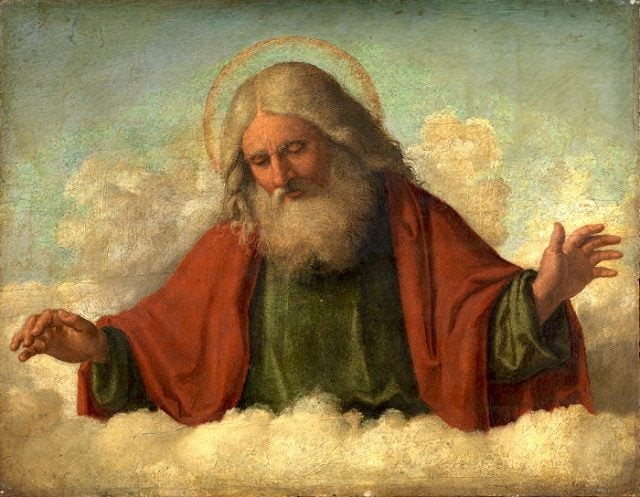
Anthrotheist made comments underneath my post, Dialogue with an Atheist on “God of the Gaps” (which was a response to him). This is my counter-reply. His words will be in blue.
*****
Regarding my thought experiment, I rather expected that the baseline expectation from your side would be a universe in chaos or no universe at all. That’s consistent with the belief that God created the world and without him it would have no reason to be here.
Correct.
Your response to a godless world in which people manage to exist seemed interesting to me, because that seems to be pretty much the world we seem to live in. There is no universal sense of purpose or morality, only people figuring things out as we go.
To the contrary, there is a unified set of moral [principles common to all societies at all times. Christian apologist C. S. Lewis compiled these and called them “The Tao”. See the end section of his book, The Abolition of Man (word-search, “Illustrations of the Tao”). That’s the world as it exists, which I think is perfectly consistent with what we would expect in a world with God, Who put these common moral impulses into mankind.
There is copious suffering, confusion, and uncertainty.
To the extent that there is, and it is tied up with conflicting moral outlooks, I would contend that it is due to massively, rapidly increasing secularization: which is essentially the rejection of Christianity (or other religions) and moral traditionalism. Suffering itself is, of course, the topic of the famous “problem of evil”: that I have written a ton about (see my Philosophy page). I don’t think it has disproved God in the slightest, because the “problem of good” is an [at least] equally difficult objection to atheism.
On a global level, with all the conflicts between nations and peoples and religions, is it really all that less awful than any (purportedly) atheistic totalitarian state? Seems we come back inevitably to the problem of evil again. :-)
I simply noted the worst examples of states that had utterly rejected God and traditional morality (Stalin’s Soviet Union, Mao’s China, and Hitler’s Germany). Those examples show the full extent of what a complete rejection of God looks like. The world as a whole is a mixture of religiously committed people, the far greater number of lax or inconsistent religionists, and atheists. It’s a mixed bag.
Taking a stab at my own question(s) is a bit difficult because I am coming from the belief that there are no gods, and must imagine a world in which there is some God. Which God exactly is the issue; I grew up Methodist but deconverted before I entered into more complex conversations regarding its theology (though I am trying to make up for that nowadays).
I’d like to read your story sometime. Every deconversion story of atheists I have seen so far (and I have examined many) made it clear that the true nature of Christianity was very inadequately understood (meaning that what was rejected was at least in part, a straw man or imaginary image of what Christianity supposedly is). Atheists — in my experience — are extremely uncomfortable with having their deconversions critiqued. But hey, if God and Christianity are fair game, so are deconversions. If you can’t stand the heat, don’t put such things up on the Internet. Just keep it private; or else someone like me will come around and it may become a bit embarrassing when I poke holes in reputed “facts” about the Bible and Christianity.
Describing a world created by God would reveal what I believe to be God’s character. Let’s say that God can do anything, and is all-good. Assuming that he wants people to have free will, he would have to allow them to do things that are evil. Being capable of anything and being good though, God could allow people to harm themselves with their evil deeds but shield others from being harmed. Thus evil could exist in the world, free will would be preserved, but God would protect people from evil that they do not deserve. Assuming that death and misfortune are not ‘evil’, people would still have struggles and hardships; what they wouldn’t have is powerlessness against malice.
I don’t think such a scenario scenario is “workable” or that it makes sense in the final analysis, when closely examined, as I have written about.
Similarly, if God created everything and wanted humanity to know of Him, I would expect the world to know of him.
As indeed it does, which is why the vast majority of the people in the world are religious and believe in either a personal God or some extraordinary power beyond mere materialistic nature. Atheists are always a tiny minority.
He would have revealed himself to the world, in whatever way.
Exactly! Revelation. And that is what we believe the Bible is. The same Bible records historic manifestations of God and His power and character. Most importantly and notably: Jesus of Nazareth.
The religions and myths across cultures would converge on a common similarity, not vary from animism, to polytheism, to monotheism, and countless more very different categories of beliefs.
That doesn’t follow. I have provided evidence that mortality is largely the same, but we would fully expect differences of opinion, just as we find in every other field of thought or inquiry. Some people are right, others wrong, and most of us are a mixture of the two. None of that implies that there is not one truth or one God out there; none of it disproves either thing. All it proves is that people don’t agree on a lot of things.
Ultimately, the problem of evil makes it difficult for me to believe that there is a good God.
I think it fails, as I have written about, but I’ve always regarded it as the most serious objection, and so I’ve written about it a lot and debated it.
Assuming that God did not have to create the world, then he could have chosen not to do so.
We agree.
If he chose to create the world knowing that he would have to create evil at the same time, then his voluntary creation of unnecessary evil flies in the face of his supposed goodness.
What He thinks is “unnecessary” and what you do may be two very different things.
If he couldn’t make us without making evil, his goodness should have precluded him making us at all;
Again; according to you. I happen to think it’s a good thing that I exist, and am here typing this, and that you do. I think it’s worth it, and that human beings can experience an amazing joy and peace that doesn’t wipe out suffering, but makes it all bearable. That has been my Christian experience, and that of millions of others. I’m happy to bear witness to it, so that others can share in the Good News. It’s what I do for a living. Life has meaning! It has the utmost purpose! God will make all things right in the end. This world (and this life; an individual’s life) is not all there is.
his eternal solitude would have been a profound sacrifice for goodness, one that he apparently chose not to make.
I’m glad He made that choice, and I’m ecstatic that the destiny of all who choose to serve Him and allow His grace to work in their lives is an eternity of bliss in union with Him. I can’t wait to get there. In the meantime I will do all that I can to help others to see that this is the truth and that they can live happy, fulfilled lives on this earth, and have that fantastic future awaiting them in heaven.
A couple of clarifications may be in order. First, atheists are actually theists revering time and atoms as gods in the same manner that Christians are actually atheists when they don’t act like their prayer will cure a loved one’s cancer.
The analogy doesn’t follow. The atheist believes that matter, on its own, based on its inherent capabilities or potentialities, can create the universe out of nothing, and everything in it, which is exactly what theists believe God does. You have simply substituted matter for God. My analogy is almost a perfect one.
Christians believe that there is suffering in the world, for various reasons. Some of it (“natural evil”) is arguably just the way the world is, by the laws of science, and it is difficult to envision a world with no laws of science, where Oswald’s bullet (God predetermining it) would have turned into jelly just before it entered President Kennedy’s head.
That’s the sort of world that atheists apparently require in order to get rid of evil and believe in the possibility of God’s existence. I don’t think it makes sense in the end (when thought through), or is plausible. As I argued way back in 2002, in such a world it would be impossible, for example, to do science (because uniformitarianism would be overthrown), and I think that would be a tremendous tragedy.
As for cancer (which both my parents, my brother, and a very beloved aunt — and recently a sister-in-law — died from), Christians believe that their prayers won’t usually cure cancer because (as we understand) miracles are very rare and the exception to the rule: by definition. It doesn’t follow that we don’t believe in any miracles (like atheists); we simply think they are rare (and that God is not bound to fulfill any given prayer). For the most part, God lets the world operate on natural principles and laws.
We want to blame cancer on God? Well, He has given us brains to figure out how to prevent it in the first place (and eventually, I believe, to cure it). We know that smoking causes lung cancer. That explains my father and my aunt. My brother did drugs back in the 60s and early 70s, and that may account for his early death (just as it has in the case of many rock stars). He had already had mononucleosis and hepatitis. It was only my mother who didn’t abuse her body in this way. And she was 89 as it was.
Cancer, then, is one case among many, where oftentimes we bring misery upon ourselves by engaging in unhealthy behavior. Then we want to turn around and blame God for letting people die because of it. He has given us the knowledge to avoid at least some forms of cancer (notably, lung). Alcoholics develop liver problems, junk food junkies get diabetes, rock stars die in their 50s because of substance abuse (e.g., Carl Wilson of the Beach Boys and George Harrison: both died at a younger age than I am now: 59), etc.
That’s what comes with free will. Many people make wrong choices, and that’s not God’s fault because He allowed them to have free will. The knowledge was freely available for them to make better, more healthy choices. It’s their fault because they made bad choices in their lives. I get very tired of God being unjustly blamed for everything (Christians tend to do it, too; not just atheists).
Neither of those are fair representations of the opponent’s beliefs.
Mine is perfectly fair. If you don’t believe as an atheist that matter brought about / created everything in the universe, then please explain to me what else did?
Also, many atheists are rabid science proponents that claim that science is the perfect epistemology in much the same manner that many Christians claim that the Bible is literal and infallible. Again, neither of those represent a more thoughtful view on the respective subject; I may believe that science is a wonderful epistemological method and you may believe the Bible to be infallible, but the rest doesn’t apply.
I believe in both. I don’t see why they must be opposed to each other. It’s illogical and completely unnecessary. Some atheists go too far with science (scientism), and some Christians get dumb and extreme with the Bible. We agree about that.
I still can’t help but feel like the attribution of phenomena to God is a stopping point of inquiry, more than it is a starting point.
Explain to me, then, a scenario in which we can posit God as some / any sort of explanation. If you think every time we do it’s a cop-out and “god of the gaps” then that is simply arbitrary atheist dogmatism. Otherwise, there is some conceivable time where we can do so without hearing this silly charge (in which case you have to explain to us what it is; when that conceivably can occur).
At the outer extremes of each position, one set of presumptions (no God) leads to the belief that anything that we can encounter can be understood; at the other end (with God), it must be assumed that there will be things that we encounter that cannot ever be figured out.
Again, we need not talk only of extremes. Both science and theology have mysteries and unknown things, that we can’t fully explain. We appeal to God’s omniscience as a thing inherently higher than ourselves, and expect this. The atheist science appeals to time, chance, the omnipotent qualities of matter, and the wondrous assumed future development of science.
I don’t object to any particular person finding themselves concluding that God is necessary to explain their world to their satisfaction.
Excellent! That’s more than many atheists are willing to go. They have to characterize us as gullible, infantile, and believers in fairy tales and silly things like leprechauns. You show yourself to be quite tolerant and sensible!
At a larger societal level though, I don’t see the conclusion “God did it” as being conducive to expanding human knowledge (and the benefits that it brings, limited as they often are to material technological conveniences).
Once again: Explain to me, then, a scenario in which we can posit God as some / any sort of explanation, where we are not accused of “God of the gaps.”
I’ll be honest, one of the things I find comforting about believing that there are no Gods is that within that belief system, two things must be true about the universe: it must be consistent in its behaviors and it must be impartial toward humanity. The idea that God is continually doing the things that make the world work, and is only doing so consistently at his whim, is frankly terrifying to me; perhaps I could be more comforted with the thought if it wasn’t for the fact that pretty much every account of God portrays him as taking sides in human affairs. The notion of being on the wrong side of God, especially if it could be done in ignorance, is far more troubling to me than the notion that the universe is never kindly nor wrathful toward me.
If God was malevolent or some sort of dictator or tyrant as many atheists (including you?) falsely perceive Him to be, I’d be terrified, too. I’m saying that He is not that way, and that what we see in the world that is bad is largely explained by sinful human behavior, and that which is not caused by humans couldn’t be vastly different than what it is without chaos ensuing.
Atheism means that this “consistency” of the universe that you refer to brings to nought all human efforts. We all die and that’s it. Now you can argue that a life can produce great good and have fulfillment and meaning, and that it’s good in and of itself, regardless of the absence of an afterlife. I agree with that, as far as it goes, but the larger problem is evil, wicked men. In the atheist worldview, they die like all the rest of us and receive no punishment for their great evil.
They can laugh about and scorn their victims all the way to the grave. There is your “consistency.” Hitler and Mother Teresa both have the same ultimate fate: nonexistence. Hitler was never punished for his evil, and Mother Teresa wasn’t rewarded for her saintly service to the poor. You may think that is a wonderful or preferable state of affairs; I do not (especially with regard to Hitler).
In the Christian view, all the scales are evened out in the end, and there is justice, and therefore, ultimate meaning. Whatever evil men did and did not repent of (God will forgive anyone for anything if they repent) will be judged, up to and including an eternal hell of torment.
No one has to be on the “wrong side” of God if they know what His side is. If someone is merely ignorant, God takes that into consideration. If it is deliberate rejection of God and His moral laws, then it’s different. But God provides the way out, so I don’t see why He should be condemned. He ought to be rapturously praised for His goodness and love.
Good discussion! Thank you for the time and effort you put into it. And we’ll keep talking about this, if you wish.
***
Photo credit: God the Father: attributed to Cima da Conegliano (1459-1517) [public domain / Wikimedia Commons]

***
Previous Post

June 26, 2018
Reply on Reasons for the Sunday Mass Obligation
Next Post
June 27, 2018 Response to "Religion & How I Lost It" (Bob Hypes)
Browse Our Archives
Select a Category & Last Things About Me Anti-Catholicism Atheism & Agnosticism Baptism and Sacramentalism Bible and Tradition Blessed Virgin Mary Books by Dave Armstrong C. S. Lewis Calvinism & General Protestantism Catholic Apologetics Catholic Apologists Catholic conversion Catholic converts Christmas Church (Ecclesiology) Church History Conversion and Converts Development of Doctrine Eastern Orthodoxy Ecumenism & Christian Unity Eucharist & Liturgy Fathers of the Church French Translations G. K. Chesterton Hell Hell & Satan Hell & Satan & Last Things Heresies & Comparative Religion Holistic Health Inquisition & Crusades & Scandals James White Jews & Judaism & Old Testament John Calvin John Henry Newman Liberal / Modernist Theology Life Issues Literary Resume Lutheranism Mariology Martin Luther Music Orthodoxy Papacy & Infallibility Personal Page Philosophy & Science Political & Ethical & Moral Issues Protestant Persecution & Intolerance Protestantism Purgatory Purgatory & Penance Romantic & Imaginative Theology Saints & Purgatory & Penance Salvation Salvation & Justification Satan & Last Things Sexuality and Gender Issues Spanish Translations Traditionalism vs. Radical Catholic Reactionaries Traducciones al español / tradução para português Trinitarianism & Christology Uncategorized Videos
Select a Month October 2026 September 2026 August 2026 July 2026 June 2026 May 2026 April 2026 March 2026 February 2026 January 2026 December 2025 November 2025 October 2025 September 2025 August 2025 July 2025 June 2025 May 2025 April 2025 March 2025 February 2025 January 2025 December 2024 November 2024 October 2024 September 2024 August 2024 July 2024 June 2024 May 2024 April 2024 March 2024 February 2024 January 2024 December 2023 November 2023 October 2023 September 2023 August 2023 July 2023 June 2023 May 2023 April 2023 March 2023 February 2023 January 2023 December 2022 November 2022 October 2022 September 2022 August 2022 July 2022 June 2022 May 2022 April 2022 March 2022 February 2022 January 2022 December 2021 November 2021 October 2021 September 2021 August 2021 July 2021 June 2021 May 2021 April 2021 March 2021 February 2021 January 2021 December 2020 November 2020 October 2020 September 2020 August 2020 July 2020 June 2020 May 2020 April 2020 March 2020 February 2020 January 2020 December 2019 November 2019 October 2019 September 2019 August 2019 July 2019 June 2019 May 2019 April 2019 March 2019 February 2019 January 2019 December 2018 November 2018 October 2018 September 2018 August 2018 July 2018 June 2018 May 2018 April 2018 March 2018 February 2018 January 2018 December 2017 November 2017 October 2017 September 2017 August 2017 July 2017 June 2017 May 2017 April 2017 March 2017 February 2017 January 2017 December 2016 November 2016 October 2016 September 2016 August 2016 July 2016 June 2016 May 2016 April 2016 March 2016 February 2016 January 2016 December 2015 November 2015 October 2015 September 2015 August 2015 July 2015 June 2015 May 2015 April 2015 March 2015 February 2015 January 2015 December 2014 November 2014 October 2014 September 2014 August 2014 July 2014 June 2014 April 2014 March 2014 February 2014 January 2014 December 2013 November 2013 October 2013 September 2013 August 2013 July 2013 June 2013 April 2013 March 2013 February 2013 January 2013 December 2012 November 2012 October 2012 September 2012 August 2012 July 2012 June 2012 May 2012 April 2012 March 2012 February 2012 January 2012 December 2011 November 2011 October 2011 September 2011 August 2011 July 2011 June 2011 April 2011 March 2011 February 2011 October 2010 September 2010 August 2010 July 2010 April 2010 March 2010 December 2009 October 2009 August 2009 July 2009 June 2009 May 2009 March 2009 February 2009 October 2008 September 2008 April 2008 March 2008 February 2008 January 2008 December 2007 November 2007 October 2007 May 2007 March 2007 February 2007 January 2007 November 2006 October 2006 September 2006 August 2006 July 2006 June 2006 May 2006 April 2006 March 2006 February 2006 October 2005 June 2005 April 2005 February 2005 July 2004 May 2004 April 2004
Follow Us!
TAKE THE
Religious Wisdom Quiz
Which Old Testament book is entirely written as a dialogue between God and a prophet?
Select your answer to see how you score.
Zechariah Malachi Amos Habakkuk
Books by This Author Books by Dave Armstrong
Related posts from Biblical Evidence for Catholicism

God, Modern Physics, & Dark Energy: An Analogy
Biblical Evidence for Catholicism

General Debate on Christianity with an Atheist
Biblical Evidence for Catholicism

Can Atheists Be Saved? Surprising Biblical Data
Biblical Evidence for Catholicism
Can Atheists Be Saved? YES! (Possibly Some ....
Biblical Evidence for Catholicism
TRENDING AT PATHEOS Catholic

In "Irreplaceable," our book on vocation and technology, Trevor Sutton and I...

I was strolling through the top floor of the brand new Parthenon...

What Does Gêvâh Mean For Kimberley Guifoyle &...
This week, a lot of the news is focused on Kimberly Guilfoyle....

INNER CIRCLE: Profound Mystery (Of Christ In All...
Ephesians 5:31-32 “For this reason, a man will leave his father and...

Do Not Rejoice When Your Enemy Falls: The...
Turning an execution into a public spectacle is a disturbing expression of...

'The Chosen' S6 Trailer: The Passion Gets Very...
Not many watching 'The Chosen' worry about spoilers, but just because they...
view all Catholic blogs
Ad-Free & Subscriber Log-In Subscription Support
- About Us
- 2026 Calendar
- Videos
- Podcasts
- Library of World Religions
- Faith In Media Tracker
- Advertise With Us
- Write for Us
- Privacy Policy
- Terms of Service
- Do Not Sell My Data
- Contact Us
- Radiant Digital
- Manage Newsletter Subscriptions
- Unsubscribe From Notifications
- Sitemap
Copyright 2008-2026, Patheos. All rights reserved.
Subscription Support Ad-Free & Subscriber Log-In
Follow Patheos