
BuddhistCatholicContemplativeEvangelicalGeneral ChristianHinduJewishLatter-day SaintMuslimNew VisionsProgressive Christian
Beliefs
- Buddhist
- Catholic
- Contemplative
- Evangelical
- General Christian
- Hindu
- Jewish
- Latter-day Saint
- More Voices
- Muslim
- New Visions
- Pagan
- Progressive Christian
Topics
- Religion News
- Food and Religion
- Sports and Religion
- Religious Art
- Religious Music and Entertainment
- Religious Events
- History and Religion
- Style and Religion
- Politics and Religion
- Women in Religion
- Recreation Outdoors and Religion
- Business Finance and Religion
- Careers Workplace and Religion
- Education and Religion
- Family Parenting and Religion
- Health Fitness and Religion
- Home and Religion
- Relationships and Religion
- Technology and Religion
- Travel and Religion
Columnists
- Buddhist Columnists
- Business Finance and Religion Columnists
- Careers Workplace and Religion Columnists
- Catholic Columnists
- Contemplative Columnists
- Education and Religion Columnists
- Evangelists Columnists
- Family Parenting and Religion Columnists
- General Christian Columnists
- Health Fitness and Religion Columnists
- Hindu Columnists
- History and Religion Columnists
- Home and Religion Columnists
- Jewish Columnists
- More Voices Columnists
- Latter Day Columnists
- Muslim Columnists
- New Visions Columnists
- Nonreligious Columnists
- Pagan Columnists
- Politics and Religion Columnists
- Progressive Columnists
- Recreation Outdoors and Religion Columnists
- Relationships and Religion Columnists
- Religion News Columnists
- Religious Art Columnists
- Religious Events Columnists
- Religious Music and Entertainment Columnists
- Sports and Religion Columnists
- Style and Religion Columnists
- Technology and Religion Columnists
- Travel and Religion Columnists
- Women in Religion Columnists
Resource Library
- 2026 Calendar
- Library of World Religions
- The 100 Most Holy Places on Earth
- Patheos Answers
- Podcasts
- Videos
- Faith Leaders Database
- Anglican Episcopalian
- Bahai
- Baptist
- Buddhism
- Christianity
- Confucianism
- Eastern Orthodoxy
- Hinduism
- Holiness and Pentecostal
- ISKCON
- Islam
- Judaism
- Lutheran
- Methodist
- The Church of Jesus Christ of Latter-day Saints
- New Age
- Paganism
- Presbytarian and Reformed
- Protestantism
- Religion Behind the Scenes
- Roman Catholic
- Scientology
- Shia Islam
- Sikhism
- Sufism
- Sunni Islam
- Taoism
- Zen
- See all religions
Research Tools
 Ad-Free & Subscriber Log-In Subscription Support
Ad-Free & Subscriber Log-In Subscription Support
Follow Patheos 

- Trending:
- Forgiveness
- |
- Marriage
- |
- Consciousness
- |
- Death Penalty
- |
- Election
- |
- Halloween

-
About
-
Catholic Apologetics
-
Church History
-
Great Apologists
-
Christian Worldview
-
Protestantism & Misc.
- Home
- Catholic
- History and Religion
- Keating & Double Standards on “Traditionalist” Labeling
Keating & Double Standards on “Traditionalist” Labeling
Last updated on: June 5, 2026 at 11:52 pm by Dave Armstrong
Keating & Double Standards on “Traditionalist” Labeling 2026-06-05T23:52:34-04:00 Dave Armstrong
Patheos Explore the world's faith through different perspectives on religion and spirituality! Patheos has the views of the prevalent religions and spiritualities of the world.
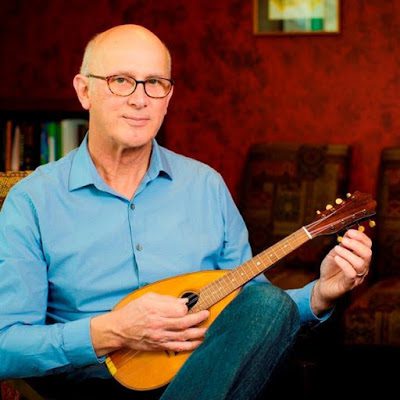
Karl Keating has been playing out of tune way too much lately.
*****
This is an old, tired discussion, but Catholic apologist and author Karl Keating wanted to again make an issue of it during the course of his (literally) 99 or so mentions / criticisms of me in his latest book, The Francis Feud. I’ve documented six glaring errors that he makes in the book, but is a side-issue and has nothing directly to do with the pathetic attacks upon the Holy Father.
Terminology is important. We must have accurately descriptive labels of the groups and sub-groups in religion generally, and for the sub-groups within the Catholic Church. Briefly, on what is usually called the “right” side of the ecclesiological spectrum, there are legitimate self-described “traditionalists” and there is also a group of people that are very far right, extreme, and radical.
The current issue has to do with what to call those extremists or fanatics. If we are to analyze the issue, they need to be able to be called something, just as with discussions of any other adherents of a particular ideology. One can’t define terms every time a group is brought up. That’s the purpose of previously understood labels or titles.
There is a big back story to this controversy with Karl over terms, because the organization he founded, Catholic Answers, was the immediate impetus for my coining my term, radical Catholic reactionary, in August 2013 (making very clear what my definition was and why I reasoned as I did).
On the May 31, 2013 edition of Catholic Answers Live, host Patrick Coffin and guest Tim Staples dealt with the general issue. The terms they used raised a firestorm of protest. It was quite a dust-up (I remember the incident well). Patrick later wrote about it in an article entitled, “Meet the Mad-Trads” (7-12-13).
It appears to have been removed from the Catholic Answers website. I had to search for it on Internet Archive. The two shows from May 31st (one / two) and two more (one / two) on August 12th, 2013 (all called “Radical Traditionalism”) are still available on the site to be listened to.
The title of that (now-removed) article quickly indicates the problem. Legitimate traditionalists complained very loudly and passionately about feeling that they were being included in these sorts of labels. They very often didn’t take it as meaning “the extreme, fringe faction of the traditionalist movement” but rather, as “traditionalists, who are always or usually ‘mad’ or ‘radical’ or ‘extreme.'”
I think thee impressions / opinions were wrong. Tim, Patrick, and CA did not mean it in the way they took it (as they made clear in their subsequent explanations). But the problem remained. If a large group of folks are offended — even if they totally misunderstand a description — it’s time, in charity, to change the term.
Thus, in Patrick’s article, he used not only “mad-trad” but also “radical Traditionalism” and “Rad-Trads.” This was not the only time CA used such terms. Jimmy Akin, in an article dated 1 July 2000 utilized “rad trads” and “radical traditionalists.” Karl Keating (then still President of CA) got in on the discussion / controversy about these radio shows in an article dated 9-1-13 (“Hyperbolic Traditionalists”). Karl stated:
The fact is that there are radical Traditionalists, people who can be distinguished from run-of-the-mill Traditionalists by their beliefs, actions, and attitudes. The two Catholic Answers Live programs discussed such folks . . .
[Taylor] Marshall did identify things that commonly are found among radical Traditionalists: “the denial of the Jewish holocaust,” “the outright denial of Vatican II as a valid council,” “disdain for Pope John Paul II and Pope Francis,” and “the belief that Latin Mass Catholics are ‘A Team’ and Novus Ordo Catholics are ‘B Team.’”
Those attributes don’t amount to a definition of radical Traditionalism, but they are useful indicators.
Karl proved in this article that he himself understood that there are serious and essential differences among groups on the “religious right,” by referring to “the distinction drawn between fringe groups of ‘radical Traditionalists’ and the much larger body of regular Traditionalists.”
It was precisely because of this controversy (as the immediate motivation) that I coined my term. In so doing I wanted to accomplish three things:
Indicate extremity and “far-right” / fringe (“radical” / “reactionary”).
Show that I regarded such people as Catholics, and not schismatics.
Completely remove any reference to or connotation of “traditionalist” or “trad” in the coined term.
Hence, radical Catholic reactionary. It accomplished all three things simultaneously (and Karl and I talked about it at some length after I coined it. I remember that he thought it was a bit awkward, but I don’t recall any fundamental disagreement with coining a term along these lines). I myself had used “radtrad” for a few years, but not that much. My preferred term before 2013 was quasi-schismatic.
Again, I was trying to be nuanced (the opposite of simplistic), in recognizing that they were not formally, canonically schismatic; yet tended to have that sort of spirit, and might possibly end up that way.
I maintain, then, that my coined term is perfectly sensible, rational, and useful. I came up with it in reaction to the controversy caused by the Catholic Answers Live shows, in response to concerns expressed by my mainstream traditionalist friends. But now, when we fast-forward to June 2018, all of a sudden Karl is irrationally, unfairly chiding me in his book for using my term:
The second note I wish to make regards Armstrong’s nomenclature. . . . his favorite seems to be one of his own fashioning, “radical Catholic reactionary,” . . .
I repeatedly have urged Armstrong to eschew labels such as “radical Catholic reactionary,” arguing that they do little to clarify and that, like widely throw [sic] nets, they drag in the guilty as well as the innocent.
That may be well and good, but the problem is that Karl loves to criticize, while offering no substantive, practical, problem-solving alternative. What is his solution to legitimate traditionalists being offended by “radtrad” and suchlike: terms in common use at his own Catholic Answers apostolate: not nearly as much on my pages?
How does he propose to resolve this dispute? I don’t see him offering any solution. At least I gave it the old college try. It’s easy to sit on the sidelines and gripe about folks who are trying to make things better and more understandable, while offering nothing better.
How does he label people I call radical Catholic reactionaries in his book? He calls all and sundry (in fact, people with widely varying ideas) “Traditionalist” (big T) with some distinctions offered in context. He cites Phil Lawler, using the term “radical Traditionalist.” Quite ironically, he seems to have no problem with Phil Lawler calling Pope Francis a “radical” in his book, Lost Shepherd.
That’s fine and dandy, but if I dare use radical Catholic reactionary, then I’m the one who is extreme and unhinged and insulting. The pope’s fair game, but the fringe, extremist elements in the Church on the far right must be treated with kid gloves or associated with perfectly legitimate traditionalists by calling them the exact same name. Phil Lawler writes in his book:
I did my best to provide reassurance—for my readers and sometimes for myself—that despite his sometimes alarming remarks, Francis was not a radical, was not leading the Church away from the ancient sources of the Faith. But gradually, reluctantly, painfully, I came to the conclusion that he was.
The Roman pontiff should be a focus of unity in the Church. Francis, regrettably, has become a source of division. There are two reasons for this unhappy development: the pope’s autocratic style of governance and the radical nature of the program that he is relentlessly advancing. (p. x)
I myself wrote that analysts on both ends of the political and theological spectrums were, for their own partisan purposes, trying to portray the pope as a radical. A year later, I was ready to conclude that maybe Francis really was a radical, . . . (p. 33)
Why would a pontiff bent on radical change within the Church make this extraordinary effort to reconcile with recalcitrant traditionalists? (p. 184)
We live in exceedingly odd times.
NOTE: See additional (rather tedious) discussion between myself and Karl Keating below in the combox, and also (a few additional tidbits) at my Facebook cross-posting.
***
Traditionalism vs. Radical Catholic Reactionaries
Radical Catholic Reactionaries
Previous Post

June 1, 2018
Is Conversion to Catholicism Mainly Emotional or "Doctrinal"?
Next Post
June 4, 2018 Reflections on the Holy Eucharist & Transubstantiation
Browse Our Archives
Select a Category & Last Things About Me Anti-Catholicism Atheism & Agnosticism Baptism and Sacramentalism Bible and Tradition Blessed Virgin Mary Books by Dave Armstrong C. S. Lewis Calvinism & General Protestantism Catholic Apologetics Catholic Apologists Catholic conversion Catholic converts Christmas Church (Ecclesiology) Church History Conversion and Converts Development of Doctrine Eastern Orthodoxy Ecumenism & Christian Unity Eucharist & Liturgy Fathers of the Church French Translations G. K. Chesterton Hell Hell & Satan Hell & Satan & Last Things Heresies & Comparative Religion Holistic Health Inquisition & Crusades & Scandals James White Jews & Judaism & Old Testament John Calvin John Henry Newman Liberal / Modernist Theology Life Issues Literary Resume Lutheranism Mariology Martin Luther Music Orthodoxy Papacy & Infallibility Personal Page Philosophy & Science Political & Ethical & Moral Issues Protestant Persecution & Intolerance Protestantism Purgatory Purgatory & Penance Romantic & Imaginative Theology Saints & Purgatory & Penance Salvation Salvation & Justification Satan & Last Things Sexuality and Gender Issues Spanish Translations Traditionalism vs. Radical Catholic Reactionaries Traducciones al español / tradução para português Trinitarianism & Christology Uncategorized Videos
Select a Month October 2026 September 2026 August 2026 July 2026 June 2026 May 2026 April 2026 March 2026 February 2026 January 2026 December 2025 November 2025 October 2025 September 2025 August 2025 July 2025 June 2025 May 2025 April 2025 March 2025 February 2025 January 2025 December 2024 November 2024 October 2024 September 2024 August 2024 July 2024 June 2024 May 2024 April 2024 March 2024 February 2024 January 2024 December 2023 November 2023 October 2023 September 2023 August 2023 July 2023 June 2023 May 2023 April 2023 March 2023 February 2023 January 2023 December 2022 November 2022 October 2022 September 2022 August 2022 July 2022 June 2022 May 2022 April 2022 March 2022 February 2022 January 2022 December 2021 November 2021 October 2021 September 2021 August 2021 July 2021 June 2021 May 2021 April 2021 March 2021 February 2021 January 2021 December 2020 November 2020 October 2020 September 2020 August 2020 July 2020 June 2020 May 2020 April 2020 March 2020 February 2020 January 2020 December 2019 November 2019 October 2019 September 2019 August 2019 July 2019 June 2019 May 2019 April 2019 March 2019 February 2019 January 2019 December 2018 November 2018 October 2018 September 2018 August 2018 July 2018 June 2018 May 2018 April 2018 March 2018 February 2018 January 2018 December 2017 November 2017 October 2017 September 2017 August 2017 July 2017 June 2017 May 2017 April 2017 March 2017 February 2017 January 2017 December 2016 November 2016 October 2016 September 2016 August 2016 July 2016 June 2016 May 2016 April 2016 March 2016 February 2016 January 2016 December 2015 November 2015 October 2015 September 2015 August 2015 July 2015 June 2015 May 2015 April 2015 March 2015 February 2015 January 2015 December 2014 November 2014 October 2014 September 2014 August 2014 July 2014 June 2014 April 2014 March 2014 February 2014 January 2014 December 2013 November 2013 October 2013 September 2013 August 2013 July 2013 June 2013 April 2013 March 2013 February 2013 January 2013 December 2012 November 2012 October 2012 September 2012 August 2012 July 2012 June 2012 May 2012 April 2012 March 2012 February 2012 January 2012 December 2011 November 2011 October 2011 September 2011 August 2011 July 2011 June 2011 April 2011 March 2011 February 2011 October 2010 September 2010 August 2010 July 2010 April 2010 March 2010 December 2009 October 2009 August 2009 July 2009 June 2009 May 2009 March 2009 February 2009 October 2008 September 2008 April 2008 March 2008 February 2008 January 2008 December 2007 November 2007 October 2007 May 2007 March 2007 February 2007 January 2007 November 2006 October 2006 September 2006 August 2006 July 2006 June 2006 May 2006 April 2006 March 2006 February 2006 October 2005 June 2005 April 2005 February 2005 July 2004 May 2004 April 2004
Follow Us!
TAKE THE
Religious Wisdom Quiz
Who saw a vision of a pot boiling toward the north?
Select your answer to see how you score.
Habakkuk Zechariah Isaiah Jeremiah
Books by This Author Books by Dave Armstrong
Related posts from Biblical Evidence for Catholicism
Foreword: "Ignorance of Things Divine" (Andrew Mioni)
Biblical Evidence for Catholicism
Robert Fastiggi: Pope Francis "Often Misunderstood"
Biblical Evidence for Catholicism
Must the Gospel be Preached at Every Time...
Biblical Evidence for Catholicism

I Never Regarded Bp. Strickland or Cdl. Burke...
Biblical Evidence for Catholicism
TRENDING AT PATHEOS Catholic

The Sermon on the Mount, Part I: Matthew...
The Sermon on the Mount, Part I (Matthew 4:12-5:12) St. Matthew moves...

What's up from Crossway: Reviewing some of their latest A few weeks...

Janie Learns the Way of the Cross: A...
Teaching children about Jesus' Passion can be challenging. Many parents and educators...

Looking For Good Catholic Writing - October 2026
He alone extends the heavens, and he walks upon the waves of...

In "Irreplaceable," our book on vocation and technology, Trevor Sutton and I...

I was strolling through the top floor of the brand new Parthenon...
view all Catholic blogs
Ad-Free & Subscriber Log-In Subscription Support
- About Us
- 2026 Calendar
- Videos
- Podcasts
- Library of World Religions
- Faith In Media Tracker
- Advertise With Us
- Write for Us
- Privacy Policy
- Terms of Service
- Do Not Sell My Data
- Contact Us
- Radiant Digital
- Manage Newsletter Subscriptions
- Unsubscribe From Notifications
- Sitemap
Copyright 2008-2026, Patheos. All rights reserved.
Subscription Support Ad-Free & Subscriber Log-In
Follow Patheos