
BuddhistCatholicContemplativeEvangelicalGeneral ChristianHinduJewishLatter-day SaintMuslimNew VisionsProgressive Christian
Beliefs
- Buddhist
- Catholic
- Contemplative
- Evangelical
- General Christian
- Hindu
- Jewish
- Latter-day Saint
- More Voices
- Muslim
- New Visions
- Pagan
- Progressive Christian
Topics
- Religion News
- Food and Religion
- Sports and Religion
- Religious Art
- Religious Music and Entertainment
- Religious Events
- History and Religion
- Style and Religion
- Politics and Religion
- Women in Religion
- Recreation Outdoors and Religion
- Business Finance and Religion
- Careers Workplace and Religion
- Education and Religion
- Family Parenting and Religion
- Health Fitness and Religion
- Home and Religion
- Relationships and Religion
- Technology and Religion
- Travel and Religion
Columnists
- Buddhist Columnists
- Business Finance and Religion Columnists
- Careers Workplace and Religion Columnists
- Catholic Columnists
- Contemplative Columnists
- Education and Religion Columnists
- Evangelists Columnists
- Family Parenting and Religion Columnists
- General Christian Columnists
- Health Fitness and Religion Columnists
- Hindu Columnists
- History and Religion Columnists
- Home and Religion Columnists
- Jewish Columnists
- More Voices Columnists
- Latter Day Columnists
- Muslim Columnists
- New Visions Columnists
- Nonreligious Columnists
- Pagan Columnists
- Politics and Religion Columnists
- Progressive Columnists
- Recreation Outdoors and Religion Columnists
- Relationships and Religion Columnists
- Religion News Columnists
- Religious Art Columnists
- Religious Events Columnists
- Religious Music and Entertainment Columnists
- Sports and Religion Columnists
- Style and Religion Columnists
- Technology and Religion Columnists
- Travel and Religion Columnists
- Women in Religion Columnists
Resource Library
- 2026 Calendar
- Library of World Religions
- The 100 Most Holy Places on Earth
- Patheos Answers
- Podcasts
- Videos
- Faith Leaders Database
- Anglican Episcopalian
- Bahai
- Baptist
- Buddhism
- Christianity
- Confucianism
- Eastern Orthodoxy
- Hinduism
- Holiness and Pentecostal
- ISKCON
- Islam
- Judaism
- Lutheran
- Methodist
- The Church of Jesus Christ of Latter-day Saints
- New Age
- Paganism
- Presbytarian and Reformed
- Protestantism
- Religion Behind the Scenes
- Roman Catholic
- Scientology
- Shia Islam
- Sikhism
- Sufism
- Sunni Islam
- Taoism
- Zen
- See all religions
Research Tools
 Ad-Free & Subscriber Log-In Subscription Support
Ad-Free & Subscriber Log-In Subscription Support
Follow Patheos 

- Trending:
- Forgiveness
- |
- Marriage
- |
- Consciousness
- |
- Death Penalty
- |
- Election
- |
- Halloween

-
About
-
Catholic Apologetics
-
Church History
-
Great Apologists
-
Christian Worldview
-
Protestantism & Misc.
- Home
- Catholic
- History and Religion
- Is Conversion to Catholicism Mainly Emotional or “Doctrinal”?
Is Conversion to Catholicism Mainly Emotional or “Doctrinal”?
Last updated on: June 1, 2018 at 6:30 pm by Dave Armstrong
Is Conversion to Catholicism Mainly Emotional or “Doctrinal”? 2018-06-01T18:30:52-04:00 Dave Armstrong
Patheos Explore the world's faith through different perspectives on religion and spirituality! Patheos has the views of the prevalent religions and spiritualities of the world.

Catholics (especially converts) are well familiar with the sort of argumentation that argues that people become Catholic for all kinds of reasons: but not doctrinal, rational ones. It is a subtle variation of the old “smells and bells” routine. The Catholic could never be what he is because of a sound comparison of systems, or a studied analysis of theology, history, or the Bible. It has to be some extraneous factor that made him take such an absurd leap.
People can differ in good faith. I don’t challenge the good faith reasoning of Protestants. I object to anti-Catholic bilge, but if someone actually produces some solid reasoning for why they converted to whatever they are, I may strongly disagree and argue with them, based on the merits of their “case,” but I don’t question the sincerity and felt-reasonableness of that and resort to speculations about how they were fed up with their former group, etc. as the “be-all” explanation of their move. One ought to accept people’s reports of their own spiritual odysseys. It is a deeply personal, oftentimes, painful and sacrificial road.
For example, Protestant pastors (oftentimes, Reformed or Anglican) who convert to Catholicism do not make such a decision lightly or for frivolous, inadequate “sole” reasons like being disgusted at division. I find that to be an absurdly naive, simplistic analysis. These people gave up their entire livelihood, way of life, oftentimes entire circle of friends (if those “friends” decide to be hostile about it, rather than respect a fellow Christian’s decision, and remain a friend, as they should).
Why is it so hard to grant that we can indeed produce positive reasons for why we converted, and not just negative ones? It is psychologically naive, too, I think, because people generally don’t make such serious life-decisions based on the “negatives” of what they are leaving. Generally speaking, folks don’t get married to person y because person x was such a scoundrel. It is because of what they see in person y.
So when one converts to Catholicism it’s usually because of what we see there that we find to be true or a better expression of apostolic faith than what we found in Protestantism: proactive rather than reactionary. Speaking for myself, I have always viewed Protestantism as a very good thing. I simply think Catholicism is better: “very good and best” rather than “bad and good.” But of course, many who leave Catholicism for Protestantism see the former as an evil, bad thing.
Virtually all converts I know do not feel this way at all. We criticize aspects of Protestantism, of course (especially apologists like me), but we don’t run it down as some essentially terrible, evil, monstrous thing. We simply believe it is an inadequate, skeletal version of the full, apostolic Christianity that we have found in the Catholic Church. “Better and best.” A chicken leg with a little bit of meat on it is a good thing. But a chicken leg right from the oven with all the meat is a much better thing. We don’t say the lesser version is “bad.” It just ain’t “enough” and a person wants more than that.
The divisions and all the nonsense to be found in Protestantism are certainly fairly important factors leading to disenchantment and the urge to explore other avenues. But it can’t account for conversion in and of itself. That is my point. It is no “grand explanation.”
I was a pretty “happy, satisfied” committed evangelical Protestant for 13 years. I knew there were a host of problems in Protestant ranks, and wrote about them (e.g., critiquing the “name-it-claim-it” errors as early as 1982, nine years before my conversion). This didn’t make me want to convert. I gave that very little thought at all until 1990, the very year of my conversion.
Rather, it was the positive things I saw in Catholicism which drew me to it: particularly the sublime moral theology that I saw preserved nowhere in Protestantism. Also, development of doctrine was persuasive to me, because it made a great deal of sense of Church history. I had dealt with development in the early 80s also, in defending the Trinity against the Jehovah’s Witnesses. We used to write about how the early Church had developed its thinking on the theology of God, etc. So this resonated with me later on, in working through various other issues.
Now someone may say I am an exception; that most other converts did it because they are fed up with “Reformed coldness” or in-fighting, or whatever else it is. I suppose former Reformed might have more of that aspect in their story (judging by how they talk about their own sphere and what goes on there).
I wasn’t Reformed, though; I was an Arminian, who had a great deal of respect for many Reformed thinkers (especially Francis Schaeffer and J. I. Packer) but didn’t worship in those circles. Our problems had more to do with apathy, hypocrisy, and silly, insubstantial fights (such as over who should be pastor) than doctrinal issues. I accepted these as a necessary evil, and refused to participate in them. But again, this didn’t cause me to convert.
Catholic converts may often complain about various errors and faults in Protestantism and Protestant circles, but when it gets down to brass tacks, the reason they give for their conversion will almost always be a positive one: the Eucharist, the papacy, Tradition, Mary and the saints (often things that are neglected altogether in many Protestant circles).
The error here lies in the relative weight placed on the complaints vs. the espousal of new Catholic distinctives. I contend that the latter is far more influential in the decision to convert than the former.
***
(originally from 9-11-04)
Photo credit: photograph by hpgruesen [public domain CC0 license / Pixnio.com]
***
Previous Post
June 1, 2018
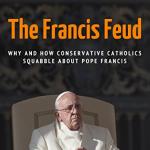
Keating & "The Francis Feud": Six Errors Documented
Next Post

June 3, 2018 Keating & Double Standards on "Traditionalist" Labeling
Browse Our Archives
Select a Category & Last Things About Me Anti-Catholicism Atheism & Agnosticism Baptism and Sacramentalism Bible and Tradition Blessed Virgin Mary Books by Dave Armstrong C. S. Lewis Calvinism & General Protestantism Catholic Apologetics Catholic Apologists Catholic conversion Catholic converts Christmas Church (Ecclesiology) Church History Conversion and Converts Development of Doctrine Eastern Orthodoxy Ecumenism & Christian Unity Eucharist & Liturgy Fathers of the Church French Translations G. K. Chesterton Hell Hell & Satan Hell & Satan & Last Things Heresies & Comparative Religion Holistic Health Inquisition & Crusades & Scandals James White Jews & Judaism & Old Testament John Calvin John Henry Newman Liberal / Modernist Theology Life Issues Literary Resume Lutheranism Mariology Martin Luther Music Orthodoxy Papacy & Infallibility Personal Page Philosophy & Science Political & Ethical & Moral Issues Protestant Persecution & Intolerance Protestantism Purgatory Purgatory & Penance Romantic & Imaginative Theology Saints & Purgatory & Penance Salvation Salvation & Justification Satan & Last Things Sexuality and Gender Issues Spanish Translations Traditionalism vs. Radical Catholic Reactionaries Traducciones al español / tradução para português Trinitarianism & Christology Uncategorized Videos
Select a Month October 2026 September 2026 August 2026 July 2026 June 2026 May 2026 April 2026 March 2026 February 2026 January 2026 December 2025 November 2025 October 2025 September 2025 August 2025 July 2025 June 2025 May 2025 April 2025 March 2025 February 2025 January 2025 December 2024 November 2024 October 2024 September 2024 August 2024 July 2024 June 2024 May 2024 April 2024 March 2024 February 2024 January 2024 December 2023 November 2023 October 2023 September 2023 August 2023 July 2023 June 2023 May 2023 April 2023 March 2023 February 2023 January 2023 December 2022 November 2022 October 2022 September 2022 August 2022 July 2022 June 2022 May 2022 April 2022 March 2022 February 2022 January 2022 December 2021 November 2021 October 2021 September 2021 August 2021 July 2021 June 2021 May 2021 April 2021 March 2021 February 2021 January 2021 December 2020 November 2020 October 2020 September 2020 August 2020 July 2020 June 2020 May 2020 April 2020 March 2020 February 2020 January 2020 December 2019 November 2019 October 2019 September 2019 August 2019 July 2019 June 2019 May 2019 April 2019 March 2019 February 2019 January 2019 December 2018 November 2018 October 2018 September 2018 August 2018 July 2018 June 2018 May 2018 April 2018 March 2018 February 2018 January 2018 December 2017 November 2017 October 2017 September 2017 August 2017 July 2017 June 2017 May 2017 April 2017 March 2017 February 2017 January 2017 December 2016 November 2016 October 2016 September 2016 August 2016 July 2016 June 2016 May 2016 April 2016 March 2016 February 2016 January 2016 December 2015 November 2015 October 2015 September 2015 August 2015 July 2015 June 2015 May 2015 April 2015 March 2015 February 2015 January 2015 December 2014 November 2014 October 2014 September 2014 August 2014 July 2014 June 2014 April 2014 March 2014 February 2014 January 2014 December 2013 November 2013 October 2013 September 2013 August 2013 July 2013 June 2013 April 2013 March 2013 February 2013 January 2013 December 2012 November 2012 October 2012 September 2012 August 2012 July 2012 June 2012 May 2012 April 2012 March 2012 February 2012 January 2012 December 2011 November 2011 October 2011 September 2011 August 2011 July 2011 June 2011 April 2011 March 2011 February 2011 October 2010 September 2010 August 2010 July 2010 April 2010 March 2010 December 2009 October 2009 August 2009 July 2009 June 2009 May 2009 March 2009 February 2009 October 2008 September 2008 April 2008 March 2008 February 2008 January 2008 December 2007 November 2007 October 2007 May 2007 March 2007 February 2007 January 2007 November 2006 October 2006 September 2006 August 2006 July 2006 June 2006 May 2006 April 2006 March 2006 February 2006 October 2005 June 2005 April 2005 February 2005 July 2004 May 2004 April 2004
Follow Us!
TAKE THE
Religious Wisdom Quiz
Who was the strongest man mentioned in the Bible?
Select your answer to see how you score.
David Saul Goliath Samson
Books by This Author Books by Dave Armstrong
Related posts from Biblical Evidence for Catholicism

On Protestant Explanations of Catholic Conversion
Biblical Evidence for Catholicism
C. S. Lewis: More Evidences of Anti-Catholic Prejudice
Biblical Evidence for Catholicism

C. S. Lewis On Why He Never Became...
Biblical Evidence for Catholicism
Reply to Gavin Ortlund: Confession & Authority
Biblical Evidence for Catholicism
TRENDING AT PATHEOS Catholic

The Sermon on the Mount, Part I: Matthew...
The Sermon on the Mount, Part I (Matthew 4:12-5:12) St. Matthew moves...

What's up from Crossway: Reviewing some of their latest A few weeks...

Janie Learns the Way of the Cross: A...
Teaching children about Jesus' Passion can be challenging. Many parents and educators...

Looking For Good Catholic Writing - October 2026
He alone extends the heavens, and he walks upon the waves of...

In "Irreplaceable," our book on vocation and technology, Trevor Sutton and I...

I was strolling through the top floor of the brand new Parthenon...
view all Catholic blogs
Ad-Free & Subscriber Log-In Subscription Support
- About Us
- 2026 Calendar
- Videos
- Podcasts
- Library of World Religions
- Faith In Media Tracker
- Advertise With Us
- Write for Us
- Privacy Policy
- Terms of Service
- Do Not Sell My Data
- Contact Us
- Radiant Digital
- Manage Newsletter Subscriptions
- Unsubscribe From Notifications
- Sitemap
Copyright 2008-2026, Patheos. All rights reserved.
Subscription Support Ad-Free & Subscriber Log-In
Follow Patheos