
BuddhistCatholicContemplativeEvangelicalGeneral ChristianHinduJewishLatter-day SaintMuslimNew VisionsProgressive Christian
Beliefs
- Buddhist
- Catholic
- Contemplative
- Evangelical
- General Christian
- Hindu
- Jewish
- Latter-day Saint
- More Voices
- Muslim
- New Visions
- Pagan
- Progressive Christian
Topics
- Religion News
- Food and Religion
- Sports and Religion
- Religious Art
- Religious Music and Entertainment
- Religious Events
- History and Religion
- Style and Religion
- Politics and Religion
- Women in Religion
- Recreation Outdoors and Religion
- Business Finance and Religion
- Careers Workplace and Religion
- Education and Religion
- Family Parenting and Religion
- Health Fitness and Religion
- Home and Religion
- Relationships and Religion
- Technology and Religion
- Travel and Religion
Columnists
- Buddhist Columnists
- Business Finance and Religion Columnists
- Careers Workplace and Religion Columnists
- Catholic Columnists
- Contemplative Columnists
- Education and Religion Columnists
- Evangelists Columnists
- Family Parenting and Religion Columnists
- General Christian Columnists
- Health Fitness and Religion Columnists
- Hindu Columnists
- History and Religion Columnists
- Home and Religion Columnists
- Jewish Columnists
- More Voices Columnists
- Latter Day Columnists
- Muslim Columnists
- New Visions Columnists
- Nonreligious Columnists
- Pagan Columnists
- Politics and Religion Columnists
- Progressive Columnists
- Recreation Outdoors and Religion Columnists
- Relationships and Religion Columnists
- Religion News Columnists
- Religious Art Columnists
- Religious Events Columnists
- Religious Music and Entertainment Columnists
- Sports and Religion Columnists
- Style and Religion Columnists
- Technology and Religion Columnists
- Travel and Religion Columnists
- Women in Religion Columnists
Resource Library
- 2026 Calendar
- Library of World Religions
- The 100 Most Holy Places on Earth
- Patheos Answers
- Podcasts
- Videos
- Faith Leaders Database
- Anglican Episcopalian
- Bahai
- Baptist
- Buddhism
- Christianity
- Confucianism
- Eastern Orthodoxy
- Hinduism
- Holiness and Pentecostal
- ISKCON
- Islam
- Judaism
- Lutheran
- Methodist
- The Church of Jesus Christ of Latter-day Saints
- New Age
- Paganism
- Presbytarian and Reformed
- Protestantism
- Religion Behind the Scenes
- Roman Catholic
- Scientology
- Shia Islam
- Sikhism
- Sufism
- Sunni Islam
- Taoism
- Zen
- See all religions
Research Tools
 Ad-Free & Subscriber Log-In Subscription Support
Ad-Free & Subscriber Log-In Subscription Support
Follow Patheos 

- Trending:
- Forgiveness
- |
- Marriage
- |
- Consciousness
- |
- Death Penalty
- |
- Election
- |
- Halloween

-
About
-
Catholic Apologetics
-
Church History
-
Great Apologists
-
Christian Worldview
-
Protestantism & Misc.
- Home
- Catholic
- History and Religion
- “Altar”: Inconsistent Protestant Use of the Word
“Altar”: Inconsistent Protestant Use of the Word
Last updated on: June 12, 2018 at 3:17 pm by Dave Armstrong
“Altar”: Inconsistent Protestant Use of the Word 2018-06-12T15:17:44-04:00 Dave Armstrong
Patheos Explore the world's faith through different perspectives on religion and spirituality! Patheos has the views of the prevalent religions and spiritualities of the world.
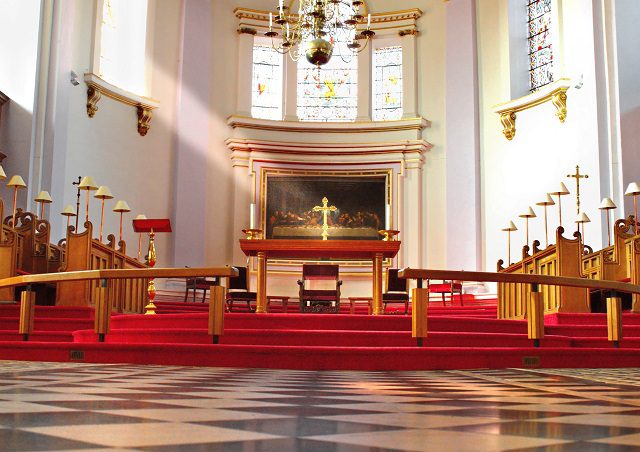
A pulpit is not an altar; it’s simply a table for sermon notes and Bibles. The front of the interior of a Protestant church is not an altar, either.
As an evangelical (from 1977-1990), I myself had little or no sense of the “altar” as a sacred place. I remember making arguments against Catholic friends that there was no such thing: that every place is equally sacred, because it is all God’s creation. The terminology of “altar call” is a remnant of Catholicism.
If one thinks all places and spaces are equally sacred, then of course, the front of a church would be included in that. But this misses the point. God is omnipresent, too, but it doesn’t follow that He is not present in a more profound way in the Eucharist and in a eucharistic chapel. Catholics believe in this sense of particularly sacred space precisely because we believe in the Real Presence and eucharistic adoration, and the Sacrifice of the Mass. The latter was vehemently rejected by all Protestants, save for a very few high Anglicans.
That is what “altar” — literally speaking, is about. It hearkens back to the Old Testament sacrificial system, Jesus as the Lamb of God, the table of the Lord (vs. the table of demons: St. Paul). Once that goes, the notion of “altar” is gutted. “Altar” doesn’t simply mean the place in front of the church where the pastor gives his sermon or where (in some churches) people come up to devote themselves to the Lord.
It’s much more than that. The term is still often used, as a carryover from Catholicism, but I think it is unfortunate because it entails a radical redefinition of what the word has historically meant.
It doesn’t follow that we are saying that no Protestants think anything is sacred, etc. No! Of course not. I wasn’t of that mind, and I dare say that few Catholic converts from Protestantism ever were, either. That’s not the point. Protestants believe in sacred space when they go to Jerusalem. They wouldn’t consider desecrating any of the holy sites. But in rejecting the traditional notion of the Sacrifice of the Mass, the altar goes, too, even if it is still called that.
Continuing Real Presence of Christ in a Catholic Church is why that space is sacred; why we genuflect; why we adore Christ in eucharistic adoration; why the sanctuary in front of the altar is a limited area during Mass, and treated with great reverence at all times.
That is not the case even in churches where the Real Presence is believed (traditional Lutherans and Anglicans), because they think the Presence ceases as soon as the service is over or after everyone receives communion. Protestants will respect the sanctuary area of their church but it is in a different sense; it’s not because they think Jesus is truly present there in a very special way. He’s only present in the sense that He is omnipresent in His Divine Nature. Since that applies to every place on earth and the universe, there is not all that much difference in the front of a church.
We see the Protestant aversion to altars in the sense I have described in, for example, John Calvin, where he writes “we know that the altars do cease, the sacrifices are abolished, whereof there was some use in time of the law . . . ”
There is no question that the Calvinist tradition (out of which large portions of the Baptist tradition is derived) scorned altars, and acted consistently insofar as altars and other Catholic items were often destroyed by Calvinist iconoclasts. This was true in the church in Geneva where Calvin preached (St. Pierre or St. Peter). Hence a web page about the church noted:
The Catholic cathedral of St. Peter became a Protestant church in 1536. John Calvin preached here from 1536 to 1564, and the cathedral became the guiding center of Protestantism. Like reformers all over Europe, Calvin’s followers stripped Geneva’s cathedral of its altars, statues, paintings and furniture. Only the stained glass windows remained. . . .
The nave is generally austere but warm, with a pleasing mix of Romanesque and Gothic architecture. The austerity is due to the former cathedral’s transformation into a Protestant Church in 1536. The Calvinists had little tolerance for religious images and any kind of excess, so they destroyed nearly everything but the bare architecture and whitewashed over the murals.
Fortunately, there were a few survivors of all this destruction – the stained glass in the chancel and the wonderful Romanesque capitals in the nave, which depict both human figures and a variety of mythical creatures.
The Lutherans didn’t do this. But the Calvinists did because they were iconoclasts, and part of that was considering an altar an idolatrous remnant of Catholicism. And that is because Catholics believed in the Real Presence and the Sacrifice of the Mass.
In an article about Calvin’s influence on the English “Reformation”, the following appears:
Add to this, that, according to the said Heylyn, the order for removing altars, and placing communion tables in their room, was chiefly owing to the influence of Calvin. “The great business of this year (1550) was the taking down of altars in many places, by public authority: which, in some few, had formerly been pulled down by the irregular forwardness of the common people. The principal motive whereunto was, in the first place, the opinion of some dislikes which had been taken by Calvin against the (first) liturgy.”
I even found a Baptist online who agrees exactly with what I am saying about how most Protestants view an “altar” in the full Catholic sense:
Baptist Altar-ations
In his post ‘Fads and Fixtures: The Seven Deadly Trappings of Evangelicalism’, Joe Carter writes that one of the fixtures he finds troubling is the altar call. While I too find the altar call methodology troubling, this brings up a larger question in my mind for my own denomination:
“Why do so many Baptist churches refer to the front of the church as the altar?
I’ve heard this terminology used in countless Baptist churches, even from pastors who should know better. The last time I checked, transubstantiation was not on any Baptist confessions of faith that I know of. Baptists believe that Christ was sacrificed once for all. In the Lords Supper Christ is not continually sacrificed, as Roman Catholics, the Eastern Orthodox, and others believe. We don’t burn offerings, and I haven’t really ever seen any kind of elevated structure other than a pulpit.
Its clear that in Baptist practice, the term altar has become synonymous with the front of the church sanctuary, but why do we retain the term? Were Baptists, after all. We don’t do altars. Can any of you more studious church historians enlighten me?
The Baptist view, along with that of many other evangelicals, is that since Christ was sacrificed once, it does not need to be re-presented, as you say. His sacrifice was presented to us once for the ages. In our view, this re-presentation is akin to re-sacrifice. After all, we would argue, why is there a need for an altar if there is no sacrifice?
Baptist Ken Blue makes basically the same point:
Having been saved and reared in Baptist churches all my life, it never occurred to me that much of what we do is steeped in tradition. We have borrowed these from Judaism and the Catholic Church. One of these is the so-called altar.
***
(originally 7-31-10)
Photo credit: [public domain / Pixnio.com]
***
Previous Post

June 12, 2018
The Problem of Evil: Dialogue with an Atheist
Next Post

June 13, 2018 Ontological Argument for God's Existence: A Survey
Browse Our Archives
Select a Category & Last Things About Me Anti-Catholicism Atheism & Agnosticism Baptism and Sacramentalism Bible and Tradition Blessed Virgin Mary Books by Dave Armstrong C. S. Lewis Calvinism & General Protestantism Catholic Apologetics Catholic Apologists Catholic conversion Catholic converts Christmas Church (Ecclesiology) Church History Conversion and Converts Development of Doctrine Eastern Orthodoxy Ecumenism & Christian Unity Eucharist & Liturgy Fathers of the Church French Translations G. K. Chesterton Hell Hell & Satan Hell & Satan & Last Things Heresies & Comparative Religion Holistic Health Inquisition & Crusades & Scandals James White Jews & Judaism & Old Testament John Calvin John Henry Newman Liberal / Modernist Theology Life Issues Literary Resume Lutheranism Mariology Martin Luther Music Orthodoxy Papacy & Infallibility Personal Page Philosophy & Science Political & Ethical & Moral Issues Protestant Persecution & Intolerance Protestantism Purgatory Purgatory & Penance Romantic & Imaginative Theology Saints & Purgatory & Penance Salvation Salvation & Justification Satan & Last Things Sexuality and Gender Issues Spanish Translations Traditionalism vs. Radical Catholic Reactionaries Traducciones al español / tradução para português Trinitarianism & Christology Uncategorized Videos
Select a Month October 2026 September 2026 August 2026 July 2026 June 2026 May 2026 April 2026 March 2026 February 2026 January 2026 December 2025 November 2025 October 2025 September 2025 August 2025 July 2025 June 2025 May 2025 April 2025 March 2025 February 2025 January 2025 December 2024 November 2024 October 2024 September 2024 August 2024 July 2024 June 2024 May 2024 April 2024 March 2024 February 2024 January 2024 December 2023 November 2023 October 2023 September 2023 August 2023 July 2023 June 2023 May 2023 April 2023 March 2023 February 2023 January 2023 December 2022 November 2022 October 2022 September 2022 August 2022 July 2022 June 2022 May 2022 April 2022 March 2022 February 2022 January 2022 December 2021 November 2021 October 2021 September 2021 August 2021 July 2021 June 2021 May 2021 April 2021 March 2021 February 2021 January 2021 December 2020 November 2020 October 2020 September 2020 August 2020 July 2020 June 2020 May 2020 April 2020 March 2020 February 2020 January 2020 December 2019 November 2019 October 2019 September 2019 August 2019 July 2019 June 2019 May 2019 April 2019 March 2019 February 2019 January 2019 December 2018 November 2018 October 2018 September 2018 August 2018 July 2018 June 2018 May 2018 April 2018 March 2018 February 2018 January 2018 December 2017 November 2017 October 2017 September 2017 August 2017 July 2017 June 2017 May 2017 April 2017 March 2017 February 2017 January 2017 December 2016 November 2016 October 2016 September 2016 August 2016 July 2016 June 2016 May 2016 April 2016 March 2016 February 2016 January 2016 December 2015 November 2015 October 2015 September 2015 August 2015 July 2015 June 2015 May 2015 April 2015 March 2015 February 2015 January 2015 December 2014 November 2014 October 2014 September 2014 August 2014 July 2014 June 2014 April 2014 March 2014 February 2014 January 2014 December 2013 November 2013 October 2013 September 2013 August 2013 July 2013 June 2013 April 2013 March 2013 February 2013 January 2013 December 2012 November 2012 October 2012 September 2012 August 2012 July 2012 June 2012 May 2012 April 2012 March 2012 February 2012 January 2012 December 2011 November 2011 October 2011 September 2011 August 2011 July 2011 June 2011 April 2011 March 2011 February 2011 October 2010 September 2010 August 2010 July 2010 April 2010 March 2010 December 2009 October 2009 August 2009 July 2009 June 2009 May 2009 March 2009 February 2009 October 2008 September 2008 April 2008 March 2008 February 2008 January 2008 December 2007 November 2007 October 2007 May 2007 March 2007 February 2007 January 2007 November 2006 October 2006 September 2006 August 2006 July 2006 June 2006 May 2006 April 2006 March 2006 February 2006 October 2005 June 2005 April 2005 February 2005 July 2004 May 2004 April 2004
Follow Us!
TAKE THE
Religious Wisdom Quiz
Who asked Jesus, "What is truth?"
Select your answer to see how you score.
Caiaphas Pilate Nicodemus Herod
Books by This Author Books by Dave Armstrong
Related posts from Biblical Evidence for Catholicism

Three More Anti-Catholic Lies About Catholicism (#6-4)
Biblical Evidence for Catholicism

The Mass & Development of Doctrine (vs. Wes...
Biblical Evidence for Catholicism

Miraculous Eucharist (vs. Francois Turretin #4)
Biblical Evidence for Catholicism

God's Presence, the Ark, the Eucharist, & Death
Biblical Evidence for Catholicism
TRENDING AT PATHEOS Catholic

I was strolling through the top floor of the brand new Parthenon...

What Does Gêvâh Mean For Kimberley Guifoyle &...
This week, a lot of the news is focused on Kimberly Guilfoyle....

INNER CIRCLE: Profound Mystery (Of Christ In All...
Ephesians 5:31-32 “For this reason, a man will leave his father and...

Do Not Rejoice When Your Enemy Falls: The...
Turning an execution into a public spectacle is a disturbing expression of...

'The Chosen' S6 Trailer: The Passion Gets Very...
Not many watching 'The Chosen' worry about spoilers, but just because they...

The purpose-driven labor priest
A labor activist reads Rick Warren and it gets me wondering about...
view all Catholic blogs
Ad-Free & Subscriber Log-In Subscription Support
- About Us
- 2026 Calendar
- Videos
- Podcasts
- Library of World Religions
- Faith In Media Tracker
- Advertise With Us
- Write for Us
- Privacy Policy
- Terms of Service
- Do Not Sell My Data
- Contact Us
- Radiant Digital
- Manage Newsletter Subscriptions
- Unsubscribe From Notifications
- Sitemap
Copyright 2008-2026, Patheos. All rights reserved.
Subscription Support Ad-Free & Subscriber Log-In
Follow Patheos