
BuddhistCatholicContemplativeEvangelicalGeneral ChristianHinduJewishLatter-day SaintMuslimNew VisionsProgressive Christian
Beliefs
- Buddhist
- Catholic
- Contemplative
- Evangelical
- General Christian
- Hindu
- Jewish
- Latter-day Saint
- More Voices
- Muslim
- New Visions
- Pagan
- Progressive Christian
Topics
- Religion News
- Food and Religion
- Sports and Religion
- Religious Art
- Religious Music and Entertainment
- Religious Events
- History and Religion
- Style and Religion
- Politics and Religion
- Women in Religion
- Recreation Outdoors and Religion
- Business Finance and Religion
- Careers Workplace and Religion
- Education and Religion
- Family Parenting and Religion
- Health Fitness and Religion
- Home and Religion
- Relationships and Religion
- Technology and Religion
- Travel and Religion
Columnists
- Buddhist Columnists
- Business Finance and Religion Columnists
- Careers Workplace and Religion Columnists
- Catholic Columnists
- Contemplative Columnists
- Education and Religion Columnists
- Evangelists Columnists
- Family Parenting and Religion Columnists
- General Christian Columnists
- Health Fitness and Religion Columnists
- Hindu Columnists
- History and Religion Columnists
- Home and Religion Columnists
- Jewish Columnists
- More Voices Columnists
- Latter Day Columnists
- Muslim Columnists
- New Visions Columnists
- Nonreligious Columnists
- Pagan Columnists
- Politics and Religion Columnists
- Progressive Columnists
- Recreation Outdoors and Religion Columnists
- Relationships and Religion Columnists
- Religion News Columnists
- Religious Art Columnists
- Religious Events Columnists
- Religious Music and Entertainment Columnists
- Sports and Religion Columnists
- Style and Religion Columnists
- Technology and Religion Columnists
- Travel and Religion Columnists
- Women in Religion Columnists
Resource Library
- 2026 Calendar
- Library of World Religions
- The 100 Most Holy Places on Earth
- Patheos Answers
- Podcasts
- Videos
- Faith Leaders Database
- Anglican Episcopalian
- Bahai
- Baptist
- Buddhism
- Christianity
- Confucianism
- Eastern Orthodoxy
- Hinduism
- Holiness and Pentecostal
- ISKCON
- Islam
- Judaism
- Lutheran
- Methodist
- The Church of Jesus Christ of Latter-day Saints
- New Age
- Paganism
- Presbytarian and Reformed
- Protestantism
- Religion Behind the Scenes
- Roman Catholic
- Scientology
- Shia Islam
- Sikhism
- Sufism
- Sunni Islam
- Taoism
- Zen
- See all religions
Research Tools
 Ad-Free & Subscriber Log-In Subscription Support
Ad-Free & Subscriber Log-In Subscription Support
Follow Patheos 

- Trending:
- Forgiveness
- |
- Marriage
- |
- Consciousness
- |
- Death Penalty
- |
- Election
- |
- Halloween

-
About
-
Catholic Apologetics
-
Church History
-
Great Apologists
-
Christian Worldview
-
Protestantism & Misc.
- Home
- Catholic
- History and Religion
- Richard Dawkins’ Outrageous Hypocrisy on Abortion
Richard Dawkins’ Outrageous Hypocrisy on Abortion
Last updated on: June 5, 2026 at 11:52 pm by Dave Armstrong
Richard Dawkins’ Outrageous Hypocrisy on Abortion 2026-06-05T23:52:34-04:00 Dave Armstrong
Patheos Explore the world's faith through different perspectives on religion and spirituality! Patheos has the views of the prevalent religions and spiritualities of the world.
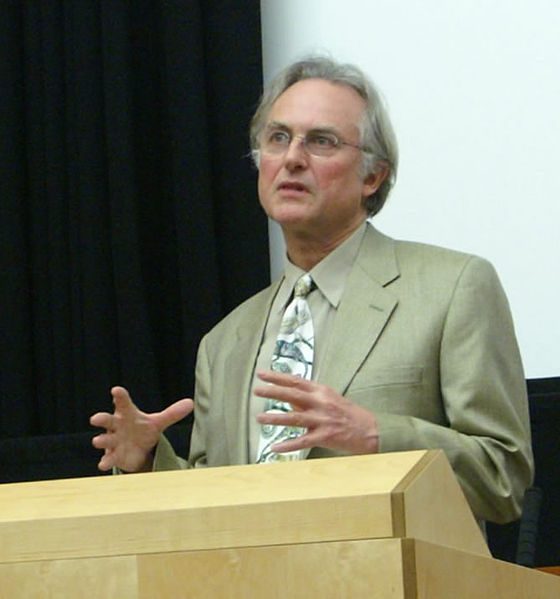
This is one of four critiques of the book, The God Delusion (New York / Boston: Houghton Mifflin Company, 2006), by perhaps the world’s best-known (and most influential?) atheist, the biologist Richard Dawkins (born in 1941). His words will be in blue. Links to the four critiques follow:
Richard Dawkins’ The God Delusion: General Critique
Richard Dawkins’ “Bible Whoppers” Are the “Delusion”
Richard Dawkins: D- Grade for Science & Christianity
Richard Dawkins’ Outrageous Hypocrisy on Abortion
***
Richard Dawkins informs us how compassionate secular (including atheist) liberals are. They are “nice liberal people” who “cannot bear suffering and cruelty” (p. 328 in the hardcover edition, as throughout). Because of this compassion, Dawkins is “scandalized” by “victim[s]” of traditional “ritual sacrifice” of human beings (p. 327). He approvingly cites psychologist Nicholas Humphrey, decrying this type of “act of ritual murder: the murder of a dependent child by a group of stupid, puffed up, superstitious, ignorant old men” (Humphrey’s words: pp. 327-328). Dawkins waxes indignant over this outrage:
Again, the decent liberal reader may feel a twinge of unease. Immoral by our standards, certainly, and stupid, . . .
The Inca priests cannot be blamed for their ignorance . . . But they can be blamed for foisting their own beliefs on a child . . . (p. 328)
Dawkins provides for us a mini atheist manifesto on the preciousness of life: “luck” being the atheist equivalent of “blessing” and/or perhaps also “grace”. It would be genuinely moving if we could only forget the multiple millions that he doesn’t include in it:
In Unweaving the Rainbow I tried to convey how lucky we are to be alive, given that the vast majority of people who could potentially be thrown up by the combinatorial lottery of DNA will in fact never be born. . . .
We are staggeringly lucky to find ourselves in the spotlight. However brief our time in the sun, if we waste a second of it, or complain that it is dull or barren or (like a child) boring, couldn’t this be seen as a callous insult to those unborn trillions who will never even be offered life in the first place? . . . the knowledge that we have only one life should make it all the more precious. The atheist view is correspondingly life-affirming and life-enhancing . . . (p. 361)
Alas, Dawkins seems to be blissfully unaware of the fatal and, to my mind, hyper-cruel and evil diabolical logic inherently involved in such reasoning. The pro-abortion atheist is in favor of the deliberate, legally sanctioned depriving of this “precious” life of preborn children scheduled to be aborted, despite the fact that it is the only life he or she will ever have. There is, of course, no afterlife in the atheist view, and no soul.
Thus, this pitiful creature attempting to emerge from the womb to see the light of day is prevented from the outset from possessing what Dawkins sincerely cherishes as “staggeringly lucky”; that is, this “only one life”: a “precious” life that we all are privileged to have. Is this not a chilling expression of the wickedness of the pro-abortion / anti-life mindset; the culture of death?
Dawkins, in his wisdom and charity, even freely concedes that “Human embryos are examples of human life. Therefore, by absolutist religious lights, abortion is simply wrong: full-fledged murder” (p. 291). Yes it is, but, try as I may, I fail to see why such a view should or would be confined merely to religious folks (by the “internal atheist” reasoning I provided in the preceding paragraph).
Did not Dawkins inform us in the excerpt above that life is so eminently “precious”? Here he includes preborn “human life” in the same category. Thus, logically, this class of “humans” are (or ought) to be included in the class of those in possession of this same human life; who are “staggeringly lucky” etc.
He trapped himself with his own words, by daring to call the preborn child “human.” This is similar to the cognitive dissonance and ludicrous Orwellian self-delusion of the pro-abortion expectant mother, who calls her preborn child (i.e., one she chooses to “want”) a (or “my”) “baby”. Then when she doesn’t want to carry a conceived child to term, she will refuse to call it a “baby.”
Dawkins also (rightly but hypocritically) waxes indignant — twenty pages earlier — over the demotion of various classes of people to sub-human status:
One reason black people and women and, in Nazi Germany, Jews and gypsies have been treated badly is that they were not perceived as fully human. (p. 271)
The “progressive” trend against this sort of outrage and in favor of “a common humanity” was, so Dawkins informs us, derived from “deeply unbiblical ideas that come from biological science, especially evolution” (p. 271). Okay. Materialistic evolution (which forbids God to play any role in it at all, according to Dawkins and atheists generally) fosters respect for life and commonness among all humankind. Wonderful! Ah, but wait! Dawkins utterly contradicts all of this touchy-feely, warm fuzzy Kumbaya love for one and all in the following proclamation:
The granting of uniquely special rights to cells of the species Homo sapiens is hard to reconcile with the fact of evolution. . . .
The evolutionary point is very simple. The humanness of an embryo’s cells cannot confer upon it any absolutely discontinuous moral status. . . .
[E]volutionary continuity shows that there is no absolute distinction. Absolutist moral discrimination is devastatingly undermined by the fact of evolution. (pp. 300-301)
This grotesque” “scientism” mentality then leads to the evil justifying of abortion, and for that matter, to the ritual human sacrifice of born children by the Incas, Aztecs, and many other cultures (though Dawkins seems utterly unaware of that logical consequence of his stated position). Indeed, the Nazis thought it quite justified all that they did, too. They proclaimed themselves (accurately or not) to be social Darwinists all through the Holocaust.
Despite all of these massive self-contradictions and vicious logical circularities, Dawkins bravely weathers on. He protests:
What kind of ethical philosophy is it that condemns every child, even before it is born, to inherit the sin of a remote ancestor? (p. 251)
First of all, he ought to get it right, when venturing into Christian theology. Christians believe that the Fall of Man was a collective one: a rebellion from mankind as a whole; not merely Adam and Eve, whose rebellion is then “attributed” to innocents evermore. This notion is derived from passages such as 1 Corinthians 15:22: “. . . in Adam all die” (RSV). I wrote in my paper, Biblical Evidence for Original Sin:
“In Adam,” not “because” of Adam’s original sin, which gave us a propensity, . . . The Fall is that of the entire human race; we are all in the same boat.
Moreover, this supposed rank injustice and unfairness (that many atheists love to ignorantly carp on and on about) is utterly removed through baptism (via baptismal regeneration), according to Catholicism, Orthodoxy, and many major branches of Protestantism, such as Anglicanism, Methodism, and Lutheranism. My mentor, Fr. John A. Hardon, S. J., one of America’s leading catechists in the 20th century, describes the effects of “baptismal graces” in his Modern Catholic Dictionary:
The supernatural effects of the sacrament of baptism. They are: 1. removal of all guilt of sin, original and personal; 2. removal of all punishment due to sin, temporal and eternal; 3. infusion of sanctifying grace along with the theological virtues of faith, hope, and charity, and the gifts of the Holy Spirit; 4. incorporation into Christ; and 5, entrance into the Mystical Body, which is the Catholic Church; 6. imprinting of the baptismal character, which enables a person to receive the other sacraments, to participate in the priesthood of Christ through the sacred liturgy, and to grow in the likeness of Christ through personal sanctification. Baptism does not remove two effects of original sin, namely concupiscence and bodily mortality. However, it does enable a Christian to be sanctified by his struggle with concupiscence and gives him the title to rising in a glorified body on the last day.
That’s a lot of things! But note especially #1 (bolded portion). Obviously, we understand that atheists don’t believe any of this. But that’s irrelevant if the topic is the alleged injustice of the Christian doctrine of original sin (which is what Dawkins was commenting upon above). Now they are in our realm, talking about our beliefs, not their own. And once they enter into that arena, they are responsible for not distorting beyond recognition what we teach. That’s unethical, and sloppy, crappy scholarship (in some cases, what can only be described as deliberately dishonest “research”). Dawkins simply appears — like multitudes of atheists when it comes to biblical theology — woefully ignorant and misinformed.
Dawkins thunders on the same page 251: “They and all their descendants were banished forever from the Garden of Eden, deprived of the gift of eternal life . . .” Of course this isn’t true. The baptism of infants drastically changes that, and then the way of salvation through the cross of Christ is open to any person who will accept this free grace of God, to heaven and eternal life. Just because atheists and others reject this free grace and the salvation and eternal life that comes through it, is no reason to blame Christianity and God, as if it’s all gloom and doom and hopeless misery, under the wascally wascal arbitrary “tyrant-god” that exists solely in the fanciful and endlessly inventive atheist imagination.
Sorry for the slight digression, but I think we can see that this extreme aversion to original sin (on fallacious grounds) is all the more clueless and out to sea, once we realize what Dawkins believes about the heartless killing of innocent young children: by the hundreds of millions. I paraphrase his own words above, in order to highlight the hypocrisy:
What kind of ethical philosophy is it that condemns every innocent, helpless preborn child whose mother doesn’t want him or her, even before he or she is born, to be the victims of the sin of his or her parents and the abortionist who mercilessly tortures [in most cases, felt] and murders him or her (for profit), and deprives this poor child of the only life he or she will ever have (according to atheist worldview): no afterlife; no life on earth, period?
Which of these two scenarios is more ethical: original sin rightly understood, and the solution to it in Christian theology, or abortion as fully and logically thought through, according to atheist presuppositions about ethics and [nonexistence of] souls and heaven, and murder?
Dawkins goes back and forth throughout the book, seeming to be (at least fleetingly) against cruelty and murder of children here, and utterly indifferent to it there. When he is condemning the biblical and ancient Hebrew accounts from the Old Testament, of course he is all for children not being killed. Sometimes they lose their lives as members of cultures which are being judged by God (which is a long, complex discussion itself, but a perfectly valid one).
Be that as it may, Dawkins condemns these instances of divine wrath and judgment: incensed that Moses “gave orders that all the boy children should be killed” (p. 245) in the case of the Midianites, and commanded the Jews to “utterly destroy” various cultures inhabiting ancient Canaan (see p. 248). This is part of the standard, stock atheist repertoire of endlessly parroted objections to the Bible and to “God” (not the real one, but their gutted / invented version of Him).
It’s very curious and inexplicable, however, that in a volume often given over to documenting various “objectionable” stories from the Old Testament, Dawkins omits — for some reason known only to him — the many vociferous condemnations of child sacrifice in the Bible:
Leviticus 18:21 You shall not give any of your children to devote them by fire to Molech, and so profane the name of your God: I am the LORD.
Leviticus 20:2-3 Say to the people of Israel, Any man of the people of Israel, or of the strangers that sojourn in Israel, who gives any of his children to Molech shall be put to death; the people of the land shall stone him with stones. I myself will set my face against that man, and will cut him off from among his people, because he has given one of his children to Molech, defiling my sanctuary and profaning my holy name.
Deuteronomy 12:31 . . . every abominable thing which the LORD hates they have done for their gods; for they even burn their sons and their daughters in the fire to their gods.
2 Kings 16:2-3 Ahaz was twenty years old when he began to reign, and he reigned sixteen years in Jerusalem. And he did not do what was right in the eyes of the LORD his God, as his father David had done, but he walked in the way of the kings of Israel. He even burned his son as an offering, according to the abominable practices of the nations whom the LORD drove out before the people of Israel.
2 Kings 17:17-18 And they burned their sons and their daughters as offerings, and used divination and sorcery, and sold themselves to do evil in the sight of the LORD, provoking him to anger. Therefore the LORD was very angry with Israel, and removed them out of his sight; none was left but the tribe of Judah only.
2 Kings 23:10 And he defiled To’pheth, which is in the valley of the sons of Hinnom, that no one might burn his son or his daughter as an offering to Molech.
2 Chronicles 28:3 and he burned incense in the valley of the son of Hinnom, and burned his sons as an offering, according to the abominable practices of the nations whom the LORD drove out before the people of Israel.
2 Chronicles 33:6 And he burned his sons as an offering in the valley of the son of Hinnom, and practiced soothsaying and augury and sorcery, and dealt with mediums and with wizards. He did much evil in the sight of the LORD, provoking him to anger.
Psalm 106:36-39 They served their idols, which became a snare to them. They sacrificed their sons and their daughters to the demons; they poured out innocent blood, the blood of their sons and daughters, whom they sacrificed to the idols of Canaan; and the land was polluted with blood. Thus they became unclean by their acts, and played the harlot in their doings.
Jeremiah 7:31-32 And they have built the high place of Topheth, which is in the valley of the son of Hinnom, to burn their sons and their daughters in the fire; which I did not command, nor did it come into my mind. Therefore, behold, the days are coming, says the LORD, when it will no more be called Topheth, or the valley of the son of Hinnom, but the valley of Slaughter: for they will bury in Topheth, because there is no room elsewhere.
Jeremiah 19:5 and have built the high places of Ba’al to burn their sons in the fire as burnt offerings to Ba’al, which I did not command or decree, nor did it come into my mind;
Jeremiah 32:35 They built the high places of Ba’al in the valley of the son of Hinnom, to offer up their sons and daughters to Molech, though I did not command them, nor did it enter into my mind, that they should do this abomination, to cause Judah to sin.
Ezekiel 16:20-21 And you took your sons and your daughters, whom you had borne to me, and these you sacrificed to them to be devoured. Were your harlotries so small a matter that you slaughtered my children and delivered them up as an offering by fire to them?
Ezekiel 16:36 Thus says the Lord GOD, Because your shame was laid bare and your nakedness uncovered in your harlotries with your lovers, and because of all your idols, and because of the blood of your children that you gave to them,
Ezekiel 20:21 When you offer your gifts and sacrifice your sons by fire, you defile yourselves with all your idols to this day. . . .
Ezekiel 20:31 When you offer your gifts and sacrifice your sons by fire, you defile yourselves with all your idols to this day. And shall I be inquired of by you, O house of Israel? As I live, says the Lord GOD, I will not be inquired of by you.
Ezekiel 23:37-39 For they have committed adultery, and blood is upon their hands; with their idols they have committed adultery; and they have even offered up to them for food the sons whom they had borne to me. Moreover this they have done to me: they have defiled my sanctuary on the same day and profaned my sabbaths. For when they had slaughtered their children insacrifice to their idols, on the same day they came into my sanctuary to profane it. And lo, this is what they did in my house.
Wisdom 12:3-6 Those who dwelt of old in thy holy land thou didst hate for their detestable practices, their works of sorcery and unholy rites, their merciless slaughter of children, and their sacrificial feasting on human flesh and blood. These initiates from the midst of a heathen cult, these parents who murder helpless lives, thou didst will to destroy by the hands of our fathers,
See much more about the numerous biblical prohibitions of abortion.
That’s an awful lot of biblical data to be ignorant of, or to deliberately pass over, ain’t it? Moreover, Jesus even compared hell to the child sacrifices that occurred in the valley of Hinnom (aka Gehenna) in Jerusalem (I almost was able to walk through it when I visited in 2014). The New Testament word for eternal hell is Gehenna. Thus, we know that Jesus had in mind what took place in this valley, as a metaphor for hell. In other words, child sacrifice (morally equivalent to abortion) is, in the mind of Jesus, a good description of hell (as I have written about).
At length, we are blessed with Dawkins’ final judgment on this sordid matter of abortion, with its unsavory nature involving profound suffering, that even Dawkins (safely away from its oceans of blood and guts and severed or savagely burned or ripped-apart heads and limbs) is forced to confront and admit as a not-so-nice thing, after all. In his section, “Faith and the Sanctity of Human Life” he opines:
Does the embryo suffer? (Presumably not if it is aborted before it has a nervous system; and even if it is old enough to have a nervous system it surely suffers less than, say, an adult cow in a slaughterhouse.) (p. 293)
And if late-aborted embryos with nervous systems suffer — though all suffering is deplorable — it is not because they are human that they suffer. There is no general reason to suppose that human embryos at any age suffer more than cow or sheep embryos at the same developmental stage. And there is every reason to suppose that all embryos, whether human or not, suffer far less than adult cows or sheep in a slaughterhouse, especially a ritual slaughterhouse where, for religious reasons, they must be fully conscious when their throats are ceremonially cut. (p. 297)
Well, that settles it and makes us all feel so much better! He would go on to inform his readers three pages later that “The humanness of an embryo’s cells cannot confer upon it any absolutely discontinuous moral status.” Right. That comes through loud and clear in Dawkins’ ghastly, emotionally flat, compassion-challenged, and Nazi-like comparisons of the suffering of preborn children to that of cows and sheep in slaughterhouses and “cow or sheep embryos at the same developmental stage.” That makes it all so understandable and justified, doesn’t it? We feel warm all over to be informed of these things.
All of these pitiable creatures being led to slaughter are on the same moral plane, you see. Human babies thus have no moral status that is superior to that of any other creature: be it a sheep, cow, or for that matter, a snail darter or a worm or a tree, or the last mosquito that you swatted. We’re all one big happy family, in the [materialistic] evolutionary community [minus God, of course] of all living things.
So, no big deal. If these babies have to be tortured and murdered (usually due to others’ sin and irresponsibility), we can take solace in the fact that it is no worse than similar experiences of the baby’s cow or sheep brethren. Since we don’t (at least not yet!) talk of murdering sheep; likewise we cannot refer to the murdering of children, who have no inherent, unique value or preciousness among all other beasts (or else their destruction would be forbidden).
It’s all wrapped up in a pretty bow (either blue or pink). This is the wonderful caring world we now inhabit: the secular / atheist Utopia, where one and all are loved and cherished, except for the smallest, most innocent and helpless among us: children in their mothers’ wombs: exponentially far and away the most dangerous place for any human being to ever be.
***
Photo credit: Richard Dawkins, photographed in March 2005 by Christopher G. Street [public domain / Wikimedia Commons]

***
Previous Post

May 21, 2018
Reply to Atheist Seidensticker on Demands for "Evidence"
Next Post

May 22, 2018 Dialogue w Atheist: Jesus, Thor, & "Evidence" for God
Browse Our Archives
Select a Category & Last Things About Me Anti-Catholicism Atheism & Agnosticism Baptism and Sacramentalism Bible and Tradition Blessed Virgin Mary Books by Dave Armstrong C. S. Lewis Calvinism & General Protestantism Catholic Apologetics Catholic Apologists Catholic conversion Catholic converts Christmas Church (Ecclesiology) Church History Conversion and Converts Development of Doctrine Eastern Orthodoxy Ecumenism & Christian Unity Eucharist & Liturgy Fathers of the Church French Translations G. K. Chesterton Hell Hell & Satan Hell & Satan & Last Things Heresies & Comparative Religion Holistic Health Inquisition & Crusades & Scandals James White Jews & Judaism & Old Testament John Calvin John Henry Newman Liberal / Modernist Theology Life Issues Literary Resume Lutheranism Mariology Martin Luther Music Orthodoxy Papacy & Infallibility Personal Page Philosophy & Science Political & Ethical & Moral Issues Protestant Persecution & Intolerance Protestantism Purgatory Purgatory & Penance Romantic & Imaginative Theology Saints & Purgatory & Penance Salvation Salvation & Justification Satan & Last Things Sexuality and Gender Issues Spanish Translations Traditionalism vs. Radical Catholic Reactionaries Traducciones al español / tradução para português Trinitarianism & Christology Uncategorized Videos
Select a Month October 2026 September 2026 August 2026 July 2026 June 2026 May 2026 April 2026 March 2026 February 2026 January 2026 December 2025 November 2025 October 2025 September 2025 August 2025 July 2025 June 2025 May 2025 April 2025 March 2025 February 2025 January 2025 December 2024 November 2024 October 2024 September 2024 August 2024 July 2024 June 2024 May 2024 April 2024 March 2024 February 2024 January 2024 December 2023 November 2023 October 2023 September 2023 August 2023 July 2023 June 2023 May 2023 April 2023 March 2023 February 2023 January 2023 December 2022 November 2022 October 2022 September 2022 August 2022 July 2022 June 2022 May 2022 April 2022 March 2022 February 2022 January 2022 December 2021 November 2021 October 2021 September 2021 August 2021 July 2021 June 2021 May 2021 April 2021 March 2021 February 2021 January 2021 December 2020 November 2020 October 2020 September 2020 August 2020 July 2020 June 2020 May 2020 April 2020 March 2020 February 2020 January 2020 December 2019 November 2019 October 2019 September 2019 August 2019 July 2019 June 2019 May 2019 April 2019 March 2019 February 2019 January 2019 December 2018 November 2018 October 2018 September 2018 August 2018 July 2018 June 2018 May 2018 April 2018 March 2018 February 2018 January 2018 December 2017 November 2017 October 2017 September 2017 August 2017 July 2017 June 2017 May 2017 April 2017 March 2017 February 2017 January 2017 December 2016 November 2016 October 2016 September 2016 August 2016 July 2016 June 2016 May 2016 April 2016 March 2016 February 2016 January 2016 December 2015 November 2015 October 2015 September 2015 August 2015 July 2015 June 2015 May 2015 April 2015 March 2015 February 2015 January 2015 December 2014 November 2014 October 2014 September 2014 August 2014 July 2014 June 2014 April 2014 March 2014 February 2014 January 2014 December 2013 November 2013 October 2013 September 2013 August 2013 July 2013 June 2013 April 2013 March 2013 February 2013 January 2013 December 2012 November 2012 October 2012 September 2012 August 2012 July 2012 June 2012 May 2012 April 2012 March 2012 February 2012 January 2012 December 2011 November 2011 October 2011 September 2011 August 2011 July 2011 June 2011 April 2011 March 2011 February 2011 October 2010 September 2010 August 2010 July 2010 April 2010 March 2010 December 2009 October 2009 August 2009 July 2009 June 2009 May 2009 March 2009 February 2009 October 2008 September 2008 April 2008 March 2008 February 2008 January 2008 December 2007 November 2007 October 2007 May 2007 March 2007 February 2007 January 2007 November 2006 October 2006 September 2006 August 2006 July 2006 June 2006 May 2006 April 2006 March 2006 February 2006 October 2005 June 2005 April 2005 February 2005 July 2004 May 2004 April 2004
Follow Us!
TAKE THE
Religious Wisdom Quiz
Who prayed for rain after a long drought and sent his servant to look seven times?
Select your answer to see how you score.
Elijah Isaiah Samuel Hosea
Books by This Author Books by Dave Armstrong
Related posts from Biblical Evidence for Catholicism

God, Modern Physics, & Dark Energy: An Analogy
Biblical Evidence for Catholicism

General Debate on Christianity with an Atheist
Biblical Evidence for Catholicism

Can Atheists Be Saved? Surprising Biblical Data
Biblical Evidence for Catholicism
Can Atheists Be Saved? YES! (Possibly Some ....
Biblical Evidence for Catholicism
TRENDING AT PATHEOS Catholic

I was strolling through the top floor of the brand new Parthenon...

What Does Gêvâh Mean For Kimberley Guifoyle &...
This week, a lot of the news is focused on Kimberly Guilfoyle....

INNER CIRCLE: Profound Mystery (Of Christ In All...
Ephesians 5:31-32 “For this reason, a man will leave his father and...

Do Not Rejoice When Your Enemy Falls: The...
Turning an execution into a public spectacle is a disturbing expression of...

'The Chosen' S6 Trailer: The Passion Gets Very...
Not many watching 'The Chosen' worry about spoilers, but just because they...

The purpose-driven labor priest
A labor activist reads Rick Warren and it gets me wondering about...
view all Catholic blogs
Ad-Free & Subscriber Log-In Subscription Support
- About Us
- 2026 Calendar
- Videos
- Podcasts
- Library of World Religions
- Faith In Media Tracker
- Advertise With Us
- Write for Us
- Privacy Policy
- Terms of Service
- Do Not Sell My Data
- Contact Us
- Radiant Digital
- Manage Newsletter Subscriptions
- Unsubscribe From Notifications
- Sitemap
Copyright 2008-2026, Patheos. All rights reserved.
Subscription Support Ad-Free & Subscriber Log-In
Follow Patheos