
BuddhistCatholicContemplativeEvangelicalGeneral ChristianHinduJewishLatter-day SaintMuslimNew VisionsProgressive Christian
Beliefs
- Buddhist
- Catholic
- Contemplative
- Evangelical
- General Christian
- Hindu
- Jewish
- Latter-day Saint
- More Voices
- Muslim
- New Visions
- Pagan
- Progressive Christian
Topics
- Religion News
- Food and Religion
- Sports and Religion
- Religious Art
- Religious Music and Entertainment
- Religious Events
- History and Religion
- Style and Religion
- Politics and Religion
- Women in Religion
- Recreation Outdoors and Religion
- Business Finance and Religion
- Careers Workplace and Religion
- Education and Religion
- Family Parenting and Religion
- Health Fitness and Religion
- Home and Religion
- Relationships and Religion
- Technology and Religion
- Travel and Religion
Columnists
- Buddhist Columnists
- Business Finance and Religion Columnists
- Careers Workplace and Religion Columnists
- Catholic Columnists
- Contemplative Columnists
- Education and Religion Columnists
- Evangelists Columnists
- Family Parenting and Religion Columnists
- General Christian Columnists
- Health Fitness and Religion Columnists
- Hindu Columnists
- History and Religion Columnists
- Home and Religion Columnists
- Jewish Columnists
- More Voices Columnists
- Latter Day Columnists
- Muslim Columnists
- New Visions Columnists
- Nonreligious Columnists
- Pagan Columnists
- Politics and Religion Columnists
- Progressive Columnists
- Recreation Outdoors and Religion Columnists
- Relationships and Religion Columnists
- Religion News Columnists
- Religious Art Columnists
- Religious Events Columnists
- Religious Music and Entertainment Columnists
- Sports and Religion Columnists
- Style and Religion Columnists
- Technology and Religion Columnists
- Travel and Religion Columnists
- Women in Religion Columnists
Resource Library
- 2026 Calendar
- Library of World Religions
- The 100 Most Holy Places on Earth
- Patheos Answers
- Podcasts
- Videos
- Faith Leaders Database
- Anglican Episcopalian
- Bahai
- Baptist
- Buddhism
- Christianity
- Confucianism
- Eastern Orthodoxy
- Hinduism
- Holiness and Pentecostal
- ISKCON
- Islam
- Judaism
- Lutheran
- Methodist
- The Church of Jesus Christ of Latter-day Saints
- New Age
- Paganism
- Presbytarian and Reformed
- Protestantism
- Religion Behind the Scenes
- Roman Catholic
- Scientology
- Shia Islam
- Sikhism
- Sufism
- Sunni Islam
- Taoism
- Zen
- See all religions
Research Tools
 Ad-Free & Subscriber Log-In Subscription Support
Ad-Free & Subscriber Log-In Subscription Support
Follow Patheos 

- Trending:
- Forgiveness
- |
- Marriage
- |
- Consciousness
- |
- Death Penalty
- |
- Election
- |
- Halloween

-
About
-
Catholic Apologetics
-
Church History
-
Great Apologists
-
Christian Worldview
-
Protestantism & Misc.
- Home
- Catholic
- History and Religion
- Does God Still Perform Miracles? (Some Evidence)
Does God Still Perform Miracles? (Some Evidence)
Last updated on: June 6, 2026 at 12:35 am by Dave Armstrong
Does God Still Perform Miracles? (Some Evidence) 2026-06-06T00:35:44-04:00 Dave Armstrong
Patheos Explore the world's faith through different perspectives on religion and spirituality! Patheos has the views of the prevalent religions and spiritualities of the world.
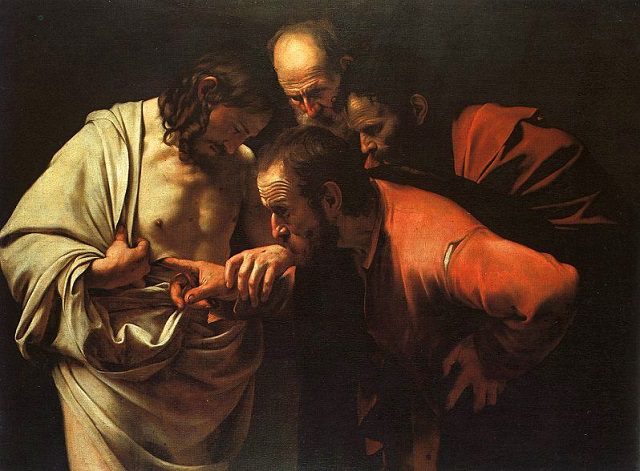
This was an exchange with “Anthrotheist” in one of my comboxes. His words will be in blue.
***
Interesting conversation, engaging topics.
What I find interesting is that the only “evidence” that exists for Christianity is in the past. At best, the most that a modern Christians can honestly say is, “I find the ancient evidences of the existence of God to be compelling.” What I find interesting is that even then, the evidence is that there was a God; the problem nearly every atheist has is that there is no contemporary evidence that there is now a God. Even if there had been gods in the past, none of them have repeated in recent times (that is, since their texts were written or their stories started) any of the extraordinary events that are lauded as having been proof of their existence.
So that would probably be my level of necessary proof: first God would have to show up, as he did with Moses or as he did as Jesus; second, he would have to perform miracles that do not require human assistance for them take place or to be conspicuously visible (again, as he did with Moses and as Jesus) — that is, obviously miraculous independent of human action and in every way imaginable impossible for humans to replicate (parting seas [violating what we understand to be laws of physics], instantly healing the sick and blind [violating every understanding we have of how the human body works], quite clearly dying and then coming back to life [violating how we understand life to work]; these would all work very well).
And of course, my necessary level of proof will probably strike most Christians as me demanding that God perform circus tricks to appease my skepticism. What strikes me is that these (and more) are all things that Christians themselves present as proof of God’s greatness. I’m not asking that he do them for me; I am simply saying that I do not believe in him because he no longer ever does them!
Of course we deny that all miracles have ceased. I would note, for example, the following scientific study of the purported cures at Lourdes, from the Journal of the History of Medicine and Allied Sciences (produced by Oxford University):
“The Lourdes Medical Cures Revisited” (2012).
Conclusions:
The least that can be stated is that exposures to Lourdes and its representations (Lourdes water, mental images, replicas of the grotto, etc.), in a context of prayer, have induced exceptional, usually instantaneous, symptomatic, and at best physical, cures of widely different diseases. Although what follows is regarded by some as a hackneyed concept, any and all scholars of Lourdes have come to agree with one of two equally acceptable—but seemingly conflicting and irreconcilable—points of view on the core issue: are the Lourdes cures a matter of divine intervention or not? Faith is set against science. . . .
After many mental twists and turns, we reached the same conclusions as Carrel some eighty to hundred years ago: “Instead of being a simple place of miracles, of interest only to the pious, Lourdes presents a considerable scientific interest,” and “Although uncommon, the miraculous cures are evidence of somatic and mental processes we do not know.”60 Upping the ante, we dare write that understanding these processes could bring about new and effective therapeutic methods.
The Lourdes cures concern science as well as religion.
Then there are the incorruptible saints: whose bodies are not decaying the way they are supposed to. See an article and book about that.
In my own library I have a book called The Miracles (1976), in which purported cures were examined by a medical doctor. One Amazon review explains: “Dr. Casdorph did a wonderful job medically substantiating the miracle claims of these people including X-rays, bone scans, medical reports and interviews with medical personnel involved in each case. There is no hearsay or second- and third-hand accounts. The evidence stands for itself.”
Other such books exist:
Modern Miraculous Cures – A Documented Account of Miracles and Medicine in the 20th Century (Francois Leuret, 2006)
The Case for Miracles: A Journalist Investigates Evidence for the Supernatural (Lee Strobel, 2018)
The question then becomes, whether a skeptic like you is willing to look into this reputed evidence for continuing miracles: that you say you are open to being convinced of. You either are or you aren’t.
As to the miracles of Jesus, particularly His Resurrection, these can be examined on the basis of standard historiography and the usual demands of courtroom-type evidence. There are good books about that, from the Christian perspective. For example:
The Case for the Resurrection of Jesus (Gary R. Habermas and Michael Licona, 2004)
The Son Rises: Historical Evidence for the Resurrection of Jesus (William Lane Craig, 2000)
The Resurrection of Jesus: A New Historiographical Approach (Michael R. Licona, 2010)
I have compiled lots of papers on historical arguments for Jesus (unfortunately, a lot of the links have changed, though).
For a general philosophical treatment of miracles, C. S. Lewis’ book, Miracles is still one of the best. For miracles in history and further general scholarly treatment, see:
In Defense of Miracles: A Comprehensive Case for God’s Action in History (R. Douglas Geivett & Gary R. Habermas, editors, 1997)
Thank you for the cornucopia of references; I doubt that I will get to them all, but it is always good to have more food for thought.
In response to the brief descriptions you give for the various sources: I include two parts to my proof proposal (which I must make clear, was a quickly formed and ad hoc response to your article) for good reason. Without the perceivable presence of God, even in “human form” as Jesus, all of the miraculous events both in history and occurring in the present are entirely ambiguous regarding their origin. What you appear to assume is the work of the Christian Biblical God, could be claimed with equal validity by any religious group that believes their god/gods/spirits/etc. also perform worldly miracles. Without God’s presence, it could be any supernatural agent or (and I don’t deny this is my expectation) it is nothing more than coincidence, falsely reported or mistakenly understood, falsified, or simply the result of a natural phenomena that is not yet understood. Bacterial infections were curses from God or possession by evil spirits/demons until germ theory was demonstrated to be an accurate (and at least effective) explanation for such illness.
The other part is the need for the miracle to be independent of human intervention, interpretation, or reporting. If the miraculous event had to be put in motion by humans, then we run again into the problem of knowing exactly who or what was responsible for the results. If the events are only found to be miraculous by interpreting a wide scope of related considerations (none of the examples you give here seem to be such, but I’m trying to be reasonably thorough) then both the claim of a miracle and its source are ambiguous. And if the event is only witnessed by a small group of individuals, without any sort of technological recording (and yes, skeptics will expect editing or manipulation; pictures of Bigfoot aren’t compelling to most skeptics either), then you have again the problem of the event’s origin compounded by the potential for malicious fraud or honest mistake.
This is why I also mention events such as the parting of the Red Sea. If a great lake or sea suddenly split in two, with dry land visible at the bottom stretching from one side to the other, it would be visible to thousands first-hand and would be recorded on satellites and on cell-phones and cameras for all to see. Global rainfall, even short of a full-on flood; enough bread to feed people for 40 years literally appearing in the sky out of nowhere and falling to the earth; water spontaneously (and publicly) transforming into wine (preferably on a large scale to avoid the small-reporting-group problems); any of these would be hard or impossible to explain with our current understandings, but would be undeniably miraculous. If God were there and at least demonstrating that such events only take place in his presence, it would be very hard to deny that he was at the very least an amazing entity worthy of respect (and if he showed himself to be benevolent and just, even praise and worship).
You yourself gave as examples of stuff that might sway you: “instantly healing the sick and blind [violating every understanding we have of how the human body works], quite clearly dying and then coming back to life”.
The Lourdes article directly dealt with the first. The incorruptibles are not resurrections, but similar insofar as they are examples of the normal process of bodily decay not occurring. These have to be examined by you. You asked for these sorts of evidences, and I have provided them. If you’re open to the possibility of miracles, then you have a lot of evidence and food for thought right there.
You can posit all sorts of “compelling” miracles that would cause even yourself to believe. It’s one of atheists’ favorite rhetorical / theoretical exercises (they seem to think it is a particularly good argument; I do not). But the catch is that the miracles “demanded” are always of such an extraordinary nature that they are not likely to occur (sea partings; forty days of rain leading to a huge — though not global — flood). Thus the atheist can always say that he hasn’t seen enough compelling evidence; that God ought to do this, that, or the other, and then He could be believed in.
The relevant question of course, is “how much is enough?” And if there is a God, how can He possibly satisfy each individual atheist’s demand for evidence? Obviously, those will differ, and so He can’t possibly fulfill each and every demand. Only God — in the final analysis — would know in the end how much revelation of Himself is sufficient (and, for that matter, how much disbelief in Him is willful and impervious to evidence in the first place).
I suspect that you believe in many inexplicable things discussed in science that are at least as odd and weird, and with less direct evidence: such as a purely materialistic evolution as an “explanation for the origin of the universe, life, and consciousness. In the meantime, I have given you some hard, raw data for the miraculous that can be examined. If it ain’t good enough for you, it ain’t, but even getting you to believe in the occurrence of one miracle would be a huge and momentous achievement. Then you would also have to believe in God, Who performed it, or else hold off for possible future scientific explanations.
I agree, I included examples of miracles that didn’t match my defined terms of proof. That is my mistake, and I apologize.
As for “how much is enough?” I brought up examples such as parting the sea or forty straight days of torrential rain (presumably in violation of every understanding humans have regarding weather patterns and meteorology) not because I am trying to set an impossibly high bar, or because these are things that are outlandishly demanding; these are things that God supposedly has already done. This is totally in his wheelhouse.
Yep; but He is under no obligation to perform them again. For those who believe (with reason) that the Bible is an inspired / accurate account of history, that’s enough. We don’t have to see the same miracles with our own eyes.
My skepticism of God’s existence is largely due to the fact that there are no reliable accounts of such phenomena outside of the Bible, and the brief exchange we have had on another of your posts starts to cover my issues with the reliability of the Bible by itself. Any event such as those would profoundly shake my conviction that God does not exist.
The evidence I gave you is outside the Bible (Lourdes miracles, incorruptibles). I look forward to hearing your appraisal and interpretation of those occurrences. But as you have already said, they won’t convince you of God. But they may convince you that a miracle is possible or at least categorized as “inexplicable by our current scientific understanding” etc.
There remains what I consider to be an essential problem, which is that even if there are miraculous events in the world (and I believe there are events that earn the title) they are no reason to abandon materialism and embrace the supernatural. Miraculous doesn’t necessarily mean outside the possibility of natural forces (narrowing ‘miraculous’ to necessarily exclude natural unguided forces indicates to me a presumed conclusion; as in, I believe miracles are supernatural because I already have made up my mind that God exists and God performs miracles, so anything miraculous must be evidence of God). Your evidence of extraordinary phenomena do not, in themselves or as a collection, lead inexorably to the Biblical God. So at the end of the day, your position appears to require a preexisting belief in the Bible’s God, and my position comes from a (pretty strong) preexisting skepticism of the existence of any god, obviously including the Biblical one.
Yeah, we believe in God prior to seeing miracles, for many reasons. Everyone has a preexisting bias. You come to whatever purported evidence there is already not believing in a God. All anyone can do is seek to have his or her belief-system be as consistent with all available reasoning as possible. But there are many kinds of evidence and sorts of reasoning: not all scientific.
To that end, I find the conversation interesting, but I can’t help but feel like we will never be able to accomplish much more than talking past one another.
Probably not, but at least we’re talking cordially, and both learning something. That is virtually a miracle these days! LOL
You won’t accept that all of the miraculous events in the world could be natural — though presently inexplicable — phenomena, and I would require a miraculous event that defies all possible explanation (and is publicly evident, preferably by anyone who wishes to investigate). I don’t find much compelling reason to change sides; my standpoint led to discovering things like bacteria and radiation, your standpoint attributed the consequence of those things to spirits and curses for millennia (without presenting any reliable means of dealing with them) and would still do so without people on my side of this debate.
This is an inaccurate false dichotomy (to put it mildly). It’s not just your standpoint. It’s mine as well. Christianity was not opposed to science. It was crucial in establishing modern science, and I have documented that 115 distinct scientific fields of inquiry were founded by Christians or at least theists. The atheists of the French “Enlightenment” murdered Lavoisier, the father of chemistry, and several other eminent scientists and philosophers (like Condorcet). We Catholics only put Galileo under house arrest in luxurious palaces. St. Robert Bellarmine had a more modern understanding of the scientific method than Galileo did. Galileo and several other prominent scientists of that time were also neck-deep in astrology: something that both St. Augustine and St. Thomas Aquinas had long since rejected. Galileo held to many other scientific errors as well. I have documented 33 Empiricist Christian Thinkers Before 1000 AD and someone else documented 244 Priest-Scientists. One of the latter was instrumental in formulating the Big Bang theory as now held. See much more on my Philosophy & Science web page and my book on the topic (I’ll send you a free e-book copy if you like).
Even the examples you give demonstrate a profound Christian influence on the advancement of science. I looked up “Bacteria” on Wikipedia. It gives the history of bacteriology and states:
Bacteria were first observed by the Dutch microscopist Antonie van Leeuwenhoek in 1676, using a single-lens microscope of his own design. He then published his observations in a series of letters to the Royal Society of London. Bacteria were Leeuwenhoek’s most remarkable microscopic discovery. They were just at the limit of what his simple lenses could make out and, in one of the most striking hiatuses in the history of science, no one else would see them again for over a century. His observations had also included protozoans which he called animalcules, and his findings were looked at again in the light of the more recent findings of cell theory.
Yep. Leeuwenhoek (as we learn in the article about him) was a “Dutch Reformed” Calvinist.[41] He often referred with reverence to the wonders God designed in making creatures great and small, and believed that his discoveries were merely further proof of the wonder of creation.[42][43]
The last footnote is as follows:
A. Schierbeek, Editor-in-Chief of the Collected Letters of A. van Leeuwenhoek, Measuring the Invisible World: The Life and Works of Antoni van Leeuwenhoek F R S, Abelard-Schuman (London and New York, 1959), QH 31 L55 S3, LC 59-13233. This book contains excerpts of van Leeuwenhoek’s letters and focuses on his priority in several new branches of science, but makes several important references to his spiritual life and motivation.
The same article noted:
[H]e is commonly known as “the Father of Microbiology“, and one of the first microscopists and microbiologists.[5][6] Van Leeuwenhoek is best known for his pioneering work in microscopy and for his contributions toward the establishment of microbiology as a scientific discipline.
You mentioned radiation. Okay, let’s look at that. I checked out Wikipedia on its discovery:
Electromagnetic radiation of wavelengths other than visible light were discovered in the early 19th century. The discovery of infrared radiation is ascribed to William Herschel, the astronomer. Herschel published his results in 1800 before the Royal Society of London. Herschel, like Ritter, used a prism to refract light from the Sun and detected the infrared (beyond the red part of the spectrum), through an increase in the temperature recorded by a thermometer.
In 1801, the German physicist Johann Wilhelm Ritter made the discovery of ultraviolet by noting that the rays from a prism darkened silver chloride preparations more quickly than violet light. Ritter’s experiments were an early precursor to what would become photography. Ritter noted that the UV rays were capable of causing chemical reactions.
The first radio waves detected were not from a natural source, but were produced deliberately and artificially by the German scientist Heinrich Hertz in 1887, using electrical circuits calculated to produce oscillations in the radio frequency range, following formulas suggested by the equations of James Clerk Maxwell.
Herschel and Hertz were both Lutherans. Ritter was the son of a Protestant pastor. Maxwell’s strong Christian views are well-known. Yet you want to act as if your (“my”) standpoint led to these two discoveries, rather than it being quite consistent with Christianity, since the ones who did it were Christians, and modern science was a thoroughly Christian enterprise. It’s every bit as much my heritage as yours, if not much more so.
I am curious though; do you believe that I am going to suffer eternally in Hell for being skeptical of a God who could prove himself to the world but continuously chooses not to?
I have no idea. I have written about how atheists can possibly be saved, and are not automatically “evil”, and about the distinction in the New Testament between “God-Rejecters vs. Open-Minded Agnostics”. Only God knows your heart, and it’s not for me or anyone else to say what your eternal destiny is. We simply don;t know. My Catholic Church does not speculate (let alone proclaim) who is in hell (with the possible exception of Judas).
***
Photo credit: The Incredulity of Saint Thomas (1602), by Caravaggio (1671-1610) [public domain / Wikimedia Commons]

***
Previous Post

May 26, 2018
Biblical Interpretation & Clarity: Dialogue w an Atheist
Next Post

May 28, 2018 Holy Trinity: Some Analogies to Help Us Comprehend
Browse Our Archives
Select a Category & Last Things About Me Anti-Catholicism Atheism & Agnosticism Baptism and Sacramentalism Bible and Tradition Blessed Virgin Mary Books by Dave Armstrong C. S. Lewis Calvinism & General Protestantism Catholic Apologetics Catholic Apologists Catholic conversion Catholic converts Christmas Church (Ecclesiology) Church History Conversion and Converts Development of Doctrine Eastern Orthodoxy Ecumenism & Christian Unity Eucharist & Liturgy Fathers of the Church French Translations G. K. Chesterton Hell Hell & Satan Hell & Satan & Last Things Heresies & Comparative Religion Holistic Health Inquisition & Crusades & Scandals James White Jews & Judaism & Old Testament John Calvin John Henry Newman Liberal / Modernist Theology Life Issues Literary Resume Lutheranism Mariology Martin Luther Music Orthodoxy Papacy & Infallibility Personal Page Philosophy & Science Political & Ethical & Moral Issues Protestant Persecution & Intolerance Protestantism Purgatory Purgatory & Penance Romantic & Imaginative Theology Saints & Purgatory & Penance Salvation Salvation & Justification Satan & Last Things Sexuality and Gender Issues Spanish Translations Traditionalism vs. Radical Catholic Reactionaries Traducciones al español / tradução para português Trinitarianism & Christology Uncategorized Videos
Select a Month October 2026 September 2026 August 2026 July 2026 June 2026 May 2026 April 2026 March 2026 February 2026 January 2026 December 2025 November 2025 October 2025 September 2025 August 2025 July 2025 June 2025 May 2025 April 2025 March 2025 February 2025 January 2025 December 2024 November 2024 October 2024 September 2024 August 2024 July 2024 June 2024 May 2024 April 2024 March 2024 February 2024 January 2024 December 2023 November 2023 October 2023 September 2023 August 2023 July 2023 June 2023 May 2023 April 2023 March 2023 February 2023 January 2023 December 2022 November 2022 October 2022 September 2022 August 2022 July 2022 June 2022 May 2022 April 2022 March 2022 February 2022 January 2022 December 2021 November 2021 October 2021 September 2021 August 2021 July 2021 June 2021 May 2021 April 2021 March 2021 February 2021 January 2021 December 2020 November 2020 October 2020 September 2020 August 2020 July 2020 June 2020 May 2020 April 2020 March 2020 February 2020 January 2020 December 2019 November 2019 October 2019 September 2019 August 2019 July 2019 June 2019 May 2019 April 2019 March 2019 February 2019 January 2019 December 2018 November 2018 October 2018 September 2018 August 2018 July 2018 June 2018 May 2018 April 2018 March 2018 February 2018 January 2018 December 2017 November 2017 October 2017 September 2017 August 2017 July 2017 June 2017 May 2017 April 2017 March 2017 February 2017 January 2017 December 2016 November 2016 October 2016 September 2016 August 2016 July 2016 June 2016 May 2016 April 2016 March 2016 February 2016 January 2016 December 2015 November 2015 October 2015 September 2015 August 2015 July 2015 June 2015 May 2015 April 2015 March 2015 February 2015 January 2015 December 2014 November 2014 October 2014 September 2014 August 2014 July 2014 June 2014 April 2014 March 2014 February 2014 January 2014 December 2013 November 2013 October 2013 September 2013 August 2013 July 2013 June 2013 April 2013 March 2013 February 2013 January 2013 December 2012 November 2012 October 2012 September 2012 August 2012 July 2012 June 2012 May 2012 April 2012 March 2012 February 2012 January 2012 December 2011 November 2011 October 2011 September 2011 August 2011 July 2011 June 2011 April 2011 March 2011 February 2011 October 2010 September 2010 August 2010 July 2010 April 2010 March 2010 December 2009 October 2009 August 2009 July 2009 June 2009 May 2009 March 2009 February 2009 October 2008 September 2008 April 2008 March 2008 February 2008 January 2008 December 2007 November 2007 October 2007 May 2007 March 2007 February 2007 January 2007 November 2006 October 2006 September 2006 August 2006 July 2006 June 2006 May 2006 April 2006 March 2006 February 2006 October 2005 June 2005 April 2005 February 2005 July 2004 May 2004 April 2004
Follow Us!
TAKE THE
Religious Wisdom Quiz
Who was Jacob's first wife?
Select your answer to see how you score.
Rachel Dinah Leah Rebekah
Books by This Author Books by Dave Armstrong
Related posts from Biblical Evidence for Catholicism

God, Modern Physics, & Dark Energy: An Analogy
Biblical Evidence for Catholicism

General Debate on Christianity with an Atheist
Biblical Evidence for Catholicism

Parting of the Red Sea & Lake Erie...
Biblical Evidence for Catholicism
Big Plans for Catholic Bible Highlights in 2026!
Biblical Evidence for Catholicism
TRENDING AT PATHEOS Catholic

The Sermon on the Mount, Part I: Matthew...
The Sermon on the Mount, Part I (Matthew 4:12-5:12) St. Matthew moves...

What's up from Crossway: Reviewing some of their latest A few weeks...

Janie Learns the Way of the Cross: A...
Teaching children about Jesus' Passion can be challenging. Many parents and educators...

Looking For Good Catholic Writing - October 2026
He alone extends the heavens, and he walks upon the waves of...

In "Irreplaceable," our book on vocation and technology, Trevor Sutton and I...

I was strolling through the top floor of the brand new Parthenon...
view all Catholic blogs
Ad-Free & Subscriber Log-In Subscription Support
- About Us
- 2026 Calendar
- Videos
- Podcasts
- Library of World Religions
- Faith In Media Tracker
- Advertise With Us
- Write for Us
- Privacy Policy
- Terms of Service
- Do Not Sell My Data
- Contact Us
- Radiant Digital
- Manage Newsletter Subscriptions
- Unsubscribe From Notifications
- Sitemap
Copyright 2008-2026, Patheos. All rights reserved.
Subscription Support Ad-Free & Subscriber Log-In
Follow Patheos