
BuddhistCatholicContemplativeEvangelicalGeneral ChristianHinduJewishLatter-day SaintMuslimNew VisionsProgressive Christian
Beliefs
- Buddhist
- Catholic
- Contemplative
- Evangelical
- General Christian
- Hindu
- Jewish
- Latter-day Saint
- More Voices
- Muslim
- New Visions
- Pagan
- Progressive Christian
Topics
- Religion News
- Food and Religion
- Sports and Religion
- Religious Art
- Religious Music and Entertainment
- Religious Events
- History and Religion
- Style and Religion
- Politics and Religion
- Women in Religion
- Recreation Outdoors and Religion
- Business Finance and Religion
- Careers Workplace and Religion
- Education and Religion
- Family Parenting and Religion
- Health Fitness and Religion
- Home and Religion
- Relationships and Religion
- Technology and Religion
- Travel and Religion
Columnists
- Buddhist Columnists
- Business Finance and Religion Columnists
- Careers Workplace and Religion Columnists
- Catholic Columnists
- Contemplative Columnists
- Education and Religion Columnists
- Evangelists Columnists
- Family Parenting and Religion Columnists
- General Christian Columnists
- Health Fitness and Religion Columnists
- Hindu Columnists
- History and Religion Columnists
- Home and Religion Columnists
- Jewish Columnists
- More Voices Columnists
- Latter Day Columnists
- Muslim Columnists
- New Visions Columnists
- Nonreligious Columnists
- Pagan Columnists
- Politics and Religion Columnists
- Progressive Columnists
- Recreation Outdoors and Religion Columnists
- Relationships and Religion Columnists
- Religion News Columnists
- Religious Art Columnists
- Religious Events Columnists
- Religious Music and Entertainment Columnists
- Sports and Religion Columnists
- Style and Religion Columnists
- Technology and Religion Columnists
- Travel and Religion Columnists
- Women in Religion Columnists
Resource Library
- 2026 Calendar
- Library of World Religions
- The 100 Most Holy Places on Earth
- Patheos Answers
- Podcasts
- Videos
- Faith Leaders Database
- Anglican Episcopalian
- Bahai
- Baptist
- Buddhism
- Christianity
- Confucianism
- Eastern Orthodoxy
- Hinduism
- Holiness and Pentecostal
- ISKCON
- Islam
- Judaism
- Lutheran
- Methodist
- The Church of Jesus Christ of Latter-day Saints
- New Age
- Paganism
- Presbytarian and Reformed
- Protestantism
- Religion Behind the Scenes
- Roman Catholic
- Scientology
- Shia Islam
- Sikhism
- Sufism
- Sunni Islam
- Taoism
- Zen
- See all religions
Research Tools
 Ad-Free & Subscriber Log-In Subscription Support
Ad-Free & Subscriber Log-In Subscription Support
Follow Patheos 

- Trending:
- Forgiveness
- |
- Marriage
- |
- Consciousness
- |
- Death Penalty
- |
- Election
- |
- Halloween

-
About
-
Catholic Apologetics
-
Church History
-
Great Apologists
-
Christian Worldview
-
Protestantism & Misc.
- Home
- Catholic
- History and Religion
- I Coined “Reactionary” [Catholic], Not Michael Voris
I Coined “Reactionary” [Catholic], Not Michael Voris
Last updated on: February 1, 2018 at 12:22 pm by Dave Armstrong
I Coined “Reactionary” [Catholic], Not Michael Voris 2018-02-01T12:22:16-04:00 Dave Armstrong
Patheos Explore the world's faith through different perspectives on religion and spirituality! Patheos has the views of the prevalent religions and spiritualities of the world.
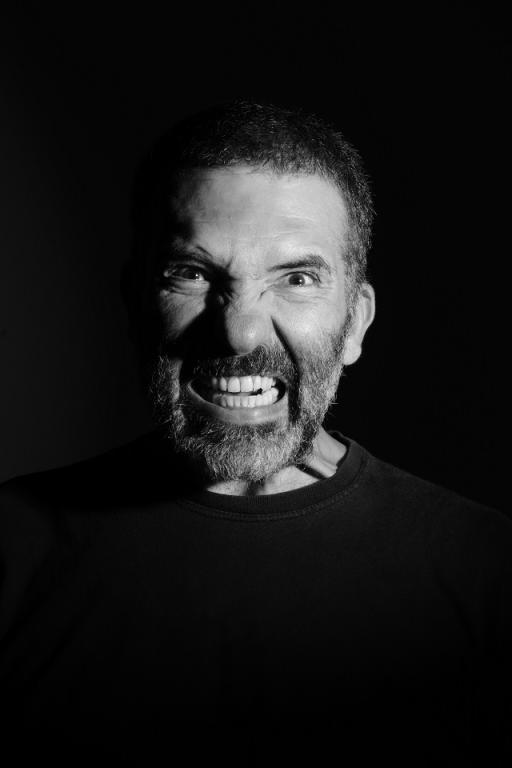
I coined the term, “Radical Catholic reactionary” on 3 August 2013.
“Daniel” wrote (underneath a Chris Ferrara post of 12-31-17 that trashed myself and Karl Keating): “I think Michael Voris got the credit in using the Communist term “reactionary” in describing all faithful Catholics who refuse to follow the teachings of Francis so now all Novus Ordo Catholics want to be like Voris.”
Not correct. I was the one who coined the term, “Radical Catholic reactionary.” It was on 3 August 2013. Although Pope Francis was pope by then, my coined term and category had nothing to do with him, nor with Voris, whom I have frequently criticized as one who is quite close to that position. When I wrote about why I coined the term, Pope Francis was never mentioned. I defined “radical Catholic reactionary” in that paper, in 23 words:
“self-righteous, pharisaical, more-Catholic-than-the-pope Catholics who incessantly bash the Novus Ordo, Vatican II, popes since Pius XII, and ecumenism.”
The whole point was to distinguish these radical reactionaries from traditionalist Catholics, with whom I share almost all beliefs. The category was necessary because of their own behavior. And Daniel above, spectacularly illustrates my point of view. I’m quite content to let him and anyone else worship as they please. I’ve advocated wider availability of the Tridentine Mass from the very beginning of my conversion in 1990, and attended for 25 years one of the few parishes in the archdiocese of Detroit that celebrated it.
But I don’t go around calling people “extraordinary form Catholics” or “Tridentine Catholics.” I’ve written for years about how even “traditionalist” is not a necessary term at all: that Catholics are either orthodox or not, and that every faithful Catholic (and indeed, anyone who uses the name) ought to be orthodox and accept all that the Church teaches. I was pleased to see that some [formerly self-described traditionalist] Catholics I know, like “Boniface” of the blog Unam Sanctam Catholicam, agree with me in that respect.
*
These reactionaries call us names, like Daniel’s “Novus Ordo Catholics” or “Vatican II Catholics” or (the dumbest one of all) “neo-Catholics”. Therefore, it was necessary to categorize the Catholics who did that, and I came up with “radical Catholic reactionaries” because many self-described “traditionalists” were complaining about “radtrad” and mistakenly concluding that it means “all traditionalists are radical” rather than its usual meaning of “extreme / fringe traditionalists”. I also did a survey of the history of the term, “radtrad.” In my categorization, traditionalists and reactionaries are two distinct groups: the first being mainstream and the second, fringe and extreme.
Daniel’s hypocrisy is evident. He objects to “reactionary” being used to describe his position, while at the same time he (blissfully unaware) feels free to use as an epithet and derisive description, “Novus Ordo Catholic.” Nor is “reactionary” confined to Communist usage. It has (like many words) a more general usage as well, and its origin in English (around 1815-1830) precedes Karl Marx.
Michael Voris did a video in early February 2015, in which he described the SSPX, The Remnant, and Catholic Family News as “reactionary Catholic media.” The late John Vennari of the latter group responded with two videos on 15 February 2015. Voris’ usage (I cant find, in searches, his use of the term any earlier) was a full year-and-a-half after my own coining of the term, so perhaps he was influenced by me, rather than vice versa. Michael Matt at The Remnant also responded to the same video and his “former friend” on 13 February 2015. He ends by stating, “please pray for Michael Voris—a good man whose talents and services have apparently been co-opted by the enemies of the authentic Catholic counterrevolution.”
Voris’ working definition was the same as mine in three of the four hallmarks that I utilize: opposition to the ordinary form Mass, Vatican II, and popes since Pius XII (not merely to Pope Francis). I don’t know if he includes ecumenism in the mix. But it is very similar to my usage 18 months before his own.
The pejorative, derogatory name-calling of non-reactionary Catholics (which in turn sadly necessitates identification of the category of folks who do this) is rampant in the Ferrara article. Reactionaries like Ferrara always refer to themselves as “traditionalists.” That’s the first thing to know. But it’s “false advertising.” It’s like Mormons calling themselves “Christians.”
Ferrara uses the term “neo-Catholic” — a term coined by sedevacantist Gerry Matatics in the late 90s — (in this instances, referring to myself, Karl Keating, and Phil Lawler) 15 times in his article. He defines terms at the end. Take special note of this: it’s absolutely classic “reactionary-think”:
* neo-Catholic: a Catholic who accepts and defends the officially-approved ecclesial novelties of the past half-century, despite their destructive results and even though no Catholic is obliged to embrace a single one of them in order to be a member of the Church in good standing. These novelties, none of them binding on the Catholic conscience, have arisen primarily under the headings of “liturgical reform,” “ecumenism,” “dialogue,” “interreligious dialogue,” and the “updating” of priestly and religious formation, which has emptied the “reformed” seminaries and convents. Neo-Catholicism, whose ensemble of characteristics would horrify a Pope such as Saint Pius X, the arch-foe of Modernism and what he called “the Modernist as Reformer,” is the ecclesial equivalent of “neo-conservatism” in the political realm: i.e., a liberalized, “moderate” form of conservatism that attempts to reconcile true doctrine with novel practices, attitudes and fashions of the day that tend to undermine true doctrine. The current prevalence of the neo-Catholic “style” of Catholicism constitutes the essence of the post-Vatican II crisis in the Church.
**traditionalist: a Catholic who, being perfectly free to do so, prescinds from the recently introduced ecclesial novelties and continues to practice the unreconstructed Faith of his ancestors, including the traditional liturgy and the traditional formation of priests and religious in seminaries and convents that are full. The descriptor “traditionalist” was unnecessary before the Second Vatican Council, because every practicing and believing Catholic was, by today’s prevailing neo-Catholic standard, a traditionalist.
Ferrara — citing one of my relevant papers — at least does me the courtesy of posting my lengthier definition of radical Catholic reactionary:
I define “radical Catholic reactionaries” as a rigorist, divisive group completely separate from mainstream “traditionalism” that continually, vociferously, and vitriolically [sic] (as a marked characteristic or defining trait) bashes and trashes popes, Vatican II, the New Mass, and ecumenism (the “big four”): going as far as they can go without technically crossing over the canonical line of schism. In effect, they become their own popes: exercising private judgment in an unsavory fashion, much as (quite ironically) Catholic liberals do, and as Luther and Calvin did when they rebelled against the Church. They can’t live and let live. They must assume a condescending “superior-subordinate” orientation.
“Vitriolically”, by the way, is the correct spelling and usage. By the insertion of “sic” Ferrara seems to think otherwise. Maybe next time he should check with the dictionaries. Then Ferrara issues his cynical take:
*
The reader will note that Armstrong’s “definition” is merely a string of insults and further undefined terms amounting to nothing more than a caricature of the traditionalist view of our unparalleled ecclesial situation. The resulting cloud of pejoratives allows Armstrong to smuggle back into his polemic precisely the condemnation of “mainstream traditionalism” he professes to eschew, . . .
*
This comes from the guy most responsible for widely promulgating the ridiculous description, “neo-Catholic.” At least my coined term makes sense. Same old same old here from the reactionaries . . . Avoid them and their websites like the plague, folks. You have been warned. Take it from someone who has studied them for over 20 years.
***
Photo credit: Photograph from Max Pixel [CC0 public domain license]
***
Traditionalism vs. Radical Catholic Reactionaries
Radical Catholic Reactionaries
Previous Post
January 31, 2018
Church Fathers vs. the "Reformation Pillar" of "Faith Alone"
Next Post

February 1, 2018 Salvation, Eternal Security, & Grace: Dialogue w Bethany Kerr
Browse Our Archives
Select a Category & Last Things About Me Anti-Catholicism Atheism & Agnosticism Baptism and Sacramentalism Bible and Tradition Blessed Virgin Mary Books by Dave Armstrong C. S. Lewis Calvinism & General Protestantism Catholic Apologetics Catholic Apologists Catholic conversion Catholic converts Christmas Church (Ecclesiology) Church History Conversion and Converts Development of Doctrine Eastern Orthodoxy Ecumenism & Christian Unity Eucharist & Liturgy Fathers of the Church French Translations G. K. Chesterton Hell Hell & Satan Hell & Satan & Last Things Heresies & Comparative Religion Holistic Health Inquisition & Crusades & Scandals James White Jews & Judaism & Old Testament John Calvin John Henry Newman Liberal / Modernist Theology Life Issues Literary Resume Lutheranism Mariology Martin Luther Music Orthodoxy Papacy & Infallibility Personal Page Philosophy & Science Political & Ethical & Moral Issues Protestant Persecution & Intolerance Protestantism Purgatory Purgatory & Penance Romantic & Imaginative Theology Saints & Purgatory & Penance Salvation Salvation & Justification Satan & Last Things Sexuality and Gender Issues Spanish Translations Traditionalism vs. Radical Catholic Reactionaries Traducciones al español / tradução para português Trinitarianism & Christology Uncategorized Videos
Select a Month October 2026 September 2026 August 2026 July 2026 June 2026 May 2026 April 2026 March 2026 February 2026 January 2026 December 2025 November 2025 October 2025 September 2025 August 2025 July 2025 June 2025 May 2025 April 2025 March 2025 February 2025 January 2025 December 2024 November 2024 October 2024 September 2024 August 2024 July 2024 June 2024 May 2024 April 2024 March 2024 February 2024 January 2024 December 2023 November 2023 October 2023 September 2023 August 2023 July 2023 June 2023 May 2023 April 2023 March 2023 February 2023 January 2023 December 2022 November 2022 October 2022 September 2022 August 2022 July 2022 June 2022 May 2022 April 2022 March 2022 February 2022 January 2022 December 2021 November 2021 October 2021 September 2021 August 2021 July 2021 June 2021 May 2021 April 2021 March 2021 February 2021 January 2021 December 2020 November 2020 October 2020 September 2020 August 2020 July 2020 June 2020 May 2020 April 2020 March 2020 February 2020 January 2020 December 2019 November 2019 October 2019 September 2019 August 2019 July 2019 June 2019 May 2019 April 2019 March 2019 February 2019 January 2019 December 2018 November 2018 October 2018 September 2018 August 2018 July 2018 June 2018 May 2018 April 2018 March 2018 February 2018 January 2018 December 2017 November 2017 October 2017 September 2017 August 2017 July 2017 June 2017 May 2017 April 2017 March 2017 February 2017 January 2017 December 2016 November 2016 October 2016 September 2016 August 2016 July 2016 June 2016 May 2016 April 2016 March 2016 February 2016 January 2016 December 2015 November 2015 October 2015 September 2015 August 2015 July 2015 June 2015 May 2015 April 2015 March 2015 February 2015 January 2015 December 2014 November 2014 October 2014 September 2014 August 2014 July 2014 June 2014 April 2014 March 2014 February 2014 January 2014 December 2013 November 2013 October 2013 September 2013 August 2013 July 2013 June 2013 April 2013 March 2013 February 2013 January 2013 December 2012 November 2012 October 2012 September 2012 August 2012 July 2012 June 2012 May 2012 April 2012 March 2012 February 2012 January 2012 December 2011 November 2011 October 2011 September 2011 August 2011 July 2011 June 2011 April 2011 March 2011 February 2011 October 2010 September 2010 August 2010 July 2010 April 2010 March 2010 December 2009 October 2009 August 2009 July 2009 June 2009 May 2009 March 2009 February 2009 October 2008 September 2008 April 2008 March 2008 February 2008 January 2008 December 2007 November 2007 October 2007 May 2007 March 2007 February 2007 January 2007 November 2006 October 2006 September 2006 August 2006 July 2006 June 2006 May 2006 April 2006 March 2006 February 2006 October 2005 June 2005 April 2005 February 2005 July 2004 May 2004 April 2004
Follow Us!
TAKE THE
Religious Wisdom Quiz
What is the Bible's advice on friendships?
Select your answer to see how you score.
Choose many friends Bad company corrupts good character Trust anyone Never have friends
Books by This Author Books by Dave Armstrong
Related posts from Biblical Evidence for Catholicism
Foreword: "Ignorance of Things Divine" (Andrew Mioni)
Biblical Evidence for Catholicism
Robert Fastiggi: Pope Francis "Often Misunderstood"
Biblical Evidence for Catholicism
Must the Gospel be Preached at Every Time...
Biblical Evidence for Catholicism

I Never Regarded Bp. Strickland or Cdl. Burke...
Biblical Evidence for Catholicism
TRENDING AT PATHEOS Catholic

I was strolling through the top floor of the brand new Parthenon...

What Does Gêvâh Mean For Kimberley Guifoyle &...
This week, a lot of the news is focused on Kimberly Guilfoyle....

INNER CIRCLE: Profound Mystery (Of Christ In All...
Ephesians 5:31-32 “For this reason, a man will leave his father and...

Do Not Rejoice When Your Enemy Falls: The...
Turning an execution into a public spectacle is a disturbing expression of...

'The Chosen' S6 Trailer: The Passion Gets Very...
Not many watching 'The Chosen' worry about spoilers, but just because they...

The purpose-driven labor priest
A labor activist reads Rick Warren and it gets me wondering about...
view all Catholic blogs
Ad-Free & Subscriber Log-In Subscription Support
- About Us
- 2026 Calendar
- Videos
- Podcasts
- Library of World Religions
- Faith In Media Tracker
- Advertise With Us
- Write for Us
- Privacy Policy
- Terms of Service
- Do Not Sell My Data
- Contact Us
- Radiant Digital
- Manage Newsletter Subscriptions
- Unsubscribe From Notifications
- Sitemap
Copyright 2008-2026, Patheos. All rights reserved.
Subscription Support Ad-Free & Subscriber Log-In
Follow Patheos