
BuddhistCatholicContemplativeEvangelicalGeneral ChristianHinduJewishLatter-day SaintMuslimNew VisionsProgressive Christian
Beliefs
- Buddhist
- Catholic
- Contemplative
- Evangelical
- General Christian
- Hindu
- Jewish
- Latter-day Saint
- More Voices
- Muslim
- New Visions
- Pagan
- Progressive Christian
Topics
- Religion News
- Food and Religion
- Sports and Religion
- Religious Art
- Religious Music and Entertainment
- Religious Events
- History and Religion
- Style and Religion
- Politics and Religion
- Women in Religion
- Recreation Outdoors and Religion
- Business Finance and Religion
- Careers Workplace and Religion
- Education and Religion
- Family Parenting and Religion
- Health Fitness and Religion
- Home and Religion
- Relationships and Religion
- Technology and Religion
- Travel and Religion
Columnists
- Buddhist Columnists
- Business Finance and Religion Columnists
- Careers Workplace and Religion Columnists
- Catholic Columnists
- Contemplative Columnists
- Education and Religion Columnists
- Evangelists Columnists
- Family Parenting and Religion Columnists
- General Christian Columnists
- Health Fitness and Religion Columnists
- Hindu Columnists
- History and Religion Columnists
- Home and Religion Columnists
- Jewish Columnists
- More Voices Columnists
- Latter Day Columnists
- Muslim Columnists
- New Visions Columnists
- Nonreligious Columnists
- Pagan Columnists
- Politics and Religion Columnists
- Progressive Columnists
- Recreation Outdoors and Religion Columnists
- Relationships and Religion Columnists
- Religion News Columnists
- Religious Art Columnists
- Religious Events Columnists
- Religious Music and Entertainment Columnists
- Sports and Religion Columnists
- Style and Religion Columnists
- Technology and Religion Columnists
- Travel and Religion Columnists
- Women in Religion Columnists
Resource Library
- 2026 Calendar
- Library of World Religions
- The 100 Most Holy Places on Earth
- Patheos Answers
- Podcasts
- Videos
- Faith Leaders Database
- Anglican Episcopalian
- Bahai
- Baptist
- Buddhism
- Christianity
- Confucianism
- Eastern Orthodoxy
- Hinduism
- Holiness and Pentecostal
- ISKCON
- Islam
- Judaism
- Lutheran
- Methodist
- The Church of Jesus Christ of Latter-day Saints
- New Age
- Paganism
- Presbytarian and Reformed
- Protestantism
- Religion Behind the Scenes
- Roman Catholic
- Scientology
- Shia Islam
- Sikhism
- Sufism
- Sunni Islam
- Taoism
- Zen
- See all religions
Research Tools
 Ad-Free & Subscriber Log-In Subscription Support
Ad-Free & Subscriber Log-In Subscription Support
Follow Patheos 

- Trending:
- Forgiveness
- |
- Marriage
- |
- Consciousness
- |
- Death Penalty
- |
- Election
- |
- Halloween

-
About
-
Catholic Apologetics
-
Church History
-
Great Apologists
-
Christian Worldview
-
Protestantism & Misc.
- Home
- Catholic
- History and Religion
- Did Cardinal Burke Criticize Pope Benedict’s Resignation?
Did Cardinal Burke Criticize Pope Benedict’s Resignation?
Last updated on: January 15, 2018 at 4:02 pm by Dave Armstrong
Did Cardinal Burke Criticize Pope Benedict’s Resignation? 2018-01-15T16:02:07-04:00 Dave Armstrong
Patheos Explore the world's faith through different perspectives on religion and spirituality! Patheos has the views of the prevalent religions and spiritualities of the world.
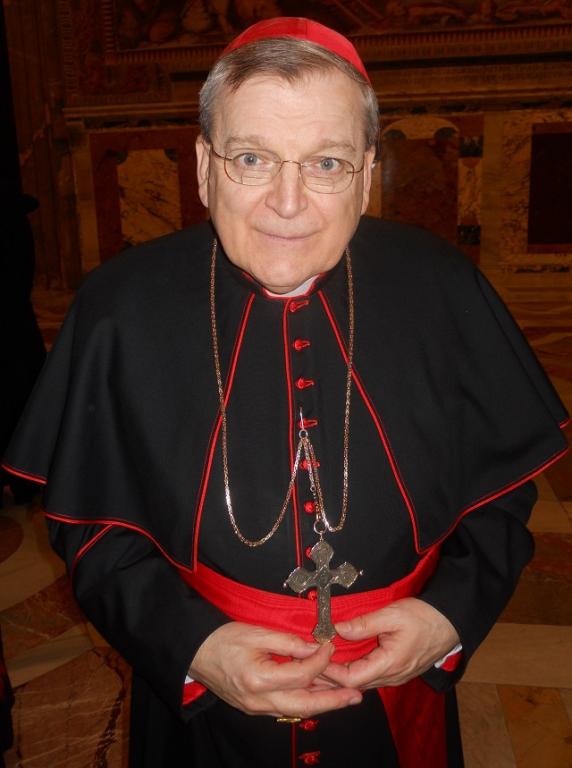
It seemed clear enough to me that he did, but in today’s “hyper-charged” atmosphere regarding anything papal, there must be controversy, and several of my friends have strongly disagreed. Karl Keating asked me: “just what is it you suspect Cardinal Burke to be saying? Be plainspoken about it. Don’t nod toward it without naming it.” I’m happy to oblige! As always, I try to have reasons for why I believe anything, and (being an author and professional apologist) to provide them in writing for others to mull over, and accept or reject. And I think lots of people would agree that I am “plainspoken” and open and transparent in my voluminous writings.
Here are the relevant excerpts (with my blue highlighting) of what Cardinal Burke said, in an interview with Aurelio Porfiri, published in O Clarim (12-21-17):
I would like to speak with you about Benedict XVI. At the time of his resignation, what did you feel?
It was an action that took me by surprise. It is clear that Pope Benedict has reached a certain age, but certainly he was in full possession of his faculties. Someone said that “he was not longer able to travel or bear many audiences.” But I ask myself: who says that the pope has to travel or that he has to receive so many people? I think it is necessary to re-examine the substance of the Petrine office. I would also say that it was not a good thing for the Church to lose its universal shepherd: there is a certain feeling among many Catholics that their father abandoned them. I hope it does not become a common practice.
Isn’t the pope’s traveling and seeing so many people something inherited from the times of John Paul II, and perhaps also Paul VI? Maybe these popes have introduced a new way of understanding the office of the Supreme Pontiff, which is not so essential?
Certainly Pope Paul VI began to travel a bit, just as he began to grant these interviews, for example the ones he gave to Jean Guitton, a French author. Pope John Paul II wanted to face the crisis of the Church with a new evangelization; that is why he traveled so often. But this not part of the Petrine ministry per se, whose mission is to safeguard the unity and the practice of the faith, and especially the liturgy.
Don’t you think that Benedict XVI, who saw the final years of John Paul II—we all remember him being very sick in his last years—feared to repeat these things?
It is naturally a fear. If I’m not mistaken, Pius XII was concerned about this matter. But it can happen to any pope, because a pope does not know how long he will have possession of his full faculties. But we must trust ourselves to our Lord and to the Church, which has the means to confront the situation of a pope who truly is no longer capable.
I have spoken with many journalists and personalities about Benedict XVI and I have discovered that even those most favorable to him have made the following observation, about which I’d like your comment: a great thinker, a great theologian, but not a great leader when it came to the government of the Church. What do you think?
He is certainly an extraordinary teacher of the faith. And he had a way of writing and speaking in a manner accessible to everyone. He also had a great charisma: he communicated a great paternity in individual encounters and also in groups. One thing we can say is that he did not want to be pope, not because he did not want to teach, because he was a great teacher even before he rose to the papal office, but in my opinion, from my limited point of view, the government of the Church, which isn’t easy for anyone, posed a tremendous challenge for him. So, he left it to others to attend to these things and there are some who did not serve him well.
Cardinal Burke appears (my take, anyway) to cite this notion of being “abandoned” as a legitimate thing: felt by “many Catholics.” But resigning due to health concerns and felt inability to do a very demanding and super-important job is hardly “abandoning.” If anything, Pope Benedict’s action was an example of the opposite. He felt that, given his health, someone else could do a better job. We’re talking about the pope’s self-report about his health and ability to continue an incredibly demanding job as a frail 86-year-old man. The “abandonment” charge is placing blame where there is none. Pope Benedict XVI felt that he resigned for the good of the Church. Accusing him of “abandoning” his flock simply because he felt ill-equipped health-wise is not fair or just. Does he bear blame simply for not feeling healthy enough to carry on the office?
The main question in dispute is whether Cardinal Burke agreed with the judgment of “abandoning” that he referenced. Several of my friends believe that he didn’t. I freely grant that the above interview offers no ironclad, indisputable proof one way or the other. But I’m saying that the strong implication is that he does agree: that it is plausible and natural to interpret his words, prima facie, in the way I have. Cardinal Burke raised the issue of abandonment, observing that “many” Catholics feel that way. Either he agrees with this notion, is neutral, or is opposed to it.
What he said was consistent with agreement, even though agreement is not absolutely certain from his words. It’s also consistent with neutrality. But to me it doesn’t seem consistent with disagreement, because he likely would have condemned the idea, if he disagreed, or else — it seems to me, as speculation — wouldn’t have brought up the “abandonment” issue in the first place, even when asked about the resignation.
There are other clues in the interview as well, as to his own position. He says, “it was not a good thing for the Church to lose its universal shepherd.” But that didn’t happen. The absence of a pope is the sedevacantist position. The Church was not without a pope, since a new one assumed office as soon as the procedure for succession could occur. Hence, Catholic canon lawyer, catechist and author Pete Vere stated on my page:
The point is Pope Benedict did not abandon the Church, or his flock. He entrusted them to whoever would follow as his successor. This idea that Benedict abandoned us plays into the narrative of the Francis critics that he really should not be pope. And as both a cardinal and the most senior churchman to publicly criticize Francis, Cardinal Burke ought to show more prudence in the eyes of many faithful.
When Cardinal Burke said, “we must trust ourselves to our Lord and to the Church, which has the means to confront the situation of a pope who truly is no longer capable,” he seemed again to suggest that Pope Benedict shouldn’t have resigned; that he should have left to the Church the decision as to whether he should remain in office. Yet a papal resignation is not contrary to canon law and has occurred in the past (four times). And the pope — as the Supreme Head of the Church — has the full prerogative (assuming mental competence and full use of faculties) to make such decisions on his own.
Many things are matters of longstanding custom, but it doesn’t follow that no exceptions can occur. Nor is a custom an absolute. For example, the popes were always Italian for hundreds of years (455 years to be exact, or since 1523). Then we got a Polish Pope, a German, and an Italian-Argentinian. That was “new” compared to “what had ‘always’ been.” But in actuality, there have been 59 non-Italian popes through history, or 21% of the whole (217 Italians have been popes).
I think this was good. One of three straight non-Italian popes was a saint, after all. The Church consists of many other nationalities besides Italian. Likewise, a papal resignation could be a good thing as well (and ought not automatically be assumed to be a bad thing). It’s not impermissible. It last happened 598 years before Benedict (in 1415). Yet Cardinal Burke and “many” others frown upon Benedict’s decision. Why, I ask?
Cardinal Burke (whether he agrees with the notion of “abandonment” or not) appears to think he shouldn’t have resigned; that it was somehow wrong and not trusting the Holy Spirit (even though canon law doesn’t forbid it).
The most extreme example I have found of criticism of Pope Benedict’s resignation came from journalist and video producer Michael Voris. In a video entitled, Benedict’s Footprints (10-25-15), Voris stated:
He resigned because of health reasons, but going on three years later, his health seems just fine. Contrast that with John Paul, who actually had a health issue . . .
In an era where fatherhood [has become] so disgraced, Pope Benedict is the one who will be remembered as abandoning his children in the hour of their need. [His resignation] may even rise to the level of immoral.
The Holy Father abandoned his flock, his children . . . [at 5:05 in the video]
He turned around and ran away, abandoning the flock to wolves he had led into the sheepfold. . . . [at 7:08]
Now, I have to make myself very clear. Of course, I’m not contending that Cardinal Burke’s views and those of Voris are identical. But I’m saying that the reference to Pope Benedict having “abandoned” his flock that Cardinal Burke alluded to includes (in the overall range of opinion; among other Catholics) this sort of rhetoric and thinking. The “many” includes the views of Michael Voris, who is by no means an unknown person in Catholic ranks. He influences multiple thousands of people.
Voris is not alone in his quite negative view. Dr. John Rao, one of the many reactionary signatories of the Correctio, directed towards Pope Francis (as I have documented) did a video interview with reactionary Michael Matt of The Remnant, a day after Pope Francis’ election. I wrote about it in my critique of the reactionaries who were prominent among the Correctio signatories:
He [Dr. Rao] says “It doesn’t look good” (1:00); that Pope Francis was elected by a faction who “don’t care if the Church dies” (1:15). How melodramatic! I thought the Church couldn’t die?! Isn’t that the quaint and old-fashioned notion of indefectibility?
Rao talks about the disappointment of what he calls “traditionalists” [i.e., reactionaries] over the resignation of Pope Benedict XVI: “I’ve seen over the past couple of days the anguish over Benedict’s resignation, turn to serious resentment on the part of traditionalist Catholics” (4:03). He refers to the opinion of a friend (with whom he seems to agree): “Benedict thwarted the will of the Holy Spirit by abdicating, and perhaps our punishment for that is to return — at least somewhat — back to the catacombs” (4:28). At 5:58, he reiterates his sunny, relentlessly optimistic faith: “The Church, underneath the spirit of the council, is dying, and will, insofar as it can die, die.” And, of course, those who are devoted to the extraordinary form Mass will be, so says Rao shortly after, “perhaps the only serious group that still survives.”
Views like the above, and the overall groundlessness of the “case” against a person (whether pope or not) determining that he can’t continue in an office, for health reasons, are the reasons why I think Cardinal Burke — with all due reverence and sincere respect to his office and person — should have denounced the “abandonment” motif.
I think the “abandonment” accusation against Pope Benedict has no basis, irregardless of what one thinks about criticizing popes. It’s wrong (fundamentally) because it’s a bum rap, not because it’s criticizing a pope. In other words, it’s wrong before we ever get to these other criteria of who should criticize a pope: when, how, and for what reason. And it’s wrong if indeed even a Cardinal says it.
See further discussion on my Facebook page.
***
Photo credit: Raymond Leo Cardinal Burke (2-22-14); photographed by “Pufui Pc Pifpef I” [Wikimedia Commons / Creative Commons Attribution-Share Alike 3.0 Unported license]

***
Traditionalism vs. Radical Catholic Reactionaries
Radical Catholic Reactionaries
Previous Post

January 12, 2018
Sophistry: Reflections on "Debating" Anti-Catholic Polemicists
Next Post
January 15, 2018 Dialogue w Protestant: "One True Church" vs. Ecumenism?
Browse Our Archives
Select a Category & Last Things About Me Anti-Catholicism Atheism & Agnosticism Baptism and Sacramentalism Bible and Tradition Blessed Virgin Mary Books by Dave Armstrong C. S. Lewis Calvinism & General Protestantism Catholic Apologetics Catholic Apologists Catholic conversion Catholic converts Christmas Church (Ecclesiology) Church History Conversion and Converts Development of Doctrine Eastern Orthodoxy Ecumenism & Christian Unity Eucharist & Liturgy Fathers of the Church French Translations G. K. Chesterton Hell Hell & Satan Hell & Satan & Last Things Heresies & Comparative Religion Holistic Health Inquisition & Crusades & Scandals James White Jews & Judaism & Old Testament John Calvin John Henry Newman Liberal / Modernist Theology Life Issues Literary Resume Lutheranism Mariology Martin Luther Music Orthodoxy Papacy & Infallibility Personal Page Philosophy & Science Political & Ethical & Moral Issues Protestant Persecution & Intolerance Protestantism Purgatory Purgatory & Penance Romantic & Imaginative Theology Saints & Purgatory & Penance Salvation Salvation & Justification Satan & Last Things Sexuality and Gender Issues Spanish Translations Traditionalism vs. Radical Catholic Reactionaries Traducciones al español / tradução para português Trinitarianism & Christology Uncategorized Videos
Select a Month October 2026 September 2026 August 2026 July 2026 June 2026 May 2026 April 2026 March 2026 February 2026 January 2026 December 2025 November 2025 October 2025 September 2025 August 2025 July 2025 June 2025 May 2025 April 2025 March 2025 February 2025 January 2025 December 2024 November 2024 October 2024 September 2024 August 2024 July 2024 June 2024 May 2024 April 2024 March 2024 February 2024 January 2024 December 2023 November 2023 October 2023 September 2023 August 2023 July 2023 June 2023 May 2023 April 2023 March 2023 February 2023 January 2023 December 2022 November 2022 October 2022 September 2022 August 2022 July 2022 June 2022 May 2022 April 2022 March 2022 February 2022 January 2022 December 2021 November 2021 October 2021 September 2021 August 2021 July 2021 June 2021 May 2021 April 2021 March 2021 February 2021 January 2021 December 2020 November 2020 October 2020 September 2020 August 2020 July 2020 June 2020 May 2020 April 2020 March 2020 February 2020 January 2020 December 2019 November 2019 October 2019 September 2019 August 2019 July 2019 June 2019 May 2019 April 2019 March 2019 February 2019 January 2019 December 2018 November 2018 October 2018 September 2018 August 2018 July 2018 June 2018 May 2018 April 2018 March 2018 February 2018 January 2018 December 2017 November 2017 October 2017 September 2017 August 2017 July 2017 June 2017 May 2017 April 2017 March 2017 February 2017 January 2017 December 2016 November 2016 October 2016 September 2016 August 2016 July 2016 June 2016 May 2016 April 2016 March 2016 February 2016 January 2016 December 2015 November 2015 October 2015 September 2015 August 2015 July 2015 June 2015 May 2015 April 2015 March 2015 February 2015 January 2015 December 2014 November 2014 October 2014 September 2014 August 2014 July 2014 June 2014 April 2014 March 2014 February 2014 January 2014 December 2013 November 2013 October 2013 September 2013 August 2013 July 2013 June 2013 April 2013 March 2013 February 2013 January 2013 December 2012 November 2012 October 2012 September 2012 August 2012 July 2012 June 2012 May 2012 April 2012 March 2012 February 2012 January 2012 December 2011 November 2011 October 2011 September 2011 August 2011 July 2011 June 2011 April 2011 March 2011 February 2011 October 2010 September 2010 August 2010 July 2010 April 2010 March 2010 December 2009 October 2009 August 2009 July 2009 June 2009 May 2009 March 2009 February 2009 October 2008 September 2008 April 2008 March 2008 February 2008 January 2008 December 2007 November 2007 October 2007 May 2007 March 2007 February 2007 January 2007 November 2006 October 2006 September 2006 August 2006 July 2006 June 2006 May 2006 April 2006 March 2006 February 2006 October 2005 June 2005 April 2005 February 2005 July 2004 May 2004 April 2004
Follow Us!
TAKE THE
Religious Wisdom Quiz
Who visited baby Jesus in the manger?
Select your answer to see how you score.
Fishermen Shepherds Roman guards Scribes
Books by This Author Books by Dave Armstrong
Related posts from Biblical Evidence for Catholicism

Was Peter "Any Old" Apostle? 10 Anti-Papal Arguments
Biblical Evidence for Catholicism

11 Protestant Objections to Papal Authority Debunked
Biblical Evidence for Catholicism

Matthew 16 & the Papacy (vs. Patrick O'Brien)
Biblical Evidence for Catholicism
Inspired Prophets: An Analogy to Infallible Popes
Biblical Evidence for Catholicism
TRENDING AT PATHEOS Catholic

Swimfan: Forgotten Aughts Pleasures
This is a recovery effort. In 2002, My Big Fat Greek Wedding...

Top Three Anti-Catholic Lies About Catholicism
This is my initial transcript for the video, "THE 3 WORST...

Pope Leo Celebrates Mass for Nurses & Docs...
I don't have any idea how he did it, but Pope Leo...

The Sermon on the Mount, Part I: Matthew...
The Sermon on the Mount, Part I (Matthew 4:12-5:12) St. Matthew moves...

What's up from Crossway: Reviewing some of their latest A few weeks...

Janie Learns the Way of the Cross: A...
Teaching children about Jesus' Passion can be challenging. Many parents and educators...
view all Catholic blogs
Ad-Free & Subscriber Log-In Subscription Support
- About Us
- 2026 Calendar
- Videos
- Podcasts
- Library of World Religions
- Faith In Media Tracker
- Advertise With Us
- Write for Us
- Privacy Policy
- Terms of Service
- Do Not Sell My Data
- Contact Us
- Radiant Digital
- Manage Newsletter Subscriptions
- Unsubscribe From Notifications
- Sitemap
Copyright 2008-2026, Patheos. All rights reserved.
Subscription Support Ad-Free & Subscriber Log-In
Follow Patheos