
BuddhistCatholicContemplativeEvangelicalGeneral ChristianHinduJewishLatter-day SaintMuslimNew VisionsProgressive Christian
Beliefs
- Buddhist
- Catholic
- Contemplative
- Evangelical
- General Christian
- Hindu
- Jewish
- Latter-day Saint
- More Voices
- Muslim
- New Visions
- Pagan
- Progressive Christian
Topics
- Religion News
- Food and Religion
- Sports and Religion
- Religious Art
- Religious Music and Entertainment
- Religious Events
- History and Religion
- Style and Religion
- Politics and Religion
- Women in Religion
- Recreation Outdoors and Religion
- Business Finance and Religion
- Careers Workplace and Religion
- Education and Religion
- Family Parenting and Religion
- Health Fitness and Religion
- Home and Religion
- Relationships and Religion
- Technology and Religion
- Travel and Religion
Columnists
- Buddhist Columnists
- Business Finance and Religion Columnists
- Careers Workplace and Religion Columnists
- Catholic Columnists
- Contemplative Columnists
- Education and Religion Columnists
- Evangelists Columnists
- Family Parenting and Religion Columnists
- General Christian Columnists
- Health Fitness and Religion Columnists
- Hindu Columnists
- History and Religion Columnists
- Home and Religion Columnists
- Jewish Columnists
- More Voices Columnists
- Latter Day Columnists
- Muslim Columnists
- New Visions Columnists
- Nonreligious Columnists
- Pagan Columnists
- Politics and Religion Columnists
- Progressive Columnists
- Recreation Outdoors and Religion Columnists
- Relationships and Religion Columnists
- Religion News Columnists
- Religious Art Columnists
- Religious Events Columnists
- Religious Music and Entertainment Columnists
- Sports and Religion Columnists
- Style and Religion Columnists
- Technology and Religion Columnists
- Travel and Religion Columnists
- Women in Religion Columnists
Resource Library
- 2026 Calendar
- Library of World Religions
- The 100 Most Holy Places on Earth
- Patheos Answers
- Podcasts
- Videos
- Faith Leaders Database
- Anglican Episcopalian
- Bahai
- Baptist
- Buddhism
- Christianity
- Confucianism
- Eastern Orthodoxy
- Hinduism
- Holiness and Pentecostal
- ISKCON
- Islam
- Judaism
- Lutheran
- Methodist
- The Church of Jesus Christ of Latter-day Saints
- New Age
- Paganism
- Presbytarian and Reformed
- Protestantism
- Religion Behind the Scenes
- Roman Catholic
- Scientology
- Shia Islam
- Sikhism
- Sufism
- Sunni Islam
- Taoism
- Zen
- See all religions
Research Tools
 Ad-Free & Subscriber Log-In Subscription Support
Ad-Free & Subscriber Log-In Subscription Support
Follow Patheos 

- Trending:
- Forgiveness
- |
- Marriage
- |
- Consciousness
- |
- Death Penalty
- |
- Election
- |
- Halloween

-
About
-
Catholic Apologetics
-
Church History
-
Great Apologists
-
Christian Worldview
-
Protestantism & Misc.
- Home
- Catholic
- History and Religion
- Difficulties of Authority: Luther, Calvin, & Protestantism
Difficulties of Authority: Luther, Calvin, & Protestantism
Last updated on: June 6, 2026 at 12:34 am by Dave Armstrong
Difficulties of Authority: Luther, Calvin, & Protestantism 2026-06-06T00:34:50-04:00 Dave Armstrong
Patheos Explore the world's faith through different perspectives on religion and spirituality! Patheos has the views of the prevalent religions and spiritualities of the world.
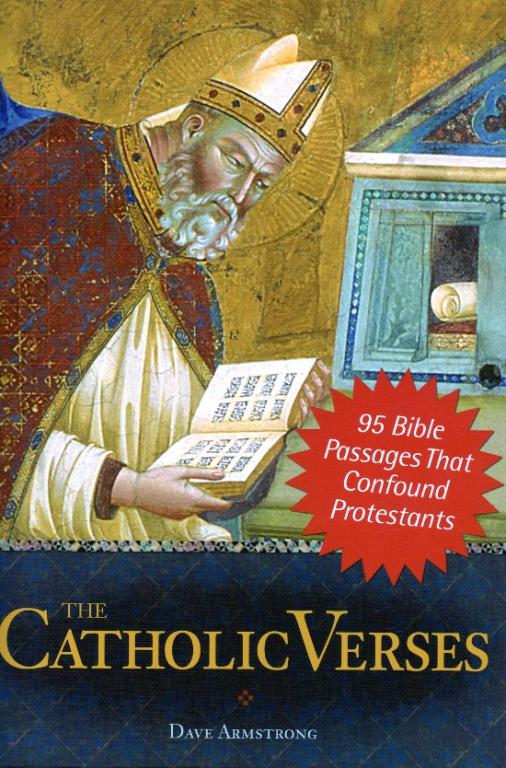
Catholics hold that Scripture is a fairly clear document and able to be understood by the average reader, but also that the Church is needed to provide a doctrinal norm (an overall framework) for determining proper biblical interpretation (specifically, for “vetoing” that interpretation which is erroneous because it leads to doctrinal error). Both Luther and Calvin underemphasize the guidance of the Church in understanding the Bible and assert the perspicuity, or clearness, and self-interpreting nature of Scripture, in terms of its overall teaching. Luther wrote:
[T]he contents of Scripture are as clear as can be . . . If words are obscure in one place, they are clear in another . . . to many people a great deal remains obscure; but that is due, not to any lack of clarity in Scripture, but to their own blindness and dullness. (The Bondage of the Will, II: “Review of Erasmus’ Preface”; ii: “Of the Perspicuity of Scripture”; from Packer, 71-72)
The apostles promulgated an authoritative tradition, . . . and they didn’t tolerate dissension from it . . . Once again, we find that an important Protestant distinctive is not biblical. So how do they attempt to explain this discrepancy? John Calvin, in his Commentaries, makes the following argument, pertaining to 1 Peter 1:20:
But the Papists are doubly foolish, when they conclude from this passage, that no interpretation of a private man ought to be deemed authoritative. For they pervert what Peter says, that they may claim for their own councils the chief right of interpreting Scripture; but in this they act indeed childishly; for Peter calls interpretation private, not that of every individual, in order to prohibit each one to interpret; but he shews that whatever men bring of their own is profane . . . the faithful, inwardly illuminated by the Holy Spirit, acknowledge nothing but what God says in his word.
I would like to apply Calvin’s principle and reasoning and by so doing, demonstrate that it ultimately reduces to absurdity and the utmost impracticality. Calvin (like Luther) despised the sectarianism that proliferated as a result of Protestant principles of authority, such as private judgment and the perspicuity of Scripture.
But neither seemed to see the obvious causal connection between their new principles and the rapidly growing number of Protestant sects. Luther claimed authority to overthrow a host of traditions that had been held for 1500 years. On what basis did he do so? In order to probe that issue and get to the bottom of it, one might construct a hypothetical dialogue between Luther [words in blue] and a Catholic critic that would run something like the following:
Luther (L): The Catholic Church is incorrect in beliefs a, b, c, and d.
Catholic (C): Why do you say that?
L: Because what you teach is unbiblical.
C: What gives you the authority to determine such a thing?
L: My authority is the Word of God, to which my conscience is captive.
C: We grant your sincerity, but not everyone agrees with your interpretation of Holy Scripture. Why should we believe you over against Church Tradition?
L: Because God has appointed me as the restorer of the gospel.
C: How do you know that? Why should we believe it?
L: God’s Word will make it manifest.
C: But what happens when your fellow Protestants disagree with you (e.g., Calvin, Zwingli, the Anabaptists)?
L: One must determine which view is more biblical.
C: How does one go about that, since your movement has no one leader, but rather, increasing numbers of sects who oppose each other on one or more grounds?
L: From now on I shall no longer do you the honor of allowing you—or even an angel from heaven—to judge my teaching or to examine it . . . Instead, I shall let myself be heard and, as St. Peter teaches, give an explanation and defense of my teaching to all the world — I Pet. 3:15. I shall not have it judged by any man, not even by any angel. For since I am certain of it, I shall be your judge and even the angels’ judge through this teaching (as St. Paul says [I Cor. 6:3] ) so that whoever does not accept my teaching may not be saved — for it is God’s and not mine. Therefore, my judgment is also not mine but God’s.
[actual words of Luther: Against the Spiritual Estate of the Pope and the Bishops Falsely So-Called, July 1522; Luther’s Works, 39, 239-299; quote from 248-249]
C: But Martin, don’t you see that when Calvin or Zwingli disagree with you, that they do so on the same grounds you claim for yourself, and that no one can figure out who is telling the truth unless there is a “court of final appeal”?
L: My truth is plain in the Bible.
C: That’s what Zwingli says too.
L: He is damned and out of the Church because he denies what has always been taught by the Church: that the body and blood of Jesus are truly present after consecration. It pains me that Zwingli and his followers take offence at my saying that “what I write must be true.” Zwingli, Karlstadt, and the other heretics have in-deviled, through-deviled, over-deviled, corrupt hearts and lying mouths.
C: The truth is that which has always been held by the Church (just as you yourself argued with regard to the Real presence in the Eucharist). Why, then, do you deny other Catholic doctrines that have an equally long history?
L: Because they are unbiblical.
C: According to whom?
L: According to the Bible.
C: As interpreted by you?
L: Yes, because, like I said already, whoever does not accept my teaching may not be saved — for it is God’s and not mine. Do we not read in the Old Testament that God commonly raised up only one prophet at a time? I say not that I am a prophet, but I do say that the more you despise me and esteem yourselves, the more reason you have to fear that I may be a prophet. If I am not a prophet, yet for my own self I am certain that the Word of God is with me and not with you, for I have the Scriptures on my side, and you have only your own doctrine.
[closely based on actual words from Luther’s tract, An Argument in Defense of All the Articles of Martin Luther Wrongly Condemned in the Roman Bull, 1521, in Jacobs, III, 13-14]
C: So we either accept your authority and word as the preeminent Bible expositor and deliverer of Christian truth of all time (and possibly a prophet), or so much the worse for us?
L: Yes, because God would have it so. You are obviously wrong and I must be right, because my teaching lines up with Scripture. You disagree with me not because of any lack of clarity in Scripture, but because of your own blindness and dullness.
And so on and so forth. It goes on and on like this, but the underlying assumptions of Luther are never proven; they are merely assumed. If a pope dared to proclaim such an unspeakably outrageous thing, Protestants would never accept it in a million years. But when Luther does it, it is accepted with blind faith that he is right and the Catholics are wrong, because “everyone knows” that Protestants are the “Bible people” and Catholics aren’t! They follow crusty, dead traditions of men which were condemned by Jesus, and are like the Pharisees. Etc., etc.
That’s what it always falls back on, because appeals to the Bible inescapably reduce to disputes over whose interpretation is correct. This is the circular nature of competing Protestant theologies. There is no way to choose between Calvin and Luther, except arbitrariness, irrational faith, or appeal to one’s own judgment.
Calvin has no more authority than Luther did. They both simply proclaimed it and people followed them. At the same time they railed against the Catholic exercise of authority, which was self-consistent, and far easier to trace back through history, in an unbroken apostolic succession (precisely as the Church Fathers argued for their authority in proclaiming true doctrine over against heresy).
This was the inner logic and dynamic of Luther’s new perspective, set forth at the Diet of Worms in 1521 (the famous confrontation where he cried, “here I stand!”).Yet few Protestants will admit that it is unreasonable or a circular argument, and far more objectionable and implausible than the Catholic stance in reaction to Luther. It sounds wonderful and noble and almost self-evidently true to choose (as Luther did at Worms) the “Bible and plain reason” rather than the “traditions of men.” But of course that is a false dilemma and caricature of Luther’s choice from the get-go.
It’s a vicious logical circle for Protestants, any way one looks at it. This is what happens when “private interpretation” is championed, contrary to 2 Peter 1:20. It was already an unbiblical concept even before its fruit in history became evident.
Sources:
John Calvin, Calvin’s Commentaries, 22 volumes, translated and edited by John Owen; originally printed for the Calvin Translation Society, Edinburgh, Scotland, 1853; reprinted by Baker Book House, Grand Rapids, Michigan: 1979.
C. M. Jacobs, translator, Works of Martin Luther, Philadelphia: A.J. Holman Co. and the Castle Press, 1930; reprinted by Baker Book House, Grand Rapids, Michigan, 1982, six volumes.
Martin Luther, Luther’s Works (LW), American edition, edited by Jaroslav Pelikan (volumes 1-30) and Helmut T. Lehmann (volumes 31-55), St. Louis: Concordia Pub. House (volumes 1-30); Philadelphia: Fortress Press (volumes 31-55), 1955.
J. I. Packer, and O. R. Johnston, translators, The Bondage of the Will, by Martin Luther (1525), Grand Rapids, Michigan: Fleming H. Revell, 1957; reprinted in 1995.
***
(originally 4-11-04)
[Excerpt from my book, The Catholic Verses (2004); Chapter Five: “Bible and Tradition”; section one: “The Necessity of Authoritative Interpretation” (commentary on the biblical passages Nehemiah 8:8, Acts 8:27-31, and 2 Peter 1:20) ]
***
Calvinism & General Protestantism
pillar and foundation of truth
Previous Post

December 15, 2017
Quiz on Early Protestant / "Reformation" Eucharistic Harmony
Next Post
December 18, 2017 Did Luther Regret Anything About His "Reformation"?
Browse Our Archives
Select a Category & Last Things About Me Anti-Catholicism Atheism & Agnosticism Baptism and Sacramentalism Bible and Tradition Blessed Virgin Mary Books by Dave Armstrong C. S. Lewis Calvinism & General Protestantism Catholic Apologetics Catholic Apologists Catholic conversion Catholic converts Christmas Church (Ecclesiology) Church History Conversion and Converts Development of Doctrine Eastern Orthodoxy Ecumenism & Christian Unity Eucharist & Liturgy Fathers of the Church French Translations G. K. Chesterton Hell Hell & Satan Hell & Satan & Last Things Heresies & Comparative Religion Holistic Health Inquisition & Crusades & Scandals James White Jews & Judaism & Old Testament John Calvin John Henry Newman Liberal / Modernist Theology Life Issues Literary Resume Lutheranism Mariology Martin Luther Music Orthodoxy Papacy & Infallibility Personal Page Philosophy & Science Political & Ethical & Moral Issues Protestant Persecution & Intolerance Protestantism Purgatory Purgatory & Penance Romantic & Imaginative Theology Saints & Purgatory & Penance Salvation Salvation & Justification Satan & Last Things Sexuality and Gender Issues Spanish Translations Traditionalism vs. Radical Catholic Reactionaries Traducciones al español / tradução para português Trinitarianism & Christology Uncategorized Videos
Select a Month October 2026 September 2026 August 2026 July 2026 June 2026 May 2026 April 2026 March 2026 February 2026 January 2026 December 2025 November 2025 October 2025 September 2025 August 2025 July 2025 June 2025 May 2025 April 2025 March 2025 February 2025 January 2025 December 2024 November 2024 October 2024 September 2024 August 2024 July 2024 June 2024 May 2024 April 2024 March 2024 February 2024 January 2024 December 2023 November 2023 October 2023 September 2023 August 2023 July 2023 June 2023 May 2023 April 2023 March 2023 February 2023 January 2023 December 2022 November 2022 October 2022 September 2022 August 2022 July 2022 June 2022 May 2022 April 2022 March 2022 February 2022 January 2022 December 2021 November 2021 October 2021 September 2021 August 2021 July 2021 June 2021 May 2021 April 2021 March 2021 February 2021 January 2021 December 2020 November 2020 October 2020 September 2020 August 2020 July 2020 June 2020 May 2020 April 2020 March 2020 February 2020 January 2020 December 2019 November 2019 October 2019 September 2019 August 2019 July 2019 June 2019 May 2019 April 2019 March 2019 February 2019 January 2019 December 2018 November 2018 October 2018 September 2018 August 2018 July 2018 June 2018 May 2018 April 2018 March 2018 February 2018 January 2018 December 2017 November 2017 October 2017 September 2017 August 2017 July 2017 June 2017 May 2017 April 2017 March 2017 February 2017 January 2017 December 2016 November 2016 October 2016 September 2016 August 2016 July 2016 June 2016 May 2016 April 2016 March 2016 February 2016 January 2016 December 2015 November 2015 October 2015 September 2015 August 2015 July 2015 June 2015 May 2015 April 2015 March 2015 February 2015 January 2015 December 2014 November 2014 October 2014 September 2014 August 2014 July 2014 June 2014 April 2014 March 2014 February 2014 January 2014 December 2013 November 2013 October 2013 September 2013 August 2013 July 2013 June 2013 April 2013 March 2013 February 2013 January 2013 December 2012 November 2012 October 2012 September 2012 August 2012 July 2012 June 2012 May 2012 April 2012 March 2012 February 2012 January 2012 December 2011 November 2011 October 2011 September 2011 August 2011 July 2011 June 2011 April 2011 March 2011 February 2011 October 2010 September 2010 August 2010 July 2010 April 2010 March 2010 December 2009 October 2009 August 2009 July 2009 June 2009 May 2009 March 2009 February 2009 October 2008 September 2008 April 2008 March 2008 February 2008 January 2008 December 2007 November 2007 October 2007 May 2007 March 2007 February 2007 January 2007 November 2006 October 2006 September 2006 August 2006 July 2006 June 2006 May 2006 April 2006 March 2006 February 2006 October 2005 June 2005 April 2005 February 2005 July 2004 May 2004 April 2004
Follow Us!
TAKE THE
Religious Wisdom Quiz
I am twelve stones taken from a riverbed and set up as a memorial to a miraculous crossing. What am I?
Select your answer to see how you score.
Altar stones The memorial stones The Stones of remembrance Bethel
Books by This Author Books by Dave Armstrong
Related posts from Biblical Evidence for Catholicism

On Protestant Explanations of Catholic Conversion
Biblical Evidence for Catholicism

Protestant Confessions & "Ever-Virgin" Mary
Biblical Evidence for Catholicism

Jesus Founded the [Catholic] Church. If Not Him,...
Biblical Evidence for Catholicism

A Few "Worst" & "Best" Arguments vs. Protestantism
Biblical Evidence for Catholicism
TRENDING AT PATHEOS Catholic

The Sermon on the Mount, Part I: Matthew...
The Sermon on the Mount, Part I (Matthew 4:12-5:12) St. Matthew moves...

What's up from Crossway: Reviewing some of their latest A few weeks...

Janie Learns the Way of the Cross: A...
Teaching children about Jesus' Passion can be challenging. Many parents and educators...

Looking For Good Catholic Writing - October 2026
He alone extends the heavens, and he walks upon the waves of...

In "Irreplaceable," our book on vocation and technology, Trevor Sutton and I...

I was strolling through the top floor of the brand new Parthenon...
view all Catholic blogs
Ad-Free & Subscriber Log-In Subscription Support
- About Us
- 2026 Calendar
- Videos
- Podcasts
- Library of World Religions
- Faith In Media Tracker
- Advertise With Us
- Write for Us
- Privacy Policy
- Terms of Service
- Do Not Sell My Data
- Contact Us
- Radiant Digital
- Manage Newsletter Subscriptions
- Unsubscribe From Notifications
- Sitemap
Copyright 2008-2026, Patheos. All rights reserved.
Subscription Support Ad-Free & Subscriber Log-In
Follow Patheos